Monasteries are wonderful locations to visit, particularly if you’re going solely for the goal of finding inner peace. Portugal, being one of Europe’s oldest countries, has a large number of monasteries, some of which are said to be as ancient as the country itself. Because Portugal is not well-known for its monasteries, we feel that including these wonderful places on your itinerary should enhance your experience.

Alcobaça Monastery
The Alcobaça Monastery (Portuguese: Mosteiro de Alcobaça, Mosteiro de Santa Maria de Alcobaça) is a Catholic monastery complex in the central Portuguese town of Alcobaça. Afonso Henriques, the first Portuguese monarch, founded the monastery in 1153.
The church and monastery were the earliest Gothic structures in Portugal, and it was one of the most significant mediaeval monasteries in Portugal, along with the somewhat older Augustinian Monastery of Santa Cruz in Coimbra. It was included on the UNESCO World Heritage List in 1989 due to its aesthetic, cultural, and historical significance.

Batalha Monastery
This is another UNESCO World Heritage Site, having been declared in 1983. Officially known as the ‘Monastery of Saint Mary of the Victory,’ this is one of Portugal’s best-preserved monastery complexes. It was erected in the 14th century to commemorate the Battle of Aljubarrota, but it became the burial church for Portuguese kings from the 15th century onward. There’s a lovely fountain in the older Manueline cloister that will capture your attention right away. There’s also a unique chamber with the Tomb of the Unknown Soldier from World War I.
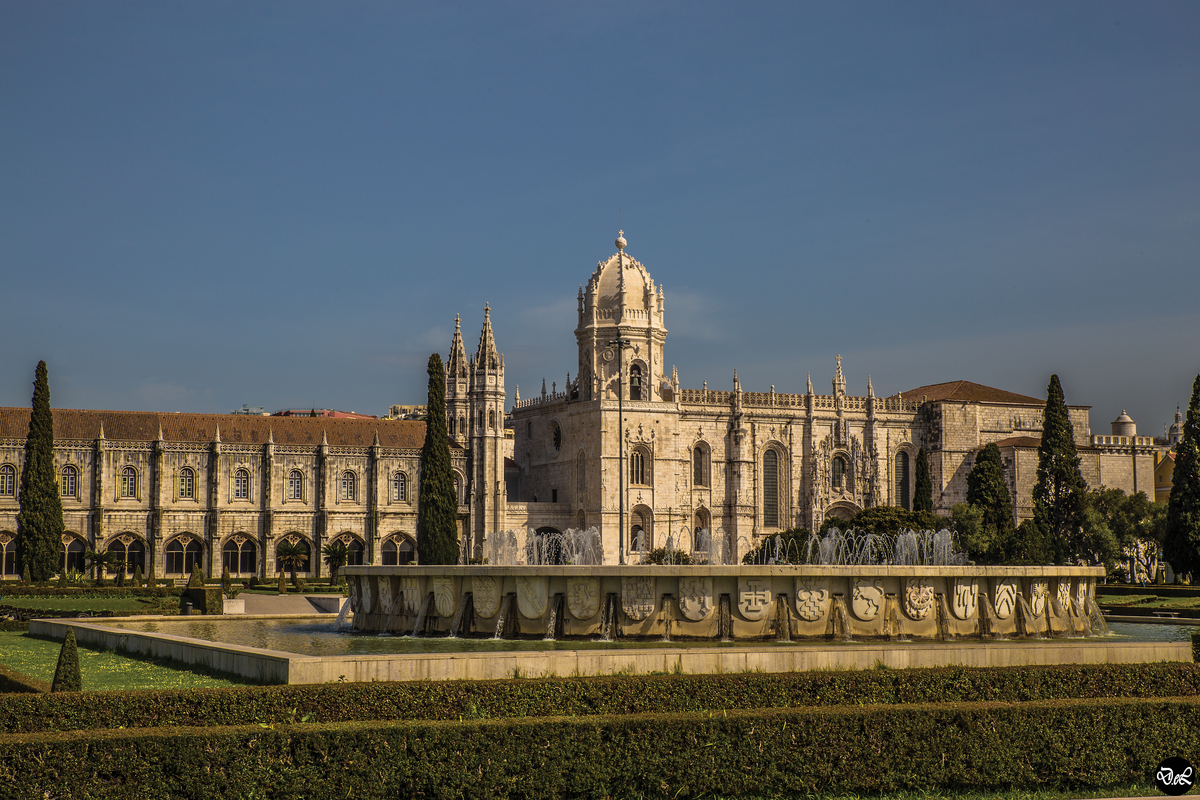
Hieronymites Monastery
Jerónimos Monastery is another name for it. This complex, located in the parish of Belém in western Lisbon, was commissioned by King Manuel I in the early 16th century on the site of the ancient church of Santa Maria de Belém. This monastery structure is approximately 55 square metres (592 square feet) in size and has two storeys. Diogo de Boitaca, a prominent Manueline architect, constructed the bottom floor, which includes large arcades embellished with elaborately carved Gothic and Renaissance-style colonnettes. The upper storey was constructed by Iberian architect Joo de Castilho and contains the tombs of poet Fernando Pessoa and author Alexandre Herculano.

Monastery of the Saviour of Travanca
The Monastery of the Saviour of Travanca was founded in the 13th century by the Portuguese lord Garcia Moniz. Even now, it is considered one of Portugal’s most prominent Benedictine temples. Located directly on the Portuguese-Romanesque road, the monastery benefited from a strategic location throughout the Middle Ages. However, following the crusades, the Order seemed to have faded into obscurity until the early twentieth century, when it was restored and eventually designated as a Portuguese National Monument.

Monastery of São João de Tarouca
This was possibly the country’s first Cistercian Order monastery, located approximately 9 miles (15 kilometres) southeast of Lamego in northern Portugal. The monastery is set against a beautiful background of terraced hills. However, it is now in a condition of disrepair. The church and monastery were at their peak until the 17th century. However, once the religious orders were disbanded in Portugal in 1834, the complex fell into disrepair. Despite the fact that the monks’ lodgings are in disrepair, the church has some of its original features, such as gilded choir stalls and 15th-century painted tiles, owing to 17th-century restoration attempts.
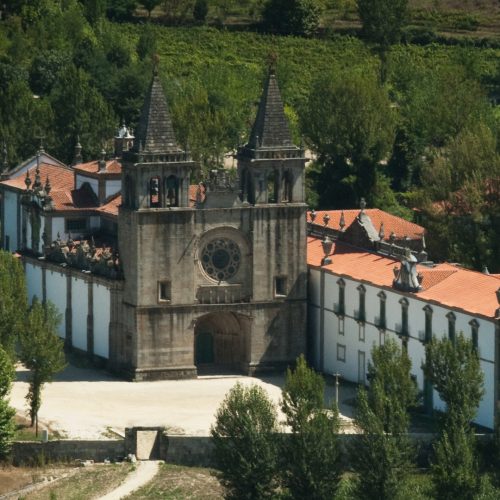
Monastery of Saint Mary of Pombeiro
Dom Gomes Aciegas is thought to have built and finished this Romanesque-style monastery structure around 1059. It was one of Portugal’s most prominent Benedictine monastery complexes until 1834 when the Benedictine monks were exiled and their religious orders were disbanded. Following then, the entire facility fell into disrepair. It was designated a national monument and officially opened to the public in 1910. The church was extensively restored between 1958 and 1987, and again between 1993 and 2006. It houses stunning Romanesque sculptures and paintings from the 14th, 15th, and 16th centuries.

Pedroso Monastery
This beautiful Benedictine abbey complex in Portugal was built in the 11th century. This monastery is located in the beautiful Vila Nova de Gaia in the country’s northwestern region. This magnificent Romanesque-style structure includes a church and a convent. The church is shaped like an irregular hexagon, with a deep chapel and two high bell towers. The monastery was at its heyday until 1560 when the Jesuit monks were ejected from the holy orders. Following that, the property was demolished. Later, in 1803, a high-rising wall divided the church from the monastery.

Monastery of Celas
The magnificent Romanesque monastic complex was founded in 1221 by Princess Sancha, daughter of King Sancho I of Portugal, and is located in the ancient city of Coimbra. The structure began as a simple chapel encircled by a cloister of tiny cells housing the nuns’ sisterhood. It evolved through time to become one of the most important monastic complexes in Portugal. However, once the religious organisations were destroyed in 1834, this monastic order, like most other Portuguese monasteries, was disbanded, although the sisters were permitted to remain.
The existing ensemble incorporates numerous 16th-century components, such as the noble entrance on the façade and the choir door to the chapter room’s antechamber.

Monastery of Lorvão
This 6th-century monastery complex, also known as the Abbey of Our Lady of Lorvão or simply Lorvão Abbey, is located in the municipal parish of Lorvão in Portugal’s Coimbra District. According to historical sources, this complex prospered at first because it was a key centre of commerce between northern Christian populations and southern Muslim authorities. Indeed, this monastery’s workshops were well-known in the 12th century for their magnificent illuminated manuscripts.
However, this structure was unable to withstand the decline that most Portuguese monasteries experienced following the dissolution of religious organisations in the nineteenth century. Surprisingly, the buildings were converted into a mental institution around the turn of the twentieth century. At the same time, it was designated as a national monument. The hospital closed in 2012, and the property has since become home to a museum showcasing religious arts.

Monastery of Saint Peter of Cête
This monastery structure from the tenth century is located in the civil parish of Cête in the municipality of Paredes in northern Portugal. Although the majority of the complex is constructed in late-Romanesque style, there are some magnificent Gothic components, such as the church’s bell tower. The complex was originally commissioned by the Portuguese nobleman Gonçalo Oveques and then renovated during the 12th and 14th centuries under the patronage of the abbot D. Estêvão Anes. Following these repair attempts, certain Manueline period features were added, which may be seen in the chapter hall and major cloister. The monastery’s interior features magnificent limestone reliefs of Saint Peter, Saint Lucia, and Our Lady of Grace, as well as a fresco of Saint Sebastian.