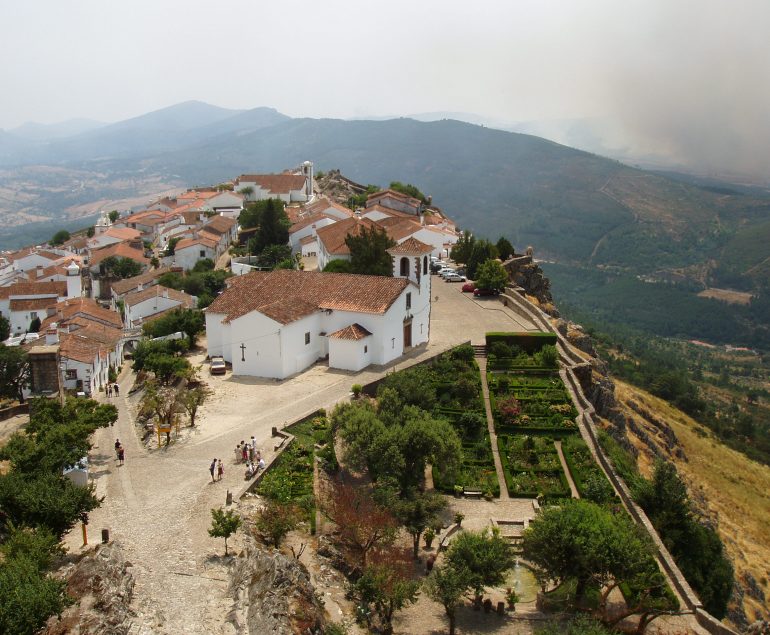
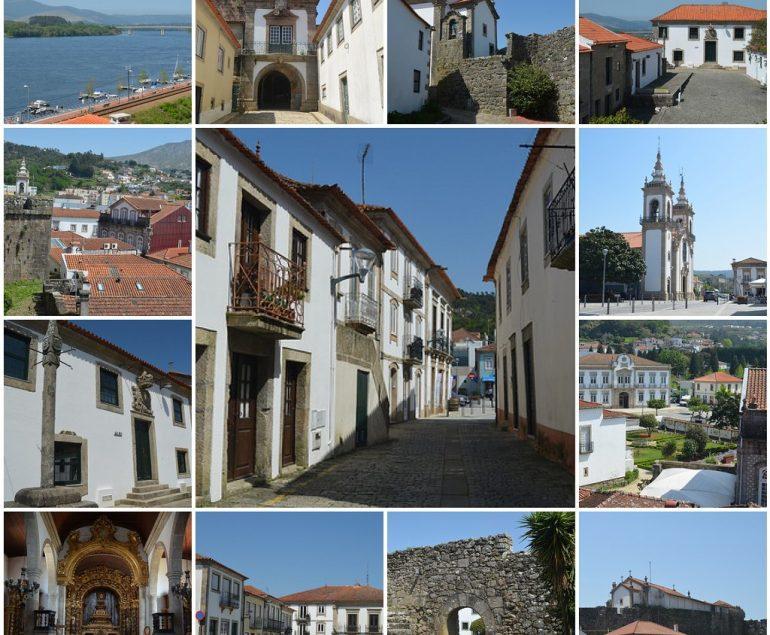
The Minho region of northern Portugal is one of the oldest provinces in the country, with a rich historical heritage. Comprised of both the Baixo and Alto Minho provinces, the region was the source of many Portuguese settlers who colonised Brazil in the 18th century.
Minho is not as popular as some of the other tourist destinations in Portugal, but it offers a unique chance to discover authentic local customs and undiscovered gems. Waterfalls, mountain villages, and breathtaking vistas of the countryside can all be explored for an unforgettable experience.
If you’re looking for a truly off-the-beaten-track adventure, consider visiting the Minho region. Here are some recommendations for the hidden gems in this Portuguese province.

Protected Landscape of Corno do Bico
Much more than a classified area, this is a magical place in Minho that takes us to an enchanted forest scenario. The Protected Landscape of Corno do Bico was created in 1999.
It has about 2,200 hectares, which are spread over five parishes: Bico, Castanheira, Cristelo, Parada, and Vascões, in the municipality of Paredes de Coura, part of the Iberian Massif.
The Corno do Bico forest is made up of an extensive forest of chestnut trees, oaks, beech trees, and cypress trees, all planted in the 1940s but magically forgotten for 80 years.
Here, various elements intersect that seem to have come out of a fairy tale, such as lichens, different species of mushrooms (more than 200 species), leafy trees, and games of light and shadow.
Therefore, it is not surprising that the forest is home to several animals, such as the Iberian wolf, the Lusitanian salamander, the water mole, and the Seoane viper. In total, more than 188 species of vertebrates and 439 species of plants have been identified.
If you’re curious, start planning your visit to this enchanting place with a magical aura and an authentic charm for the senses thanks to the exuberant colors, the intensity of the smells of nature, and the depth of silence that one feels around here. You will see that it is one of those places that will stay in your memory for a long time.
Lagoas of Bertiandos
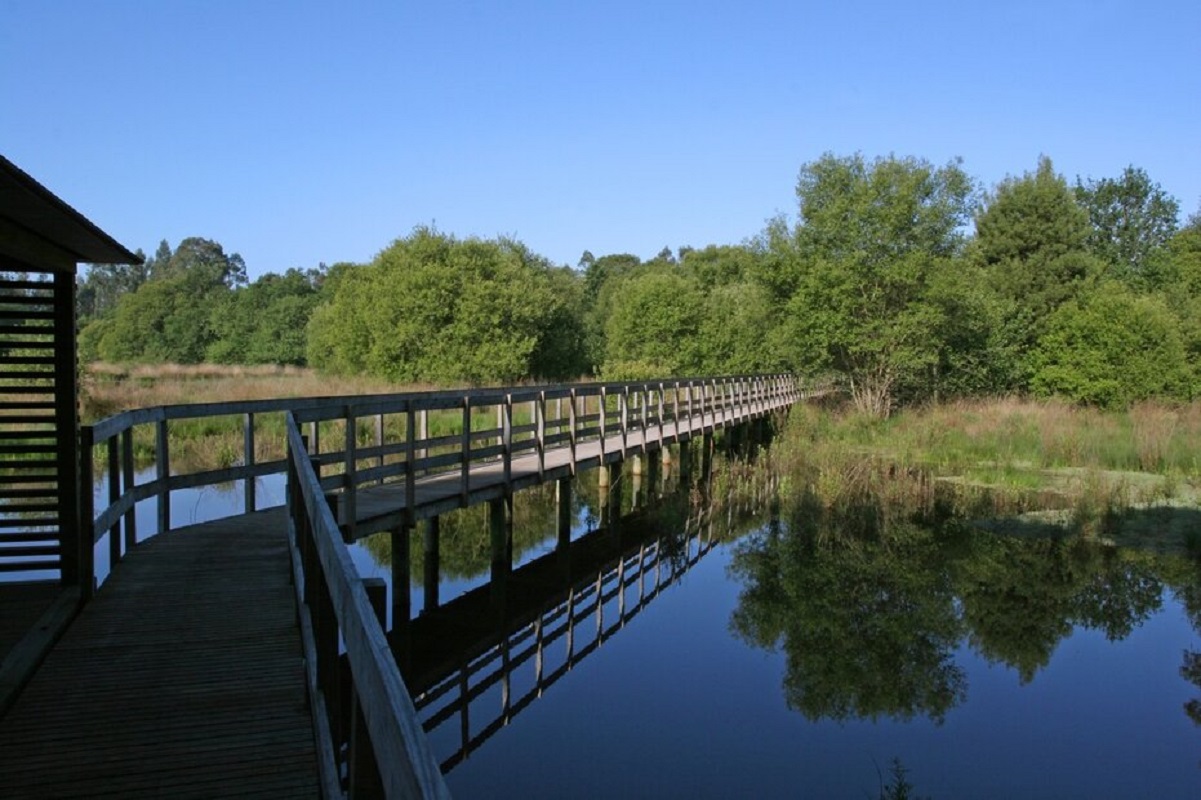
The protected zone includes an area of 346 hectares (3.46 km2) situated in the municipality of Ponte de Lima, accessible directly by the Estrada Nacional E.N.202 and the Auto-Estrada A27. Bertiandos and São Pedro de Arcos are important spaces for the conservation of nature and biodiversity, resulting in the presence of a diverse biotope associated with a humid continental zone that includes habitats and priority species conservation.
Its wetlands are divided between the Bertiandos, São Pedro de Arcos, Estorãos, Moreira do Lima, Sá, and Fontão parishes of Ponte de Lima, northern Portugal.
A “small route” for pedestrians is the Lagoa Trail. The corresponding markings and signs adhere to universal standards. You can enjoy the distinctive scenery of the lagoon of S. Pedro d’Arcos and understand its natural values thanks to the route’s location in the Bertiandos and S. Pedro d’Arcos Lagoon Protected Area.
These lagoons are a protected landscape as they contain diverse habitats, ranging from wetlands, non-wetlands, pastures, forests, and agricultural areas. The Bertiandos lagoons are served by natural canals and crossed by the river Estorãos.
King’s Mills
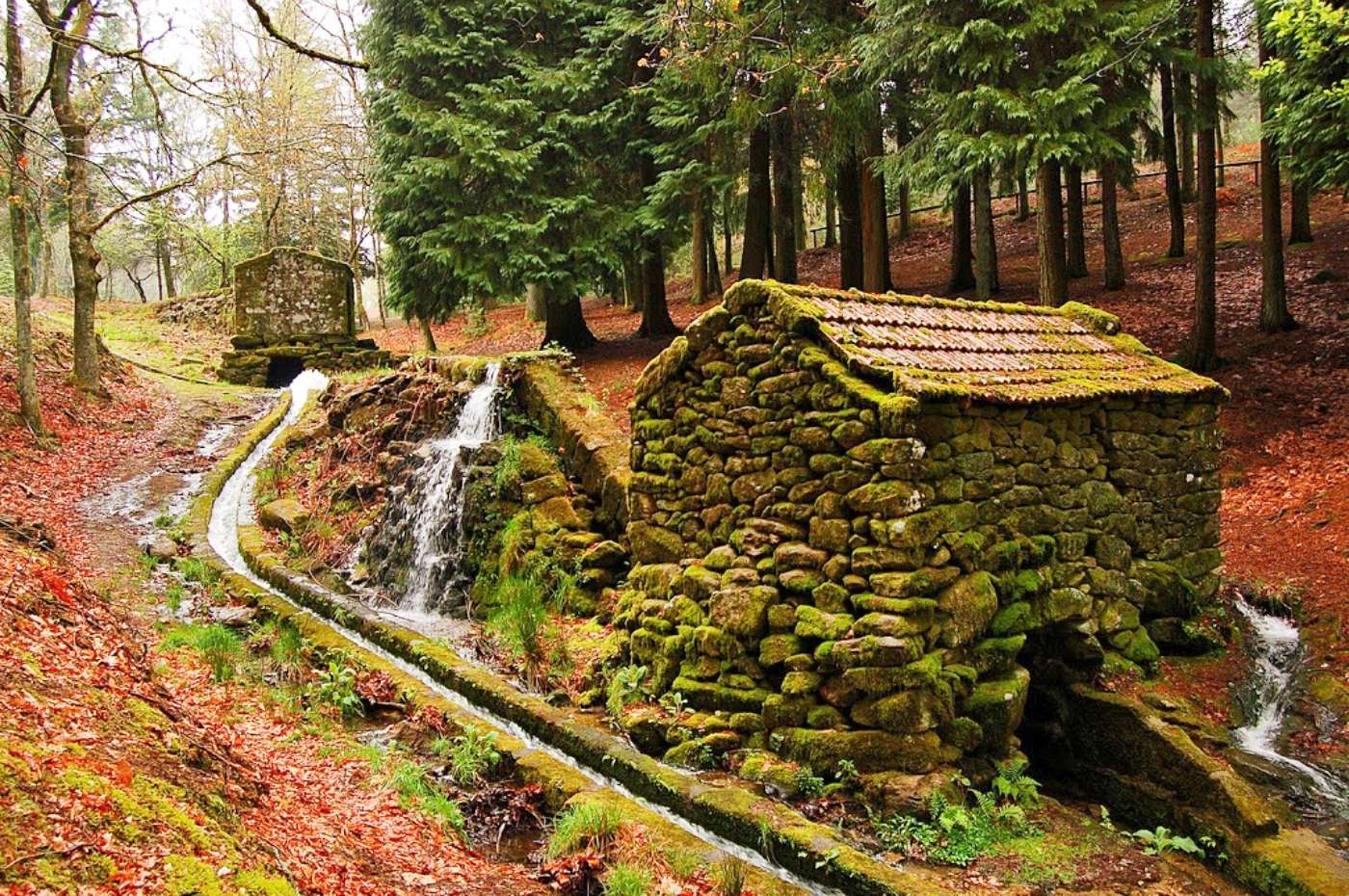
They are known as Moinhos de Rei because they were erected by D. Dinis, one of the Portuguese kings who promoted agriculture and related activities the most. They are at Cabeceiras de Basto, in the Serra da Cabreira, and are now part of a beautiful park where you can spend valuable time with your family.
The municipality erected two interpretive centres here to enhance the area: one dedicated to the bread cycle and another to the municipality’s diverse wildlife life. This is a must-see, especially if you have children.

Pontes
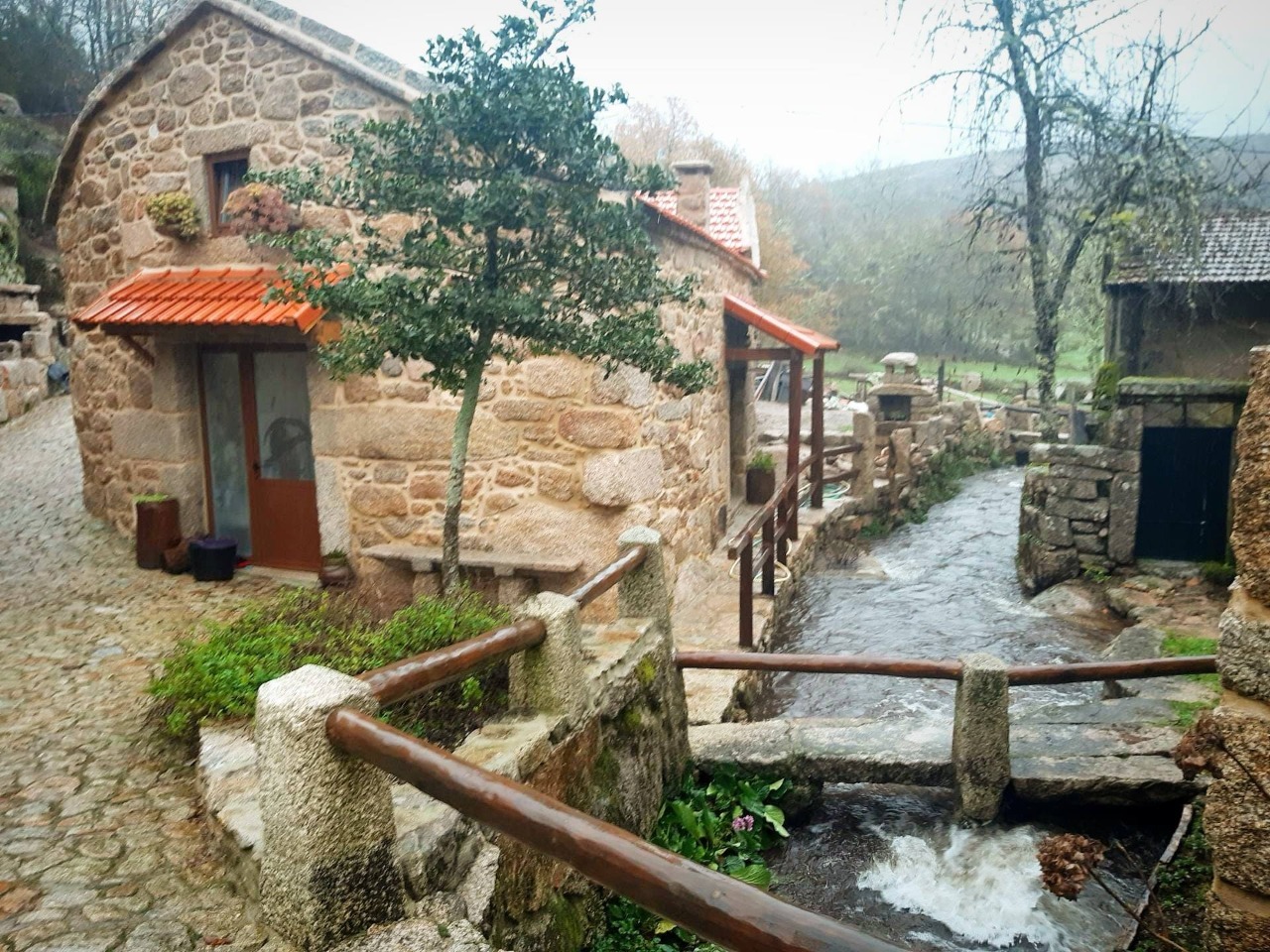
Pontes is a tiny cluster of seasonal houses known as an “inverneira,” or “winter place,” that used to be occupied during the colder months, from Christmas to Easter. It is situated in the valley at an elevation of 700 to 750 metres above sea level. It is one of a collection of inverneiras that, along with the brandas and permanent houses in the region, comprise Castro Laboreiro’s settlement structure. It consists of 12 inverneiras on the right side of the Laboreiro River. In the parish of Castro Laboreiro, there are 19 inverneiras, 18 brandas, and 9 permanent communities.
Families in Pontes would uproot themselves, along with their animals and goods, and relocate to the brandas (summer settlements) of Campelo and Formarigo, where they would meet up with neighbours from neighbouring inverneiras. They intended to go back to Pontes before Christmas.
Estorãos
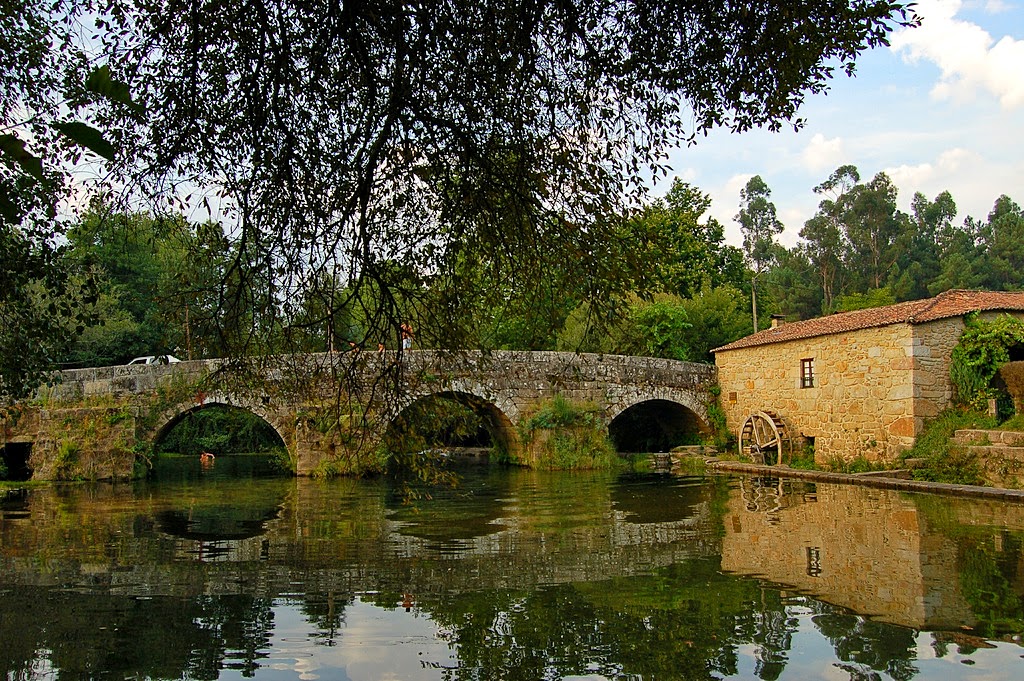
The parish of Estorãos is one of the most beautiful, not only in the municipality of Ponte de Lima but also in the entire Minho region, given the magnificent landscapes that can be enjoyed in its lands and its enchanting water courses, where the river Estorãos assumes, in this particular case, the main role. The river also provides an excellent river beach. Indeed, because this beautiful parish extends from the foothills of Serra de Arga to its highest points, it enjoys this privilege of nature. Despite these important aspects, there are other attractions for which man assumes responsibility for their unquestionable quality. We refer to its architectural heritage as follows: the Roman Bridge, the Parish Church, crosses, the Roman Bridge of Arquinho, the Chapel of S. João, Ruins of Bouça do Monte de Crasto and Crasto in ruins on Monte Castelo, Gramela mills, and the watermill. Its Romanesque bridge has its own characteristics that indicate that it dates from the 13th century.
Approximately six kilometres from Ponte de Lima, where the river that gives the village its name runs, is Estorãos, a tiny Minho village. The waters that flow from the Arga mountain’s summit meander through pine forests, vineyards, and fields, forming little lakes and dams where trout and lampreys hide from tourists and anglers. The scenery is breathtaking. The mountains’ bluish and sombre shape contrasts with the green of the fields and the autumnal hues of the vines and cornfields, producing a genuine garden that begs for many strolls and rural explorations.

Branda da Aveleira
Located on the entrance to the Peneda Gerês National Park, Portugal, Branda do Aveleira is a testament to human resilience. This humble cluster of cottages, which was used for generations as a temporary settlement, was in danger of being lost in the last century. Fortunately, it has been restored and is now open for visitors.
Branda da Aveleira today has a selection of homes for rural tourism. The restoration was done carefully to retain the original architecture and character of the village. Everything has been renovated to keep the essence of the village alive and provide the necessary comforts and amenities.
.

Poças do Malho
Poças do Malho are four deep pools with four beautiful waterfalls on the Castro Laboreiro River, located between Mistura das Guas (the junction of the Peneda and Laboreiro rivers) and Ribeiro de Baixo, and they form the boundary between Portugal and Spain. The best way to get to the Poças do Malho is to take a route that starts on the Spanish side, at the point where the road connecting Olelas and Mistura das Águas ends. The route follows the right side of the Laboreiro River and goes through Peneda Gerês National Park in Portugal.
Before making any vacation plans, please check the constantly changing local limitations and safety rules. It should be noted that not all sites and services are operating as usual, so check their respective websites for the most recent details.