First Glimpse of the Atlantic
There’s something about the Portuguese coast that sneaks up on you. Drive west from Sintra and the road threads through vineyards, sleepy villages, and fields where the wind never seems to rest. Then, just when you’ve settled into the quiet rhythm of the countryside, the land suddenly falls away and the Atlantic takes over—restless, endless, blue on blue.
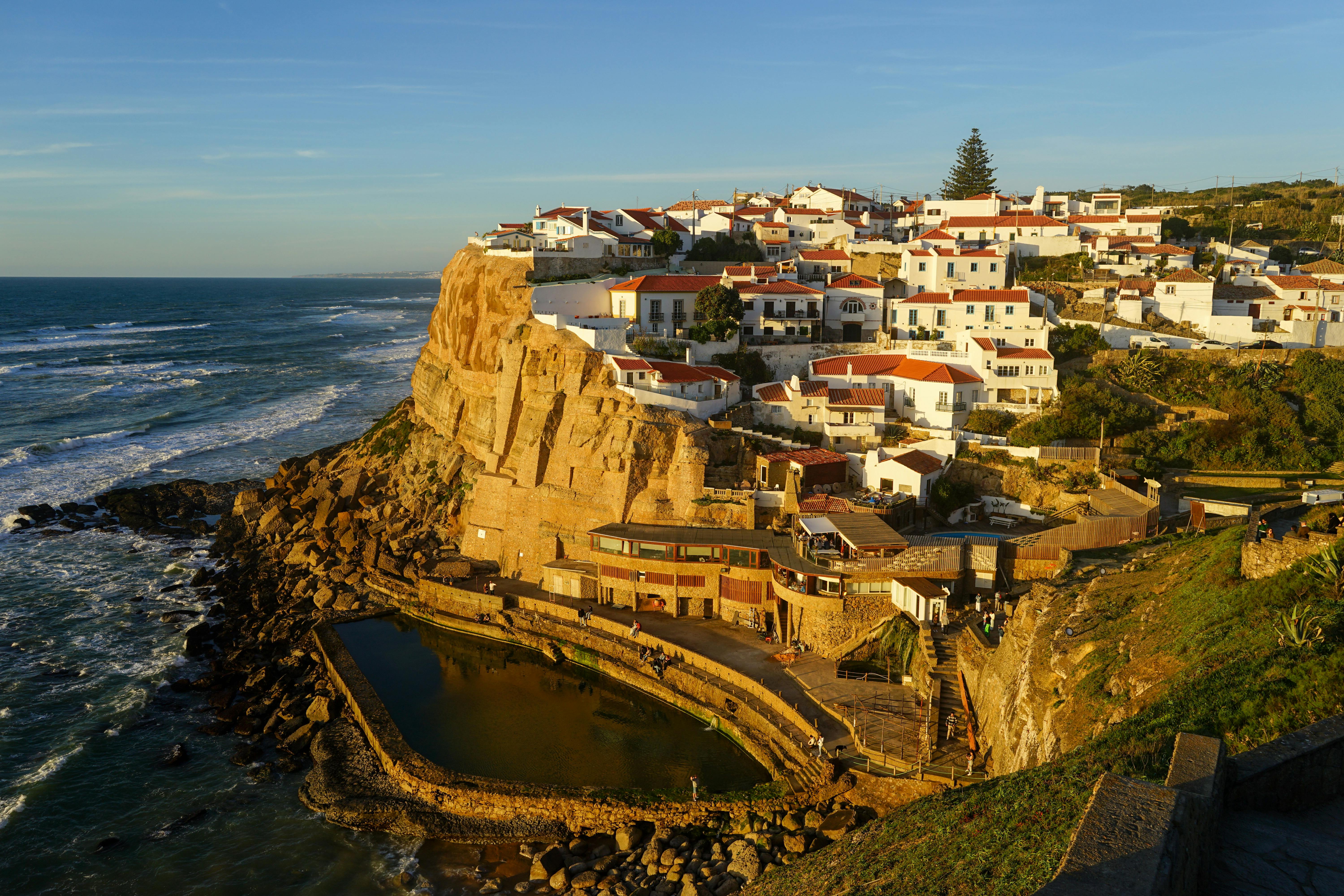
And there, as if clinging for dear life, is Azenhas do Mar. Whitewashed cottages tumble down the cliff in improbable layers, blue-trimmed windows catching the light, red tile roofs stacked like stairs to the sea. At the bottom, waves slam against the rocks, foaming into a natural seawater pool that has become the village’s signature.
The scene is so dramatic it almost feels staged. But Azenhas do Mar isn’t a movie set. It’s a real community—part fishing village, part summer retreat, part day-tripper dream—that has managed to balance its picture-postcard fame with the rhythms of local life.
This is the kind of place people describe as a “hidden gem,” but the truth is: it’s not hidden anymore. And yet, if you take your time here—if you do more than stop for a photo—you’ll find it still feels like a discovery.
What’s in a Name: The Watermills of the Sea
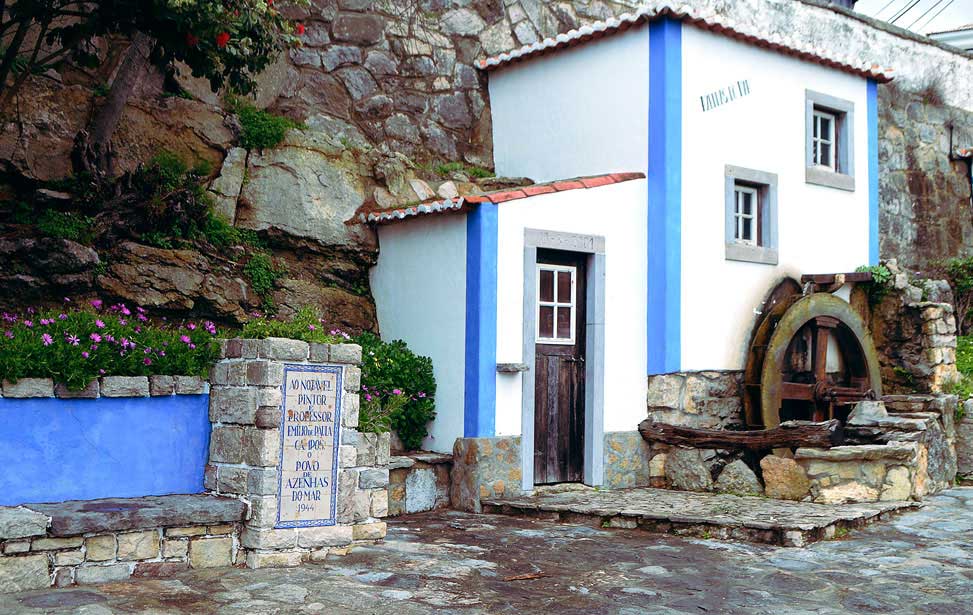
The name Azenhas do Mar translates to “watermills of the sea.” Centuries ago, the strong stream that runs through the village powered mills where grain was ground. The ocean and the stream together shaped both the landscape and the livelihood here.
Originally a fishing hamlet, the village was known for shellfish and fresh catch. Families lived in small, simple homes carved into precarious spots on the cliffs. In the early 20th century, Lisbon’s upper class discovered the beauty of the Sintra coast and began building summer houses here. They added tiled façades, decorative balconies, and gardens—a different kind of life layered onto the old fishing base.
Today, you can still see both stories: fishermen’s boats and nets at the shore, elegant villas tucked into the upper lanes. It’s this mix of humble and grand, old and new, that gives Azenhas do Mar its unusual character.
Things to See and Do
1. The Natural Ocean Pool
If Azenhas do Mar has one icon besides its clifftop view, it’s the seawater pool. Built right into the rock at the base of the village, the pool fills naturally as waves crash in. On calm days it’s a safe place for a swim; on wild days it becomes a stage for the Atlantic’s power, with waves leaping dramatically over the walls.
Tip: If you want to swim, aim for low tide in summer, when the pool is calmer. Bring sturdy sandals—the rocks can be slippery.
2. The Tiny Beach
Right beside the pool lies a small sandy cove. Sometimes it’s wide enough to host sunbathers; sometimes the tide swallows it whole. When it’s there, it’s one of the most atmospheric little beaches in Portugal, with the cliff towering above and the pool alongside.
3. The Viewpoint
This is the shot you’ve probably seen online: from the clifftop looking down at the stacked houses and the ocean pool below. It’s worth the hype. The best time is sunset, when the light turns honey-gold and the sea shifts into silver and violet. Photographers love it, but you don’t need a camera to be impressed.
4. Wandering the Village Lanes
Azenhas do Mar is tiny—you can walk its streets in 15 minutes—but don’t rush. Wander slowly. You’ll find blue-and-white houses, bougainvillea climbing over walls, and tiled façades from the 1930s and 40s. Cats doze in the sun, laundry flaps in the wind, and the sea booms constantly below. There’s no big attraction here beyond the village itself, and that’s exactly the point.
5. Walking the Coastal Trails
For the more adventurous, trails link Azenhas with nearby beaches. South lies Praia das Maçãs (“Apple Beach”), a wide sandy stretch with cafés and a family vibe. Further on is Praia Grande, popular with surfers. Walking the cliffs gives you raw Atlantic views: jagged rock formations, sea spray, and gulls wheeling above.
Eating and Drinking
Restaurante Azenhas do Mar
This is the star of the village: a restaurant perched dramatically on the cliffside, windows opening straight onto the sea. The menu is all about seafood—grilled octopus, clams in garlic and wine, shellfish rice, and whole fish brought in fresh from the market. It isn’t cheap, but the combination of setting and flavor makes it one of those meals you’ll talk about long after you’ve left.
Cafés and Casual Spots
At the top of the village near the viewpoint, you’ll find small cafés perfect for a quick bite or a coffee. Don’t miss the chance to try a pastel de nata with your espresso—there’s something about eating it outdoors with that sea air that makes it taste even better.
Colares Wine
Just inland from Azenhas is the Colares wine region, one of the most unusual in the world. Vines grow in sandy soil, trained low to withstand the Atlantic winds. The Ramisco grape, found almost nowhere else, produces red wines that are structured, salty, and completely unique. Many restaurants in the area serve them—worth ordering if you want to taste something local and rare.
When to Visit
-
Summer: Best for swimming in the pool and enjoying long evenings, but expect more visitors.
-
Spring and Autumn: Still warm, fewer crowds, and dramatic seas. A great balance.
-
Winter: The village is quieter, the waves more dramatic, but some restaurants may be closed. Good if you want solitude and wild landscapes.
Tides matter. The beach and pool look completely different at high versus low tide. If swimming or sunbathing is your goal, check the tide chart before you come.
Practical Tips
-
Parking: Limited near the viewpoint, especially in summer. Arrive early or be prepared to walk.
-
Clothing: Even in summer, the Atlantic wind can be cool. Bring a layer.
-
Safety: The cliffs are steep—stay behind railings. On the beach, watch the tides carefully.
-
Shoes: Wear comfortable shoes if you plan to walk the trails; flip-flops are fine for the pool but not for climbing around.
How to Get There
From Lisbon (30 km)
-
By car: Around 40 minutes via A37 and N247. The easiest option.
-
By train + bus: Train from Lisbon’s Rossio station to Sintra (40 minutes), then local Scotturb bus 440 or 441 to Azenhas (about 25 minutes).
-
By taxi or rideshare: About 40 minutes, €45–60.
From Sintra
Take bus 440 or 441 directly to the village. Journey time: about 25 minutes.
Nearby Highlights
Sintra
Just 15 minutes away, Sintra is a UNESCO site packed with palaces, gardens, and legends. Combine both in a day trip if you’re short on time.
Praia das Maçãs
A family-friendly beach with cafés, surf schools, and a summer tram line that connects it to Sintra.
Praia Grande
Larger and wilder, this beach is popular with surfers and has a row of seafood restaurants.
Cabo da Roca
The westernmost point of continental Europe, dramatic cliffs plunging into the Atlantic, lighthouse standing guard.
Festivals and Local Life
Despite its fame, Azenhas is still home to about 800 permanent residents. Farming, fishing, and winemaking remain part of daily life. In August, the village celebrates its patron saint, São Lourenço, with music, processions, and a blessing of the sea. If you happen to visit during the festival, it’s a reminder that this is not just a pretty viewpoint but a living community.
Why Stay Longer Than a Photo
Many people visit Azenhas do Mar as a quick detour from Sintra: they park, snap the clifftop photo, and move on. But the village rewards those who linger.
Spend an afternoon swimming in the tidal pool. Stay for a seafood lunch. Walk the alleys, buy a glass of wine, and wait for sunset. Listen to the sea and watch the light change over the cliffs. It’s in those moments—not the hurried snapshots—that you’ll feel why Azenhas has enchanted locals for centuries.
Azenhas do Mar is small, but its impact is big. It shows you Portugal’s contrasts in miniature: rugged coastline and delicate tiles, wild Atlantic energy and slow village life, simple fishing traditions and elegant summer villas.
Yes, it’s beautiful. But more than that, it’s a reminder of what makes travel meaningful. It’s not just about seeing a place; it’s about letting a place see you—about giving it time to leave its mark.