There’s a quiet kind of beauty in Oliveira do Hospital. The kind that doesn’t reveal itself at once. It lingers in the air, in the way the light falls over the hills, in the stillness of the river that seems to remember older times. I came here without much expectation, only curiosity, and what I found was a place where the past still breathes softly through the walls, and the land feels alive in a steady, unhurried way.
A place layered with time

The first thing you notice is how old everything feels, not in a decaying sense, but in the way stone holds memory. The town lies in the northern part of Coimbra district, at the foot of the Serra da Estrela mountains. From the road, it appears as a quiet grid of houses and rooftops, flanked by valleys that open into fields and olive groves.
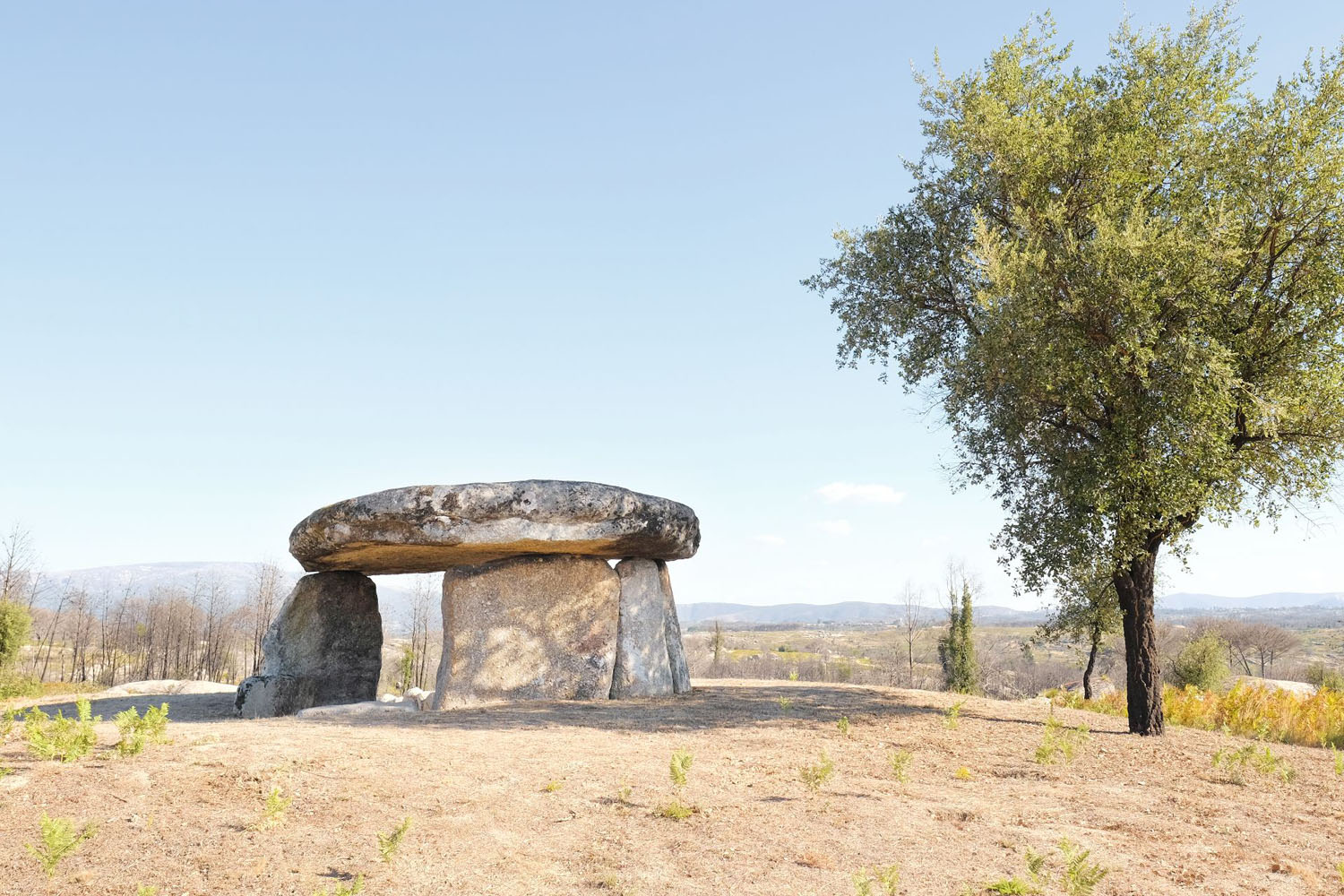
Its story stretches back far beyond what you can see. Archaeologists have found traces of Neolithic and Bronze Age settlements here, and Roman ruins still stand in Bobadela, just a short drive from the town center. You can walk through that ancient site, see the outline of an amphitheater, the arches still marking where people once gathered. It’s humbling to stand there, on ground that has held so many lives before yours.
Later came the Visigoths, the Moors, and the medieval orders. The town’s name tells part of the story. “Oliveira” for the olive groves that once covered these hills, and “do Hospital” for the knights of St. John of Jerusalem, who established a commandery here centuries ago. Even now, the rhythm of olive oil still shapes the land and its people.
Where the rivers meet
If you follow the roads out of town, you’ll reach the valleys of the Alva and Alvoco rivers. This is where Oliveira do Hospital really reveals its heart. Water cuts through the landscape, curving between terraces of green, feeding small orchards and villages that cling to the slopes.
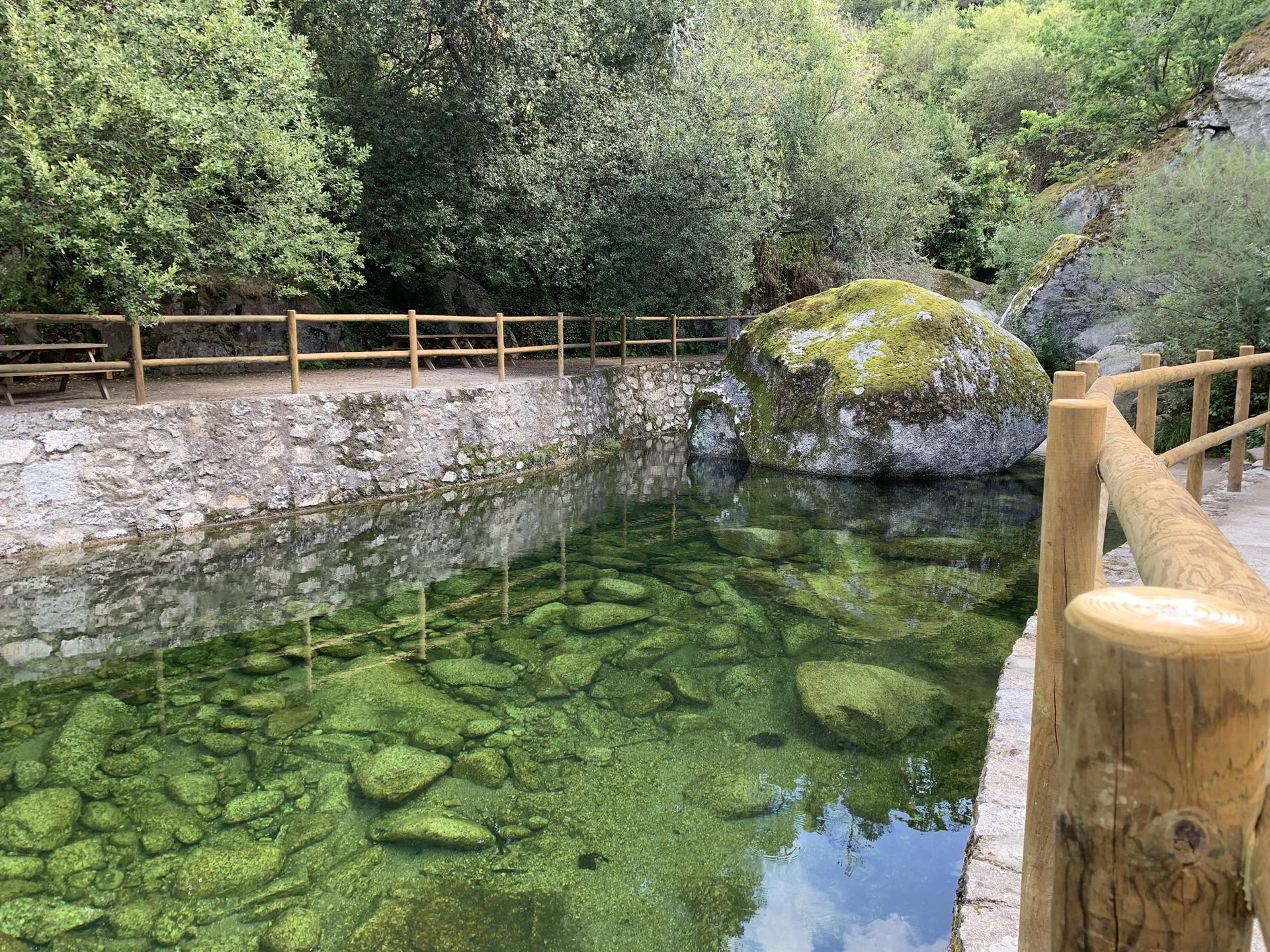
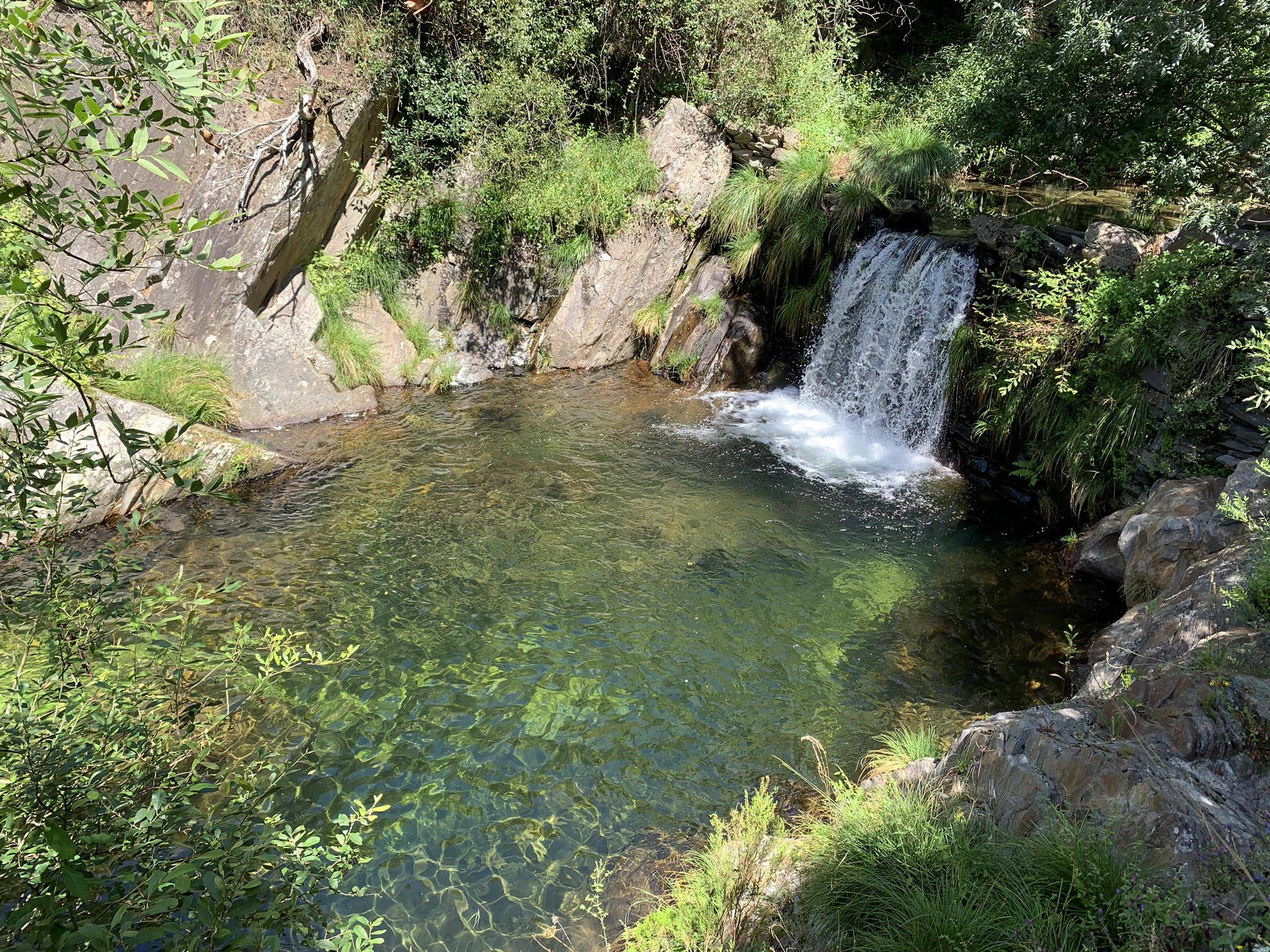
The village of Avô is one of the prettiest. It sits between two rivers, wrapped in stone and sunlight, with a Roman bridge arching gracefully across the water. On summer days, locals gather along the Praia Fluvial, a river beach shaded by willows, where children swim and old men sit in the shallows, chatting about the harvest. It’s the kind of scene that reminds you how Portuguese life often unfolds outdoors, slowly and without fuss.
Further along, in Alvoco das Várzeas, the landscape becomes wilder. The river there runs clear and cold, carving its way through granite boulders. Wooden walkways follow its path, and if you walk them early in the morning, mist rises off the water, and the only sound is the rush of the current.
There’s a feeling of wholeness in these places. The kind that doesn’t need anything to be added or explained.
The quiet grace of Lourosa
One of the most remarkable sites here is the Igreja de São Pedro de Lourosa, a Mozarabic church from the 10th century. It stands in a small village surrounded by fields and stone walls, its arches curved in a way that feels older than time itself.
I arrived in the late afternoon, when the sun was low and golden. The church was closed, but even from the outside, it was extraordinary. The carvings, the proportions, the way the stone caught the light. There’s something deeply human about places like this. You can sense the effort it took to build them, the care to preserve them.
Standing there, I thought of how the world changes and repeats, how faith, architecture, and endurance somehow find each other again and again.
Food that tells a story
Every region in Portugal has its own table, and Oliveira do Hospital is no exception. The cuisine here comes from the land, hearty and honest. In small restaurants or family-run tavernas, you’ll find dishes like chanfana (goat stew cooked slowly in red wine), roasted lamb, and rice made with pork ribs. The flavors are deep, rooted in old recipes that have outlasted the generations who made them.
Cheese from nearby Serra da Estrela is often served with local bread and honey. There’s olive oil, of course — golden and full-bodied, pressed from the groves that give the town its name. At the Museu do Azeite in Bobadela, you can learn the history of that tradition, from the Roman presses to the mills still operating today.
I stopped one afternoon in a café near the center. It was one of those places where the same few men sit at the counter every day, where the air smells faintly of espresso and conversation. I ordered a bica and a pastel de abóbora, a small pumpkin sweet that reminded me of autumn. The owner asked where I was from, and when I told her, she smiled and said, “Here, time walks slower.” She was right.
Villages with a pulse
What I love about this part of Portugal is how the villages still hold their pulse. In Póvoa de São Cosme, slate houses line narrow lanes, their doors painted in soft blues and greens. In Meruge, women sweep the cobblestones in front of their homes, chatting across the street. Every corner feels lived in.
These are places built by hand. You can see the craft in every wall, in the way roofs are stacked and stones fit together. Some homes have been restored for tourism, others remain untouched, keeping the marks of another time.
The rhythm is simple: morning light, a walk to the fields, lunch at home, quiet evenings. There’s a humility to that kind of life, and a wisdom too.
The land itself
Oliveira do Hospital sits at a crossroads of geography. To the east, the Serra da Estrela rises, with its rocky peaks and grazing flocks. To the west, the terrain softens toward the Dão wine region. Between them, this municipality unfolds like a map of Portugal’s soul — green valleys, stone terraces, rivers that carve and feed, villages that echo the patience of time.
It’s easy to understand why people stay here, why families hold onto land that might not be rich, but is deeply theirs. There’s generosity in the soil. You feel it in the taste of a tomato, in the scent of freshly pressed olive oil, in the rhythm of local festivals that celebrate harvest and community.
In summer, the air carries the smell of pine and sun-warmed stone. In winter, smoke curls from chimneys, and the hills turn a deeper shade of green. Each season feels like its own story.
A place to slow down
Traveling through Oliveira do Hospital isn’t about ticking off attractions. It’s about letting the landscape settle into you. Walking the same streets more than once. Sitting by the river with no reason to leave. Watching how life moves at a pace that feels right.
When you stay here, you start to notice small things. The way light filters through grapevines in the late afternoon. The sound of a church bell echoing down a quiet street. The smell of bread baking in the morning. These are not dramatic moments, but they’re real.
And maybe that’s what this place teaches best: how to live without rushing. How to find meaning in stillness.
If you go
You can reach Oliveira do Hospital easily by car from Coimbra or Viseu. The roads wind through valleys and forests, and along the way you’ll catch glimpses of river bends and distant peaks.
Stay in a rural guesthouse if you can. There are several charming options, from stone cottages near Avô to boutique hotels with views of the Serra da Estrela. The hospitality is genuine, the kind that makes you feel less like a guest and more like a visitor expected home.
Visit the Roman ruins in Bobadela, the church in Lourosa, the olive oil museum, and the river beaches in Alvoco or Avô. Walk the small trails, try the local food, and talk to people. They’ll tell you about their land, their families, and their seasons.
Spring and early autumn are ideal. The weather is gentle, the fields alive with color. Summer brings heat and laughter, and winter wraps the hills in mist. Each time of year changes the tone, but the soul of the place remains the same.
The feeling you take with you
I left Oliveira do Hospital with the sense that I’d stepped into a story that doesn’t need an ending. It’s a place that continues quietly, whether you’re there or not. Life moves slowly, the rivers keep flowing, and the stones keep holding the warmth of the sun.
What stays with you is not just what you saw, but how it felt to be part of that rhythm, even for a short while. To walk streets where time stretches, to breathe air that smells of earth and wood smoke, to feel that rare, rare thing — presence.
That’s Oliveira do Hospital for me. A quiet heart of Portugal. A reminder that the beauty of a place isn’t always loud. Sometimes it just sits, waiting for you to stop long enough to notice.