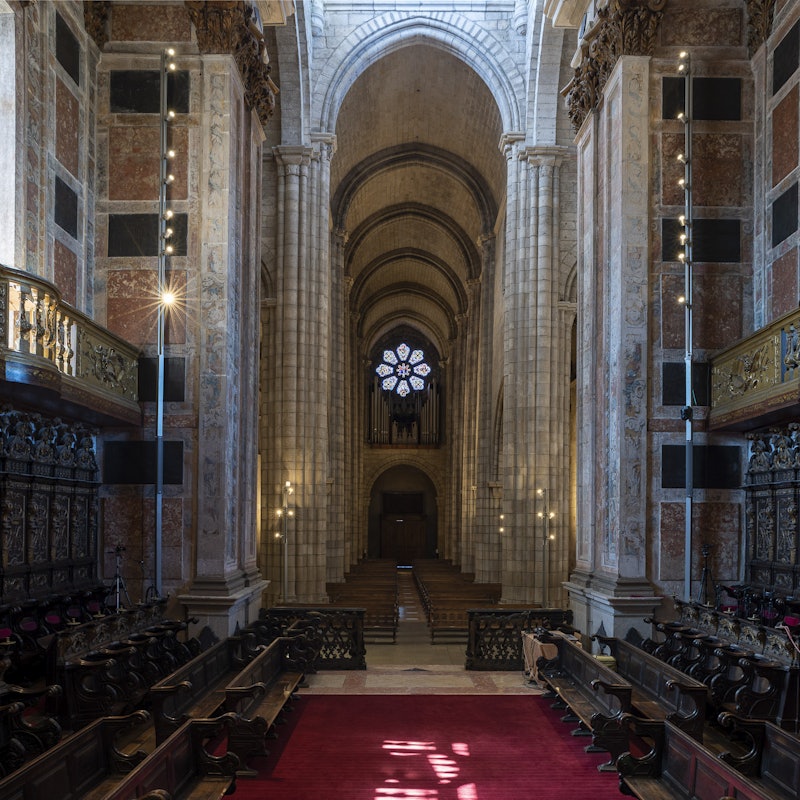
Évora, one of the country’s most beautiful cities, is located deep in southern Portugal’s sun-drenched Alentejo province. Although the Romans established themselves here in 57 BC, it was during Moorish control that the town took shape, with its maze of tiny streets and alleyways characteristic of Islamic urban architecture. The Sé, Évora’s magnificent cathedral and one of the numerous outstanding visitor attractions in the ancient town, was built during the Christian reconquest.
Consecrated in 1204, this famous ecclesiastical structure combines Romanesque, Gothic, and Baroque styles, and visitors may pop up to the top for great views of the surrounding area after viewing the interior.
The Roman Temple, Évora’s most recognisable landmark, lies nearby. This is the most magnificent Roman structure in the nation, dating from the second or third centuries AD. Indeed, Évora’s historic heritage is so significant that it has been designated a UNESCO World Heritage Site.
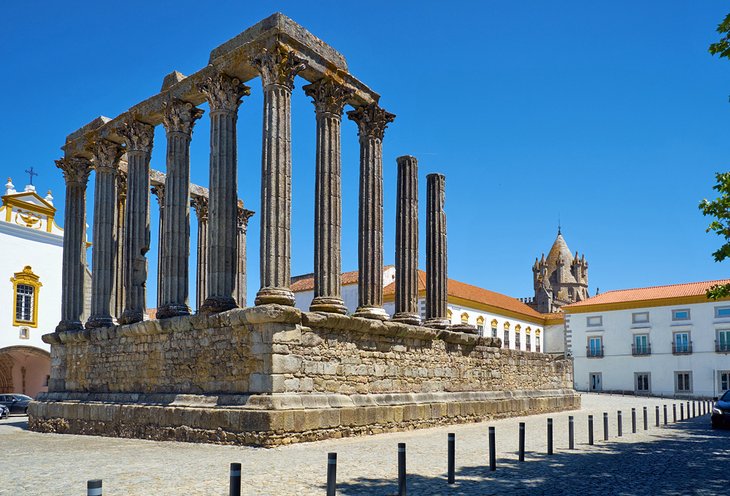
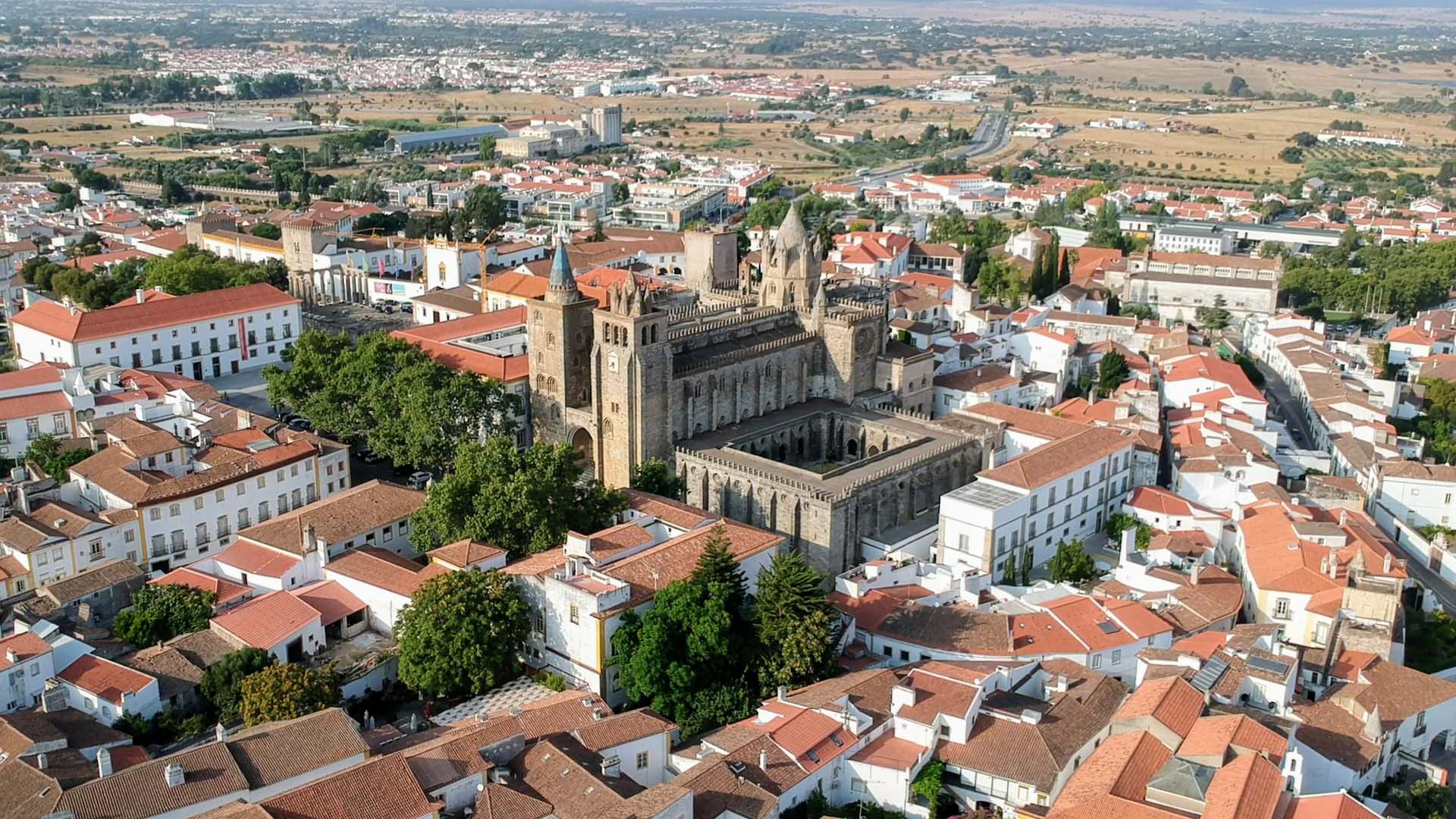

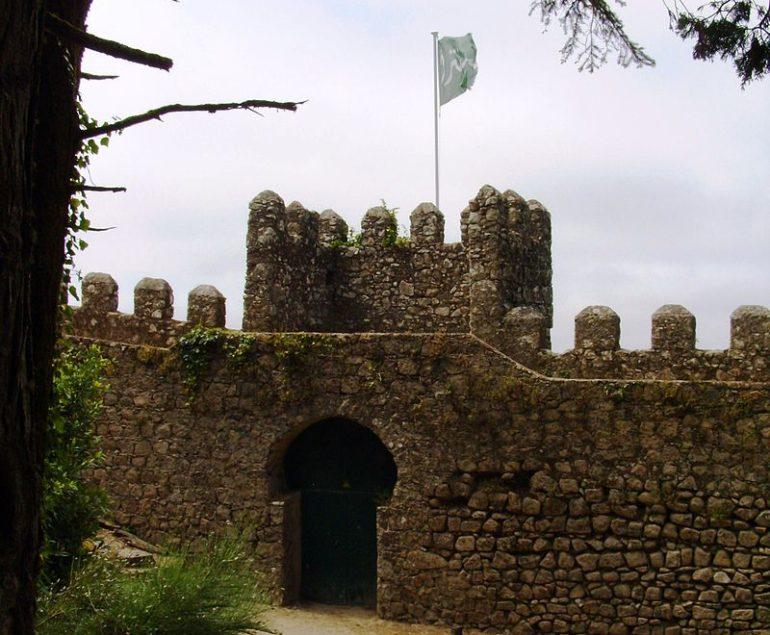
The Historic Centre of Évora, capital and seat of the Alentejo Province, has been moulded by almost two centuries of history, dating all the way back to Celtic times. It was conquered by the Romans and contains the remnants of the Temple of Diana, among others. The Christian city inhabited the surface area enclosed by the Roman wall during the Visigoth era, which was later renovated. Under Moorish rule, which ended in 1165, additional modifications to the initial defensive system were constructed, as shown by a fortified entrance and the ruins of the old Kasbah. There are several mediaeval structures, the most well-known of which is the Cathedral, which was constructed in the 13th century. However, it was in the 15th century, when the Portuguese monarchs began to visit Évora on a more regular basis, that Évora entered its golden era. At that time, convents and royal palaces sprung up everywhere: St Claire Convent, the royal church and convent of San Francisco, not far from the same-named royal house, and Os Lóios Convent, which is next to the São João Evangelista Church. These are notable monuments that were either totally new structures or additions to older structures and are characterised by the Manueline style that persisted in the 16th century’s main works.
Évora became Portugal’s second city in 1553 when the University of the Holy Spirit was founded. However, the university’s precipitous downfall began in 1759, when the Company of Jesus was expelled by minister Marquis of Pombal.
Évora is also noteworthy for reasons unrelated to its magnificent legacy associated with major historical events. The sixteenth-century saw extensive urban development and considerable intellectual and religious impact. While Évora also contains a number of notable sixteenth-century aristocratic homes (Cordovil House, Garcia de Resende House), the city’s distinctive quality stems from the coherence of the city’s minor architecture from the sixteenth, seventeenth, and eighteenth centuries. This homogeneity is exemplified by the numerous modest whitish buildings adorned with Dutch tiles and wrought-iron balconies and topped with tile roofs or terraces that line narrow mediaeval alleys and bore evidence to the town’s concentric expansion until the 17th century. Additionally, it served to reinforce the essential unity of an architectural style that is well suited to the climate and location.
Évora was mostly unaffected by the great earthquake that struck Portugal in 1755, destroying numerous towns, including Lisbon. The monuments in Évora’s Historic Centre attest to their significant effect on Portuguese architecture in Brazil.
Criterion (ii): The cityscape of Évora’s Historic Centre provides a unique setting for appreciating the influence of Portuguese architecture in Brazil, as seen by places such as Salvador de Baha’s Historic Centre.
Criterion (iv): Évora’s Historic Centre is the greatest surviving example of a city from Portugal’s golden era following the devastation of Lisbon by the 1755 earthquake.
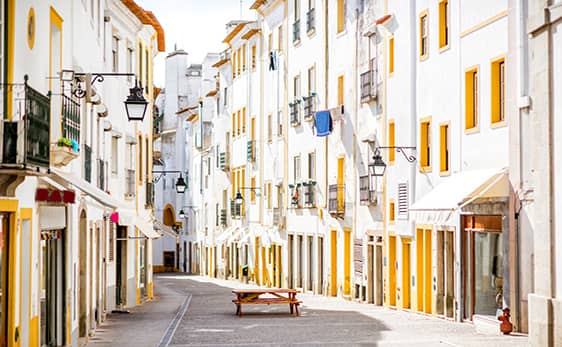
Since the 2nd century B.C., Évora has been inhabited. It was the royal home for lengthy periods of time during the Middle Ages, and it acquired importance in the 16th century when it was elevated to the status of an ecclesiastical city. Despite considerable urban changes throughout the ages, Évora nevertheless bears witness to a variety of aesthetic forms.
Despite rapid population expansion, which necessitated the building of new quarters to the west, south, and east, the Historic Centre of Évora has kept its features within the Vauban-style wall erected in the 17th century according to the plans of French engineer Nicolas de Langres. In addition, the road network created around the city walls in the twentieth century has aided in their preservation. The general integrity of Évora has been preserved in terms of both individual monuments and the townscape. The rural terrain to the north has mostly stayed unaltered.
Megalithic Monuments
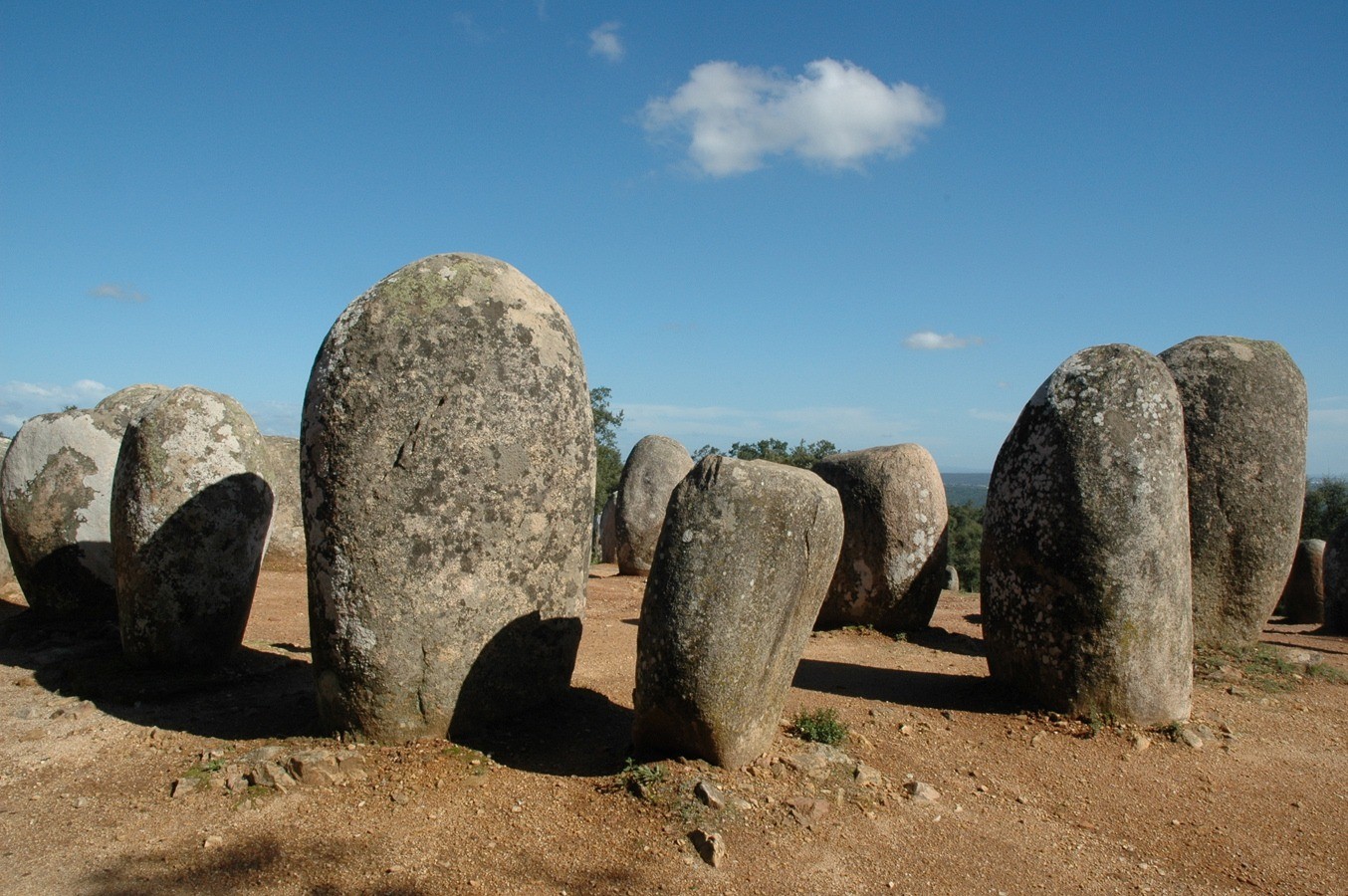
Because of its natural qualities, man has lived in the Evora region from prehistoric times. As a result, this is another reason to visit Evora and its distant past, which has earned it the title of Iberian Megalithic Capital.
Anta Grande do Zambujeiro (dolmen), Cromeleque dos Almendres (cromlech), and Menir dos Almendres (menhir) are only a few of the prehistoric remains near Evora that are part of the Megalithic Circuit. To supplement your tour, travel to the Megalithica Ebora interpretive centre at Convento dos Remédios, where you will learn about two important phases in the construction of Evora, the megalithic period and the Roman period.