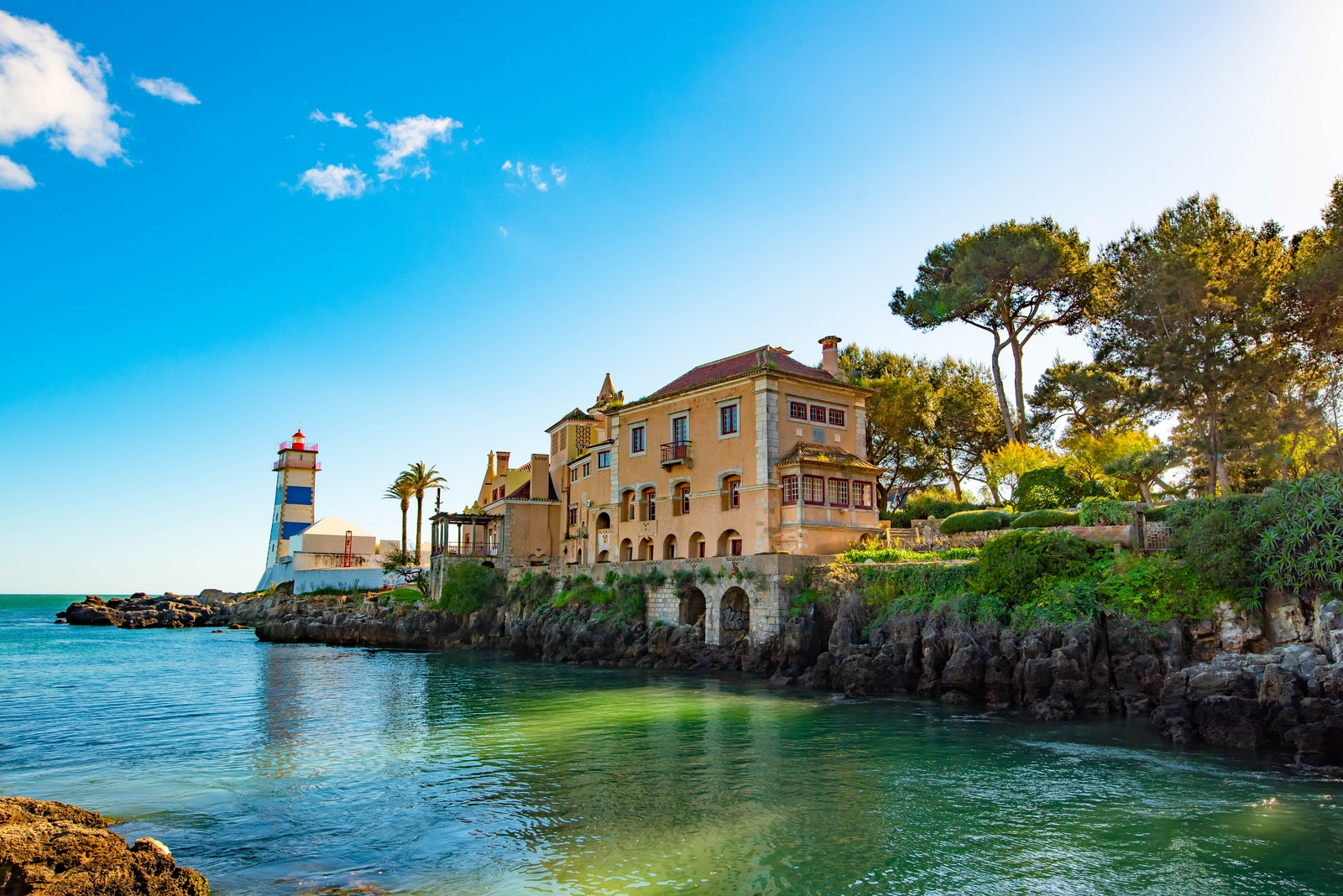
As soon as visitors to Setúbal begin exploring this colourful and active city, they shrug off its image as a busy industrial port. Setúbals connection with the sea is instantly obvious since it is located on the north bank of the River Sado, close to the estuary’s mouth. The wide Atlantic Ocean spreads out towards a steel-blue horizon from the castle high above the port.
Churches in the old town are clad with pleated stone that resembles a twisted rope. Restaurants around the waterfront sell iconic meals like choco frito, which is deep-fried cuttlefish seasoned with garlic and lemon juice. The estuary is a designated natural reserve that is a popular wintering spot for spirited dolphins and other species.
Hikers may explore the stunningly barren Serra to the west of the city, where they’ll find secret chapels and mediaeval castles nestled among emerald woods and fields of flowers. A chic resort on the other side of the harbour serves as the entrance to a quiet peninsula with golden beaches and small lagoons. They cultivate and fish like the Romans did here, and village life is a world away from the metropolis over the sea.
Castelo de São Filipe

The town’s castle dominates the skyline above Setúbal. The fort was constructed under Philip II of Spain’s instructions in 1595, and it is based on a star-shaped design created by Italian military architect Filippo Terzi. Also from Italy, architect Leonardo Torriana ensured that everything was in order.
The fortified fortification was built during the Spanish era to keep out pirates and English invaders. Heavy, more durable walls were constructed after the Portuguese Reconquest, as was a stone tunnel leading to the interior.
Tourists now besiege the castle, either to playfully scramble over the aged bastions or to stay at the pousada, an expensive inn built on 16th-century drawings.
It’s worth taking a look at a little church with intricately crafted tiles. The breathtaking vista of Setúbal, the glistening Sado estuary, and the distant Tróia peninsula, however, is the true lure.
Reserva Natural do Estuário do Sado
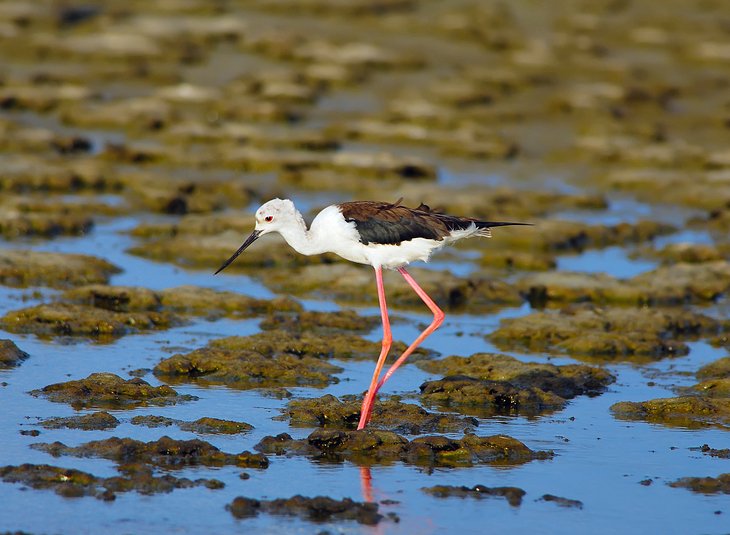
The Sado Estuary Natural Reserve attracts ornithologists. Around 220 bird species have been reported in open water, small lagoons, reed beds, and on the mudflats of the 23-hectare nature park.
The estuary is a popular wintering spot for a variety of birds, including razorbills, marsh harriers, flamingos, purple herons, and black-winged stilts. (For the finest picture opportunity, serious birders should visit between October and February.)
The area is home to fox, badger, mongoose, and the secretive genet. Most tourists, however, are captivated by the native bottlenose dolphin population. The estuary is their preferred site since it provides both food and shelter.
Address: Porto de Abrigo de Sesimbra, Avenida dos Náufragos, Sesimbra
Museu de Arqueologia e Etnografia

This little museum specialises in archaeology and is known for its lively ethnographic collection. Simple stone tools from the Paleolithic period are among the first artefacts on display in the permanent exhibition, which dates back to antiquity. Bronze Age pottery and Roman coins are more visible. A number of amphorae are on show, and the mosaic panels, which were also created by Romans, are one of the museum’s attractions.
The remarkable 19th-century devotional paintings on wood representing divine visions and miracles should also be noted. The majority of the eccentric ethnographic show is made up of local and regional arts, crafts, and industries – the traditional costumes are amusing, and the collection of ships and watercraft is the envy of any scale model boat lover.
Address: Avenida Luisa Todi 162, Setúbal
Igreja de Jesus
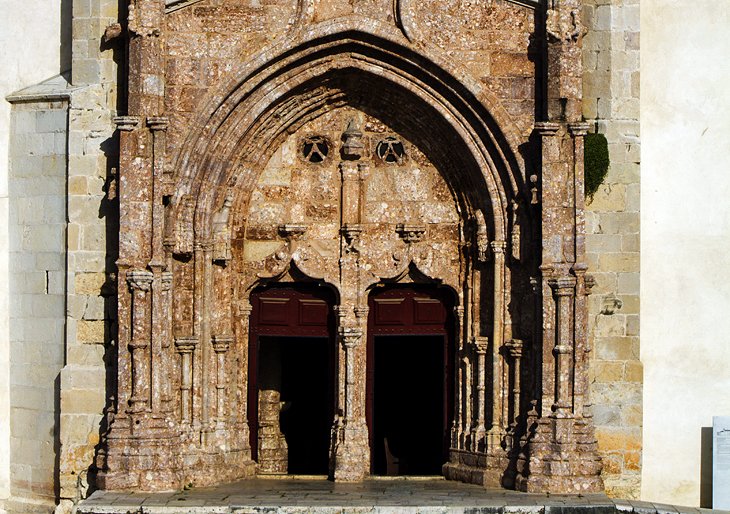
The filigree stonework that decorates this chapel will captivate fans of Manueline architecture. The monastery, which stands alone to the north of the old town, is one of the earliest structures in Portugal to be constructed in the Manueline style, a Portuguese form of Late Gothic that thrived during Manuel I’s reign in the 16th century.
The church, which was built in 1494 by architect Diogo Boitac, is a fitting tribute to the rising trend of using marine elements in architecture, such as plaited colonnettes that resemble twisted rope, which was inspired by Portugal’s Age of Discovery. If you imagine it, the internal columns may be huge lollipop sticks, and the elaborate ribbed vaulting could be a giant spider’s web embellishing the ceiling.
The nearby monastery has been converted into a museum with a notable collection of Portuguese and Flemish paintings from the 15th and 16th centuries. The 14-panel portrayal of Christ’s life by Jorge Afonso is the show’s centrepiece.
Location: Praça Miguel Bombarda, Setúbal
Castelo de Palmela
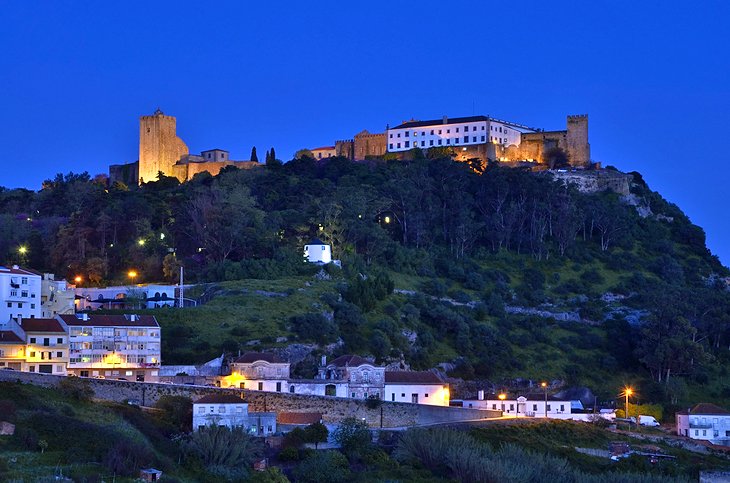
Before Christian armies ultimately took it, the Moors defended it with terrifying fury, and the fortress at Palmela has remained in remarkable good condition since the 12th century. The stronghold, which is strategically located above this charming hill town, was given a makeover in 1423 by King João I, who extended and fortified the walls before converting much of the structure into a monastery.
Today, it is a beautifully magnificent pousada, a historic hotel. The castle’s powerful ramparts may still be examined, and tourists can climb the 14th-century keep for views of the surrounding Serra da Arrábida, including distant Lisbon on a clear day. Wait until dark, when floodlight bathes the castle walls in a copper wash, for the greatest photos of the castle.
Parque Natural da Arrábida
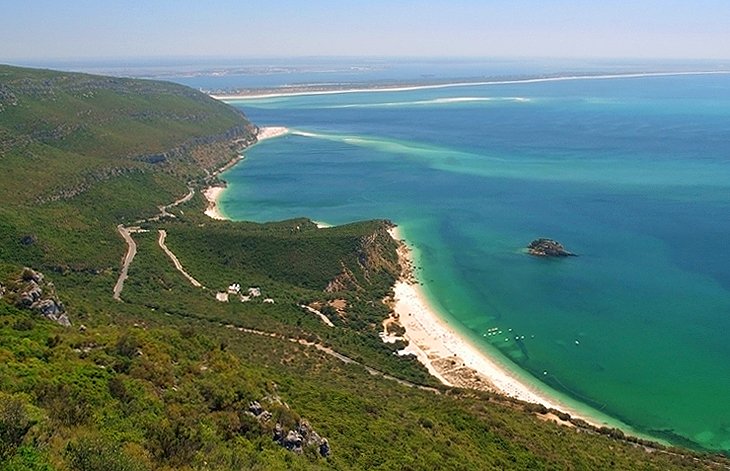
The Serra da Arrábida Natural Park combines a lush stretch of picturesque farmland with a stunning Atlantic Ocean shoreline in a wild and undulating landscape. The stunning backdrop is one of the area’s greatest natural attractions, consisting of a pristine terrain rich in cork, pine, and eucalyptus woods, thickets, meadows, and blankets of scented bushes.
Hikers will have a delight following the well-marked trails. Cyclists will like the vacant streets and hidden nature paths as well. The coastal nature of Arrábida is defined by precipitous limestone cliffs, secret caves, and half-moon coves. Sunbathers are drawn to pockets of golden sand, while scuba divers, snorkelers, and other water sports aficionados are drawn to the crystal-clear sea.
Portinho da Arrábida is a popular site that can only be reached by car along a steep, narrow road. Its teeny-tiny beach looks out over Pedra da Anixa, a rocky outcropping. The Museu Oceanográfico, a remarkable Sea Museum and Marine Biology Center situated in the 17th-century Fortaleza de Santa Maria, lies nestled above the village.
The park’s harsh and untamed landscape begs to be explored thoroughly, and the best way to do so is to join an organised Land and Sea Tour of Arrabida National Park. This operator follows health regulations by providing gloves, masks, and disinfection.
Address: Museu Oceanográfico, Fortaleza de Santa Maria, Portinho da Arrábida
Explore nearby Sesimbra
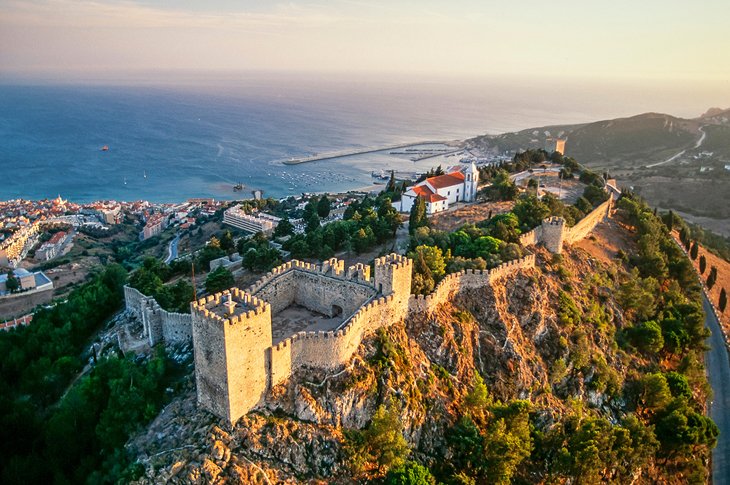
Sesimbra, about a 40-minute drive from Setúbal, is located in a protected south-facing harbour beneath the hills of the Parque Natural da Arrábida. The town features a picturesque old centre — a maze of cobblestone streets radiating around the 17th-century Fortaleza de Santiago, originally the seaside palace of the Portuguese monarchs — that combines fishing village charm with a bustling, seasonal resort ambience. During the day, the fort’s attractive terrace is available to the public.
The esplanade, which runs parallel to a big sandy beach, is dotted with a variety of cafés and one or two great seafood restaurants and makes for a delightful stroll. The fleet of fishing boats floating in Sesimbra’s harbour, the Porto do Abrigo, exemplifies the city’s dynamic personality.
The hike up to the reconstructed Moorish castle, which sits high above the town, is another worthwhile activity in Sesimbra. The spectacular panoramic views from the robust battlements are well worth the arduous trek, and there’s a café to unwind in afterwards.
Convento da Arrábida
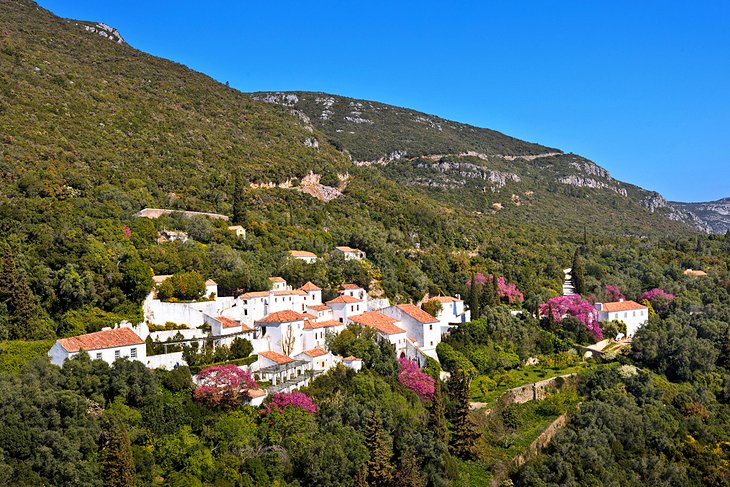
This 16th-century monastery is half-hidden amid the trees of the Serra da Arrábida, providing the most exquisite setting of any tourist destination in the area.
The whitish cluster of buildings with terra-cotta roofs, which was founded in 1542, really surrounds two monasteries. The remains of the ancient convent are located on the topmost portion of the hillside and are in a terrible state of decay; the later structure, which is in considerably better condition, is located further down the slope.
The stunning views from the newer Franciscan retreat, which overlooks the Atlantic Ocean, are motivation enough to visit this remote location. A visit of the grounds, on the other hand, would discover four chapels and a number of tower-like shrines, which are likely utilised for meditation. There are also a number of cells carved out of limestone rocks that may be viewed.
The inside of the monastery is nondescript for the most part, save for the gilded woodwork and azulejo (tile) panels that adorn the walls.
Address: Serra da Arrábida, Azeitão
Península de Tróia
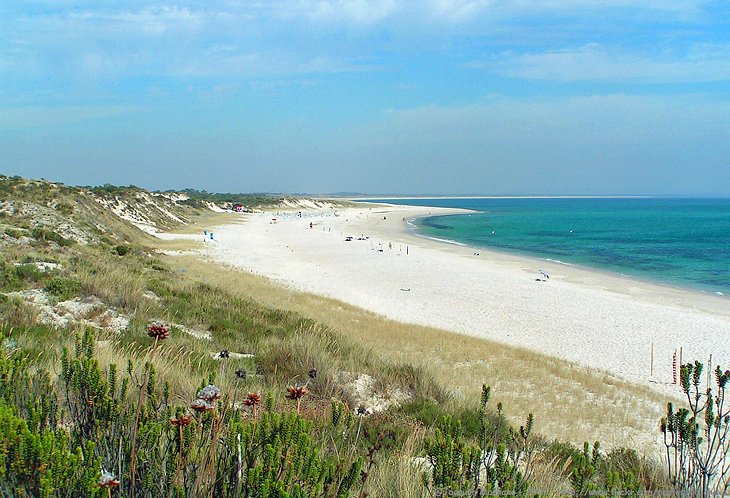
The long, narrow Tróia peninsula, located in the Alentejo area, sits just across from Setúbal. This appealing site, easily accessible by automobile or passenger ferry, boasts the greatest beaches in the area: swaths of golden sand on the western edge span the whole length of the spit.
Tróia, an exclusive resort with hotels, residences, a marina, and a neighbouring golf course, is located at the northern extremity of the island. The boardwalk is lined with chic cafés and bistros.
Traditional fishing villages dot the peninsula’s eastern flank, which overlooks the warm, shallow waters of the protected Reserva Natural do Estuário do Sado, a haven for birdlife and schools of friendly bottlenose dolphins that can be seen during specialised sightseeing cruises that depart from the Tróia pontoon.
Rice paddies can be found growing alongside reed beds and wetlands. The Romans felt at ease here and established Cetóbriga as a fish farm. Comporta, farther south on the peninsula’s heel, is noted for its nesting white storks and one of Portugal’s best beaches, with a selection of wood-decked eateries specialising in grilled fish and shellfish.
Cetóbriga
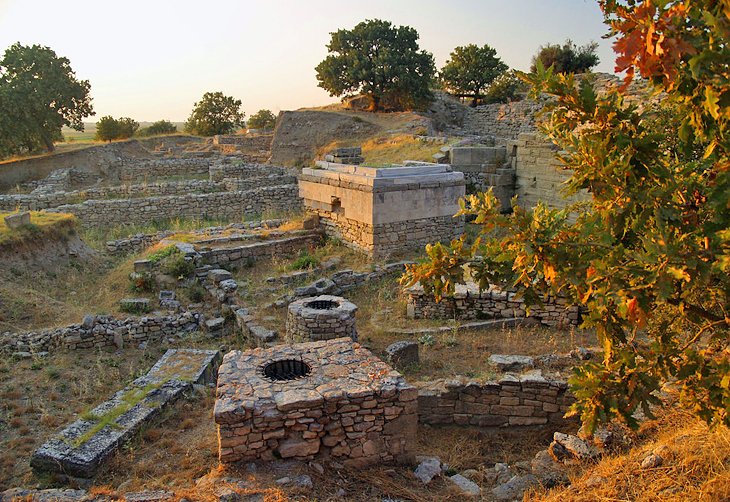
Cetóbriga was created by the Romans in the late third century AD to develop a fish-salting enterprise, and the town prospered. The stone tanks used in the operation, as well as the foundations of the many buildings and businesses that rose up in and around the town centre, can still be seen. There are also the remnants of baths, villas, and tombs, as well as patchy mosaic and marble lining.
Cetóbriga was a bustling harbour, and while the companies that made condiments have vanished, remnants of the columns that supported the roofs may still be seen.
The town’s history and the industries that brought it fortune are explained on information panels in Portuguese and English, which add to the tourist experience.
Artist’s impressions depict how the complex might have appeared and aid in the recreation of what was surely a thriving and ambitious community.