Tucked deep in the folds of the Serra do Açor mountains, Benfeita feels less like a destination and more like a whisper. It’s one of those Portuguese villages that hides from the world on purpose — a place where time moves slower, the air smells of pine and stone, and every footstep seems to echo against history.
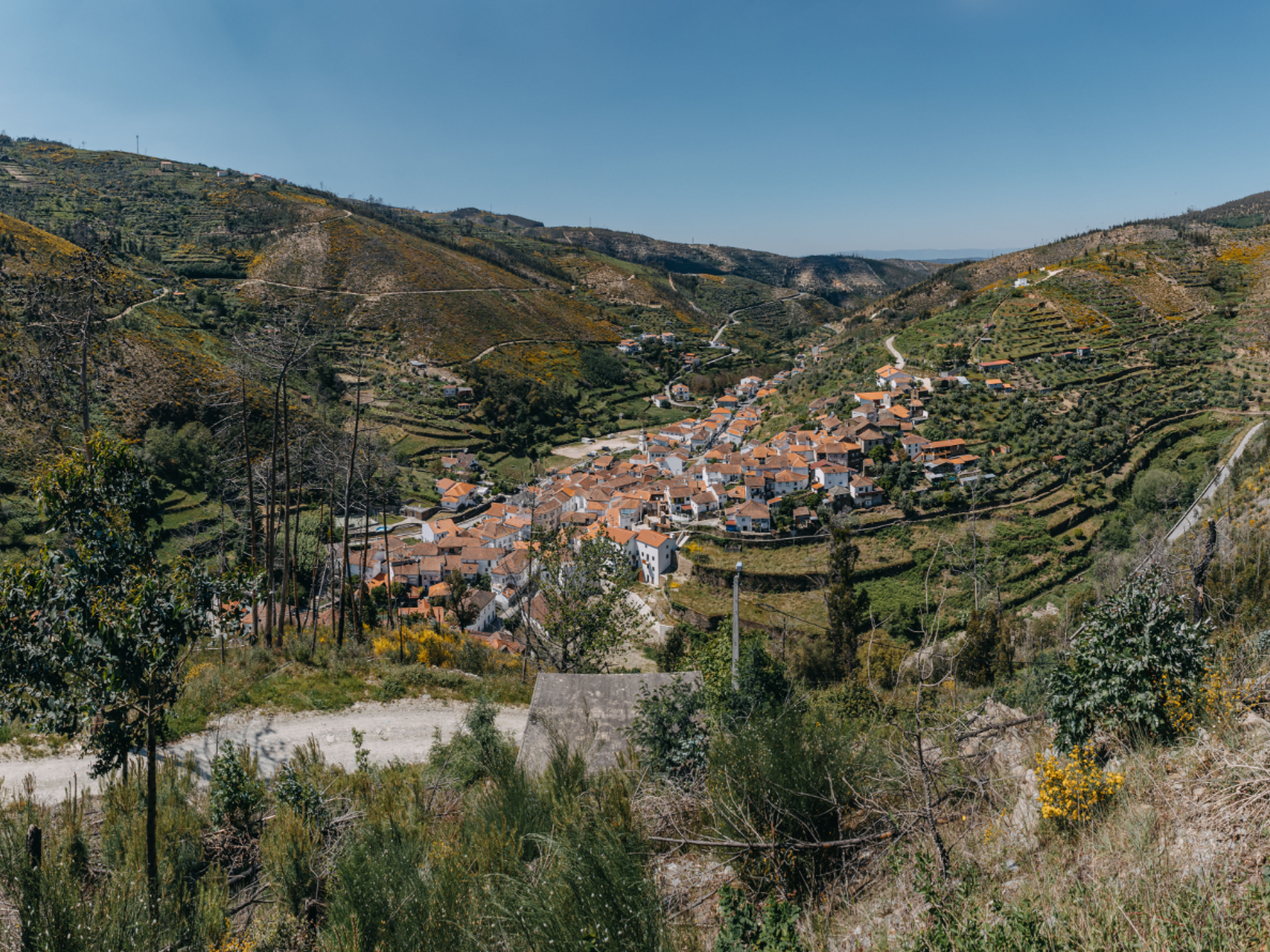
I first saw Benfeita from the bend of a mountain road, a scatter of whitewashed houses nestled into a lush green valley, their slate roofs glinting under the sun. The road down wound sharply, tracing the contours of the hillside until the sound of running water grew louder — the Ribeira de Mata da Margaraça cutting its path through the village like a vein of life.

A Village That Greets You with Stillness
Benfeita belongs to the Aldeias do Xisto network — the Schist Villages — a cluster of remote mountain communities built from the same dark stone that shapes the hills around them. Each one has its own rhythm, but Benfeita has a softer voice. It’s quieter, more introspective, as if it has chosen contemplation over celebration.
Walking through the village, you notice how the houses cling to the slope, how narrow cobbled lanes twist and rise toward little squares shaded by fig and cherry trees. Laundry hangs from balconies, cats sleep on the walls, and the only sound is the constant murmur of water — the sound that defines Benfeita.
It’s here that the Peace Tower stands, a slender white monument built in 1946 to commemorate the village’s remarkable distinction: during World War II, not a single life was lost to the conflict. Each year on May 7th, the village rings its bells 162 times — once for each day that the war lasted — to honor peace and memory. It’s a ritual that feels profoundly Portuguese in its simplicity and sincerity.
Water and Stone: The Soul of Benfeita
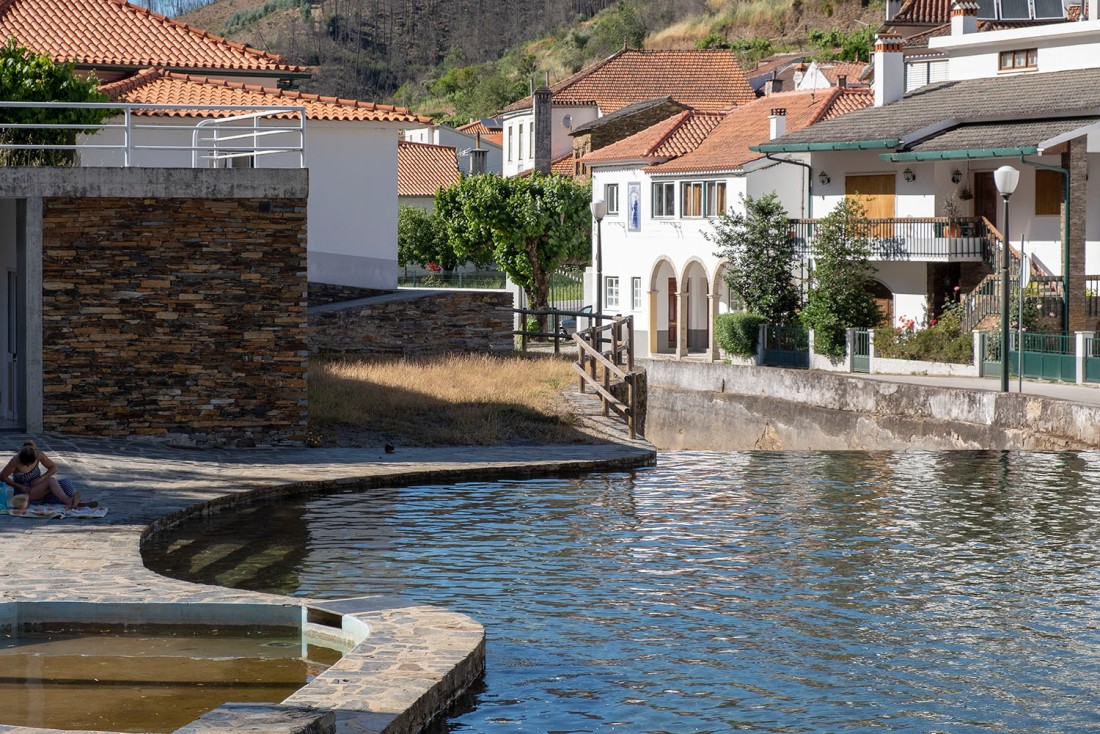
The village’s lifeblood is its water. You can follow its journey — from the moss-covered fountains at the edge of the forest, to the channels that run beneath old bridges, to the river that swells into natural pools where locals cool off on summer afternoons.
On my first morning in Benfeita, I followed the sound of water upstream, passing the public washhouse where women once gathered to scrub clothes and exchange news. Beyond that, the path turned into a dirt track, leading me deeper into the green — toward Fraga da Pena, one of Portugal’s most beautiful waterfalls.
The air grew cooler as the forest thickened. Chestnuts, oaks, and ferns created a cathedral of shade. And then, suddenly, the forest opened to reveal the waterfall — a silver curtain cascading from a rocky cliff into a clear pool below. The sound filled the valley, wild and endless.
There’s something ancient about this place. The stones are slick with moss, the air alive with mist, and you can’t help but feel small — like you’ve stepped into a secret that’s been kept safe for centuries.

Mata da Margaraça: The Forest of Time
A short walk or drive beyond the waterfall lies the Mata da Margaraça, one of Portugal’s last surviving examples of native Atlantic forest. It’s part of the Serra do Açor Protected Landscape, and walking here feels like entering another world.
The trail begins gently, then leads upward under a canopy of oak, hazel, and laurel. Birdsong replaces silence, and the scent of wet leaves follows you with every step. This is a living museum of what Portugal’s forests once were — dense, biodiverse, and full of small wonders.
The park is carefully managed, not as a manicured garden but as a preserved ecosystem. Fallen logs are left to rot and feed the soil; streams are allowed to meander freely. It’s wild, but in a balanced way — a reminder of how nature thrives when left to its own rhythm.
I stopped at one of the wooden bridges and looked down at the water, dappled with sunlight. It felt timeless. And in that stillness, I understood something about Benfeita — that its charm lies not only in its beauty but in its patience. Nothing here is hurried. Everything unfolds at its own pace.
Aldeias do Xisto: Stories Etched in Stone
Benfeita is part of a constellation of villages known as the Aldeias do Xisto, scattered across the Lousã and Açor mountain ranges. These places — Cerdeira, Candal, Talasnal, Piódão — share a visual language: narrow lanes, dark schist walls, and a deep connection to landscape. But their spirits differ.
Piódão draws the crowds, with its postcard-perfect symmetry of stone houses. Cerdeira attracts artists, offering workshops and residencies for those seeking creative solitude. Benfeita, though, feels different — quieter, more spiritual, more lived-in. It’s not performing for visitors. It simply is.
Many of the houses have been lovingly restored by locals and foreign dreamers who fell in love with its quiet magnetism. You’ll see solar panels alongside centuries-old slate roofs, organic gardens on terraces that once grew maize, and workshops tucked into old mills. The balance between past and present here feels right — respectful, grounded, and real.
Arganil: The Gateway to the Mountains
Just beyond Benfeita, about twenty minutes by car, lies Arganil, the small town that serves as a gateway to this mountain world. It’s not a tourist hub, but it has the conveniences travelers need — cafés, bakeries, and a weekly market that fills the air with the scent of roasted chestnuts and fresh bread.
Arganil also has history. Its central square, Largo do Município, is framed by elegant old buildings and a stone fountain that’s been flowing for centuries. On the outskirts, the ruins of Castle of Coja recall the region’s medieval past.
But more than landmarks, Arganil offers contrast — the gentle hum of daily life against the stillness of Benfeita’s valley. It’s where you stop for coffee after a morning hike or pick up supplies before heading deeper into the mountains.
Seasons of Benfeita
In spring, the hills burst with wildflowers and the air carries the scent of orange blossom. The river swells with melted rainwater, and the waterfalls are at their most dramatic.
Summer brings golden light and lazy afternoons. The river pools become natural swimming spots, and families gather under fig trees with baskets of bread and cheese.
Autumn paints the valley in shades of copper and red. Chestnut season begins, and you’ll hear the soft thud of nuts falling through leaves. It’s a season of gathering — both harvest and human.
Winter is quiet and raw. Mist rolls through the valley, fires crackle behind thick stone walls, and Benfeita retreats into itself. It’s beautiful in its stillness — introspective, almost meditative.
A Place That Teaches You to Listen
Benfeita isn’t about doing. It’s about being. You don’t come here for a checklist of attractions; you come to remember how to notice things again. The sound of a river at dawn. The smell of eucalyptus after rain. The way the mountains hold silence like a secret.
There’s a small café near the bridge where I stopped for coffee one afternoon. The owner, a woman named Teresa, told me she was born here but spent years abroad before returning. “People think nothing happens here,” she said, smiling, “but everything happens — just very quietly.”
And she’s right. The life of Benfeita unfolds in whispers — in the rhythm of tools against wood, in the laughter of neighbors sharing figs, in the toll of the Peace Tower’s bells. It’s a place that restores perspective, that reminds you how small we are in the best possible way.

Travel Tips
How to Get There:
Benfeita lies in the municipality of Arganil, in the Coimbra district. From Coimbra city, it’s about 80 kilometers — a scenic drive of roughly 1.5 hours. The most beautiful route winds through the EN342, passing through Coja before climbing toward the Serra do Açor.
Where to Stay:
There are several small guesthouses and restored schist cottages in and around Benfeita. Casa da Padaria and Casa do Rio are charming options, with views over the valley and the gentle sound of running water nearby. For more amenities, Arganil and Coja offer comfortable rural stays.
Where to Eat:
Benfeita’s few cafés serve simple, hearty fare — grilled meats, vegetable soups, and local wine. For a full meal, head to Arganil or Coja for traditional Portuguese dishes like chouriça assada, bacalhau com broa, and arroz de pato.
What to See Nearby:
-
Fraga da Pena Waterfall: Just 3 km away, this is a must-see natural wonder.
-
Mata da Margaraça: A preserved forest with marked trails and rich biodiversity.
-
Piódão: One of Portugal’s most famous schist villages, about 30 minutes away.
-
Arganil and Coja: Nearby towns offering local markets, churches, and cafés.
Best Time to Visit:
Spring and autumn are ideal — warm days, cool nights, and vibrant colors. Summer is perfect for swimming and hiking, while winter brings misty magic and fireside evenings.
Why Benfeita Stays With You
Benfeita doesn’t demand attention. It earns it slowly, through quiet gestures — the echo of water, the scent of moss, the sound of bells that remind a whole village of peace.
You leave not with a checklist completed, but with your senses tuned a little differently. The world feels quieter. Your thoughts, slower. And somewhere in that stillness, you realize that the best journeys aren’t about escape, but about return — to simplicity, to silence, to yourself.