Words by Rolando Silva
Introduction: Where Borders Breathe Stories
Travel through Central Portugal and you’ll notice how the landscape itself seems shaped for defence. Granite ridges rise like natural ramparts, valleys curl into shadowed corridors, and rivers slice deep gorges into the earth. Here, for centuries, Portugal’s very survival hinged on these frontier lands. To hold them was to hold independence. To lose them was to risk absorption into Castile.
Castles were built, rebuilt, and adapted across these contested landscapes. Each keep, tower, or ruined archway still whispers of battles fought and alliances sealed. But they are not just relics. They remain part of living towns and villages — often perched above cobbled squares or hidden within forgotten hamlets where time seems to have slowed.
Join us on a journey through 15 enchanting castles that shaped Portugal’s story of resilience and intrigue.
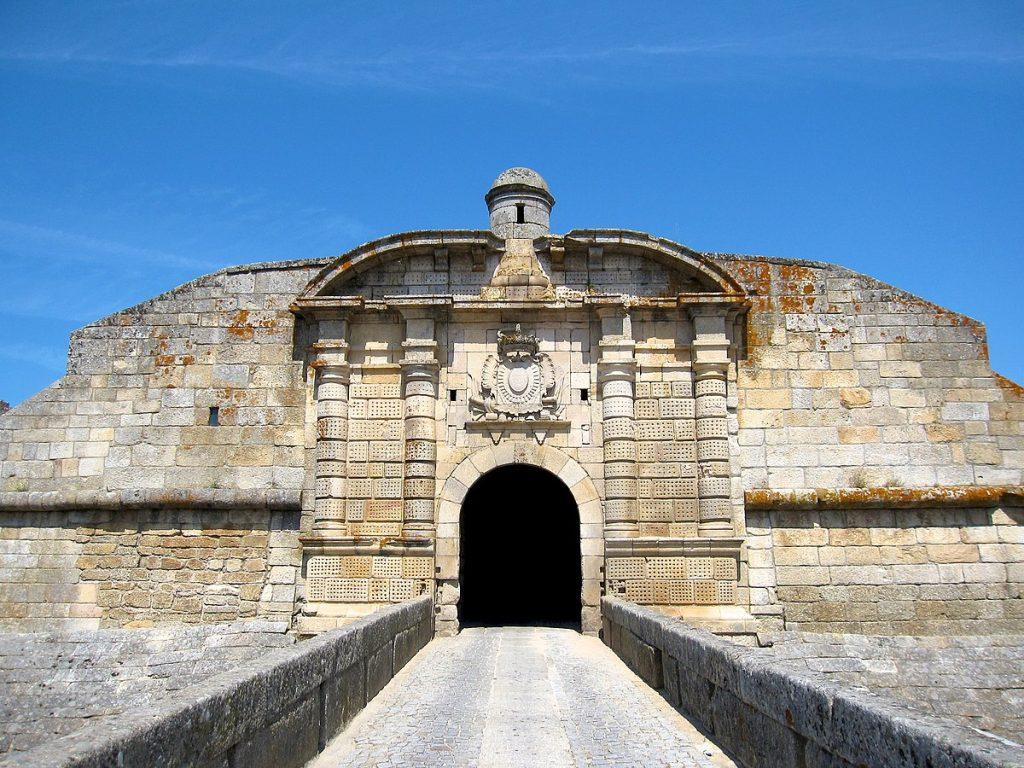
1. Almeida Castle – The Star Fortress
Few places capture the marriage of strategy and spectacle like Almeida. From above, its fortress unfurls in a perfect twelve-pointed star, bastions radiating into the plains. This was no ordinary medieval castle.
Almeida became one of Portugal’s most formidable strongholds during the 17th century, as Vauban-style defences swept across Europe. Yet its story stretches back further: medieval walls fortified against Castilian armies, Napoleonic troops besieged it in 1810, and devastating explosions ripped through its powder magazine.
“Stand on Almeida’s bastions at dusk and the frontier feels alive again — flatlands stretching endlessly towards Spain, silence heavy with memory.”
Today, Almeida is less ruin and more open-air museum. Walk the ramparts, explore underground galleries, and feel the echo of cannon fire where families now stroll.
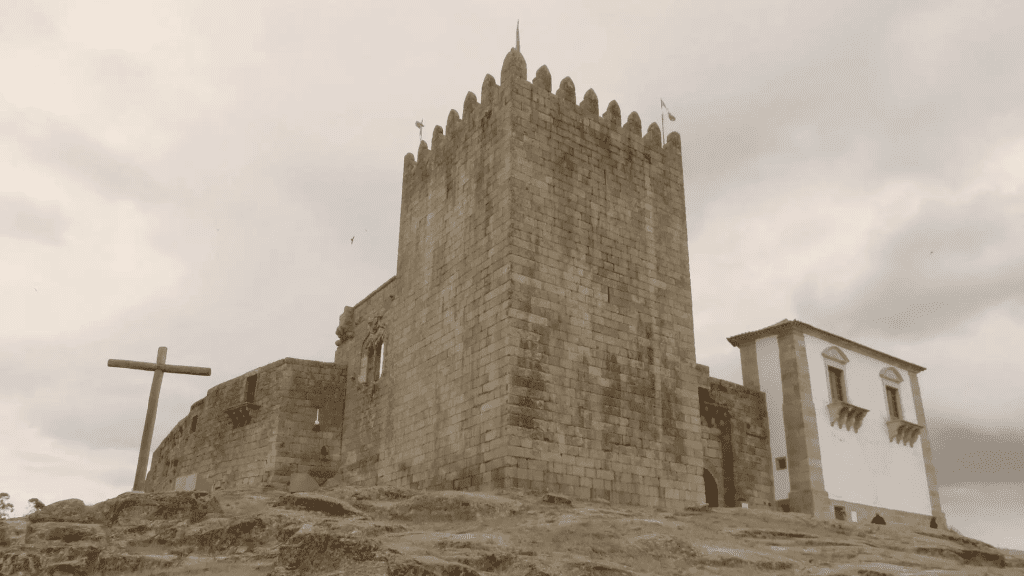
2. Belmonte Castle – Home of Cabral and the Secret Jews
Belmonte perches above a granite town famed for one of Portugal’s most extraordinary stories: a Jewish community that practised its faith in secret for centuries and only openly revealed itself after the 20th century.
The castle is tied to another legend — Pedro Álvares Cabral, the navigator who “discovered” Brazil, was born here. His coat of arms still adorns the keep. The walls themselves speak of resilience: destroyed in the wars with Castile, rebuilt, then scarred by neglect.
Today, Belmonte Castle stages cultural events, its rough granite tower glowing gold in late light. From here, you see the Serra da Estrela mountains, guardians of another kind of frontier — of altitude and stone.
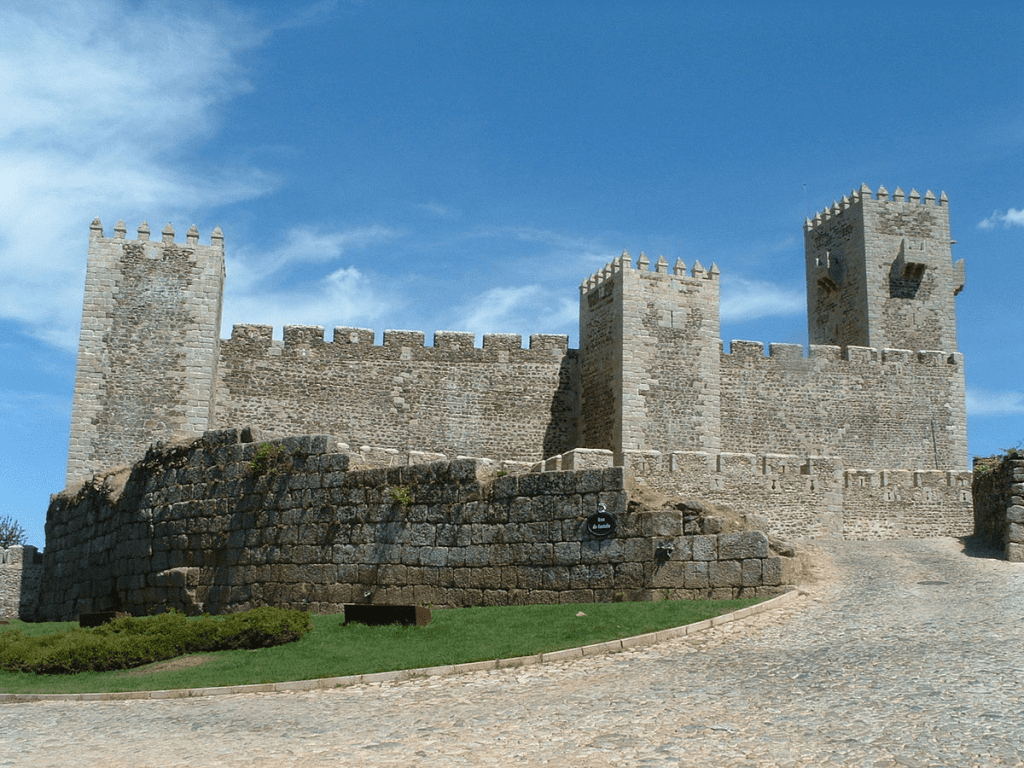
3. Sabugal Castle – The Five-Cornered Keep
Few castles are as distinctive as Sabugal. Its keep is not square, round, or rectangular, but pentagonal — five sides of stone rising above the Côa River. Scholars still puzzle over its design. Was it symbolic? Tactical? Or simply architectural experimentation?
Sabugal Castle, built in the 13th century, was fought over repeatedly in the wars with Castile. Later, it became a strategic location in border skirmishes during the Restoration War in the 17th century.
Today, the town embraces its fortress. Festivals spill into the square, children cycle past its walls, and visitors can climb the keep for a view that still commands the frontier.
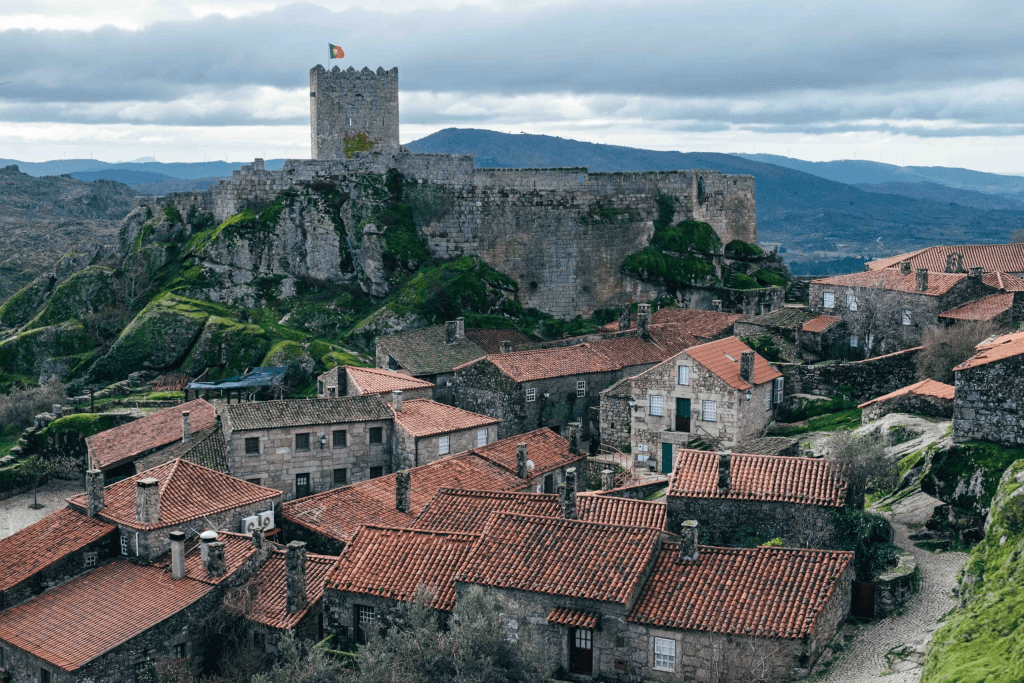
4. Sortelha Castle – A Granite Time Capsule
Enter Sortelha, and you step into another century. This walled village, encircled by granite battlements, is among Portugal’s best-preserved medieval towns.
The castle itself is partially ruined, its keep broken but still looming proudly over the clustered houses. What makes Sortelha enchanting is not just the stone but the silence. Wandering here, you feel time has slowed to a trickle.
“In Sortelha, the past doesn’t need to be imagined—it is lived in cobbled lanes, lichen-streaked walls, and the whisper of wind over battlements.”
Legends abound of sorceresses and tragic loves, but the real magic is standing at the parapet as evening paints the Serra da Malcata hills.
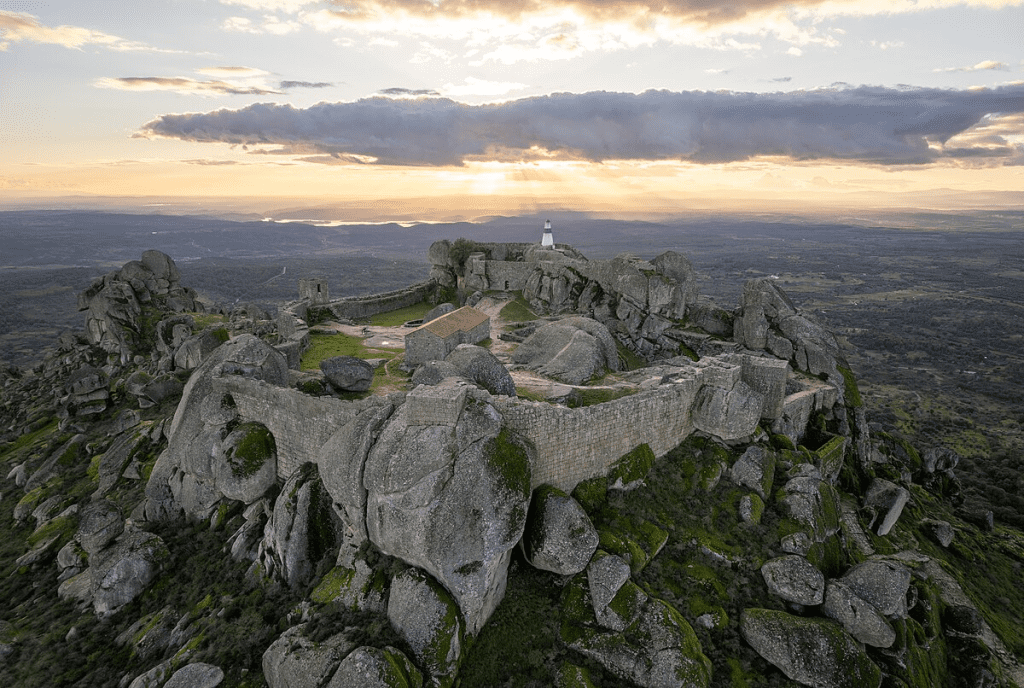
5. Monsanto Castle – Built Among Giants
Monsanto is often called “the most Portuguese village in Portugal”, and its castle feels grown out of the very rock. Perched high on a granite hill, its walls weave between colossal boulders the size of houses.
Here, defenders once rolled stones down on invaders, using nature itself as a weapon. The castle was a Knights Templar stronghold, later strengthened under King Dinis.
The climb is steep, but the view from the top—with rooftops nestled among rocks and plains stretching into Spain—rewards every step. Monsanto is proof that in frontier lands, man and nature built together.
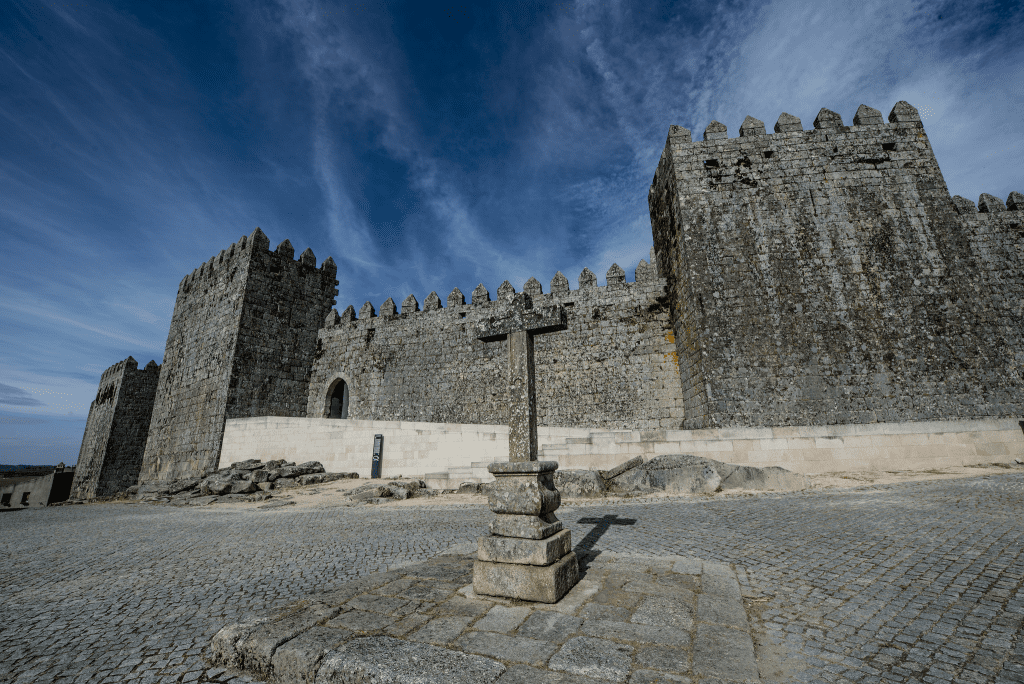
6. Penamacor Castle – A Sentinel of Silence
Once a critical defensive outpost, Penamacor Castle today is a lonely ruin. Its crumbling keep still rises above a town where traditions linger — festivals with bagpipes, narrow alleys scented with woodsmoke.
The castle’s history is turbulent: built in the 12th century, it was reinforced during wars with León and Castile, then gradually abandoned as artillery walls became obsolete.
Walking its ramparts, you sense the silence of centuries. The frontier is calmer now, but the stones remember otherwise.
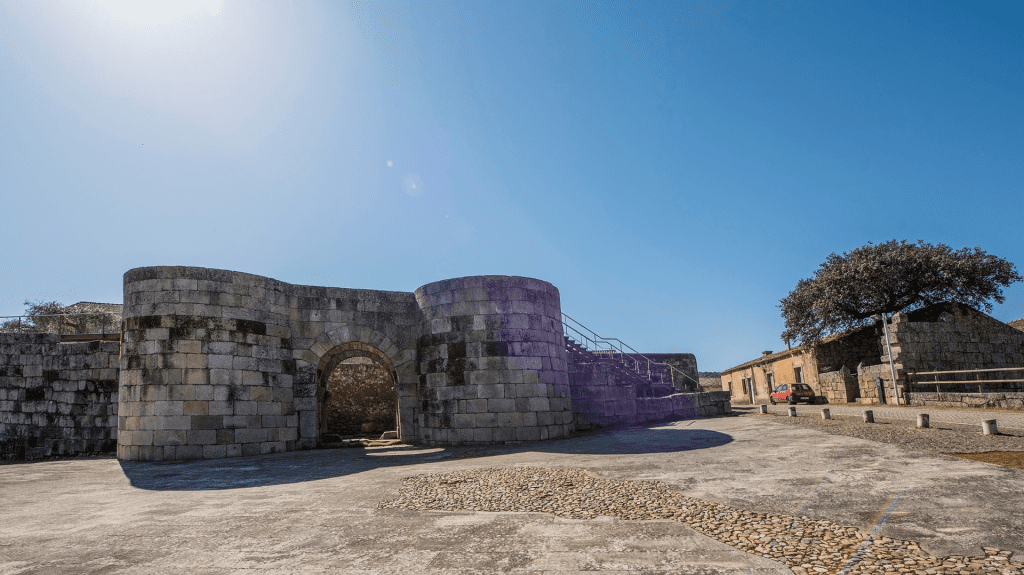
7. Idanha-a-Velha Castle – Echoes of Rome and Faith
Idanha-a-Velha is no ordinary village. Beneath its humble houses lies one of Portugal’s richest archaeological sites, with Roman inscriptions, Visigothic churches, and medieval walls.
The castle itself, modest yet powerful in presence, was a frontier watchtower built upon layers of earlier civilizations. It was here that Christian and Muslim forces clashed, and later, Templar knights guarded strategic routes.
Idanha-a-Velha feels like walking through a palimpsest of history — one where the castle crowns centuries of struggle and belief.
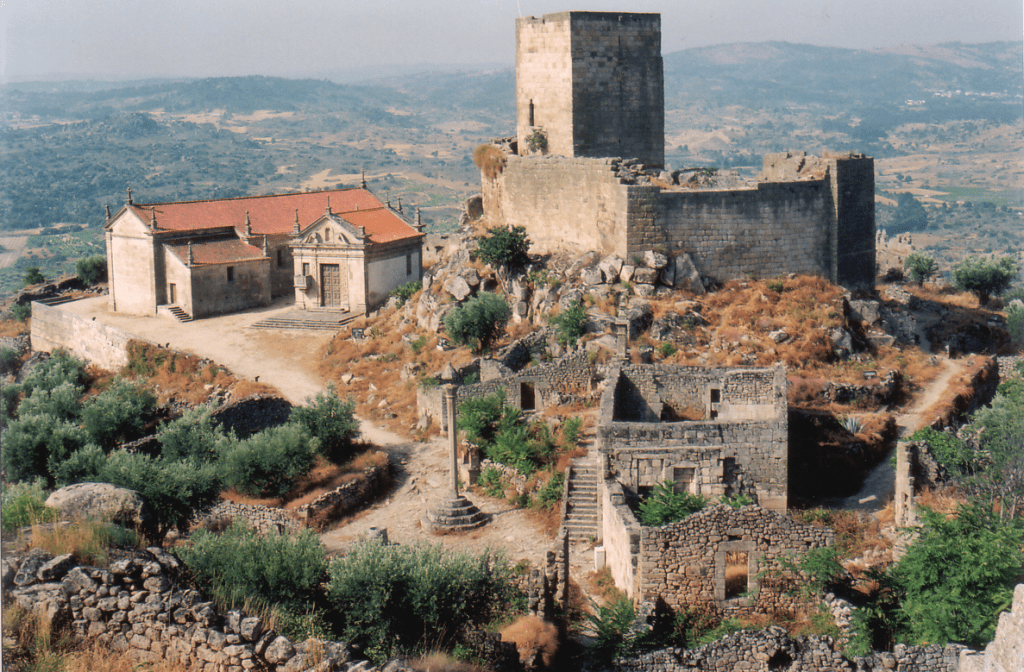
8. Marialva Castle – Ruins of a Forgotten Town
Marialva is a ghost of a town. Within its walls lie ruined houses, a tumble of stone streets, and a haunting silence. Once a bustling medieval settlement, it declined as wars, plague, and shifting trade routes emptied its life.
The castle itself remains impressive: a keep rising above the desolate streets, its walls still defending nothing but memory.
“Marialva is less visited than other castles, but here the silence speaks loudest. It is not ruin — it is testimony.”
Walking through Marialva feels like archaeology without excavation. Everything is still here, waiting for the imagination to fill the void.
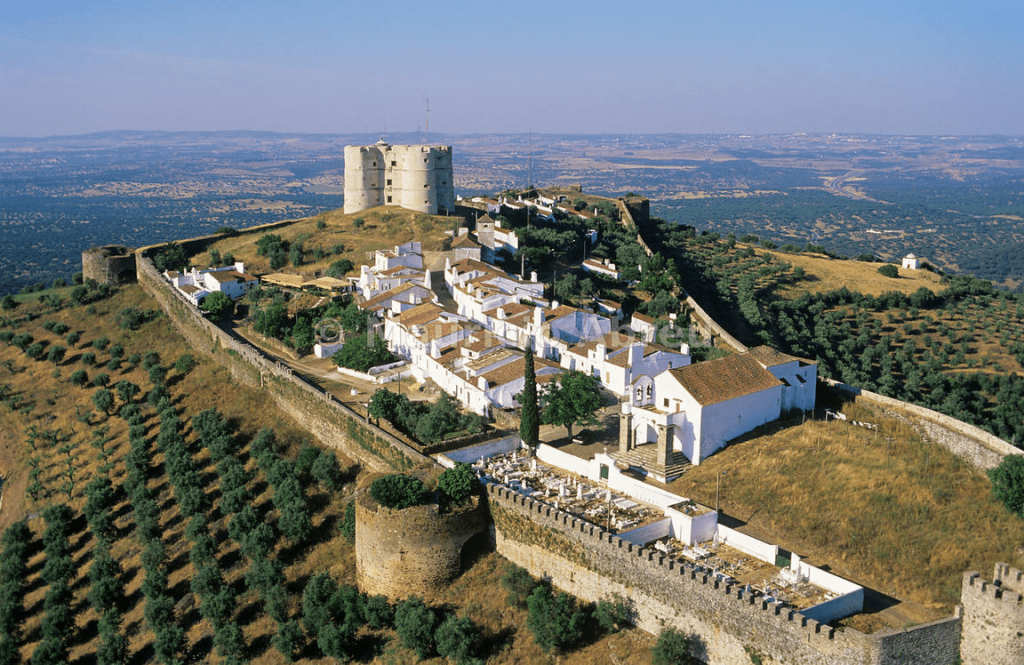
9. Trancoso Castle – Weddings and Wars
Trancoso Castle looms over a town where medieval fairs still echo with drums and banners. Its walls once sheltered the wedding of King Dinis and Isabel of Aragon in 1282—a union that brought peace with Castile.
But peace was never permanent. The fortress withstood invasions, including Spanish troops in the 17th century and French armies in the Peninsular War.
Today, climb the towers and look down at the town square, where markets bustle. Trancoso is a castle alive — woven into daily life as much as into history.
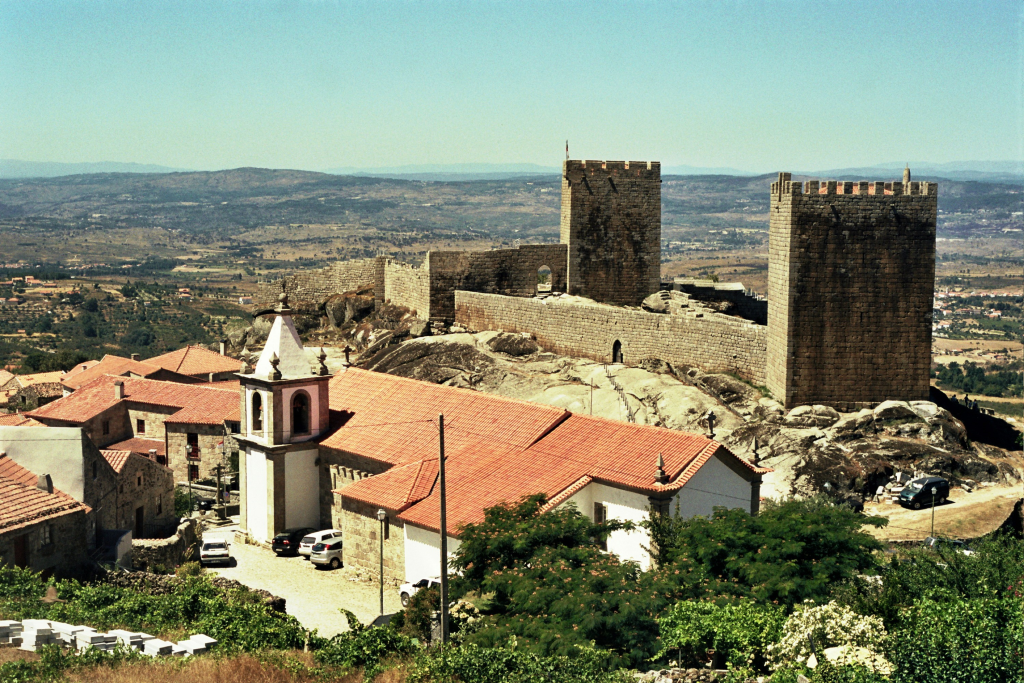
10. Linhares da Beira Castle – Stone and Sky
Linhares is one of those frontier villages where time folds into landscape. Its castle, perched above 800 metres, commands sweeping views of the Serra da Estrela.
The castle dates to the 12th century and was a linchpin in the wars with Castile. Today, it is more atmospheric than intact — walls weathered, towers truncated.
But Linhares is alive with another tradition: paragliding. From the castle’s shadow, colorful wings leap into the sky. Medieval defense has given way to aerial freedom.
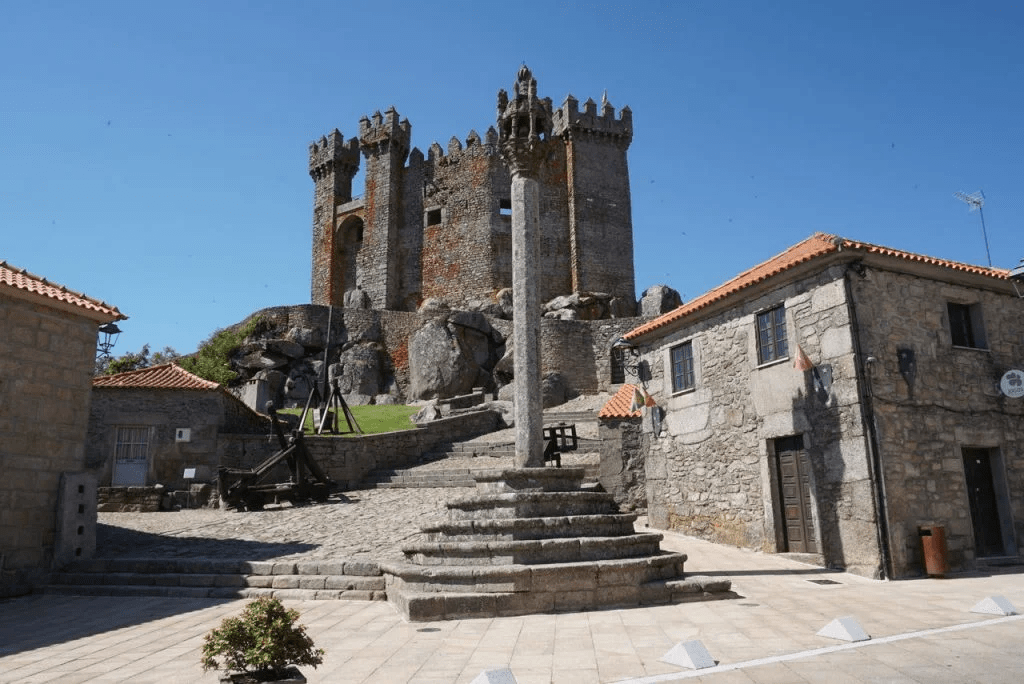
11. Penedono Castle – A Fairy-Tale Fortress
Penedono’s castle looks like something from an illuminated manuscript. A small, turreted keep with pointed towers, perched dramatically on a rocky knoll, it seems more romantic than warlike.
Yet it was once home to Álvaro Gonçalves Coutinho, one of the legendary “Twelve of England” knights immortalized in Portuguese epic poetry.
The village below feels sleepy, but the castle still crackles with story — half history, half legend.
12. Castelo Bom – The Overlooked Guardian
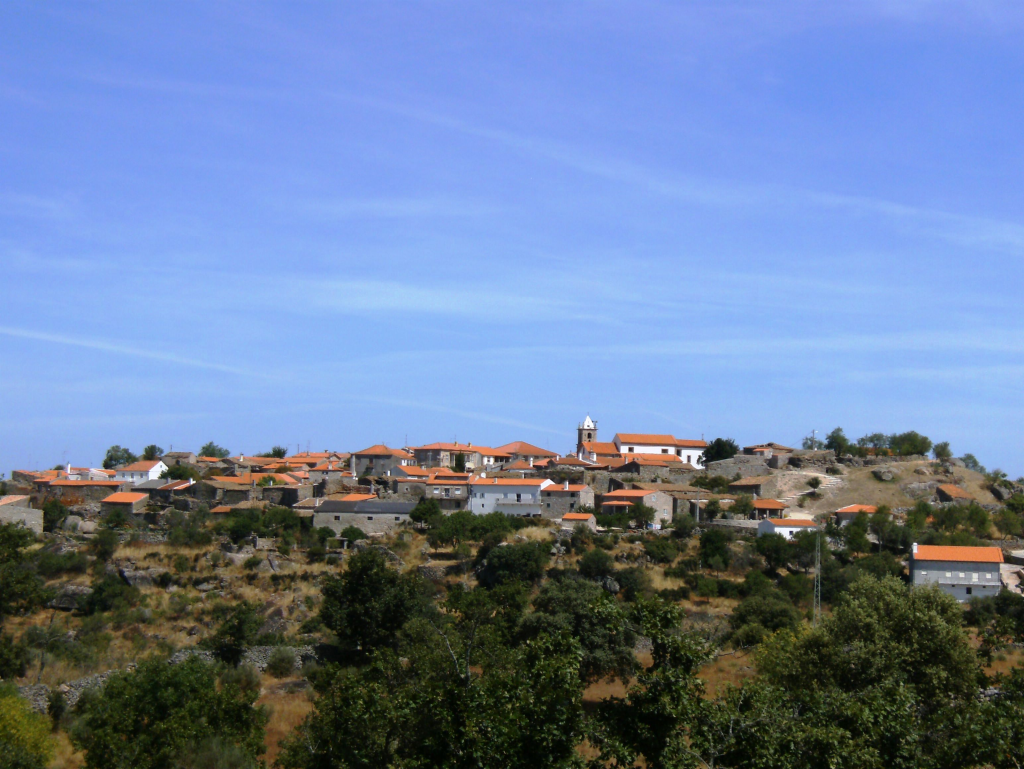
Not far from Almeida lies Castelo Bom, a fortress that is little visited but was once fiercely contested. Built in the 12th century, it stood guard over trade routes and farmland, passing between Portuguese and Castilian hands multiple times.
Today, its ruins are modest, but the view across the frontier plain remains commanding. Standing here, you feel what it must have meant to watch the horizon for enemy banners.
13. Castelo Melhor – Fortress of Stone and Prehistory
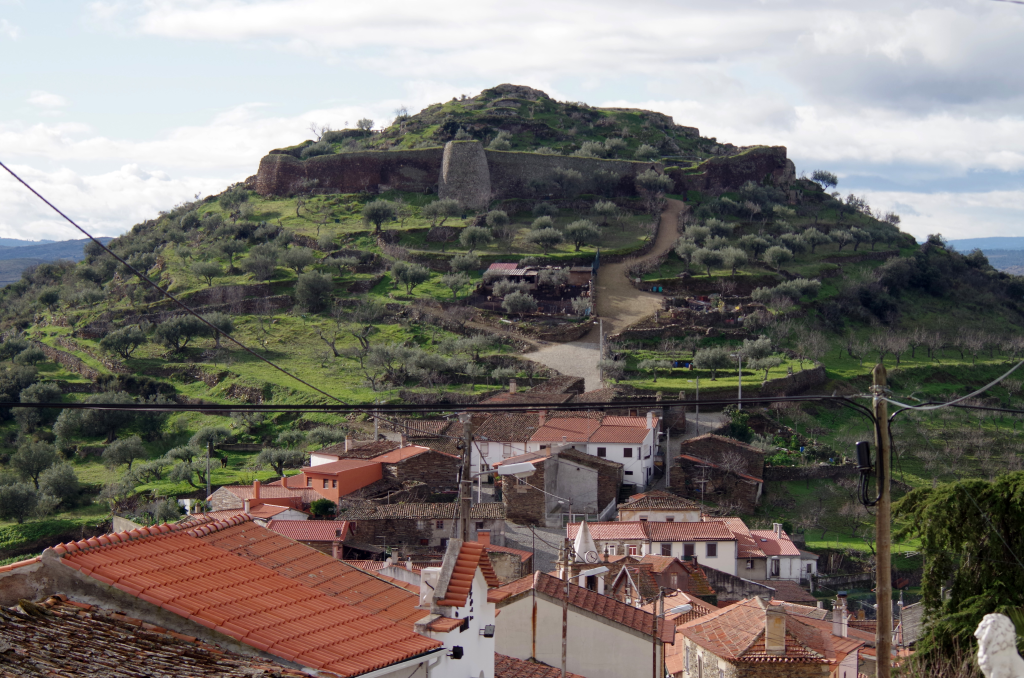
Castelo Melhor is a ruin perched on a ridge above the Côa Valley. Its medieval walls once guarded villagers and shepherds, but the valley below tells an even older story: prehistoric rock art dating back 25,000 years.
“At Castelo Melhor, human history stacks like sediment — from Paleolithic carvings to medieval battlements, all layered in one valley.”
To visit is to see not just one era, but the sweep of human resilience across millennia.
14. Celorico da Beira Castle – The Breadbasket Fortress
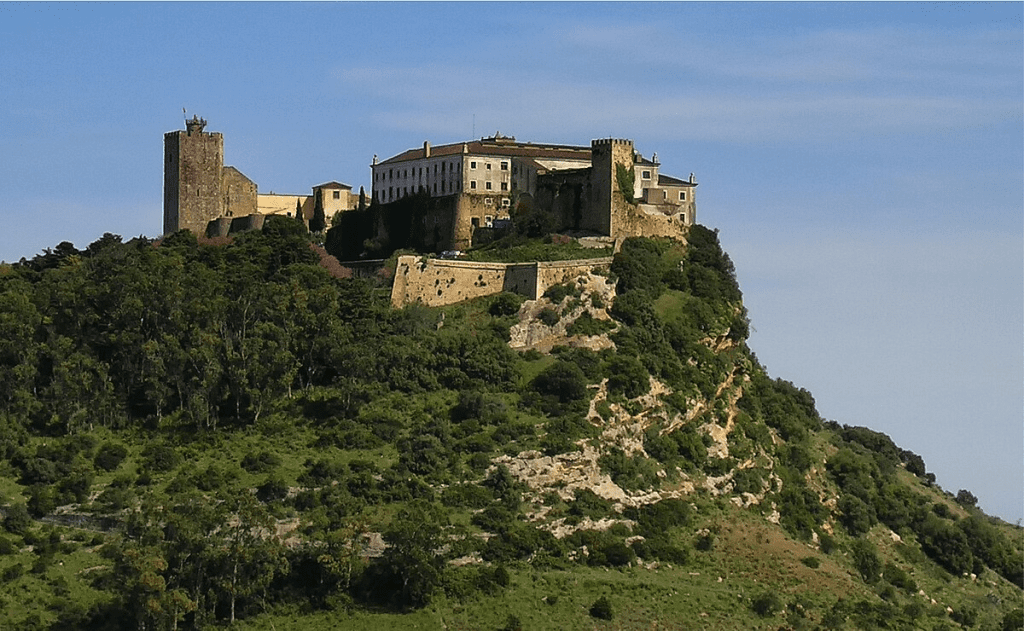
Celorico da Beira, known as the “breadbasket of Beira”, needed protection. Its castle, perched above the Mondego valley, provided just that.
From here, defenders watched not only for enemy movements but also safeguarded the granaries and fields below. Wars with Castile scarred it, Napoleonic troops stormed it, and yet it still stands proudly above the town.
Climb its tower to understand why grain mattered as much as gold.
15. Vilar Maior Castle – The Lonely Sentinel
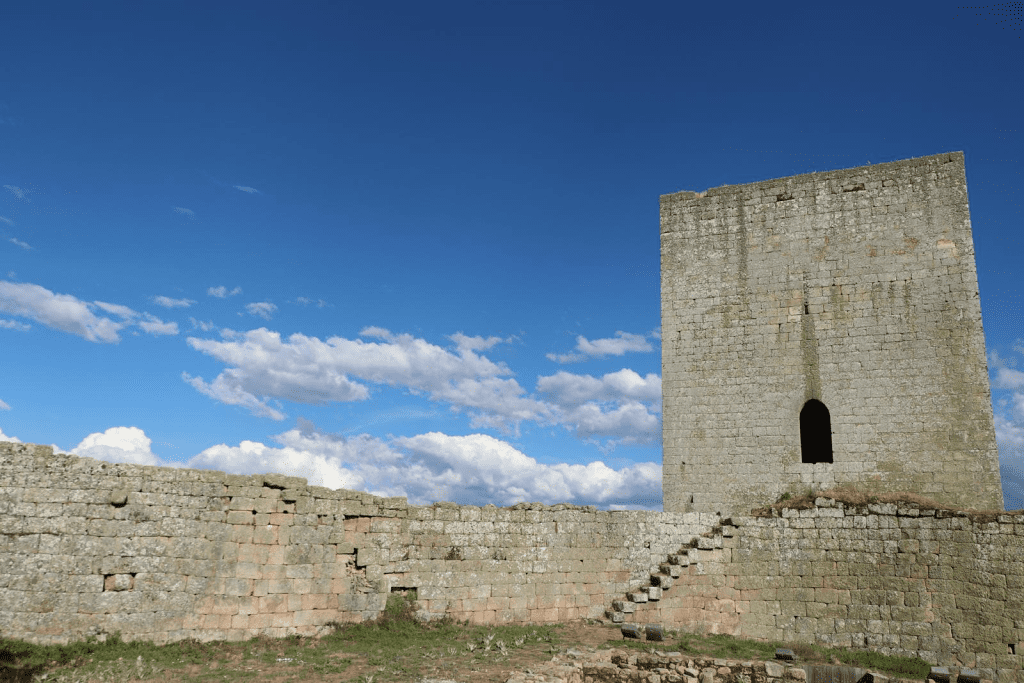
Vilar Maior is Portugal’s most remote castle village. Once bustling, today it is a place of quiet stone houses and long silences. The castle crowns it all — walls enclosing emptiness, towers gazing east.
It was once a fiercely disputed territory, changing hands between León and Portugal until treaties fixed the border. Now it is a monument to the endurance of stone, of people, of memory.
Conclusion: The Thread of Stone
Central Portugal’s border castles are more than military relics. They are stories carved into granite, limestone, and schist. Each keep tells of Portugal’s struggle for identity—of wars with Castile, of Napoleonic invasions, of communities built and abandoned.
To walk their walls is to cross centuries. To stand on their ramparts is to feel both fragility and resilience. The frontier is quieter now, but its castles remain as sentinels — guardians not of war, but of story.
“Castles don’t only defend borders. They defend memory. And in Central Portugal, memory has never surrendered.”