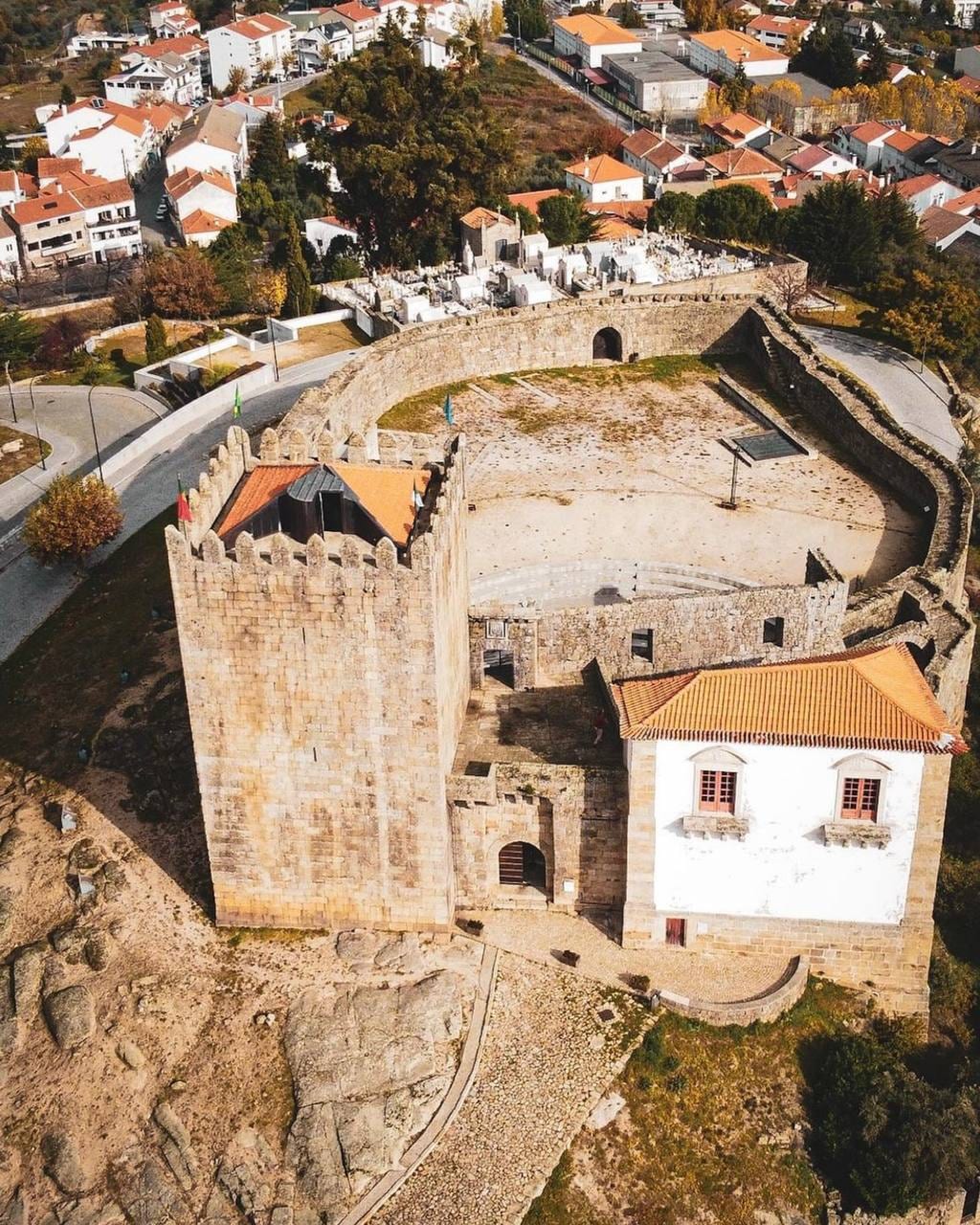
High in the Beira Interior, where the granite shoulders of the Serra da Estrela rise against Portugal’s eastern horizon, stands the Castle of Belmonte. More than a medieval stronghold, it is a fortress of memory—of battles fought, explorers born, and traditions kept alive in whispers through centuries of secrecy.
Today, visitors to Belmonte discover a place where stone walls overlook rolling valleys, where history feels both ancient and strikingly present. It is at once a destination for curious travelers, a gateway to Jewish heritage, and a link in Portugal’s global story.
The Story Behind the Walls
Belmonte Castle traces its origins to the 12th century, and is part of Portugal’s network of frontier fortifications built to defend against Castile. Its strategic perch overlooking the Cova da Beira valley made it vital for control of the region.
The castle is best remembered as the seat of the Cabral family. In 1466, King Afonso V granted the fortress to Fernão Cabral, whose son, Pedro Álvares Cabral, would later sail across the Atlantic and discover Brazil in 1500. Within these walls, one of Portugal’s most defining chapters of the Age of Discoveries began.
The castle’s Manueline window, adorned with the Cabral coat of arms, is more than decorative stonework. It is a signature carved in granite, linking Belmonte’s medieval legacy to Portugal’s maritime destiny.
A Haven of Hidden Faith
Belmonte is also remarkable for another reason: its Jewish heritage. For centuries, the town’s Jewish community practiced their faith in secret, outwardly conforming to Catholicism while keeping rituals alive behind closed doors. These crypto-Jews—or “Marranos”—survived inquisitions, persecutions, and forced conversions, passing traditions quietly from one generation to the next.
“In Belmonte, faith survived not in grand cathedrals, but in whispers carried through kitchens, back rooms, and the quiet courage of families who refused to forget.”
Unlike most hidden Jewish communities of Europe, Belmonte’s endured into the 20th century, when its story finally came to light. Today, the Jewish Museum of Belmonte tells this extraordinary tale, and the town remains home to a vibrant Jewish population that worships openly in its synagogue.
The castle stands as a backdrop to this resilience, a reminder that history is not only carved in stone but also kept alive in the courage of communities.
What to See at Belmonte Castle
Visitors stepping inside Belmonte Castle today encounter a blend of medieval atmosphere and modern interpretation.
- The Walls and Keep: Weathered but imposing, they frame the sweeping views of the Serra da Estrela and the fertile valley below.
- The Manueline Window: A masterpiece of Gothic flair, proudly bearing the Cabral family arms.
- The Museum Space: Inside, exhibitions highlight local history, Jewish heritage, and Portugal’s role in the Age of Discoveries.
- Cultural Events: The castle hosts concerts, festivals, and heritage events, bringing its courtyards back to life.
Walking the ramparts, it’s easy to picture both armored knights guarding the frontier and sailors preparing for voyages that could redraw the world map.
The Village of Belmonte
The castle is the crown, but the town is its beating heart. A stroll through Belmonte reveals whitewashed houses, narrow cobbled lanes, and a handful of museums that together tell a remarkable story:
- Jewish Museum of Belmonte: A moving chronicle of crypto-Jewish survival.
- Museum of the Discoveries (Museu dos Descobrimentos): Dedicated to Pedro Álvares Cabral’s epic voyage to Brazil.
- Church of Santiago and Pantheon of the Cabral Family: A Romanesque treasure where history and faith converge.
- Eco Museum of Olive Oil: A sensory experience exploring one of Portugal’s oldest traditions.
Belmonte is a village that feels lived in, not staged, and authentic in its rhythms, proud of its past, and welcoming to those who come to listen.
Practical Travel Tips
- Location: Belmonte is in the district of Castelo Branco, about 30 km from Covilhã and 50 km from Guarda.
- Getting There: The easiest route is by car. Regional trains reach nearby Covilhã. From Lisbon, the drive takes about 3.5 hours.
- Opening Hours: The castle is open year-round, usually from 9:00 to 17:30 (later in summer). Check local listings for exact times.
- Tickets: Entry costs a few euros, often with combined passes for the town’s museums.
- Best Time to Visit: Spring and autumn are ideal, with mild weather and clear views of the Serra da Estrela. Winter adds drama, with snow often capping the surrounding peaks.
Beyond the Castle
A visit to Belmonte pairs naturally with exploration of the surrounding region:
- Serra da Estrela Natural Park: Portugal’s highest mountains, offering hiking, skiing, and dramatic landscapes.
- Covilhã: A historic wool town blending industry with mountain charm.
- Guarda: Portugal’s highest city, crowned by a Gothic cathedral.
- The Cova da Beira Valley: Vineyards, olive groves, and traditional villages tucked into fertile plains.
Belmonte can be a half-day stop on a broader itinerary — or, if you linger, a two-day immersion in history and nature.
Why Belmonte Matters
Belmonte Castle stands out not just for its stones but also for its stories. Few places in Portugal capture such a layered narrative: medieval frontier wars, the dawn of the Age of Discoveries, and centuries of hidden history and faith.
To walk through its gates is to step into a dialogue between past and present. The fortress no longer guards armies but something more precious—memory, identity, and resilience.
For travelers seeking more than a checklist, Belmonte offers a journey into the very soul of Portugal’s interior.
Portugal has castles aplenty, but few with the resonance of Belmonte. Perched quietly in the Beira landscape, it invites visitors not only to admire its architecture but also to engage with the stories it shelters: of Cabral’s voyage, of Jewish perseverance, and of a community and a land that shaped history.
Stand on its ramparts at sunset, when the Serra da Estrela glows gold in the fading light, and you’ll understand why Belmonte remains unforgettable.