Castle of Castelo Bom, Almeida, Guarda District, Beira Interior, Côa Valley, Portugal castles, medieval Portugal, Portuguese history, King Dinis, Treaty of Alcañices, Bronze Age sites, frontier fortresses, fortified villages, Portuguese heritage, Castelo Bom village, Poço do Rei, hilltop castles, National Monument Portugal, travel Portugal, architecture Portugal, medieval architecture, fortress ruins, border history, travel blog Portugal, Let Us Discover
Castle of Castelo Bom, Almeida, Guarda District, Beira Interior, Côa Valley, Portugal castles, medieval Portugal, Portuguese history, King Dinis, Treaty of Alcañices, Bronze Age sites, frontier fortresses, fortified villages, Portuguese heritage, Castelo Bom village, Poço do Rei, hilltop castles, National Monument Portugal, travel Portugal, architecture Portugal, medieval architecture, fortress ruins, border history, travel blog Portugal, Let Us Discover
High on a granite ridge at 725 metres above sea level, overlooking the winding valley of the Rio Côa, the Castle of Castelo Bom stands as both monument and memory. This site, weather-worn and silent now, once marked the edge of a kingdom, the pulse of frontier life, and the ambition of a medieval monarch. What you see today are ruins. But what these ruins whisper is a story of strategic significance, architectural evolution and human tenacity.
Origins and Early Occupation
Long before kings raised walls and towers, this hilltop bore human presence. Archaeological evidence points to a Bronze Age castro (hill-fort) here. The terrain itself—rock, slope and vantage—was chosen for defence, not leisure. Over time, the area evolved, changed hands and was fought over.
By the 12th and 13th centuries the location was part of the contested zone between the Kingdom of León and emerging Portugal. The borderlands of Beira Interior were neither peaceful nor static. Frontline and fortress blurred.
The Portuguese Crown Takes Hold
The real turning point came under King Dinis of Portugal, who saw the strategic value of this place. He granted a charter (foral) to the settlement in 1296, and by the subsequent Treaty of Alcañices in 1297 the fortress passed definitively into Portuguese hands.
What this means is that the castle was more than a local stronghold—it became part of a national boundary, a bulwark at the edge of a realm. In this sense, the Castle of Castelo Bom is a place where the map changes under foot.

Architecture and Fortification
Climbing the narrow lanes now, you trace the footprint of walls and towers. The original plan was irregular, hewn to the ridge, yet intercepted by a barbican, towers and gate. According to the iconography of Duarte de Armas (around 1509) the fortress then featured two square towers, a keep tower, double rings of walls and a barbican attached to the settlement wall.
One of the most evocative structural features is the cistern called the Poço do Rei (“King’s Well”). A rectangular vaulted space designed to safeguard water for defenders.
Here’s a pull quote to capture the moment:
“The fortress, once the ultimate defense of Portugal, stands today as a silent outline against the sky.”

Life Inside the Walls
As you imagine the settlement inside the walls, picture narrow rock-cut lanes, granite homes leaning on ancient turrets, church bells ringing across the hilltop. In the 16th century the population of the castle town had grown, yet the frontier location ensured that daily life retained the tension of defence.
We know that by 1527 the settlement counted just under 396 inhabitants. These were farming folk, artisans, soldiers—and their families—living inside the fortress walls, integrating military purpose with domestic routine.
The Defence of the Border
Because of its position, the Castle of Castelo Bom played a key role in the frontline defence through the centuries. When Portugal asserted its independence and consolidated its borders, this site mattered. During the 17th century, in the phase of the Restoration Wars, the castle held artillery, bastions and shelters for civil as well as military occupants.
In 18th century conflicts, notably the Seven Years’ War (1762) and the Napoleonic invasions of the early 19th century, the fortress was attacked, damaged and the settlement suffered. This history of conflict left its mark in stone, ruin, quiet corridors and memory.
Decline and Ruin
After the municipal reform of 1834 the local powers changed. The municipality of Castelo Bom was abolished, the frontier shifted, priorities changed. Over time, the defensive role faded, the stones were reused by locals, and a former keep tower was demolished for agricultural use.
Yet, despite decay, the castle was declared a National Monument in 1946. Restoration efforts have been piecemeal. Even so, the fortress remains one of the most characterful hilltop castles of the Portuguese interior.
Another pull quote:
“What remains are the walls, the gate, the well and the silent testimony of a people standing at the edge of kingdoms.”

Visiting Today
If you visit now you approach the village of Castelo Bom (village) in the Municipality of Almeida, district of Guarda, in the Centro region of Portugal. The fortress crowns a granite outcrop. The views across Riba-Côa and into the Spanish frontier plains are sweeping.
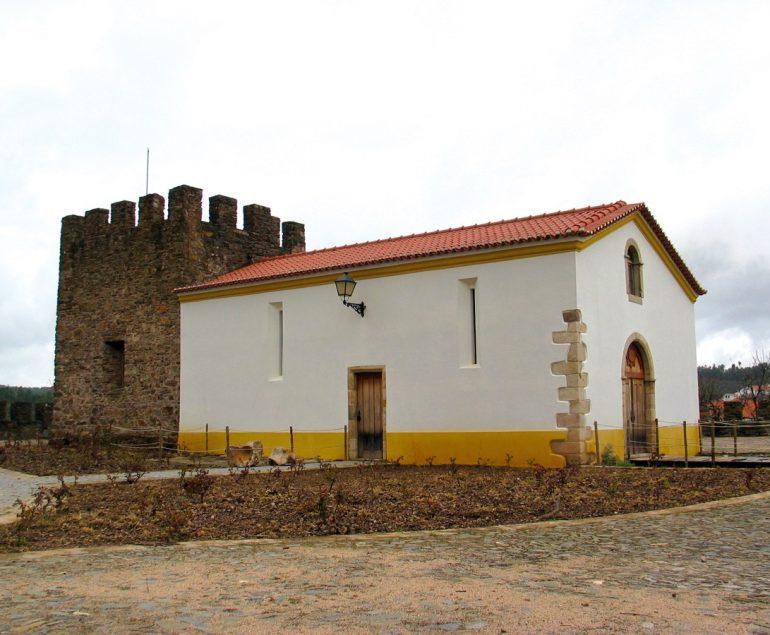
Walking the remains of the wall you encounter the Porta da Vila—the old town gate—which presents a broken outer arch and intact inner arch. On the south side the cistern awaits. Parts of the double ring of walls still exist. The irregularity of plan, the infrastructure for defence (pits, towers, trumpeted stone) all echo a fortified town, not just a keep.
The village beneath has a quiet charm: stone houses, small lanes, local hospitality. Few crowds. You feel remote yet connected to centuries of history. If you time your visit for late afternoon light the granite glows in salmon tones, the valley trees shift in gold and green, and the fortress silhouette stands serene and strong.
Why It Matters
For one thing, it’s a tangible link to the era when Portuguese sovereignty was contested and the frontier defined by stone and human effort. The Castle of Castelo Bom is more than architecture. Its geopolitical history is carved in granite.
It also matters because of its continuity from Bronze Age to medieval fortress to ruin. Few sites combine those layers so clearly. The fabric of the walls, the reused stonework, the layout adapted to topography—all these speak of adaptation and resilience.
Tips for Your Visit
- Wear sturdy shoes. The ground is granite, uneven and often steep.
- Visit when light is soft (late afternoon or early morning) for best photography.
- Bring water and perhaps a snack; services in the village are limited compared to larger tourist towns.
- Combine your visit with the nearby border town of Vilar Formoso or the fortress town of Almeida for full frontier-region context.
- Take a moment at the vantage point and imagine the sentries watching the plain below, the flags fluttering, the howitzers of the 17th century aimed across the valley.
Conclusion
The Castle of Castelo Bom may not be the most famous castle in Portugal—but it is among the most evocative. Walking its walls is to walk the edge of a nation. Sitting on the ridge, the stones still hold echoes of centuries. The fortress speaks of human struggle, ambition, defence and change. And it is waiting, in quiet dignity, to be discovered.