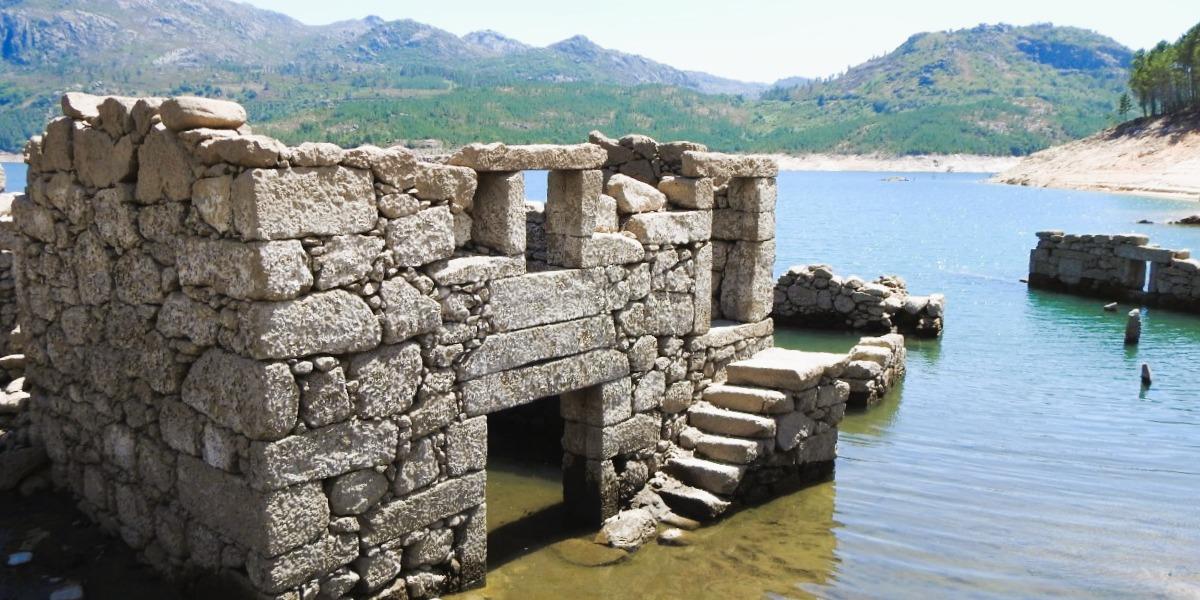
In Portugal’s storied Minho region, a fascinating revelation appears in rare moments of drought: the haunting remains of Vilarinho da Furna rise from beneath the waters, exposing the silent skeletons of a lost community. Where a placid lake now ripples most of the year, ancient stone walls, doorways, and memories resurface in the shimmering sun, captivating all who witness this extraordinary scene.
The tale of Vilarinho da Furna is as compelling as its rare emergence. In 1967, ambitions for hydroelectric progress led the Portuguese Electricity Company to commence construction on a dam along the River Homem. The project promised power for the region, but at a mammoth cost—a small, tightly-knit village with roots tracing back some 2,000 years would be forever changed. Oral histories recall the Roman founding in the 1st century C.E., and for countless generations, life flourished in this valley. Yet, progress could not be stopped. Residents—around 300 souls—accepted compensation and said their final farewells, the last villager departing in 1971 as the waters inched ever closer.
Come 1972, Vilarinho da Furna surrendered to the rising tide, its ancient homes and cobbled paths swallowed entirely. Occasionally, when the dam’s water level recedes after a prolonged dry season, the spectral village returns. Its time-worn architecture—walls, windows, and doorframes—emerges briefly from the deep, an evocative reminder of centuries past.
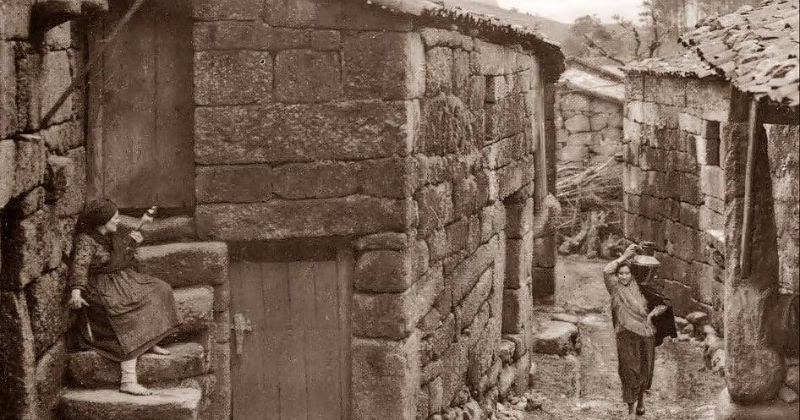
Today, the spirit of Vilarinho da Furna is kept alive in nearby São João do Campo, where a museum stands as a tribute to the submerged city. Commemorative efforts and oral storytelling ensure that its rich history endures. Recently, transparent-bottomed boat excursions have become a novel way for visitors to catch glimpses of the hidden village when conditions allow—though approaching the submerged ruins is risky and strongly discouraged due to fluctuating water levels and unpredictable hazards.
Should fortune guide you to the region during an exceptionally dry spell, you may witness this submerged marvel firsthand. Otherwise, local boat operators are available for safe lake tours, offering stories and context about life before the flood. Whether seen or simply imagined beneath the water, Vilarinho da Furna remains a poignant emblem of resilience, loss, and memory in Portugal’s dramatic Minho landscape.

How to get there
To visit the submerged village of Vilarinho da Furna, you will first need to head towards the Peneda-Gerês National Park in northern Portugal, specifically the civil parish of Campo do Gerês, within the municipality of Terras de Bouro, Braga district. Here’s how to get there:
By Car
- From Braga (the nearest major city), drive about 48km northeast towards Campo do Gerês. This takes approximately 54 minutes and provides the most flexibility, allowing you to reach the area near the dam and the museum in São João do Campo.
- In the summer months, you may be able to access closer to the ruins by car for a fee. At other times, access is typically on foot.
By Public Transport
- From Braga, you can take a bus from the Centro Coordenador de Transportes de Braga to Campo do Gerês. The journey takes about 1 hour and 14 minutes, with the bus running several times a week. Expect a transfer to local routes in Terras de Bouro, then a local taxi or a hike to the site.
- For those relying on public transport, the nearest bus stops to the area include Veiga de S. João and Campo do Gerês (Museu Etnográfico)—the latter a short walk from the starting point of local trails.
Points of Interest
- The Ethnographic Museum of Vilarinho das Furnas in São João do Campo provides background and context to your visit. The museum is open Tuesday to Sunday and is easily accessible once you arrive in Campo do Gerês.
Tips
- The submerged ruins are only visible during times of severe drought when water levels recede.
- Local guides or boat tours are sometimes available, but it’s wise to check conditions in advance, as the area can be dangerous due to fluctuating water levels.
This journey is best suited for those with a car, but determined explorers can reach the vicinity via bus and short hikes. The village remains hidden under the waters except during rare dry spells, making any visit especially memorable if the ruins are visible.