Are sweets considered sinful? It’s not the case in Portugal, where for ages, monks and nuns have been cooking up the most delectable delicacies. The following are seven of the country’s most beloved sweet delights, along with recommendations for the best venues to experience them in the capital.
Portugal is a land of sweet temptation, which may be found everywhere. It’s a country where you can’t turn a corner without being enticed into yet another confeitaria or pastelaria for a crisp, oven-warm pastel de nata (custard tart) or a fluffy, bite-size queijada (cheesecake) to accompany your early morning espresso. The Portuguese are notoriously difficult to please, so follow their lead and look for the fabrico próprio (‘made in house’) signage, and prepare to be spoiled.
Portuguese pastries have had an enchanted history.
To appreciate Portugal’s national fascination with cakes, sweets, and desserts, you have to go back to the 15th-century Age of Discoveries, when the country was riding the waves in search of land, power, and wealth, and the country’s fixation with sweets and desserts began. Intrepid navigators set sail for the new globe, establishing trade routes and bringing back treasure chests loaded with exotic spices from the Azores, Africa, America, and Asia.
The monasteries and convents where the explorers stayed, where the inmates prayed for their souls while they braved the storm-tossed sea, received several of these as gifts. As a result, the habit of manufacturing doces conventuais (conventual sweets) began to spread throughout Europe. As they had lots of free time on their hands, the monks and nuns began to cook up delectable delicacies utilizing sugar and spices sourced from far-flung locations throughout the world. They flavoured their eggs, butter, and flour with spices such as cinnamon, vanilla, coconut, and citrus, and they often gave their new concoctions spiritual names. These were a hit with the royals and nobility of the great kingdom, and the recipes have remained mostly unchanged over the years.
Here are seven delectable Portuguese sweets that you must sample if you ever find yourself in Portugal.

Pastel de feijão (bean pastry)
This flaky puff-pastry tartlet, which is literally stuffed with beans (feijões), may blow your mind with its buttery, caramelized crispness and creamy, unctuous egg yolk, almond, and white-bean cream. A late 19th-century chef in the coastal city of Torres Vedras, Joaquina Rodrigues invented this dish for his family and close friends, who were the only ones to enjoy it. Nonetheless, the word went out, and it has since become a solid Portuguese pastelaria favourite to this day. You can even convince yourself that the bean portion is beneficial to your health.
Where can I eat it?
Nowhere in Lisbon does a better pastel de feijão than the Fábrica do Pastel de Feijão (Rua dos Remédios 33), tucked away in the Alfama district. Here, chef António Amorim has subtly improved the art by making them rectangular in shape

Bola de Berlim (Berlin ball)
You only have to bring up the bola de Berlim with the Portuguese and you’ll see them sigh with nostalgia. Anyone who has ever eaten one of these fluffy, egg cream-filled, sugar-coated dough balls — a local twist (thus the name) on Germany’s Berliner doughnuts – has a favourite childhood story to tell about it. However, there is a difference: the Portuguese version is cut lengthwise to allow for a thicker, oozier filling to be accommodated. Vendors endure the heat, sand, and flying bats and balls to bring sunbathers these sticky sweets, which they deliver in boxes full of bolinhas (‘little balls.’)
Where can I eat it?
Besides the beach, you can grab a bola de Berlim at numerous pastelarias in Lisbon, but the best are those sold in myriad flavours at Berlineta (Estação de Santa Apolónia). Try the beetroot, carob and activated-charcoal versions if you’re feeling adventurous. Vegans are also catered for.

Queijada (cheesecake)
If you look at it on paper, the components appear to be delectably straightforward: flour, eggs, sugar, cinnamon, and fresh cheese. However, in reality, the queijada is a thing of beauty, consisting of a paper-thin pastry casing filled with a marzipan-like cheesecake filling and topped with a caramelized sugar coating on top. It’s gone in a couple of nibbles — and you’ll be hankering for another. While you can find queijadas all across Portugal, some of the best are found in Sintra, a UNESCO World Heritage Site known for its beautiful palaces and located only a short drive from the capital, Lisbon.
In this location, the nuns once maintained their faith by baking these delectable treats to use up an excess of fresh cheese from the nearby meadows, occasionally seasoning them with almonds, oranges, coconut, and honey.
Where can I eat it?
For the real deal, head to the old-school Fábrica das Verdadeiras Queijadas da Sapa (Volta Duche 12), a bakery founded in 1756, and either scoff them straight away or buy a half-dozen to take away, hand-wrapped in vintage paper.
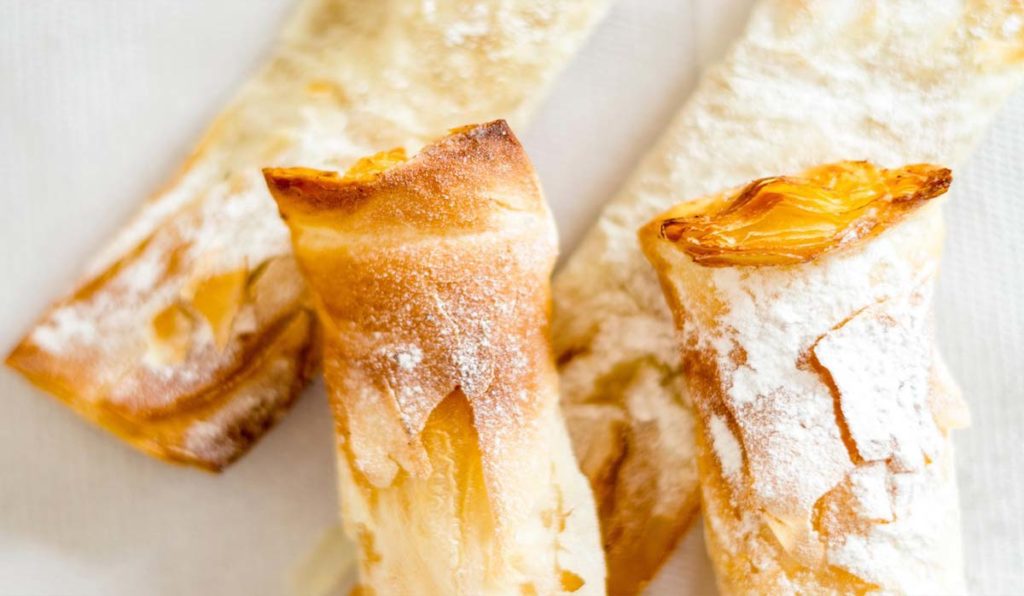
travesseiro (pastry pillow)
It is a puff pastry delight that flakes beautifully when cut, filled with delectable egg and almond cream, and coated with powdered sugar. It is a Portuguese dessert. Casa Piriquita, a bakery in Sintra that has been in operation since 1862, is where this dessert was conceived and first served to customers. The specific recipe for the travesseiro is a well-held family secret, although it is reported that during World War II, the family was experimenting with new sweets when they came upon a collection of old recipes that included the travesseiro.
Where can I eat it?
Naturally, Casa Piriquita (Rua das Padarias 1/18,) in Sintra is the number-one place to sample a travesseiro, but you’ll also find them at Lisbon’s 19th-century Confeitaria Nacional (Praça da Figueira).

Pão de Deus (God’s bread)
It’s reasonable to expect wonderful things from this brioche-like bun, and the chances are good that you won’t be disappointed. Perfect for breakfast with an espresso or as a savoury snack (the Portuguese commonly serve it with cheese and ham), this fluffy, sweet bread gets its golden crunch from a coconut crust that is baked on the outside and baked inside. Some are added a splash of rum, vanilla, and lemon to give them a little additional kick.
As is customary in Portugal, Pão de Deus is related to the holiday known as dia do todos Santos (also known as All Saints’ Day) or All Hallows’ Day, which takes place on November 1.
Where can I eat it?
Pão de Deus is no longer reserved for All Saints’ Day. Find it at Lisbon patisseries such as Sacolinha (Rua Paiva de Andrada 4/12) and A Padaria Portuguesa (Rua Barata Salgueiro 30).
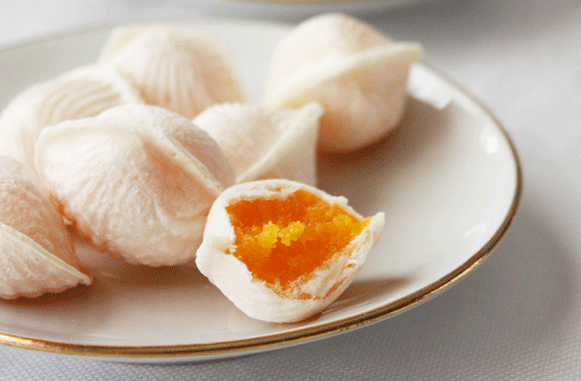
Ovos moles (soft eggs)
It should come as no surprise that the Portuguese are obsessed with eggs in their desserts, especially the ovos moles (soft eggs) that come from the city of Aveiro, on the country’s west coast. According to the authentic spiritual tradition of doces conventuais, these rice-paper communion wafers are filled with an egg yolk and sugar cream that has been carefully churned over a precise heat until thick and rich. They are formed in the shapes of shells, clams, whelks, and barrels, all of which allude to Portugal’s naval tradition and melt in your mouth.
Where can I eat it?
If you can’t get to Aveiro, the next best place has to be Lisbon’s Casa dos Ovos Moles (Calçada da Estrela 142). Incidentally, this is also a terrific spot to try toucinho do céu (‘bacon from heaven’), a dense almond cake made with pork fat.
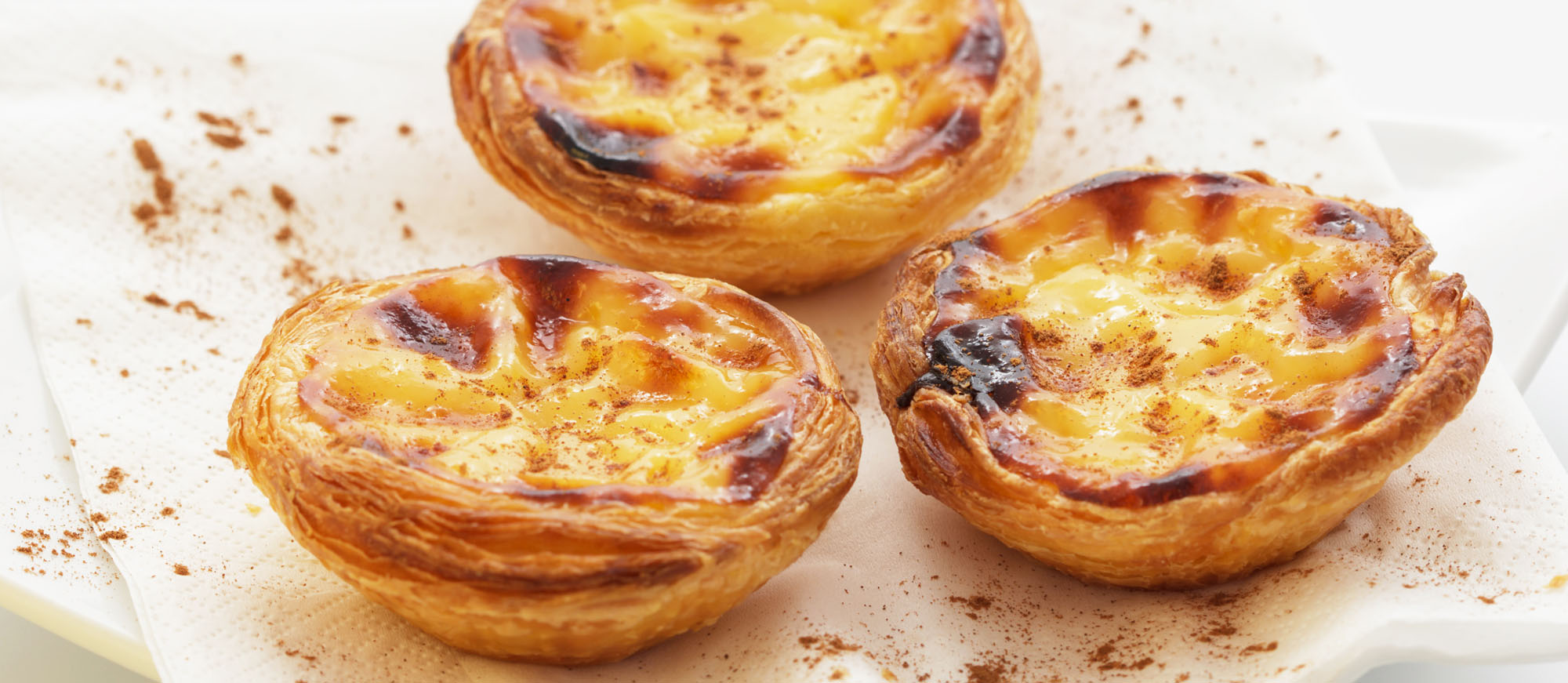
Pastel de nata (custard tart)
We’ve saved the best for the very end. Unless you’ve been living in a cave for the past decade, you’ve almost certainly heard of Portugal’s world-travelling star sweet, the pastel de nata (custard tart), which is now gobbled everywhere from Sydney to So Paulo. These tarts, which are best eaten fresh from the oven, are incredibly delectable: they are filled with a silky smooth egg vanilla cream and encased in flaky, caramelised puff pastry that has been dusted with cinnamon. One bite will have you hooked, just as the monks at Jerónimos Monastery in Lisbon were back in the 19th century when they discovered the dish. According to legend, when the dissolution of the monasteries was implemented in 1834, the monks turned to sugar and baking in order to live, concocting a secret recipe for pastéis de Belém that has remained constant to this day.
Where can I eat it?
Some say you can’t beat the originals (since 1837) at Pastéis de Belém (Rua de Belém 84), but we’d argue that the pastéis de nata at former butter factory Manteigaria (Rua do Loreto 2) are every bit as good.