


On the Portuguese island of Madeira’s northern shore lies a municipality called Santana. It is renowned for its traditional stone buildings called Casas Tpicas de Santana, which have high, triangular-shaped thatched roofs. The Madeira Theme Park, which has displays about the island’s history, culture, and customs, also has examples of the houses on display. A golden altarpiece may be found in the white, baroque-style Igreja de Santana church.
Things to see and do
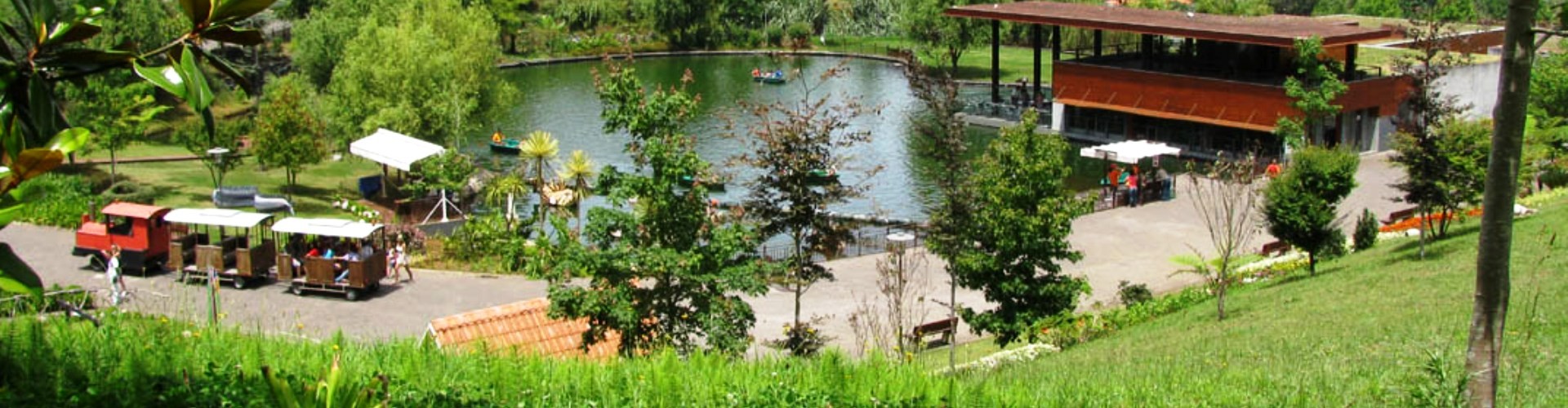
Madeira Theme Park in Santana
The “Theme Park” in Santana, which opened its doors to the public in October 2004, comprises various nucleuses with several attractions related to the archipelago’s traditions, culture, and history that will delight the young and the old, whether they are tourists or locals.
It covers an area of around 145,000 m2 where visitors can find themed attractions, such as four themed pavilions, one of which is a machine that simulates the island’s discovery, a “zoom-in, zoom-out” circuit (with several references to local monuments or garments, like the typical Madeiran hat “gorro de orelhas”—a cap with long earflaps—in small and huge sizes), a smaller replica of the Monte train making the connection between these attractions, beautiful gardens filled with colourful flowers and endemic plants, a bullock cart, and a trip in one of the mini boats reminiscent of the Câmara de Lobos fishing boats.
In other parts of this themed village, visitors can practise extreme sports (like cable sliding, bungee jumping, wall climbing, etc.). There are also two restaurants and a bar, a car park, and a souvenir shop.
The Madeira Theme Park is unique because of its attractions and shows, its themes, and the quality and variety of the services it offers. It is a place where fun and learning about and appreciating nature go hand in hand.
Enjoy a great day outdoors and learn something about Madeira’s culture and traditions at the same time!
Opening hours: Every day from 10:00 to 19:00 h (April – September) or from 10:00 to 18:00 h (October – March). Closed on Christmas Day.
Cable car at Rocha do Navio
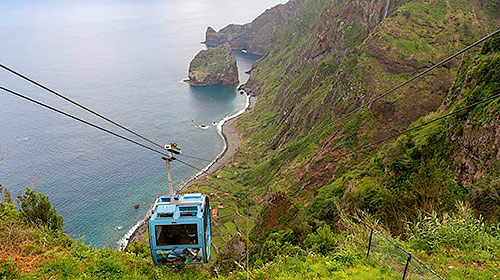 On Madeira’s north coast, in the Santana municipality, is the location of the Rocha do Navio cable car station. It is breathtaking to travel the five minutes down to Fajã da Rocha do Navio, where you will see banana plantations, vineyards, and Rocha do Navio, one of Madeira’s designated natural reserves.
In order to provide local farmers with easier access to their land plantings, this cable car was erected in 1997. Visitors may now explore and take in the breathtaking scenery and environment of “Teleférico da Rocha do Navio.”
The name “Rocha do Navio” given to this location is connected to the 19th-century shipwreck of a Dutch ship.
Every day of the week, between 9:00 and 17:00, this cable car is in operation.
Levada do Caldeirão Verde (PR9) Walking Trial
.
The journey is incredibly lush, a beautiful fairy tale in a green paradise that starts at Casa das Queimadas and continues until you reach the spectacular waterfall. The vast mountains and the São Jorge village are visible in magnificent views.
Along the walk, water is constantly present, sprouting out of the walls and calmly flowing along the levada. Any time of year is a great opportunity to hike this wonderful and secure trail.
Along the route, there will be various tunnels, so be sure to bring a torch.
Allow yourself to be captivated by the stunning sight of the large waterfall cascading over the chilly, crystalline lagoon as soon as you arrive at the Caldeiro Verde waterfall. Allow the soothing sounds of the water falling to calm you. Before returning, you might want to take a picnic.
Beaches
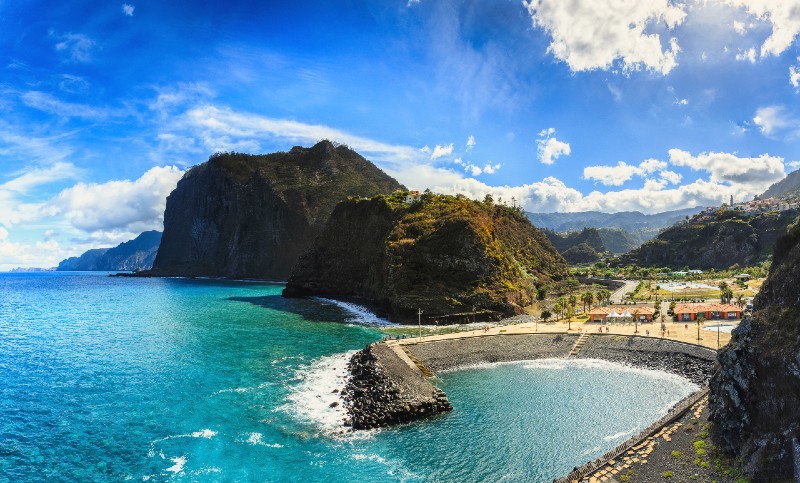
Beach at Foz da Ribeira do Faial
The bathing area in Foz da Ribeira do Faial is fully equipped for guests to enjoy the swimming season in complete safety and pleasure.It is designated as a Blue Flag beach.
The bathing area is equipped with a sand-floored playground, a solarium, a children’s saltwater pool, a children’s playground, a first-aid station, and a café.

Beach at Foz da Ribeira de São Jorge
The beach near the mouth of the Ribeira de São Jorge consists of a small lagoon and a bathing facility with three swimming pools, a solarium, changing facilities, and a café.
Matriz De Santana Mother Church .
.
 .
.
The Igreja Matriz de Santana is located in the centre of the city of Santana. This church was built at the end of the 16th century.
The church has a baroque style, and it is possible to observe a main altar with a gilded altarpiece and a screen in the centre of the temple, which represents Santa Ana and São Joaquim.
Primitive Nucleus of the Parish of São Jorge
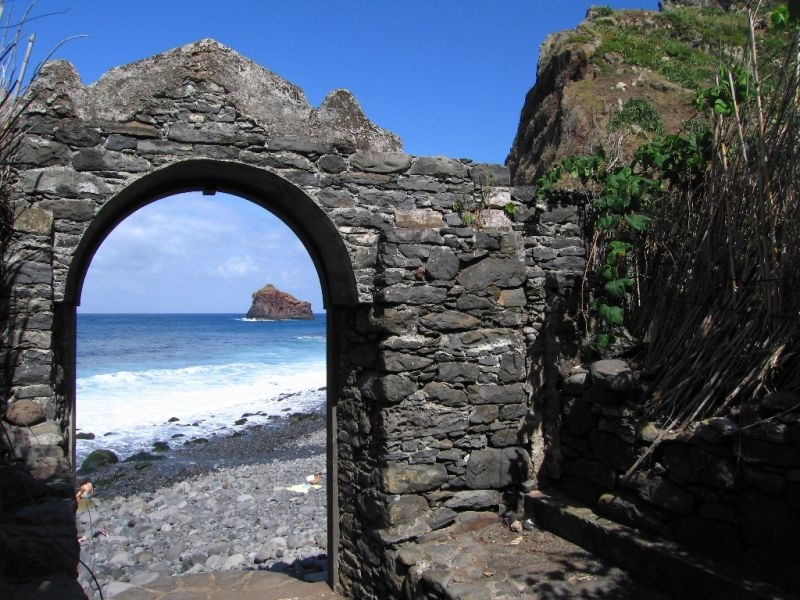 On the pebbles of São Jorge, you can find the Primitive Nucleus of the parish of São Jorge.
These ruins belong to the old sugar cane mills that were built there at the beginning of the settlement. The stone entry arch is one of the most prominent historic structures.
São Jorge lighthouse
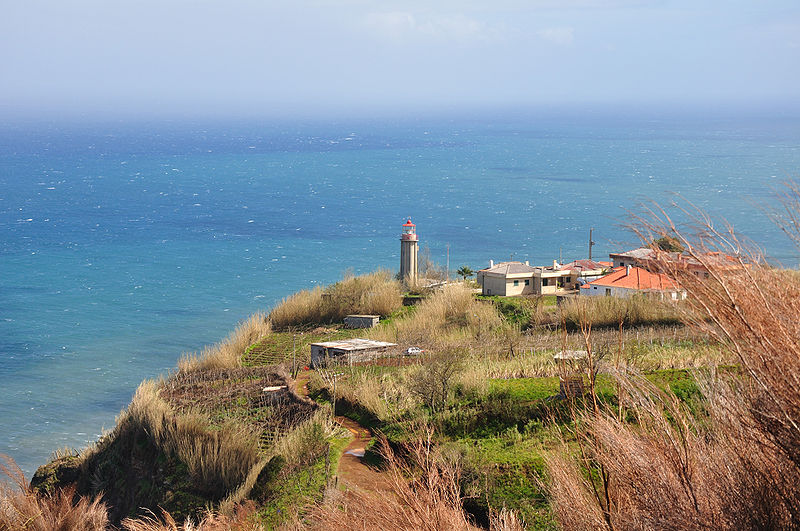 In addition to guiding marine navigation, the Lighthouse of São Jorge, located at Sítio da Vigia in São Jorge, is a lovely spot from which you can see the local parish, as well as Achada do Gramacho and Pico da Boneca in neighbouring Santana.
Faials Old Bridge
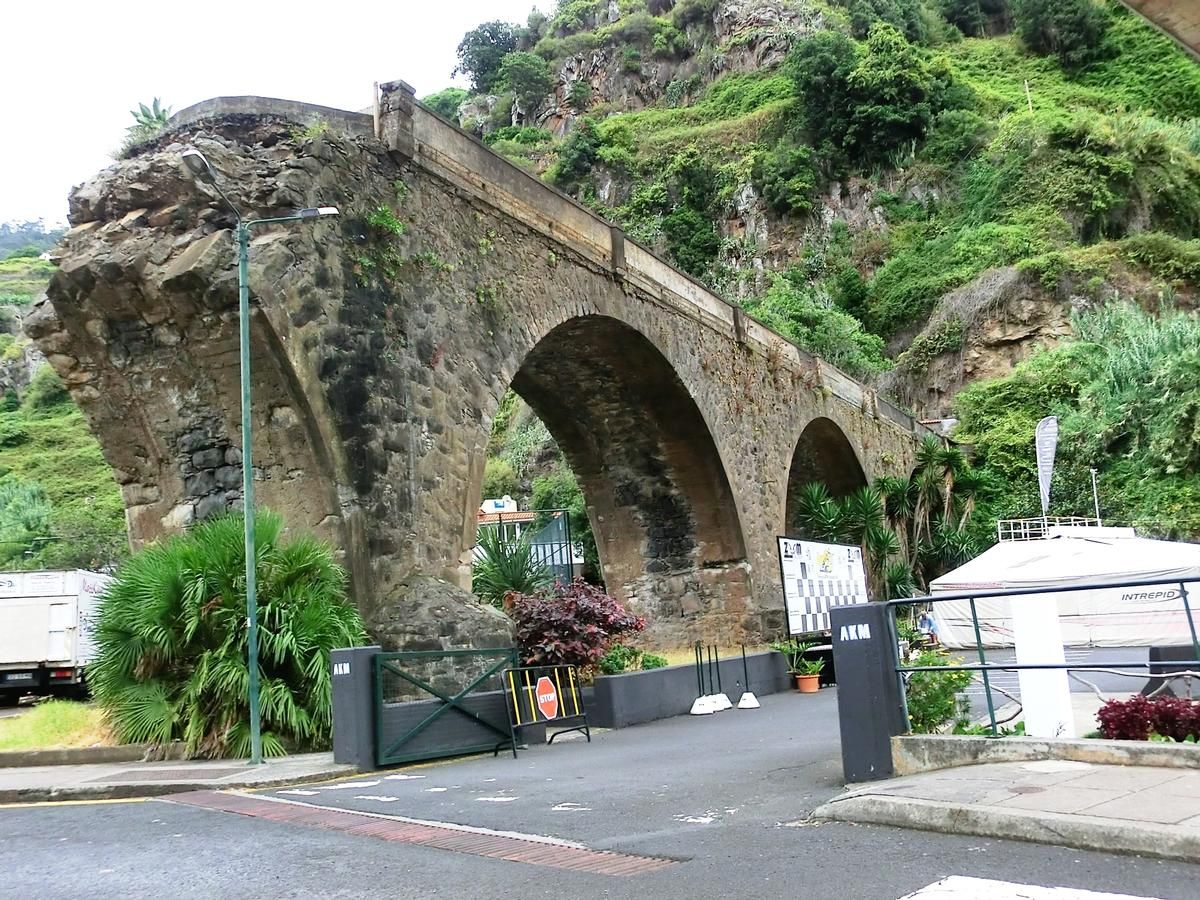 At the start of the 20th century, the bridge was built to connect the two sides of the parish that were separated by Ribeira do Faial. It was opened in 1904.
With a total length of 130 metres, the Faial Bridge was the longest bridge in Madeira, earning the nickname “Bridge of Seven Mouths” due to its seven arches. Bad weather on May 1, 1984, collapsed four of the seven arches that comprised the bridge, leaving the remaining structure as a parish and city monument.
Chapel of Our Lady of Penha de França
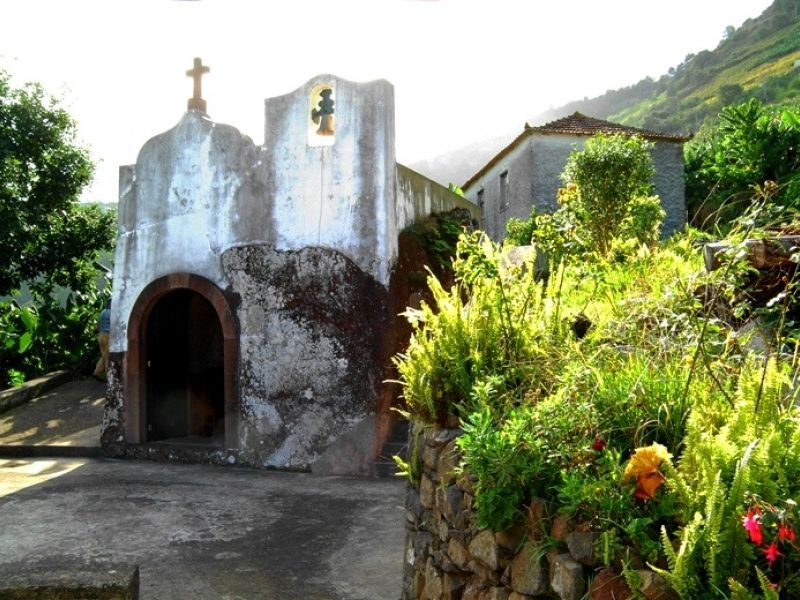 Built in the parish of Faial in the 17th century, more precisely in the year 1685, the chapel of Penha is a small chapel excavated in a huge boulder of reddish stonework on the site of Difference.
Inside, we can see the irregular barrel vault coverage and a small altar in Mannerist stonework. Tradition has it that it was a refuge for escaped Canary Island slaves. Currently, the chapel of Nossa Senhora da Penha de França hosts an annual pilgrimage, which takes place on the third Sunday of October.

