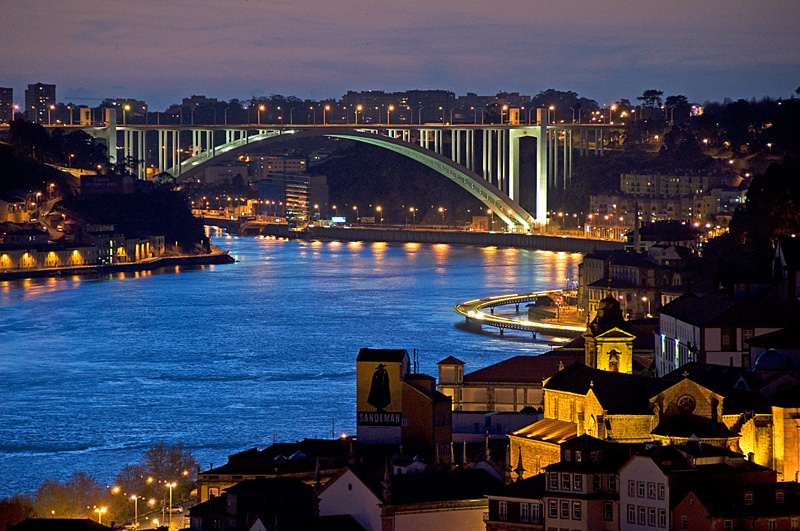
Uncover Lisbon’s Hidden Gems: A Guide for the Discerning Traveler. Whether you wish to avoid crowds due to agoraphobia or desire a more authentic, tranquil experience, Lisbon offers a wealth of lesser-known sites ideal for those seeking serenity and adventure beyond the city’s well-trodden paths.
Tapada das Necessidades
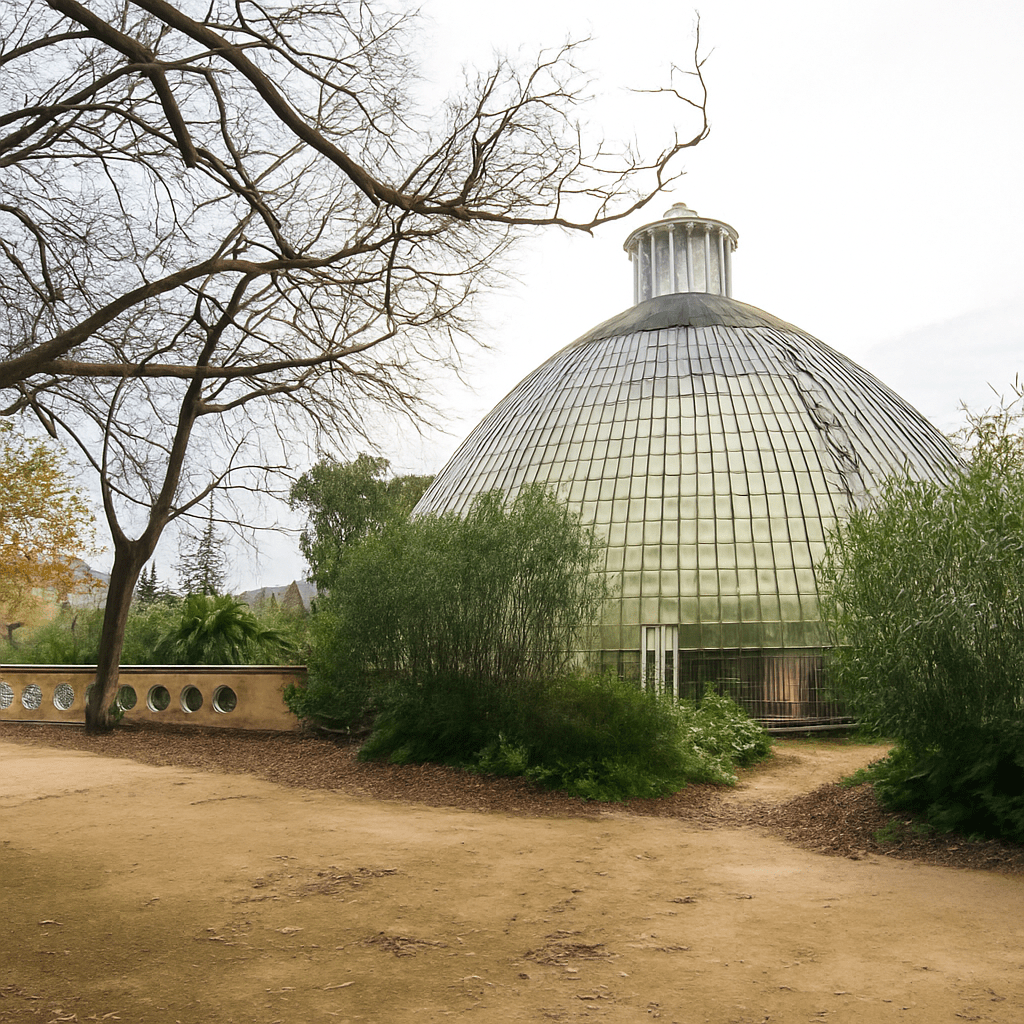
Unlike many major cities, Lisbon does not feature a single, expansive central park. Instead, its green spaces are scattered—found on the city’s fringes, tucked between neighborhoods, or often concealed within its fabric. This landscape of hidden and peripheral parks adds to Lisbon’s air of mystery and romantic appeal.
Tapada das Necessidades is a prime example of these unique green spaces. Situated near the Palace of Necessidades—which now houses the Ministry of Foreign Affairs—this historic garden was established in 1742 as a royal retreat, designed in the British style. For decades, Tapada das Necessidades suffered from neglect, but recent restoration efforts have revived much of its former charm.
Today, the garden is open once again to Lisbon’s residents and visitors, offering an enchanting setting for leisurely strolls or picnics. Its expanse is so prominent that it is easily visible from the 25 de Abril Bridge upon entering the city, yet its entrance remains somewhat hidden, enhancing its enigmatic allure.
From within the grounds, spectacular views of Lisbon unfold, making Tapada das Necessidades a memorable and picturesque destination—for both peaceful recreation and appreciating the city’s panorama.
Livraria do Simão

Livraria Simão is recognized as one of the world’s smallest and most distinctive bookshops. Occupying just four square meters at Escadinhas de São Cristóvão 18, in Lisbon’s Mouraria neighborhood, this unique space accommodates approximately 4,000 volumes—primarily in Portuguese, but also featuring titles in English, Spanish, Italian, Chinese, and other languages.
The bookshop specializes in used books, including literary rarities and significant works by renowned Portuguese authors such as Fernando Pessoa, José Saramago, and Luís de Camões. Due to its size, only one customer can enter at a time; when you wish to browse, the proprietor, Simão Carneiro, steps outside to allow visitors to explore the selection.
Address: Escadinhas de São Cristóvão 18, 1100-119 Lisbon
Hours:
Monday–Friday: 10:30 a.m. – 1:00 p.m. and 3:00 p.m. – 7:00 p.m.
Saturdays: 10:30 a.m. – 1:00 p.m. (select dates)
Livraria Simão is a must-visit for bibliophiles and travelers in search of Lisbon’s hidden cultural treasures.
Fonte Luminosa – Light, water and magic
Monumental 1940 fountain in a park, with sculptures of Triton & mermaids, plus evening light shows.

Lisbon’s Fonte Luminosa (“Luminous Fountain”) is a monumental feature located in Alameda Dom Afonso Henriques, at the heart of the Alto do Pena neighborhood. Often compared to Barcelona’s Magic Fountain and Rome’s bustling Trevi Fountain, Fonte Luminosa offers a distinctive Lisboeta experience—spectacular, yet tranquil and frequented mainly by locals.
Designed by architects Carlos and Guilherme Rebello de Andrade and inaugurated in 1948, the fountain commemorates the advent of a stable water supply to eastern Lisbon. Its modernist design features a wide, terraced cascade with striking sculptures—most notably a Triton on horseback and four mermaids—set above a vast reflecting basin. The fountain is integrated into a landscaped park where you’ll often see families, children at play, couples, and people relaxing or walking their dogs, contributing to its romantic and welcoming atmosphere.
A defining feature of Fonte Luminosa is its nightly light show. As dusk falls, the cascading water is illuminated in a symphony of color, creating a magical scene that can be enjoyed from various vantage points throughout the park. The terrace at the top of the monument also provides excellent panoramic views over the surrounding avenue and city.
Practical details:
- Address: Alameda Dom Afonso Henriques, 1900-221 Lisboa, Portugal.
- Access: Conveniently located near Alameda metro station, it’s easy to reach by public transport.
- Best time to visit: Water shows usually occur between 12:00–15:00 and 18:00–21:00. The light show takes place about 15 minutes after sunset. Note that, due to maintenance, the fountain is occasionally inactive.
Fonte Luminosa remains a cherished local spot—a grand yet peaceful oasis, ideal for a picnic, a stroll, or to enjoy the interplay of light and water amidst Lisbon’s urban landscape
Jardim do Campo Grande
A boat trip inside the city. The best alternative is to combine the boat journey with a stroll down to the patio and a cup of coffee at CASA do Lago’ bar/restaurant.
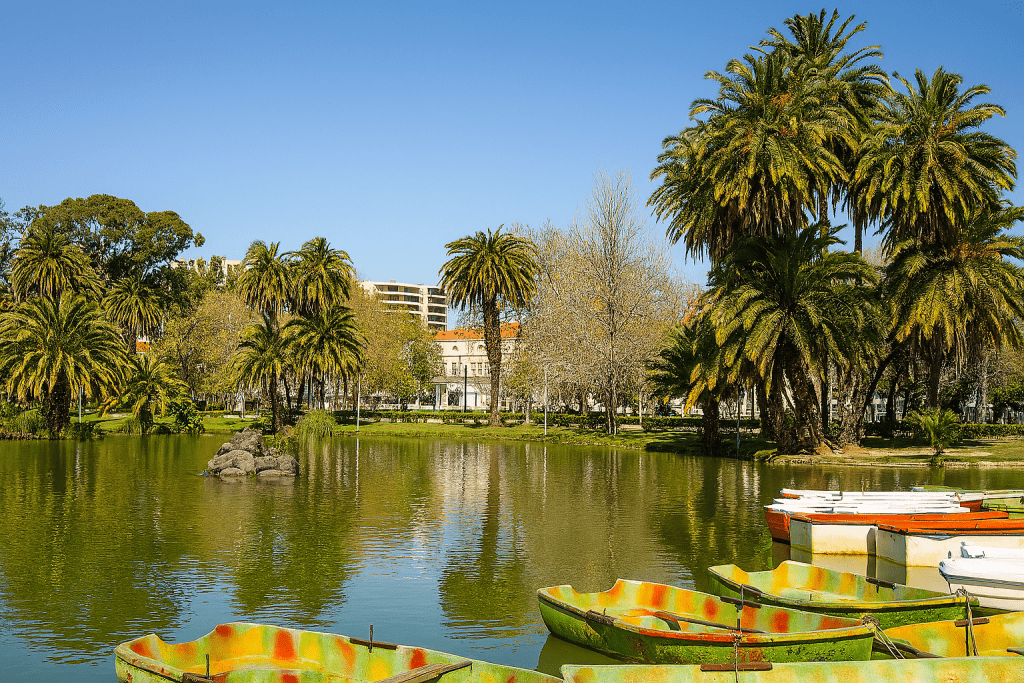
Once an area characterized by isolation and elegant estates shaded by venerable trees planted during the reign of Queen Dona Maria II in the 19th century, this space was transformed into one of Lisbon’s most beloved parks in the mid-20th century. Parque Eduardo VII—named in honor of the British king who visited Lisbon in 1903—underwent its major redesign in 1950 under the renowned Portuguese architect Keil do Amaral.
Stretching for nearly one kilometer, Parque Eduardo VII is a multifunctional urban oasis:
- Landscaping & Atmosphere: The park features expansive lawns, a picturesque lake populated with ducks and overlooked by clusters of mature palm trees, as well as carefully planned garden beds and topiary that provide both shade and structure.
- Leisure & Facilities: Visitors can rent small rowing boats to enjoy the tranquil lake, making it an ideal spot for families. There are multiple sports facilities—including workout stations, a running track, and a large open-air gym area—catering to those seeking physical activity.
- Art and Monuments: Scattered throughout the grounds are several notable sculptures and modern art installations, as well as memorials and commemorative statuary that reflect the park’s historical lineage.
- Amenities: The park is well-equipped with children’s playgrounds, picnic areas complete with tables and benches, restroom facilities, and a public swimming pool. Onsite dining includes a full-service restaurant and casual bar/snack-bar, making it easy for visitors to spend several hours exploring and relaxing.
- Outlook: At the northern end of the park, an observation platform provides one of the city’s most sweeping views—directly down the manicured central axis to the Praça Marquês de Pombal, Avenida da Liberdade, and all the way to the Tagus River.
- Events: Parque Eduardo VII is also a prime location for cultural events, seasonal markets, book fairs, and open-air concerts that bring an extra layer of vibrancy to the area year-round.
With its rich history, abundant amenities, and diverse landscape, Parque Eduardo VII offers a harmonious blend of recreation, culture, and natural beauty in the heart of Lisbon.
Escadinhas de São Cristóvão – Graffiti tribute
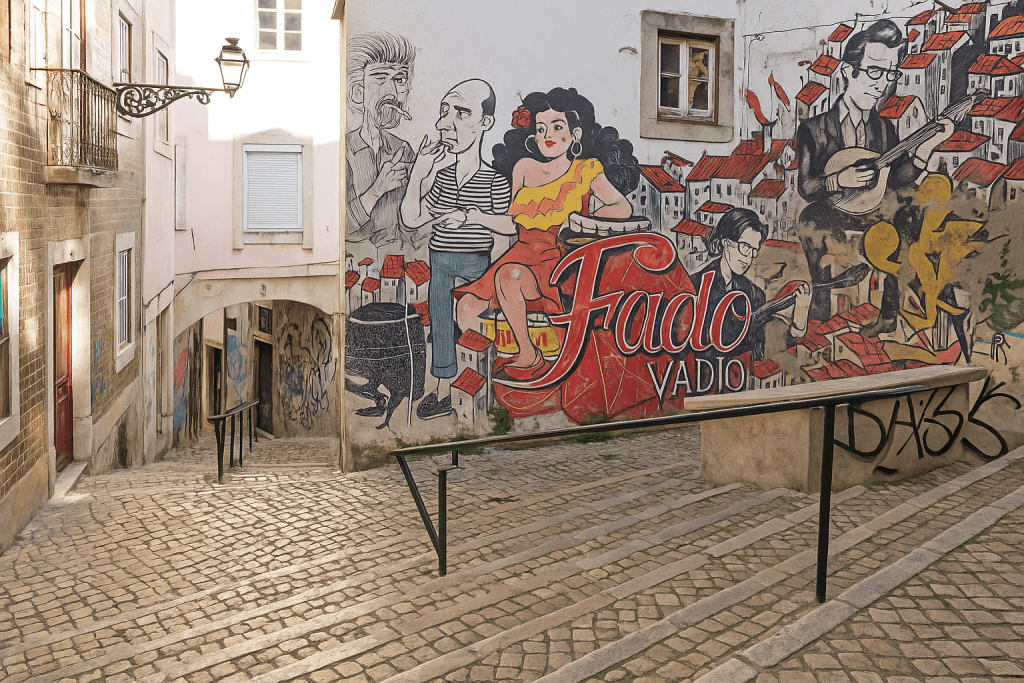
Nestled beside one of Lisbon’s many intimate stairways, this remarkable mural stands as a vibrant tribute to the São Cristóvão neighborhood—a district renowned as the birthplace of Fado, Portugal’s most cherished musical genre. Created by a collective of talented artists, the mural honors the unique spirit and daily life of the community, capturing the essence of all that contributes to its rich identity.
Artistic Homage to Neighborhood Life
The mural vividly illustrates:
- Elderly women in conversation at their doorways, reflecting the neighborhood’s sense of camaraderie and tradition.
- A local resident with a glass of wine, epitomizing conviviality and authentic Lisbon living.
- The parish priest of Igreja de São Cristóvão, a nod to the area’s spiritual heritage.
- Saint Christopher (São Cristóvão) himself, symbolizing protection and historical roots.
- Fado singers (“fadistas”) and musicians, celebrating the birth and enduring presence of Portugal’s iconic song in this very neighborhood.
Community-Driven Curation
This project was thoughtfully curated by M.A.S.C. (Movimento os Amigos de São Cristóvão), an association of local residents and friends who first met on the very streets of São Cristóvão. Their citizen-led initiative has fostered a deeper sense of community pride, transforming public space into a canvas that narrates the lived experiences and cultural legacy of the area.
This mural stands not only as an enduring work of art but also as a heartfelt homage to the everyday narratives, traditions, and musical heritage that define the São Cristóvão neighborhood—ensuring its stories continue to inspire both locals and visitors alike.
AGUAS LIVRES AQUEDUCT
Walking through the Aguas Livres Aqueduct is like walking through history.
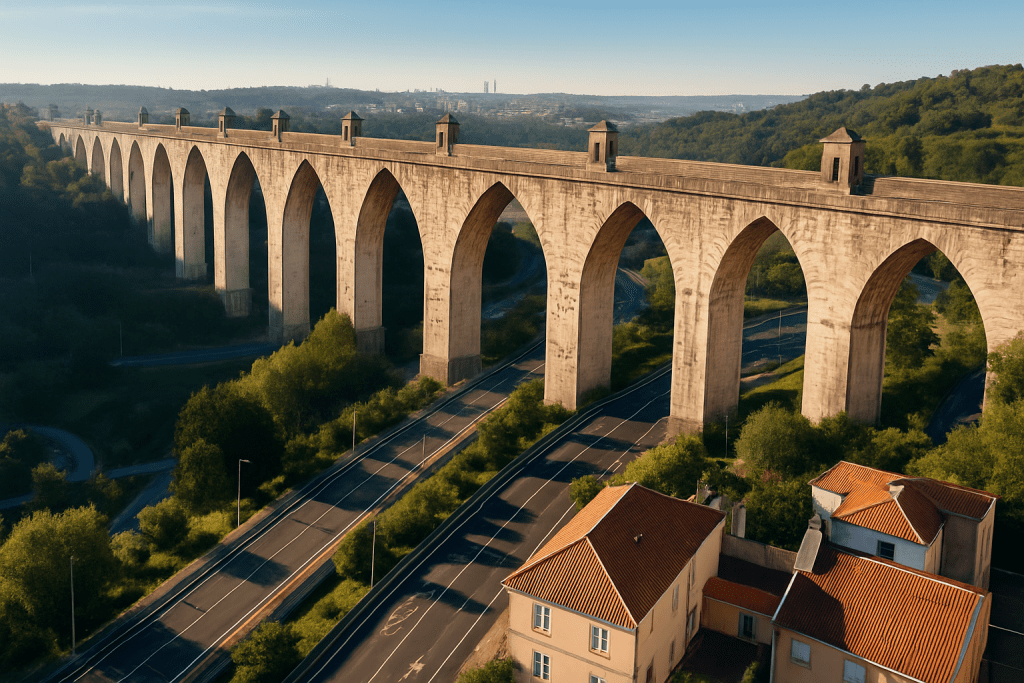
The Águas Livres Aqueduct stands as one of Lisbon’s most remarkable and resilient monuments. Completed in 1748, it was engineered to supply water to the city from Sintra, 14 kilometers away. Notably, the aqueduct survived the devastating 1755 earthquake—a cataclysm that destroyed much of Lisbon’s historic center—and remains largely unchanged nearly three centuries later.
Stretching impressively across the Alcântara valley, the Águas Livres Aqueduct is one of the most prominent and oldest architectural landmarks visible in Lisbon. Walking its elevated pedestrian pathway offers a unique historical experience: visitors are treated to panoramic views of the cityscape, the Monsanto Forest, the iconic “25 de Abril” Bridge, and the picturesque neighborhoods nestled beneath the aqueduct’s arches.
The aqueduct’s walkway is bifurcated, allowing for vistas from both sides. Below its monumental arches, several quaint communities provide a striking contrast to the urban expanse of Lisbon. The pedestrian route connects Amoreiras, a central district in Lisbon, to the Monsanto Forest. However, it is important to note that the Monsanto entrance is typically closed to public access.
Visiting the Águas Livres Aqueduct offers not only an immersion in Lisbon’s architectural heritage but also spectacular, sweeping views—making it a memorable highlight for those seeking to engage with the city’s storied past.
Water Museum – Mãe d´Água das Amoreiras Reservoir
Designed in 1746 by the Hungarian architect Carlos Mardel, this reservoir was built to receive and distribute the water carried by the Águas Livres Aqueduct.
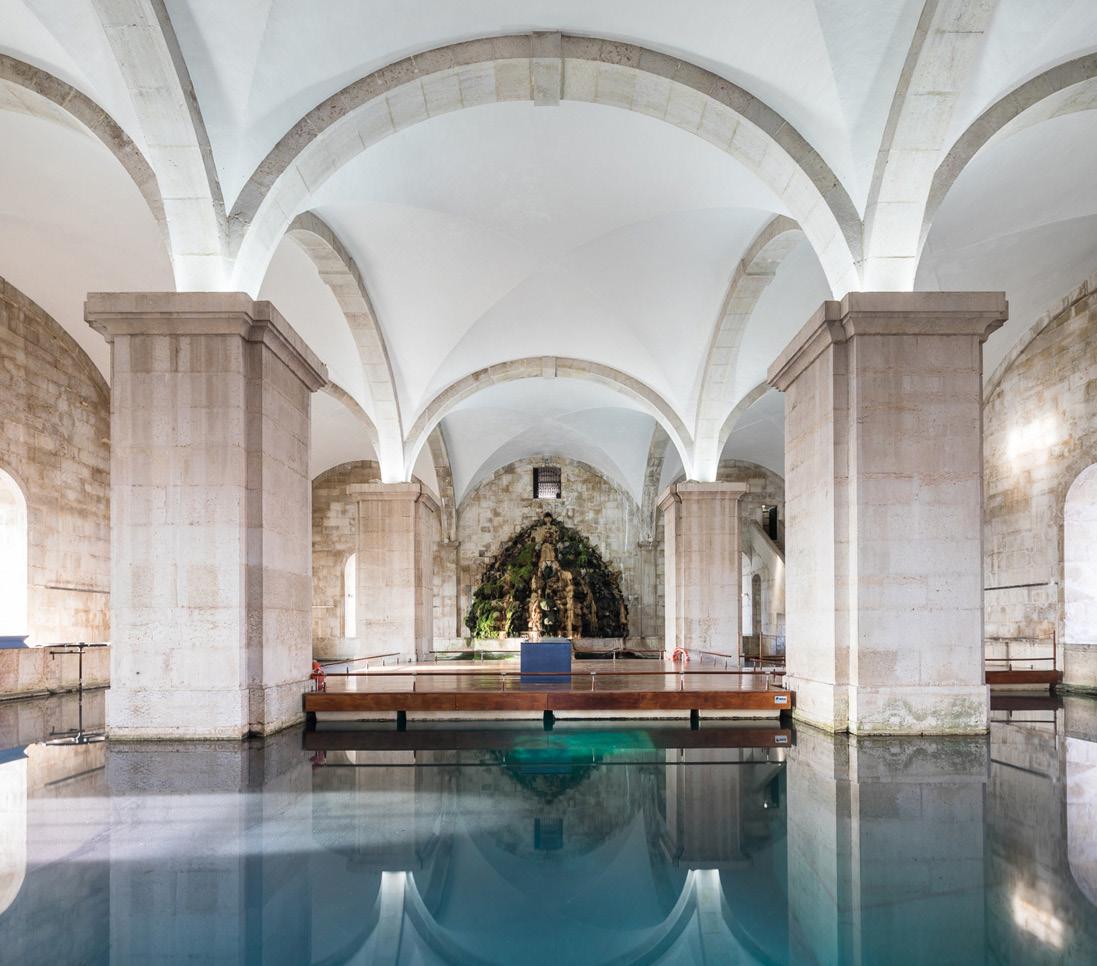
Lisbon’s 18th-century Águas Livres Aqueduct—an iconic engineering marvel—concludes its journey at the elegant Mãe d’Água das Amoreiras Reservoir, often referred to as the “Mother of Water.” Located in the Estrela district, this monumental structure not only played a crucial role in distributing fresh water across Lisbon, but also stands as a testament to the city’s architectural and urban history.
History and Architecture:
- The reservoir was first designed in 1746 by Hungarian architect Carlos Mardel, though its construction spanned nearly 90 years, ultimately being completed and inaugurated in 1834 during the reign of Queen Maria II.
- Characterized by its massive, cathedral-like hall, the reservoir’s central water tank is 7.5 meters deep and can hold up to 5,500 cubic meters of water.
- Stone cascades, pillars, and a vaulted ceiling give the interior a uniquely monumental appearance, emphasizing the historical importance of water in Lisbon’s development.
Features and Experience:
- At the reservoir’s summit, visitors can access a panoramic terrace offering sweeping views of Lisbon.
- The western facade houses the historic Casa do Registo (Register House), once responsible for regulating water distribution to the city’s public fountains, convents, factories, and noble residences.
- Declared a National Monument in 1910, Mãe d’Água is now an integral part of Lisbon’s Water Museum, often serving as a venue for exhibitions and events.
Visitor Information:
- Address: Praça das Amoreiras, 10, Lisbon
- Hours: Tuesday–Sunday, 10:00–17:30 (closed Mondays and public holidays)
- Transport: Easily accessible by public transport, including the nearby Rato metro station and several bus lines.
- Photography: Allowed throughout the site.
A visit to Mãe d’Água das Amoreiras allows exploration of both a single heritage site and the dramatic story of Lisbon’s triumph over nature, with the added reward of exceptional city views from its rooftop terrace.