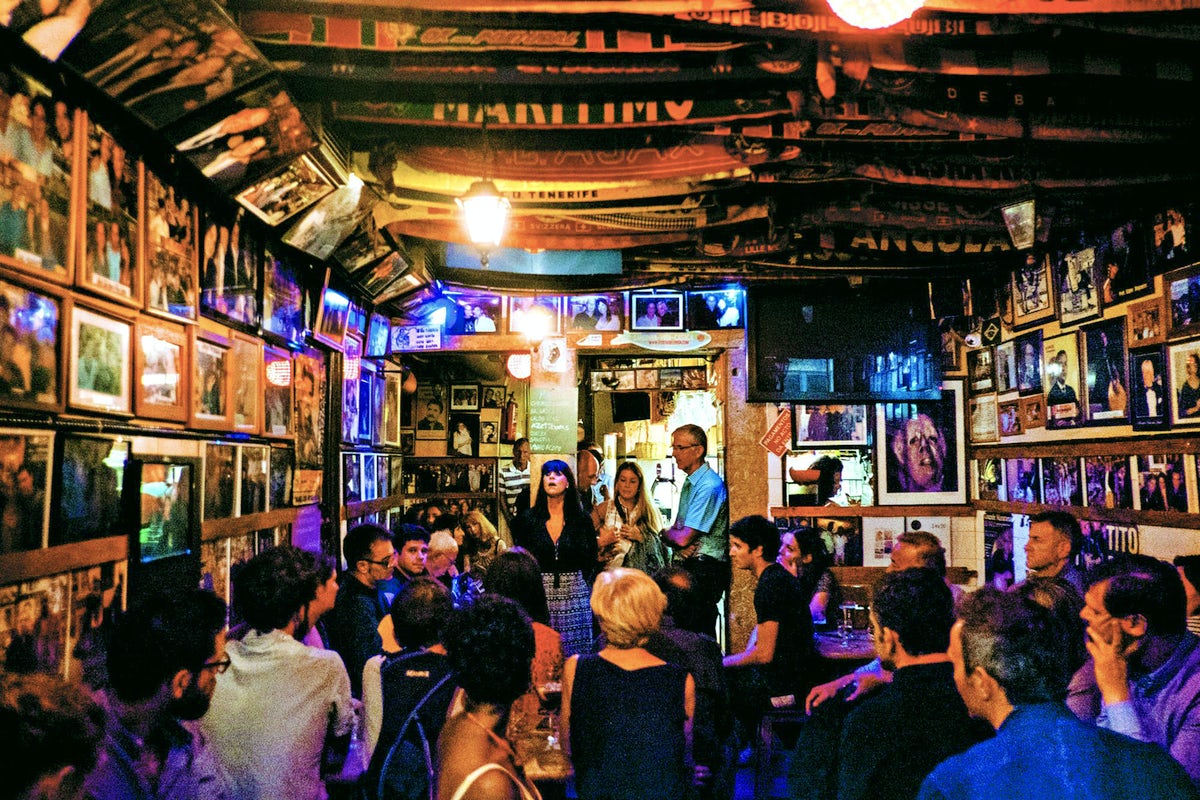
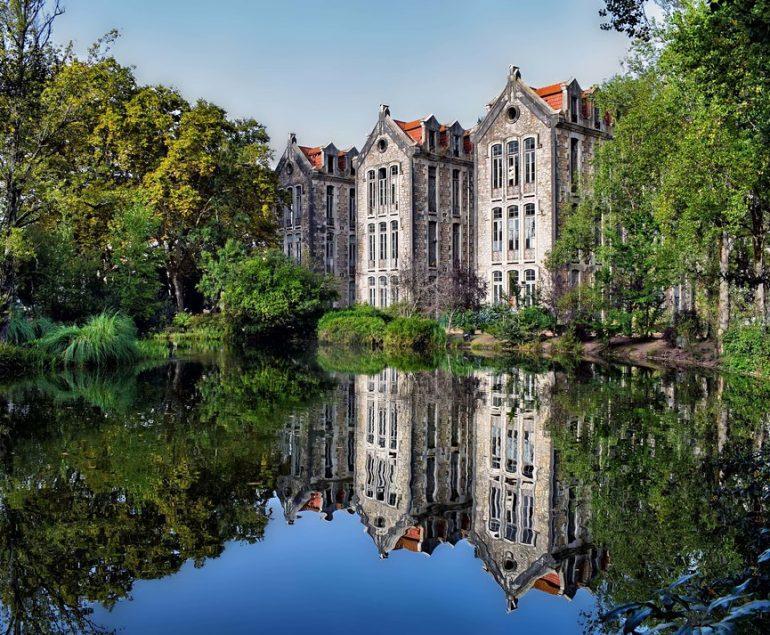
The ancient community evolved around the castle, which was erected in the twelfth century on the instructions of D. Afonso Henriques, the first monarch of Portugal.
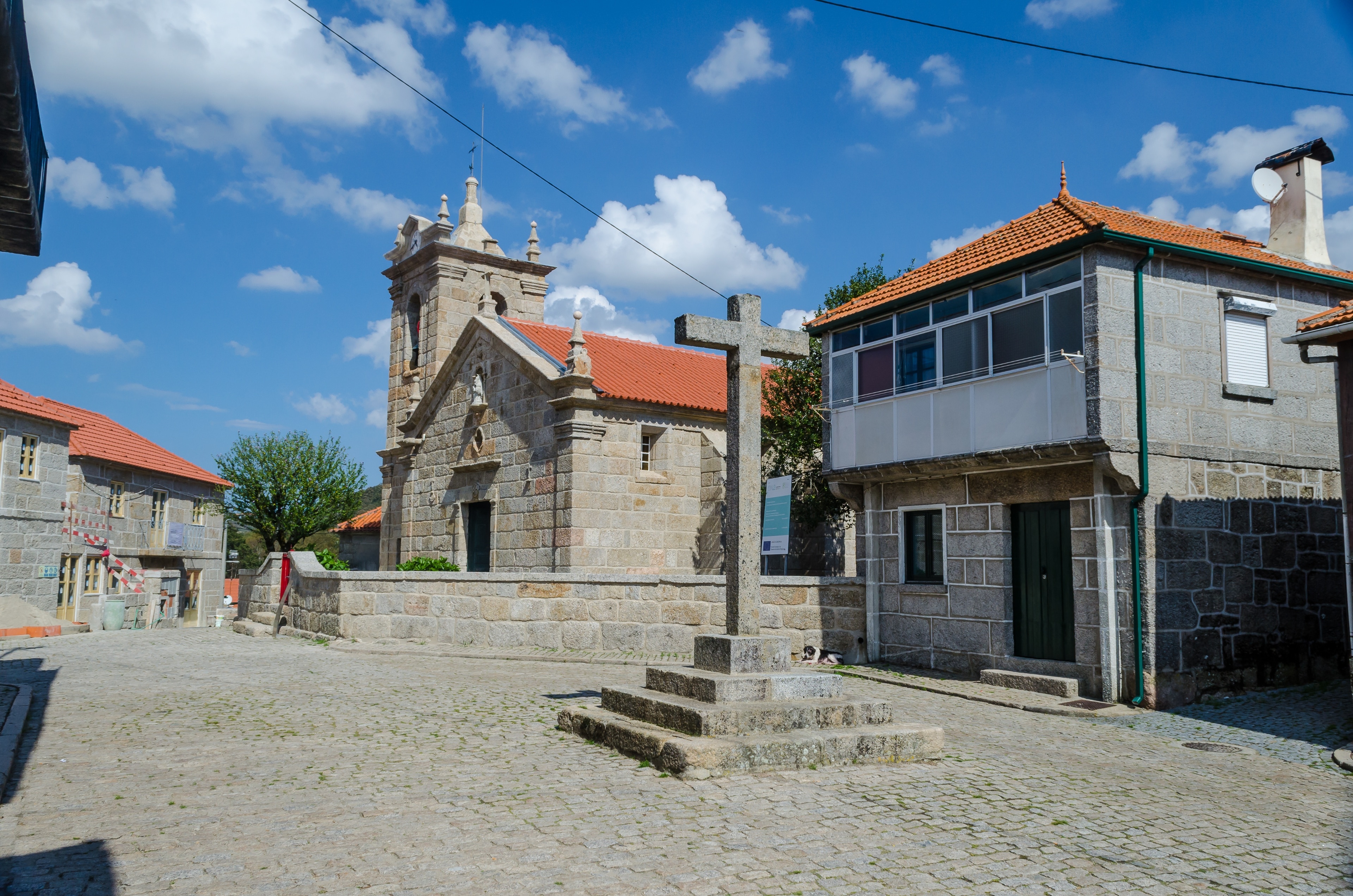
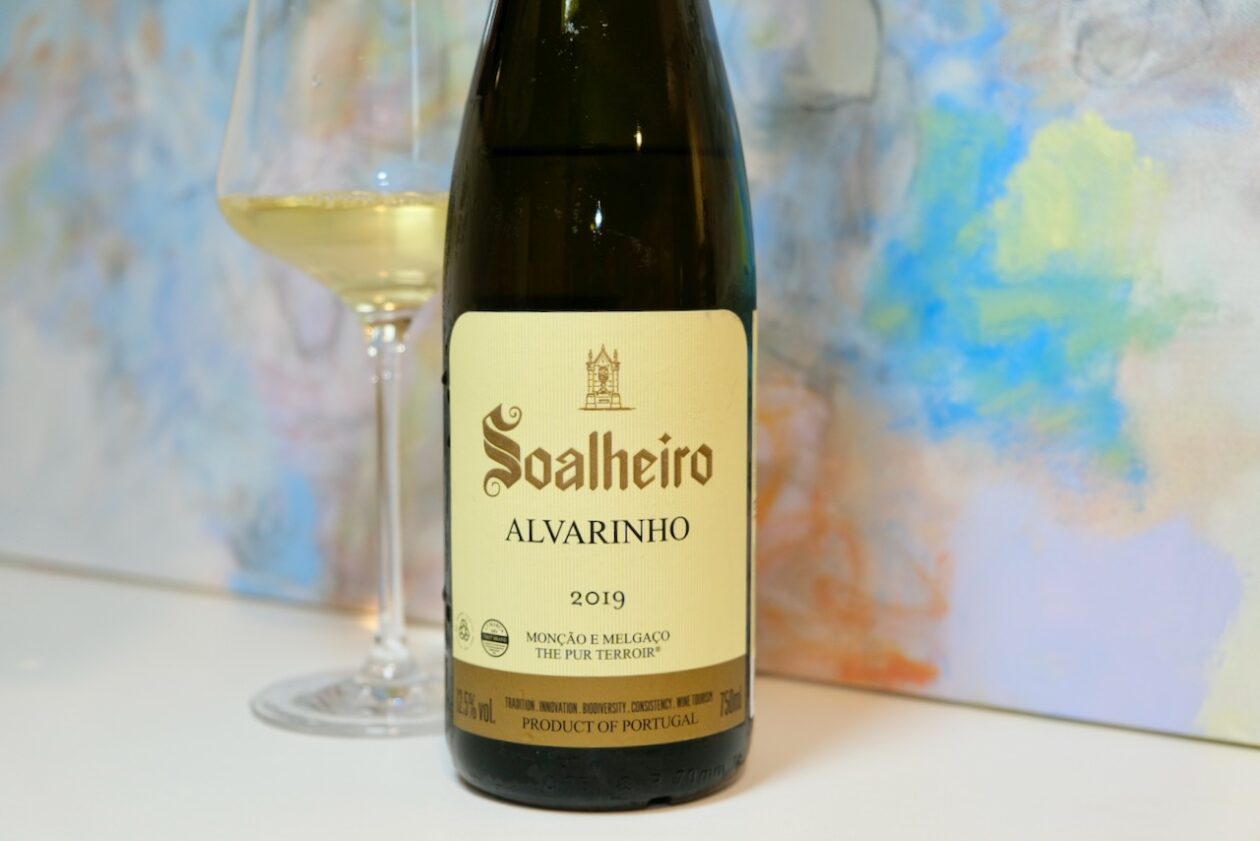 Melgaço has one site that everyone must visit in the midst of the calm and lushly green region where the famous Vinho Verde is produced: the Solar do Alvarinho, where it is possible to taste the many distinct kinds of this unique wine, unrivalled anywhere else in the world.
There are several remarkable Romanesque structures in the surrounding region, including the monastery of Fiães, the churches of Senhora da Orada and Paderne, and the traditional village of Castro Laboreiro. Its origins may be traced back to the Iron Age, and it has subsequently given its name to a dog breed (Portuguese cattle dog) that originated here.

Termas do Peso, about 4 kilometres from town, is a popular spa known for the healing properties of its waters.

The Tower of Homage will be the first to greet you when you arrive in Melgaço. Its excellent location on top of the ancient mediaeval town overlooks the magnificent Minho valley, which surrounds Melgaço and the surrounding Peneda Geres park.
The Tower, which now houses the archaeological museum, is a remnant of the fortress that previously safeguarded the settlement from the Spaniards.
Walking around the village, you’ll see small lanes lined with meticulously maintained houses, all of which are no more than three floors tall. Similar to the one at Solar do Alvarinho, a modest stone palace dedicated to the marketing of Alvarinho and Vinho Verde wines. Don’t just walk by; they provide free wine samples to guests and stock every wine brand made in the region.
In the historic centre, there are two Romanic churches worth seeing: Igreja Matriz (XII Century) and Igreja da Misericordia (from the XIII Century).
In addition, right in front of the Tourism Information Point on Praça da Republica is a small archaeology museum that aims to explain the village’s ancient past through its tunnels and passageways.
The Smugglers’ Land
Today, Galicia/Spain and Portugal have an extensive trade tie, particularly between the regions located around the Minho river.
However, there was a time following the First and Second World Wars, as well as during the dictatorships of Franco and Salazar, when the Minho River became the location to go to buy things that could not be obtained with ration cards.
Smugglers would cross the border with the merchandise disguised in their garments. Or cruise them along the river on black boats in the dead of night to hide them from the authorities.
Oil, flour, rice, copper, and so on were among the most fundamental necessities.
Or Portuguese coffee, which gained in popularity in Galicia since the only thing available was roasted chicory, a coffee replacement.
This period of history may be seen at Melgaço’s Espaço Memoria e Fronteira, an exhibit that displays some of the tactics employed to cross the Minho River as well as the history of the migrants who left the town in the previous 200 years.
The therapeutic hot springs

Melgaço’s thermal baths and hot springs have a lengthy history. Termas de Melgaço, a spring resort in the heart of a lovely natural park, is located just outside of town.
Melgaço’s hot springs are well-known for their ability to alleviate stomach and respiratory issues. It’s free to sample at the Termas main fountain. The water has a gentle iron flavour that will remind you of a soda. Just don’t drink too much, since the resort’s physicians recommend only one glass each day (unless otherwise prescribed).
The spa is set in a green garden with mature trees. It is separated into two buildings: a 1920s-style kiosk where the original hot spring fountain is placed, and a central structure with a pool and medical facilities next to the kiosk. There is also a small playground for children and a cafe within the park.
Wine Flavors of Vinho Verde and Alvarinho
/GettyImages-803910818-69bd95edea324446b0665a52e5f94722.jpg)
Melgaço Province and its neighbouring Arbo (in Spain) are recognised for their mild temperature, which is aided by the surrounding mountains and the Peneda Geres National Park. This region promotes the growth of wine, which is protected under the Alvarinho name, which is regarded as one of the top white wine brands in the world. These wines are also from the Vinho Verde area.
Wineries and vineyards may be found across the province and can be visited. You may taste the wines and learn more about their production techniques and qualities at the House of Alvarinho in Melgaço’s historical centre.
Finally, towards the end of November, Melgaço has one of its most popular festivals, the Feira do Espumante de Melgaço, which promotes sparkling Alvarinho and Vinho Verde. If you visit Melgaço in April, make sure to attend the Festa do Alvarinho e do Fumeiro, which brings together local wine and salted meat producers to showcase their wares.

Melgaço Film Museum. It first opened in 2005, when director and critic Jean-Loup Passek donated his personal collection of film-related artefacts (posters, cameras, lamps…). It’s directly behind the tower.
Melgaço has another fascinating site named Castro Laboreiro within the Peneda-Geres Park. The location, an old and remote nomad settlement, has a long history of customs. The church from the IX century, the “castros” (pre-roman dwelling), and the old Roman route are some of the notable buildings on it.
In addition, there are several trails and cycling routes that go through Melgaço, and several outdoor activities’ companies that offer routes on horseback, 4×4 or even canoeing. In addition to the downtown area, there is a pedestrian walkway known as the “Paseio Urbano del Rio Porto.” This little river promenade is located among an olive grove and features a traditional washing facility that uses pure river water.
Some further information
Melgaço is easily explored on foot, although you will most likely need a car to visit the adjacent little villages and noteworthy landmarks (Lamas do Mouro, Castro Laboreiro, the petroglyph sites…).
There are several private parking lots in town, as well as numerous public parking lots (paid, however, weekends are free.)
Ways to Get There
By Bus: Transportes do Minho and Groupo AVIC provide daily direct buses from Viana do Castelo, Porto, and Lisbon.
By plane, the nearest airport is Vigo (VGO, 50 kilometres away), followed by Santiago de Compostela (SCQ, 140 kilometres away) or Porto (OPO, 150km).