If you have time for one palace in Lisbon, make it the Palace of Ajuda. It’s a rare thing: a royal residence that still feels like a home yet doubles as a working state venue and a superb museum. You walk through rooms where monarchs dined, negotiated, hosted balls, and—crucially—left things behind. Furniture remains as it was originally. Silk wall coverings glow in natural light. Silver glints on sideboards, not in sterile vitrines. And from the windows, the Tagus and Belém lie below, reminders that this hill once watched over an empire.
Here’s the thing: Ajuda isn’t as crowded as Jerónimos Monastery or Belém Tower, and that’s your advantage. You get space to breathe, to notice details, and to linger in halls built for ceremony but intimate enough to invite curiosity. This section will explore what the palace is, why it matters, what to observe, and how to plan an effective visit.
Why Ajuda matters
Ajuda is the last official royal residence of Portugal. After the 1755 earthquake, the court abandoned the downtown Ribeira Palace and moved to a temporary timber complex on this hill, the Real Barraca (literally, “royal hut”). A fire destroyed the complex in 1794, prompting the construction of a permanent palace—a project that would extend, stagnate, and evolve amid wars, political shifts, and changing aesthetic tastes. The result is Portugal’s defining neoclassical palace, a statement of order after chaos, and later the favored residence of King Luís I and Queen Maria Pia in the late 19th century. Today, it’s a national museum and a site for official ceremonies—so yes, you might see a red-roped corridor or a salon prepped for a state occasion.
A quick history you’ll actually remember
- 1755: The Lisbon earthquake and tsunami devastate the royal downtown palace. The court moves uphill to Ajuda in a giant wooden complex (the Real Barraca).
- 1794: Fire destroys the wooden “palace.”
- 1795 onwards: Construction begins on a monumental palace. Plans evolve from late Baroque-Rococo ideas (Manuel Caetano de Sousa) to a cleaner, neoclassical vision (José da Costa e Silva and Francisco Xavier Fabri), influenced by Italian models like Caserta.
- 1807–1812: Napoleon’s invasion halts progress; the royal family decamps to Brazil. Work progresses slowly, but major ambitions are continually curtailed.
- Late 1800s: Ajuda becomes the preferred home of King Luís I and Queen Maria Pia—hence the richly decorated interiors and the feeling that people actually lived here, not just posed for portraits.
- 1910: The monarchy falls. Ajuda transitions into a museum across the 20th century. A devastating 1974 fire destroyed part of the north wing, including a painting gallery with 500 works. (It’s a sobering chapter that the museum acknowledges.)
- 2022: The unfinished west wing is finally completed in a contemporary idiom to house the Royal Treasure Museum, unifying the palace site and bringing the crown jewels into a permanent, purpose-built vault..

What to look for inside the palace
Ajuda’s appeal lies in rooms that appear as though paused mid-conversation. Keep an eye on:
- The Grand Staircase and Vestibule – neoclassical gravity without heaviness. It sets the tone: symmetry, proportion, and light.
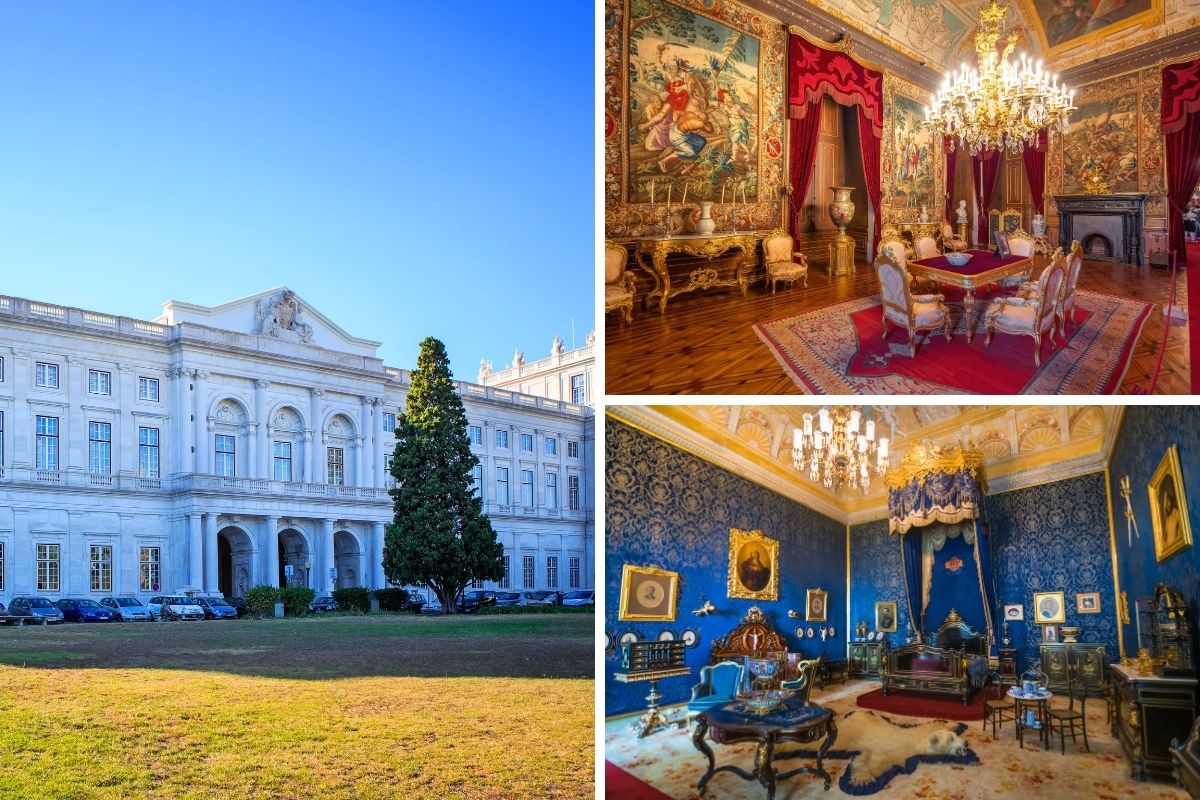
- Throne Room and State Halls – Red silks, chandeliers, sculpted gilding, and the sense that ceremonies could restart at any moment. These aren’t generic “European palace” spaces; they carry a Portuguese thread—maritime gifts, local craftsmanship, and royal portraits that anchor the state’s narrative.
- Queen’s Bedroom (Maria Pia) – Blue silk with silver motifs, Napoleonic taste, and an almost disarming intimacy—religious imagery, an elaborate canopy bed, and even a polar bear rug in period descriptions. It’s ornate, yes, but you can read daily life here.
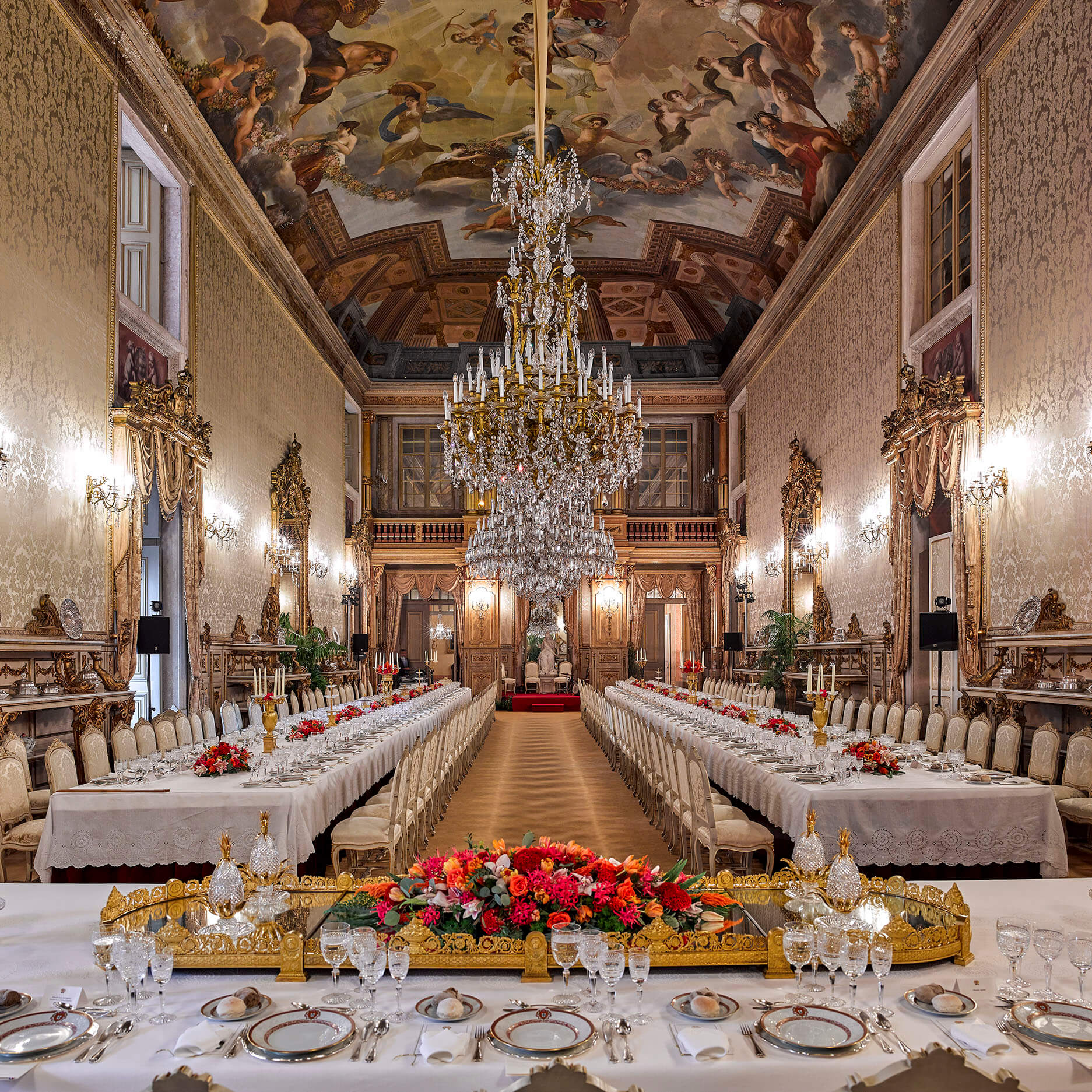
- State Dining Room – Think grand dinners and toasts with visiting dignitaries. When you see the breadth of service and the scale of the table, you understand the logistics of monarchy as much as its glamour.
- Music and Painting Rooms – Ajuda was not merely a site of display; it functioned as a vibrant hub for the arts. Despite losses from the 1974 fire, the narrative of patronage survives.
Tip: move slowly and look for materials—silk, Portuguese woods, stone, stucco—and for light. Morning and late afternoon bring warm angles that flatter the rooms.
The Royal Treasure Museum: a vault you can walk into
In 2022, Portugal finally gave its crown jewels and royal regalia a permanent home in Ajuda’s newly completed west wing. The Royal Treasure Museum (Museu do Tesouro Real) is both architectural and curatorial theater: three floors inside one of the world’s largest museum-grade vaults, showcasing more than a thousand items across eleven themed sections. Visitors can trace narratives through Brazilian gold and diamonds, orders and insignia, diplomatic gifts, and private royal jewelry and the celebrated Germain silver service—a Rococo masterpiece on a cinematic scale. It’s a world-class narrative of power, taste, and global networks, told through metalwork and stones.
In effect, this reveals the underlying infrastructure of monarchy—wealth gathered, refashioned, gifted, and displayed—laid out with context rather than simply dazzled at. The vault design and environmental control are part of the experience; you feel the hush and the weight of value the second you enter.
Gardens and the hilltop setting
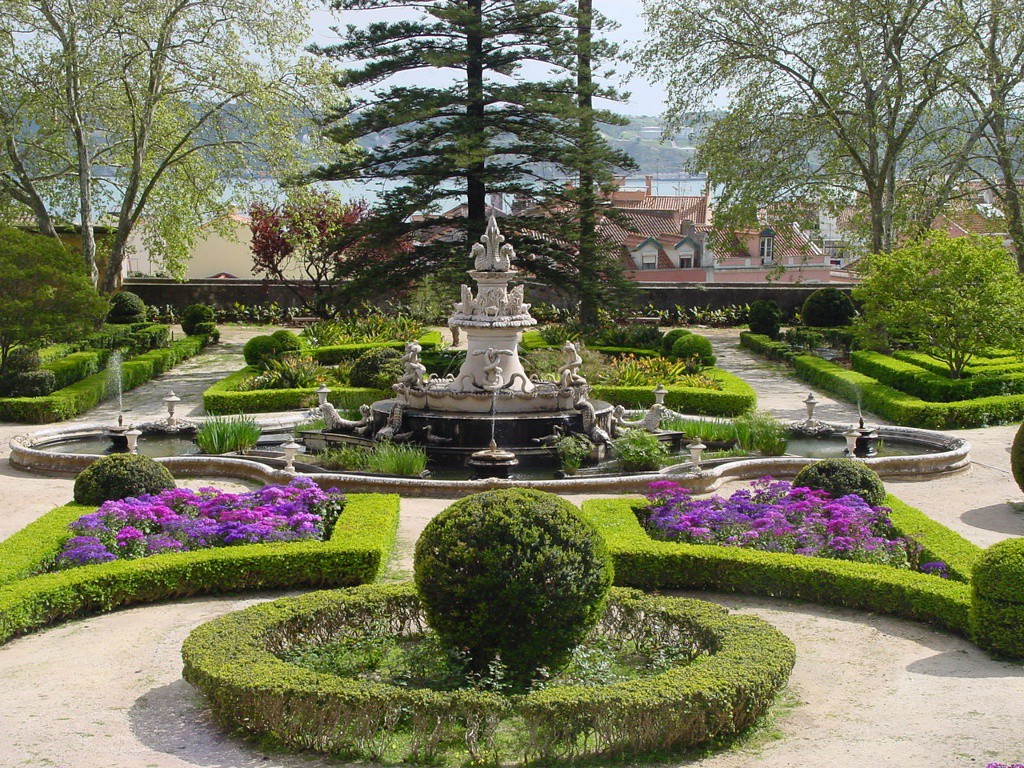
Step outside, and the palace’s setting makes sense. Ajuda occupies a ridge above Belém, with related green spaces:
- Jardim das Damas (Ladies’ Garden) is located beside the palace and has historically been part of the ensemble.
- Ajuda Botanical Garden, across the road, is the oldest in Portugal, once home to around 5,000 species laid out to Linnaean principles—worth a short detour if you like historic gardens. It’s quieter than other Lisbon parks and offers views across the river.
Between the palace and gardens, you can easily spend half a day on this hill before heading down toward Jerónimos, the Coaches Museum, MAAT, or a custard tart at Pastéis de Belém.
Planning your visit
Opening hours
- Ajuda National Palace: Thursday to Tuesday, 10:00–18:00 (last entry 17:30). Closed Wednesdays and on certain holidays. Always check for occasional early closures due to official ceremonies.
- Royal Treasure Museum: Daily; Oct–Apr 10:00–18:00, May–Sep 10:00–19:00; last entry 60 minutes before closing. Closed Dec 25 and Jan 1.
Tickets and passes
- Ajuda National Palace: the official tariff is currently €15 (regular).
- Royal Treasure Museum: official adult ticket €11; reduced rates available; free for ages 0–6; usually included with the Lisboa Card.
- Combos: A combined ticket with the National Coach Museum is widely offered and a good value if you’re doing Belém the same day; pricing can vary by seller, but you’ll often see around €12 for palace + Coaches Museum through tourism sites. If you prefer official sources, buy separate tickets via each museum’s site or at the door.
- Free days: Portugal has an expanding policy of free-entry days across state museums; residents get a set number of free days per year. Check current eligibility before you go.
Getting there
Ajuda sits above Belém on the Largo da Ajuda. Public transport is straightforward:
- Buses: Carris 729, 732, 742, 760 stop by the palace.
- Tram: 18E serves the area, historically running from Cais do Sodré toward Ajuda; service and routing can shift with works, so verify on the day.
- Train: Belém Station on the Cascais line is the nearest rail stop; from there it’s an uphill walk or a quick bus/tram hop.
Tip: If you’re already in Belém for Jerónimos or the riverfront, save your climb for later afternoon when the light is softer. Grab the 732 or 760 up the hill, walk down via the botanical garden.
How long to allow
- Palace: 60–90 minutes if you move at a brisk pace; two hours if you prefer to read, photograph, and absorb.
- Royal Treasure Museum: 60–90 minutes, depending on interest in jewellery and crowd levels.
- Garden add-on: 30–45 minutes.
Accessibility
The palace and museum have made steady improvements, but expect some uneven floors and changes of level in the historic wings. The Treasure Museum’s new architecture is fully modern—with elevators and wide circulation—so it’s the easier part for mobility. For specific needs, contact the sites directly before your visit.
Photography
Non-flash personal photography is typically allowed in the palace, but policies can shift, and the Treasure Museum may have particular restrictions in certain galleries due to security. Always follow staff guidance.
A smart route through the day
If you want a day that feels cohesive rather than rushed, try this:
- Late morning – Start at Jerónimos Monastery to beat the heaviest lines. Quick coffee.
- Midday – Visit the Coaches Museum (it’s close, air-conditioned, and doesn’t take long).
- After lunch – Ride up to Ajuda Palace while Belém bakes. Move through the state rooms without crowds.
- Late afternoon – Cross to the Royal Treasure Museum; the vault’s cool hush is perfect at day’s end.
- Golden hour – Stroll through the Ajuda Botanical Garden or descend to the river for sunset.
This order respects both queues and heat, and it stacks context nicely: monastery → carriages → courtly life → crown jewels → garden.
For design lovers: read the building
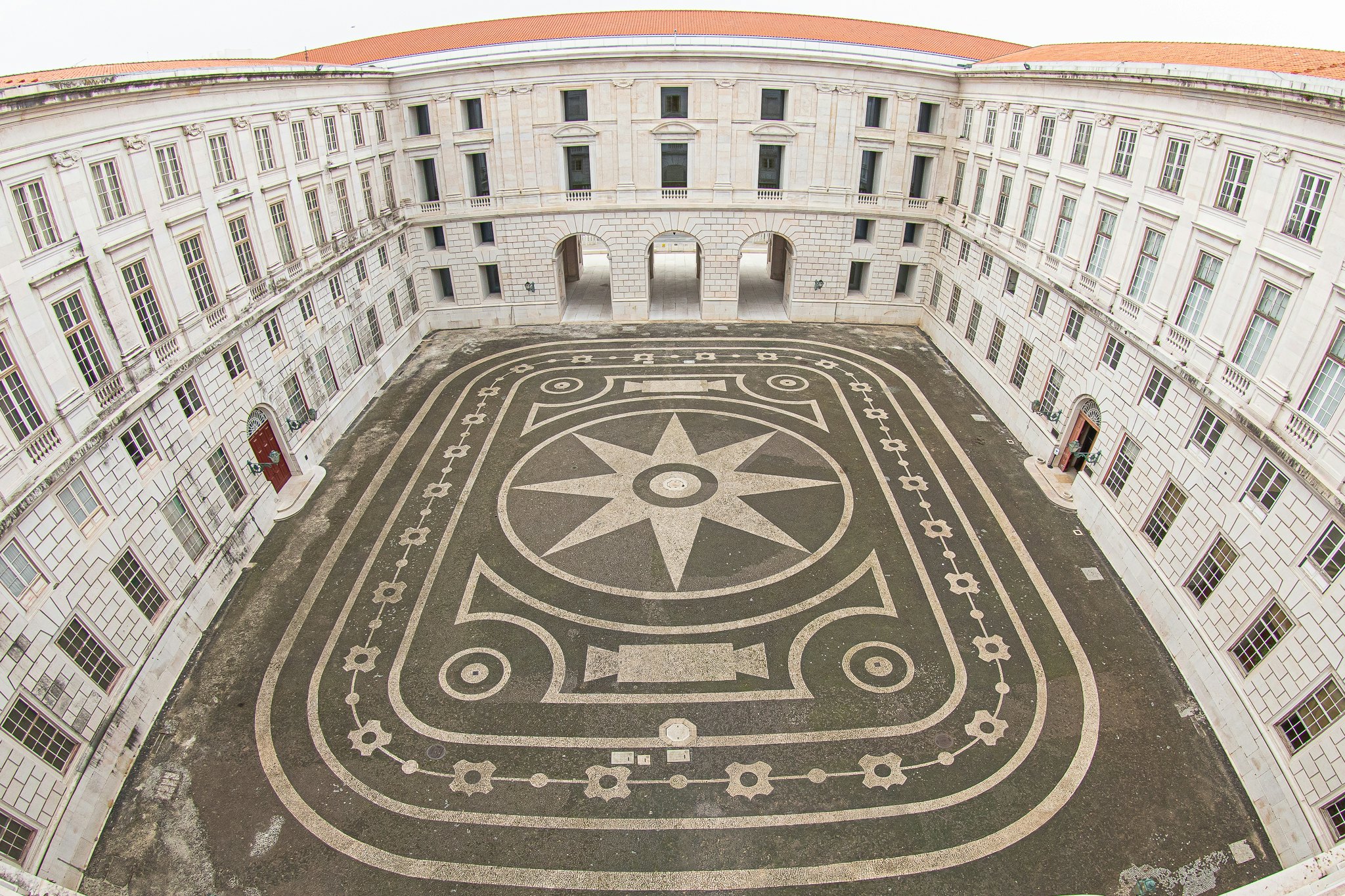
Ajuda is neoclassical, yes, but not textbook French or pure Italian. It’s Lisbon. Look at the façade symmetry facing east and the monumental quadrangle that never fully closed on the west—until 2021–22 finished the story with a crisp, contemporary volume for the Treasure Museum. Inside, note how 19th-century tastes pile on: silk damasks, towering mirrors, chandeliers that read as sculpture. The palace is an architectural palimpsest; every halt and restart left a layer.
For history lovers: trace the power circuits
The palace and the Treasure Museum together tell a political story without shouting. In the halls: diplomacy, ceremony, the optics of monarchy. In the vault: gold and diamonds sourced from Brazil; orders and decorations that knit alliances; gifts that signaled favor or demanded it; and regalia used to stage authority. Walk the two sites as one narrative—performance above, instruments of power below.
For families: make it tactile
Kids tend to connect with scale and sparkle. Encourage children to count chandeliers or identify animals depicted in the tapestries. In the Treasure Museum, focus on three things: a crown, a sword, and an outrageous piece of table silver. Short attention spans love anchors, and the vault environment heightens focus without you having to say a word.
Practical tips that actually help
- Buy same-day and keep it nimble. If the weather turns or an event shutters a wing, switch to the Treasure Museum first; it’s fully indoors and climate-controlled.
- Mind the Wednesday closure for the palace. Many travelers assume Monday (like other museums); at Ajuda, it’s Wednesday.
- Use the buses up, walk down. The hill is no joke in summer. Ride 732 or 760 up and meander downhill through the garden.
- Check combo deals if you’re also doing the Coaches Museum; if you prefer official channels, buy each museum directly to avoid third-party quirks.
- Lisboa Card holders: you’ll often get free or included entry on state sites like these, but confirm the inclusions and time windows before you go.
The bottom line
The Palace of Ajuda isn’t just another set of rooms; it’s Portugal’s 19th-century court life preserved in situ, now completed by a 21st-century vault that finally gives the crown jewels a fitting stage. Although visitors may be initially attracted by the chandeliers and tapestries, they often leave with a deeper understanding of how a small Atlantic nation displayed power, taste, and identity—not in the abstract, but through objects, rituals, and rooms that still resonate with purpose.
If you want a Lisbon day that blends beauty with understanding, Ajuda is your anchor. Go for the palace. Stay for the treasure. Walk out, with the city and its history making a lot more sense.
“Ajuda isn’t just another set of rooms; it’s Portugal’s 19th-century court life preserved in situ, now completed by a 21st-century vault that finally gives the crown jewels a fitting stage.”

Rooms You Can’t Miss
Here are the standout rooms to focus on. They capture royal life, power, and style.

Quick Guide
- Location: Largo da Ajuda, Lisbon. Easily accessible via buses 729, 732, 742, 760; Tram 18E; and train to Belém plus a short bus/walk.
- Opening hours: 10:00-18:00 (last entry 30 mins before closing). Closed Wednesdays.
- Tickets: Official entry to the Palace; check also for Royal Treasure Museum if you plan to see the crown jewels.
- Best time: Late morning or early afternoon to avoid heat and crowds. Light toward late afternoon makes interiors glow.
- Allow: About 90 minutes to 2 hours if you want both the palace and the highlights; 3 hours to include Royal Treasure Museum and garden.
90-Minute Highlight Route
Here’s a suggested walking path through Ajuda Palace that maximizes your time, focusing on the must-see rooms. Adjust if you move slower or want more depth.
| Time | What to Do / Room | Why This Order Makes Sense |
| 0-10 minutes | Enter through main vestibule → Archer’s Hall (Sala dos Archeiros) → Spanish Tapestry / Audience Hall | These are close to the entrance and give your first impression: ceremony, symbolism, and tapestry that sets tone. |
| 10-25 minutes | Music Room → King Luís’s Bedroom + Antechamber → Blue Room → Green Room | Transition from public to private: see living quarters, contrast of luxury and intimacy, decorative variety. |
| 25-40 minutes | Sala Chinesa → Queen Portrait Room → Ballroom / King John VI’s Hall | Build up to the formal show-rooms: style gets richer, ceilings more elaborate, more mirrors, more spectacle. |
| 40-60 minutes | Throne Room → Banquet / Dining Hall (including Supper Room) → Chapel (if open) | Peak of the palace’s political and ceremonial power. Dining and throne rooms are designed to impress. Chapels often tucked near private apartments but worth the stop. |
| 60-90 minutes | Descend through any back-rooms you skipped (e.g. bilhar / billiard room, private dining) → exit through gardens / views → Royal Treasure Museum (if time) | Wind down your visit with quieter spaces and then finish with the vaults of crown jewels if your schedule allows—it’s indoors and leaves a strong final impression. |