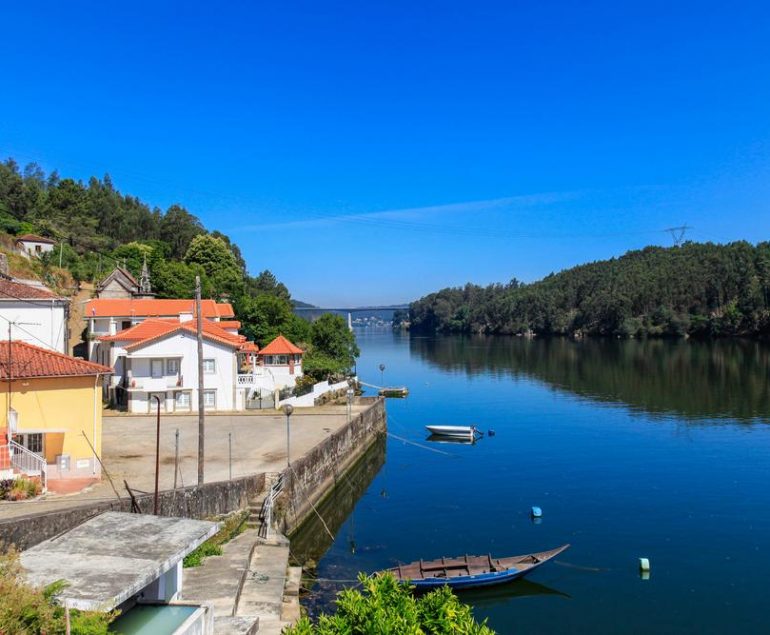
A Bridge Between Kingdoms and Centuries
On the banks of the gentle River Mouro, tucked into the lush green valleys of northern Portugal, lies a village that most travelers have never heard of but that shaped history in ways few could imagine. Ponte de Mouro, straddling the parishes of Barbeita and Ceives in the municipality of Monção, is at once a pastoral retreat and a place where medieval diplomacy unfolded.
At the heart of this village stands its namesake: the Ponte Medieval de Mouro, a 14th-century bridge that still arches gracefully over the clear waters. Classified as a structure of public interest, the bridge is more than a scenic backdrop. In 1386, it became the setting for a pivotal meeting between King João I of Portugal and John of Gaunt, Duke of Lancaster, who sealed terms of alliance between Portugal and England. This moment marked a turning point in the Iberian struggle for power, with the English seeking to press claims against Castile.
Walk across the bridge today, and you’re retracing the footsteps of monarchs, diplomats, and soldiers whose decisions shaped Europe’s dynastic map. The stone beneath your shoes has borne centuries of carts, herds, and pilgrims, and if you pause at the midpoint, you’ll see the same rolling hills that once framed royal negotiations.
A Village of Granite and Grace
Beyond the bridge, Ponte de Mouro reveals itself slowly, like a painting unfurled. Granite houses, weathered but strong, rise two stories high, their lower floors once used as animal courts while the upper levels housed families. This architectural style, typical of the Minho region, speaks of pragmatism born of rural life, but also of endurance—homes that have stood through centuries of storms and shifting empires.
As you meander through the village lanes, you’ll come across chapels and crosses that punctuate the landscape with quiet reverence. The Cruzeiro da Nossa Senhora do Soledade, an ancient stone cross, stands sentinel, while the Chapel of São Tiago, dating to 1569, keeps its doors open to travelers just steps from the 17th-century Church of Barbeita. Chapels of Santo Cristo and Santa Apolónia offer more glimpses into faith woven into daily life, their open façades inviting light and worshipers alike.
Elsewhere, the Casa do Cruzeiro, the small but atmospheric São Félix Chapel, and rustic mills scattered along the riverside create a living museum of northern Portuguese heritage. Each structure tells a story, not of kings this time, but of villagers whose lives revolved around crops, animals, festivals, and faith.
The River That Nourishes
The River Mouro is not simply a setting. It is the lifeblood of the village. Its waters, clear and refreshing, have shaped the land and fed its people. In summer, locals and visitors alike flock to the river beach at Ponte de Mouro, a natural retreat where the current slows and forms crystalline pools. Dip your feet into the cool water, or dive in entirely—this is the kind of place where time bends to the rhythm of nature.
Wander further, and you’ll discover hidden corners where the river forms natural nooks, shaded by willows and ash trees. It’s easy to imagine why generations of families chose this landscape to settle, farm, and fish.
A Feast of the Minho
Travel in Portugal is always a journey of the palate, and Ponte de Mouro does not disappoint. Here, the cuisine is rooted in the river and the hills.
-
-
Lamprey rice is the local showpiece, a dish that inspires devotion (and some trepidation) with its rich, gamey flavor. The lamprey, caught in the River Mouro and neighboring Minho, is prepared in a thick, savory rice dish that embodies tradition.
-
-
-
Shad, another river fish, appears grilled or stewed, its delicate meat balancing the strength of local spices.
-
-
-
For meat lovers, there is oven-roasted goat, slow-cooked until the flesh falls apart, usually served with potatoes and rice in portions generous enough to satisfy a farmer after a long day in the fields.
-
No meal here is complete without a glass of Vinho Alvarinho, the crisp, floral white wine produced in Monção and Melgaço. Alvarinho is Portugal’s northern treasure, perfectly suited to the local dishes, and it has become a calling card for the region.

Where the World Comes to Dance.
Every year, Ponte de Mouro becomes a stage for the Ponte do Mouro and Alvarinho International Folklore Festival – Folk Monção “O Mundo a Dançar.” Organized by the Folklore Ranch of Barbeita’s Casa do Povo, this event brings dancers and musicians from around the globe to the village’s heart.For a few days, the quiet rural rhythm shifts to one of color, music, and motion. Traditional costumes swirl, drums and accordions echo, and locals and visitors join in celebrating cultural diversity. The juxtaposition is striking: medieval stone arches and granite houses providing the backdrop for a world united in dance.
If you time your visit with the festival, you’ll see Ponte de Mouro at its most vibrant, proving that even the smallest villages can host global conversations through culture. Walking Into the Past and Present
One of Ponte de Mouro’s great charms is that it invites slow travel. This is not a destination for rushing through a checklist but for wandering, pausing, and listening. The bucolic countryside surrounding the village offers gentle trails where you can walk among fields, vineyards, and woodlands. Birdsong accompanies you, and occasionally, the clinking of cowbells.
The village streets themselves are worth lingering in. Look closely at doorways, fountains, and balconies, and you’ll spot details that blend history with artistry: a carved lintel, an iron balcony railing, or a moss-covered fountain where generations have drawn water.
Practical Guide to Visiting Ponte de Mouro.
Getting There
Ponte de Mouro is located in northern Portugal, in the municipality of Monção, close to the Spanish border. From Porto, it’s a two-hour drive north along scenic routes that pass through the Minho wine country. From Vigo in Galicia, Spain, it’s just over an hour’s journey, making it accessible from both sides of the border.
When to Visit
- Spring and summer bring warm weather, ideal for river swims and countryside walks.
- Autumn is harvest season, when the vineyards of Monção are alive with activity and Alvarinho flows freely.Festival season (usually summer) is the most lively time to visit, especially if you want to experience “O Mundo a Dançar.”
Where to Stay
While Ponte de Mouro itself is a small village, nearby Monção offers charming quintas (wine estates) and boutique guesthouses, many set amid vineyards with sweeping valley views. Staying in Monção allows easy access to the village while providing a base for exploring the wider region.
What Else to See Nearby
-
Monção: Explore the town’s fortress walls and spa heritage.
-
Melgaço: Portugal’s northernmost municipality, famed for Alvarinho wine.
-
Peneda-Gerês National Park: For wild mountain landscapes and traditional stone villages.
-
Valença: A fortified town overlooking the River Minho, perfect for history enthusiasts.
Why Ponte de Mouro Matters
In Portugal, grand cities like Lisbon and Porto often steal the spotlight, but it is in villages like Ponte de Mouro that the deeper heartbeat of the country can be felt. Here, history is not sealed away in museums; it is underfoot, in the stones of a medieval bridge. Culture is not confined to grand concert halls; it is danced in the square during a summer festival. And tradition is not staged for tourists; it is lived in the food, architecture, and rhythms of daily life.
To walk in Ponte de Mouro is to be reminded that history is never abstract. It is lived and relived in the landscapes where alliances were struck, where chapels welcomed the faithful, and where rivers continue to nourish both body and soul.
Final Thoughts
If you are travelling through northern Portugal, let Ponte de Mouro be more than a stop. Let it be an immersion—a place to sit by the river with a glass of Alvarinho, to taste lamprey rice with locals, to cross a bridge that once bore the weight of kingdoms, and to feel the quiet continuity of a village that has carried history across centuries.
Ponte de Mouro is not just a village. It is a living bridge—between past and present, between Portugal and England, and between the local and the global. And it is waiting to be discovered.