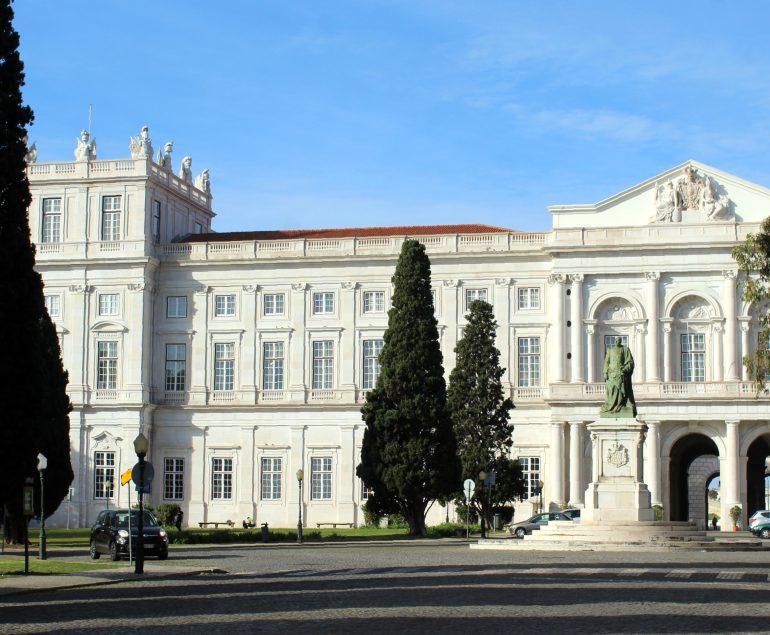
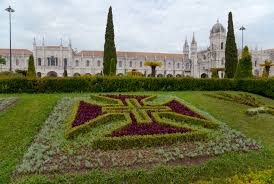
The city of Porto was developed along the hills overlooking the Douro river estuary, and its historical centre was designated a UNESCO World Heritage Site in 1996. It has been continually inhabited since at least the 4th century when it was known as Portus Calle by the Romans.
Porto has a semi-Mediterranean climate, however, it is heavily influenced by the Atlantic Ocean, making it cooler than other cities in a similar climate. Temperatures might reach 40 degrees Celsius in August during heat waves. Winters are pleasant and humid, with a few chilly nights when temperatures fall below 0ºC.
Porto has traditionally been a commercial city, as seen by the architecture of the buildings that line the Avenida dos Aliados, the city’s main thoroughfare. Unlike other large Portuguese cities, which lean toward the baroque, the town centre is granite and colossal.
Porto is a treasure trove of things to see and do, and we’ve compiled a list of some of the best.

Cais da Ribeira
In Porto, Cais da Ribeira is known for being the riverbank area, and it is the best spot to go if you want to take a stroll down sun-dappled streets. In addition to a wealth of cafés and restaurants to pick from, fresh seafood is often the order of the day on this waterfront strip.
A plethora of sights and attractions can be found across Porto, particularly in this area of town.

Dom Luis I Bridge
The Dom Luis I Bridge, which spans the Douro River and is one of the most recognizable sites in Porto due to its sheer grandeur, is one of the city’s most iconic sights. This has to be one of the most impressive sights to witness in Porto, at least in terms of sheer scale.
The bridge, which is similar in style and design to the Eiffel Tower, was created by a student of Gustav Eiffel, who is best known for the construction of the Eiffel Tower.
There’s an option to go across the top of the bridge, and I’d highly recommend it because it offers one of the nicest views of the city.

Church of São Francisco (Porto)
The Church of Saint Francis is the most famous Gothic landmark in Porto, Portugal, and it is also notable for its exceptional Baroque interior décor, which is well worth mentioning. It is located in the historic centre of the city, which has been designated as a UNESCO World Heritage Site.

São Bento Train Station
The São Bento Railway Station (Estaço Ferroviária de Porto-São Bento) is one of Portugal’s most visually arresting railway stations, and it is located in the city of Porto.
The São Bento Railway Station in Porto was built on the site of a former Benedictine monastery and opened its doors to the public in 1916. The edifice exudes a gloomy and nostalgic atmosphere that is characteristic of the city.
Although the train station appears to be beautiful from the outside, the true beauty may be seen on the inside. The main hall is a sight to behold, with more than 20,000 tiles depicting scenes from Portugal’s past.

The Palácio da Bolsa (Stock Exchange Palace)
Construction on the building began in the mid-nineteenth century in the neoclassical style and was completed in the city centre, near to the St Francis Church, in 1898. This historical structure was built on the ruins of the St Francis Convent, which was destroyed during the Liberal Wars and rebuilt on the same site. The Palácio da Bolsa was constructed in 1842, but it was not completed and opened to the public until 1891.
Upon entering this neoclassical National Monument, you will be able to see the huge central courtyard known as Pátio das Naçes (Courtyard of the Nations), which is enclosed by a glass structure that allows for an abundance of natural light to flood the whole building.
In the next rooms, you will see the Golden Room, which is totally covered in gold leaf, and other magnificent rooms until arriving at the Palace’s crowning achievement, the Arab Room, which is located on the top floor of a magnificent marble and granite stairwell. The ceremonial receptions are conducted in this 300-metre-square space, which has been furnished in Moorish style, with inspiration taken from the Alhambra.
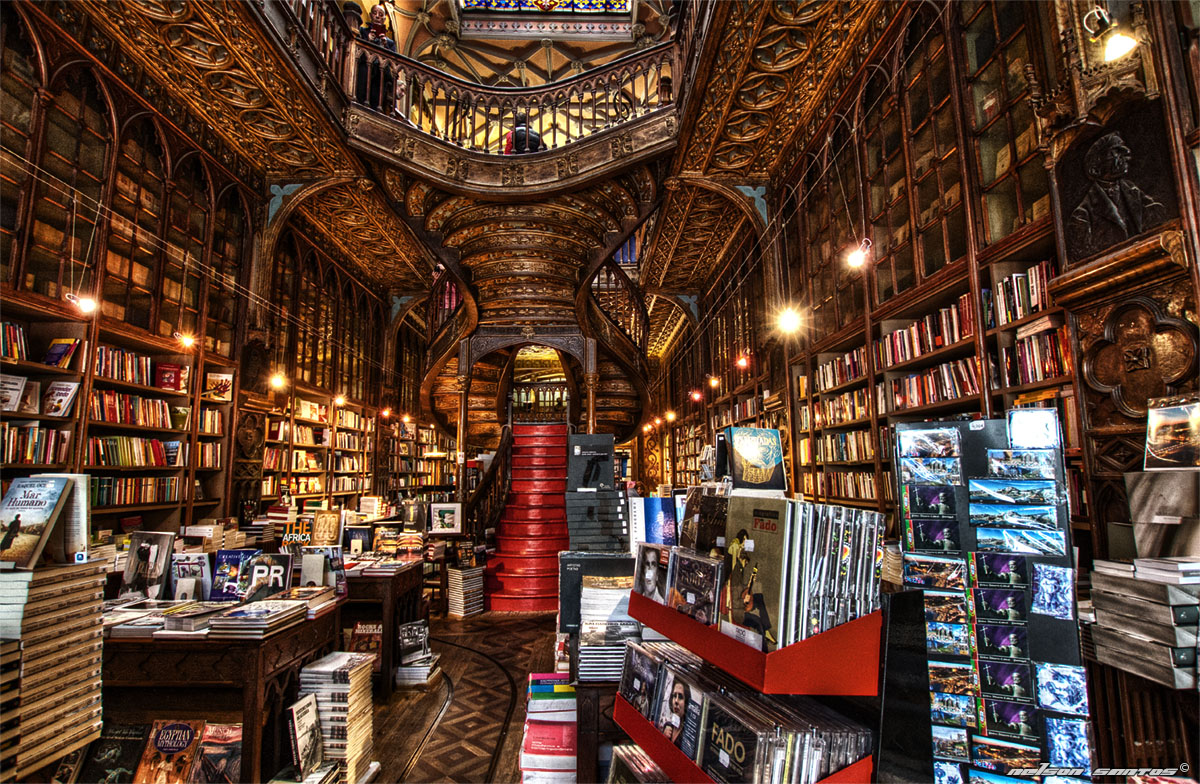
Livraria Lello & Irmão
Found close to the Torre dos Clérigos, the Livraria Lello & Irmão is considered the most beautiful library in Europe and one of the most beautiful in the world.
As the name suggests, Livraria Lello and Irmo is a bookshop in the heart of Porto that is set in a neo-gothic building from 1906 that has been so magnificently decorated with wood panelling that it will transport you back in time to the nineteenth century.
The bookstore is spread over two storeys, with shelves crammed with books of various shapes and sizes lining every wall and reaching all the way to the ceiling on the first floor. While a beautiful wooden and red velvet staircase runs through the centre of the library, connecting the two floors, a stained-glass window at the top of the staircase floods the area with natural light, bringing the entire room to life.
A setting reminiscent of a fairy-tale
You really must pay a visit to this one-of-a-kind bookshop, where you’ll feel as if you’ve wandered into a fairy-tale setting rather than a traditional library.
Livraria Lello is so beautiful that it served as an inspiration for author J.K. Rowling when she was writing Harry Potter while she was living in Porto.
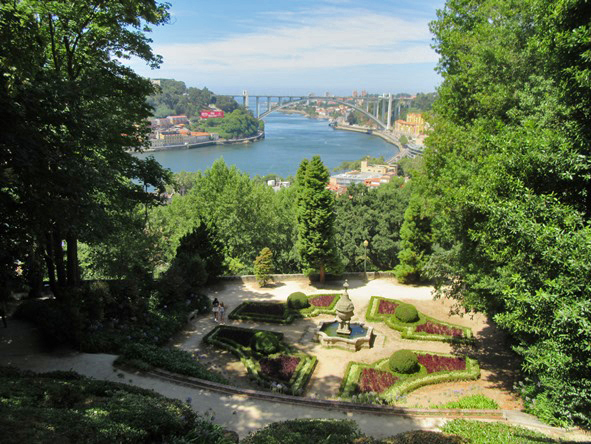
The Crystal Palace Gardens
The Crystal Palace Gardens is a delightful park in Porto, designed at the end of the 19th century.
The Crystal Palace Gardens are located in the upper section of Porto and are a wonderful green park with panoramic views of the city, the Duero’s mouth, and the Atlantic Ocean.
You can visit numerous themed areas inside the gardens, including an aromatic plant garden, a medicinal plant garden, a feelings garden, a rose garden, and a woodland.
Excellent Views
Visiting these gardens is an excellent way to unwind, take a break, and take in some breathtaking views of the city.
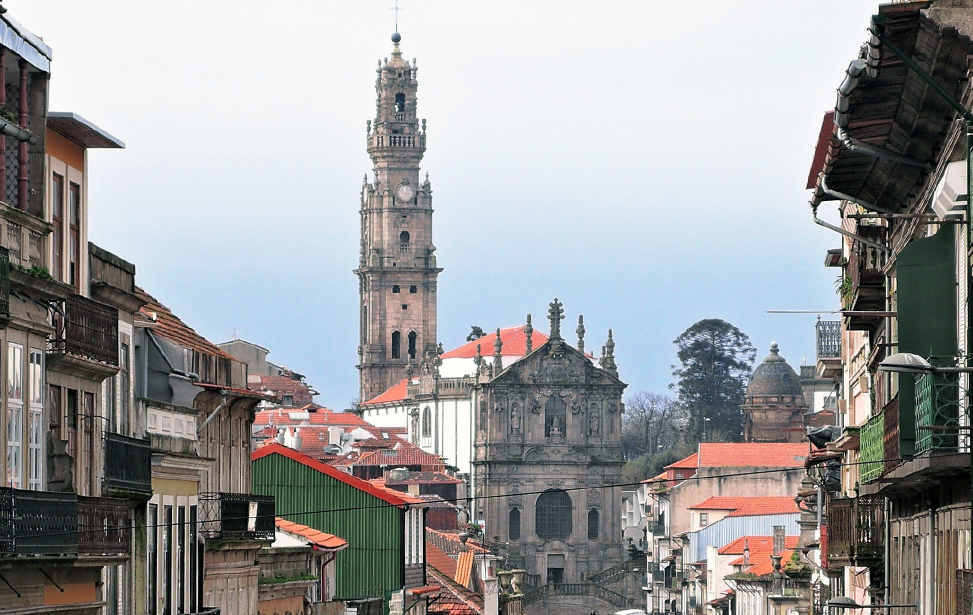
Clérigos Church and Clérigos Tower
The Clérgios church was built in the baroque style between 1735 and 1748. It is topped by the Clérgios tower, which is one of the city’s most recognizable landmarks.
The Brotherhood of the Clérigos commissioned this eighteenth-century complex in the old town, atop the “hill of the hanging men,” where the slain criminals were interred.
Clérigos Tower is a structure in the city of Clérigos
Clérigos Tower (Torre dos Clérigos in Portuguese) is Portugal’s tallest campanile. It stands 249 feet (76 meters) tall, and climbing its 200 steps provides a unique view of the city and the river.
As you climb, you’ll come across 49 bells that create a massive carillon, which can be rather frightening if you’re in the bell tower when they ring. When you reach the top and look out from the tower’s observation deck over Porto, you’ll find that the effort of climbing all those steps was well worth it. This is also an excellent location for photography.
It is well worth a visit.
The Clérigos Church and its bell tower are two of Porto’s most prominent attractions. We recommend climbing the steep steps for a spectacular view of the old city and the Douro River.