Portugal is a beach lover’s heaven with around 600 miles of coast, the majority of which is sandy. Add to that Portugal’s exceptional climate, and it’s easy to see why Portugal is one of Europe’s most popular vacation locations.
There are plenty of sandy beaches, rugged cliffs, and beautiful views to select from between the mainland, the Azores, and Madeira.
Praia de Benagil, Algarve

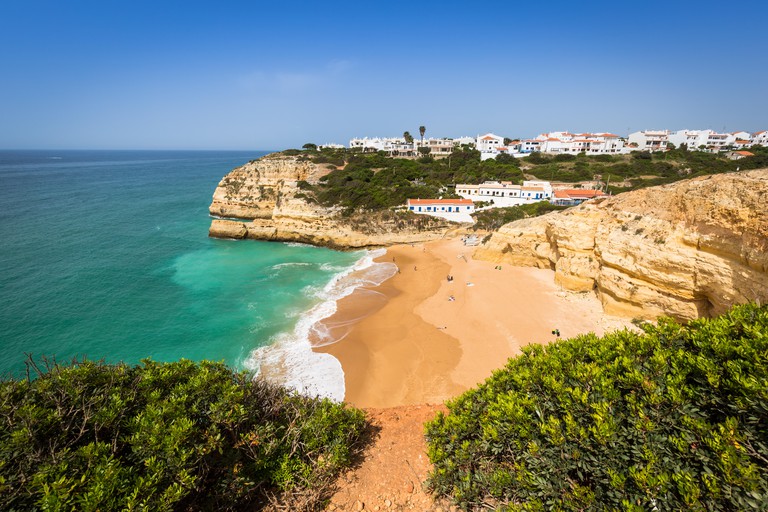
The Algar (Grotto) de Benagil is one of the most photographed caves in the Algarve. Located in a fishing community near Carvoeiro, the Algar (Grotto) de Benagil is the star attraction of the local beach and is only accessible by water. The Praia de Benagil is much more than this unique feature; it is one of the more tranquil and private locations due to the lack of surrounding parking. Additionally, it is bordered by steep cliffs, which are a frequent feature across the Algarve.

Praia da Marinha, Algarve
Another attractive beach in Lagoa is the Praia da Marinha, which is covered with smooth sand and framed by colourful cliffs. It is also one of the quietest areas in the area, maybe due to the fact that it is only truly accessible by car, followed by a steep descent down the cliffside. Bring snorkelling equipment along with your sunblock, as the Praia do Marinha has calmer seas that are ideal for swimming all day.

Praia da Rocha, Algarve
Praia da Rocha in Portimo, a lovely long beach close to hotels, cafes, restaurants, and bars, is closer to the tourist centres. It is one of the nicest resort beaches in the Algarve.
Praia de Odeceixe Mar, Algarve
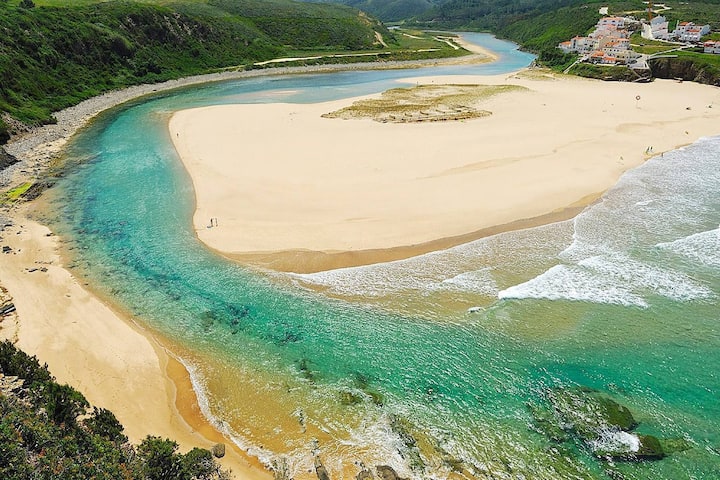
Praia de Odeceixe Mar is a beach on Portugal’s Atlantic coast that borders the Algarve and Alentejo provinces. It is located near the mouth of the River Seixe (Rio de Seixe), which forms the border and leads to the beach via a lovely green valley.
Odeceixe is a large sand beach that attracts surfers. The break near the river mouth is really good. At the northern end, there are cliffs that are abrupt and precipitous. A little cove (Praia de Adegas) at the far southern end is a certified nudist beach.
Odeceixe beach is around 4 kilometres (3 miles) from Odeceixe settlement, and during the summer, a ‘road train connects the two. However, it is not significantly faster than walking, and the trek down to the ocean is rather pleasant.
As a Blue Flag beach, there are numerous facilities, including a smattering of beachfront shops and cafes.
Additionally, the beach is located within the Vicentine Coast Natural Park.
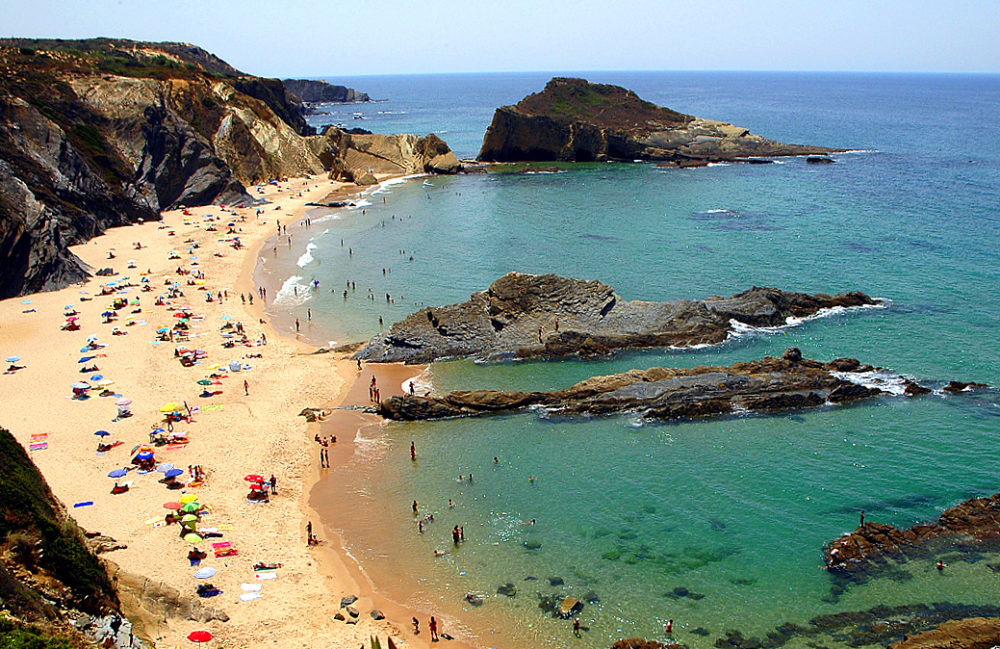
Praia Zambujeira do Mar, Alentejo
Many people know Alentejo with expansive fields and delectable wine, the region also boasts some stunning beaches. In the Natural Park of the Costa Vicentina e Sudoeste Alentejano is a tranquil surf beach surrounded by untamed countryside and endowed with almost magical beauty. This fishing community comes to life only in August, when the area hosts one of the major music festivals in the country. Otherwise, it’s an excellent spot to escape the crowds and enjoy some peace and quiet, whether on the beach or in the neighbouring natural park.

Portinho da Arrábida, Setúbal
Serra da Arrabida, located less than an hour south of Lisbon, is a popular hiking destination that conceals lovely beaches along the mountainside. Portinho do Arrábida, with its glittering sea and beautiful sands, is a popular choice. Numerous charming fishing villages are nearby, where you may sample traditional Portuguese cuisine and culture.

Praia da Nazaré, Nazaré
Nazaré, in central Portugal, is a well-known surf destination. Indeed, the world’s highest wave was surfed here, so it should be experienced only by those with strong wave riding skills. The best time to visit is in the spring or fall when the weather is still pleasant but there are fewer people. Apart from the ocean, Nazaré is an excellent location for fresh seafood and immersion in Portugal’s thriving fishing culture.
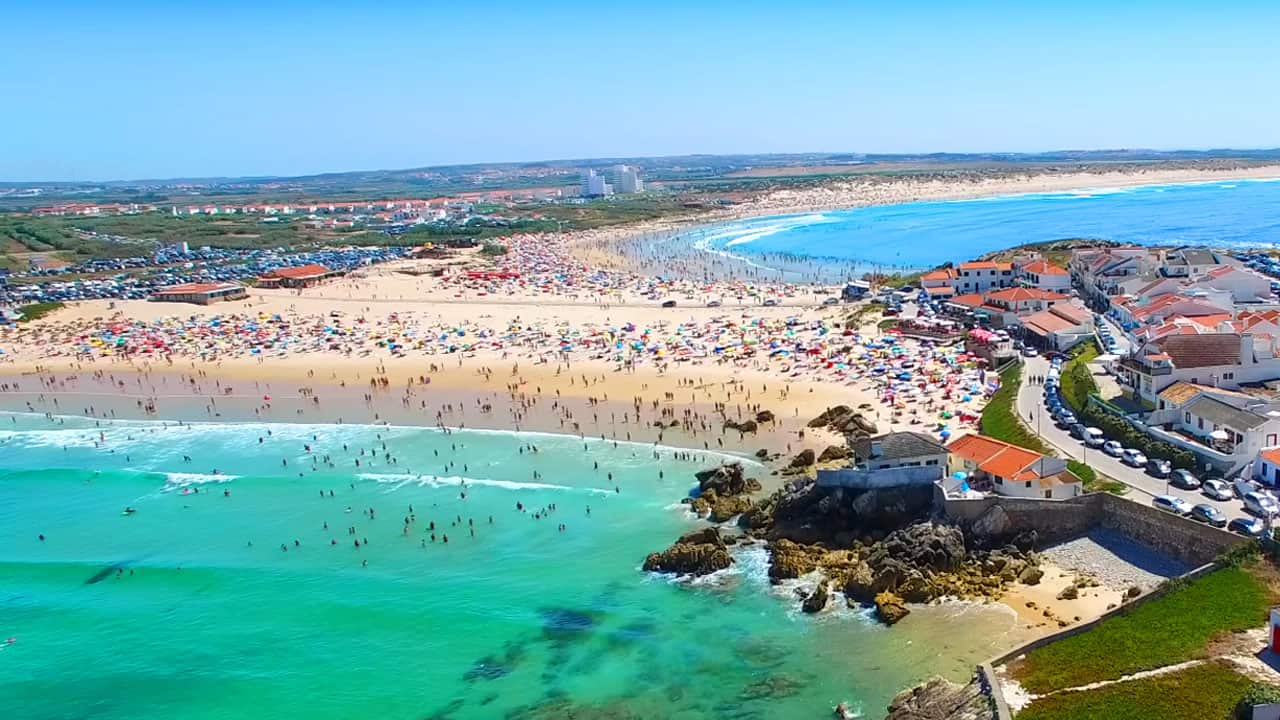
Praia do Baleal, Peniche
Baleal beach is located at the opposite end of the broad bay, approximately 4 kilometres (3 miles) from the town of Peniche. Around 100 metres away, the sandy beach connects the island of Baleal to the mainland.
Baleal is a wonderful, clean beach that is popular with families and, more importantly, surfers. Due to the diversity of the shoreline, there are waves ideal for all skill levels and weather situations.

Praia Azul, Torres Vedras
Just 35 minutes north of Lisbon on a toll-free piece of highway, the stunning and wild Praia Azul, whose name translates as ‘blue beach,’ was one of the first beaches to be connected with Peniche’s legendary waves. This relatively unspoiled blue flag beach is a long, sandy surfer’s paradise located at the mouth of the Sizandro River. There is pretty steady surf throughout the year, with easterly off-shore winds. With adequate banks, this exposed beach break can be large and hollow, with hefty barrels, making it more suitable for surfers than swimmers.
Torres Vedras, a historic city, is only 15 kilometres away.

Praia de Porto das Barcas, Lourinhã
Porto das Barcas is a huge sandy beach located near Lourinhã, approximately 15 kilometres south of Peniche. A little over an hour from Lisbon, this beach was formerly quite popular. However, things have mellowed out through the years, and the beach retains a wild feel for the majority of the year.
For the majority of its length, the beach is surrounded by towering cliffs. These rocks are of importance to palaeontologists due to the discovery of multiple dinosaur remains.
Around halfway along the beach’s length, the cliffs descend and a car park and road lead down. This road goes beside the northern section of the beach, shielded from view by boulders put in front of it. At the end of the road is the old fishing port, which consists of a slipway and a few dilapidated whitewashed hotel structures.

Matosinhos beach, Porto
Porto’s principal beach is Matosinhos. It’s a pleasant enough stretch of fine sand, surrounded by apartment buildings, an esplanade, and a variety of tiny cafes. There is always something going on on the beach during the summer, and the lifeguard service ensures that bathing is safe.
Although the water quality has significantly improved over the years, it still falls short of Blue Flag criteria. This is unsurprising, given the presence of a sizable port and oil terminal near the beach’s northern end.
Matosinhos is also the most reliable surfing location in Porto. Unlike the beaches towards Foz, this beach is devoid of rocks, and the harbour wall at the northern end provides wind protection. The gently sloping sand here absorbs part of the surf’s energy, making it a good site for surfers of all abilities.
One significant advantage of visiting Matosinhos beach is that the area is well-known for its excellent eateries, particularly those serving seafood.

Praia Castelo do Queijo, Porto
The name of the beach is Praia Castelo do Queijo, which translates as “Cheese castle beach”! The name is derived from the Fort of San Francisco Xavier, which is located just across from the beach. The fort is claimed to have been erected on a rock that resembled a massive chunk of cheese.
The beach is a tiny expanse of sand and pebbles that runs parallel to a promenade. Although not as popular as nearby Matasinhos, the beach is nonetheless quite busy throughout the summer months.
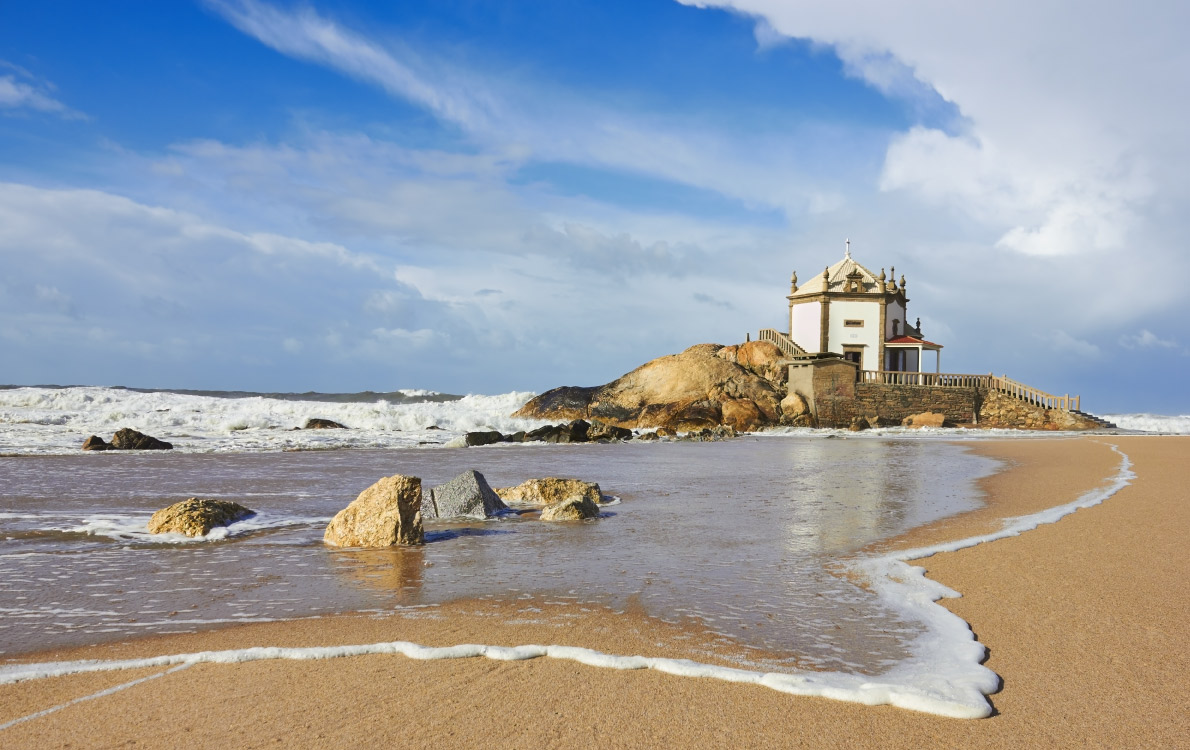
Praia da Miramar, Northern Portugal
The Capela do Senhor da Pedra is a lovely lonely chapel perched on a rocky outcrop in northern Portugal’s Praia da Miramar. The beach surrounding the chapel is expansive, frequently uncrowded, and offers spectacular sunsets (especially when the chapel is included in the backdrop).

Apúlia – Northern Portugal
The long sandy beach of Aplia is located a few kilometres south of Esposende, on the far bank of the river Cavado. Aplia has numerous conveniences, as you would expect from a Blue Flag beach, and is backed by a modest promenade and tiny town. The beach is guarded by lifeguards throughout the summer season, making it a suitable option for families.
The most recognizable feature of Aplia is a cluster of ancient windmills situated in the dunes at the northern end of the beach. These no longer have sails and have been converted into lodging.

Praia Formosa, Azores
Praia Formosa, in Santa Maria, is one of the most beautiful beaches in the Azores. The beach’s most distinguishing characteristic is its yellow-white sands that stretch between the beautiful blue Atlantic and undulating green hills. Even better, you may tent nearby and spend a few days relaxing and admiring this Atlantic gem.