

The Alentejo, a region in southern Portugal, encompasses a vast area of approximately one-third of the country, extending south from the Rio Tejo to the northern mountain ranges of the Algarve and encompassing a wide range of climates. The name Alentejo comes from the Portuguese phrase além do Tejo, which means “beyond the Tejo River.” It’s called Portugal’s garden because the vast majority of the region is devoted to cork plantations, wheat fields, and vineyards. Even though much of it is flat, the region is worth exploring because it contains a wealth of unexpected surprises, ranging from ancient dolmens and superbly sited castles to Roman ruins and expansive Atlantic beaches.
The majority of the population subsists on the vast agricultural estates known as latifndios, which are passed down through generations — many have existed since Roman times. The large farms are often wildlife-friendly – the Alentejo is home to wild boar and hundreds of different bird species, ranging from the black stork to the great bustard.
Towns in the Alentejo, Portugal

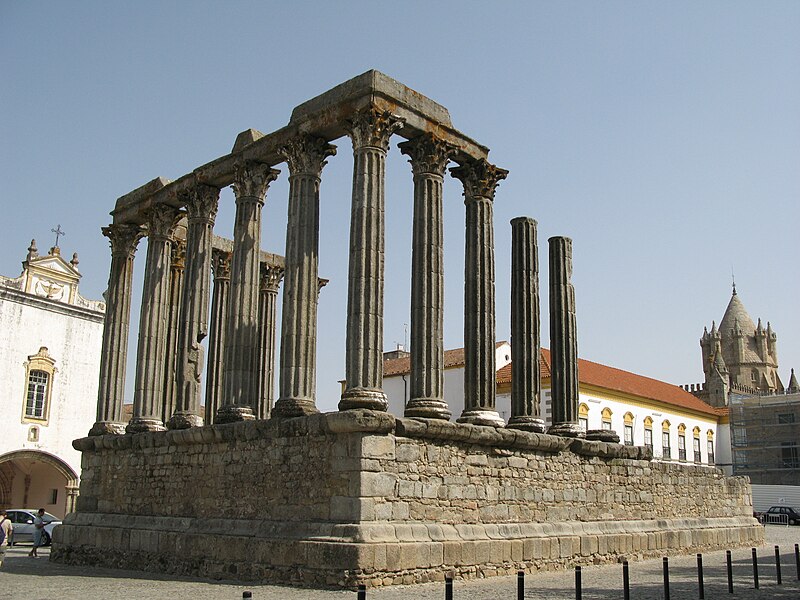
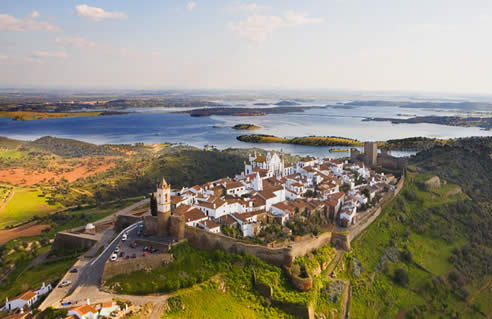
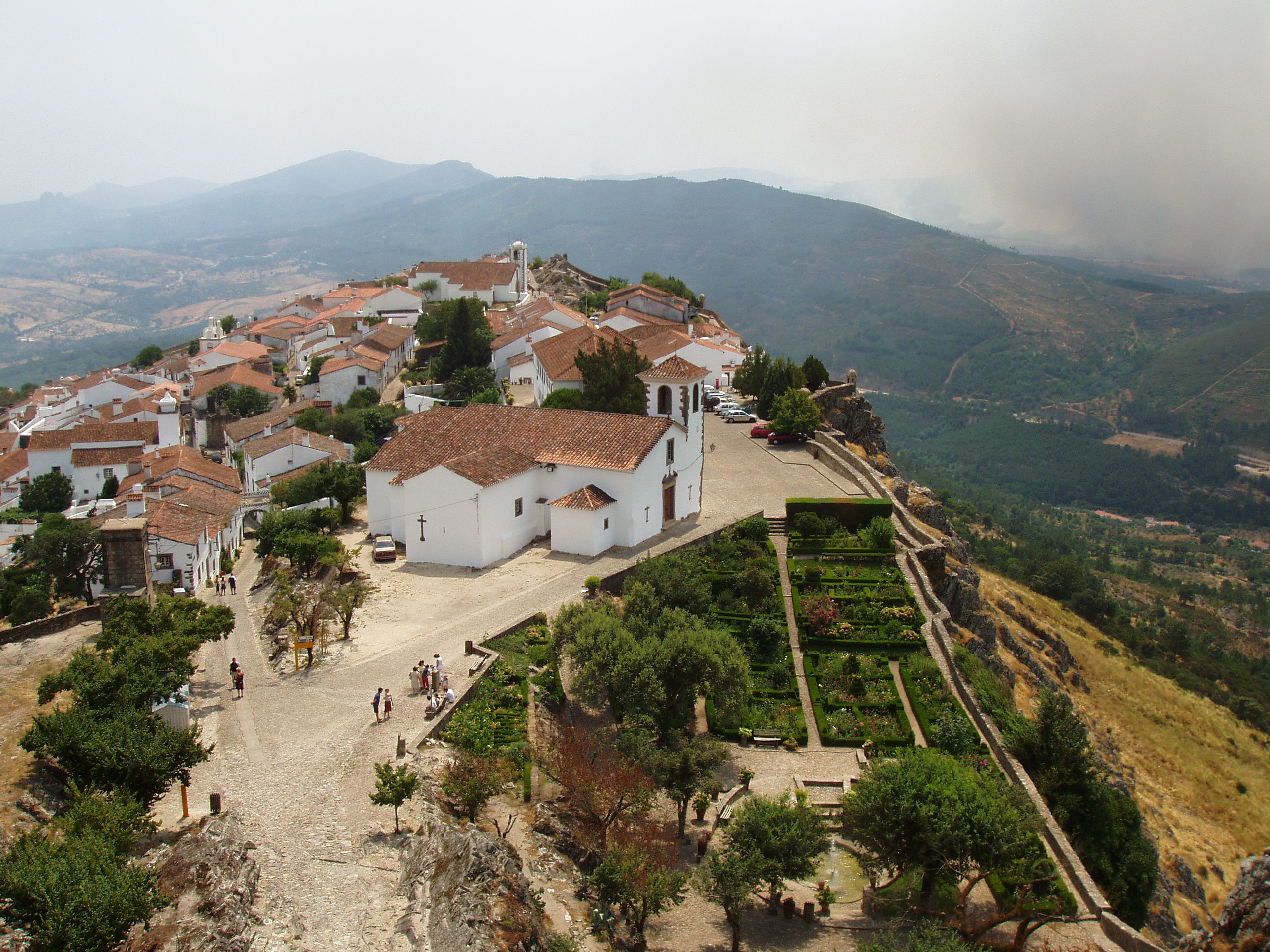


Two towns have been designated as UNESCO World Heritage Sites: Elvas, a beautiful walled town, and Évora, a city whose Roman temple, medieval walls, and cathedral have established it as a popular tourist destination. Alto Alentejo (Upper Alentejo) is home to the sparkling hilltop villages of Monsaraz and Marvo and the marble towns of Estremoz and Vila Viçosa, where the marble quarries have given many of the buildings a luxurious appearance thanks to the local marble quarries.
South of Évora, in the plains of Baixo Alentejo (Lower Alentejo), the sights are more dispersed and harder to view without a car. However, there are some excellent overnight destinations, including the major town of Beja as well as adjacent Moura, Serpa, and Mértola, all of which are charming medieval towns. Also unexpectedly enjoyable is a trip to the coast.
Cork
While travelling through the southern Alentejo, you’ll pass miles and miles of cork oak groves, so it should come as no surprise that the region produces around half of the world’s total supply of cork. Since the late nineteenth century, it has been a substantial Portuguese export, and it has been a prominent crop for more than seven hundred years.
Estremoz

It is in the heart of a marble-rich region that the tranquil but immensely appealing walled market town of ESTREMOZ is located. The material is employed widely in even the most banal surroundings, as you will notice as you stroll its marble-clad streets and squares, which are lined with marble. Historically, it was a significant border village, and it was here that Dom Dinis, an early ruler who began the process of reinforcing Portugal’s borders, opted to build his hilltop palace.
On Saturdays, one of Portugal’s most beautiful markets is held in the Rossio, the city’s huge central square (officially known as the Rossio Marquês de Pombal), which has been the site of one of the country’s most beautiful markets for decades. Since the event begins and ends early, it is beneficial to spend the night in town on Friday night if possible.
The Rossio also plays host to the yearly festival of Estremoz (during the first weekend in September), as well as the massive five-day agricultural extravaganza known as the Feira Internacional de Agricultura e Pecuária, which takes place in April and includes cattle exhibitions, concerts, and handicrafts.
Alter do Chão

Even though it’s a charming town with rounded towers overlooking a shady central plaza, the main reason to go there is to view the royal stud farm, Coudelaria Alter-Real, which was established by royal decree in 1748. Throughout the years, Alter-Real Lusitano horses have been highly sought after; both the Lisbon Riding School and the Portuguese mounted police rely on them for their horses. The stallions are kept in their vaulted stables, and you can see the picadeiro (riding ring) and an assortment of antique carriages on guided tours. Every year on April 24, the annual stud show and sale takes place, making it an excellent day to pay a visit.
Marvão
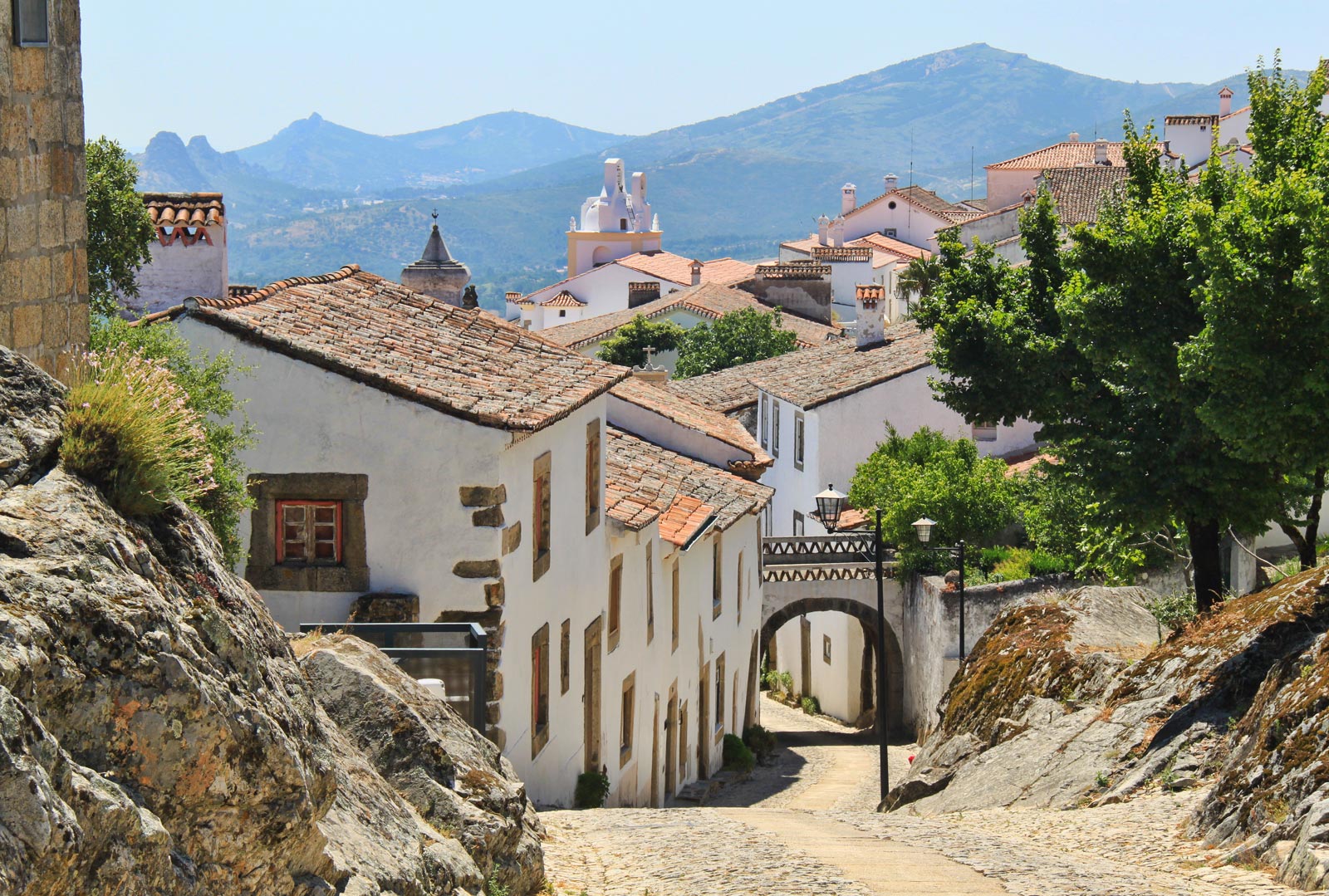
Unbeatable views from the strikingly located rocky outcrop high above the undulating Serra, the settlement has fewer than a thousand individuals living within a complete circuit of seventeenth-century walls, in compact dwellings with granite windows and pitched red roofs.
Naturally, it’s a mainstay on the tourist circuit, although many visitors only drive up for a quick peek, making staying the night here an appealing idea. The community has only a few physical attractions aside from an amazing castle ruin, historical museums, and some exhibits at the Casa da Cultura, which is housed in the old town hall.
The village shop, post office, and ATM are all located along the centre of Rua do Espirito Santo. However, climbing the switchback cobblestone lanes or the (unguarded) outer town walls, or simply sitting in the immaculately managed terrace gardens, is just as satisfying.
Elvas
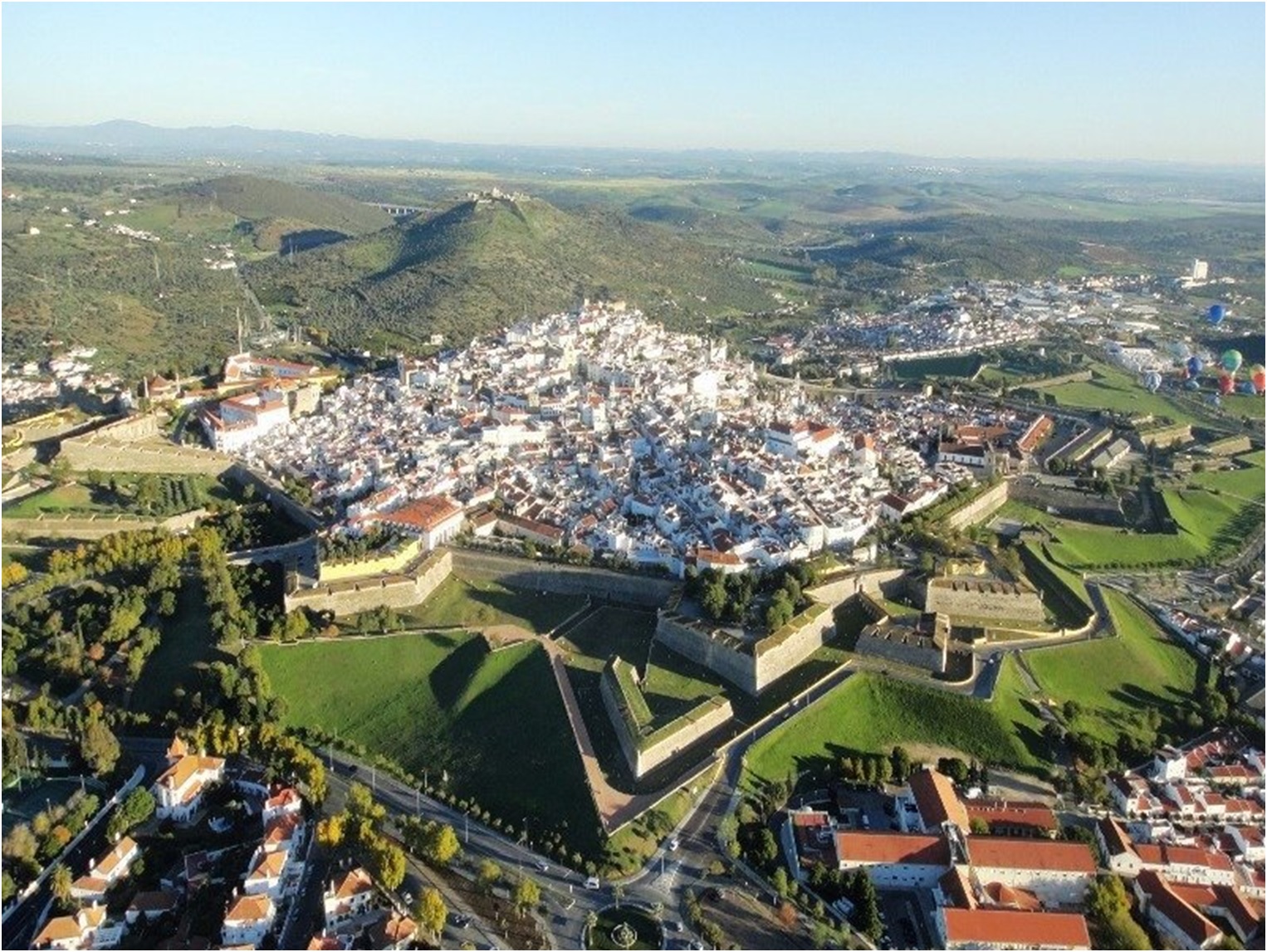
The picturesque hilltop town of ELVAS was formerly one of Portugal’s mightiest frontier posts, strategically located just 15 kilometres to the east across the Rio Guadiana from Spanish Badajoz. Its star-shaped walls and outlying forts of Graça and Santa Luzia are among Europe’s best-preserved military defences, which contributed to the town’s later UNESCO World Heritage designation. With its military significance long gone and a population of around 25,000, the town now relies heavily on tourism – Spanish day-trippers flock here to climb the steep cobblestone streets and sit in the restored central square, the Praça da Repblica, which is ringed by cafés and dominated by the mighty but ultimately underwhelming Igreja de Nossa Senhora da Assunção.
Another popular feature is the bustling Monday market (hosted on alternate weeks), which takes place just outside town behind the aqueduct. Otherwise, the town’s yearly highlight is the week-long Festa de S. Mateus, which commences on September 20.
A brief history
Today’s fortifications originate primarily from 1643–53 when they were constructed during the Restoration Wars with Spain (1641–68). Padre Cosmander, a Dutch Jesuit, oversaw the addition of huge moats and star-shaped ramparts to an already remarkable circuit of walls. The resulting structure is often regarded as the finest example of the Dutch school of fortifications in the world. Elvas’ garrison withstood a nine-day siege by Spanish troops in 1644, and in 1658, with its population down to a mere thousand due to an epidemic, Elvas defeated a fifteen-thousand-strong Spanish army. The fort served as a base for Wellington’s victorious attack on Badajoz during the Peninsular Wars in 1811.
Vila Viçosa

The charming hamlet of VILA VIOSA is fully dominated by its ducal palace – the last abode of the Portuguese monarchy. As in Estremoz, marble is the major building material: the road from Borba, 5 kilometres away, is surrounded on both sides by massive marble quarries, and everything in town, from the sidewalks to the most basic structures, is built of the native stone.
A short history
The Bragança dukes built their residence here in the fourteenth century, initially in the fortress and then in the Paço Ducal in the early 16 century. The Bragança family was always an influential member of Portugal’s governing class, but it was not until Spain’s Philip II assumed the Portuguese throne in 1581 that the family achieved true prominence. After sixty years of Spanish domination, Portuguese soldiers rose up and took control of the Lisbon palace. The Duke of Bragança was an obvious option to usurp the Spanish throne and was duly crowned Dom Joo IV of Portugal.
From 1640 till the establishment of the Republic in 1910, the dynasty maintained monarchical rule. Although the Bragançan dukes and monarchs possessed sumptuous homes around the kingdom, they frequently opted to remain in Vila Viçosa — indeed, it was here that Dom Carlos slept the night before he was assassinated in the capital in 1908 during a republican rebellion.
Manuel II’s son, Manuel, also frequented the palace prior to his final exile to Britain two years later. Following that, the family was barred from visiting Portugal until 1950, and it is believed that when the present duke, Dom Duarte Pio – who still considers himself heir apparent – was born (1945), he was born in the Portuguese embassy in Berne, Switzerland, to safeguard any future right of succession.
Monsaraz

MONSARAZ – colloquially referred to as Ninho das guias (Eagles’ Nest) – is positioned high above the border plains, a little settlement surrounded by strong walls near the Spanish border. Monsaraz has a permanent population of only a few hundred and only two main streets, Rua Direita and Rua de Santiago, which run parallel to one another. The Igreja Matriz is located in the village’s core, close to the main square, which features an unusual eighteenth-century pillory.
While the village does have a few galleries, craft shops, and restaurants, it is the castle, the jumbled streets, and magnificent views from the walls that draw visitors: to the north and west, you survey a typically flat Alentejan plain of vineyards and olive groves, while to the south and east, a watery expanse glitters far below the village, forming part of Europe’s largest artificial lake.
The territory near Monsaraz was a major centre of megalithic civilisation four thousand years ago, and numerous dolmens (covered temples or tombs), menhirs (standing stones), and stone circles still exist today.

Monsaraz Castle
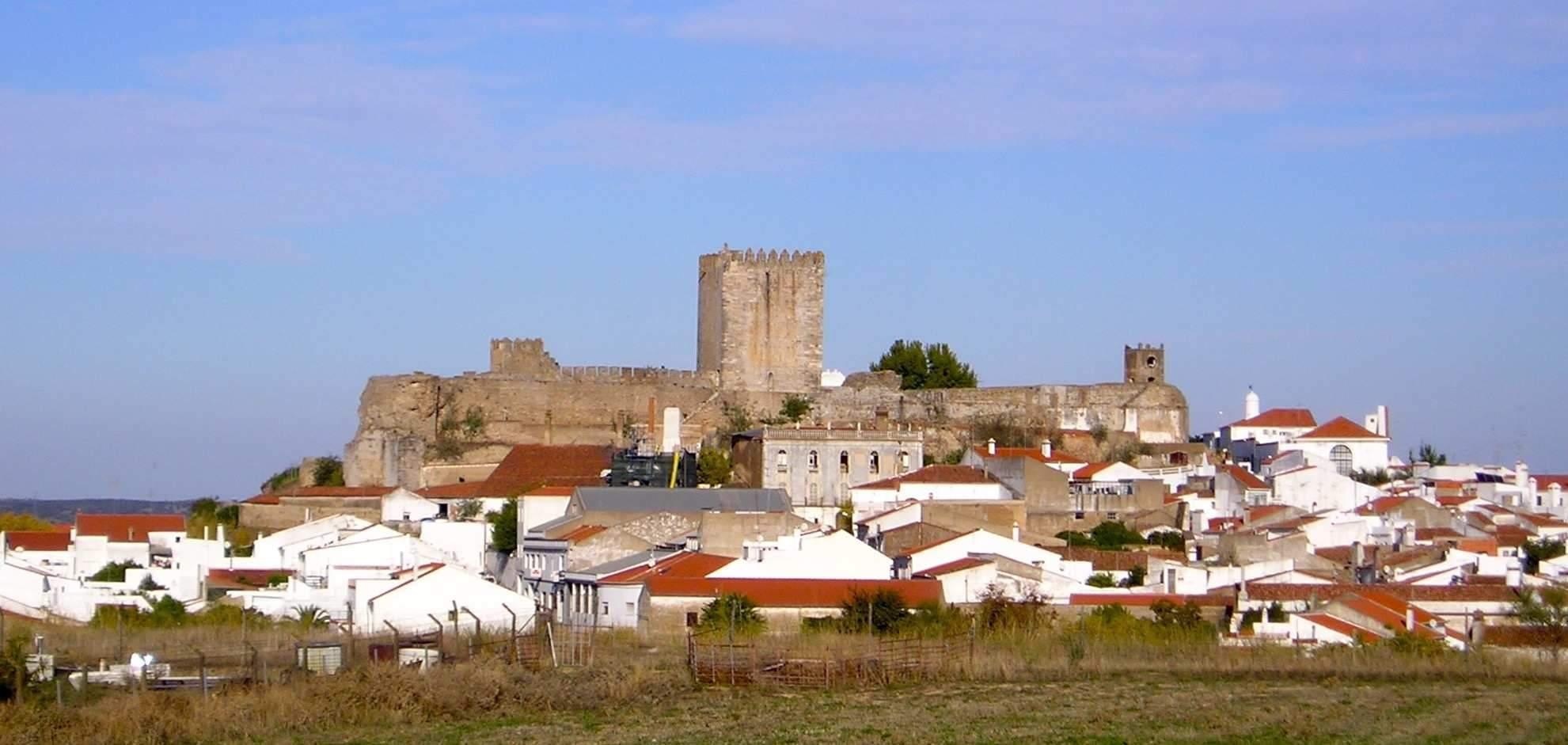
The Torre das Feiticeiras (Witches’ Tower) rises from the castle at Monsaraz’s southern end, part of a chain of impressive frontier fortresses once ruled by the Knights Templar and later the Order of Christ, who ensured the fortified town remained in Christian hands long after it was taken from the Moors in 1167. Climb the outside walls for spectacular views, which surround a central space within the castle that was once used as a bullring.

Moura
Moura, 50 kilometres south of Monsaraz, is a delightfully provincial town filled with beautiful mansions, attractive squares, and pedestrian-friendly retail districts. Additionally, it is the nearest village to the controversial Alqueva dam. Moura is named after a Moorish maiden, Moura Saluquia, who ostensibly threw herself from the castle tower in despair when Christians murdered her betrothed and overran the town in the eighth century – an Arabic well still exists in the old town.
Moura’s eventual prosperity was inspired by the discovery of naturally carbonated thermal springs in the late nineteenth century; the spa water still dribbles from the Fonte das Três Bicas (Fountain of Three Spouts), but the spa is no longer operational. Nonetheless, the adjacent Jardim Doutor Santiago grounds provide a lovely promenade, thanks to their abundance of shady trees. The Manueline Igreja de São João Baptista rises west of here, with the castle entrance immediately beyond the huge market building.

Serpa
SERPA is a tiny market town located thirty kilometers southwest of Moura and the same distance east of Beja. It features characteristic Alentejan attractions such as a walled center, a castle, and narrow, whitewashed alleys lined with elegant bougainvillea-clad buildings and verdant gardens.
Celts, Romans, and Moors have all occupied the town at various periods, and its highest point is crowned by the ruins of its Castelo. Serpa’s charm lies in its peaceful, little-visited streets, which stretch barely a few hundred metres within the city’s encircling walls. The Praça da Repblica is the settlement’s focal point, with its inviting cafés, while arched gates allow entry to the more modern town beyond. To the south, verdant public gardens give shade during the day’s warmest hours. The town’s traditional feira is held on the weekend closest to August 24, and there are large Easter celebrations in honor of Nossa Senhora de Guadalupe.
Beja
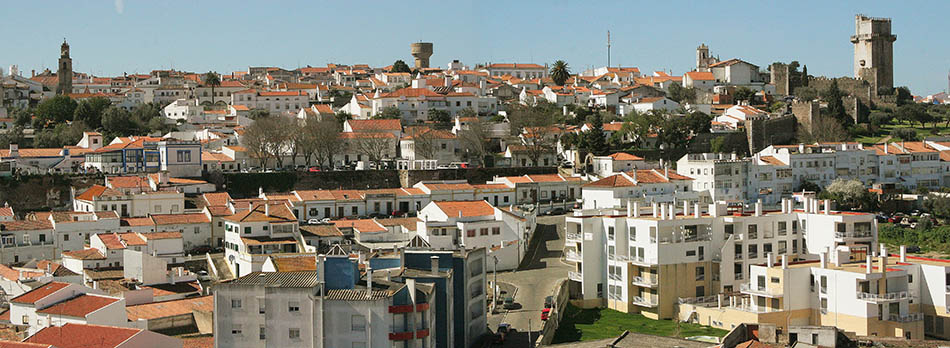
Beja is the capital of the Baixa Alentejo (Lower Alentejo). Due to its inland location, it is typically the hottest area in Portugal, something to keep in mind if visiting during the summer months. After passing through the modern suburbs, you’ll discover a laid-back ancient neighborhood complete with a historic convent and a thirteenth-century castle.
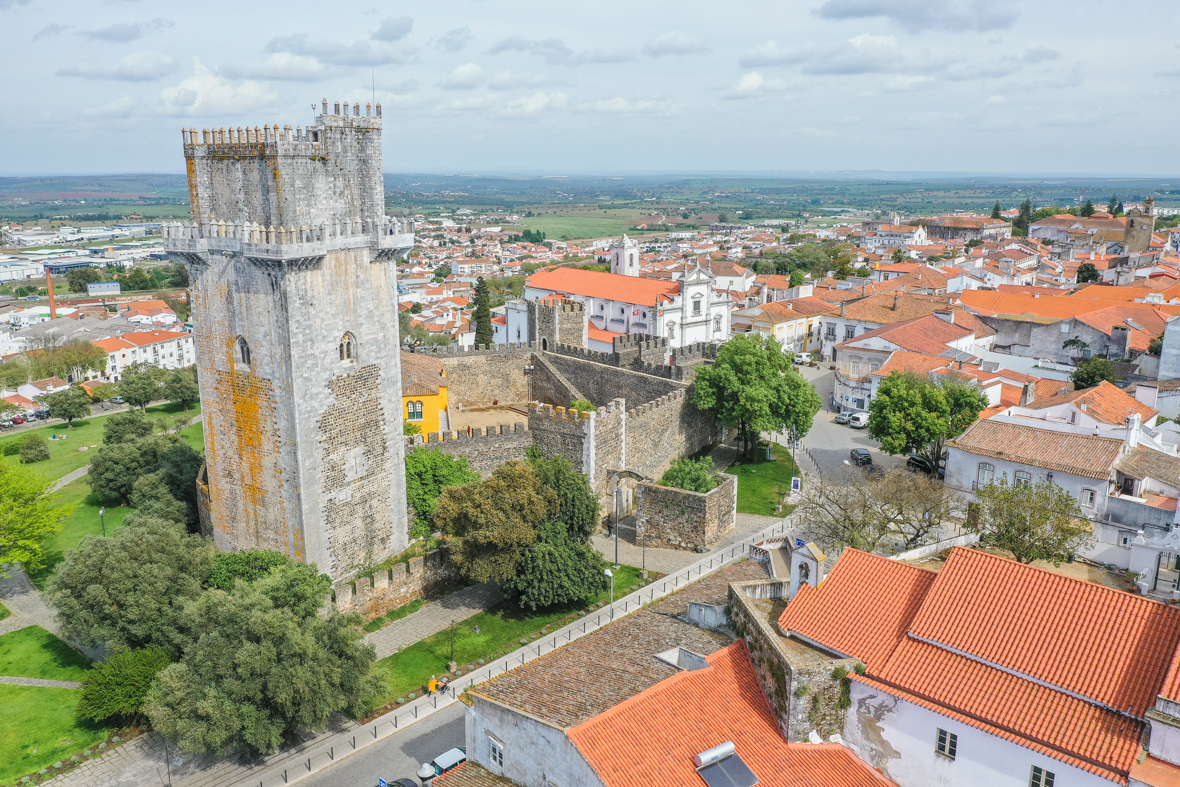
The Torre de Menagem is entirely composed of marble and is a striking sight to behold while touring the grounds of Castelo de Beja. Among other buildings, churches, and museums, Beja provides ample opportunity for history buffs. In Beja, you’ll find Roman ruins and Moorish castles from the time of Arab dominance, providing a visual timeline of Portugal’s ever-changing past under the influence of invaders. Among the other notable locations are the Convento de Nossa Senhora da Conceicao, the Misericordia Hospital, and the Jorge Vieria Museum. If everything else fails, a day spent meandering through the old district and stopping at cafes is a wonderful way to spend the afternoon.
It has always been an important and rich city due to its strategic location in the heart of the plains. It was christened Pax Julia by Julius Caesar in 48 BC in honor of the peace treaty struck here between Rome and the Lusitanians, but eventually became Pax Augusta and then simply Pax – which gradually deteriorated to Paca, Baca, Baju, and finally Beja. To the north, at the dramatic Ruinas Romanas de So Cucufate, visitors may still experience the Roman impact, as the history of three distinct Roman villas is revealed through significant excavations and restorations.
Mértola

MÉRTOLA, 54 kilometers southeast of Beja, is as picturesquely located as any town in the south, perched high above the junction of the Guadiana and Oeiras rivers and defended by the ruins of a Moorish frontier castle. It’s an ancient town brimming with activities and calm rural surrounds that are part of the Parque Natural Vale do Guadiana: the N265 through the park to Serpa is one of Portugal’s most beautiful drives. The region is home to the rare black stork and other endangered species, and the region’s hills, riverbanks, and valleys provide good walking opportunities, particularly around the historic mining community of São Domingos.
Mértola’s history dates all the way back to Phoenician times, when it was a vital river port. It was then fortified and extended by both the Romans (as Myrtilis) and the Moors (as Martulah), before being captured by Dom Sancho II in 1238 as part of the Christian Reconquest. With the walled town occupying such a limited area, successive conquerors and settlers simply built on what they found, which is what continues to fascinate Mértola today – the proof of thousands of years of existence seen in practically every building and street.
![boats docked near seaside promenade]](https://letusdiscover.com/wp-content/uploads/2023/04/prb-sjoubfs-770x635.jpg)