by David Leite | photo by Nuno Correia
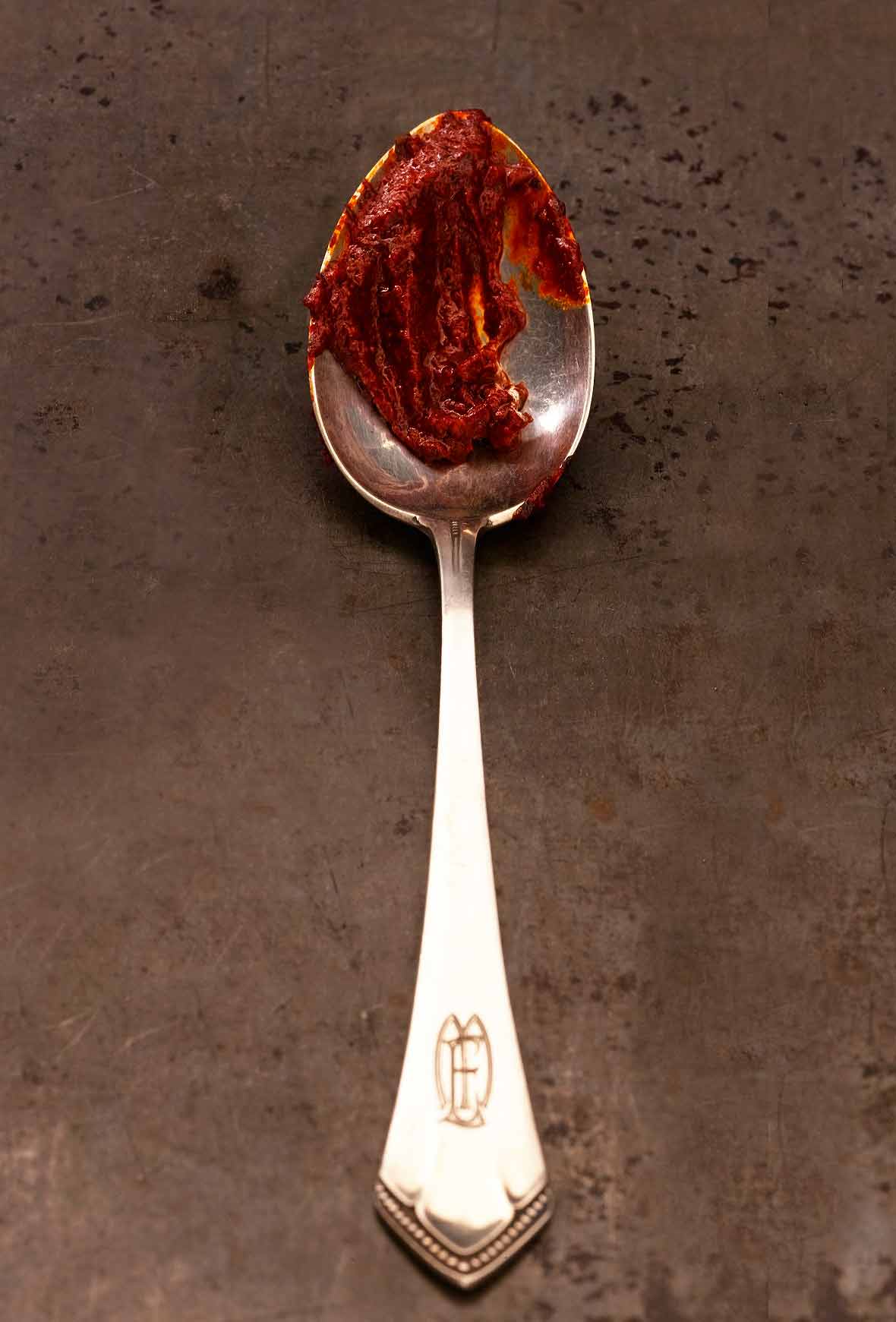
Each Portuguese family has its own rendition of the classic, pantry staple known as massa de pimentão. Here’s how David has amped it up several notches and in the process created something new. It’s bursting with wine, paprika, garlic, hot sauce, and herbs. It’s Portugal in a jar.
By David Leite | The New Portuguese Table
Massa de pimentão is originally from the Alentejo province. The salty red pepper paste, a pantry staple, is a Portuguese classic and constitutes the major flavour component of the region’s cooking. Each cook has his or her own version. Some are made from fresh bell peppers that have been salt-cured, others rely on roasted peppers, and still, others turn to paprika. This isn’t the classic version. This is an “amped-up red pepper paste” based on my family’s recipe. I wanted all the flavours of the Portuguese kitchen in one power punch of a paste.
It’s richly flavoured–think of it as a preseasoned rub–so all you have to do to make dinner is rub a little on beef, chicken, fish, or even peeled, halved potatoes before roasting. Although I have to say that this particular paste’s most famous—and deservedly so—application (although granted, I’m a little biased) is my Grandmother Costa’s Bread Dressing.–David Leite
HOW TO USE PORTUGUESE RED PEPPER PASTE
David explains that red pepper paste is like Asian fish sauce in that a little goes a long way. As David mentions above, you can rub a little on a beef roast, chicken (both above and below the skin), fish, and even peeled, halved potatoes before roasting. Or you can stir it into stews or soups. It works wonders when stirred into mayo. And any other application you can imagine where you want or need a little spice.
Portuguese Red Pepper Paste
Prep10 mins
Total10 mins
INGREDIENTS
- ▢2 tablespoons sweet paprika
- ▢2 tablespoons sweet smoked paprika
- ▢1/4 cup dry red wine
- ▢8 to 10 garlic cloves
- ▢2 crumbled Turkish bay leaves
- ▢3 tablespoons store-bought or homemade tomato paste or 1 tablespoon double-concentrate tomato paste
- ▢1 1/2 tablespoons fresh lemon juice
- ▢7 sprigs cilantro
- ▢5 sprigs of flat-leaf parsley
- ▢1 1/2 tablespoons kosher salt (16 g)
- ▢1/4 teaspoon freshly ground white pepper
- ▢Few dashes Piri-Piri sauce or to taste
- ▢1/4 cup olive oil
DIRECTIONS
- In a food processor, combine the sweet paprika, sweet smoked paprika, wine, garlic, bay leaves, tomato paste, lemon juice, cilantro, parsley, salt, pepper, and Piri-Piri sauce.
- Pulse until the garlic and herbs are minced, scraping the sides of the bowl as necessary.
- With the motor still running, add the olive oil in a slow, steady stream and continue whirring until the mixture comes together in a slick, homogeneous paste, 1 to 2 minutes.
- Use the mixture immediately or spoon it into a small glass jar with a tight-fitting lid and refrigerate for up to a month.
NOTES
Classic Red Bell Pepper Paste Variation
This Classico approach to red bell pepper paste relies on salt-cured bell peppers for oomph. It’s a much saltier version of the paste than the recipe above, so use it with a judicious hand. Wash, stem, and seed 3 red bell peppers. Slice them into 1-inch-wide strips. Line a colander with cheesecloth and pour in about an inch of kosher salt. Press some of the strips into the salt and cover with another inch of salt. Continue layering until all the strips are covered. Top with a heavy pan. Place the colander in a large bowl and set aside at cool room temperature for 5 days. On the 6th day, fish out the bell pepper strips and brush off the salt but do not rinse. Purée in a food processor, transfer to a clean glass jar and refrigerate until you need your next fix.

and previously unpublished.
Learn more about The New Portuguese Table
Get yours at Leite’s Culinaria or get your
copy at Amazon.com
and/or Barnes & Noble