 The first Rhinoceros to set foot on European soil since Roman times did not last long. Surviving the 120-day sea voyage to Portugal, the rhino was a diplomatic gift from India. Arriving in 1515, the Indian rhinoceros was off-loaded near the construction site of the Tower of Belem in Lisbon.
Tragically, the rhino never made it to Rome, drowning instead in a shipwreck off the coast of Northern Italy.
Strangely, the short-lived rhino inspired a famous woodcut by the artist Albrecht Dürer, who never saw the animal in person. He based his illustration on secondhand descriptions and a sketch by an unknown artist. The resulting woodcut shows a magnificent beast in riveted armour. Real rhinos being in somewhat short order at the time, this fanciful interpretation of reality became known as “Dürer’s Rhinoceros” and went on to inspire dozens of paintings and sculptures across Europe.
 Meanwhile, the beautiful Tower of Belem was being built as the third in a series of fortifications designed to protect the natural port of Lisbon. Constructed between 1514 and 1520 of local limestone, the tower is an example of the distinctive Portuguese “Manueline” style, named for King Manuel I. The style incorporates motifs inspired by the great Age of Discovery and the recent return of Vasco de Gama from explorations to the Far East. Design elements from Morocco, Venice, and India mingle with nautical symbols like a rope. The entrance to the tower is marked with carvings of armillary spheres representing Manuel’s support of exploration.
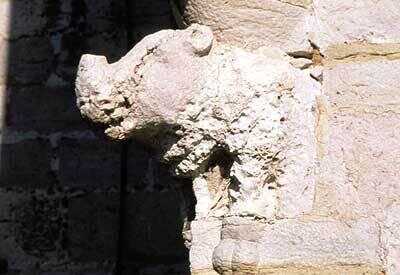
The turrets are decorated with carvings of exotic beasts. At the base of one of the turrets, stone carvers immortalized the rhinoceros they saw in 1515, now well worn, but notably lacking the armour of Dürer’s interpretation.
 The 100-foot tall tower survived the disastrous earthquake of 1755 and has been restored many times. It is now a UNESCO World Heritage Site.