

Sanctuary of Senhora da Peneda: Where Granite, Legend, and Pilgrimage Meet
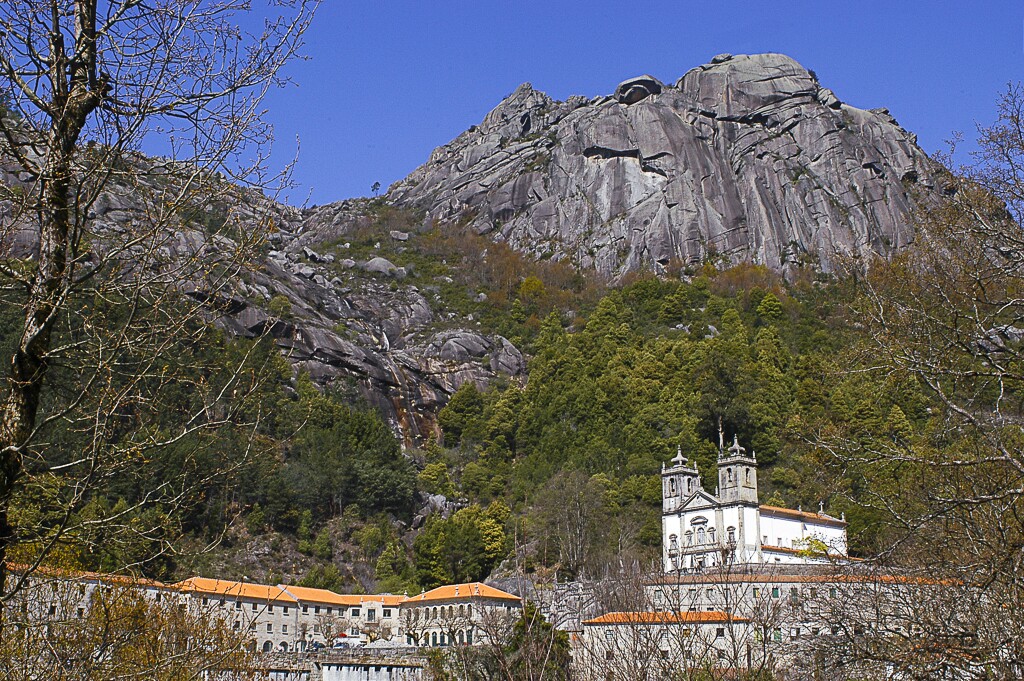
Tucked into the folds of northern Portugal’s Peneda-Gerês National Park, under the watchful gaze of a granite monolith known as Penedo da Meadinha, lies one of the country’s most atmospheric sanctuaries. The Santuário de Nossa Senhora da Peneda (Sanctuary of Our Lady of Peneda) isn’t just a place of worship—it’s a place of wonder, legend, and deep-rooted tradition.
A Sacred Site Born from a Shepherd Girl’s Vision
The origins of the sanctuary are tangled in myth and mystery. According to local lore, in the year 1220, a young shepherdess tending her flock witnessed a dove that transformed into a vision of the Virgin Mary. The Lady asked that a shrine be built on that very spot. When the girl ran to the village to share her experience, no one believed her. Days later, the vision returned—this time in the human form that devotees now revere.
The Lady then gave the girl a name: Domingas Gregório, a woman from the nearby village of Roussas who had long been incapacitated. The villagers brought her to the spot, and in the presence of the apparition, she was miraculously healed. That moment marked the beginning of the devotion to Our Lady of the Snows and the first small hermitage was built on the site of the apparition.
Architectural Grandeur in a Wild Landscape
Over the centuries, the humble shrine evolved. Between the late 1700s and mid-1800s, the sanctuary we see today took form—an impressive composition of granite structures that seem to rise organically from the rocky terrain.
At the heart of it all is the main church, whose construction began in 1838 and was completed in 1857. In front of it stretches the Escadório das Virtudes (Staircase of Virtues), built in 1854, symbolising faith, hope, charity, and glory in sculptural form. The setting is majestic: the sanctuary nestles into a concave granite bowl, protected by cliffs and wild forest, giving it an almost otherworldly isolation.
Visitors pass through the Angel Gabriel square and a grand arched porch adorned with a statue of Our Lady of the Incarnation—features that date to the 18th century. Twenty small chapels flank the climb to the main church, each one telling a part of the life of Mary. At the top, the Evangelists’ Quadrangle (built in 1860) completes the ensemble.

The September Pilgrimage: A Tradition Like No Other
If you want to truly experience the spirit of this sanctuary, visit in early September. The annual pilgrimage, held on the 7th, draws thousands of devotees from across Portugal and Galicia. It’s not only a religious event but also a celebration of community, heritage, and landscape.
There’s a raw energy in the air. Pilgrims move in rhythms shaped by song, prayer, and the steady hum of folk instruments. Families camp in the surrounding hills, and traditional vendors line the roads. Despite the crowds, the granite cliffs and remote mountain setting preserve a sense of seclusion. It’s a unique combination—deep spiritual focus meets joyful festivity.
Why You Should Go
This isn’t just a stop on a religious circuit. Even if you’re not a pilgrim, Nossa Senhora da Peneda is worth the journey. The combination of remote beauty, local folklore, and monumental architecture makes it one of Portugal’s most evocative sites. The hike or drive through Peneda-Gerês to reach the sanctuary is an adventure in itself, winding through dense forest, waterfalls, and ancient shepherd paths.
You’ll find no souvenir shops cluttering the experience. No manicured perfection. What you’ll get instead is something far richer: a feeling that this place belongs more to myth than to modernity—and that you’ve stepped into a story that has been told and retold for over 800 years.
Getting There: The sanctuary is located near the village of Gavieira in the Arcos de Valdevez municipality. A car is the best option, though adventurous travellers can pair a visit with hiking routes through Peneda-Gerês National Park.
Best Time to Visit: Early September for the pilgrimage or late spring to autumn for cooler temperatures and fewer crowds.
Tip: Don’t rush. Stay overnight in one of the small casas de turismo rural nearby and let the stillness of the mountains do its work.
In short? The Sanctuary of Senhora da Peneda isn’t just a place you visit. It’s a place you feel—etched into the stone, whispered in the wind, and remembered long after you’ve left.
.