The cathedral is older than Portugal.
To begin any discussion about cathedrals, we must first define what a cathedral is.
A cathedral is unrelated to any architectural style, size, or level of ostentation.
A cathedral is simply the home church of a bishop in a diocese. In theory, a cathedral could be a mobile home if it was a bishop’s church.
The word cathedral is derived from the Latin word ‘cathedra,’ which means ‘chair.’ The chair in the church was a symbol of a bishop’s leadership and authority, so the cathedral was the structure with the chair.
Today, the chair is more metaphorical than literal. Every church has chairs, and a bishop can have one in the same way that someone can chair a meeting while standing up.
Because a cathedral is defined as the principal building of a bishop, many churches that people mistakenly believe are cathedrals are not technically cathedrals.
The Cathedral of Braga
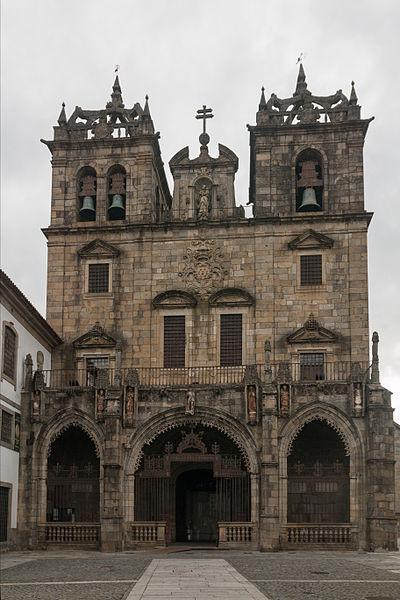
The Cathedral of Braga is the country’s oldest cathedral, giving rise to a popular saying in Portugal: “older than the Cathedral of Braga.” The building began before Portugal was a nation, which explains why the entire city has grown around the Cathedral. Over the years, the Cathedral has incorporated five chapels, two cloisters, a Galilee, an Apse chapel, a chevet, and a sacristy, with several architectural styles visible on its facades and walls, namely Romanesque and Gothic, with a mostly baroque interior.
The Cathedral of Braga was Portugal’s first cathedral, built several decades before the country’s founding. It began construction at the end of the 11th century and was consecrated and dedicated to the Virgin Mary on August 28, 1089, during a solemn session presided over by Bishop Pedro. It is the city’s jewel, competing in power with the Cathedral of Santiago de Compostela. The parents of Portugal’s first king, D. Henrique and D. Teresa are buried in the Chapel of Kings.
Also known as the Santa Maria de Braga Cathedral, it contains artistic relics from its over nine centuries of history. The Porta do Sol door, the ambulatory floor plan, the main portico, and the apse of the Santo Amaro cloister all retain the original Romanesque style. The architects were the abbots of the Cluny (France), Saint Gerard, and Brudino Monasteries. The temple’s entrance porch was constructed in the Gothic style in the 15th century. Within is a wooden Gothic-Flemish style tomb for Infante D. Afonso, son of King Joo I and D. Filipa de Lencastre.
Other decorative elements were added in the following century, most notably the Baptismal Font and, outside the main chapel, a niche with the statue of Our Lady of the Milk, attributed to Nicolau Chanterenne and incorporating the city’s coat of arms. The baroque style was also incorporated, most notably in the interior decoration of the altars, gilded woodwork, the Upper Choir stand, and the monumental organs in the main chapel, as well as the two intriguing bell towers that distinguish the exterior façade.
To conclude your visit, do not miss the Cathedral’s Treasure Museum, which houses the cross from the country’s first mass, led by Pedro lvares Cabral.