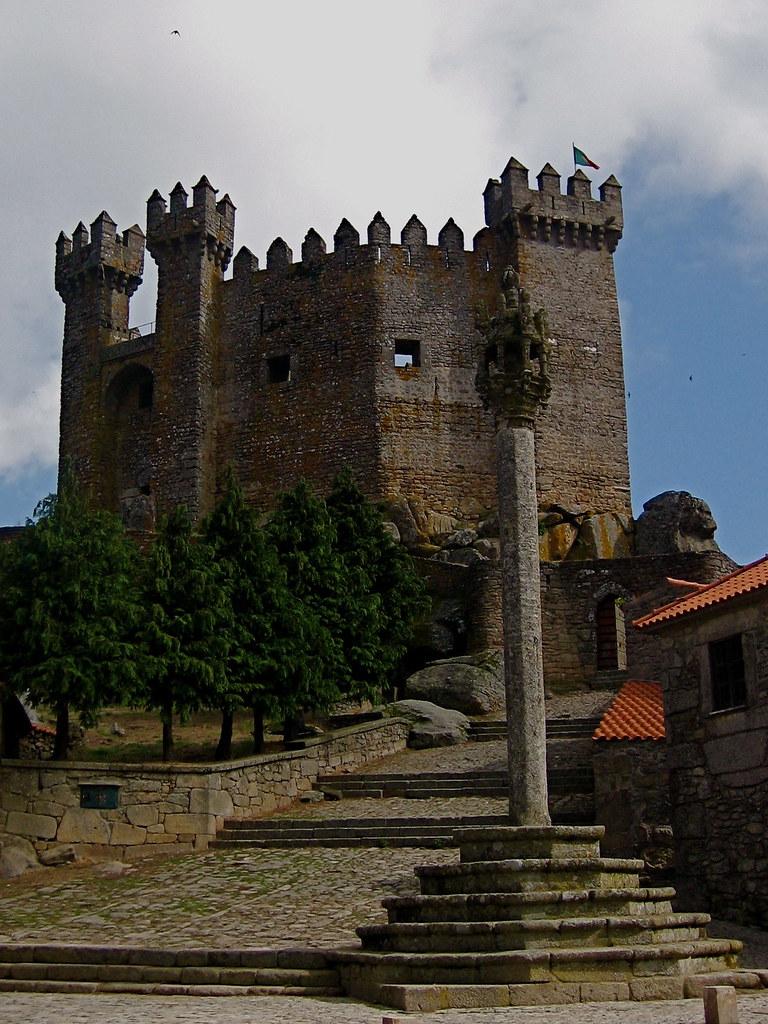
Perched high on a granite hilltop at 930 metres above sea level, in the rugged heart of Viseu district, sits one of Portugal’s most fairytale-like castles—Castelo de Penedono. With its irregular heptagon layout, slender watchtowers, and jagged merlons, it looks like it’s been plucked straight from the pages of a medieval legend. And in some ways, it has.
Why Go?
Penedono Castle isn’t just a monument; it’s a time capsule of Portugal’s turbulent frontier past. If you’re drawn to places that feel remote, weathered, and poetic, this one should be on your list. You don’t stumble upon Penedono—you make a deliberate journey here. And it rewards you with cinematic views, complete solitude, and stories carved into stone.
A Fortress Woven Into History
The earliest known record of the castle dates back to 960 AD, when a noblewoman named Chamôa Rodrigues donated it to the Monastery of Guimarães. That alone gives you a clue to how ancient this place really is. But the structure likely predates even that—an outpost during the Christian reconquest, a target for Moorish forces under Almanzor in 987, and a key stronghold retaken by the armies of Ferdinand I of León by 1057.
By the 12th century, King Sancho I saw its strategic value and granted Penedono its first foral (charter). Over the centuries, it changed hands—sometimes by royal favour, sometimes by force. At one point in the 14th century, it was nearly dismantled, until the people of Penedono petitioned the king to intervene.
The Legend of O Magriço
One of Penedono’s claims to fame is its link to Álvaro Gonçalves Coutinho, also known as O Magriço—a legendary knight immortalised by Luís de Camões in The Lusiads. Legend has it he was born right here, in this fortress, and became one of twelve knights sent to England to defend the honour of twelve ladies at the Lancaster court. Whether that’s folklore or fact hardly matters—it adds to the castle’s mystique.
What to Expect When You Visit
The castle sits above the small village of Penedono, and from the moment you approach the outer square, the ascent begins. A wide granite staircase leads you to the entrance, flanked by two slim towers that look like watchful sentinels.
Step inside and you’ll find an interior that’s as rugged as the landscape: rocky terrain, partial ruins, and a silence that’s louder than any crowd. It’s not overly restored, which is part of the magic. This is a place you walk through slowly.
Look out for:
-
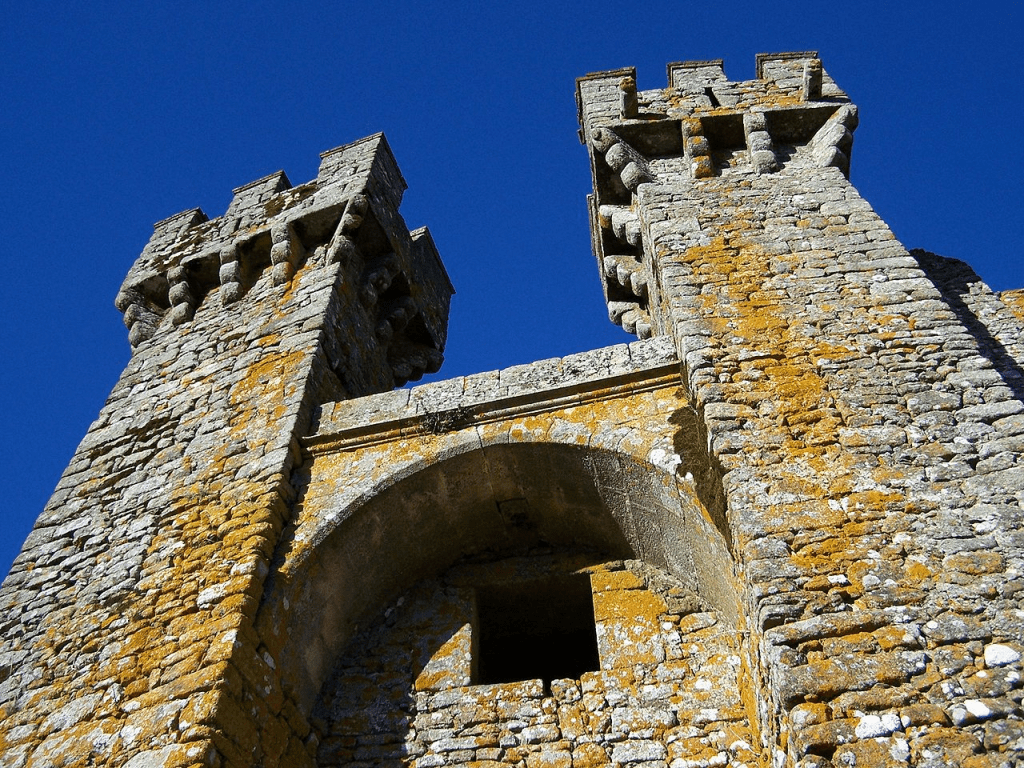
- Arrow slits and battlements still intact
- A cistern with a vaulted ceiling tucked away in one of the towers
- Narrow walkways and crenellated parapets where soldiers once stood guard
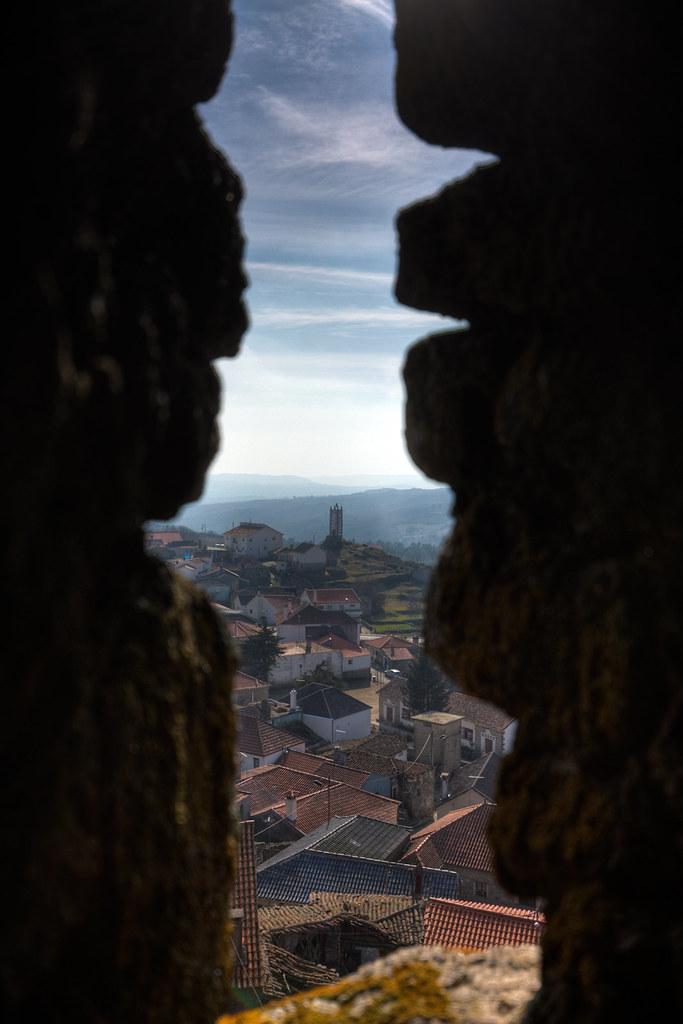
- Views that stretch over the Beira Alta region and deep into the Serra de Serigo
Restoration with Respect
By the time Portuguese writer Alexandre Herculano visited in the 19th century, the castle was already in ruins. It wasn’t until the 20th century that the Estado Novo regime took on its restoration—carefully rebuilding staircases, stabilising walls, and repairing the watchtowers using traditional stone and lime mortar.
The works, carried out between the 1940s and 1980s, were never excessive. What you see today feels lived-in, weather-beaten, and authentic.
How to Get There
Penedono is a quiet town in Portugal’s Viseu district. You’ll want a car to get here—there’s little in the way of public transport. From Porto, it’s about a 2.5 to 3-hour drive through scenic countryside.
Pro tip: Combine your visit with a trip to the nearby Douro Valley—Portugal’s wine heartland—or explore the granite villages scattered across the Beira Alta.
Final Thoughts
If you’re after sweeping Instagram views and polished guided tours, this isn’t that kind of castle. But if you want to walk the ramparts of a medieval legend, alone with the wind and the ghosts of knights past—Penedono delivers.
Bring a camera. Bring a notebook. And bring time. This one deserves it.