Citânia de Briteiros is one of the most spectacular archaeological sites in Portugal and by far the largest and most exciting fortified Celtic-Iberian village in the nation. It is approached through picturesque forested hills in northern Portugal’s lush, green Minho area.
This well-preserved prehistoric monument, which was formerly completely walled in, occupies an area of 3.8 hectares and is located about 10 kilometres southeast of the Bom Jesus sanctuary in Braga.
According to historians, Citânia de Briteiros was the northern Celtic-Iberians’ final stand against the invading Romans.
This unusual archaeological find was discovered in 1874 and devoted the next decade to being examined and unearthed.

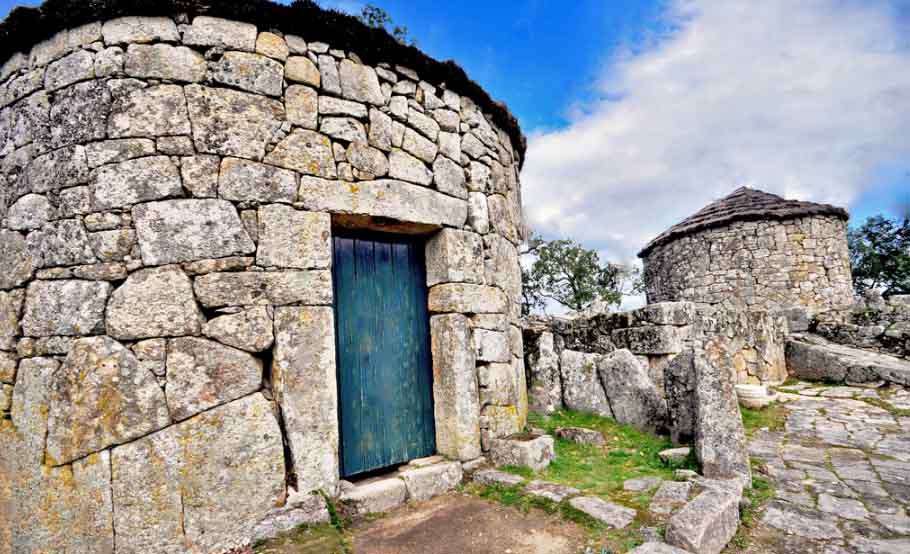
It consists of about 150 single-roomed stone homes of various shapes, including round, rectangular, and elliptical, each with its original foundation amazingly intact, while a few have two or three compartments and even a courtyard.
Citânia de Briteiros, located in a great site overlooking the clean waters of the River Ave, dates back more than 2,500 years, but it was very likely abandoned by 300 A.D.
The fort is composed of three lines of entrenchments up to 2m (7ft) thick, straddling the slope of the boulder-strewn hill of São Romão.
It’s an amazing thrill for tourists to be able to study the site’s rudimentary town design, stroll along with one of Europe’s oldest walkways, and investigate the archaic water system.
Citânia do Briteiros, reminiscent of ancient Mycenae in Greece, is the magnificent ruins of an Iron Age settlement with stone slab streets and houses constructed without the use of mortar.
Complete with conical thatch roofs, some of the structures were properly repaired and recreated by Martins Sarmento (1833–99), the local archaeologist who discovered it.
Apart from the reconstructed chapel and two circular homes atop the hill, the village comprises a bigger structure (about 11m/36 feet in diameter) that was reportedly used as a gathering space, as well as an isolated structure beyond the boundary that was possibly used as a cremation.
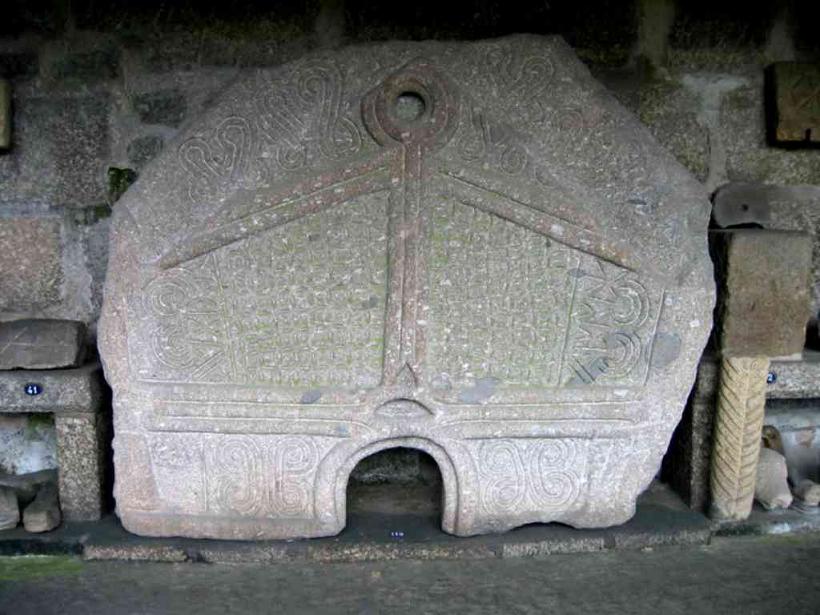
Numerous antiques, artefacts, and ornate gateways discovered during the site’s excavation are currently on exhibit at neighbouring Guimares’ Museu de Martins Sarmento. Along with the numerous fragments of pottery (much of it painted), carved stones, weapons, implements, and pieces of jewellery on display, the star exhibit is without a doubt the Pedra Formosa (meaning ‘beautiful stone’), which confounded archaeologists for years but is now known to have been part of a tomb or shrine.
Easily visible from Citânia de Briteiros, another of Portugal’s most significant ancient monuments, Castro de Sabroso, is just as interesting and dates all the way back to the Iron Age. Both possessed a significant degree of the same Celtic culture and exist as testaments to the great riches and significance of Portugal’s early settlements.