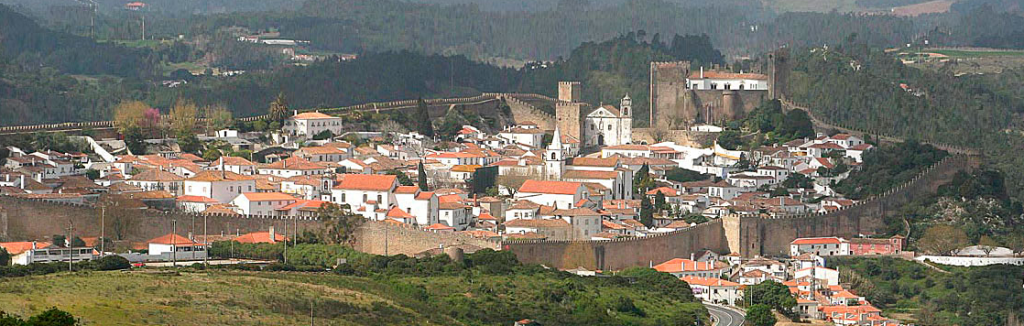
Located on a hill amidst the rolling plains of Portugal, one may find the captivating mediaeval town of Óbidos. As a travel writer, I am delighted to lead you through this charming and scenic destination, where the passage of time appears to halt and the echoes of history resonate in every little lane.
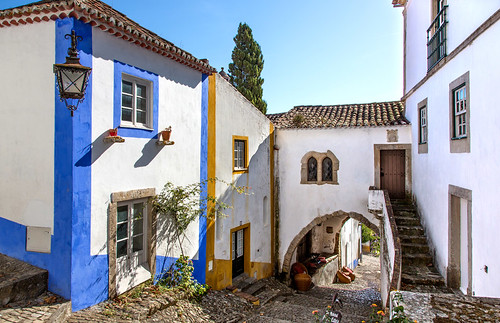
Upon arrival, one is immediately met with a picturesque setting reminiscent of a fairy tale: charming buildings painted in white and embellished with bougainvillaea, while small pathways entice visitors to explore further into the heart of the town. As you progress, the reverberations of past periods envelop you.
However, the most remarkable feature of Óbidos is its splendid castle, which serves as a witness to the town’s rich history. Enter through the ancient gates and see the enduring craftsmanship. The views from the castle’s walls are really awe-inspiring, providing a glimpse of the stunning Portuguese landscape below.
As you continue to explore, you will uncover concealed gems at every corner, ranging from delightful squares embellished with vibrant window boxes to elaborately carved Manueline porticoes that narrate stories of a past age. Additionally, it is important to explore the religious and civic edifices in the town, since they provide tangible evidence of Óbidos’ extensive historical and cultural legacy.
Óbidos offers a captivating experience that transports visitors to a bygone era, seamlessly blending historical and contemporary elements in a delightful display of elegance and allure.
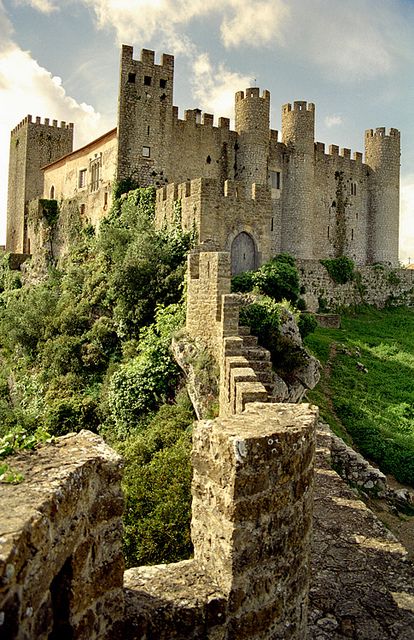
Óbidos Castle
The impressive Öbidos Castle, perched magnificently atop the hill, offers a breathtaking perspective over the mediaeval town of Bidos. During the seventh century, when the Romans occupied Portugal, the Moors erected the first foundations for this remarkable monument. But since 1148, a number of Portuguese kings have carried out maintenance and enhancements that have shaped the castle’s modern Moorish architectural design.
Built in 1375, the castle’s opulent main turrets stand as silent witnesses to the stormy events that have taken place inside its walls over the ages. Apart from its strategic significance, the castle served as a royal home, offering luxury and a haven appropriate for kings. In actuality, an opulent hotel now occupies the spaces that the Portuguese nobility once occupied after a protracted restoration project that started in 1932.
Walking through the castle’s hallways and courtyard in the present, one can’t help but feel the stifling weight of the past. Each stone seems to whisper stories of kings who walked these halls in the past, of battles fought and victories gained. Nonetheless, there’s a calm vibe that invites visitors to pause and consider the passing of time.
Beyond being only a defensive structure, Óbidos Castle is a living representation of Portugal’s rich cultural heritage and continues to pique the curiosity of those who see it. Thus, take a moment to appreciate the grandeur of this historic landmark and consider the enduring influence that earlier generations have left behind as you stand in front of its ancient ramparts.
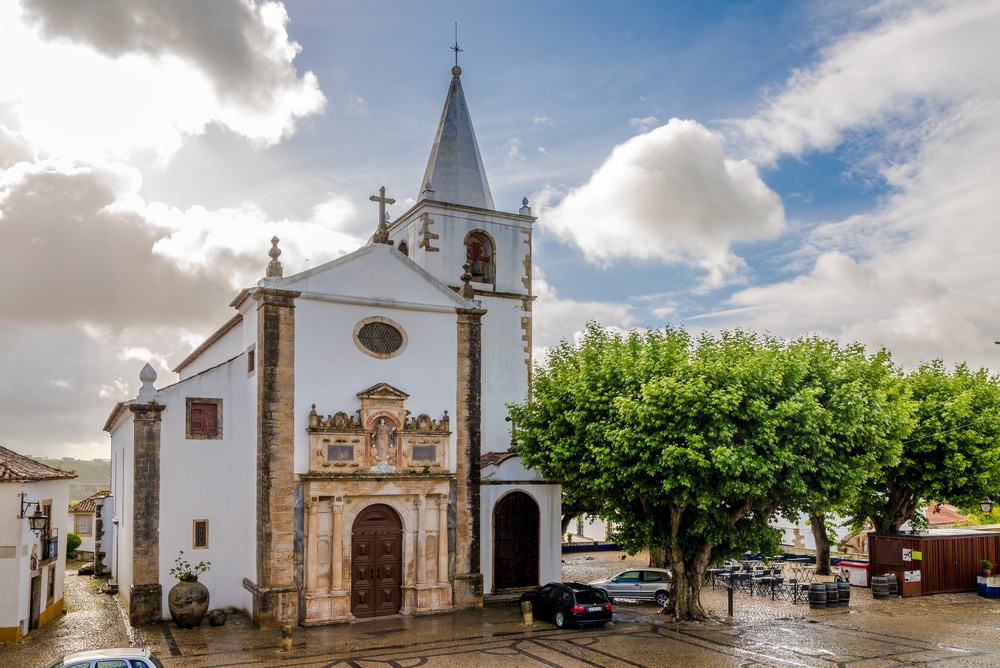
Igreja De Santa Maria
The Santa Maria Church in Óbidos has indeed undergone a fascinating journey through history, reflecting various cultural and religious influences. Originally starting as a Visigothic temple, its transformation into a mosque and later into a Christian church mirrors the region’s diverse past. The current structure largely reflects renovations and additions from the 1600s, following significant damage from the 1535 earthquake. The painted wood ceiling from 1676 and the blue and yellow tiles adorning the walls between 1680 and 1690 add to the church’s aesthetic appeal and historical significance. Inside, visitors can admire several notable artworks, including a baroque retable and a painting by Josefa de Óbidos depicting the “Martyrdom and Life” of St. Catherine. The presence of the image of the Virgin Mary, once situated on the Gate of Our Lady of Grace, adds to the religious importance of the church. One of the highlights is the tomb of João de Noronha, a prominent local aristocrat, dating back to 1525. Carved entirely from stone, this tomb is a remarkable example of Portuguese Renaissance art and is classified as a National Monument, showcasing the cultural heritage of the region. Additionally, the presence of a 17th-century pipe organ in the choir adds to the church’s musical and architectural significance, providing a complete sensory experience for visitors exploring its rich history and cultural heritage.
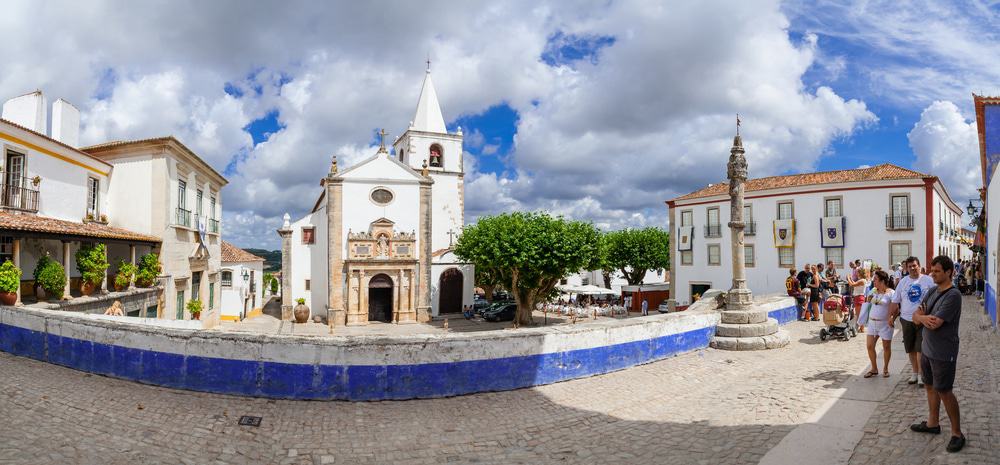
Praça de Santa Maria
Praça de Santa Maria is a beautiful square located a little bit south of the main street. The square is surrounded by a covered market and some old houses.
In this square lie some of the most iconic monuments of the beautiful city of Óbidos, such as the Picota (XV century), crowning a fountain and carrying the arms of Queen Leonor, among them, the net signifying the death of her son, drowned in the river Tejo, near Santarém in 1491, since the corpse of the boy was taken to her covered in a fishing net.
Allow some time to potter around the square in front of the church, as there are some neat things if you know where to find them. One is the pillory, a monument to the town’s autonomy and a place to punish criminals. This is from the 1400s and bears the coat of arms of Eleanor of Viseu. Beneath this is a 16th-century fountain once fed by the town’s aqueduct. Upon the north side are the Telheiro, a building easy to recognise for its portico with six columns, and housing the town’s indoor market until the 1900s.
Porta da Vila
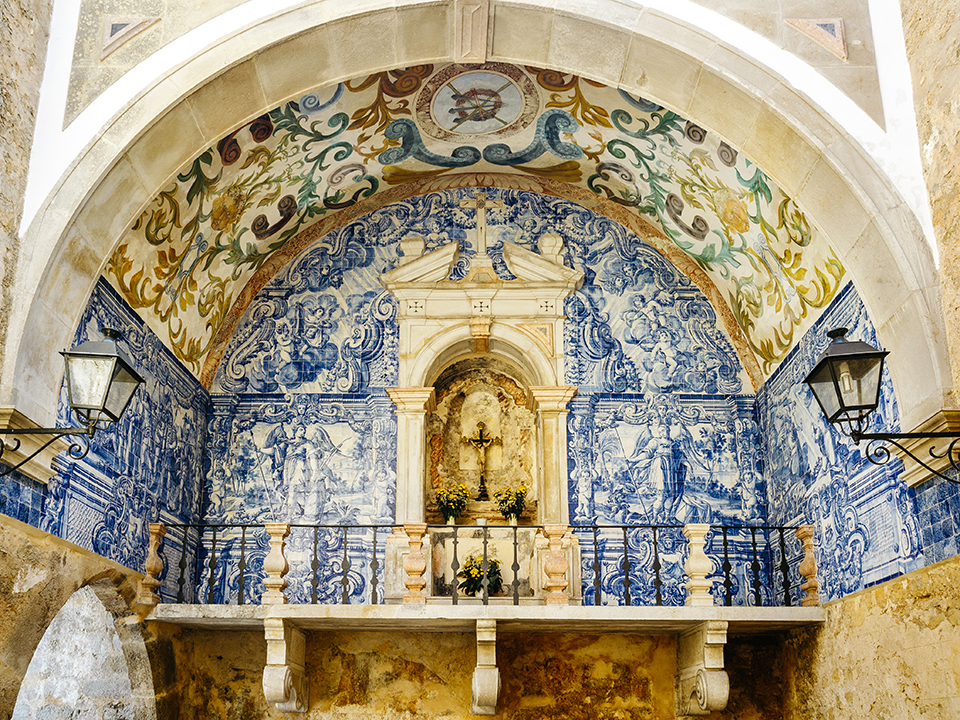
Porta da Vila is Óbidos’ main town gate. It’s made up of two low-rise staggered gateways to prevent a direct cavalry charge, as was common in gothic Portuguese castles. Between the gateways is a balcony that served as an oratory, embellished with beautiful blue and white tile panels from 1740, depicting the Passion of Christ. They include an inscription related to Our Lady of Sorrows (Óbidos’ patroness saint) — “The Virgin, Our Lady conceived without original sin.” The painted ceiling above the tiles illustrates a crown of thorns.
Misericórdia Church, Óbidos
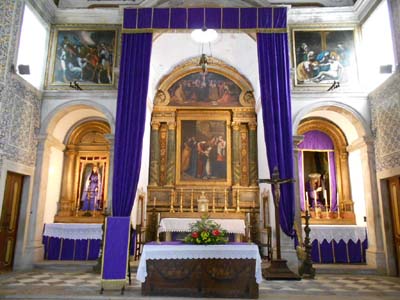
Founded by Queen Dona Leonor in the 15th century, this church has an important set of artistic treasures. One of the most significant images is the old blue porcelain statue of the Virgin Mary, which can be seen in the entrance porch.
The church’s interior is completely covered in 17th-century tiles, placed here during the last important phase of restoration (1678). Also of interest is the tomb of the Countess of Cavaleiros, Dona Luiza Guerra. The wooden barrel vaulting of the ceiling is painted with various decorative motifs and the royal crown.
Formerly the “Chapel of the Holy Spirit,” it became known as the Church of Mercy or of the Almshouse since 1498, when Queen Leonor founded the local almshouse. It was rebuilt in the 17th century, and was the place of worship of the sick and the poor, many of them hospitalized in the baroque annex. Today it’s more a museum than a place of worship, exhibiting several works of art.
Óbidos Aqueduct
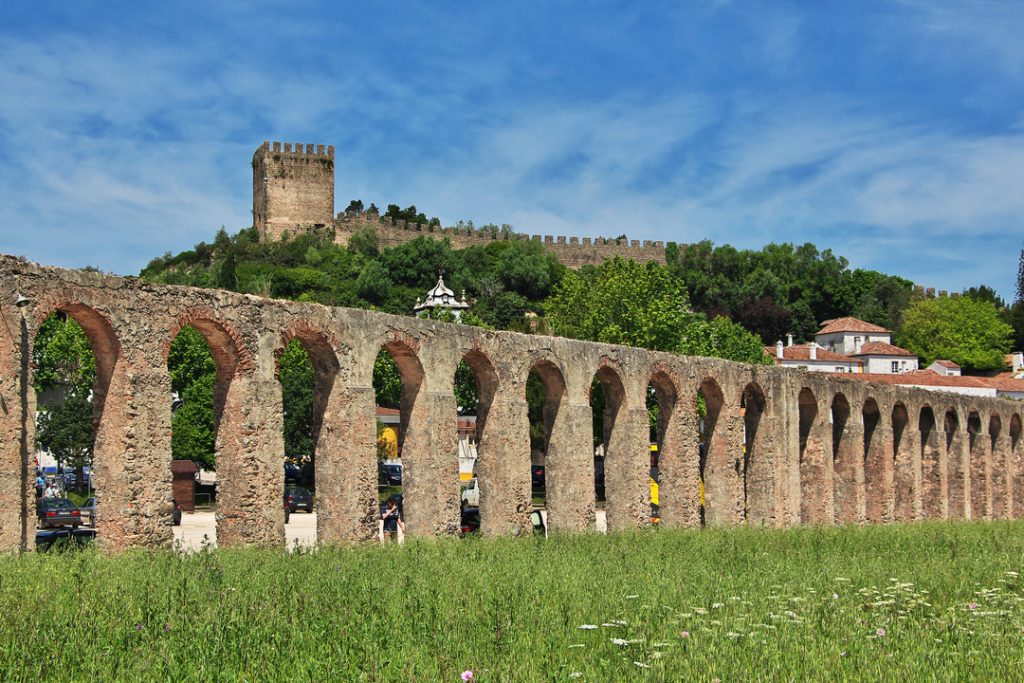
Commissioned by Queen Catherine of Austria (wife of Portugal’s King João III) in 1573, this aqueduct carried drinking water for the people of Óbidos. Its arches crossed 3km of vineyards and orchards, starting on a spring in nearby Usseira, and its water ended up in the town’s fountains. The queen paid for the monument herself, by selling her lands around Óbidos. It was restored in the 1600s and survived the great earthquake of 1755. You’ll see it as soon as you arrive in Óbidos, and it’s completely intact. The area around it is now used as a parking lot and is where many tourists leave their car. The town gate is just across the road.

Ginja De Óbidos
The best way to end your trip to Óbidos is with a shot of “ginja de Óbidos,” or “ginjinha”. This cherry liqueur is a famous local drink and is often served in a chocolate cup. It originated with 17th-century monks from the region, who combined Morello cherries and brandy, and drank it as an aperitif or after dinner. Today, any time is a good time to try the dark red drink, as many visitors to Óbidos do. You’ll find several spots down Rua Direita where you can have a sip, and may even buy a bottle. In fact, it just may be the perfect souvenir.
Mercado Medieval ( Medieval Fair)
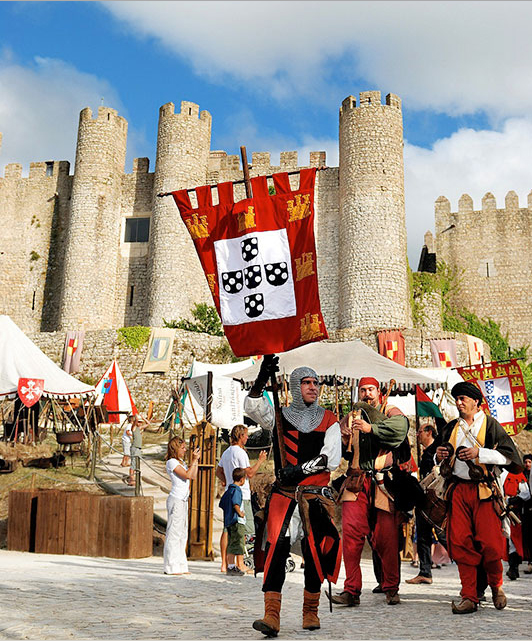
Amedieval fair recreates the Middle Ages in Óbidos for about one month every July. Knights and fortune tellers stand around the large terrace behind the castle, and there are theater performances and concerts of medieval music on a big stage.
Visitors are taken on a journey back in time to medieval Europe in different ways, including in the food served at several stalls. There are also campsites, displays of weapons and tools, and live animals such as ponies, donkeys, falcons, and snakes.
To access the site with all of the events and activities, you must purchase a ticket at the entrance.
Prison of Óbidos
The former prison of Óbidos, which is located in the town’s historic centre, is now one of its most picturesque buildings. The building dates back to the 14th and 15th centuries and served as the town hall during that time. In the 20th century, it was converted into a private residence and became the home of the Portuguese painter and scenographer Abílio de Matos e Silva.
Today, the building is a popular tourist attraction, and visitors can explore its interior, which has been beautifully restored and decorated with traditional Portuguese tiles and furnishings. It also houses a small museum that showcases the work of Abílio de Matos e Silva as well as temporary exhibitions of contemporary art.
The former prison’s location in the heart of Óbidos’ historic centre makes it a convenient stop for visitors exploring the town’s other attractions, such as the castle, the Church of Santa Maria, and the numerous shops and restaurants that line its cobblestone streets.
How to get there from Lisbon.
Coordinates 39.3606° N, 9.1608° W.
Obidos is only an hour’s drive north of Lisbon. Most tourists go there on a tour, but many use public transport to get there.
Here’s what you can do:
There are several ways to get to Óbidos from Lisbon, including by car, bus, or train.
By car, you can take the A8 highway westbound from Lisbon and follow the signs to Óbidos. The journey takes approximately 1 hour.
By bus, you can take the Rede Expressos bus from Lisbon’s Sete Rios bus station to Óbidos. The journey takes approximately 1 hour and 15 minutes.
Bus from Lisbon to Obidos
Express buses from Lisbon may transport you to Obidos in only one hour.
The Campo Grande terminal is where they leave from; it is located next to the Alvalade XXI/Sporting Lisbon stadium.
The stadium is visible as soon as you walk outside the metro station after exiting on the Alameda das Linhas de Torres. The terminal is accessible via the green or yellow lines.
The terminal was divided into “Terminal 1” and “Terminal 2” in 2022; Terminal 2 is where the Obidos bus leaves from and is to your right as you exit the metro station.
The Rodoviária do Oeste company’s bus with the ultimate destination of Caldas da Rainha is the one that may be found in bays 30 or 31.
Before getting to Obidos, it only stops once at Bombarral, after which it carries on to Caldas da Rainha.
On weekdays, it leaves every hour in the morning and every 15 minutes during the afternoon rush, with fewer departures on weekends.
As it gets to Obidos, it comes to a halt just beyond the town’s walls.
Return to the same location to wait until you arrive in Lisbon.
The air-conditioned buses are contemporary, spotless, and comfy.
There are no reserved seats and no advance ticket sales.
You can pack your stuff into the spaces under the car if you’re going somewhere with it.
Price of admission: Please check prices on their website (Tickets are purchased from the driver.)
By train, you can take the Linha do Oeste train from Lisbon’s Estação do Oriente to Óbidos. The journey takes approximately 1 hour and 30 minutes.