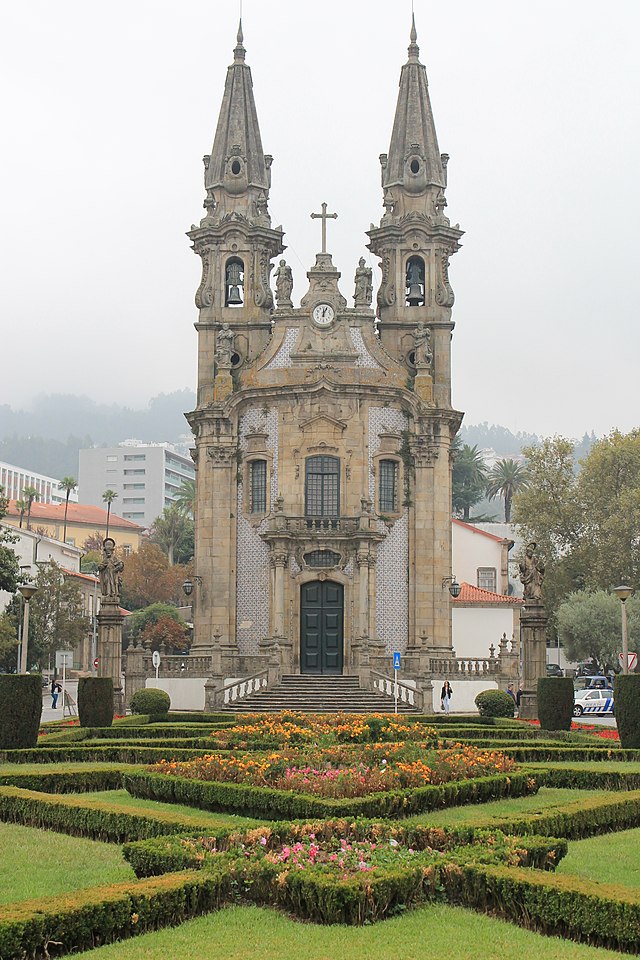
Explore this village deep in the magical world of Lousã Mountain, hidden among lush vegetation where deer, roebuck, wild boar and many other species lurk.
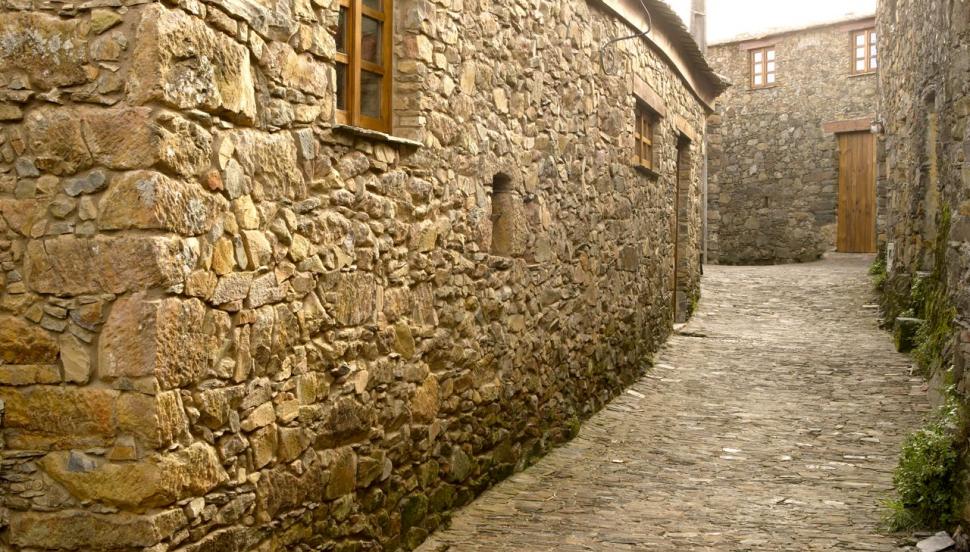
The village layout is complex, with homes scattered over a south-facing hill (which encompasses most of the settlement) and another north-facing slope. The main roadway follows the steep slope of the mountain. It is surrounded by lanes and alleyways, which foster an atmosphere of discovery, encouraging everyone to explore in anticipation of a surprise around the next turn. The main construction material is dark-coloured schist, and almost all of the buildings’ facades are surrendered.
In general, the history of this village is similar to the histories of the other four Schist Villages in Lousã municipality. Permanent settlement of the villages of the Lousã Mountain occurred in the second half of the 17th century or the beginning of the 18th century. Until then, occupation was only seasonal, in the spring and summer, with pastoralism practices. Indeed, the “Register of the population of the Kingdom (1527)” mentions none of these villages in its entry for Lousã.


The oldest documents that point to their occupation are a fine imposed by the Lousã Council in 1679 and the register of tenant properties ordered by King Pedro II in 1687. At the beginning of the 19th century, only Candal and Cerdeira escaped pillaging by the Napoleonic army. In 1885 the population of the seven villages (the five Schist Villages, plus Catarredor and Vaqueirinho) corresponded to 8.7% of the total population of the parish of Lousã (5340 inhabitants).
The resident population reached its peak in 1911 with 129 inhabitants. It possessed a school and two olive presses. The school was the pride of the “population who gave contributions to build it. Afterwards, when it was ready, it lacked teachers, and when they arrived, it lacked pupils until 1975, when it was closed when only two children were attending.” In 1981 there were only two permanent inhabitants. Today, all the original inhabitants have departed, many of them to other continents. The houses have changed hands and have been converted into second homes, visitor accommodations or commercial establishments.
Things to do and see

Shrine of Our Lady of Mercy
Serra da Lousã contain truly monumental landscape gems. The natural and landscape complex of Our Lady of Mercy is an almost enchanted valley where lofty cliffs rise beside the river running through it, surmounted by a religious complex of great beauty, at whose feet lie the river swimming pools.

Chapel of Nossa Senhora de Fátima
Historically, the towns of Cerdeira, Silveira de Cima, and Silveira de Baixo shared an old church dedicated to St. Lawrence situated halfway up the mountain slope. This was the custom among the nine mountain villages: each cluster of three settlements had its own church.
When this chapel was in danger of crumbling, the residents of the two Silveiras constructed a new chapel and took the figure of St. Lawrence from the old. Cerdeira’s residents, for their part, decided in the 1950s to construct their own chapel.

Senhora da Piedade River Beach
The Senhora da Piedade River Beach is located on the São João river, in the middle of the Serra da Lousã, in an area of exceptional natural beauty.
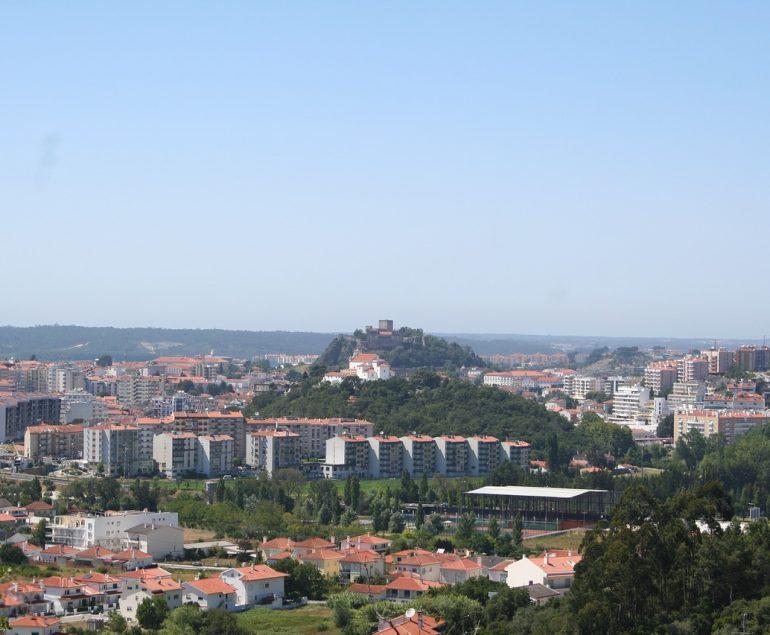
Lousã Castle welcomes tourists with a lovely location filled with secret nooks ideal for leisure and peace and quiet.
Shale is an inescapable presence. Everything on the beach is schist, including the roughly 1.75-metre-high diving board.
A small natural pool provides a safe environment for youngsters to splash and play. Additionally, it provides excellent access for individuals with limited mobility.
The beach area has a bar with a patio that overlooks the mountains and the hermitages of Nossa Senhora do Piedade. At the summit, the “Burgo” restaurant offers a panoramic view of the beach.
Additionally, changing rooms with showers and restrooms are provided. During the bathing season, a lifeguard supervises the beach, and there is a first aid station.

Lousã Castle
Also known as Arouce Castle, it is part of one of the first defensive lines established in the second half of the 11th century to secure Coimbra’s southern entrances.
The location was important as a border town during the early years of the Portuguese monarchy. In 1124, an Islamic assault captured the fortress, and after it was recaptured by the Condado Portucalense, King Afonso Henriques granted it a charter in 1151.
According to an old tale, during the Muslim domination, the emir (Arab leader) Arunce constructed the fortress to safeguard his daughter Peralta and his riches after his loss and expulsion from Conimbriga.
The predominant building material is schist and most of the facades are unrendered. Gondramaz preserves a genuine village spirit in a very developed settlement that maintains its traditional architectural lines.
Worth a visit:
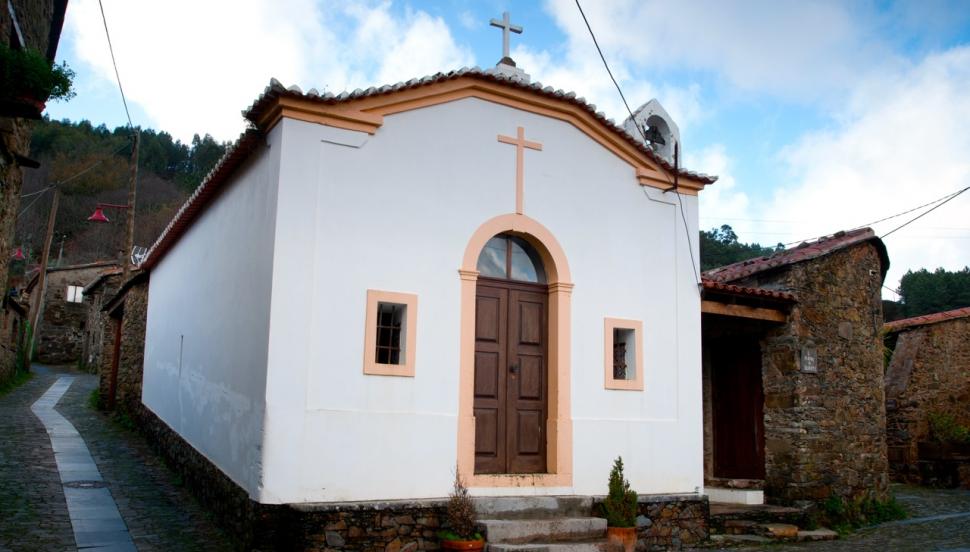
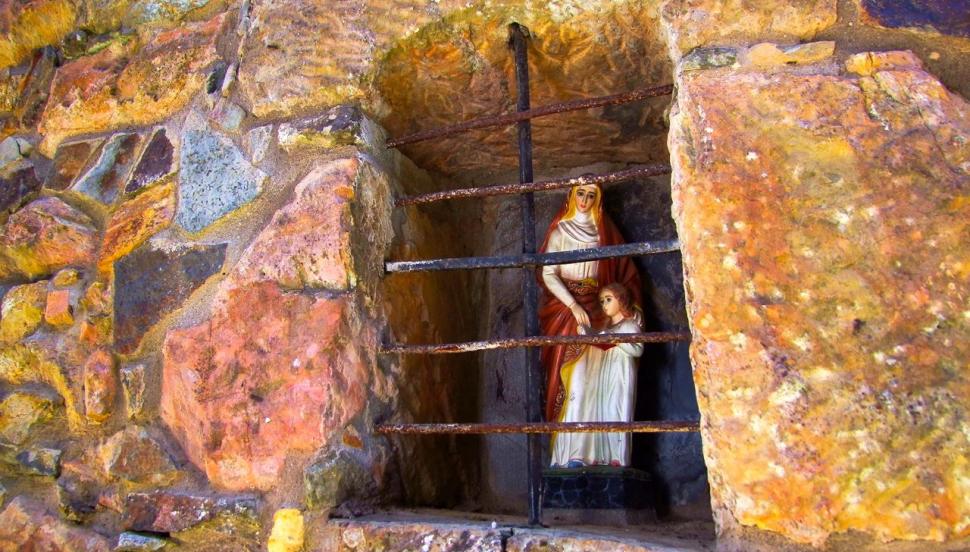
- Chapel of Nª Srª da Conceição
A chapel of simple design that contains statues of Our Lady of the Immaculate Conception and Our Lady of the Lanterns. - Wayside Shrine
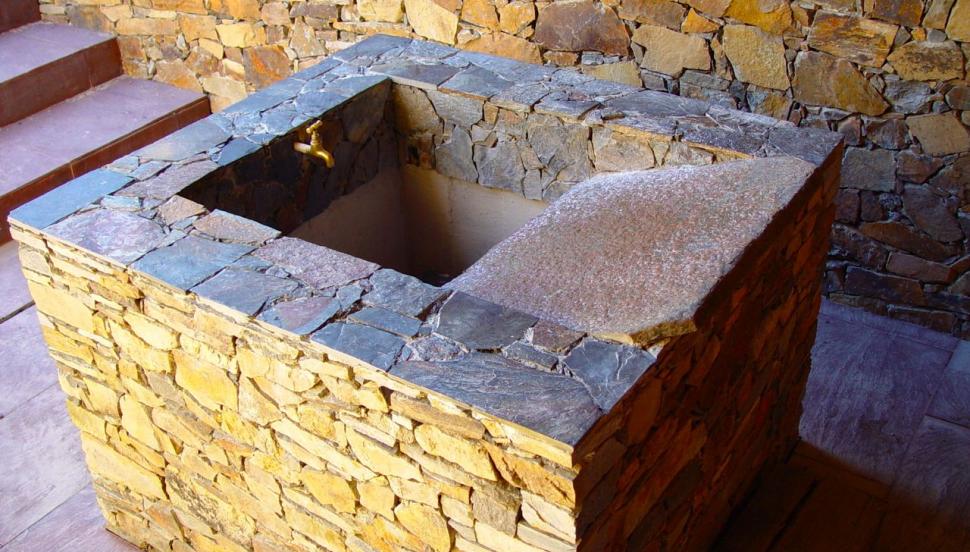
Built into the facade of a private house. - Public Washhouse and Drinking Fountain
The public washhouse, situated in the centre of the village, and the drinking fountain, which provides piped water, are the only public facilities in the village.

The Candal Aldeias do Xisto Shop is conveniently situated and provides tourists with the full range of Aldeias do Xisto goods while also enjoying a cup of tea and a piece of cake.
Here, you may sample delectable liqueurs, wines, sausages, honey, and other items that are characteristic of this area of Portugal’s diverse cuisine. Along with stomach comforts, visiting this Aldeias do Xisto Shop allows you to discover one-of-a-kind items of traditional or modern crafts and to admire the work of local artisans.
However, if you’re looking to unwind, visit the sunny patio or, in the winter, pair a piece of cake with a steaming cup of tea on the comfortable upper level.
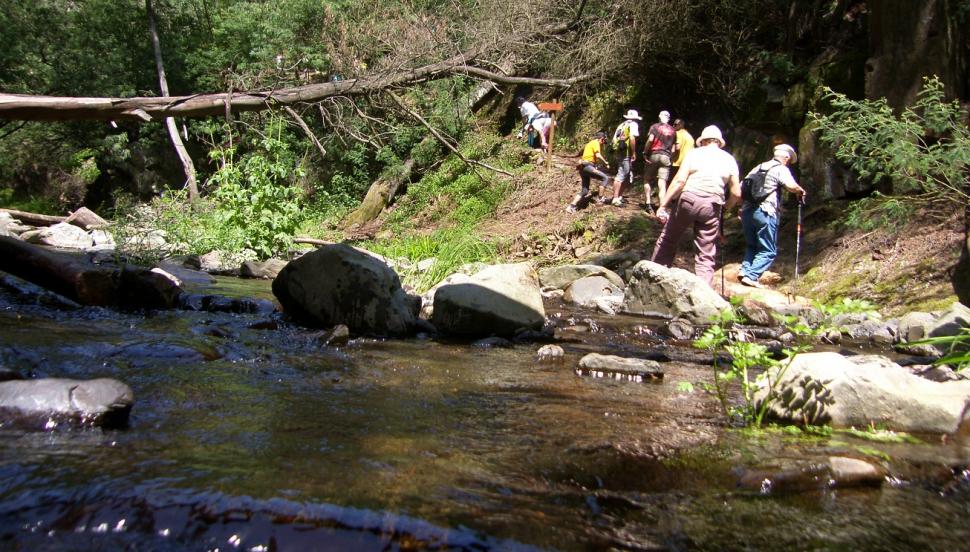
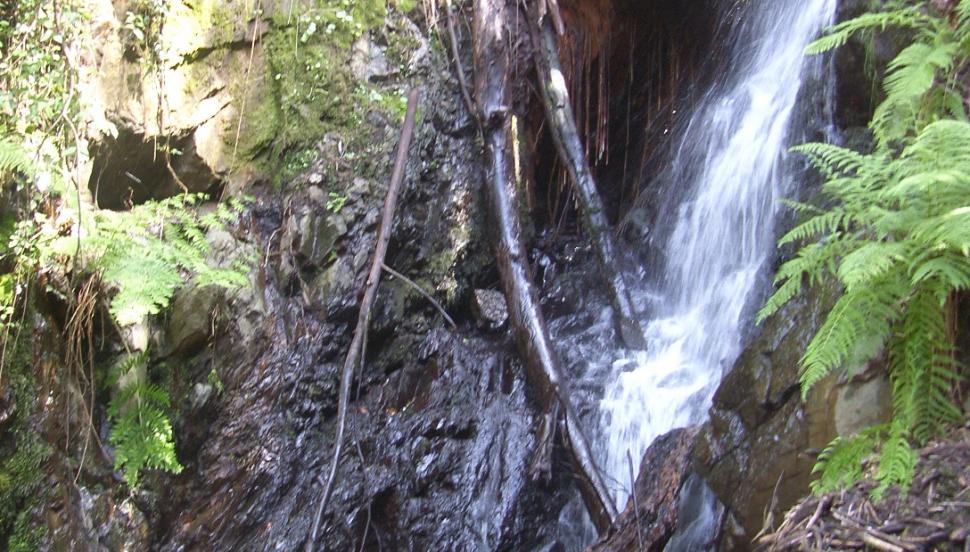
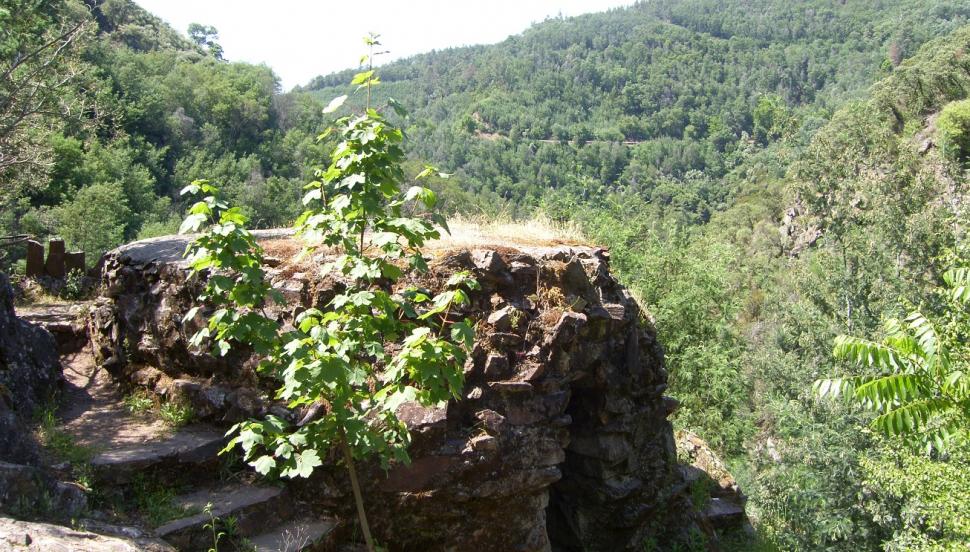
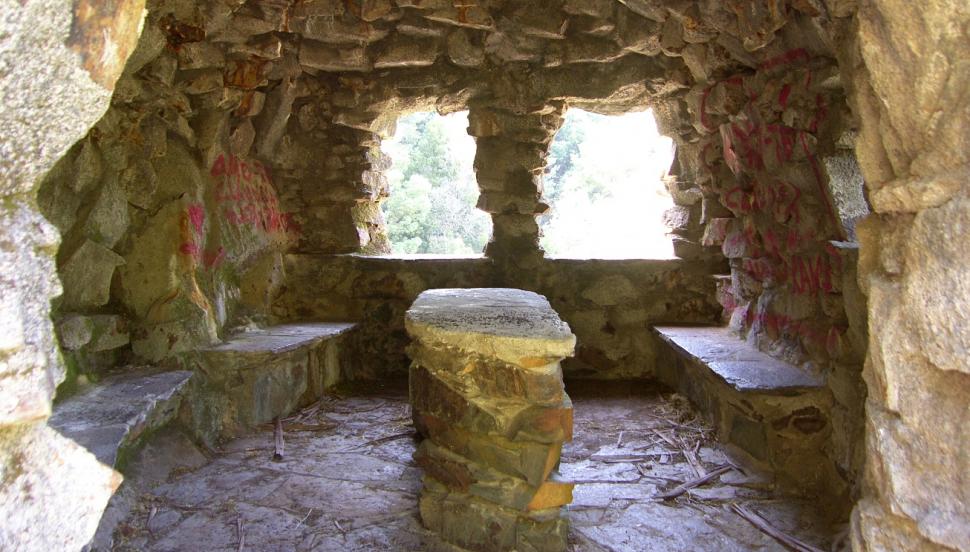
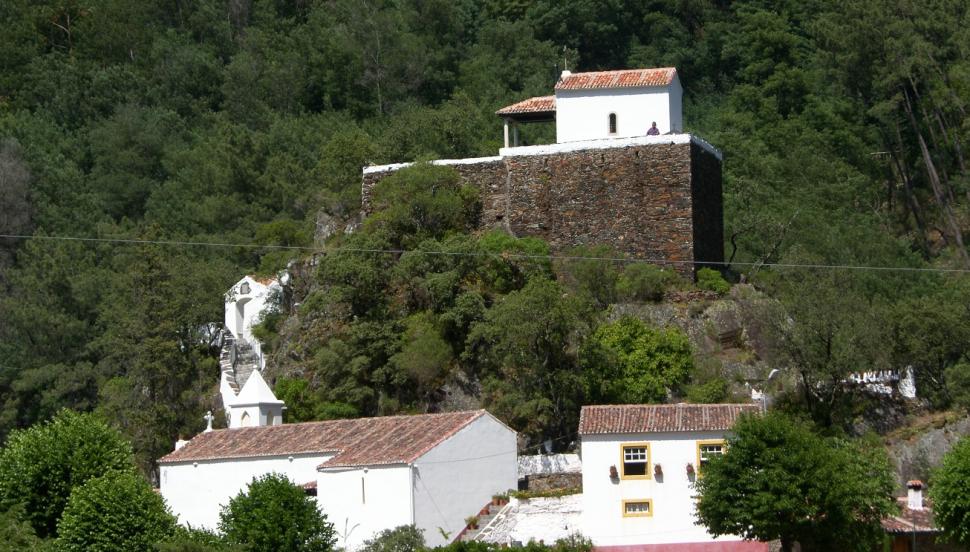
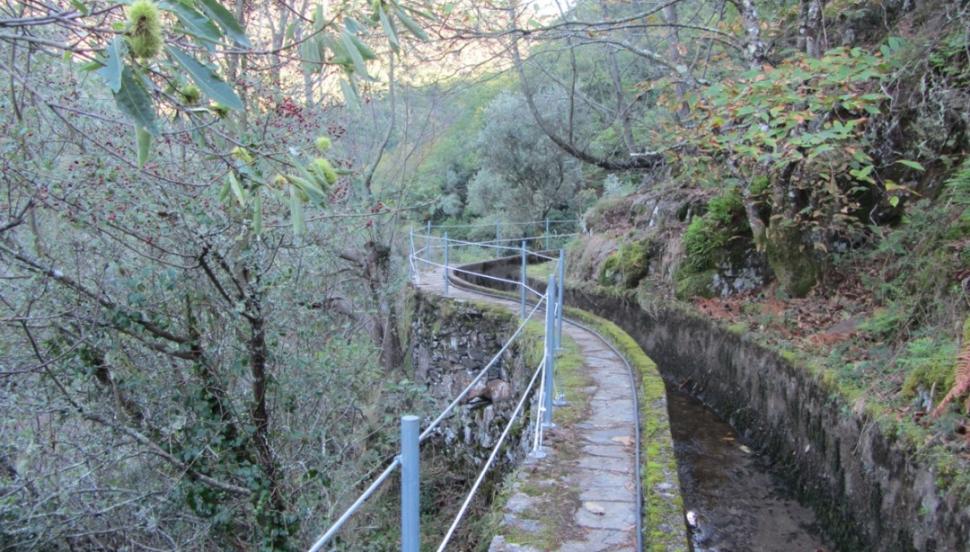
The path mostly follows the Lous Mountain’s slopes, linking Lousã Castle and the Shrine of Our Lady of Mercy with two of these mountains’ most famous Schist Villages: Talasnal and Casal Novo.
It is also a trip through time, as we retrace the steps of the ancient residents of these mountain settlements as they descended the few routes available to reach the town of Lousã. Almost the whole path is surrounded by vegetation and is reasonably sheltered at all times of the year. Due to the drop, this is a physically demanding route; however, there is an alternate that shortens the trip.