Lisbon is Portugal’s hilly, coastal capital city. From the imposing São Jorge Castle, the view encompasses the old city’s pastel-colored buildings, the Tagus Estuary, and the Ponte 25 de Abril suspension bridge. In the nearby National Azulejo Museum, you will find ceramic tiles dating back 500 years. Lisbon has a lot of historical sites and museums, but it also has a busy nightlife and a lot of restaurants and cafes. The city is also home to a variety of beaches and parks, making it a popular destination for visitors looking to explore its unique mix of old and new.
Here are ten things not to miss while visiting Lisbon.
Elevador da Bica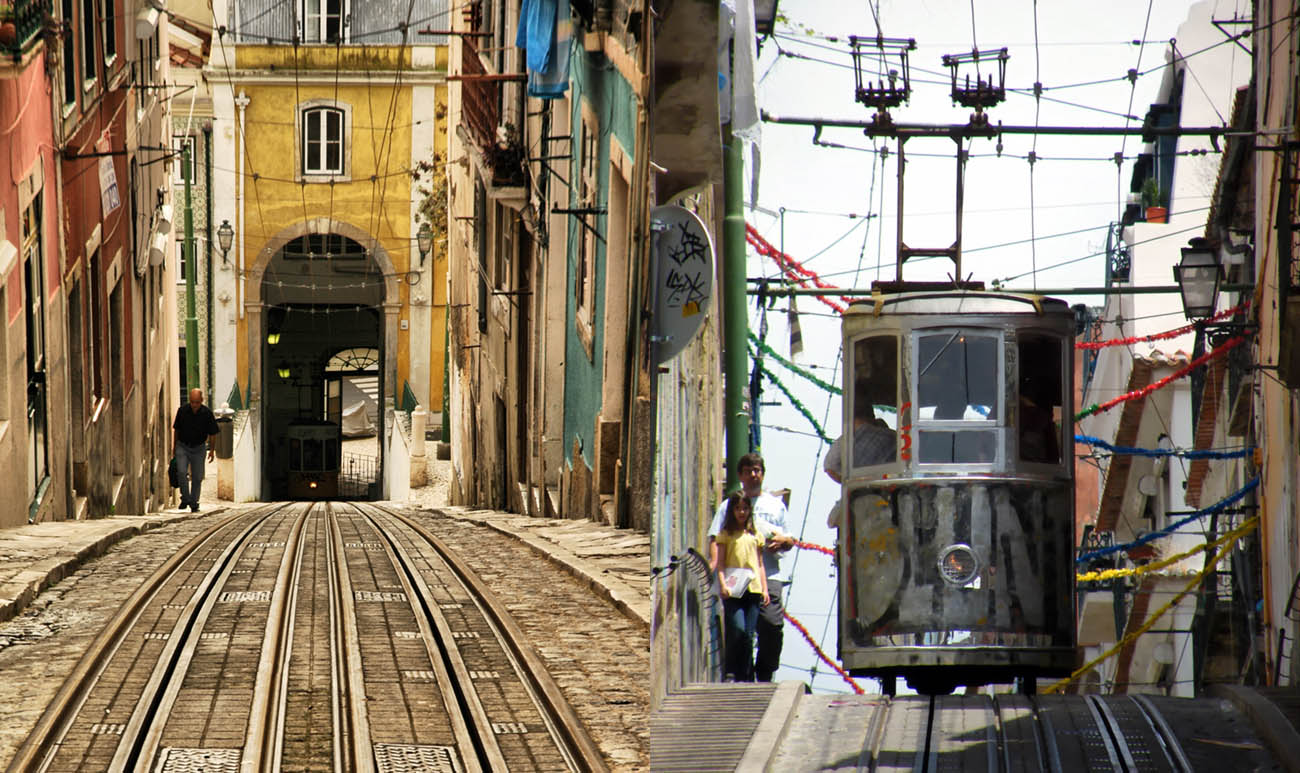
Take the Elevador da Bica if you want to have a truly unique experience in Lisbon. Travelling up a steep incline with the Tagus in the background is one of the most famous experiences in Lisbon. A tram rises a few hundred inspirational and highly photogenic metres up a steep slope is another.
Due to the stark contrast between the steep slope and the river in the background, this is one of the most photographed funiculars in the world, and it is also one of the city’s most popular tourist attractions. It connects Largo do Calhariz and Rua do São Paulo with a thrilling drop that can be completed on foot, but an equally challenging ascent that is only intended for the fittest.
During the Festas Populares, the tram, which has been lavishly decorated by local artisans and serves as a witness to the thriving nightlife on Rua da Bica, appears to join in the enthusiasm of the rest of the city.
Try to capture the two trams as they cross the street, with the colourful residences and flowering verandas providing the perfect backdrop. The two trams have been designated a national monument since 2002 and have been in operation for a century.
- www.carris.pt/en/home/
- Address: R. da Bica de Duarte Belo1200 Lisboa
Elevador da Glória
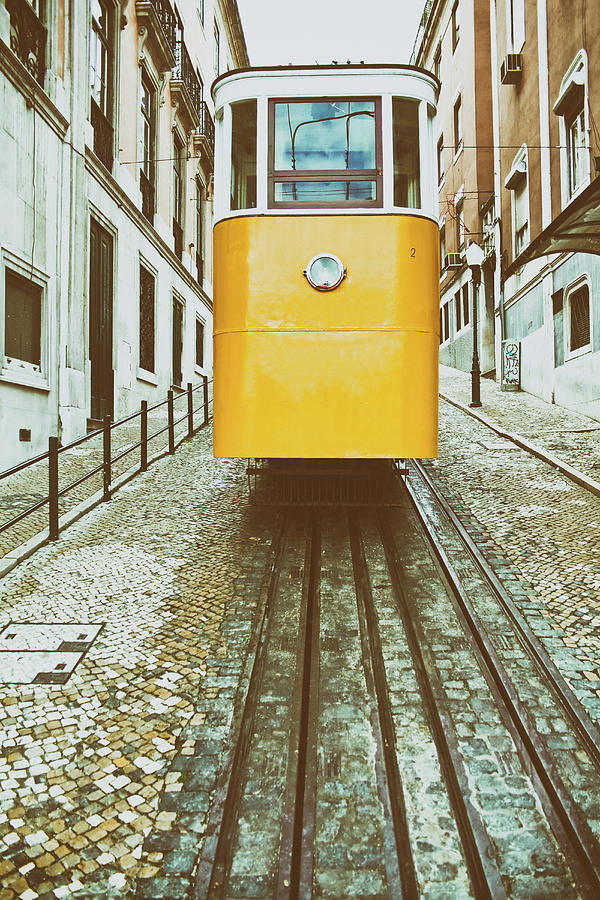
This funicular will save your legs on the ascent, but it will still leave you out of breath. It is the most efficient method of ascending from Baixa to Bairro Alto and arriving without the need to rest.
The Elevador da Glória, connects Baixa and Bairro Alto – more particularly, Praça dos Restauradores and Miradouro de So Pedro de Alcântara.
It was the second of its sort in the city when it debuted in 1885, allowing you to convert a strenuous climb into a beautiful encounter. Despite the fact that it was only electrified in 1915, it has retained many of its original features.
The Subida à Glória, a counter-circulating pulley system used by both amateur and professional cyclists, has just been restored.
However, it is preferable to take advantage of the comfort of the seats and jerks of the ascent in order to relax a bit before taking in the beautiful view from the miradouro.
- www.carris.pt/en/home/
- Address: Calçada da Glória,1269-124Lisboa
Elevador de Santa Justa
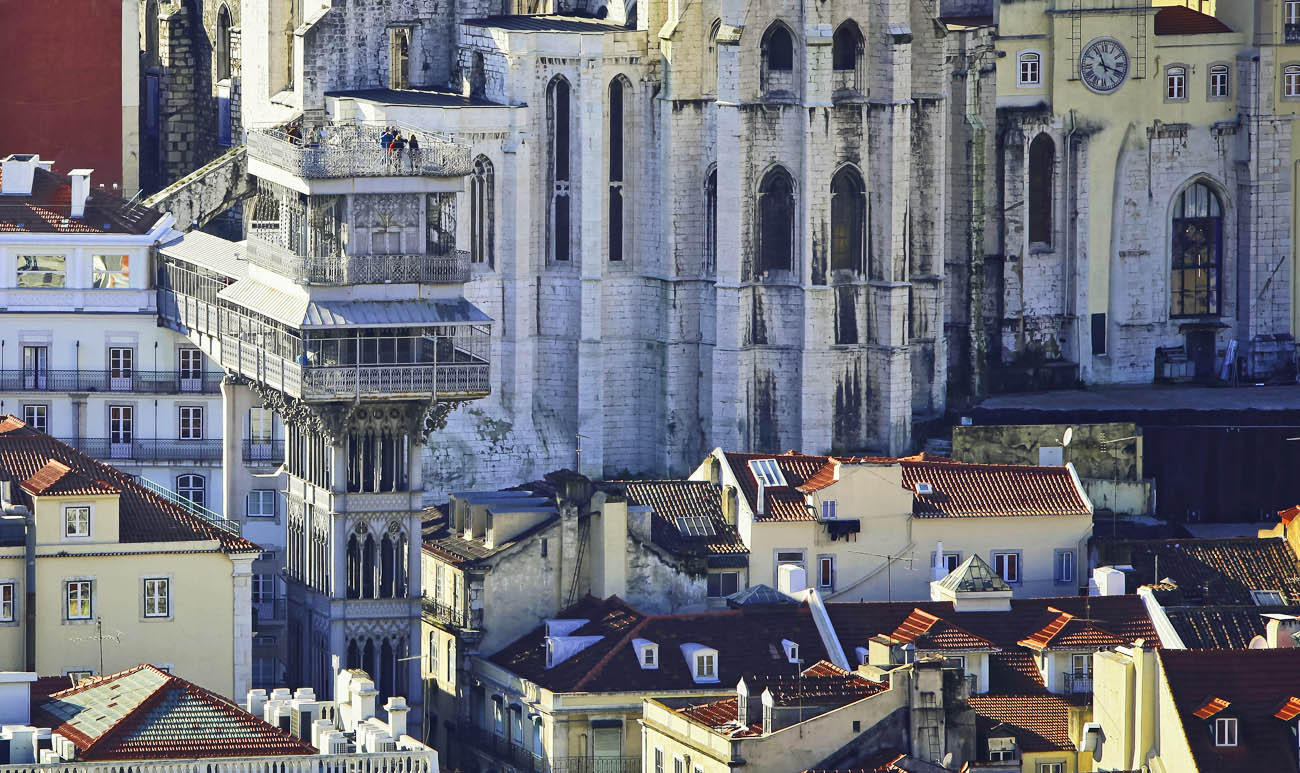
Take a ride on one of the most recognisable lifts in all of Lisbon (elevadores). It is one of the most popular tourist attractions in the city because of its distinctive structure and the breathtaking view from the top.
The Elevador de Santa Justa is one of the most well-known landmarks in the city.
A neogothic-style building joins Rua do Ouro and Largo do Carmo, setting it apart from any of the other elevadores in the city.
The Elevators built of wood and delicately ornamented with brass transport passengers up and down to the most luxurious locations in the city, conjuring up images of a time machine.
The observation deck at the top of the tower is one of the greatest viewing locations in the city, offering a magnificent perspective of Baixa, Castelo, the Tagus, as well as the stunning remains of the Convento do Carmo church, which is located nearby.
- www.carris.pt/en/home/
- Address: Rua de Santa Justa1150Lisboa
Lisbon’s Streetlamps
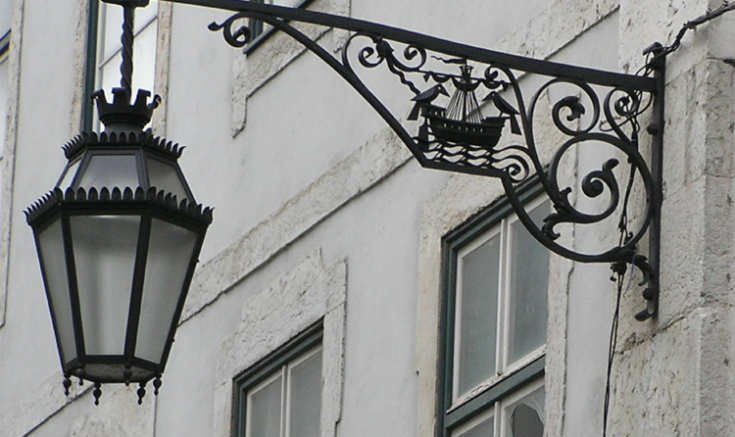
The distinctive light of Lisbon is well-known. The city’s lights and streetlamps, however, are unique.
These streetlamps, whether in the ancient type, constructed of iron and affixed to the walls, or the more modern style, mounted on the end of a post, tell the tale of the city’s public illumination.
In 1878, gas lamps and the first electric bulbs replaced the olive oil lamps that were established during the reign of Queen Maria I.
Their structure, which is built of forged and cast iron as well as concrete, reflects the Romantic and contemporary styles that have increasingly adorned the city.
They may be seen in the old areas and on the Avenidas Novas, often ornamented with the Lisbon sign of a caravel with two ravens.
Pilar 7 Bridge Experience

In Lisbon, there’s a new cultural attraction!
An immersive and interactive experience that enables a one-of-a-kind exploration of the Ponte 25 de Abril.
This interactive centre in Alcântara (Avenida da Índia) allows all visitors to have a one-of-a-kind experience of the bridge – which is considered one of the most beautiful in the world – through a tour that includes the exterior areas of this key pillar as well as the sensory experience of visiting its interior.
It is a journey through the building’s history, culminating in an elevator ride to a panoramic observation point with an unrivalled perspective of the city and river.
Your journey will conclude with an immersive virtual reality experience of areas of the bridge that are inaccessible, as well as a call to the PhotoBooth to capture this amazing moment.
Address: Avenida da Índia, Pilar 7 da Ponte 25 de Abril1349-028Lisboa
Praça do Comércio (Terreiro do Paço)
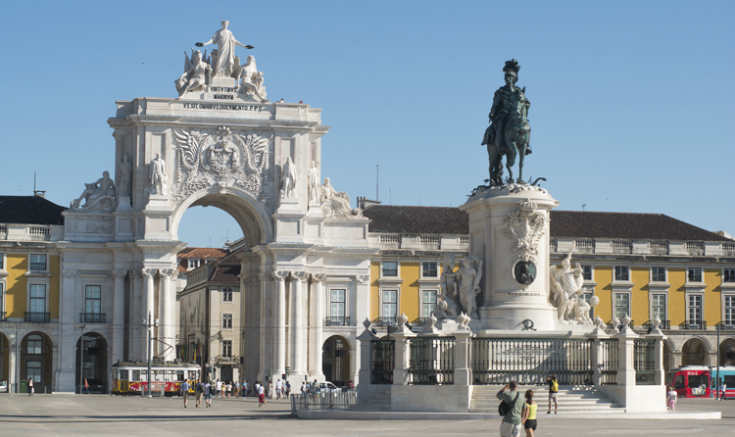
Praça do Comércio is one of Lisbon’s most famous squares. Locals call it Terreiro do Paço because it was previously the site of the paço, or palace, before the earthquake in 1755. It is one of Europe’s largest squares. As a city icon, it allows access to a number of must-see sights, including Pátio da Galé, Cais das Colunas, and the unique Lisbon Story Centre. Climb to the top of the Arco da Rua Augusta to see the symmetry of the streets, the calçada Portuguesa, and the river panorama. Relax at the feet of King José I and the majestic horse Gentil, a statue carved by Machado de Castro that exemplifies royal strength and the Lusitano breed’s grandeur. Make Praça do Comércio your first stop when exploring the city.
Address:Praça do Comércio1100-148Lisboa
Ribeira das Naus
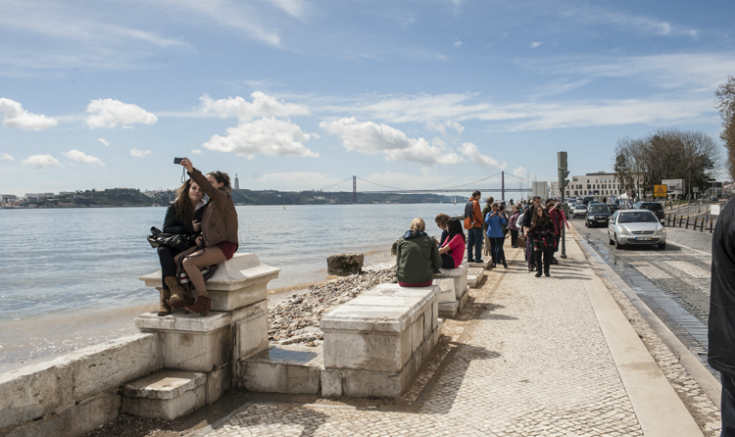
Ribeira da Naus is one of Lisbon’s most intriguing neighbourhoods. This former boatyard, which was recently refurbished, is now a surprise river beach, complete with a huge grassy space and broad steps leading down into the river. Despite the fact that swimming is prohibited, this space connecting Cais das Colunas in Praça do Comércio and Cais do Sodré is tempting for sunbathing and resting one’s feet after a long day on the streets. Ribeira das Naus includes a kiosk and outside seats to take advantage of Lisbon’s light and the greatest sunset in the city, making it even more pleasant. Take a stroll along the river, which has been completely altered. It’s a one-of-a-kind veranda on the Tagus in a modern and appealing location; a true river beach in the heart of the city, whose allure is to be savoured.
Address: Avenida Ribeira das Naus1100-454Lisboa
Lisbon’s Azulejos
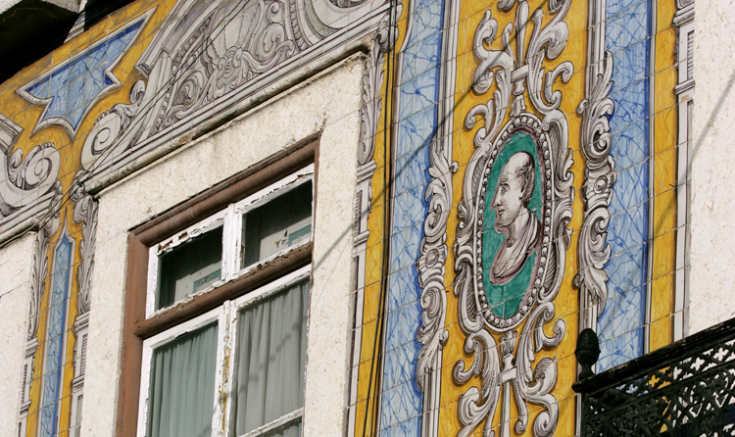
Explore this important art form in Lisbon, which provides the ideal backdrop for Portuguese tile-making, with eras, styles, and resistance to the passage of time plainly obvious. After surviving so many disasters, the azulejos of Lisbon continue to adorn the city with works of art that are unlike anything else in the world.
The city boasts many gorgeous façades, however, you won’t be able to view them all because many are hidden in private homes. Explore their history in the Museu do Azulejo and look for memorable specimens on the streets of Alfama, Mouraria, and Chiado.
Discover additional modern samples near Abel Manta’s Guas Livres Aqueduct and Maria Keil’s Avenida Infante Santo, emphasising the colossal and modern, the baroque and art nouveau, in a trip through the city’s history.
Calçada Portuguesa
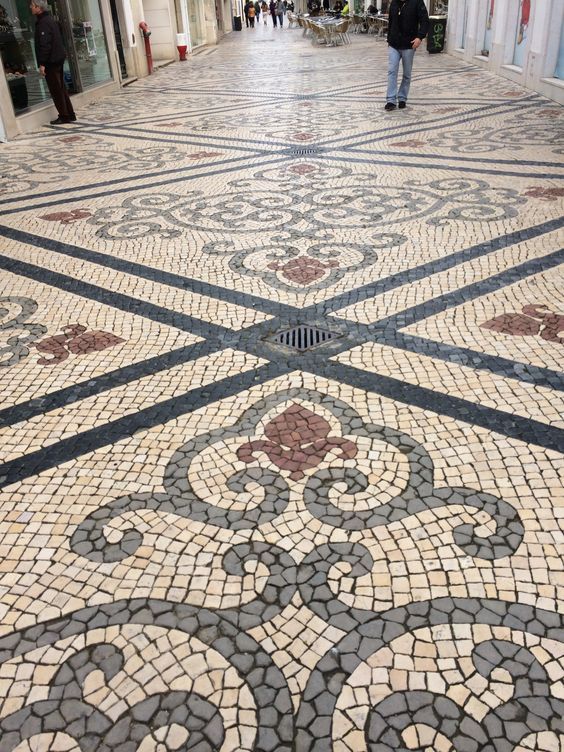
Calçada Portuguesa, or Portuguese pavement, is a hallmark of Lisbon.
Find out more about this style of art that you may see in Lisbon. Allow your feet to tread on – and your eyes to take in – the city’s distinctive patterns.
It is one of the city’s oldest features, and it plays an important part in establishing the city’s unique ambience by reflecting all of the light that falls on it.
The patterns, which are made out of limestone cubes that are carved and set by hand by skilled artisans, can be geometric, figurative, or specific depending on the locality and the tastes of the time.
In Avenida da Liberdade, take in the undulating pattern, or in Chiado, take a step back and admire the symmetry of the design.
It’s worth strolling down the same street twice, first to admire the architecture and again to marvel at the ground-level patterns.
Cape Roca

The most magnificent and spectacular of all of Lisbon’s observation sites aren’t even in the city. It is located halfway between Cascais and Sintra and requires tourists to go down one of the region’s most beautiful routes. The gradual and tortuous ascent does not prepare you for the enormity of the panorama from continental Europe’s most westerly point. Cape Roca, in the Sintra highlands, is a broad, open location where the ground descends suddenly into the sea from its 140-meter-high cliffs, combining calm and severe weather in one place. You may buy mementoes, but the photographs and fresh sea air will always remind you of the Atlantic’s power. The lighthouse, which was built in 1772, continues to direct ships along the Portuguese coast. The boundary between the land and the water. Cape Roca, immortalised in the words of Portugal’s finest poet, Luis Vaz de Cames, is awe-inspiring to everyone who comes.