Looking for a fix of culture but don’t know where to start? Lisbon offers an attractive selection of museums, from Classical art to Modernism, from historic palaces to buildings designed by contemporary architects.
Here are ten picks of the 62 museums you can find in Lisbon.
1. Lisboa Story Centre

Lisboa Story Centre Memories of the city built on the hills bathed by the Tagus, and overlooking the Atlantic Ocean, Lisboa is a fascinating mosaic of memories, stories and influences that still mark the urban landscape of this unique city. The various events that make up its history and some of its protagonists are now presented at Lisboa Story Centre, where all who visit the Portuguese capital are invited to make a trip back in time and discover memories of Lisboa, from its foundation until the present day.
Located in Terreiro do Paco, this interactive technology-based facility relates the main events in the city from past to present. In a playful and interactive way whilst respecting the historical accuracy that a city with Lisboa’s past deserves, this interpretation centre takes visitors on a 60-minute journey through space and time with an audio guide system presenting historically accurate events and dramatic scenes of the city’s different eras.
The tour is organized into six main sections: Lisboa: Myths and Realities, which covers the River, Land, Sea, Sky, Early mythology, settlers and conquerors and the City Walls. This is followed by the section Lisboa: Global City, which presents the Cosmopolitan City, the Warehouse of the World, Beyond the Horizon, the Flying Priest, Magnificent City, Death and Politics and the Church. The section focusing on November 1755, All Saints Day, addresses the earthquake and the city in ruins, passing on to the core vision of Pombal, who introduces Modern City Planning in the post-earthquake period and the Reconstruction of the City. And finally, the Terreiro do Paco section, which focuses on the Public Square: Politics and Leisure.
The 1755 earthquake is shown in a sensory theatre experience that captivates all visitors. You can extend your tour with a visit to the 1st floor where visitors can play with an interactive scale model that recreates the centre of Lisboa, allowing you to visualise predetermined events and the places where they occurred.
WEBSITE: https://www.lisboastorycentre.pt/pt
2. Navy Museum
 The Navy Museum is a maritime museum in Lisbon, dedicated to all aspects of the history of navigation in Portugal. The museum is administered by the Portuguese Navy and is located in the tourist district of Belém. It occupies a part of the neo-Manueline Western wing of the Jerónimos Monastery with the National Museum of Archaeology, as well as a modern annexe built to the North of the monastery.
The history of the museum is connected to King Luís I (1838-1889), who had a strong interest in oceanographic studies and an accomplished navigator himself. In 1863, he began collecting items related to the preservation of the maritime history of Portugal, a collection that was enlarged in the following decades, culminating in the inauguration of the Maritime Museum in 1963 in its present location.
The exhibits include historical paintings, archaeological items and many scale models of ships used in Portugal since the 15th century, a collection of navigations instruments and maps, royal barges, as well as the Fairey III “Santa Cruz” that crossed the Atlantic in 1923, and the Portuguese Navy’s first aircraft, an FBA Type B flying boat.
WEBSITE: https://ccm.marinha.pt/pt/museu
3. National Coach Museum
 The National Coach Museum is located on the Afonso de Albuquerque Square in the Belém district of Lisbon in Portugal. The museum has one of the finest collections of historical carriages in the world and is one of the most visited museums in the city.
The museum is housed in the Royal Riding Hall of Belém, the former home of the Portuguese School of Equestrian Art. It is part of the larger Belém Palace complex, formerly a Royal Palace which is now the official residence of the President of Portugal. The Horse Riding Area was built after 1787 following the Neoclassical design of Italian architect Giacomo Azzolini. Several Portuguese artists decorated the interior of the building with paintings and tile (azulejo) panels. The inner arena is 50 m long and 17 m wide and was used for training horses and for horse riding exhibitions and games, which could be watched from its balconies by the Portuguese royal family.
The museum was created in 1905 by Queen Amélia to house an extensive collection of carriages belonging to the Portuguese royal family and nobility. The collection gives a full picture of the development of carriages from the late 16th through the 19th centuries, with carriages made in Italy, Portugal, France, Spain, Austria and England.
Among its rarest items is a late 16th/early 17th-century travelling coach used by King Philip II of Portugal (Philip III of Spain) to come from Spain to Portugal in 1619. There are also several pompous Baroque 18th-century carriages decorated with paintings and exuberant gilt woodwork, the most impressive of these being a ceremonial coach given by Pope Clement XI to King John V in 1715, and the three coaches of the Portuguese ambassador to Pope Clement XI, built in Rome in 1716.
WEBSITE: museudoscoches
4. National Tile Museum
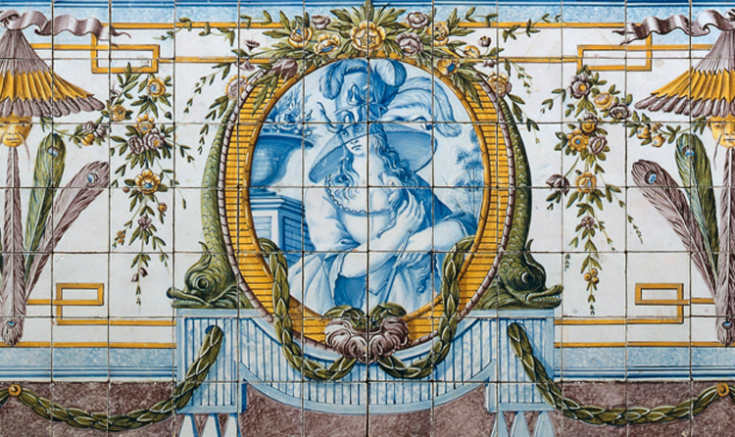
Museu Nacional do Azulejo is one of the most important of the national museums by the singularity of its collection, Azulejo (Tile), an artistic expression that differentiates Portuguese culture, and by the uniqueness of the building in which the Museum is set, former Madre de Deus Convent, founded in 1509 by Queen D. Leonor. Its collections allow a journey through the history of tile, from the 15th century till the present days. Belonging to the convent, the Madre de Deus church is decorated in full Portuguese baroque splendour, with gilded and carved wood, paintings and tile panels.
WEBSITE: http://www.museudoazulejo.gov.pt/
5. Fado Museum
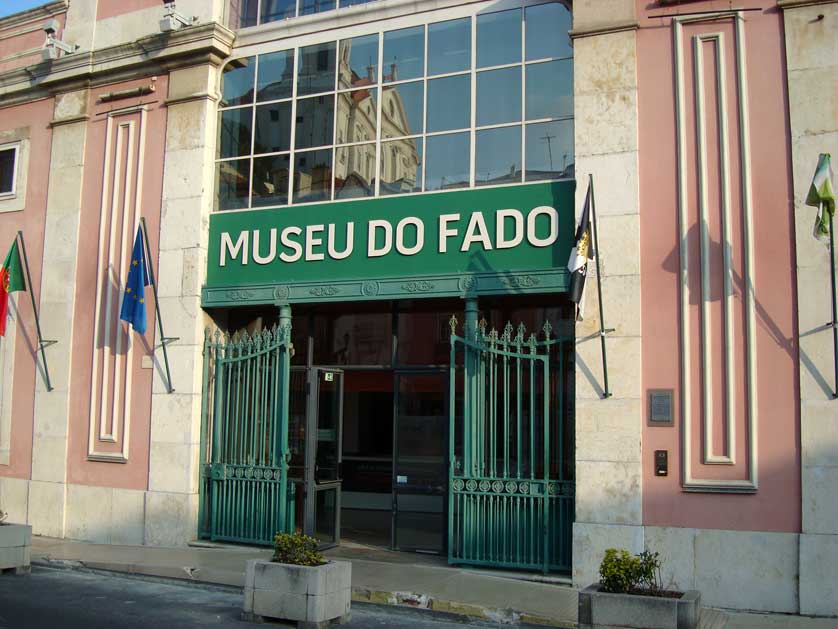
The Fado Museum in Lisbon is a museum dedicated to the music genre fado. An interactive museum to see, hear and feel Fado a World Heritage Site. Discover centuries of history and personalities that still today reinvent and keep the heritage alive.
Visitors can learn about traditional Portuguese fado music which dates back to the 1820s. The exhibition guides visitors through the history and main promoters of this music genre fado, which is slowly becoming popular again. Opened in 1998, this museum also serves as a venue for frequent music concerts and other cultural events.
WEBSITE: https://www.museudofado.pt/
6. Military Museum

The Military Museum of Lisbon (Museu Militar de Lisboa) is located in the Largo dos Caminhos de Ferro in Lisbon and is the largest military museum in Portugal and one of the oldest museums in the city of Lisbon. In the Vasco da Gama Room it includes a collection of ancient cannons and modern murals that represent the discovery of the maritime route to India. The first floor features rooms dedicated to the First World War. Other rooms describe the evolution of weapons in Portugal, from flint blades, spears and shotguns. The courtyard, flanked by cannons, tells the story of Portugal from the Christian Reconquest to the First World War.
WEBSITE: http://www.exercito.pt/pt/quem-somos/historia
7. Museum of Aljube Resistance and Freedom
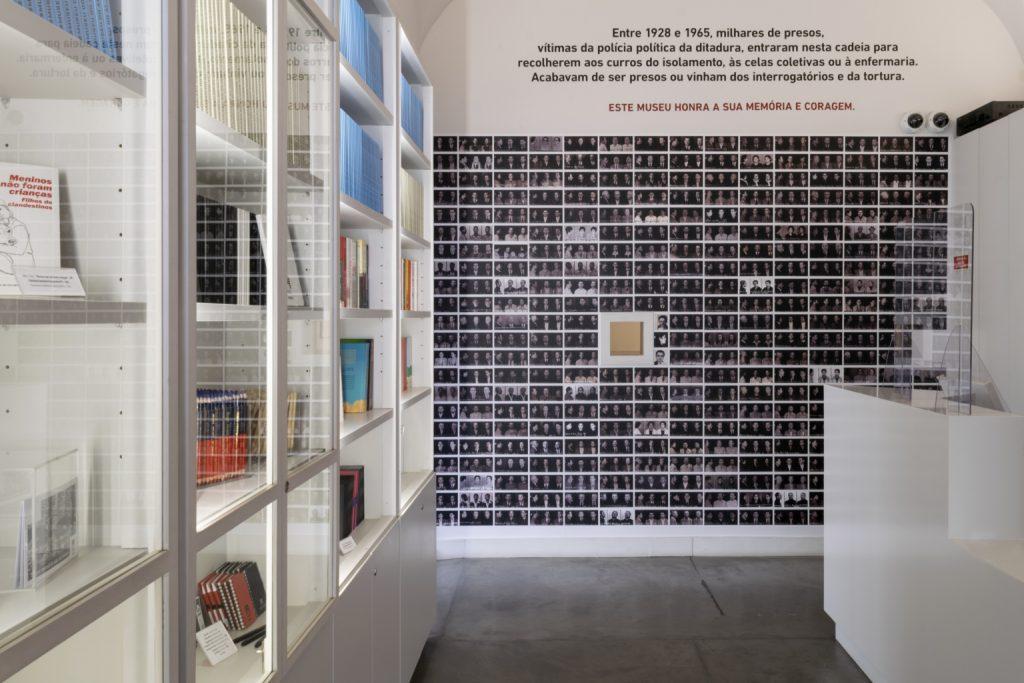
The Museum of Aljube Resistance and Freedom is a historical museum in Lisbon that is dedicated to the history and memory of the fight against the dictatorship and the recognition of resistance in favour of freedom and democracy. The museum illustrates the general characterisation of the Portuguese dictatorial regime (1926-1974), its means of oppression over the population, the response of the opposition, semi-legal and clandestine, and also aspects of the anti-colonial struggle that induced the military to overthrow the regime through a military coup in 1974.
WEBSITE: https://www.museudoaljube.pt/
8.Puppet Museum (Museu da Marioneta)

Museu da Marioneta is located at the Convento das Bernardas. It is the first and only Portuguese museum solely dedicated to the interpretation and dissemination of the history of puppets and puppet theatres, featuring the history of this utmost fascinating art throughout the world, the different types of puppets and the various approaches they allow, focusing on the Portuguese puppets.
The museum’s collection has evolved progressively, depicting the different theatrical forms that derive from ancient traditions or from modern artistic pursuits, exploring new forms, new materials, and new techniques. This development was possible due to the help and support of various people, authors, collectors and puppeteers who joined us in this project, giving their inestimable contribution and assets.
We are deeply proud to feature the most significant and complete collections of Portuguese traditional puppets.
WEBSITE: https://www.museudamarioneta.pt/en/
9. MAAT – Museum of Art, Architecture and Technology

MAAT is a cultural project for the city of Lisbon that is focused on three areas – Art, Architecture, and Technology.
The museum sits on the River Tagus (Rio Tejo) to the west of the city centre. It establishes a connection between the new building and the Tejo Power Station, one of Portugal’s most prominent examples of industrial architecture from the first half of the 20th century, and one of the most visited museums in the country.
MAAT’s ambition is to present national and international exhibitions by contemporary artists, architects, and thinkers. The programme also includes various curatorial perspectives on EDP Foundation’s Art Collection, reflecting current subject matters and trends.
WEBSITE: https://www.maat.pt/
The National Museum of Archeology

The National Museum of Archeology is the largest archaeological museum in Portugal and one of the most important museums devoted to ancient art found in the Iberian Peninsula. Located in Lisbon, the museum was founded in 1893 by the archaeologist José Leite de Vasconcelos.
Visit the website for information and the programs available.