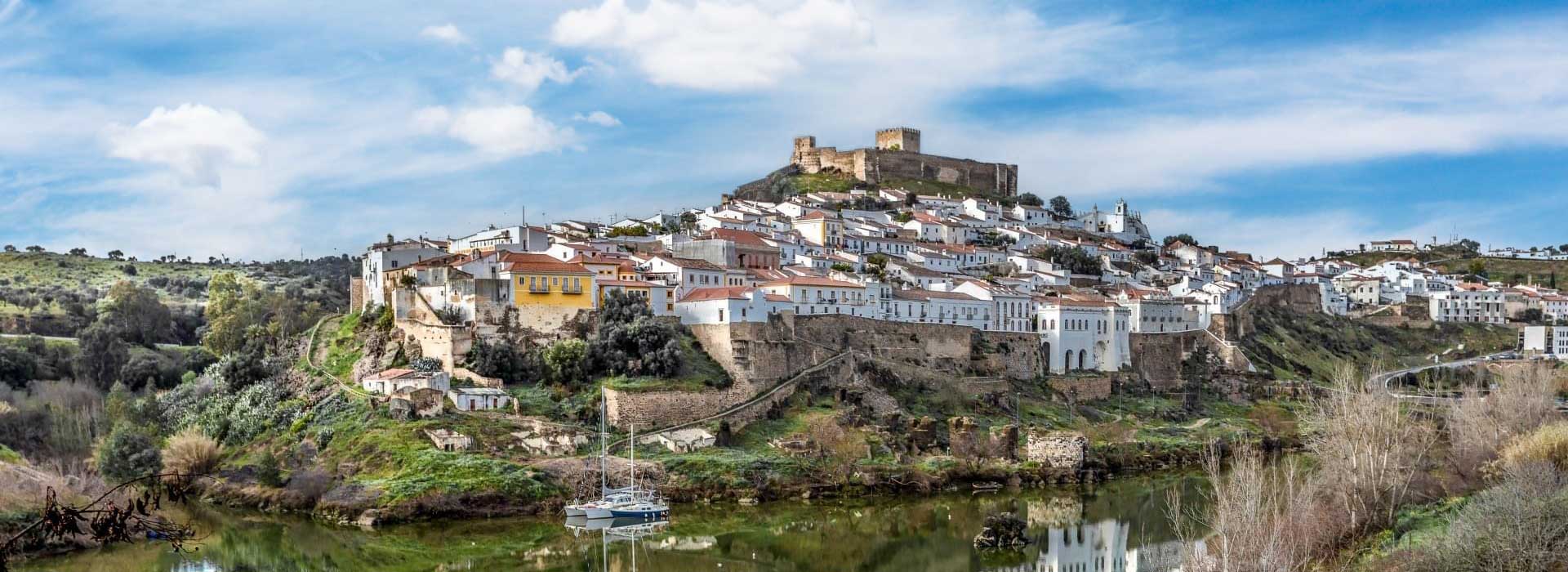
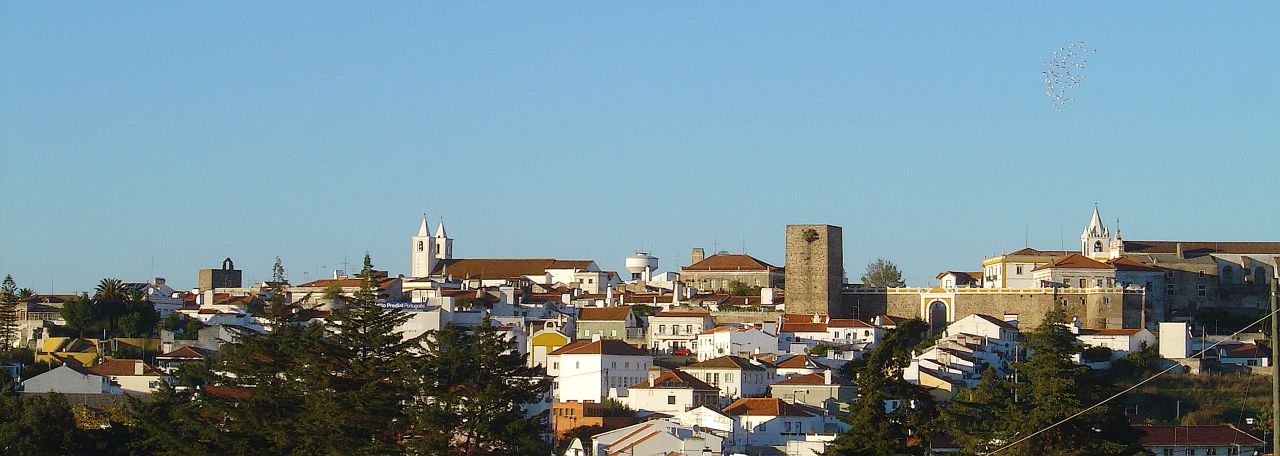
There are villages in Portugal that feel like they were built for people who enjoy quiet details. Places that still follow the rhythm of their own seasons, their own bells, and their own silences. Avis is one of those places. It rises on a gentle hill in the northern Alentejo, a white cluster of houses sheltered by what remains of the old castle walls. Below it, a wide lake stretches toward the horizon like a polished piece of silver.
Visitors often arrive expecting a short stop. They leave surprised at how deeply such a small village settles into memory. This is the kind of place that rewards you if you let yourself walk slowly, look twice at a doorway, or pause at a viewpoint simply to inhale the warm air of the plains.
Avis is not dramatic. It does not ask for attention. It offers calm, story, and space to breathe. And in a world that moves faster each year, that feels like a gift.
A village shaped by an Order
To understand Avis, you begin with the Order of Avis, one of the most influential military orders in medieval Portugal. The village was founded in the 12th century when King Afonso II granted land to the knights. They built a fortified monastery, a castle, and eventually the small town that still stands today.
This historical weight is not loud or theatrical. It hangs lightly in the air. When you walk through the old quarter, the past follows you quietly. Stone towers appear between houses. Gothic arches frame small alleys. And every so often, you stop at a corner that feels older than it looks.
The heart of it all is the Monastery of the Order of Avis, a building that carries centuries of memory within its walls. Parts of it have been restored as a museum. Other parts remain untouched except for the marks left by time. This gentle blend of preservation and decay gives the village its atmosphere. Avis does not pretend to be frozen in the medieval period. It simply lives with its past like an heirloom kept on the shelf.
Wandering the old streets
What makes Avis charming is not a single monument but the entire texture of the village.
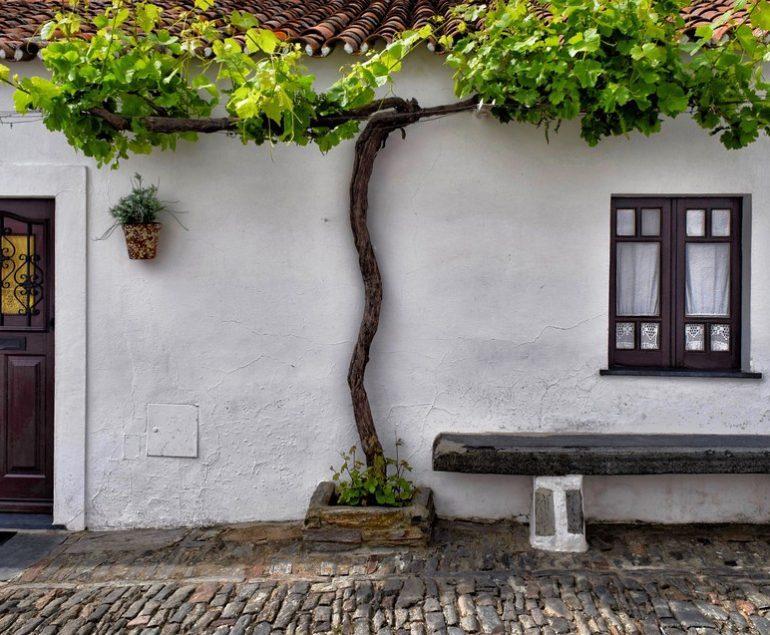
The streets follow the hill’s natural slope. Many are narrow and paved with stones softened by centuries of footsteps. Whitewashed façades lean into each other. Tiny windows frame clay pots filled with geraniums or rosemary. Cats nap in the shade without worrying about traffic.
You can walk the historic center in thirty minutes, but that would miss the point. Avis invites wandering, lingering, absorbing.
Here is how most people explore the village without realising they are doing it:
You start near the main entrance, where you can park the car. You enter the old quarter on foot and feel your pace slow almost immediately. The light in the Alentejo is different. It is warm but gentle, making colours look deeper, older, more honest.
You follow a quiet lane uphill until the walls of the monastery appear. You touch the stone because you want to know how it feels. It feels cool even in summer.
You climb a little further, turn left, and suddenly the plains open below you. Endless fields roll toward the horizon, sometimes green, often golden, always impressive. You take a photo even though the photo will not capture the real scale of it.
You keep walking, turning the kind of corners that seem to hold secrets. Every so often you find a tiny viewpoint carved between houses, as if someone long ago decided that the world needed another place to stop and admire it.
By the time you reach the top of the village, you feel like Avis has been revealing itself in small, thoughtful pieces.
The lake that feels like a sea
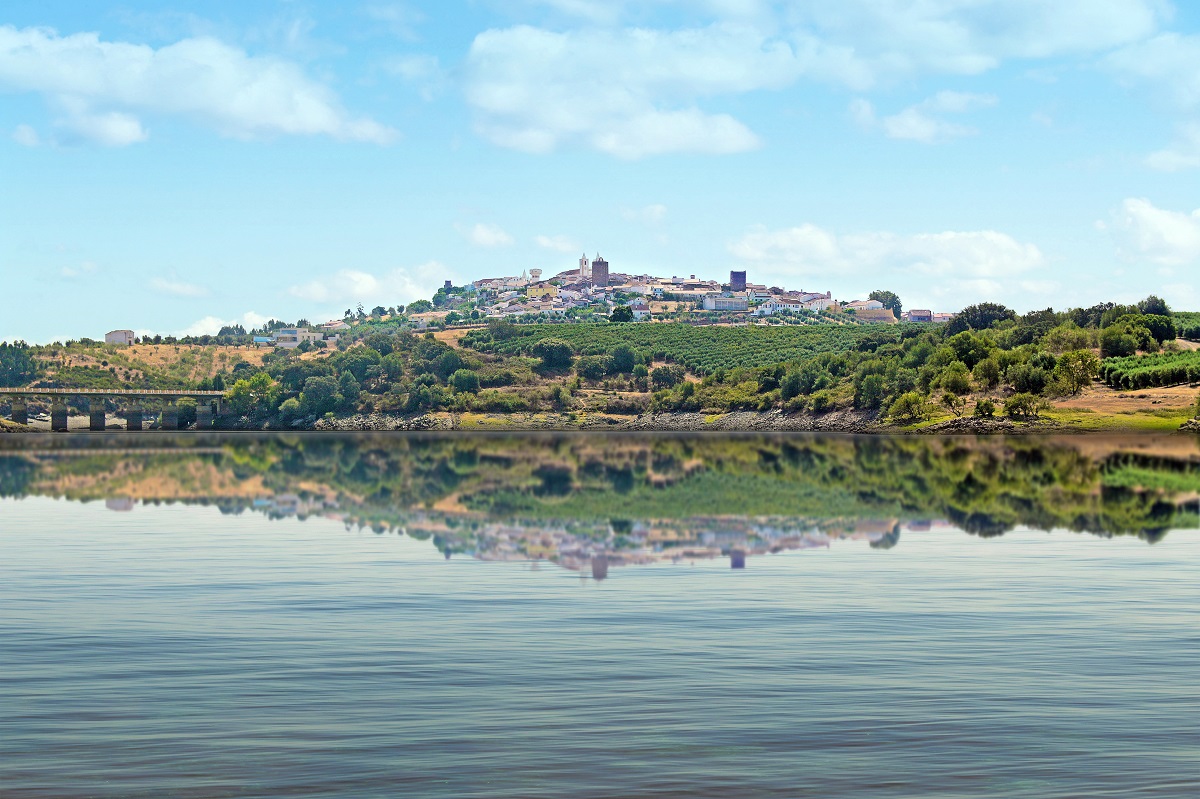
Just when you think you understand Avis, it surprises you with a lake that looks like it belongs somewhere else.
A few minutes from the village lies Albufeira do Maranhão, a large reservoir created by the Maranhão Dam. It stretches across hills and valleys, forming a landscape that feels almost coastal despite being deep inland.
The lake is calm and expansive. In the early morning the water sits still, reflecting the sky so perfectly that the horizon dissolves. By late afternoon the light shifts into a golden haze, turning the surface into a warm ribbon of colour.
People come here for different reasons.
Some arrive with kayaks.
Some find a quiet spot to swim.
Some prefer to stand at the shore and let their thoughts settle.
There are picnic areas, small sand patches, and places to launch boats. Local fishermen cast long lines with the steady patience of people who understand the rhythm of the lake. Couples park their cars under trees and sit watching the water for an hour without speaking. Families come on weekends for a simple day outdoors.
The lake gives Avis its softness. Without it, the village would feel entirely medieval. With it, Avis becomes a place where past and present meet quietly.
Life in a village that does not hurry
Avis is not a fast village. And that is its charm.
Shops open later than you expect. Cafés serve coffee slowly. People greet each other in the street. There is no pressure to rush or perform. You are allowed to be unhurried.
This is a place where you feel the difference between traveling through and being somewhere.
Mornings are calm. Afternoons are sleepy. Evenings bring a softness that you only find in the Alentejo.
Locals often sit outside their doors, talking or simply watching the street. It is the kind of everyday life that has almost disappeared in larger cities.
It reminds you that travel does not need to be complicated to be meaningful.
What to see and do
If you want a list, here is one. But keep in mind that the real magic of Avis is found between the items, not in them.
1. Monastery of the Order of Avis
The symbolic heart of the village. Its architecture reflects centuries of religious and military history.
2. Castle remains and towers
Scattered around the old quarter. Some restored, some in quiet ruin. All atmospheric.
3. Miradouro do Adro
A small viewpoint that opens toward the plains. Perfect at sunset.
4. Albufeira do Maranhão
Swimming, kayaking, fishing, picnicking or simply enjoying silence by the water.
5. Traditional streets
Rua da Misericórdia, Rua do Convento, and other narrow lanes where the beauty lies in the details.
6. Local cafés and small restaurants
Simple, homemade Alentejo cuisine. Nothing fancy. Everything honest.

A day in Avis
If you are planning a day trip, here is a natural rhythm that suits the place.
Start early.
Arrive before the heat settles. Walk the old quarter while the morning light still feels fresh.
Climb to the monastery.
Stand at the viewpoint. Let the plains stretch out in every direction.
Explore slowly.
Turn corners without a plan. Look at the clay pots. Notice the stillness.
Lunch in the village.
Choose a small restaurant. Eat something traditional. Let time pass without checking the clock.
Head to the lake.
Spread a towel. Read a book. Dip your feet in the water. Stay until the shadows lengthen.
Return to the village before sunset.
The white façades turn soft gold. The streets feel even quieter. It is the best moment of the day.
If you can stay the night, do it. Small villages have a different heartbeat after dark.
When to visit
Spring suits Avis beautifully. Flowers appear on balconies, and the landscapes turn green.
Autumn is also special, with long warm afternoons that feel endless.
Summer is hotter, but perfect for the lake.
Winter is quiet, introspective, and atmospheric in its own way.
Avis never feels crowded, so any season offers space.
Getting there
From Lisbon: around 1 hour 40 minutes by car
From Évora: 1 hour
From Estremoz: 40 minutes
From Castelo Branco: 1 hour 30 minutes
There is no stress with parking. You leave your car outside the historic center and explore on foot.
GPS coordinates for the village: 38.8629, -7.8935
Where to stay
Avis has small guesthouses, rural homes, and serene lakeside retreats. Accommodations tend to be simple but comfortable. Many have terraces facing the water or the plains.
If your goal is to disconnect, you will find it effortless here.
Why Avis stays with you
Here is the thing about Avis.
It is not a destination you brag about visiting. It does not appear in glossy travel lists or viral reels.
And yet, it lingers.
It stays with you because it represents something rare: a place where life still feels gentle.
You remember the quiet streets. You remember the softness of the lake. You remember the way the village sits on its hill with complete confidence, as if it has nothing to prove.
You leave Avis calmer than when you arrived.
And that is reason enough to go.