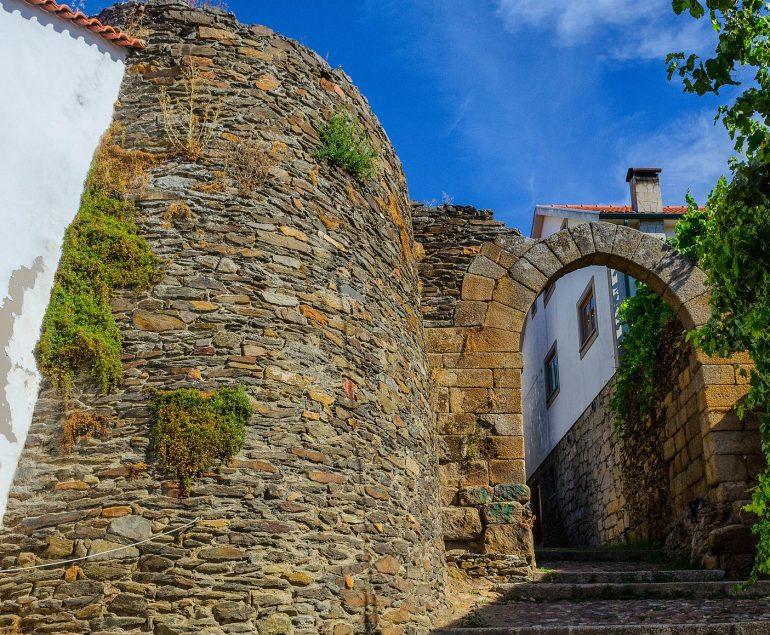
When November arrives in Portugal, the skies turn gray, the days shorten, and the routine starts to feel heavy. At this time of year, the urge to find sun, space, and nature that feels alive is irresistible. You want warmth on your skin, the scent of something green and thriving, and landscapes that seem to exist outside the usual rhythms of daily life. Madeira delivers all of that, and more.
Just three hours from Lisbon, this volcanic island rises sharply from the Atlantic, technically Portuguese, but closer to Africa than Europe. Its climate is mild year-round, the terrain dramatic, and the distances manageable. In a single day, you can drive from one end to the other, yet it feels as if you’ve traveled across multiple worlds: lush valleys, high cliffs, deep forests, and sparkling coastal villages.

A Thrill from the Top
Most visitors associate Madeira with wine, a few think of its famously steep hills, and some remember the wicker toboggans. I wanted to try all three. My first adventure began in Monte, reached by cable car that winds through banana fields, vineyards, eucalyptus groves, and pine forests, rising above Funchal’s colorful rooftops. By the time I reached the top, the island had already begun revealing its contrasts: cultivated yet wild, steep yet accessible, playful yet deeply rooted in history.
Here, two locals in straw hats and crisp white shirts guide you into wicker toboggans and send you hurtling down the mountain roads. It’s a ride that blends exhilaration with absurdity, the kind of experience that makes you laugh with disbelief as much as thrill. Wind whips your hair, arms clutch each other for balance, and the island unfolds below in dramatic terraces, crumbling cliffs, and scattered farmhouses that cling improbably to volcanic slopes.
“The wind whips your hair, your arms cling to each other, and somewhere between fear and exhilaration, you feel fully alive.”
It’s a rite of passage for visitors, but also a lens through which to see the island’s ingenuity. Before modern roads and tunnels, locals developed creative and sometimes wild ways to navigate the steep terrain.

Walking Through Time
Madeira is the tip of an ancient volcano. Its soil supports some of Europe’s richest flora, and the laurel forests of Ribeiro Frio and Parque Natural da Madeira are living time capsules. These trees survived the ice age untouched, and walking among them feels like stepping millions of years back. Moss clings to branches, ferns carpet the forest floor, and the air smells of damp earth and something ancient, something resilient.
Rui, my local guide, led us along the levadas, narrow irrigation channels carved centuries ago to bring water from the mountains to the plantations below. The Levada do Rei is a gentle introduction: water flowing beside mossy stone paths, shaded by cliffs and forest, guiding you step by step. Hikers seeking more intensity can head to Pico do Arieiro, where cliff-edge trails offer views that make the Atlantic horizon seem small in comparison to the world around you.
“Madeira is small, but every corner feels vast—full of life, history, and surprise.”
The levadas are more than walking paths. They are the lifeblood of the island, a centuries-long engineering feat that demonstrates how humans and nature can coexist. On a quiet morning, with only the rush of water and birdsong as sound, you understand why these trails are sacred to locals and travelers alike.
Coastal Villages and Local Flavors
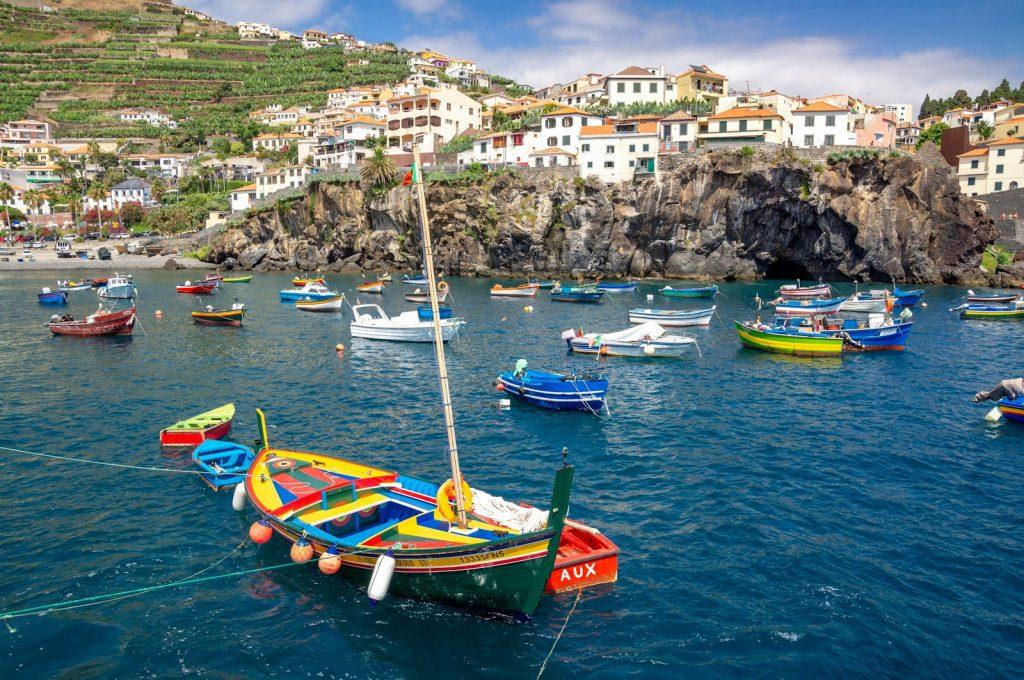
After a morning among trees and water, I made my way to Ponta do Sol, a small village perched on cliffs above the Atlantic. Lunch at Restaurante O Barqueiro was an exercise in simplicity and focus: black scabbard fish, locally caught and freshly prepared, paired with seasonal vegetables and local bread. From my table, I could watch waves crash against jagged rocks far below and seabirds wheel in the wind above.
Later, São Vicente offered a different rhythm. Whitewashed houses hugged the cliffs, and cobbled streets led to hidden squares where locals gathered to sip Poncha, Madeira’s sugar-cane and honey spirit. The fortified wines cultivated on steep terraces taste of the volcanic soil: strong yet refined, sweet yet precise. These flavors are a reflection of the island itself, rigorous in its geography, generous in its gifts.
Adventure by Land and Sea
The island’s north coast calls to the adventurous. Kayaking along Seixal’s cliffs, I explored caves carved by lava flows, letting the Atlantic’s rhythm set my pace. The water is clear, the cliffs are towering, and the roar of the ocean echoes against the volcanic rock. Dolphins often accompany paddlers here, though even without them, the experience is complete—a meditation in movement, salt, and sunlight.
For land-based thrills, the Paul da Serra plateau is ideal. Dense forests, cliffside tracks, and sudden waterfalls unfold beneath the open sky. My guide Rui drove us in a jeep along steep trails, taking advantage of open-top views, stopping at hidden waterfalls where we could stand beneath the spray. Adventure on Madeira requires local knowledge; without it, the terrain could be intimidating. With it, every corner feels exhilarating.
Wellness in the Forest
Morning yoga at Quinta do Lorde offers another kind of immersion. Sunlight filters through palms and moss-covered trees, and gongs hum at 432 hertz. The forest seems to inhale and exhale along with you. For an hour or two, you simply move, breathe, and exist in the moment, surrounded by the quiet energy of the island. Afterward, a gentle walk along nearby coastal paths allows for reflection or just the satisfaction of being present.

Hiking, Levadas, and Scenic Highlights
Madeira is famous for levada walks, and for good reason. Levada das 25 Fontes and Levada do Caldeirão Verde offer different but equally stunning perspectives. Along these trails, waterfalls tumble into hidden pools, forests give way to high ridges, and occasional glimpses of the Atlantic remind you how compact and diverse the island truly is. For those willing to push further, the cliffs at Cabo Girão, the highest in Europe, offer views that make you pause and take stock: small island, immense impact.
Sun, Sea, and Lava Pools
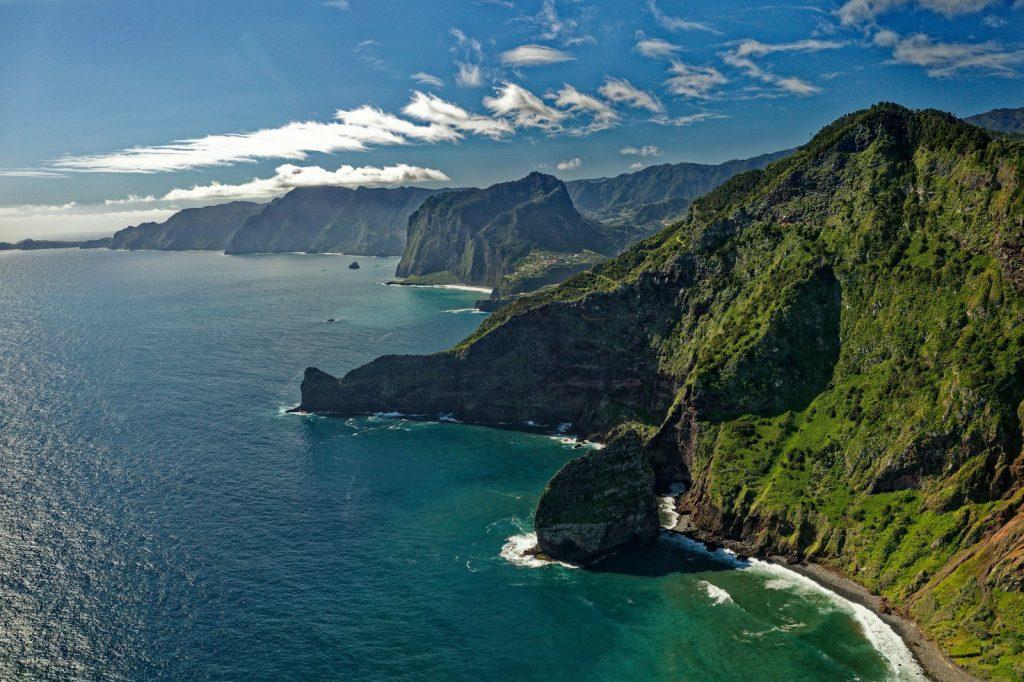
Madeira’s coastline is dramatic. Natural lava pools at Porto Moniz, carved into volcanic rock and filled by the Atlantic, offer a unique swimming experience. Far from ordinary pools, these are alive with ocean energy: waves crash and spill over rock walls, sending spray into the air, and the water is refreshingly cool yet comfortable. For those who prefer a slower pace, cliffs around Ponta do Pargo provide quiet vantage points for sunset, with uninterrupted views over the Atlantic horizon.
What to Do
- Hit the water: kayak, whale-watch, or simply admire cliffs from the shore.
- Walk a levada trail: Levada do Rei, Levada das 25 Fontes, or Caldeirão Verde.
- Taste Madeira wine: fortified and local whites are both worth savoring.
- Try the lava pools at Porto Moniz: natural, dramatic, and unforgettable.
- Chase sunrises and sunsets: Pico do Arieiro and Ponta do Sol reward early risers.
Local Tips
- Quinta do Lorde, Caniçal – seaside resort with forest trails and organic gardens.
- O Barqueiro, Ponta do Sol – fresh, cliffside dining with local ingredients.
- Atelier Teresa Lobo, Funchal – art rooted in environmental storytelling.
- Parque Natural da Madeira – hiking, levadas, and laurel forest immersion.
- Seixal and São Vicente – for kayaking and coastal exploration.
Madeira is small but immense: wild yet lived-in, thrilling yet meditative. From cliff-edge hikes to gentle levada walks, from adrenaline-filled toboggan rides to quiet forest yoga, every experience feels intentional, alive, and unforgettable. A few days here are enough to feel removed from routine, yet entirely present in the moment.
“Madeira may be just a dot in the Atlantic, but it holds a world within it—one that rewards curiosity, courage, and a willingness to wander.”