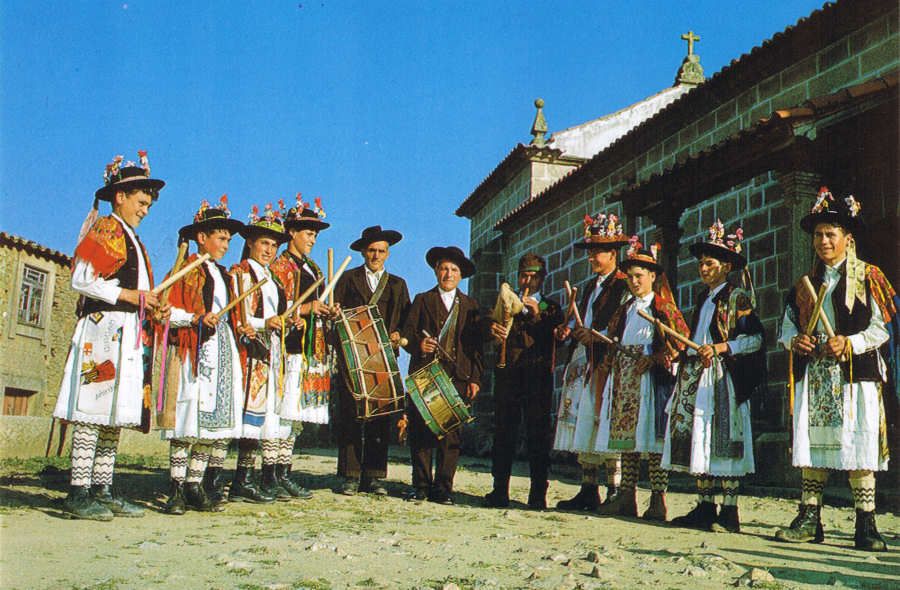
it is known as the “Cidade Museu” of the Trás-os-Montes region, keeping many of its medieval and Renaissance-era traditions and architecture. It has its own language, Mirandese, which has official status in Portugal and cultural and historical separation from the rest of the Portuguese state. The village is located on the border between Portugal and Spain, with the Douro River separating the two nations.
Historians debate the origins of Miranda do Douro as a populated place, although archaeological finds show that inhabitants lived there during the Bronze Age. Around AD 716, the Moors overcame the local Visigothic tribes and seized a portion of the territory, renaming it Mir-Hândul.
By the late eleventh century, Castile desired the territory as a gateway to Portugal.

Miranda was founded on King Denis’s idea, in a location between the Douro and Fresno Rivers’ lateral slopes. Denis and Ferdinand IV of Castile signed the Treaty of Alcanices in Miranda, establishing the border between the two kingdoms. Miranda was formed on 18 December 1286 and immediately elevated to the status of vila (English: town), one of the conditions of which was that the administrative division would be a Crown fief. Miranda gradually developed into one of the most prominent towns that surrounded the Trás-os-Montes region following that period.

The Castle of Miranda do Douro (Portuguese: Miranda do Douro Castle ) is a Portuguese medieval castle. Largo do Menino Jesus da Cartolinha. The castle has a quadrangular plan, with walls, in granite and schist, crenellated and reinforced at the three external angles by cubes (two rectangular and one hexagonal), involving a considerable plaza of arms, which has been reduced to a large one. To the north, the complex is dominated by the Torre de Menagem, at a height of 682 m above sea level. The village fence encompassed a total perimeter of 600 steps, torn by three broken arch doors: the Senhora da Amparo Gate, the False Gate and the Postigo.

Concatedral de Miranda do Douro (Cathedral of Miranda do Douro, Igreja Matriz), The Cathedral of Miranda do Douro is a Roman Catholic cathedral in Miranda do Douro, Portugal. It is the co-cathedral of the Diocese of Bragança-Miranda, which has its see in the Cathedral of Braganza. Work on the cathedral began on 24 May 1552. Confirmation of its completion was sent to Pope Paul V in 1609. Largo da Sé. It is a magnificent example of Mannerist architecture, with some Renaissance and Gothic features. The figure most revered by the people of Miranda, the Child Jesus da Cartolinha, is kept here. For two centuries, it was an important centre of religious life; the see was later transferred to Bragança. Behind the church, you can see the ruins of the Old Episcopal Palace.

Paços do Concelho ou Câmara Municipal a magnificent Baroque building located in the central square of the village, Praça de D. João III.

Igreja da Misericórdia de Miranda do Douro Its construction started in 1578. It has a longitudinal plan, composed of a single nave and chancel.

Barragem de Miranda. A dam on the Portuguese-Spanish border between Miranda do Douro and Torregamones, Samora, Spain. Built-in 1956.
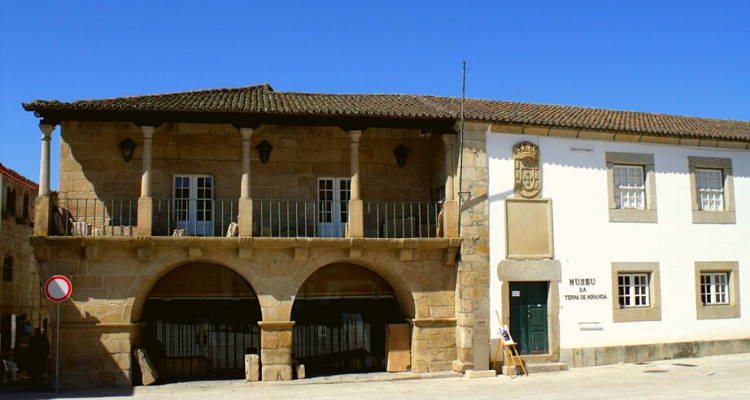
Museu da Terra de Miranda, you can appreciate traditional Mirandese clothing. It also has a room for weapons and traps, a traditional kitchen reconstituted to detail and a room dedicated to the masks of the rattles.