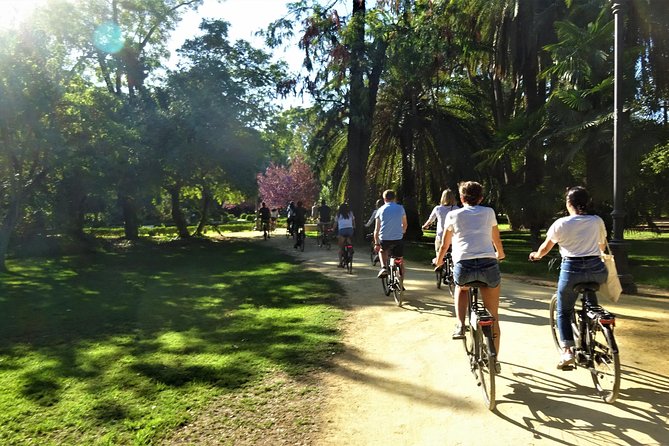
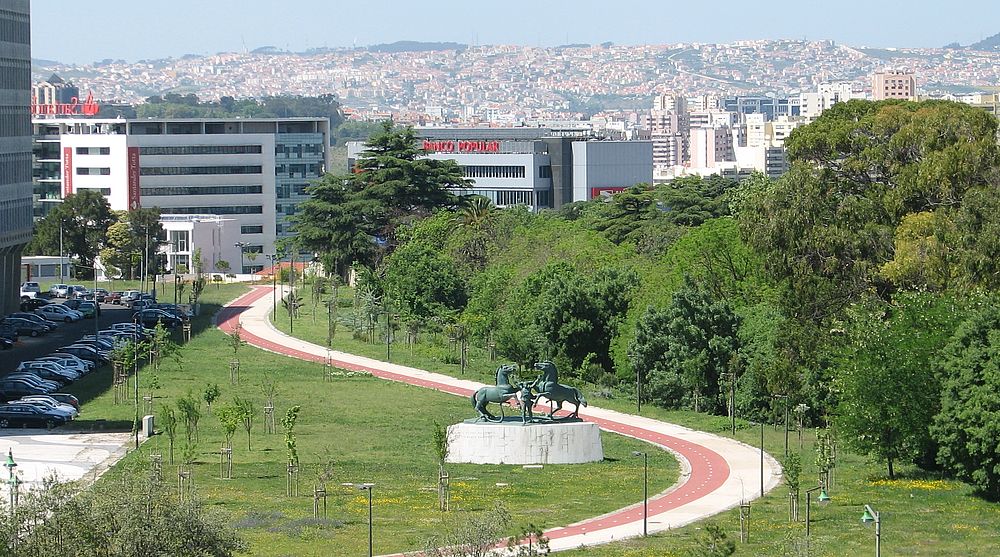
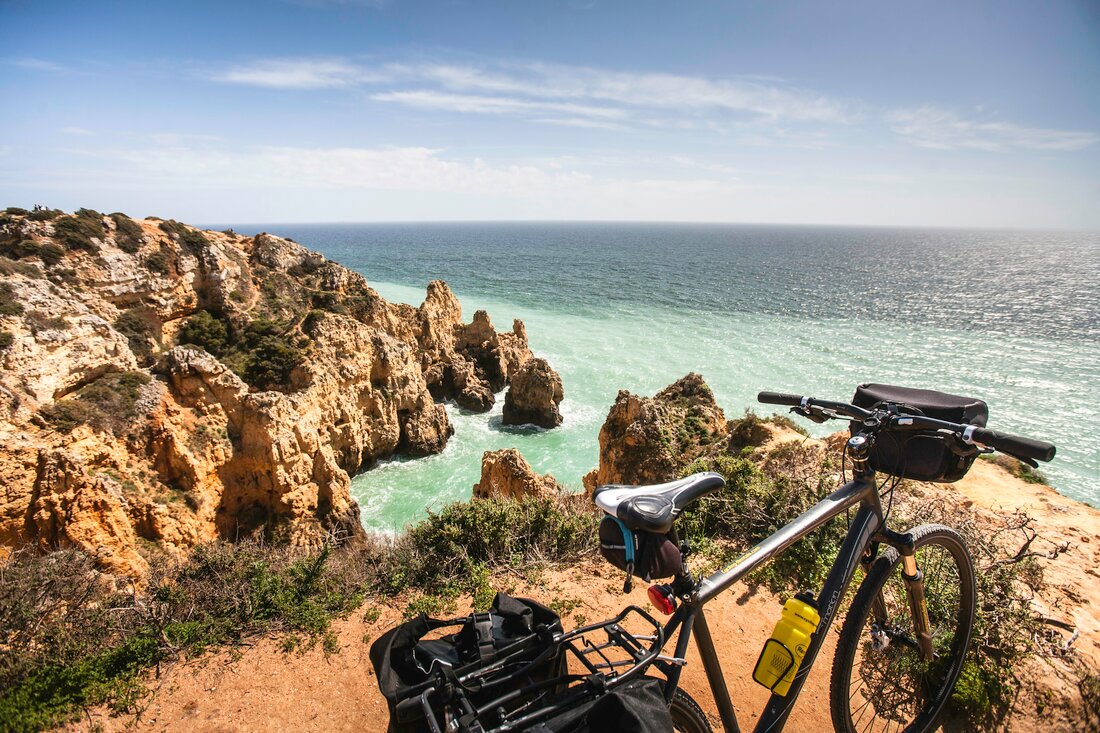
The city of Castelo Branco features 3 bike pathways leading to the most attractive sites, such as the contemporary Urban Park, where you will discover walking trails, a sports complex, swimming pools and artificial lagoons.

These are the riding paths of Castelo Branco (about 4 km long):
Dia de Portugal – 1 km-long
– 1 km-long spectacular view over the nearby Gardunha ans Estrela Mountains

Parque Urbano – 1,9 km-long

– a sophisticated sports’ facility with various amenities

– walking paths

– artificial lagoons

– swimming-pools

Egas Moniz – 1,3 km-long

– this bike path is located in a city entrance

– in the surroundings: commercial area and Urban Park sports’ complex

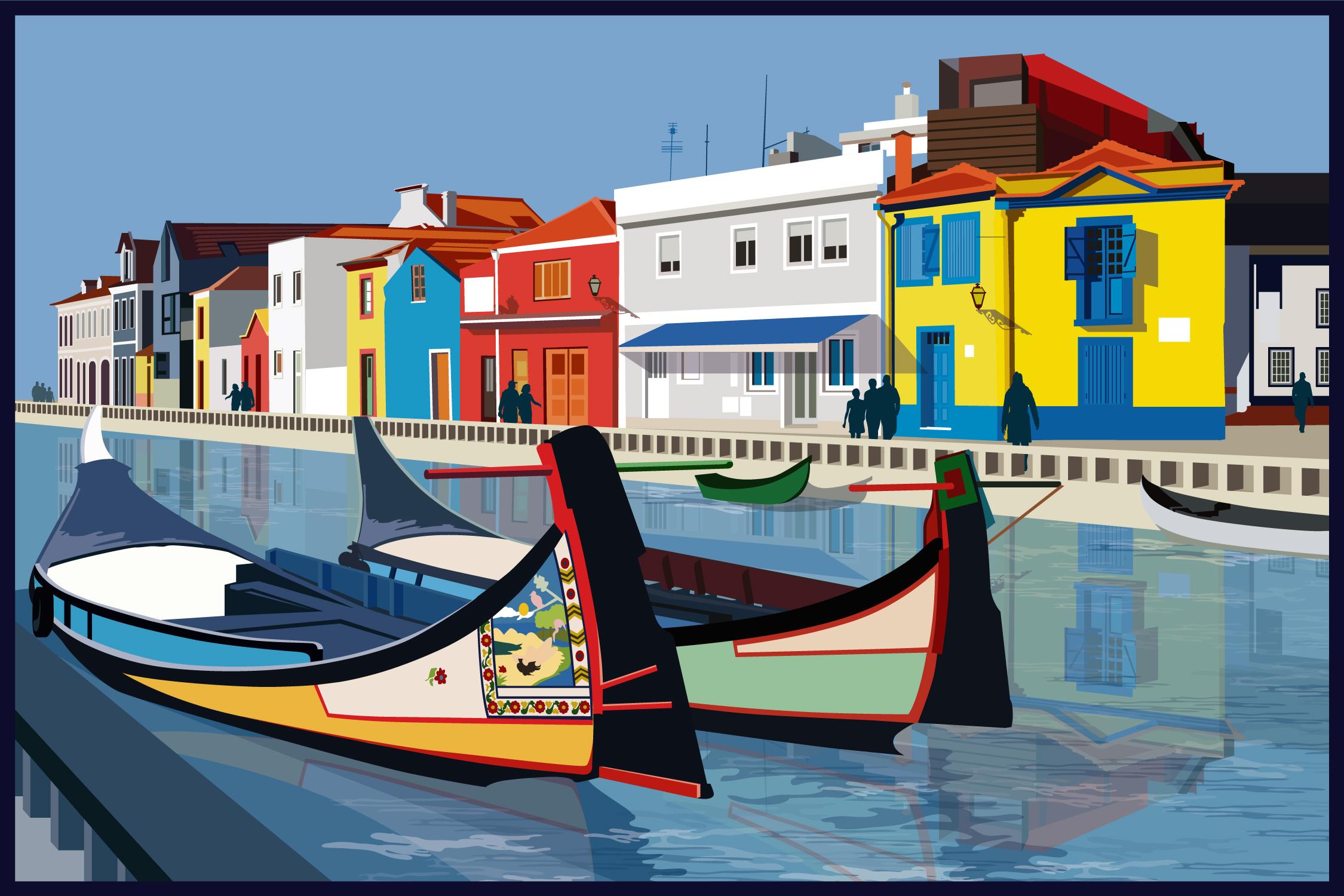
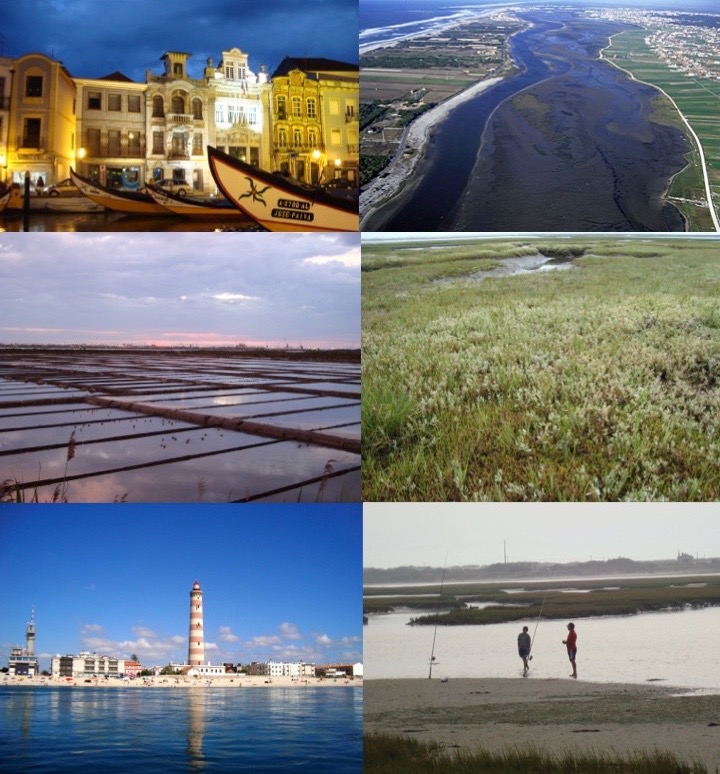
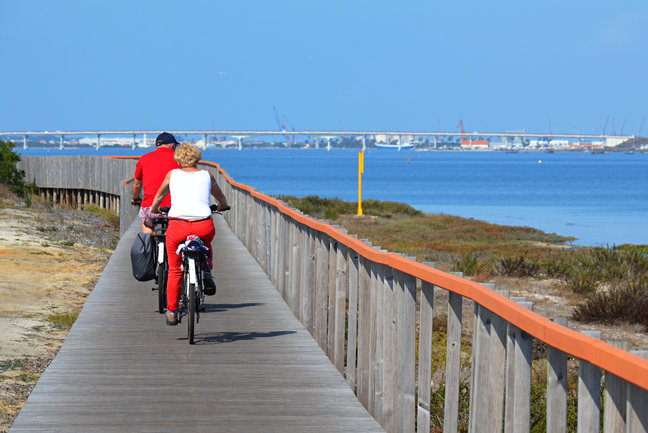
Take advantage of this one-of-a-kind ecosystem by partaking in the Great Route of Aveiro Lagoon, which recently added two new walking and cycling routes: the golden and green routes, which take visitors around the surrounding region.

Walking upon water • Togetherness • Center of Portugal

The blue route is 130,8 kilometres long and includes pathways as varied as the landscapes and biotopes of Portugal’s only lagoon environment. From salt marshes to “Bocage” habitats, from pine woods planted in the dune cords that retain the Ocean to the farming fields of communities that have coexisted with the Ria for generations, this is a path that reveals the complexity and depth of human connections with the natural world.

LTSER Ria de Aveiro - Portugal | DEIMS-SDR

The golden route is the longest and most varied of the Ria de Aveiro’s three major routes. This 234-kilometre path winds through the sea, the mountains, and the Vouga Valley, where travellers will find some of the country’s most magnificent and breathtaking waterfalls. This path, ideal for bike excursions, follows the Vouga Ecotrail, passing through some of the region’s most distinctive communities.

Aveiro, Lagoons & 'Silver Coast' | Inntravel | AITO

The green route is 194 kilometres long and can be explored on foot, by bicycle, or by boat. The green path passes through some of the most diverse landscapes in Portugal, including the Vouga Valley, the endless vineyards of the Bairrada wine area, the riverbank woodlands of the Alfusqueiro River, and Aveiro’s urban heart.

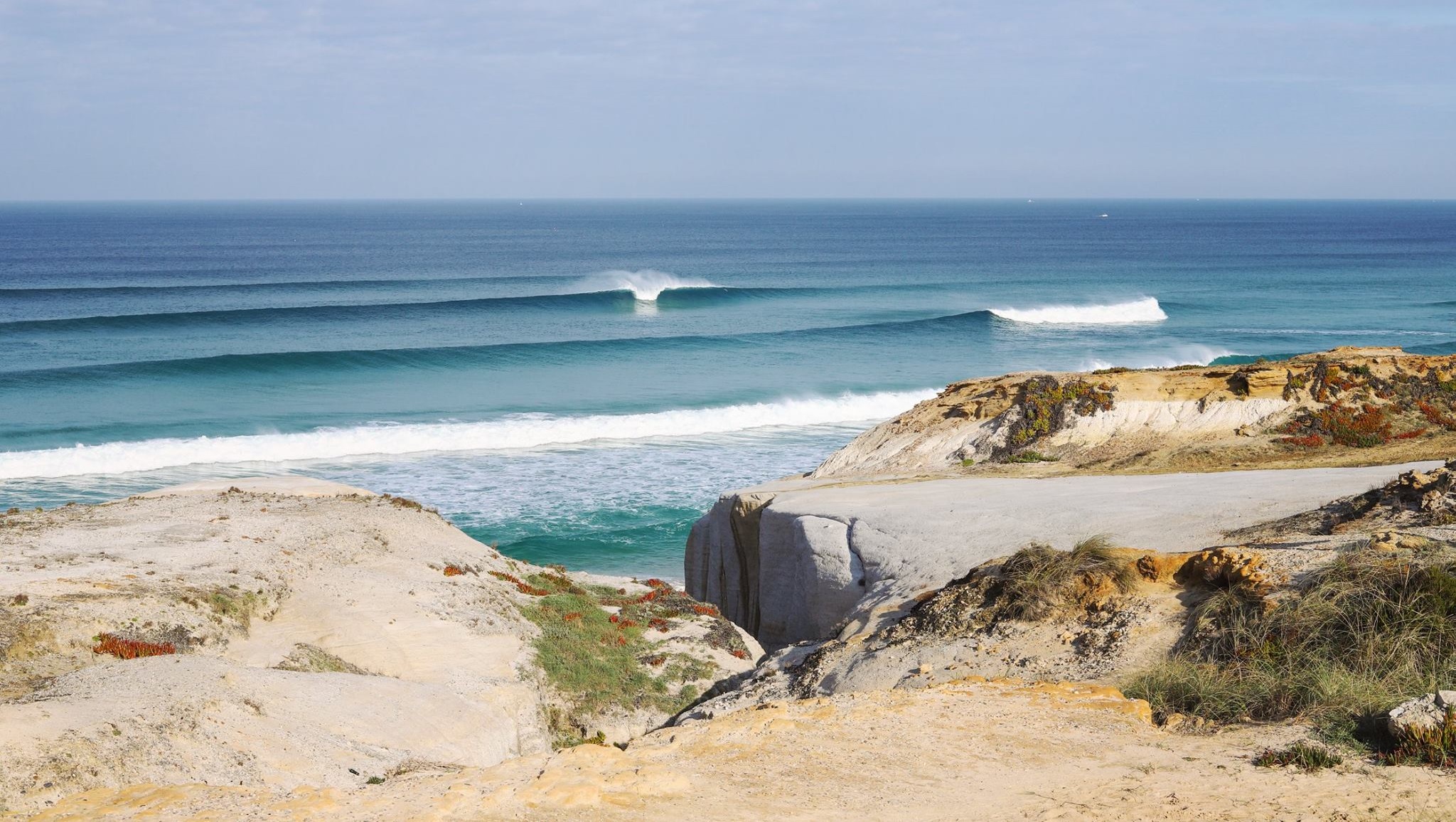
The coastline of Central Portugal is 279 kilometres long and boasts some of Europe’s top surf areas.

During the summer season, smaller boards are acceptable for surfing waves, sometimes smaller and softer. During winter days, larger boards are a necessary requirement for surfing more powerful waves or even for surfing gigantic waves.

And with so many alternatives, you may also locate Soul Surfers Sessions that give a little surf trip concept. You can access the greatest surf site in the morning or the best waves away from the crowds. With surf schools and surf homes throughout the coastline, discover the greatest surf places!

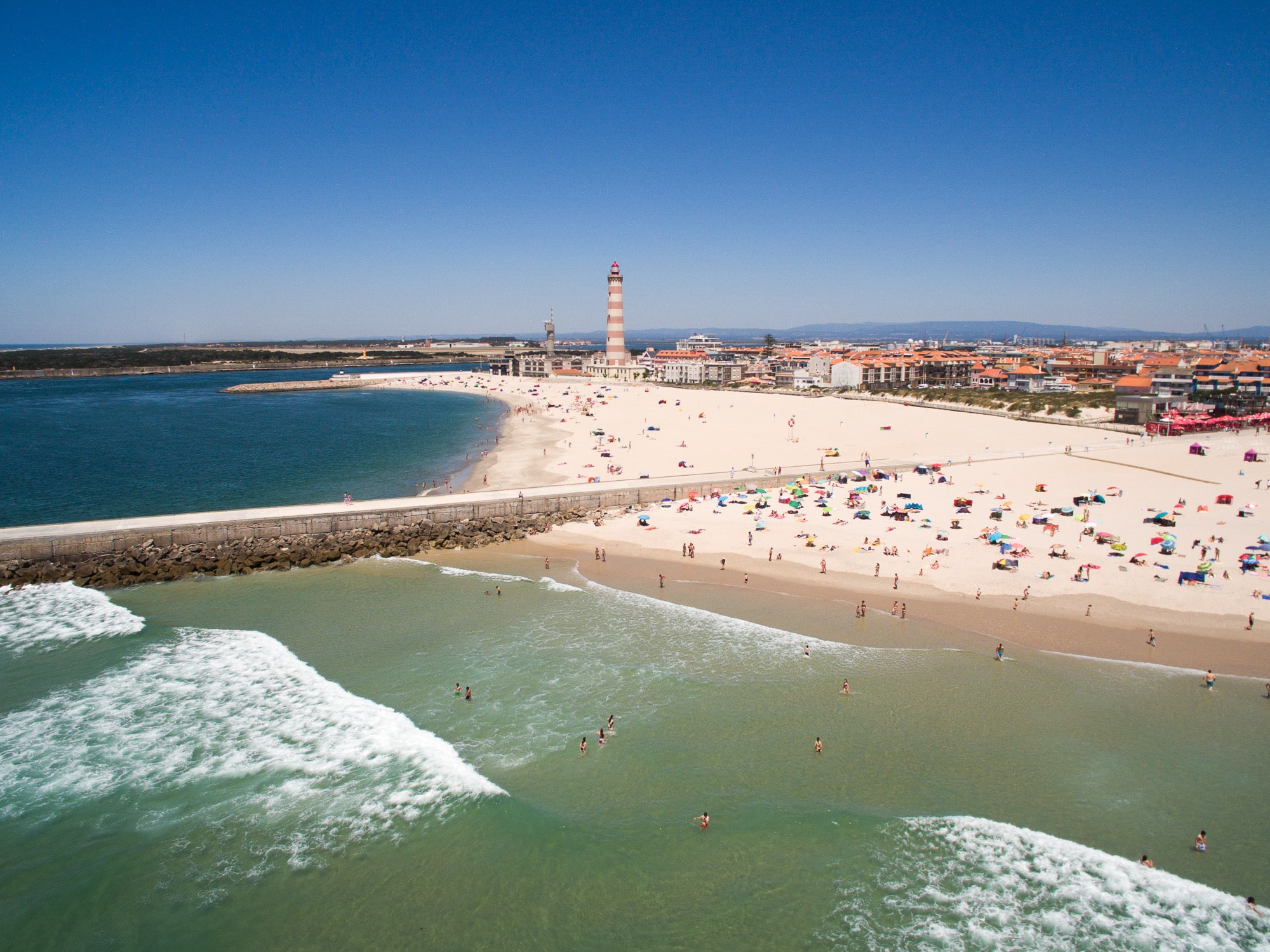
Barra da Praia

2 min from beach. Big Terrace. Kids-friendly - Apartments for Rent in Gafanha da Nazaré, Aveiro, Portugal

Barra beach, which is near Aveiro, is fairly wide and is sheltered on the north by a pontoon. It is a beach that is perfect for all types of sports due to the presence of various peaks along the shore.

Figueira da Foz
Although it is still relatively unknown to many surfers worldwide, Figueira do Foz is establishing itself as a sunny, pleasant, and extremely inexpensive surf destination. Are you aware that Figueira da Foz is renowned for its mile-long hand breaks?

Buarcos
Buarcos is home to three distinct surf spots: Tamagueira, a hollow right-hand point break; Teimoso, one of Portugal’s largest waves; and Mina, a great reef break portion that breaks on bigger days.

Cabedelo

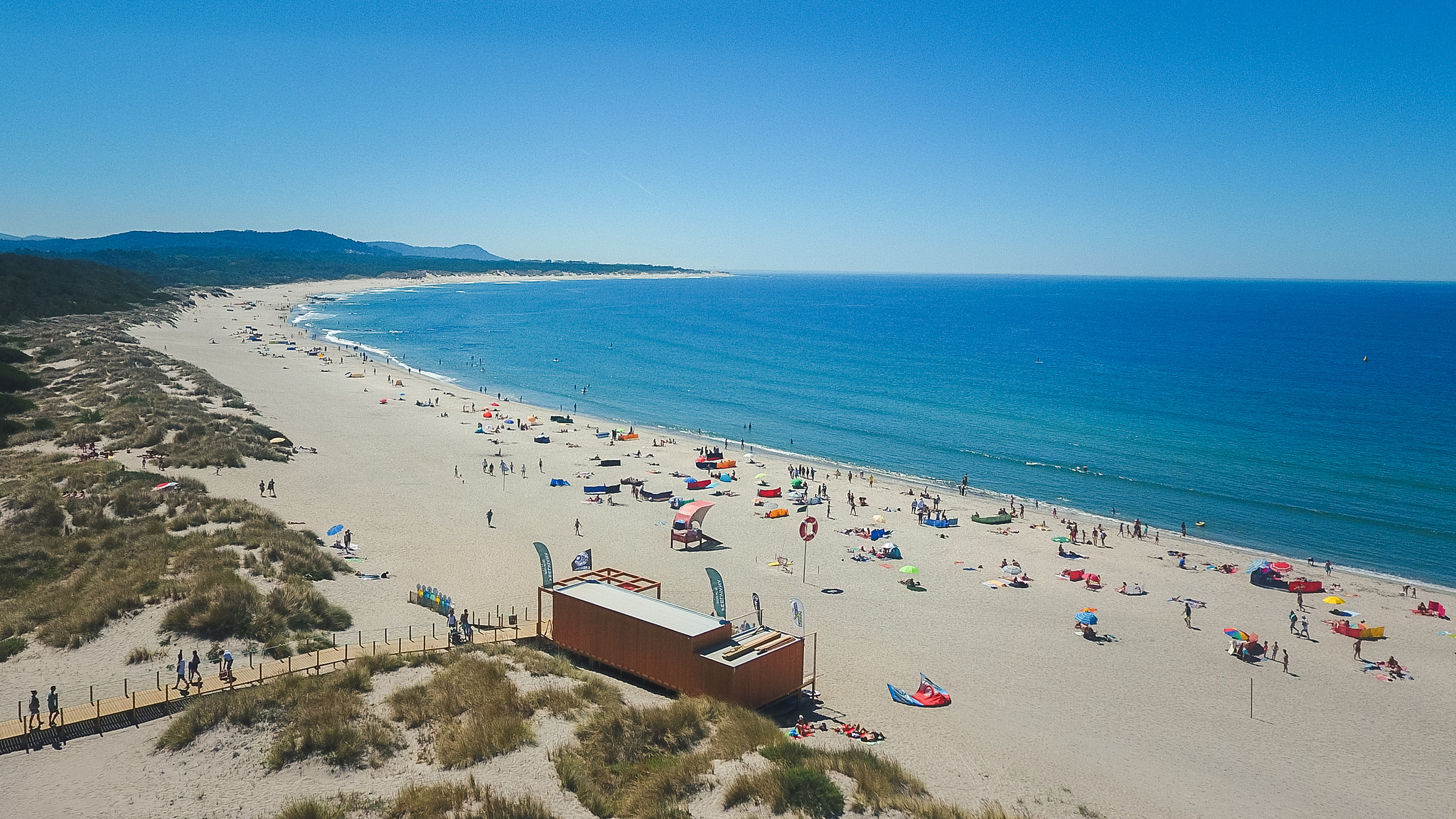
Cabadelo Beach - Portugal - TheKiteMag

The most well-known location in Figueira da Foz, it served as the primary venue for Portugal’s inaugural championship tour event. Cabedelo is known for its big right-handers, but it’s also a really consistent and exciting surf place.

Molhe Norte & 1º Molhe
One is comparable to California’s “The Edge,” while the other is just another great and reliable beach break. Determine which is which…

Murtinheira
One of the rare sites that features both rights and lefts, this is a fantastic beach break that works best when the wave is smaller.

São Pedro de Moel
It is one of the most scenic beaches on the Portuguese coast, situated between residences in the heart of Leiria’s pine forest. Protected by the Northwind, it is extremely magnificent at the end of Summer.

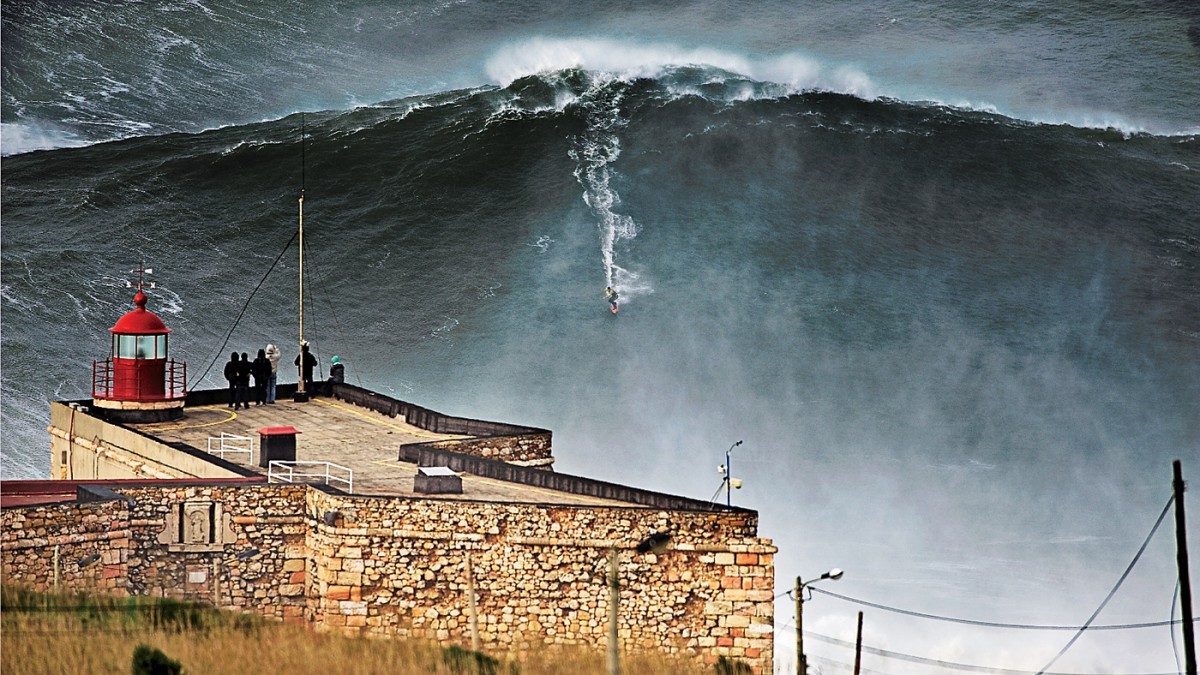
Nazaré – XXL Award for Biggest Wave

Surf Blog - Legendary surf spot Nazaré - the biggest wave ever surfed.

And Nazaré continues to boast the world’s largest wave. The wave measured 24,38 metres high and was surfed on November 8th, 2017 by Rodrigo Kôxa of Brazil. A really historic triumph!

Peniche

Surf Blog - Peniche Surf Spots

Recognized as Portugal’s greatest and most consistent surfing location, the peninsula of Peniche features a north and south-facing shoreline. Daily conditions are excellent, independent of the swell or wind direction.

There is usually a place on the peninsula of Peniche where the wind is off-shore, generating excellent waves. Along 15 kilometres of shoreline, there are around 20 surf places suitable for all levels of surfers, from beginners to expert practitioners.

Praia do Baleal Norte/Lagido
This beach is well-known among surfers for its furious sea. This is one of the most beautiful beaches on the Peniche coast, with a very long stretch of sand. It was a blue flag beach with excellent amenities. If you have the opportunity, do not miss the spectacular sunset.

Praia do Medão / Supertubos

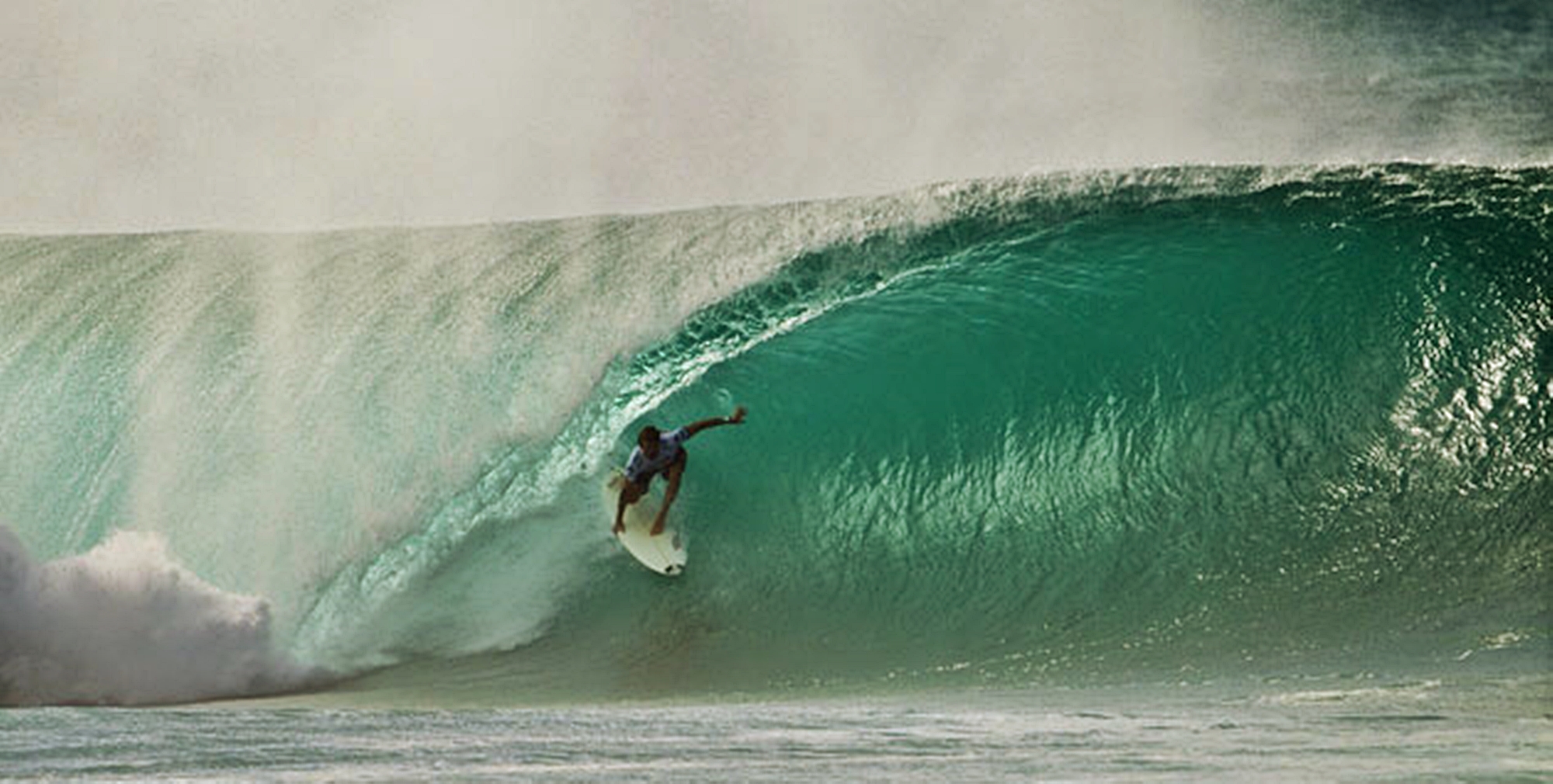
Rip Curl Pro Portugal | Events | Rip Curl | Rip Curl Australia
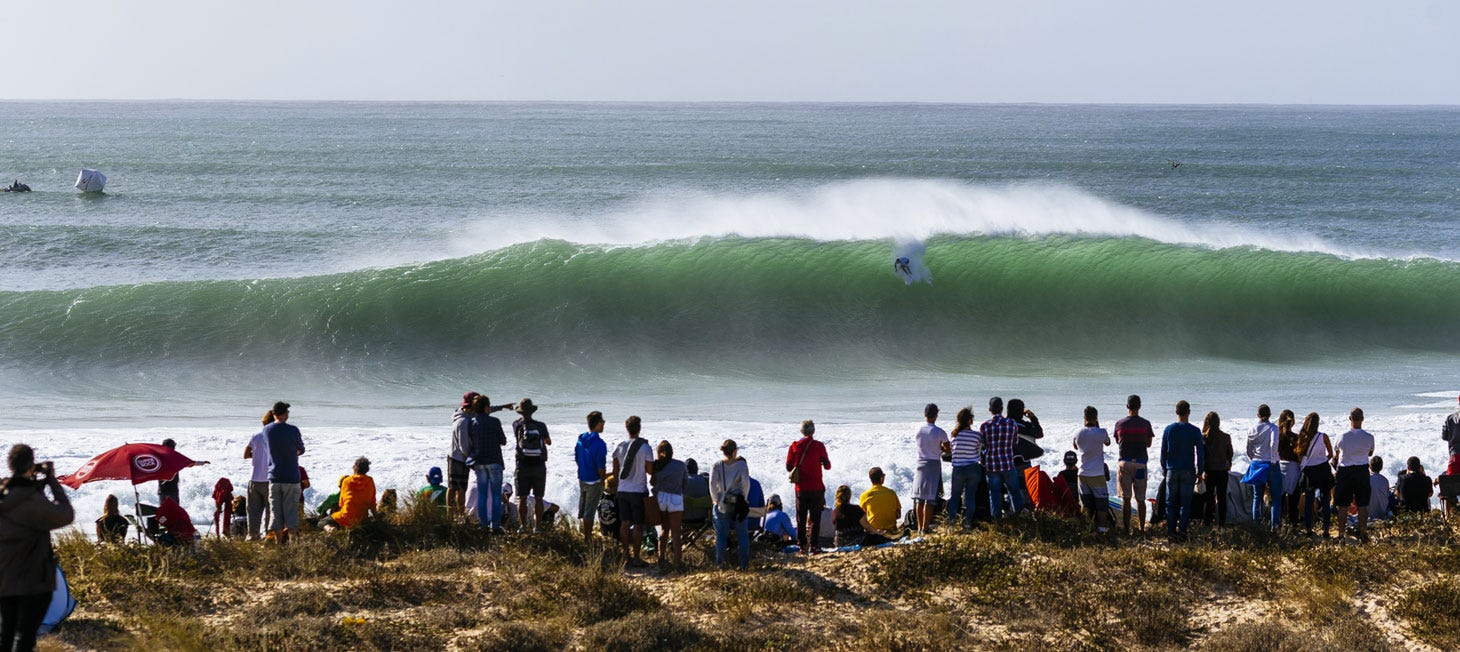
Praia de Medão is renowned for its flawless and tubular waves, earning it the nickname Super Tubes. The waves’ crests are so lengthy that they form hollow spaces, real tubes, which draw practitioners of these therapies from all over the world throughout the year. The most renowned national and international contests in wave sports take place at Praia dos Supertubos.

Santa Cruz
A wonderful spot dedicated to the Waves and the Ocean! Santa Cruz, which is remote but only one hour from Lisbon, meets the Atlantic with its white dunes and untamed rocks. The Santa Cruz coast is carved by kilometres of waves that connect it to two Portuguese surf meccas — Ericeira and Peniche (25 minutes). There are over five world tour surf events in the Santa Cruz region, allowing pros from all over the globe and surfers of all ages the opportunity to compete in world-class waves.

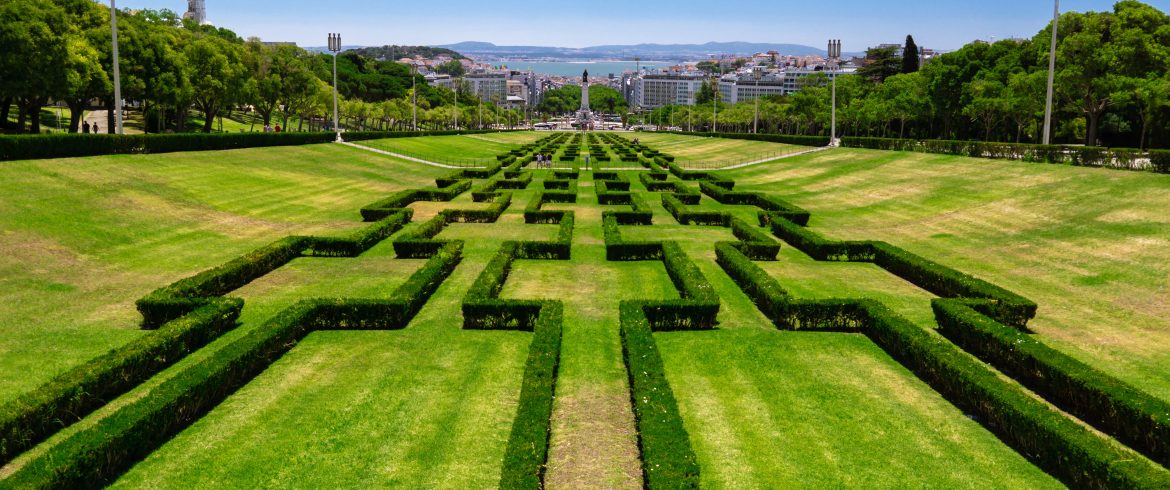
Eduardo VII Park, with 65 acres, is located in central Lisbon and serves as the start of a ‘green corridor’ that extends to Monsanto Park. The park’s focal point is the 0.6-kilometer (0.4-mile) central path that connects the Marquess of Pombal Statue (off Av. de la Liberdade) to the summit, which has Portugal’s biggest flag (20×12 meters!) and panoramic views. Run down a broad alley walk or the bottom lawn, which is surrounded by box hedges. There is a lake, a cool greenhouse, and a café in the park.

A circle consisting of the centre walk and the adjacent trails in Park Jardim Amália Rodrigues is around 3-4 kilometres long. For a longer run, proceed north to Gulbenkian Park, or south from Marquess of Pombal along the great Av. da Liberdade’s median to Rossie Square (1.6 km).

Another option is to use the ‘green corridor,’ a newly finished ‘linear park’ that runs approximately two miles southwest to Monsanto Park. The route begins at the park’s northern end, off Rua Marquês de Fronteira (look for the red pavement).

The Monsanto Green Corridor, which took more than 30 years to complete, connects a variety of green spots around the city. It was created by Gonçalo Ribeiro Telles, an architect who believed that conserving Portugal’s natural side was critical to the country’s future. The result is a planted urban walkway that oozes eco-consciousness, with recycled plastic signs and a new bridge fashioned from Nordic wood harvested from sustainable forests, allowing people to comfortably stroll, bicycle, or blade above Lisbon’s congested streets.

Though the trail is not completely disconnected from the city – glass and steel structures frame the corridor until it enters the dense forest – the lush landscaping, dotted with stone pines, oaks, wild olive, and poplar trees, and flecked with clusters of ornamental grasses and a vibrant palette of jasmine, lavender, and other blooms, creates a verdant experience.

The Monsanto Green Corridor is loved by joggers, walkers, and cyclists alike.

GUINCHO
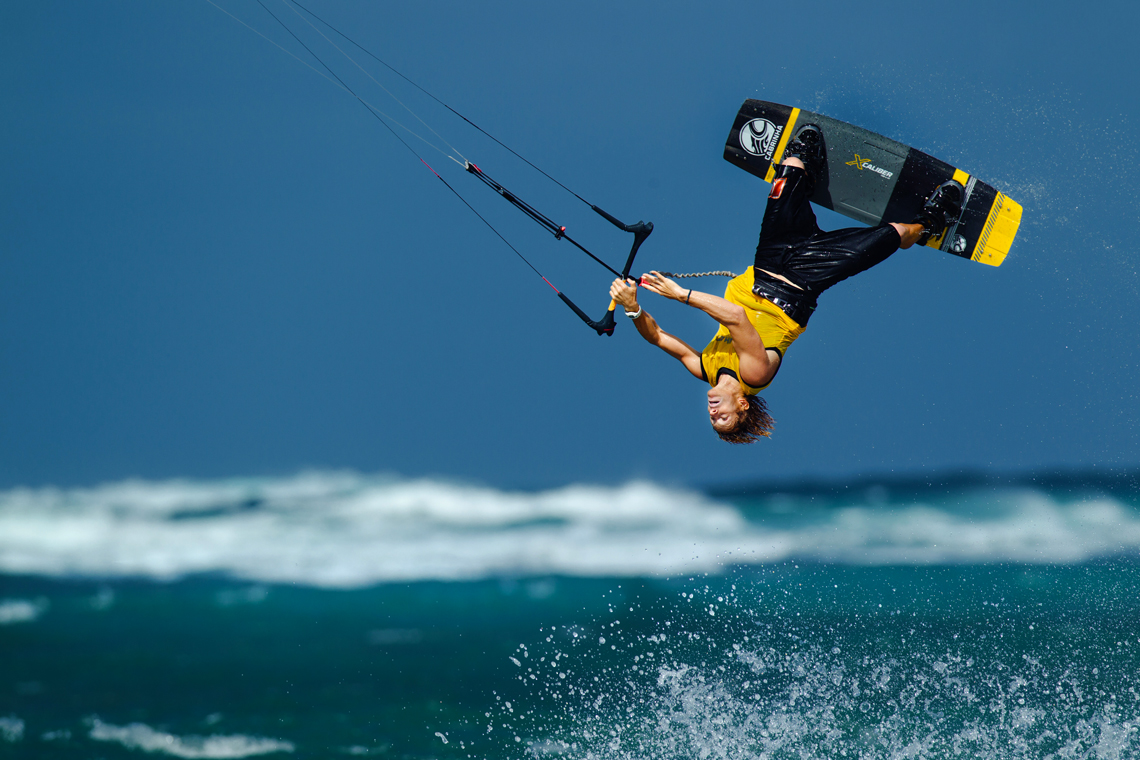
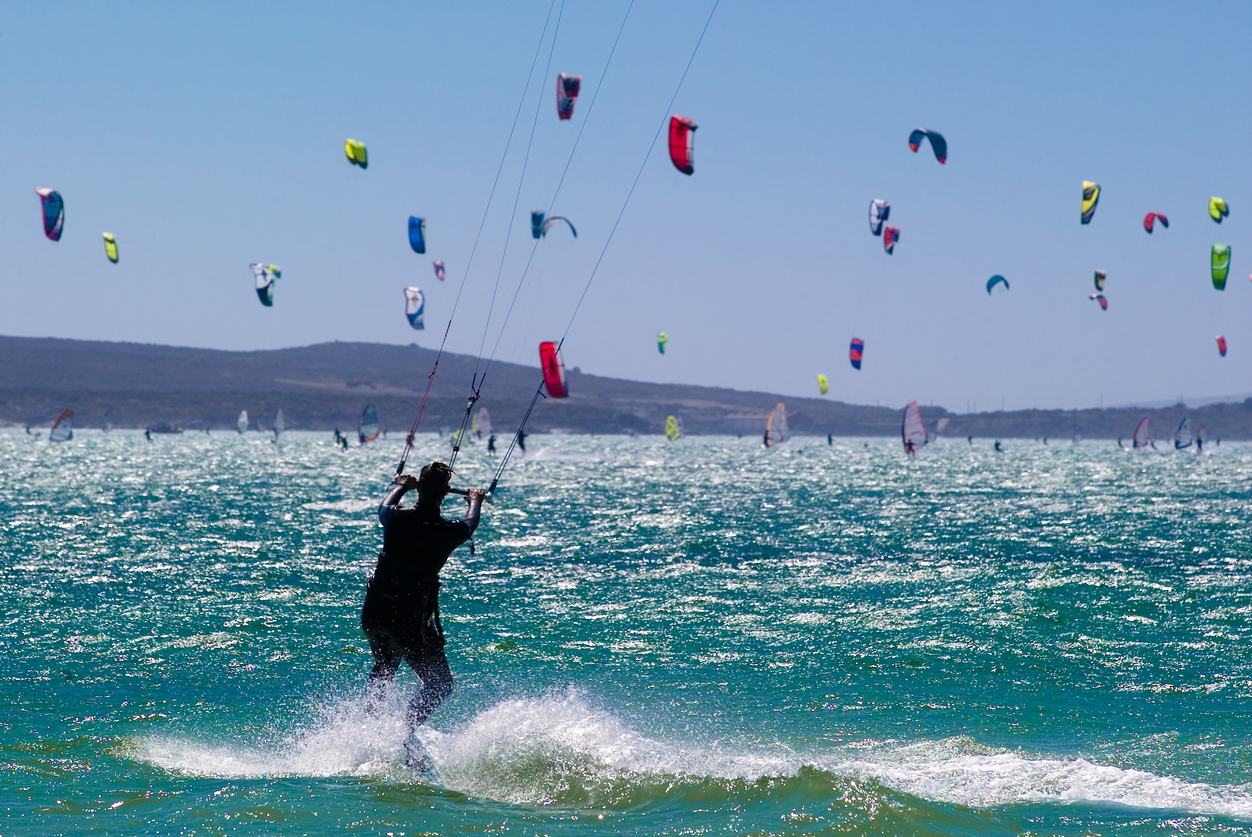
Guincho kite beach is only a 30-minute train trip from Lisbon and has some of the most consistent wind in all of Portugal (the northerly mountains tend to increase the force of the thermal winds that blow here).

This is not a site for the faint of heart; the waves at Guincho beach range from more than a metre to a metre and a half in height, growing even larger during periods of severe surf. That being said, if you’re a surfer, this is the spot to kite in Portugal.

The flat sand bottom offers a lovely break that is broken up by clean spaces to play in between the waves. Simply keep an eye out for the large boulders on each side of the beach; they are the only significant challenges to avoid.

PRAIA DO BALEAL PENICHE/PRAIA DO BALEAL
Praia do Baleal, renowned for its high surf and large waves, is not for the faint of heart. Intermediate and experienced kiters, on the other hand, will like the fantastic surf and expansive sandy beaches.

The greater Peniche area is an excellent location for joining a kite camp, kite tour, or even planning a solo road trip due to the quantity of kiteable places within a half-hour radius.

LAGOA DE BIDOS LAGOA DE BIDOS
This is the largest flat water lagoon in Portugal, making it ideal for novices, free-riders, and wakestyle kiters. The lagoon, which is connected to the ocean by an estuary, is subject to tides—and during low tide, it may become quite shallow near the sandbars (therefore it’s better to visit during high tide). The greatest location for a launch is on the Foz do Arelho side, where there is ample space and a variety of schools and amenities.

CAPARICA
Caparica is densely packed with kiteboarding opportunities, however, kiteboarding is not permitted everywhere. Keep to authorised kite beaches, the most well-known of which being Novo Vaga.

Novo Vaga, located on the southern tip of Caparica, benefits from rather consistent winds and 1-1.5 metre waves. During the winter months, the surf may be rather strong, but during the summer’s peak kite season, the waves drop in size and become much more bearable —perfect for wave riding beginners and intermediate jumpers.

You also have access to Fonte da Telha, a rapidly growing kitesurfing beach with a number of schools currently in operation, about 15 minutes south. Further south (about a half-hour drive), you’ll find the legendary Lagoa de Albufeira, which features both flat water lagoon riding and tough outer breakers.

The Best Kitesurfing Spots in Portugal - BookSurfCamps.com

NORTH PORTUGAL

VIANA DO CASTELO/CABEDELO 

This is without a doubt the greatest kiteboarding destination in Northern Portugal. Cabedelo is a long, sandy beach that front a large bay; there is plenty of safe launching space and minimal hazards. Two piers offer a calm flat(ish) area to play in while remaining shielded from the surf.

However, if you’re seeking waves, Cabedelo will not disappoint. Clean breakers sweep around the bay practically all year; come during the full moon to enjoy the waves at their best.

ESPOSENDE
Once you’ve had your fill of playing in the waves at Cabedelo, there is a slew of excellent kite beaches within a short drive of Viana do Castelo; Esposende is well worth a visit.

This is one of those beautiful kite sites that has it all: clean waves, a level ocean, and, most importantly, excellent wind. It’s unsurprising that it’s become one of the top kiteboarding places in northern Portugal!

Everything You Need to Know About Kitesurfing | Pegasus Airlines

ALGARVE

LAGOS/ALVOR
Lagos and its neighbouring Alvor are good locations for kitesurfers searching for a combination of waves and flat water.

Meia Praia is the most popular kite beach on the Lagos side of the bay. This is the site to visit if you’re a beginning or intermediate kiter, owing to the forgiving low breezes and expansive beach space (but keep an eye on the forecast as wind is often offshore here). On the other hand, Praia de Alvor offers comparable conditions and is a good choice for intermediate kiters looking to hone their slalom abilities.

Between the two is a flat water lagoon that attracts kiters of all abilities, from complete beginners to seasoned freestylers. The lagoon is accessible from both Lagos and Alvor, albeit the former requires a boat while the latter can be reached on foot. The lagoon is tidal, and it decreases significantly at low tide, thus it’s preferable to visit around high tide.

As the wind picks up in the afternoon, 9’s and 10’s are typically exchanged for 7’s and 8’s. It may be more manageable for beginners in the late morning/early afternoon.

CARRAPATEIRA
Carrapateira, dubbed one of Southern Portugal’s secret kitesurfing treasures by locals, is located just half an hour from Lagos and makes an excellent day trip for those kiting in the Algarve.

Bordeira, for example, has wonderful huge wave conditions that are popular with surfers, but it’s also a good kitesurfing destination because of the cross-onshore wind. Additionally, there is a flatwater lagoon concealed behind the estuary. This location is optimal in the winter; summer breezes are rather light here.

South of the headland is Amado, whose chaotic breakers are normally too much for kiteboarding during the south-westerlies, but may provide for a delightful little playground during the winter months when the northerlies blow hard enough.

FARO
Faro, Portugal’s southernmost city, boasts a smattering of kiteboarding beaches. Ilha da Barreta, Ilha de Culatra, Barrinha, and Ilha de Armona are the ones to keep an eye out for. You’ll find a mixture of flat water lagoons, waves, and mild chops on the open ocean along with these areas. Due to the picturesque island close off the coast, this is a perfect location for a kite safari or catamaran sail.

When you’ve had your fill of kitesurfing in this location, drive about half an hour east to Cabanas de Tavira, another favourite Algarve kitesurfing destination because of its moderate winds and large, safe beach area.

PR1 - Vereda do Areeiro

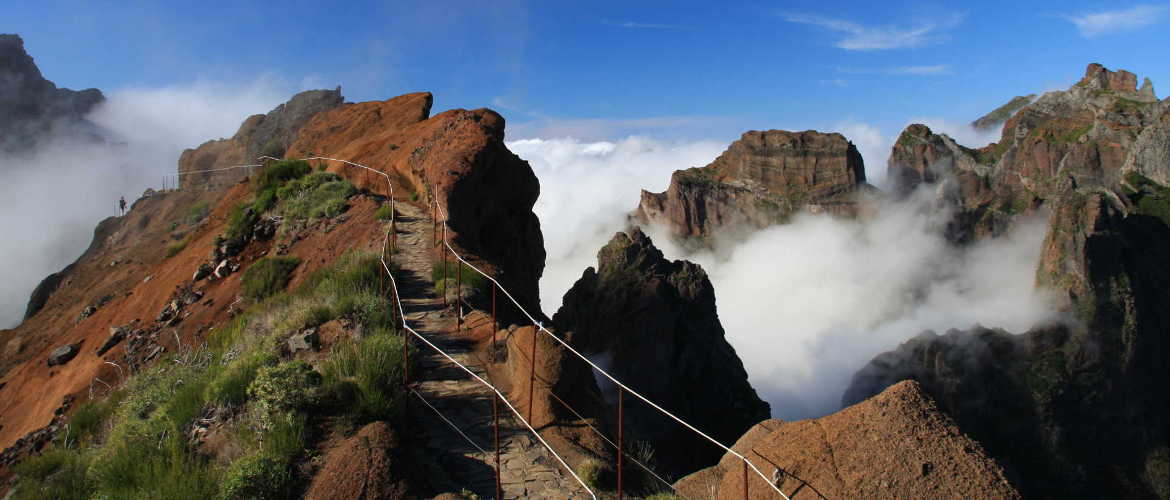
Looking for a challenge and some spectacular views of Madeira? Scale Pico Ruivo Madeira Island’s highest point. It is only accessible on foot, generally from Pico do Arieiro after a tough climb, or from Achada do Teixeira through a shorter, gentler path. There is another track that leads west to Encumeada., and the most direct path – a 3k (2mi) walk that takes approximately an hour and a half to finish – begins in Achada do Teixeira, a tiny hamlet famous for the towering Homem em pé (Standing Man) basalt formation. Take the popular 11km (7mi) return route from Pico do Arieiro, which travels through small trails and over steep inclines for a more challenging trek. At the summit, you’ll discover a little cabin, a water tap, and restrooms, as well as panoramic views.

The trail is well-marked and well-protected throughout.

It is not advised for children under the age of 12 due to the degree of difficulty.

Numerous ascents, descents, tunnels, and steps are included. The weather is unpredictable, and although the hike begins at 1818 metres, it descends to 1491 metres before ascending to 1862 metres, where Madeira’s highest mountain, Pico Ruivo, is located. It is necessary to have appropriate footwear, warm clothes, flashlight, water, and munchies, and you should never hike it alone.

If you are staying in Funchal, the closest starting point is Pico do Areeiro, which has parking and a café/bar. Additionally, there is a tiny gift store and restrooms.


PR1 hiking trail from the Pico do Arieiro to Pico Ruivo, Madeira, Portugal, Wanderweg PR1 vom Pico do Arieiro zum Pico Ruivo

Elevation: 1 861 m
Prominence: 1 862 m
Location: Madeira (Portugal)

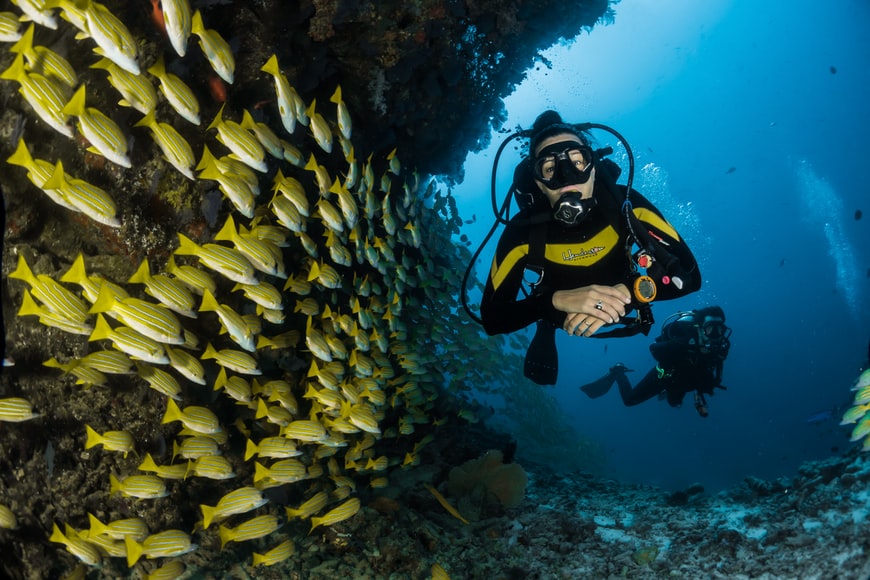
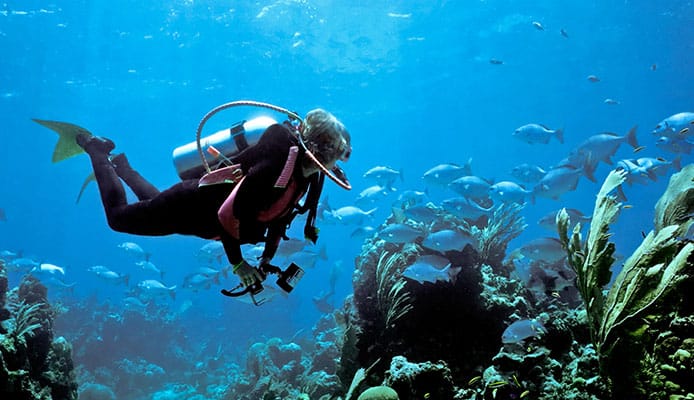
Portugal’s 1,700 kilometre-long shoreline is home to some fantastic diving locations. The possibilities are unlimited from north to south, from Porto to the Algarve. Whether you want to go shark diving or learn to scuba dive for beginners, there is something for every budget and interest.

Portugal is renowned for having Europe’s most diverse diving spots. This is unsurprising, considering the country’s eight marine reserves. There are also sunken ships and submarines, which are great places for shipwreck diving.

10 Best Dive Sites in Portugal - Globo Surf

Nature Reserve of Berlengas
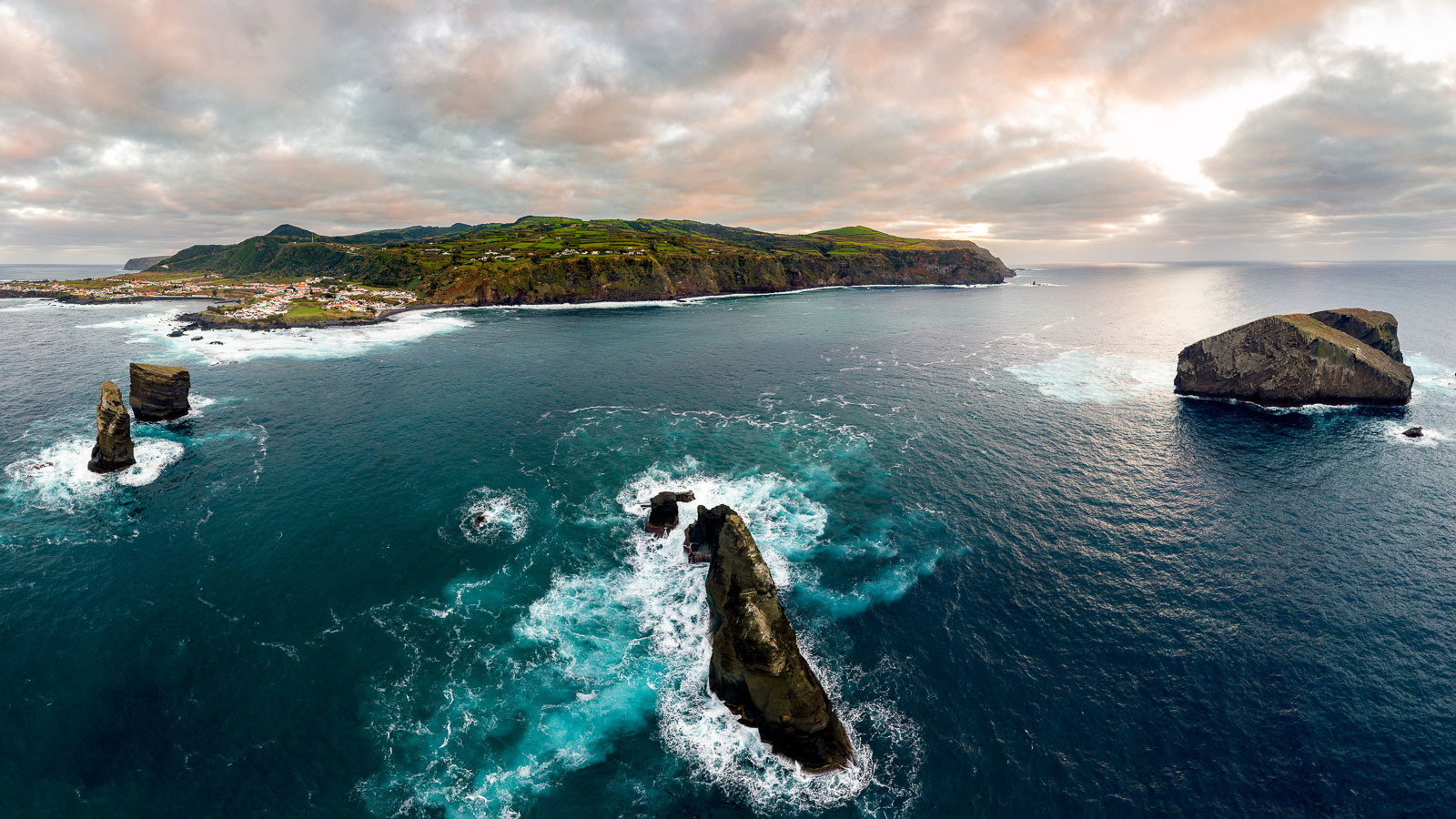
When discussing diving in Portugal, it’s nearly hard to avoid mentioning the Berlengas Nature Reserve. Access to this natural reserve in the Berlengas Archipelago is around ten kilometres from Peniche, a major fishing town. It is remote but lovely, making the journey worthwhile. The archipelago is well-known for its picturesque forts and dramatic scenery, which make for an impressive spectacle.

Under the surface of the sea, an incredible surprise awaits. Prepare your diving masks and dive to see the magnificence of the Berlengas Nature Reserve up close and personal. It is well-known for its volcanic and rocky seafloor, which is home to a variety of marine life. Prepare to be mesmerised by crayfish, manta rays, and octopuses!

If you wish to try cave diving, another incentive to visit the Berlengas is to do so. There are several red gorgonians in this cave. On the other hand, the sandy bottoms and walls are teeming with vibrant anemones.

June through October is the main diving season in the Berlengas. The water temperature is roughly 19 degrees Celsius throughout these months.

Burgau Wreck

If you’re a novice seeking the greatest diving spots in Portugal, the Burgau wreck is a must-see. This is a 1980s barge that sunk. Because the typical depth is just 5 to 10 metres, diving here does not need high technical abilities. At the absolute least, you should be familiar with fundamental abilities like buoyancy management and diving signals.

A conga eel is frequently sighted hiding in a conduit at one end of the wreck when it comes to aquatic life. Other intriguing species, like octopuses, can be found in the nooks and crannies. Additionally, spider crabs and cuttlefish are abundant in the vicinity. If you dive during the summer months, you will come face to face with a vast population of triggerfish.

Princess Alice Bank

Those looking for the greatest diving locations in Portugal should not overlook Princess Alice Bank, sometimes known locally as Banco Princesa Alice. This hidden seamount was found in 1896 and has since become one of the most popular diving locations in the Azores.

Scuba diving in the Azores | ZuBlu

The lowest depth is 104 metres, and powerful currents are possible. When you reach the main diving area, you can anticipate the water to be amazingly clean, which is one of the reasons this site attracts so many visitors. Due to the complexity of diving, you should ensure that you have advanced certification prior to visiting. Acquaint yourself with scuba diving safety precautions. Remember to bring your diving safety equipment!

If you’re planning to dive here, the optimum time to visit is between July and mid-October. The average water temperature at these periods is between 18 and 23 degrees Celsius.

Island of Porto Santo
If you’re visiting Madeira, you might as well visit Porto Santo Island. It’s about 43 kilometres from the island of Madeira. Due to the island’s size, you won’t have to limit your underwater exploration to a single location. Numerous locations are certain to be worthwhile of your time.

The island is home to Madeirense, a ship that was deliberately sunk in 2000 and is currently one of the area’s most popular wreck diving locations. With a 70-meter length, you may be astonished by what you find during your dive here. At depths of up to 40 metres, visibility is excellent. Barracudas, lilies, tunas, common whales, sperm whales, and dolphins are just a few of the wildlife you may encounter here, depending on the season.

There are 23 diving spots in Porto Santo that you may enjoy depending on your ability level. The majority of these diving spots are within a ten- to ninety-minute boat journey of the shore.

You wouldn’t think of Portugal as a top rock-climbing destination, and there are no world-renowned climbing places in the country. However, great rock climbing and bouldering places abound in Portugal, most of which are close to the country’s most popular tourist attractions. As a result, it is a perfect location for those who want to combine rock climbing with a beach vacation, as well as some of the best surfing and windsurfing in the world. Sport climbing on limestone crags and sea cliffs, challenging trad routes on granite, bouldering on granite rock, and deep water soloing are all options in Portugal.

Northern Portugal Rock Climbing
The northern region of Portugal is quite rural and is home to the Serra da Estrela Mountains, the country’s highest peak, located near the town of Covilha. There are single and multi-pitch routes in these granite mountains that provide both adventurous traditional climbing and sport climbing. Additionally, there is excellent bouldering at Pedra do Urso, which is Portugal’s greatest bouldering location, with 1,000’s of quality problems spanning all grades.

Central Portugal’s rock climbing
The hills of Montejunto, Reguengo do Fetal, and Serra do Sico provide some excellent limestone crags north of Lisbon. These short bolted cliffs provide an abundance of routes of varying grades. These locations are ideal for escaping the scorching heat due to their elevation, which is substantially cooler than the coast.

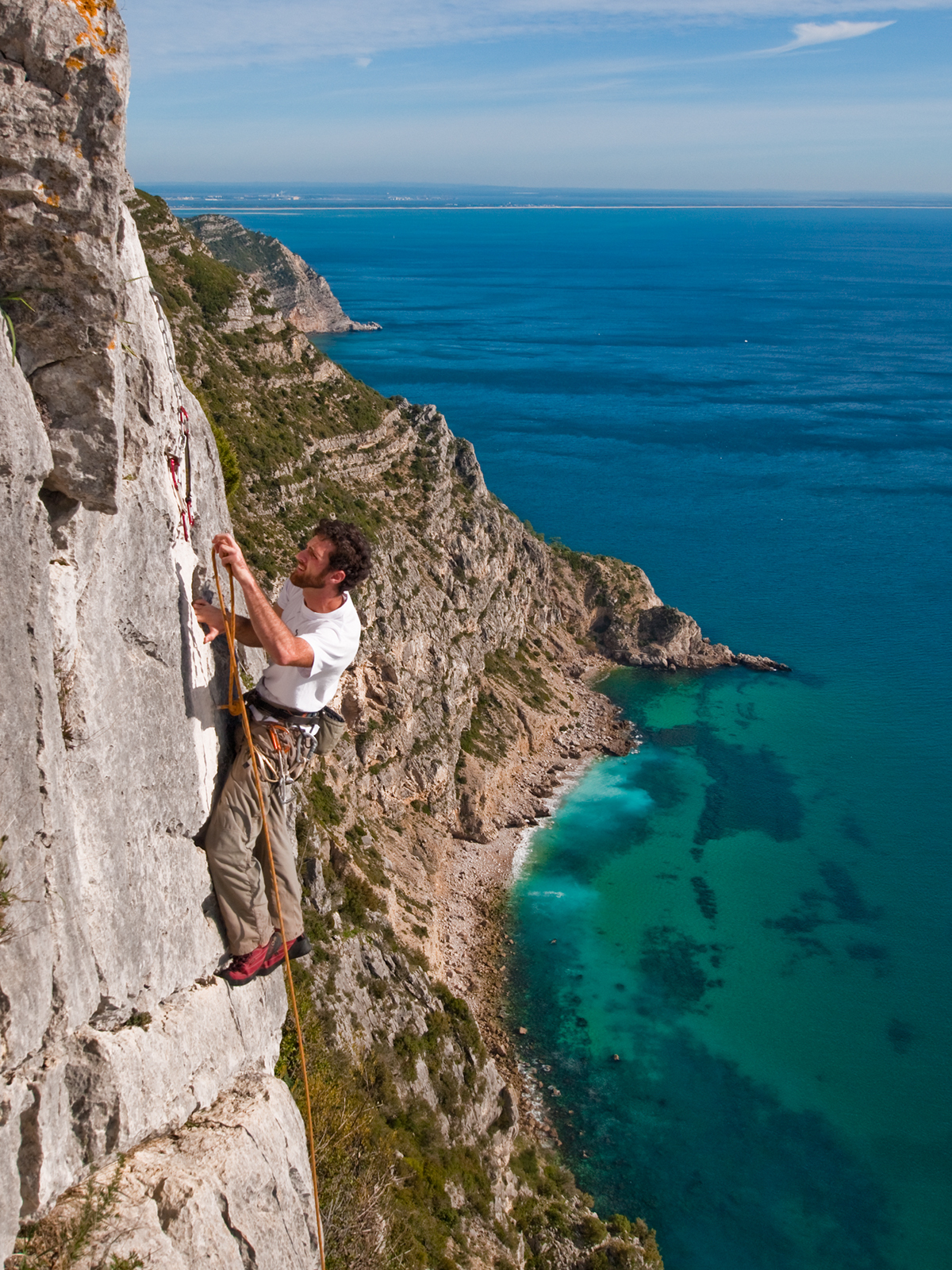
Sintra and Cascais are located west of Lisbon. Around Sintra’s hills, rock climbing is done on granite. Here are some beautiful bolted granite slabs that provide an incredible sensation of exposure. A series of granite bouldering locations are located high in the forest above Sintra, providing substantially cooler climbing than the beaches just a few kilometres below. It’s all about sea cliff climbing on limestone rock in Cascais. This includes sport climbing at Farol Da Guia and beach bouldering at Baia Do Mexilhoeiro.

Five sport climbing locations are located south of Lisbon between the cities of Sesimbra and Setubal, the greatest of which being Fenda. The routes here are unquestionable of a higher grade (mostly 7’s) and are located on steep and overhanging limestone rock cliffs.

Photo: Elliot Kals on Star Factory - AJS_0782.jpg | theCrag


Southern Portugal Rock Climbing
With its great beaches and surfing opportunities, the Algarve in southern Portugal is considered Portugal’s finest tourist area. There are two excellent climbing places in this region, each offering a completely different type of climbing. Rocha da Pena is the premier sport climbing crag in the world, with a diverse range of grades on high-quality limestone rock. It is conveniently located just far enough away from the bustling tourist areas of Quarteira and Albufeira while remaining easily accessible and only a short walk from the vehicle.

Sagres, a rocky outcrop on Portugal’s southwest coast, offers challenging sea cliff climbing. There is both sport climbing and traditional climbing here, as well as some multi-pitch routes. However, Sagres is gaining international prominence as a world-class location for Deep Water Soloing (DWS), with the primary crag being Ponta Garcia.

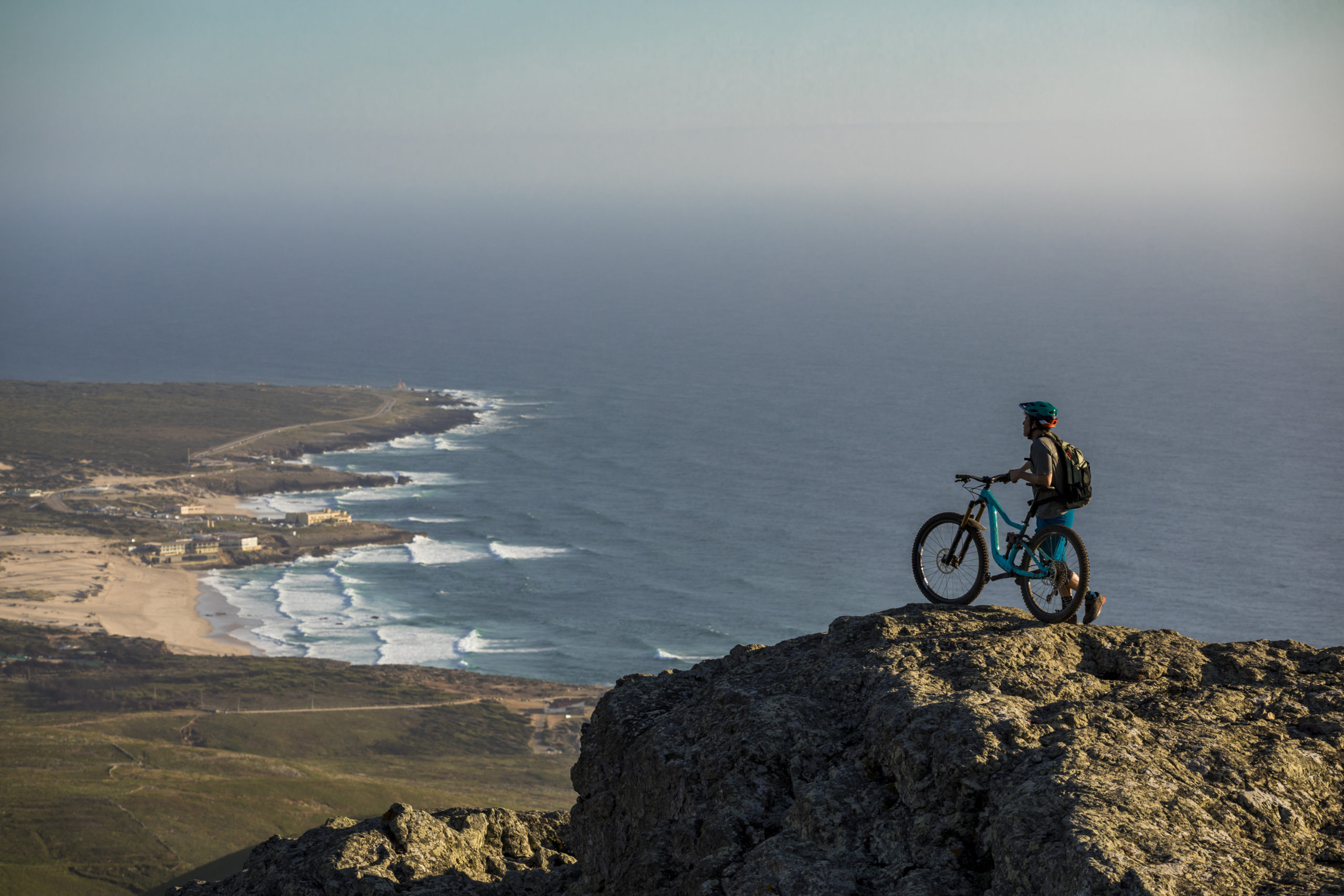
For those searching for afternoon jaunts or those wishing to discover the nation on a more in-depth basis, cycling in Portugal provides wonderful routes, pleasant views, and interesting scenery. With a long Atlantic coastline and two outlying archipelagos, bike trips will frequently present you with breathtaking sea vistas and plenty of opportunities to put your toes in the water.

Portugal Self Guided Bicycle Tour Holidays | Cycling Rentals - Cycling Rentals

Cycling paths in Portugal, on the other hand, have much more to offer than just a stunning, untamed coastline. You may ride past rocky mountains and through glacial valleys, see rare Mediterranean woods, and stop in distant villages for pasteis de nata, Portugal’s famed custard dessert. There is an incredible range of landscapes to view.

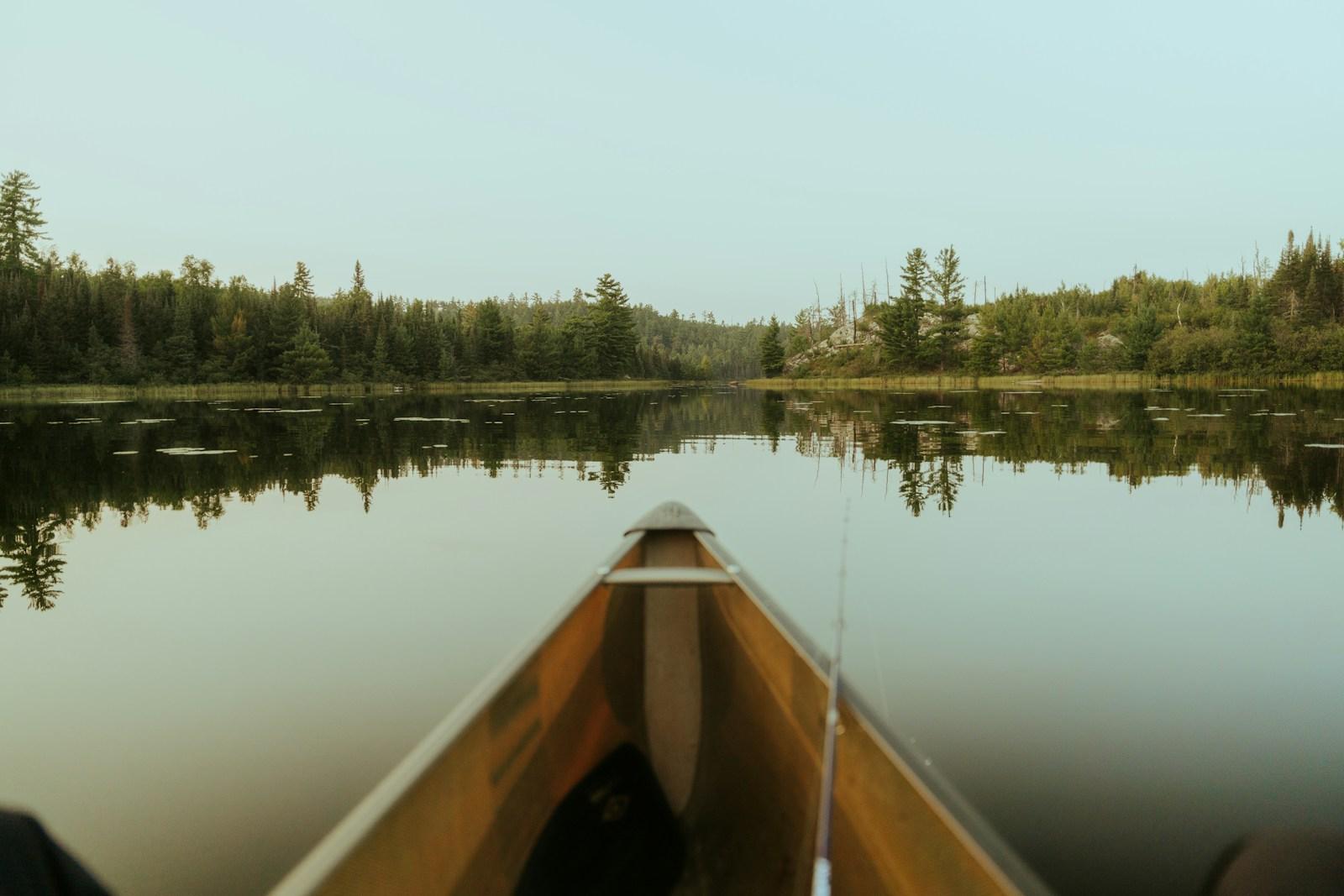
There are several places to go canoeing in Portugal. The Tagus, Douro, Guadiana, and Minho rivers, as well as several smaller ones, make canoeing in Portugal a possibility no matter where you are in the country. Sea kayaking is also a great opportunity to view the finest of the coast and the stunning sea caves that dot the coastline.

As one of Europe’s least populous countries, Portugal’s rivers provide an ideal setting for soaking in the country’s natural splendour and unique culture. When spring arrives in the Algarve, you’ll feel like you’ve stepped back in time, floating over centuries-old orchards, white-washed houses, and even white storks! You should bring your camera if you visit in the spring to photograph the almond groves covered in fragrant pink blossoms, but you should also pack some warm clothing in case the weather turns chilly. The Ria Formosa wetlands, a 60-kilometer nature reserve with an ever-changing lagoon system made up of sandy islands connected by natural inlets and channels, are an excellent place to go kayaking.


a person in a canoe on a calm lake

Canoeing allows you to see parts of Portugal that are otherwise inaccessible. There are rocky mountains, secret waterfalls, untamed moorland ponies, ancient granite settlements, and jangling cowbells that signal the return of the herd for milking in the Peneda-Gerê National Park in the north of Portugal.

Whitewashed towns nestle among flawlessly shaped hills and gnarled olive and cork trees in the Alentejo region, which is also home to Europe’s longest man-made dam.

It is possible to enjoy sea kayaking in Portugal all year round, even for novices, thanks to the country’s warm temperature.