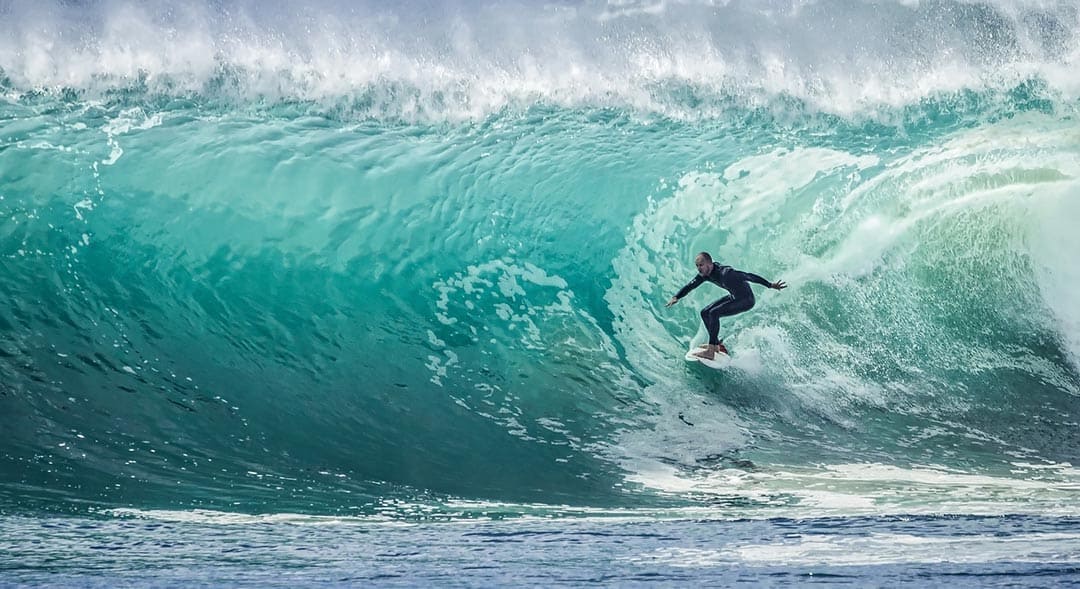
Portugal offers it all, from a surfer’s perspective. It is not just the incredible waves that make it one of the world’s top surfing destinations; it is also the surf culture, the unique charm, and the affordability.

Why visit Portugal to surf? The quick answer is that Portugal has every type of wave conceivable and offers everything a surfer could want in a surf vacation.

There is whitewater for beginners, softly rolling tubes for intermediate surfers, and some nasty beach and point breakers for experts. There are waves for all abilities, all year, and close proximity to one another, as well as highly regarded surf camps around Portugal’s coastline.


There’s no denying that Portugal offers some of Europe’s top surfing waves, from the legendary North Canyon in Nazaré (where Garrett McNamara set the Guinness World Record for surfing the biggest wave in history) to Supertubes in Peniche (home to the Rip Curl Pro competition).

Coxos in Ericeira has to be the greatest wave in Portugal — a right-hand barrel that crashes over flat rocks.

Ericeira holds World Surf Reserve status, confirming its standing as one of the top surf places in the world. There are nine world-class breakers and thirty outstanding surf locations in the vicinity.

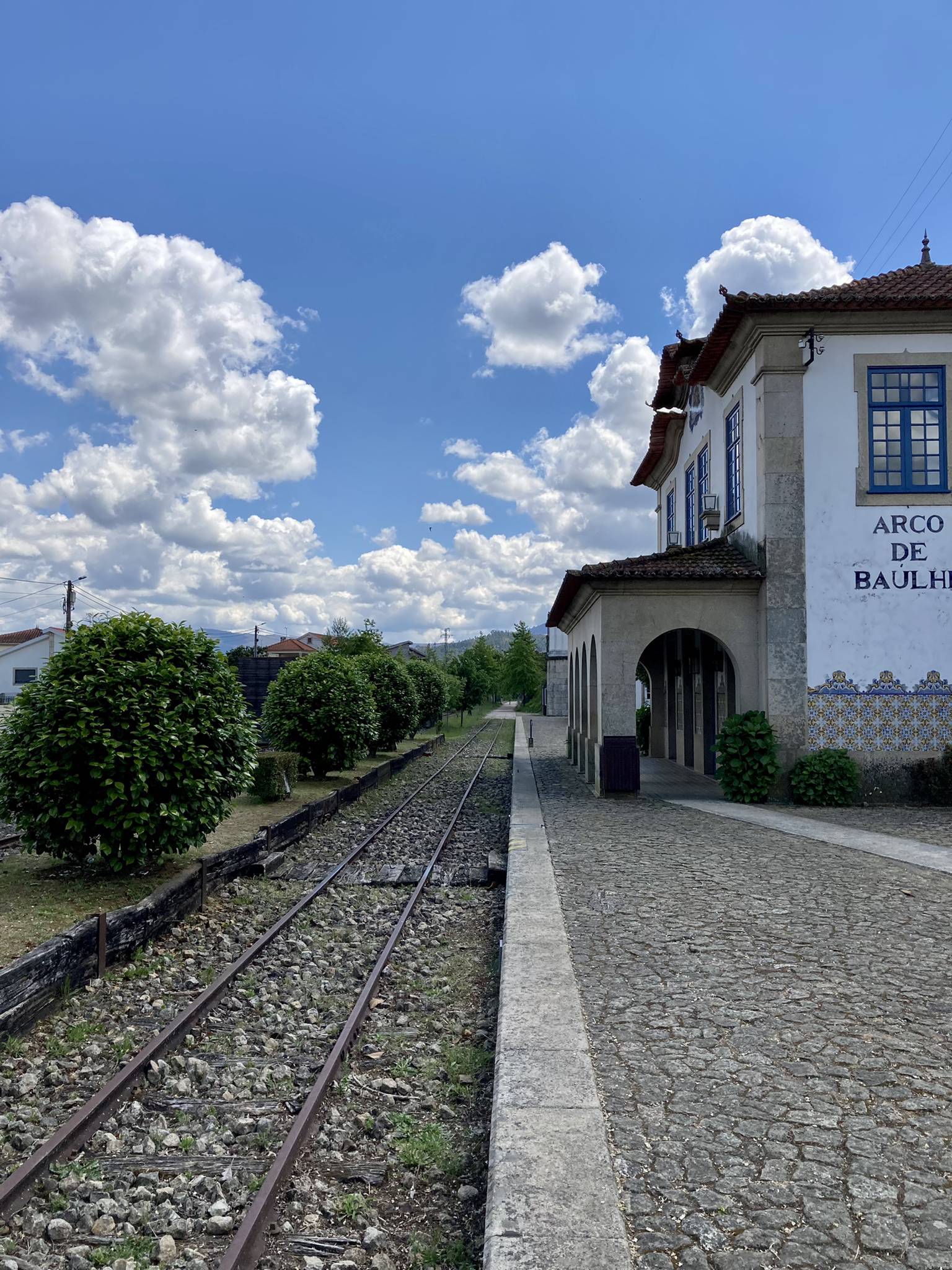
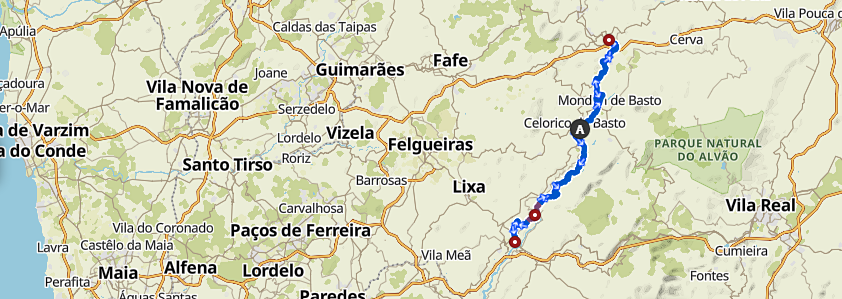
Mountain biking journey for experts. Excellent physical condition is necessary. All skill levels are welcome. The Track’s starting site is directly close to a parking lot.
Starting point: Parque de Estacionamento Provisório da Igreja de Britelo

Ending Point: Parque de Estacionamento Provisório da Igreja de Britelo

Time: 5 hours   Distance: 46.9 miles   Elevation: 3,575 ft

The trails are not marked but there is an incredible network of trails with singletracks, fire roads, long climbs, technical descents, etc. The best trails in Portugal and only 30 minutes drive from Lisbon.

Sintra Trail & Enduro MTB - Lisbon Coast Cottages
GETTING THERE
Start at Malveira da Serra, a small town that is 5 miles from Cascais. Cascais is 30 minutes drive from Lisbon (airport).
powered by Singletracks.com
Level:
Length: 25 mi (40.2 km)
Surface: Other
Configuration: Network
Elevation: +350/349 ft
Total: 28 riders

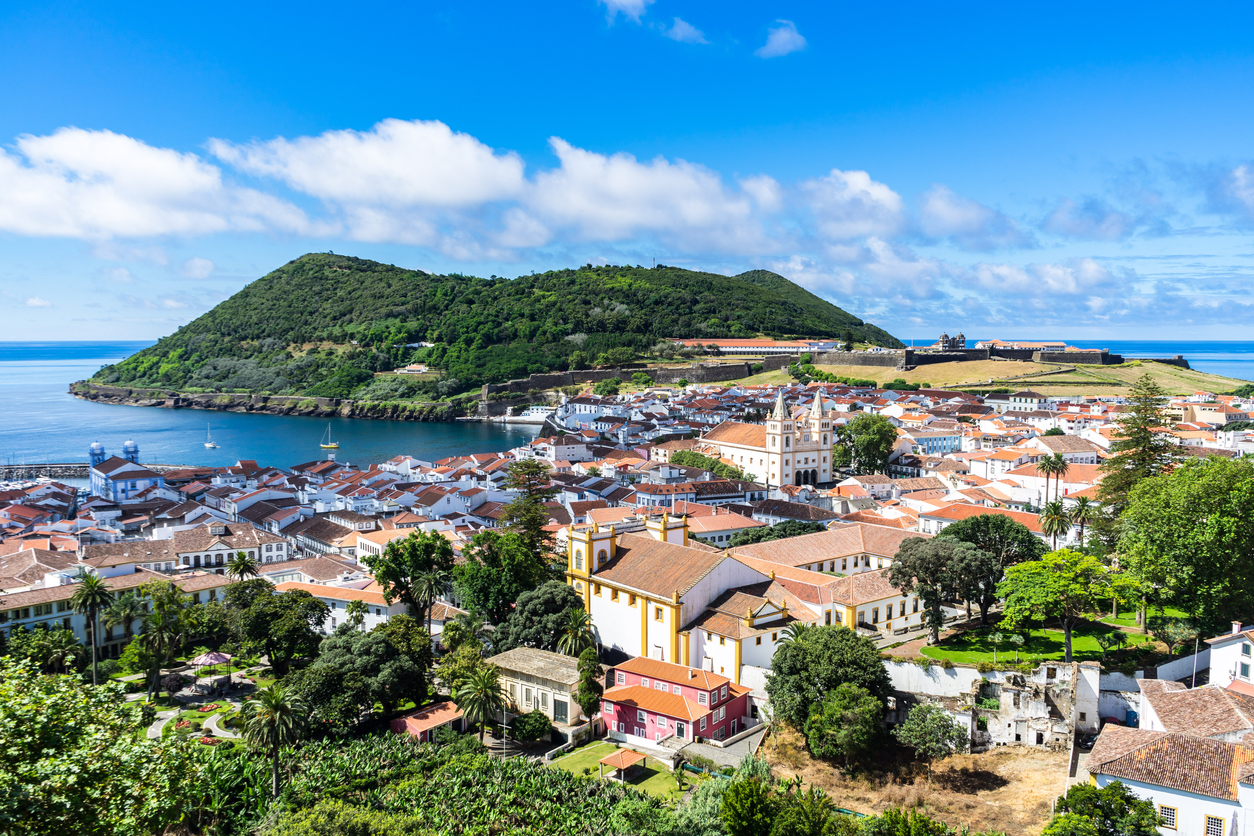
Terceira Island, (known as “The Lilac Island”) Portuguese Ilha Terceira, is a Portuguese archipelago in the North Atlantic Ocean that is part of the Azores archipelago. It has a total area of 153 square miles (397 square km).

Terceira was given its name since it was the third Azorean island found by the Portuguese. The principal town and harbour, Angra do Heroismo, was originally the Azores’ capital. In 1983, it was named a UNESCO World Heritage Site for its town centre. The only other significant town is Praia da Vitória, which has a breakwater-protected harbour and serves as a supply point for the North Atlantic Treaty Organization (NATO) air station at Lajes on the island’s northeast coast. Terceira’s economy is primarily agricultural, with a rising tourist industry.

Things to see and do in Terceira Island, Azores.

ANGRA DO HEROÍSMO TOWN IN TERCEIRA ISLAND.

  • Sé Cathedral
    This Azores Islands’ major church is located in the town of Angra do Heroismo on Terceira Island. With its one-of-a-kind architectural elements and incalculable importance to the local culture and legacy, this sacred church is a breathtaking sight for Christians and non-Christians alike, since art genuinely transcends religion.


  • The Streets of Angra do Heroismo

Cais da Alfândega (Angra do Heroísmo) – Wikipédia, a enciclopédia livre

My ancestors fled the Azores. The coronavirus trapped me there.

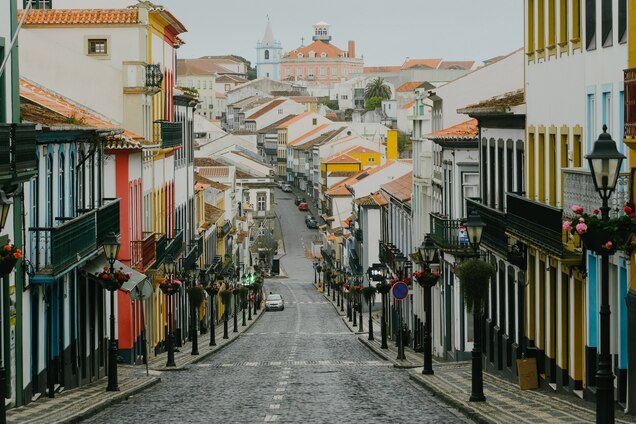
The beautiful and colourful streets of Angra do Heroismo contribute to the city’s joyful and inviting Cultural feel. Appreciate the rainbow colours of Angra’s buildings and dwellings while also being fascinated by the outstanding architecture’s awe-inspiring splendour.


  • Duque da Terceira Garden

Jardim Duque da Terceira | Angra do Heroismo-Terceita Island… | Flickr

Take a break from your on-foot exploration of downtown Angra do Heroismo on Terceira Island, the only Azorean city to be designated as a UNESCO World Heritage Site, by sitting in the Public Garden, a lush green oasis in the heart of Terceira’s capital. This nineteenth-century garden has various layers of beauty, and it also leads to one of the island’s most renowned overlooks, the Alto da Memória.


  • Capitães-Generais Palace  This palace was previously the official house of the first general captain, who was then in charge of the Azores archipelago’s governance. It was also used as a royal residence during monarchs’ visits to this lovely island. Apart from admiring the museum’s amazing and charming façade, visitors may also tour the museum, which has significant items of Portuguese monarchy history as well as one of the most important collections of 17th-century hollandaise tiles.


  • Alto da Memória Viewpoint
    This perspective is regarded to be Terceira Island’s most renowned postcard-worthy panorama due to its perfection. Once you experience it for yourself, it’s easy to see why!


  • Prainha
    A charming tiny beach nestled on the shores of a UNESCO World Heritage town, the Prainha overlooks Monte Brasil and is yet another must-see site.


  • Monte Brasil.

Angra do Heroísmo assinalou mais um aniversário (Vídeo) - Cultura - RTP Açores - RTP

Monte Brasil was formed by a volcanic explosion in the sea that became tied to the city of Angra do Heroismo, enhancing its beauty and intrigue. You may reach the summit of Monte Brasil by automobile, and once there, you’ll be rewarded with breathtaking views of the sea and town from any of the several overlooks on-site. Additionally, it is home to the São João Batista Castle.


  • Natural Pools of Silveira
    There is nothing quite like plunging into Silveira’s natural swimming pool’s crystal blue waters! Apart from the excellent water quality, the views of Monte Brazil from this location are equally breathtaking.


WEST OF TERCEIRA ISLAND

  • Viewpoint from Ponta do Queimado

O Que Fazer na Costa Ocidental da Terceira (Açores) | Melhores Locais

A pleasant discovery on Terceira Island’s northwest coast, the Ponta do Queimado perspective stimulates all five senses. This is particularly true at sunset when the magnificent shoreline dazzles the eyes even more.


  • Factory de Queijo de Vaquinha

3 Most Popular Azorean Cheeses - TasteAtlas

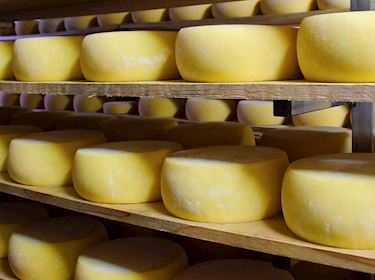
Make a point of booking a visit to Vaquinha Cheese Factory as you descend to the southwest. Queijo Vaquinha is a delightfully creamy, buttery-soft cheese that originated on Terceira Island. Locally produced by an Azorean family, this cheese is the result of a welcoming business that awaits your visit for a tour, during which you will have the opportunity to roll up your sleeves and get your hands dirty while learning how this beautiful cheese is truly manufactured!


NORTH OF TERCEIRA ISLAND

  • Natural Pools of Biscoitos

WATCH: Why you should visit this Portuguese island in the middle of the Atlantic Ocean | News24

For residents and visitors alike, this is one of the island’s most popular natural swimming pools due to the spectacular beauty left by volcanic lava. Biscoitos Pools, with their varied natural pools and excellent infrastructure, are a sight not to be missed.


  • Wine Museum 
    After viewing the local fields of grapes divided by volcanic stone walls – similar to Pico Island’s vineyard environment, which is a UNESCO World Heritage Site – it’s time to visit a local winery and sample some delectable wine. Proceed to the wine museum, where you will sample several wines and visit the wine museum room to have a better knowledge of Terceira Island’s wine-producing history.


EAST OF TERCEIRA ISLAND

  • Facho Viewpoint

10 Things to do in Praia da Vitoria That You Shouldn't Miss

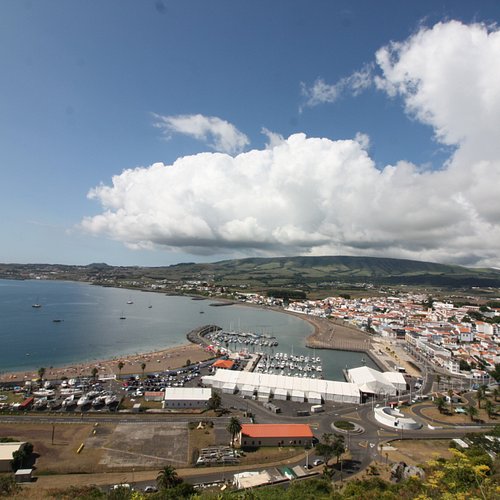
Go to this viewpoint for the greatest panoramic view of the Praia da Vitória town and its numerous beaches.


  • Império da Caridade

Império da Caridade, Praia da Vitoria | House styles, Mansions, House

You’ll find lovely small Holy Spirit chapels scattered over the island. They are only one of the many features that contribute to Terceira Island’s particular and unique character, as they are not found on any other island!  Império da Caridade at Praia da Vitória is a beautiful example.


  • Serra do Cume

Things to do in Terceira: seven things you have to try

As you travel further into the island’s centre, you will come to Terceira Island’s most renowned viewpoint, Serra do Cume. The patchwork landscape is Terceira Island’s trademark, as are the green panoramas that stretch as far as the eye can see.

  • Natural Pools of Serretinha
    Serretinha natural swimming pools, located in the southeast of the island, overlook the Cabras Islets on the horizon and are one of the greatest swimming locations on Terceira.


CENTER OF TERCEIRA ISLAND, AZORES

  • Algar do Carvão

Algar do Carvão | Terceira Island | Azores | Portugal

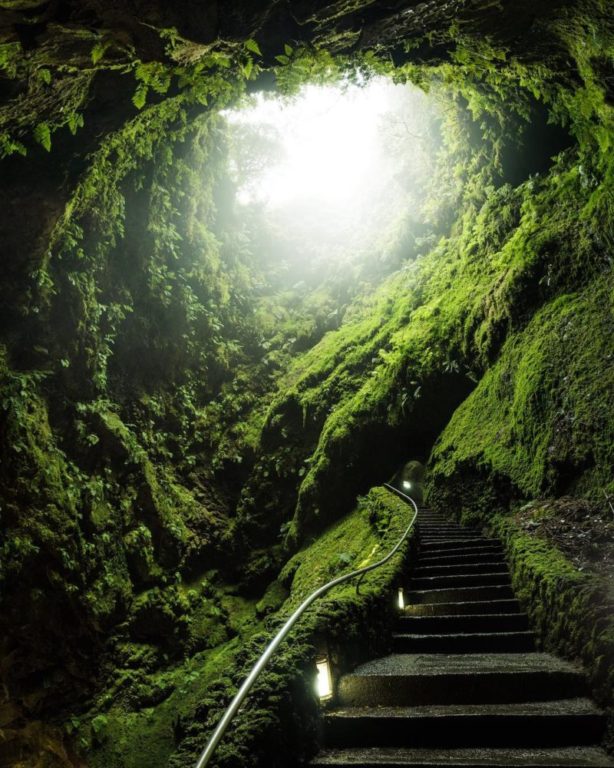
Descend 90 metres (300 feet) inside one of the world’s only accessible volcanoes! Algar do Carvão is a 3,200-year-old lava tube and volcanic chimney.


  • Gruta do Natal
    The “Gruta do Natal” lava tube astounds with its succession of tiny and lengthy tunnels and the many shapes and colours that take over the walls, floor, and ceiling – all of which convert the cave into a really wonderful site.


  • Furnas do Enxofre
    On the surface, the “Furnas do Enxofre” (Sulphur Pits) are a powerful testament to the Azorean volcanoes’ strength. The scenery is dominated by fumaroles, which are bordered by the reddish-coloured ground that contrasts well with the green of the mosses and other rich flora in the surrounding region. The air is heated and filled with a strange odour… of sulphur, of course, which just adds to the surreal ambience.

São Miguel, the largest island in the Azores, has a lot to offer for active people who like kayaking, paddleboarding, diving, surfing, canyoning, coasteering, sailing, fishing, hiking, road cycling, and mountain biking. In addition, the Azores are Europe’s top location for whale and dolphin viewing. There’s no need to limit yourself to land-based activities on São Miguel; some of the most exciting attractions are found in the huge ocean that surrounds it. Many whale and dolphin species travel through the Azores on their yearly migrations or dwell permanently in the area.

São Miguel is one of the archipelago’s most prominent volcanic islands. Furnas, one of the island’s oldest calderas, is to the east. In and around Furnas village, as well as on the banks of the crater lake, there are over thirty geysers and mineral-rich springs. Furnas has a semi-tropical vibe thanks to the heated ground and a rich blend of scents from the wild aloe, old cedars, and gushing springs. Nowhere is this truer than in the 200-year-old Parque Terra Nostra, which houses São Miguel’s famed geothermal swimming pool.


8 essential experiences on Sao Miguel Island in the Azores | The Star

Staying in the charming village of Furnas is a terrific alternative to staying in the capital of Ponta Delgada,  Enjoy the area’s main attraction: eating a meal cooked in a volcano.

The Beauty of Boca do Inferno Will Astound You.

12,243 Sao Miguel Stock Photos, Pictures & Royalty-Free Images - iStockStruxTravel - Snapshot: São Miguel Island, Azores, PortugalThe name “Boca do Inferno” translates to “Mouth of Hell,” on a bright day, this vista is likely to be one of the most magnificent sites you’ve ever seen. With only a five-minute stroll up a ridgeline, you’ll be rewarded with a view that even the greatest photographs can’t capture.

Sete Cidades, the island’s largest crater, is located to the west and is a must-see location for most travellers to the islands due to its amazing beauty. The views across Sete Cidades lake are some of the most well-known in the Azores, and the Vista do Rei (King’s View) viewpoint is the most popular site to see them. Sete Cidades has a good selection of walking paths and cycling routes for the more athletic, and its twin-crater-lakes are a breath-taking kayaking site.

Our Favorite Miradouros (Viewpoints) on São Miguel Island - Married with Wanderlust | São miguel island, Sao miguel, Island


Farol do Arnel, the oldest lighthouse in the Azores is located on the remote east coast of São Miguel. It is only open on Wednesdays, but it is well worth a visit on other days of the week because of its lovely setting.

If you wish to visit it and the surrounding quaint, picturesque fishing village, be mindful of the exceedingly steep, twisting road that goes there.

If you like hiking, São Miguel is the place to be. Several routes traverse the island, ranging from simple strolls to a viewpoint to multi-hour hikes through the hills.


Salto Do Prego


While the Azores may not experience the intense heat of mainland Portugal, it could be very scorching at times—which provides the ideal opportunity to cool off beneath a waterfall. There are several waterfalls on the island, but two of the most popular are Salto do Cabrito and Salto Do Prego.

Halfway down the twisting road from Lagoa do Fogo to Ribeira Grande, one of the island’s most popular sights may be found. Caldeira Velha is a cluster of natural hot springs surrounded by thick jungle, each with its own waterfall.

People sitting in the natural hot springs


The capital Ponta Delgada is a pleasant, friendly city where everything, including many of the island’s greatest restaurants, is within walking distance

Ilha de São Miguel DSC00659 (36586155410) (cropped).jpg

Things to do and see in Ponta Delgada

  • Jardim Botânico José do Canto
  • Mercado da Graça
  • Igreja de São Sebastião
  • Fuerte de San Blas
  • Azorean Pineapple Plantation
  • Miradouro do Ilhéu de Rosto de Cão
  • Jardim Padre Sena Freitas
  • Farol de Santa Clara
  • Campo de São Francisco
  • Forno da Cal
  • Jardim Antero de Quental
  • Parque Urbano de Ponta Delgada
  • Núcleo de Santa Bárbara
  • Gruta do Carvão – Monumento
  • Museu Carlos Machado
  • Museu Militar dos Açores
  • Viewpoint of the Rock Source


Getting there: SATA Azores Airlines has frequent service from Lisbon and Porto to São Miguel (about two hours) and regular service from Boston, Toronto and Montreal (about five hours).

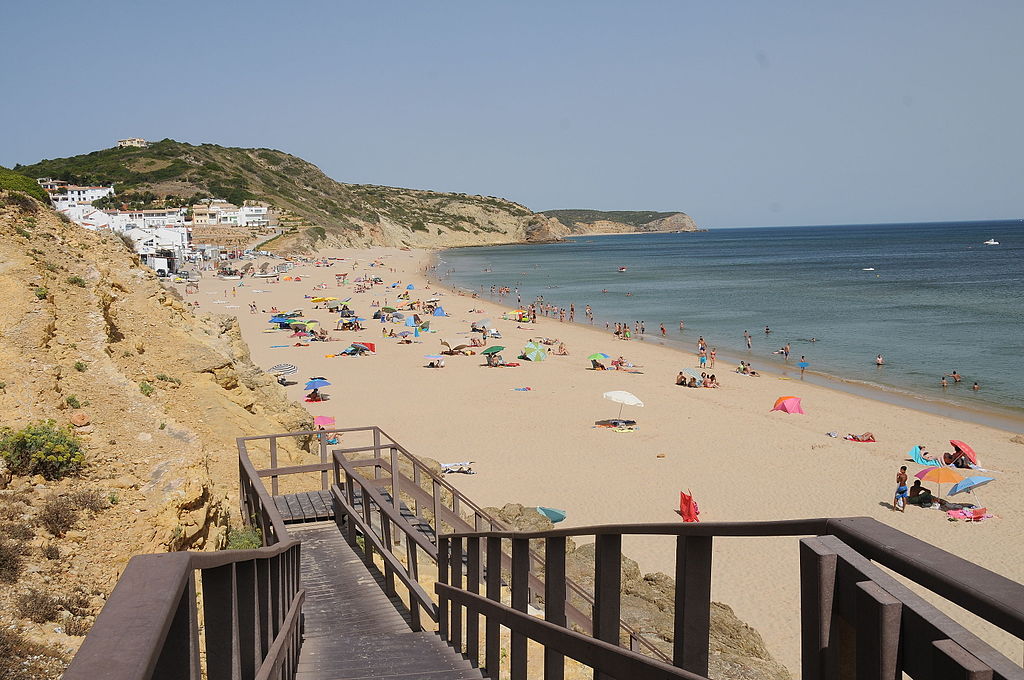
Salema is a village located near Vila do Bispo in the Algarve, Portugal. Historically it was a fishing village, but it is now a popular tourist destination.

Salema name meaning “safe”.

The little village of Salema is located just a few minutes off the N125, which travels through the Algarve. Despite the fact that the mountains around the town are filled with vacation houses and lodging, Salema retains its traditional fishing hamlet at its centre. The boat launch is central to the beach, where you’ll typically see fishermen tending to their boats or nets. Cafés, pubs, and cosy eateries may be found along the narrow streets.

Salema features a population of people that appear to live their traditional routines in tandem with the contemporary world, oblivious to the visitors who are simply another and necessary slice of the local economy.

local-fisherman-salema

Picture cobblestone alleyways and tiny blue-trimmed whitewashed fishermen’s houses peppered with chimney pots. We are glad that Salema has remained true to itself by keeping its past traditions. A colourful fleet of wooden boats catches sea bass, bream, octopus, sardines, and mackerel. Every morning, you can still see fisherman unloading their catch before repairing their nets and relaxing after a night at sea.

Nazaré, a picturesque fishing town on the Atlantic coast of Portugal, may be small in size, but it is big in charm and character. The town’s history dates back to ancient times, and it has been the home of fishermen and their families for generations. Today, Nazaré has become a popular tourist destination because of its stunning beaches, world-renowned surfing spots, and fascinating culture. Whether you’re a water sports enthusiast, a history buff, or just in search of a tranquil getaway, Nazaré has something to offer. In this article, we’ll take a closer look at what makes Nazaré such a special place and explore the best things to do and see in this Portuguese gem.

Nazaré : un ancien village de pécheurs au Portugal

Introduction to Nazaré: A Portuguese Gem

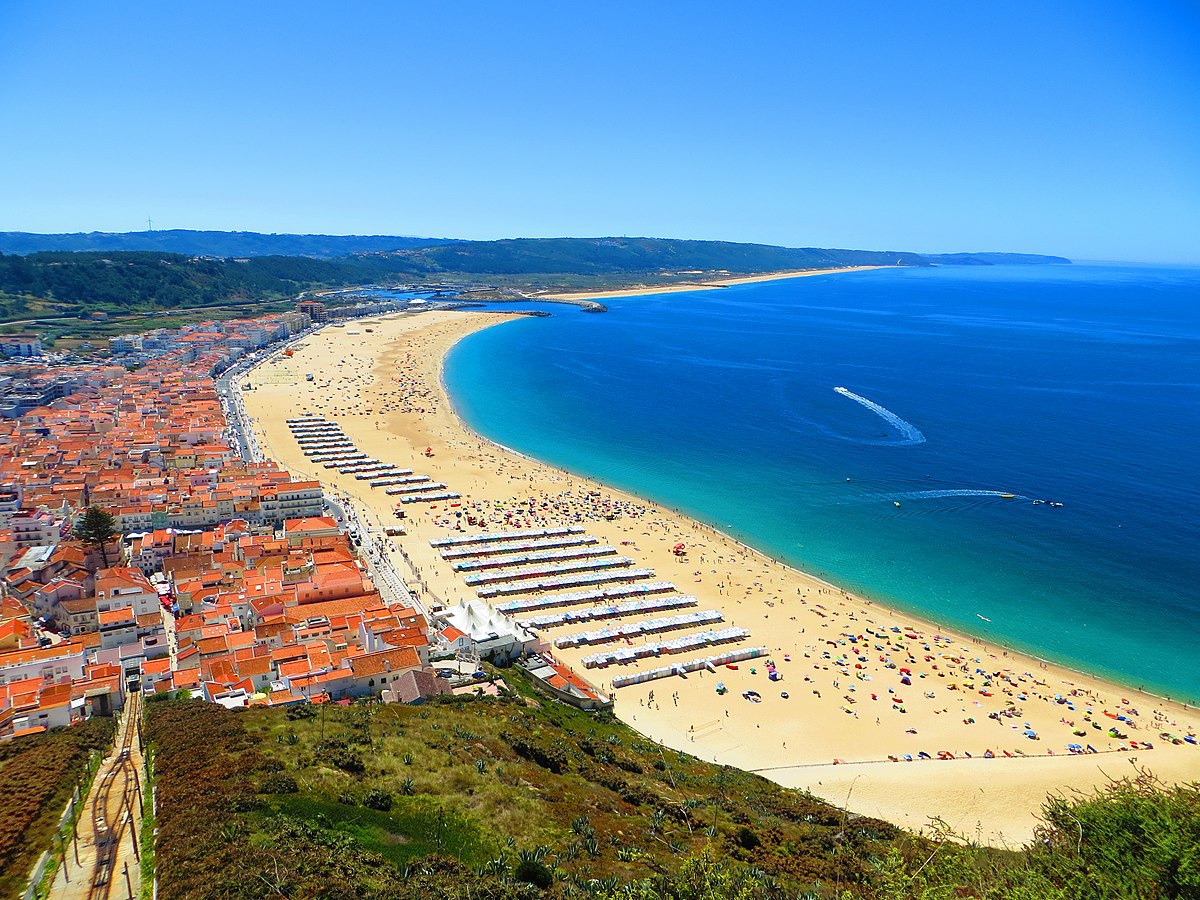
Nazaré is a picturesque fishing village located on the west coast of Portugal. With its narrow streets, colourful houses, and stunning beaches, Nazaré has become a popular tourist destination. The town is best known for its gigantic waves, which have attracted surfers from all over the world. But Nazaré is more than just a surfing spot. It has a rich history and culture, which are reflected in its traditions, festivals, and architecture.

Discovering the charm of Nazaré

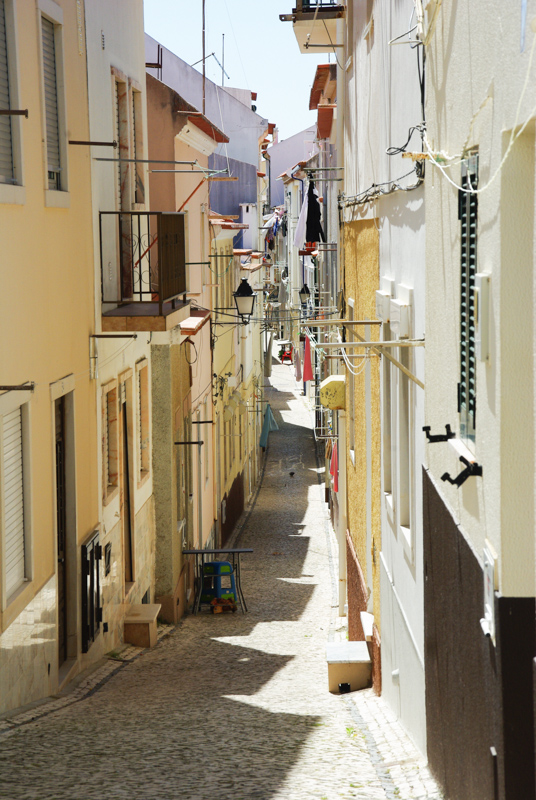
Nazaré is a town that has preserved its traditional way of life despite the influx of tourists. Walking through the streets of the historic centre is like taking a journey back in time. Beautiful natural landscapes that provide stunning views of the Atlantic Ocean surround the town. From the Praia do Norte cliffs, you can see the waves that have made this town famous. Nazaré has a unique charm that attracts visitors who are seeking an authentic Portuguese experience.

The History and Culture of Nazaré

From Fishermen’s Village to Tourist Destination

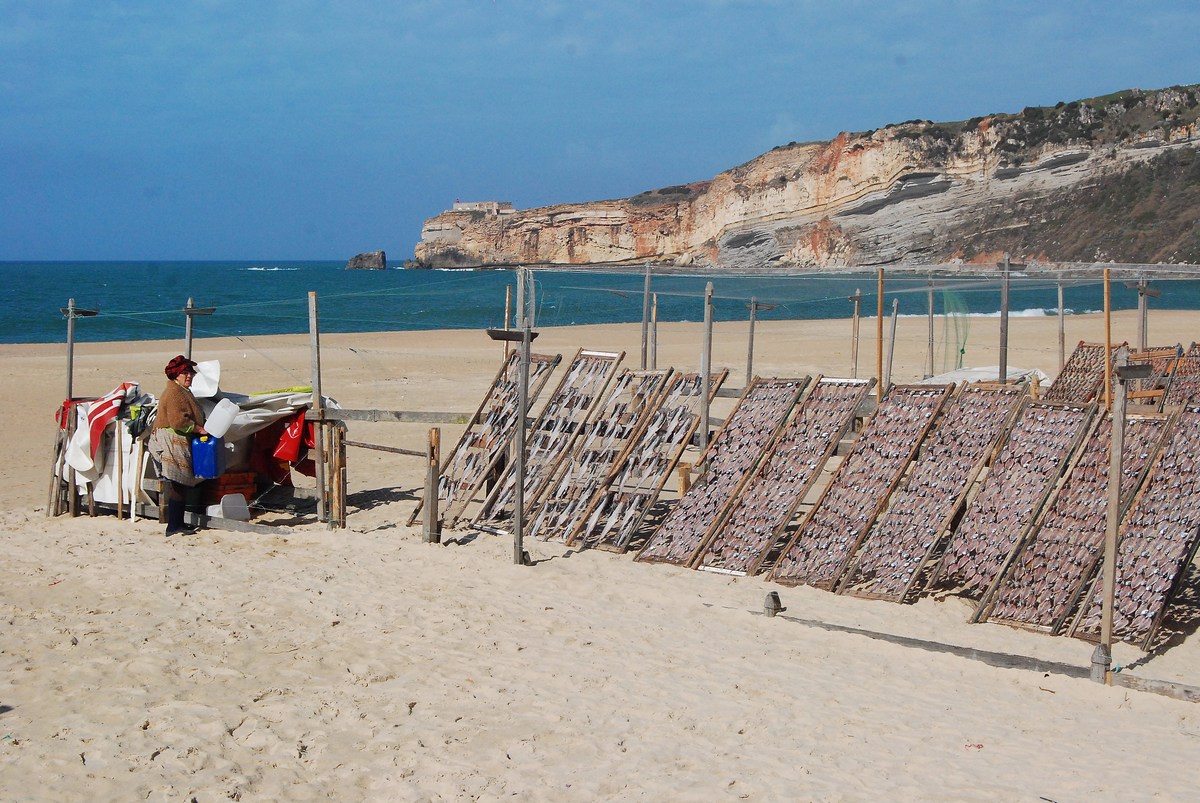
Nazaré was once a small fishing village that depended on the sea for its survival. It was known for its traditional sailing boats, called “botes.” Today, the town has become a popular tourist destination, attracting visitors from all over the world. Despite the changes, Nazaré has managed to preserve its heritage and traditions.

The Festivals and Traditions of Nazaré

Nazaré is a town that celebrates its traditions with passion and pride. The most famous festival in Nazaré is the Senhora da Nazaré festival, which takes place in September. During the festival, the town is decorated with flowers and lights, and there are processions and performances. Other traditions include the blessing of the fishing boats, the celebration of Santo António, and the wearing of traditional costumes.

Portugal - le village de pêcheurs de Nazaré - Les routes de tous les voyages


Sítio:

Sanctuary of Our Lady of Nazaré - Wikipedia

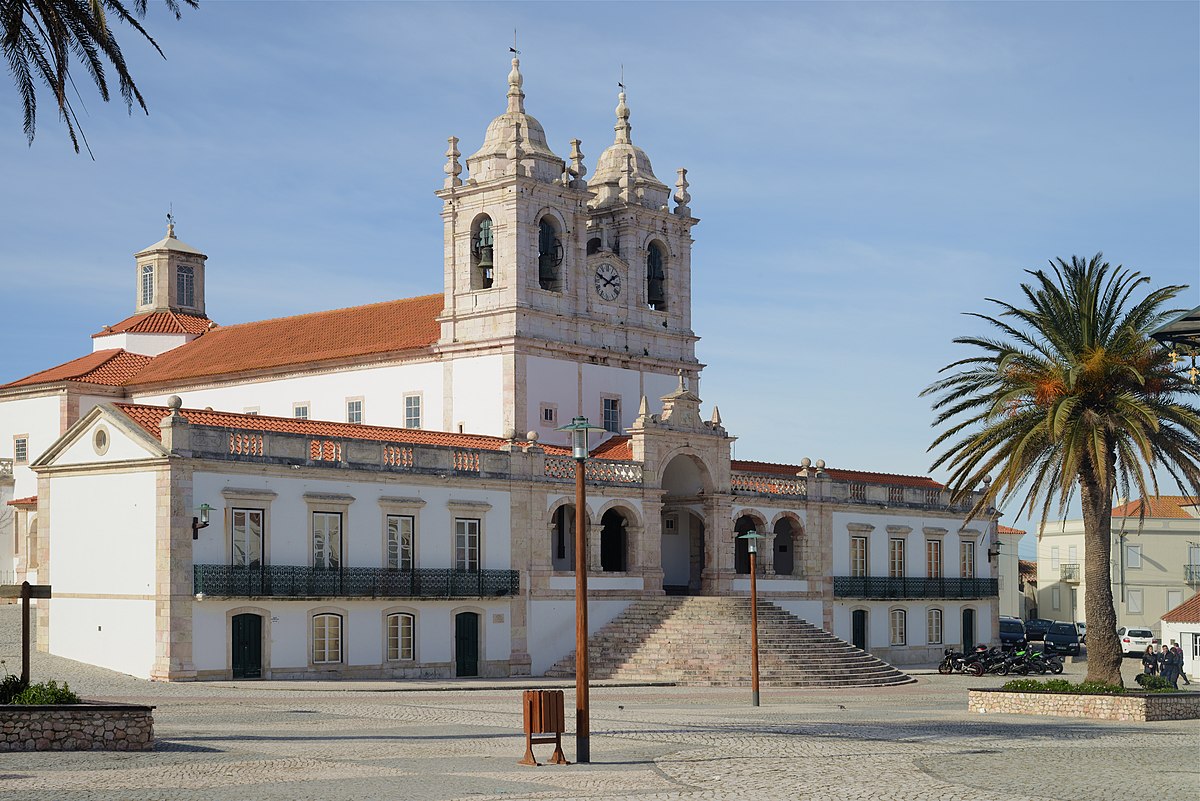
Sítio has been a religious and pilgrimage site since the 13th century, affiliated with Nossa Senhora de Nazaré and the Marian religion.

sítio da nazaré | Casas do Quico

Access is by vehicle or stairwell. The cable car, on the other hand, is the most enticing choice, since it provides stunning views of the low city and the ocean.

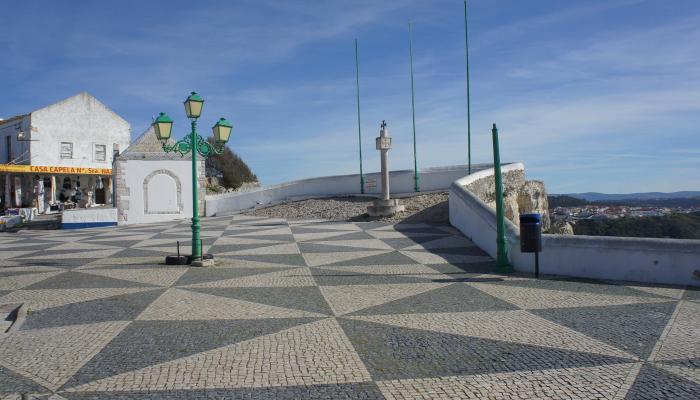
The Miradouro do Suberco Viewpoint is 110 metres above sea level and provides one of the greatest views of Portugal’s coastline.

Don’t miss the opportunity to see the Capela da Memoria Chapel, the Nossa Sanhora da Nazaré Sanctuary, the Miradouro do Suberco Viewpoint, the Etnographic and Archeaologic Museum, the Dr. Joaquim Manso Museum, and the Fort of São Miguel Arcanjo with its famous lighthouse while in Stio.
Additionally, Praia do Norte Beach, which is bordered by a pine and dunes forest, is an ideal location for surfing huge waves and sport fishing.
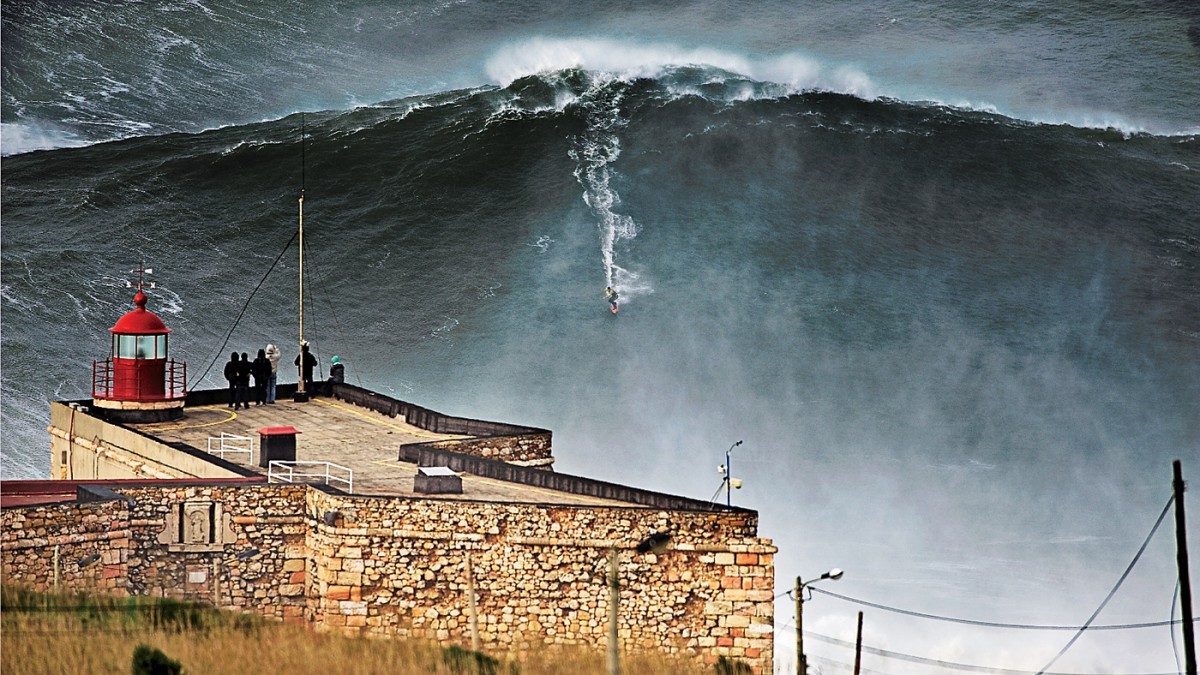
Surf Blog - Legendary surf spot Nazaré - the biggest wave ever surfed.

Nazaré is a famous surfing location owing to the extremely high breaking waves created by the underwater Nazaré Canyon. The canyon amplifies and condenses the incoming ocean surf, which, when combined with the local water circulation, results in tremendous increases in wave heights. Numerous surfing records have been established at Nazaré due to the height of the waves.

Pederneira:

Pederneira - Wikipedia

File:Igreja da Misericórdia da Pederneira, Nazaré (6316068082).jpg - Wikimedia Commons

Na Senda do Canhão da Nazaré - GreenTrekker.pt

Pederneira rises over a cliff to the east of Praia, serving as the city’s birthplace. It is worthwhile to visit Igreja da Misericórdia Church and see the ancient council and its emblematic Pelourinho. Additionally, it is recommended to take a walk and take in the views from Pederneira Viewpoint. The natural scenery is enhanced by the beauty of São Brás Hill and Aguieira Dunes.

Famalico is located a little further from the neighbourhoods and is home to the Praia do Salgado and the undiscovered Valado de Frades Lagoon.

The Beaches and Waves of Nazaré

Praia do Norte: The World-Famous Surfing Spot

Praia do Norte is the beach that has made Nazaré famous. It is home to some of the biggest waves in the world, reaching up to 100 feet in height. Surfers from all over the world come to Nazaré to ride these waves. The beach is also a great spot for watching the surfers and enjoying the stunning views.

Other beaches and coves in Nazaré

Nazaré has several other beaches and coves that are worth a visit. Praia da Nazaré is the main beach, which stretches for several kilometres. It is perfect for sunbathing, swimming, and taking long walks. Cliffs encircle Praia da Vila, a more secluded and smaller beach. Other beaches include Praia do Salgado, Praia do Sul, and Praia da Légua.

The Best Activities and Attractions in Nazaré

Taking a Stroll in the Historic Centre of Nazaré

The historic centre of Nazaré is a great place to take a leisurely stroll. The narrow streets are lined with colourful houses that are adorned with beautiful tiles. There are several traditional shops selling souvenirs and handicrafts. You can also visit the church of Nossa Senhora da Nazaré, which has a beautiful portal and is decorated with azulejos.

Visiting the Fort and Lighthouse of Nazaré

The Fort and Lighthouse of Nazaré are two of the most iconic landmarks in the town. The fort was built in the 16th century to protect the town from pirates and invaders. Today, it is a museum that showcases the history of the town. The lighthouse is located on the cliff overlooking the Praia do Norte beach. It offers stunning views of the ocean and the town.

Exploring the Nazaré Canyon

Nazaré Canyon is a natural wonder that is located off the coast of Nazaré. It is one of the deepest underwater canyons in the world, reaching depths of up to 5,000 metres. The canyon is home to a diverse range of marine life and is a popular spot for diving. Boat tours are available for those who want to explore the canyon without getting wet.

In conclusion, Nazaré is a town that has something for everyone. It is a town that has managed to preserve its heritage while embracing modernity. Whether you are a surfer, a history buff, or a nature lover, Nazaré is a destination worth visiting.

The local food and drink scene in Nazaré

When it comes to food in Nazaré, fresh seafood is the star of the show. The coastal town is home to a bustling fishing industry, which means that visitors can enjoy some of the freshest and most delicious seafood dishes imaginable. From grilled sardines to seafood stews, the options are endless. If you’re feeling adventurous, try the local specialty called “caldeirada”, a hearty fish stew made with whatever the fishermen catch on the day.

Of course, no meal is complete without a glass of wine. The region is known for its rich and full-bodied red wines, so be sure to pair your meal with a locally produced bottle. And if wine isn’t your thing, Nazaré also has a thriving craft beer scene, with breweries popping up all over town.

Savouring the fresh seafood of Nazaré

Nazaré’s coastline offers an abundance of fresh seafood, making it a seafood lover’s heaven. The best place to sample the local seafood is at one of the many small restaurants that line the beachfront promenade. These restaurants offer daily specials featuring whatever fish the fishermen have caught that day. You won’t be dissatisfied with the freshness and quality of the food, whether you choose to try a straightforward grilled fish or a more elaborate seafood platter.

Trying the Traditional Dishes and Wines of the Region

Aside from seafood, Nazaré and its surrounding region have some delicious traditional dishes to offer. “Cozido”, a meat and vegetable stew, is a hearty and warming meal that is perfect for colder days. “Arroz de marisco”, a seafood rice dish, is another local specialty. Be sure to sample some of the region’s excellent red wines as well. Two popular varieties are “Touriga Nacional” and “Tinta Roriz”, both of which have a rich and robust flavour.

Exploring the surrounding natural beauty of Nazaré

Beyond the town itself, there is plenty of natural beauty to explore in the surrounding area.

Discovering the Serras de Aire e Candeeiros Natural Park

Located just a short drive from Nazaré, the Serras de Aire e Candeeiros Natural Park is a must-see for nature lovers. The park is home to a wide variety of flora and fauna, including rare birds, butterflies, and wildflowers. Visitors can explore the park’s many hiking trails, caves, and stunning limestone formations.

Going on a Boat Trip to the Berlengas Islands

The Berlengas Islands are a group of small islands just off the coast of Nazaré, and they are home to a diverse array of marine life and bird species. Visitors can take a boat trip to the islands to explore their cliffs, coves, and crystal-clear waters. It’s also possible to go scuba diving and discover the underwater world.

Where to Stay in Nazaré: Accommodation Options for All Budgets

Whether you’re looking for a luxury hotel or a budget-friendly apartment, Nazaré has plenty of accommodation options to suit every budget.

Luxury Hotels and Resorts

For those looking for a bit of luxury, there are several high-end hotels and resorts in Nazaré that offer stunning views of the ocean. Many of these properties have on-site restaurants, spas, and swimming pools.

Mid-Range Hotels and Guesthouses

For a more affordable but still comfortable stay, there are many mid-range hotels and guesthouses in Nazaré. These often feature cosy rooms, friendly staff, and great locations close to the beach.

Budget-Friendly Hostels and Apartments

If you’re on a tight budget, Nazaré has several hostels and apartments that offer affordable prices and a welcoming atmosphere. These can be a great option for solo travellers or groups, and they often come with a shared kitchen and common areas.

Tips for Travelling to Nazaré: Getting There, Getting Around, and Essential Information

How to Get to Nazaré by Car, Bus, or Train


Nazaré is located about 120 kilometres north of Lisbon and can be reached by car, bus, or train. If you’re driving, take the A8 motorway and follow signs to Nazaré. There are also several bus companies that offer regular services from Lisbon to Nazaré, as well as the train from Lisbon to Leiria and then a bus to Nazaré.

Navigating the Streets of Nazaré

Nazaré’s town centre is quite compact and can easily be explored on foot. However, if you plan to explore the surrounding areas or go on day trips, it’s best to rent a car. Taxis and public transportation are also available.

Weather and climate in Nazaré

Nazaré has a Mediterranean climate, with mild winters and warm summers. July and August are the busiest and hottest months, with temperatures often reaching above 30°C. If you prefer a quieter and cooler time to visit, spring and autumn can be good options. From its rich history and culture to its breathtaking natural beauty and world-class surf, Nazaré truly is a hidden gem of Portugal. Whether you’re looking to relax on the beach, explore the town’s culture and history, or catch some waves, Nazaré has something for every type of traveller. So, why not make Nazaré your next destination and experience the magic of this enchanting town for yourself?

FAQs about Nazaré

What is the best time to visit Nazaré?

Nazaré is a year-round destination, but the best time to visit depends on your interests. If you’re looking to surf the world-famous waves, the best time is during the winter months (November–March). If you prefer warmer weather and want to enjoy the beaches, the summer months (June–September) are ideal.

What are the best beaches to visit in Nazaré?

Praia do Norte is the most famous beach in Nazaré and is known for its big waves that attract surfers from around the world. If you’re looking for a quieter and more secluded beach, Praia da Nazaré and Praia do Salgado are good options.

What are some of the best local dishes to try in Nazaré?

Nazaré is known for its fresh seafood and traditional dishes, such as caldeirada de peixe (fish stew), arroz de tamboril (monkfish rice), and sardines grilled over an open flame. Don’t forget to try the local wines, such as the Baga and Touriga Nacional varieties.

What are some of the best sights to see in Nazaré?

Some of the must-see sights in Nazaré include the Forte de São Miguel Arcanjo, the lighthouse, the Praça de Touros (Bullring), and the Santuário de Nossa Senhora da Nazaré (Sanctuary of Our Lady of Nazaré).

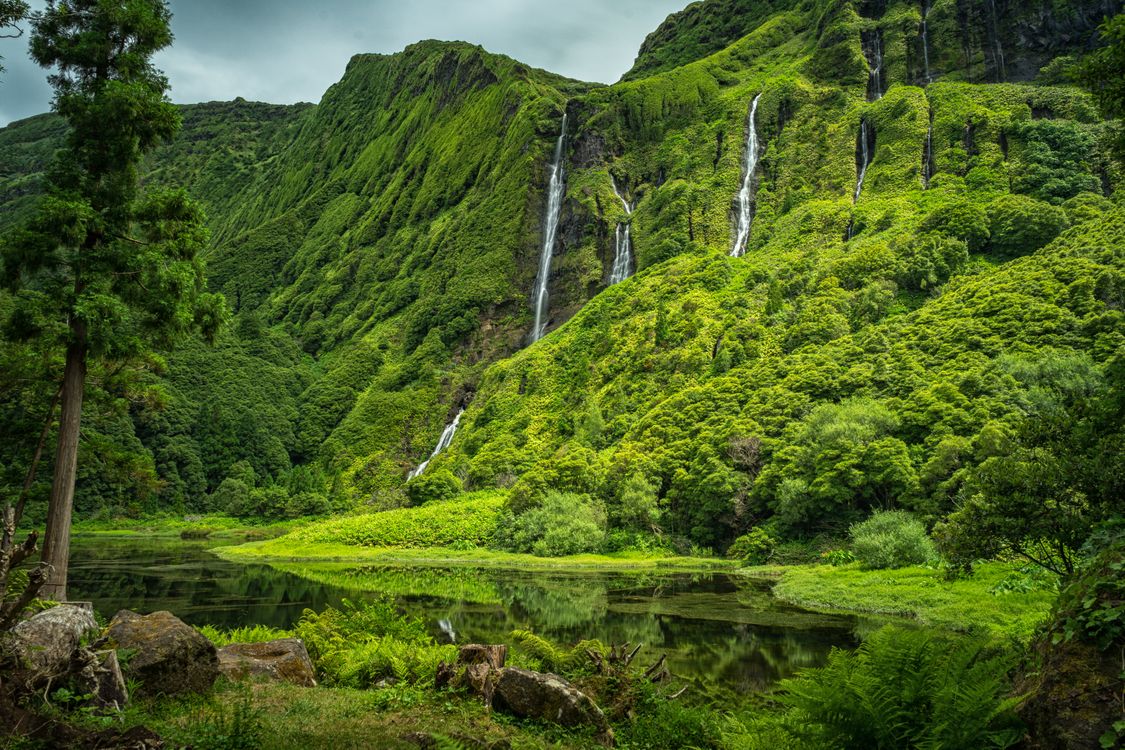
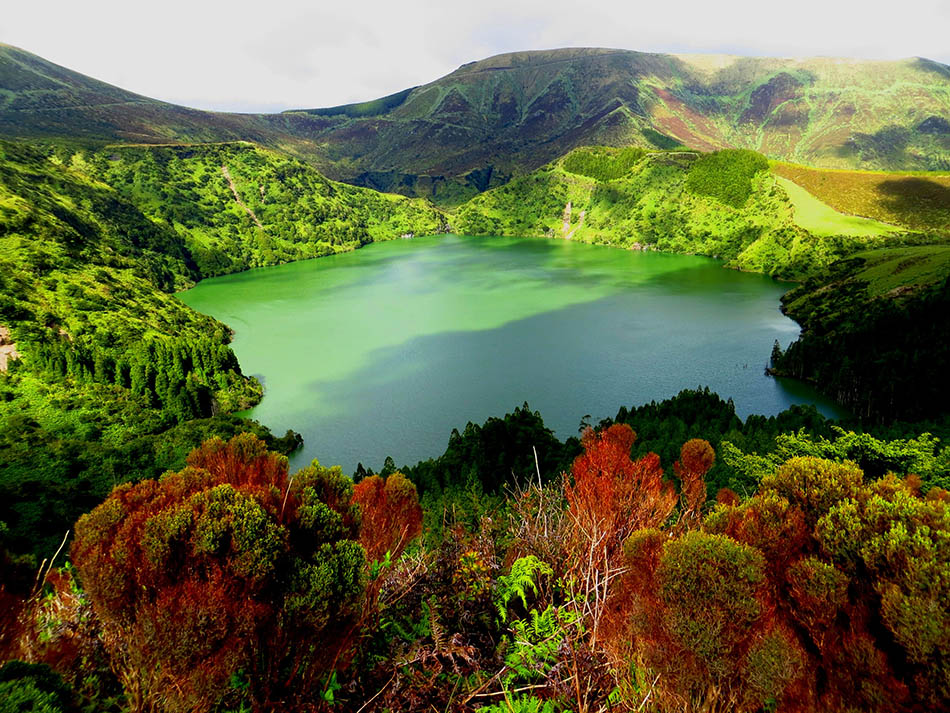
Flores Island is one of the islands in the Azores Archipelago’s western side. This island is rich in natural beauty, with craters, lakes, cliffs, bays, fajãs, forests, vistas, natural pools, and so on.

It is hard to arrange a path along the island’s shoreline due to its orography. As a result, it is best to start in Santa Cruz das Flores, the main city, and explore the island for at least two or three days.

It is best to tour the interior, where there are various vistas and two lagoon groups, and the southern section of the island on the first day, and save Santa Cruz das Flores, the island’s capital, for the following day. There, visitors may visit the Casa Pimentel de Mesquita House Museum, the Flores Museum, the Igreja Matriz de Nossa Senhora da Conceiço Mother Church, the Baleia Factory, and the Enxaréus Grotto, as well as the Northern shore.

It is recommended to spend the third day only on hiking trails that run all along the littoral shore or down to the fajãs.


Although the original yellow flowers have been replaced by gladiolus, hydrangeas, and other alien species, the general environment of this 141 square kilometre island only reinforces why this Island is called Flores. When you arrive, you feel alone since you are in an abandoned location left to its own fate. It’s hardly unexpected, given the island’s population of fewer than 4,000 people.

Here you will discover quiet, relaxation, and the necessary interaction with nature to relieve stress. The island includes a large number of natural places, including various reserves. Seven volcanic lakes may be found in the centre area and in the neighbourhood of Morro Alto. The Rocha dos Bordes Formation and the Ribeira Grande waterfalls are also noteworthy.

Unlike the other Azores islands, there have been no known volcanic eruptions on the island, and its calderas are usually thought to be extinct. Flores (together with her smaller neighbour Corvo) is located on the western side of the tectonic plate boundary that separates the North Atlantic plate from the Eurasian plate (with the Azores Microplate squeezed in-between). The plates are gradually sliding apart.

Flores Island, Azores


The island is teeming with picturesque overlooks from which you may appreciate the island’s stunning sceneries in peace. Among the most popular are the Miradouro da Fajã do Conde and Miradouro da Caveira Viewpoints, both of which are located on the highway to Lajes; the Miradouro de Ladeira de Cima Viewpoint, which offers views of Ribeira da Cruz and Ponta do Caveira; and the Miradouro Pico da Casinha Viewpoint, which is located at 511 metres above sea level and offers views of the village of Santa Cruz, the Miradouro de Arcos Ribeira da Cruz Viewpoint, located in the island’s centre, offers views of a magnificent waterfall that cascades down through forest covered cascades, from which you can descend to the Nossa Senhora das Flores Chapel and the Lagoa da Lomba Lake, a 15-metre-deep circular lake teeming with frogs, toads, seaweed, and fish; the Miradouro Craveiro Lopes and the Miradouro de os Cambros Viewpoints provide views over the Atlantic Ocean with Corvos Island in the background, enclosing a wild bay that is a popular scuba diving location.


Pico’s volcanic island is dominated by a peak that rises to 2,350 metres in elevation. It is the second-largest island in the Azores, measuring 46 kilometres long and 16 kilometres wide.

The islands of Pico and Faial are divided by a 6 km long waterway. Divers will be able to see excellent underwater architecture as well as a variety of marine species: cetaceans and pelagic schools are the island’s pride and joy! They can be seen throughout the year. The best season to dive on Pico Island, however, is from June to September. Visibility is often perfect.

EXPLORING THE AZORES - DIVE Magazine

Dive spots are available to divers of all skill levels. Cachorro and Corais de Sao Caetano are ideal for novices or snorkelling. The most famous diving destinations are Condor, Princesa Alice, and Baixa Da Norte, however, they are exclusively for experienced divers.

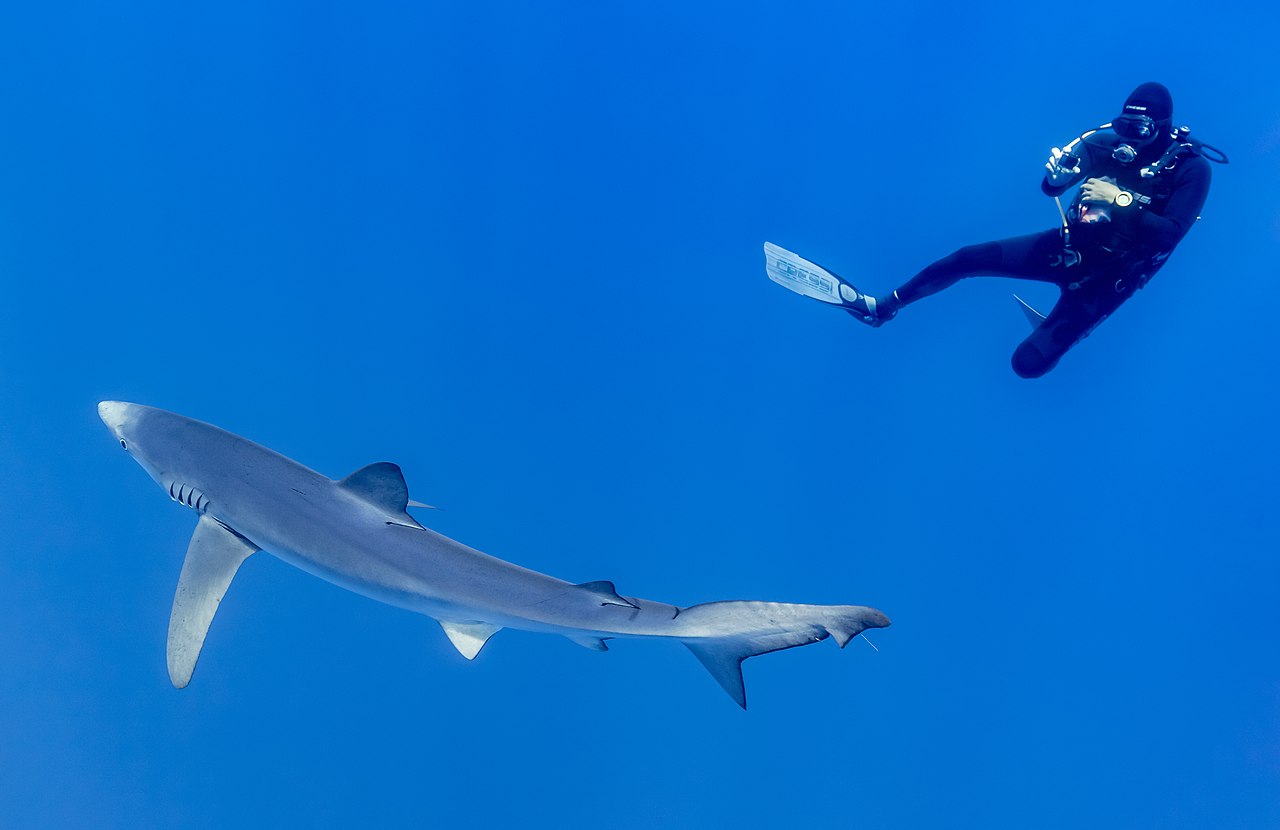
One of the most popular activities on the island is diving with blue sharks, one of the fastest fish in the world, being one of the few places where it is possible to do so.