Ferreira do Zêzere sits between hills and water, offering a slow and beautiful escape shaped by the Zêzere River, the Castelo de Bode reservoir, and the soulful village of Dornes.
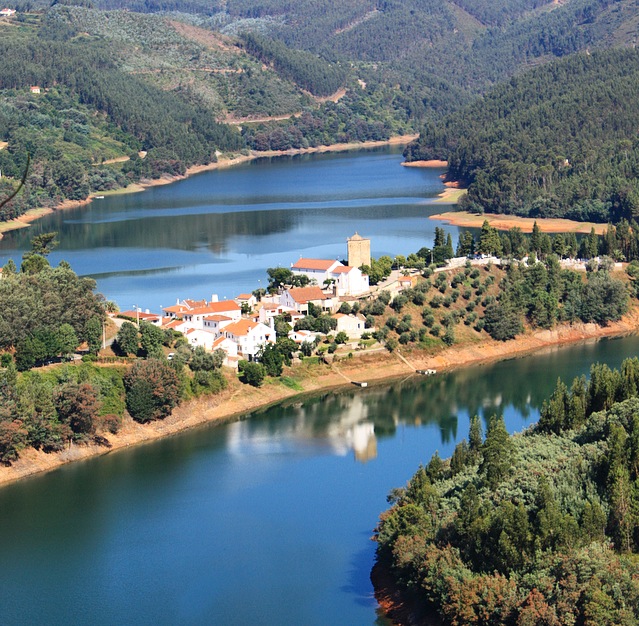


Ferreira do Zêzere sits between hills and water, offering a slow and beautiful escape shaped by the Zêzere River, the Castelo de Bode reservoir, and the soulful village of Dornes.
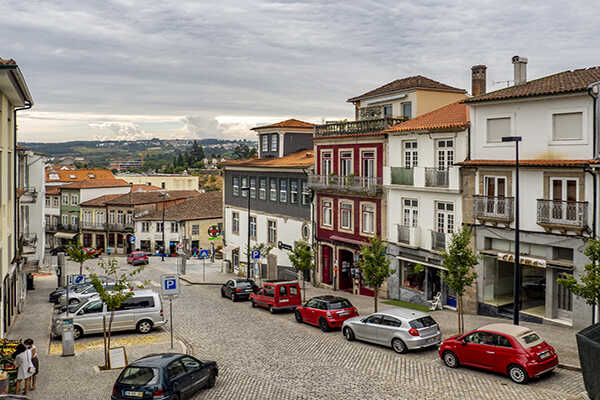
Vila Real, perched above a cliff, protects majestic homes with coats of arms, Manueline windows, and typical wrought-iron balconies.
It is a historic city situated at the junction of the Rivers Corgo and Cabril, surrounded to the west by the Alvão and Marão Mountains and to the south by the Serra de Montemuro. It is an inland city with a waterfront avenue that spans a deep ravine where the River Corgo flows.
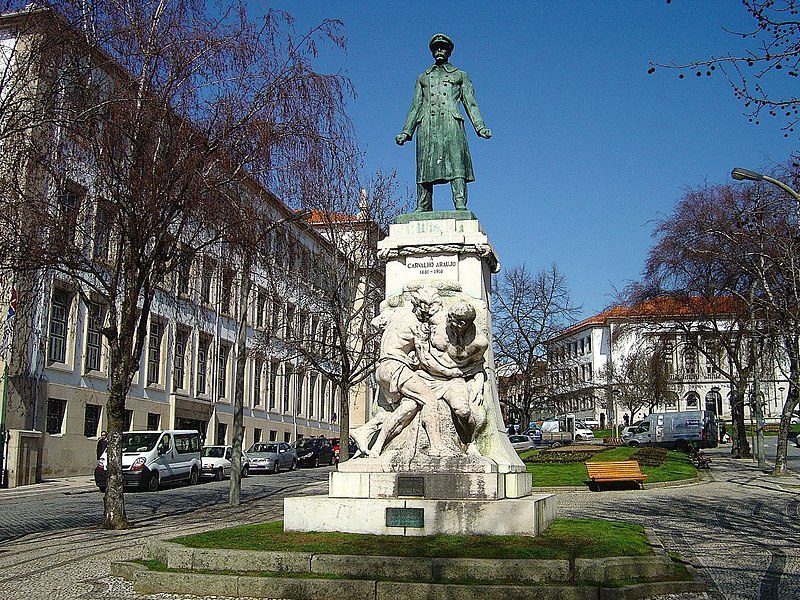
The city’s main thoroughfare, Avenida Carvalho Araújo, is surrounded by traditional cobblestone walkways and leads to the 19th century Town Hall structure at one end. The Gothic Cathedral is a short distance away, as is the Tourist Office, which is housed in a 16th century home with Manueline windows.
Continue walking between Avenida Carvalho Araújo and the waterfront avenue, via majestic homes and shopping lanes, to reach Vila Real’s liveliest and most typical neighbourhood. The Misericórdia Church and the Clérigos Church, the latter a masterwork by Italian architect Nicolau Nasoni, are both located here. Take a look at the iron railings on the balconies and the granite-framed windows that constitute a gallery of authentic Portuguese civic architecture.
Vila Real is well-positioned to explore the little-visited Parque Natural da Serra do Alvao, with its green valleys and towering mountains, from where good views can be had from the Miradouro de tras-do-cemiterio.
Vila Real’s strategic location at the crossroads of the Douro Valley and Trás-os-Montes provinces in the heart of northern Portugal has helped it to play an essential part in the region’s economy over the ages.
It was the first town in Portugal to install electricity in 1895.
The church of São Pedro in Rua da Portela, built-in 1528, has a beautiful Baroque façade and an interior decorated with rare 17th-century azulejo glazed tiles.
The Dominican monastery of São Domingos, built for King João I in 1427, is all that survives of the town’s centrally positioned Gothic church.
The ancient rock temple of Panóias, located 5 kilometres north-east of Vila Real, was where the Romans sacrificed animals to their gods.
Bisalhães, a small village 6 kilometres to the west, is well-known for its distinctive black and dark-grey pottery, which is coloured by wood smoke during slow firing. These durable pots are used for storing oil and olives, transporting water, and cooking.
The Solar de Mateus, located barely 3 kilometres from Vila Real, is one of Portugal’s most well-known country manor residences. The house, which was built in the 18th century and belonged to the Count of Vila Real, appears on the label of every bottle of Mateus Rosé wine.
Places to visit: 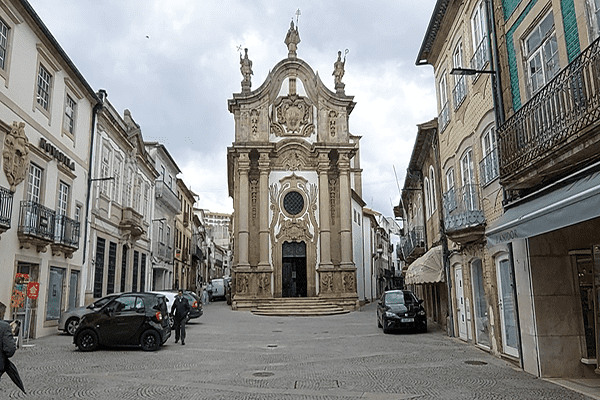
Cathedral of Vila Real
St. Peter’s Church
St Paul’s Church / New Chapel
Mateus Palace
Museums: Vila Real Ethnographic Museum
Tavira is a small town on the Algarve coast of Portugal. It crosses the Gilão River, which flows into the sea through the Ria Formosa Natural Park’s inlets and lagoons. Tavira Island includes a large, sandy beach as well as salt pans where flamingos, spoonbills, and other wading birds can be found. Tavira is an ancient Roman seaport that was formerly occupied by the Moors, and a town famed for carpet making and tuna fishing. Tavira, like many other cities in Portugal’s southern region, was largely damaged by the Great Earthquake of 1755, therefore many of its magnificent buildings date from the 18th century.


The town, which is located on the Gilão River, welcomes visitors to explore a maze of cobblestone alleys, ancient white-washed houses, and dozens of churches, many of which feature stunning azulejos, the traditional blue and white tiles popular in Portugal. The Ria Formosa Natural Park protects waterways, mudflats, bird sanctuaries, and salt pans to the south of the city.
Tavira’s old castle lies in partial ruins, yet still offers excellent vistas. A magnificent garden may be found within the castle walls. You may enjoy even greater views of the city by climbing up old stone stairs within the walls. Another attraction: a camera obscura in the historic water tower close to the castle provides tourists with a 360-degree virtual tour of the city. The tombs of seven knights killed by the Moors are housed at the Santa María do Castelo Church.

Head to the dock at Quatro Águas. Catch a ferry to one of Portugal’s most beautiful beaches. On the island of Tavira, you’ll find a long stretch of white sand beach bordered by dunes, a half-dozen restaurants serving fresh seafood, tropical-style outdoor bars, and a smattering of sellers selling handicrafts at reasonable prices.
In the vicinity, there are world-class golf courses as well as excellent snorkelling and scuba diving.
The former fishing camp Arraial Ferreira Neto, where tuna fishermen used to live, is now the hotel Vila Galé Albacora. Their lodging has been transformed into a hotel and is located in the Ria Formosa Natural Park. The ancient church now hosts weddings and christenings, while the former bakery is now a modest tuna industry museum.
Sign up for a boating adventure with one of the many firms that provide excursions to try your hand at fishing, including for marlin and sharks. Make the drive only a few miles outside of Tavirato Praia do Barril if you’d like to learn more about the area’s fishing history. Rows of rusty anchors have been laid to rest on this lovely beach. The Anchor Cemetery is more than just a beautiful photo op; it pays special tribute to the men and women whose lives were inexorably linked to the sea.
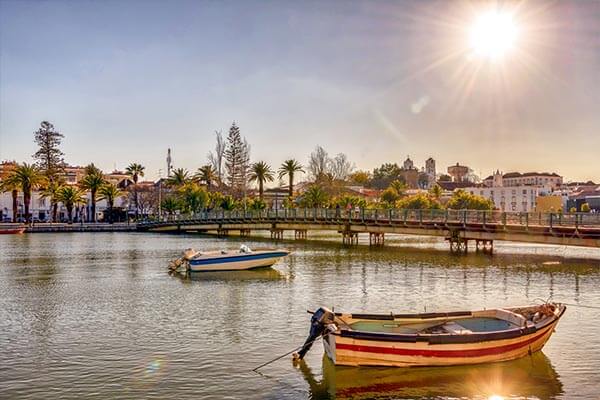
Tavira is a great place to sit in a plaza or a riverbank café with a cup of freshly pressed coffee and do some serious people-watching. InPraça da República, near the Mercado da Ribeira, to the left of the Roman bridge, and on Rua Borda d’gua da Assêca, to the right of the bridge, there are various cafés with outdoor seating.
Praia de Cabanas is one of the wildest strands in the Algarve, with more than 7km (4.3mi) of dune-backed, resort-free sand: imagine a long sand spit, littered with millions of shells, open to the Mediterranean on one side and overlooking the Ria Formosa waterfowl preserve on the other. It’s one of the few beach segments in the Algarve that is guaranteed to be crowd-free even during peak season, and it’s only accessible by boat from Tavira.
Praia Verde
Praia Verde, lapped by calm waves, dominates the middle of a seemingly endless white strand that stretches from the Ria Formosa reserve’s end to the Guadiana River on the Spanish border. In the beachside parking lot, there’s a tiny seafood restaurant where the crowds congregate. Even in the busy season, stroll a few hundred metres east or west down the sand and you’ll discover unoccupied locations where you may drape a towel and be alone.
Praia da Ilha de Tavira

© Parallax Visual Media / Alamy Stock Photo
Tavira’s main beach is a long stretch of white sand with a dune-backed backdrop, sprinkled with a few restaurants and seaside shack-bars. Even when the town is crowded, you’ll soon find a spot to yourself if you go away from the main area. The beach is located at the end of a long sand spit island that is separated from Tavira by the Ria Formosa lagoon. The only way in is by boat, which departs from the Cais das Quatro Guas jetty near the Gilo river mouth.
Igreja da Misericórdia

© dpa picture alliance / Alamy Stock Photo
It’s nestled away down a side street off Praça da República, with a sombre neoclassical front — little wonder so many people stroll right past it. Step inside, however, and you’ll find one of the Algarve’s most impressive church interiors: walls adorned with magnificent 18th-century azulejo tiles depicting scenes from Christ’s life; gargoyle-topped columns rising to the ornate ceiling; and a series of exquisitely carved, gold-glistening altar baroque pieces.
Castelo de Tavira
From the craggy battlements of this Moorish citadel, take in panoramic views of the cityscape, from terracotta roofs of Tavira to the meandering Gilão river and distant ocean. The castle is one of Europe’s oldest, with ruins dating back to the 8th century BCE in Phoenician times. The current structure shows substantial restoration during the Portuguese Reconquest – new defences erected on the Islamic walls in the 13th century – which accounts for its picturesque appeal.
The Algarve region had outposts of Moorish caliphates, one after the other, administered from Cordoba, Seville, and Granada in modern-day Spain for more than 500 years. Tavira’s modest museum, housed in the remains of one of the Algarve’s few surviving Islamic structures, offers light on the town’s Muslim history with exhibitions, films, and recovered objects: seek for ceramics and architectural elements.
This convent church’s humble whitewashed exterior conceals a sumptuous interior – all paid for by a wealthy lay brotherhood, reflecting Tavira’s prosperity in the 18th century, when it was one of Iberia’s most significant trading ports. Step inside and crane your necks at the rococo carvings, coloured marble, and Murillo-inspired trompe l’oeil ceiling painting of the Virgin and Child. The gleaming altar items are some of the best in all of southern Portugal.
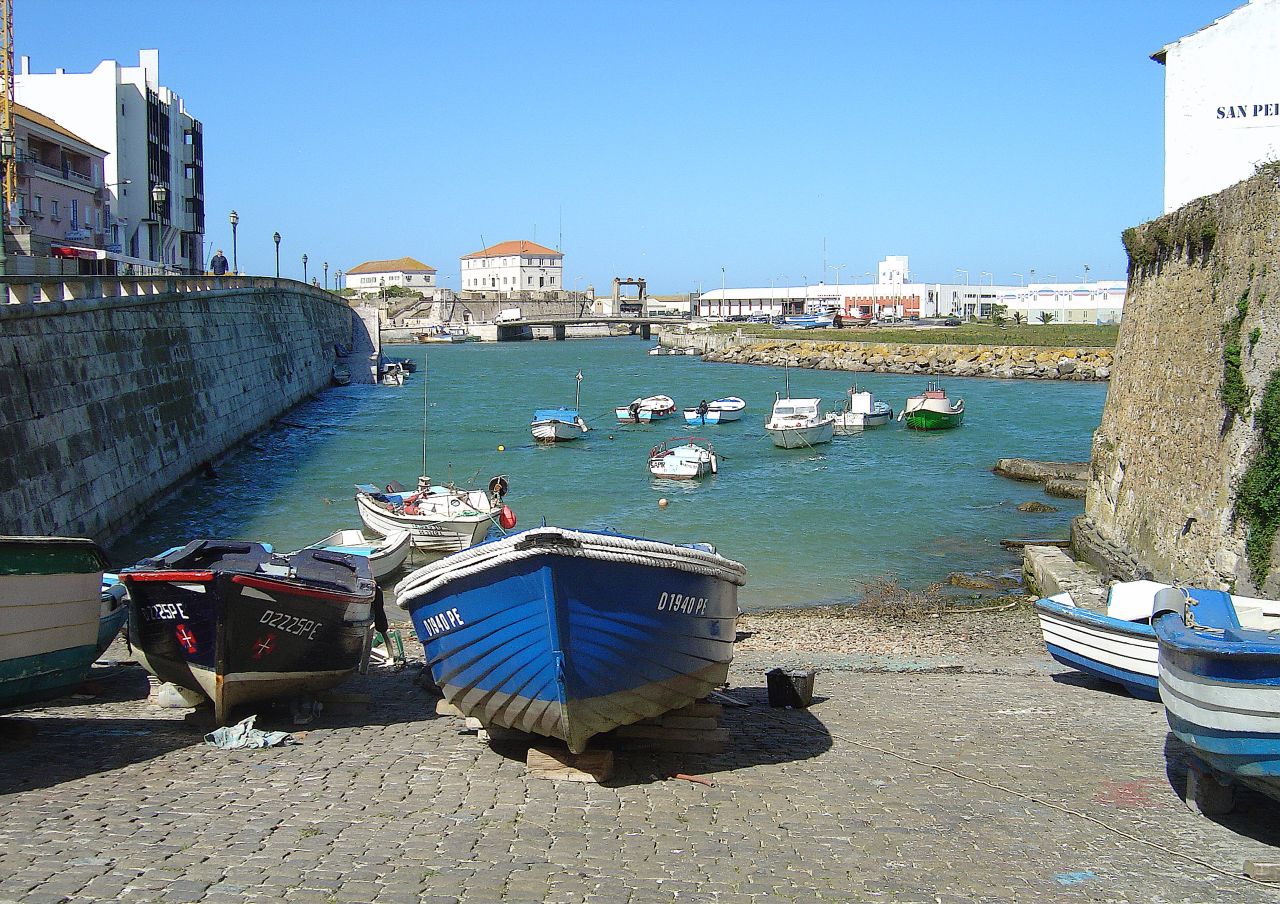
You must take a stroll around the historic centre of Peniche before heading to the beach on your trip to the city. The Peniche Fort, in addition to the Sanctuary of Nossa Senhora dos Remédios, the São Pedro and Misericórdia Churches, is a must-see attraction. It was constructed in the 16th and 17th centuries to protect the coastline, together with the Fort on Consolaço beach and the fort on the island of Berlengas, which were both constructed at the same time. It has played a significant role at different moments in Portuguese history, but its most recent use was as a political prison under the Estado Novo dictatorship, where it housed some of the most prominent public figures in the country’s anti-Fascist struggle. Because it is presently serving as the Peniche City Museum, you will be able to learn all about it once you visit.
In addition to fishing, which has traditionally been a major source of revenue for the locals, Peniche is well-known for the technique of bobbin lacework, which was developed by the women while the men were away at sea.

The water continues to be one of the most significant points of interest and activity, and the beaches of Peniche are particularly well-liked even though the bays of Consolaço and Baleal are ideal for a family day out, surfers and bodyboarders from all over the globe flock to this part of the island’s west coast for the Supertubos (tubular Supertube waves) off Medão Grande Beach. After competing in a national contest, it was named one of “Portugal’s 7 Wonders.” It is the site of the biggest global surf championship, the Rip Curl Pro Portugal, which takes place in conjunction with Lagido Beach and is a stop on the World Surf League’s World Surf League Tour.
A short boat trip away lies the Berlengas Nature Reserve on the island of Berlengas. Because of its clear waters, it is an excellent diving destination, since it is a natural haven for marine flora and animals.
Things to do and see
The Municipal School of Bilros Lace in Peniche, Portugal, was established in 1987 with the goal of preserving the technique of weaving bobbin lace. It is housed in the Peniche Tourist Office building, in the heart of the city, and has become a point of reference in the protection of the region’s cultural heritage.
Built by D. João III in 1557 and completed in 1645 by D. João IV, who considered it the main key to the Kingdom from the sea, it stands out in the Peniche Fortress, in addition to the typical star design, the Baluarte Redondo – the first fortification built on the Peniche peninsula – the Watch Tower, and the chapel of Santa Bárbara. This property saw its space used in a different way according to the needs and historical vicissitudes of each era. Military square of vital strategic importance until 1897, shelter for Boer refugees from South Africa at the beginning of the 19th century. XX, the residence of German and Austrian prisoners during the First World War, political prison of the Estado Novo between 1934 and 1974, temporary accommodation for Portuguese families arriving from the former overseas colonies in 1974, and from 1984 onwards housing the Municipal Museum, until November 20, 2017, the Peniche Fortress assumes a special relevance as an important document of a historical diachrony of a local and national nature.
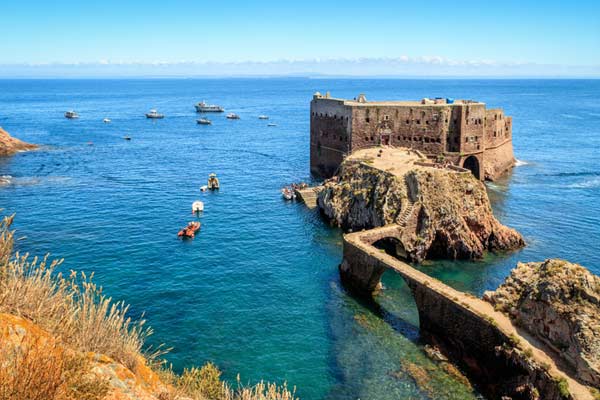
Built-in 1651 by order of D. João IV and finished in 1656, the Fort of S. João Baptista is located on Berlenga Island. The most notable war occurrence in the island’s history occurred in June 1666, when it was built to prevent the seizure of the island by North African corsairs or foreign forces. On that date, the Fort of S. João Baptista was besieged by a Spanish fleet led by D. Diogo Ibarra, which consisted of fourteen ships and a caravel. Defended by a small garrison of fewer than twenty men and with only nine pieces of artillery at the time, this fortification led by Cape Avelar Pessoa managed to withstand the fierce enemy bombardment for two days, as well as causing significant casualties among the besieging forces. This resulted in a high number of deaths, one ship sunk and two others severely damaged, compared to one dead and four wounded Portuguese. The Fort of S. João Baptista was eventually surrendered due to a lack of supplies and ammunition, as well as the desertion of one of the troops who reported the catastrophic position of the Portuguese garrison to D. Diogo Ibarra.

The Church of S. Leonardo located in the old town of Atouguia da Baleia is the oldest Christian temple in the county, dating from the 17th century. XII. This Gothic-style church, consecrated to S. Leonardo, was built, according to tradition, using the bones of a whale that had washed up on the coast. Its façade has a beautiful ogival portal topped by capitals with stylized representations of mythological beings. Also noteworthy is the rose window, the bell tower, topped off at the top by two curved-edged pyramids, and, at the back, an apse crowned by a row of merlons. The interior of the church is divided into three naves, by an imposing ogival arcade. In the chancel pontificate the 16th century altarpieces and paintings, in addition to the tomb of D. Álvaro Gonçalves de Ataíde, 1st Count of Atouguia.
The Church of Nossa Senhora da Conceição, in Atouguia da Baleia, dating from the end of the 19th century. XVII is a temple of Baroque style, attributable to the architect João Antunes, built with the alms of the population and some figures of the Portuguese nobility of the 17th century, such as Queen Maria Sofia Isabel of Neuburgo, second wife of D. Pedro II. Inside, with a single vaulted nave, the main chapel is covered in marble, in different shades (from the twisted colonnade of the altarpiece to the medallions on the sidewalls and ceiling), the gilded altar, where the image of the patron saint, a 17th-century piece, and the holy water fonts, made of Arrábida marble, carved in the shape of a shell.
The Church of S. Pedro is located in the heart of the historic centre of Peniche, constituting the largest temple in the county. This church, dating from the end of the century. XVI is divided into three large naves. In the side aisles there are several altars consecrated to deities such as Nossa Senhora da Boa Viagem, Senhor do Bonfim, or S. Pedro de Alcântara. In the central nave, the baroque magnificence of the chancel consecrated to S. Pedro stands out, decorated with gilded carvings and boasting beautiful back columns, in addition to several 18th-century paintings depicting scenes from the life of the patron saint. It is undoubtedly the most imposing church in the county.
The Misericórdia Church dates from the beginning of the 19th century. XVII, belonging to the Santa Casa da Misericórdia de Peniche. This church, attached to the former hospital of the aforementioned institution, boasts a rare decorative beauty inside, visible in the 17th-century tile panels, in the oil paintings, some of which are large, which decorate the walls with scenes alluding to evangelical events, and on the ceiling. decorated with coffers, illustrating scenes from the Life and Passion of Christ.

The Chapel of Nossa Senhora dos Remédios, located along the coast at the western end of the Peniche peninsula, forms the basis of a Sanctuary dedicated to the Marian cult. The date of construction of this church is unknown, but it is assumed that it was probably built in the 19th century. XVI. According to legend, the image of Our Lady was found in the 19th century. XII hidden in a small cave, located in the place where the chapel is today, having started, from that date, the cult of the so-called Senhora dos Remédios. The importance of this cult translated into annual pilgrimages, the candles, motivated the creation of a sanctuary in the 19th century. XVII, composed of the aforementioned church and a border square lined with houses in which the hermit and the stewards lived, the pilgrims sheltered, and the stables were set up.

Possibly dating from the 19th century. In the 18th century, the Touril, as the name implies, seems to correspond to a structure used as a stage for bullfighting, perhaps by the idle royal family and nobility, often hosted in the neighbouring Paço da Serra de El-Rei. From this structure, located in the square opposite the church of Nossa Senhora da Conceição, in Atouguia da Baleia, several stone pillars can still be observed, embedded in the ground, delimiting the “arena”, presenting the traditional three holes. The Touril de Atouguia da Baleia corresponds to one of the rare and, at the same time, oldest specimens of the genus existing in Portugal.
Consolação beach
Gamboa Beach
Cova de Alfarroba beach
Peniche de Cima beach
Sao Bernardino beach
Baleal Beach Camping
Baleal do Sul beach
Praia do Medão / Supertubos
Praia do Molhe East
Praia do Porto de Areia Sul
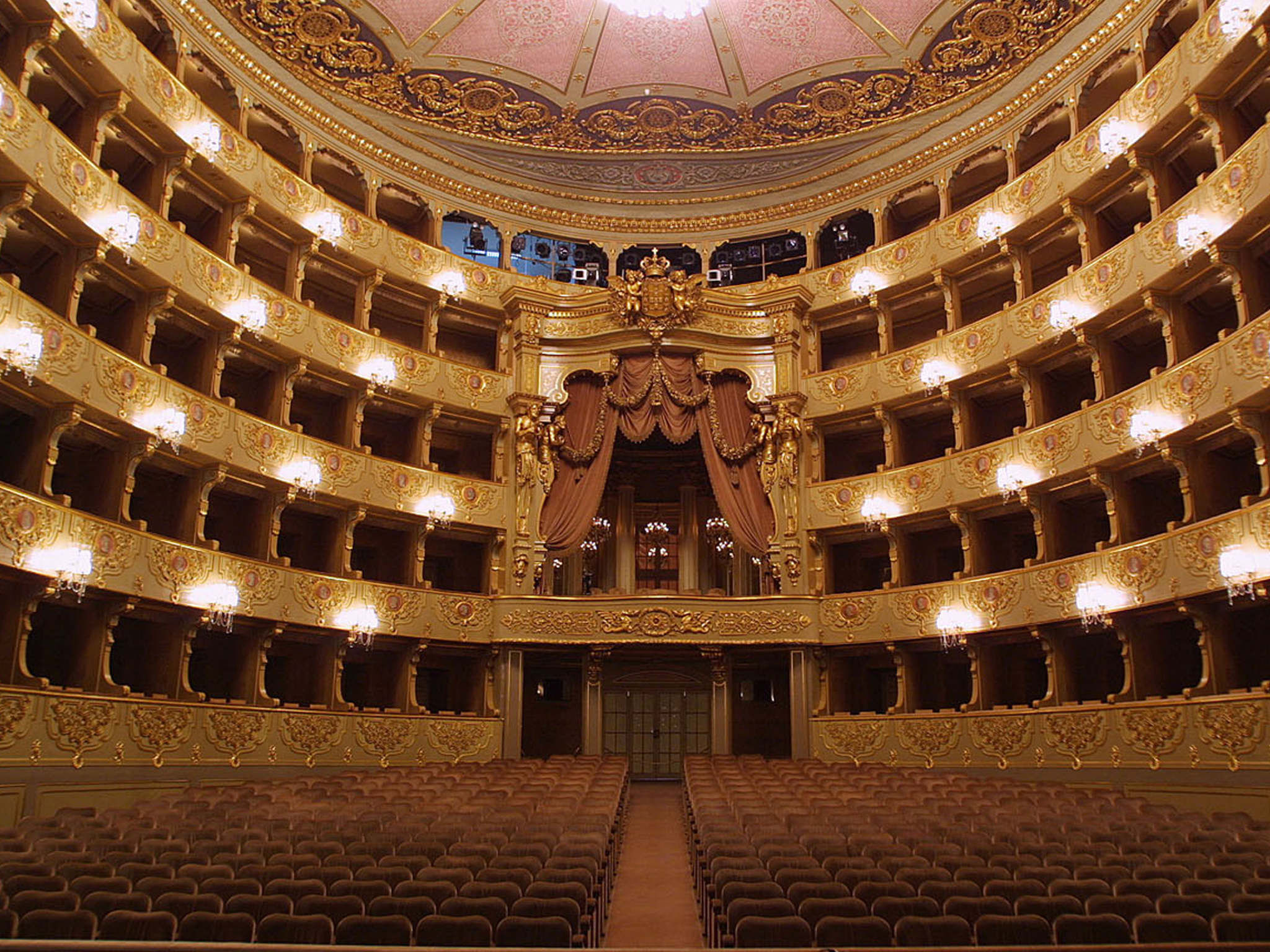
The Teatro Nacional de São Carlos, situated in the heart of Lisbon’s historic Chiado area, stands as an emblem of Portugal’s rich cultural heritage. Inaugurated on June 30, 1793, by Queen Maria I, it replaced the Tejo Opera House, which succumbed to the devastation of the Lisbon earthquake in 1755. Its 18th-century neoclassical architecture, influenced by Italian design, was rightfully declared a National Monument in 1928, underscoring its significance in the nation’s artistic legacy.
 As the sole Portuguese venue dedicated to producing and staging opera, choral, and symphonic music, the Teatro Nacional de São Carlos holds a unique position in the country’s cultural landscape. Within its hallowed halls, patrons are treated to a diverse array of performances, ranging from grand operatic productions and symphonic concerts to intimate recitals and chamber music.
Central to the theatre’s artistic endeavours are its resident ensembles: the esteemed Coro do Teatro Nacional de São Carlos, established in 1943 as Portugal’s premier professional choral ensemble, and the Orquestra Sinfónica Portuguesa, founded in 1993. Together, these groups breathe life into the great operatic and choral-symphonic repertoire, captivating audiences with their virtuosity and passion.

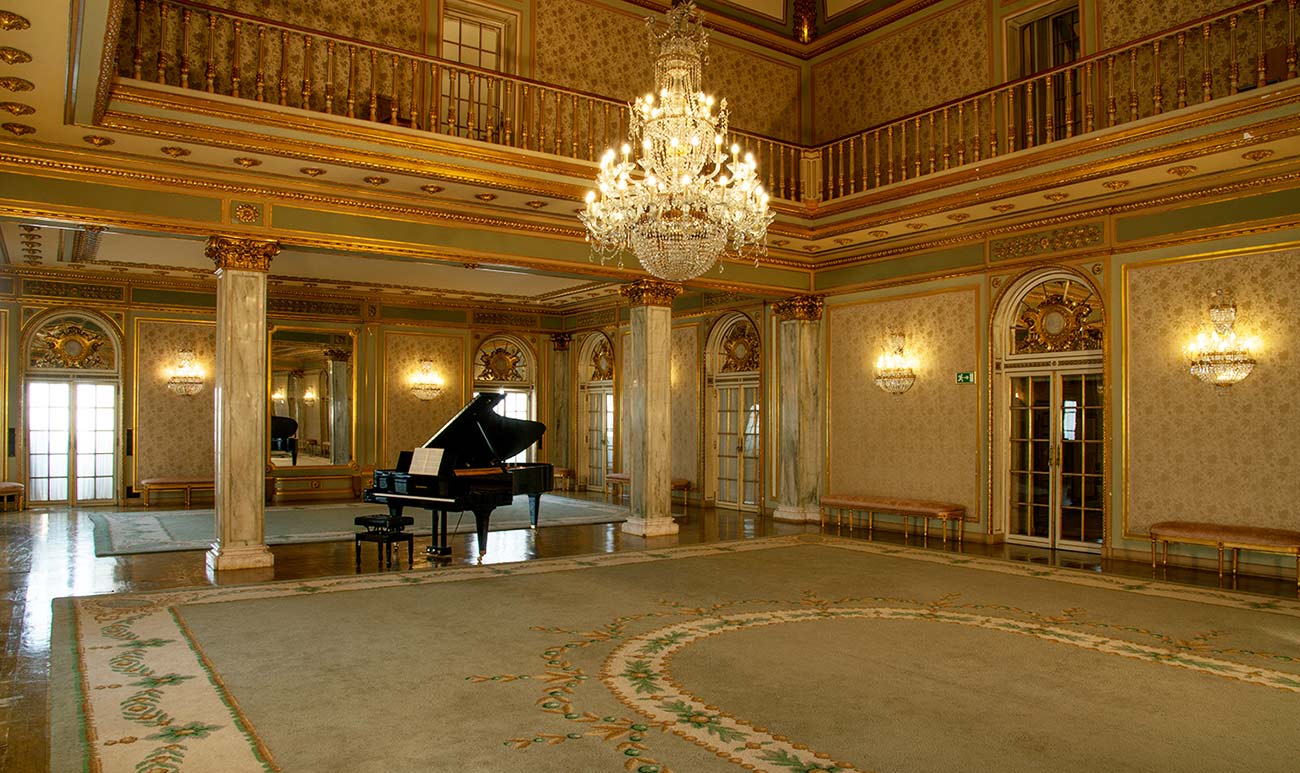
The theatre’s programming unfolds across three distinct spaces: the Main Hall, a grand stage where monumental productions and concerts take centre stage; the Salão Nobre, an elegant setting ideal for intimate performances such as recitals and chamber music; and the foyer, a vibrant hub for social gatherings and free-admission events, including chamber concerts and recitals.
Beyond its regular schedule, the Teatro Nacional de São Carlos serves as a dynamic cultural hub, hosting a myriad of events ranging from meetings and conferences to master classes and educational concerts tailored for schools and families. A highlight of its annual calendar is the Festival ao Largo, a month-long celebration held at São Carlos Square, just outside the theatre’s doorstep. Here, open-air performances spanning opera, theatre, symphonic music, and dance captivate audiences of all ages, fostering a spirit of inclusivity and cultural exchange.
Through its unwavering commitment to artistic excellence and community engagement, the Teatro Nacional de São Carlos continues to uphold its legacy as a bastion of culture and creativity in Portugal’s capital city.
Address: R. Serpa Pinto 9, 1200-442 Lisboa, Portugal
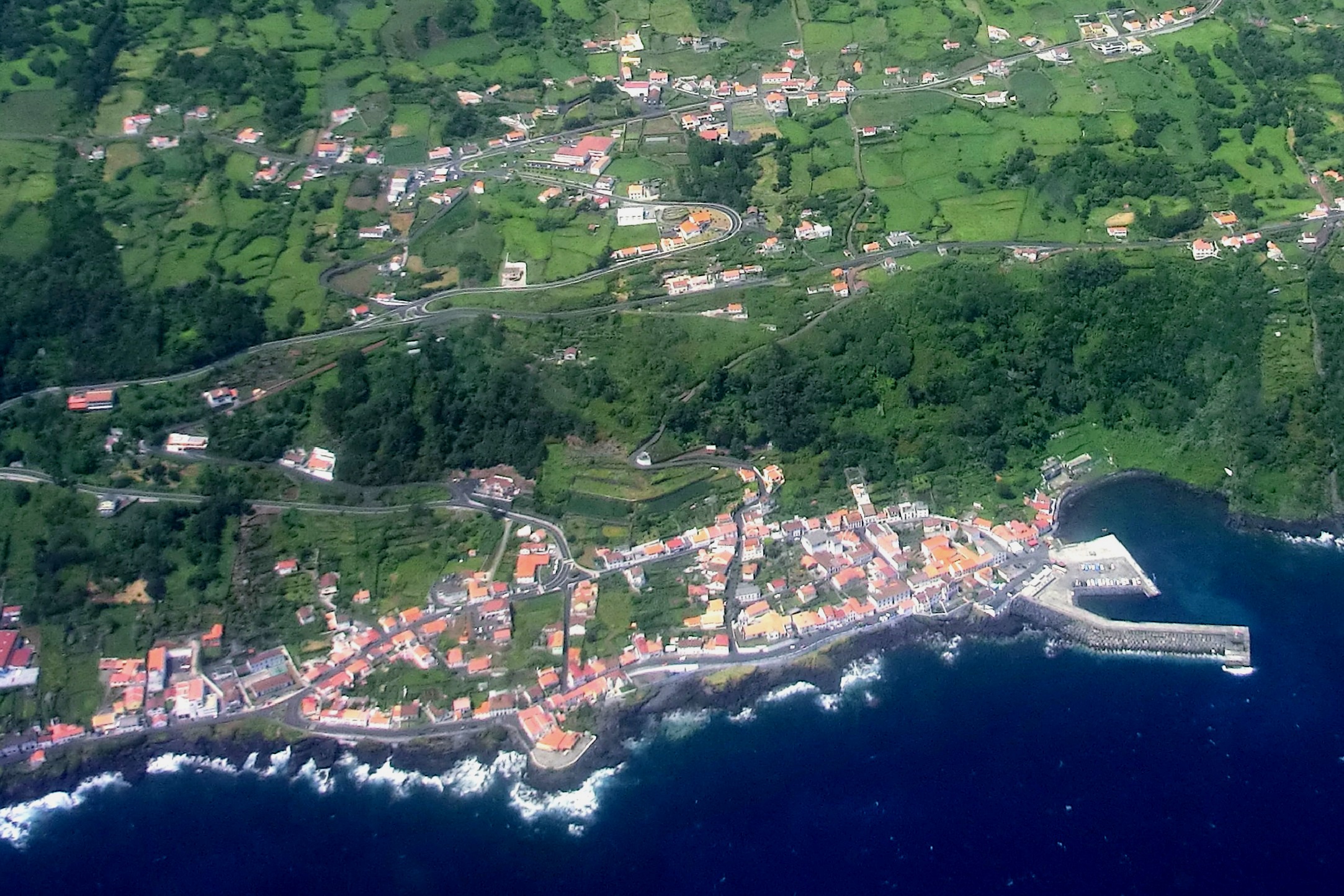

São Jorge is an island in the central group of the Azores archipelago that is part of Portugal’s autonomous territory. The middle group is sometimes referred to locally as part of the Triangulo (“Triangle”) group or simply “The Triangle” since it is separated from its nearest neighbours (Pico and Faial islands) by the 15-kilometre (9.3 mi) Pico-São Jorge Channel.
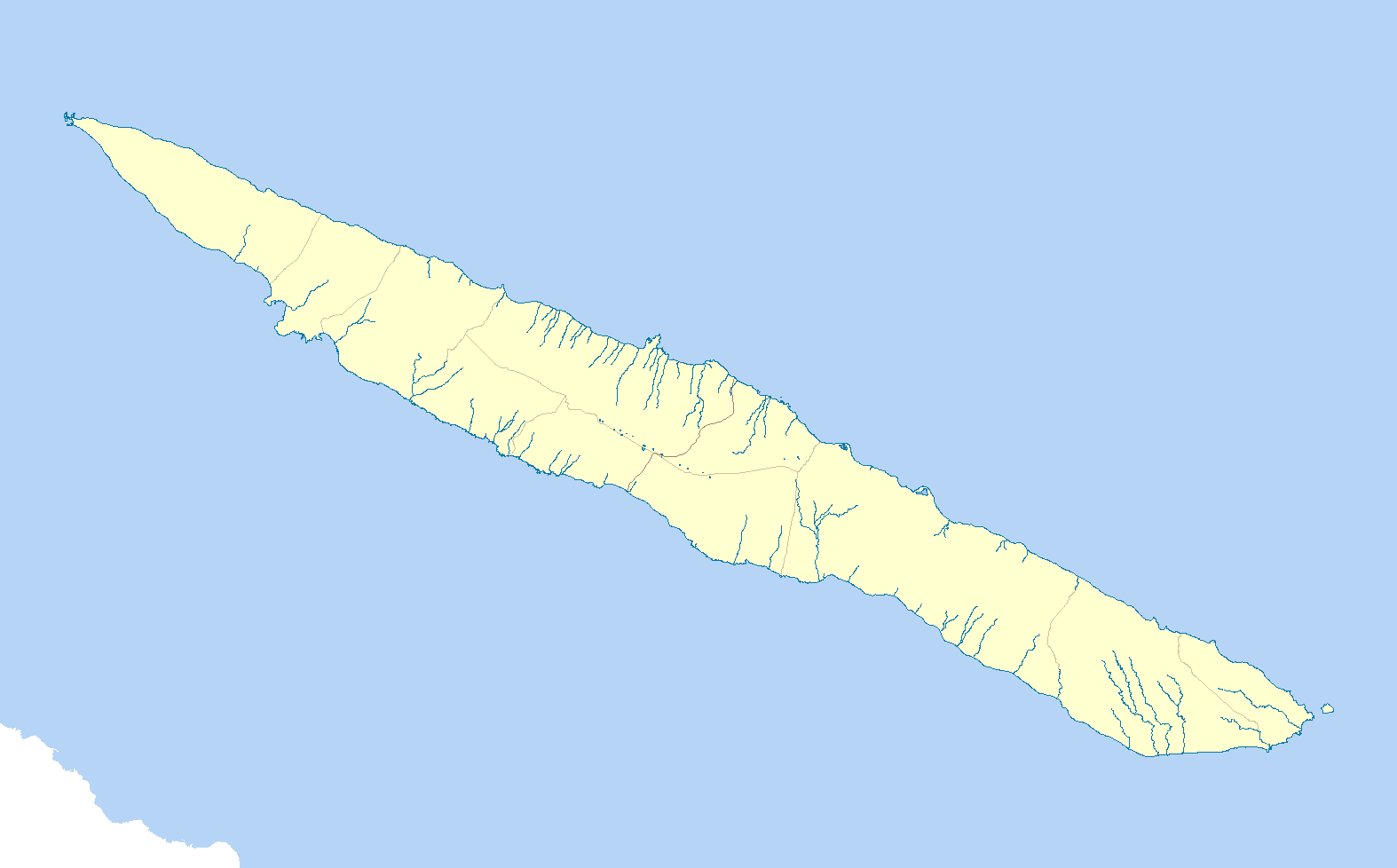
São Jorge is one of the Azores’ most beautiful islands! The core group of the Azores archipelago is a total surprise, with enchanting views of the surrounding islands of Terceira, Pico, Faial, and Graciosa. São Jorge is distinctive because of its geographical form.
São Jorge is a rather long, thin island with steep cliffs, with residents centred on various geological debris fields (fajs) along the north and south coasts; the island is 53 kilometres (33 miles) long and 8 kilometres (5.0 miles) broad, with a total area of 237.59 square kilometres (91.73 sq mi).
Things to do and see in São Jorge

The historical centre of Velas, the island’s principal town, is beautiful and peaceful, with a clear view of Mount Pico whenever you gaze out to sea. Stroll through downtown Velas, which has restaurants and bars, also visit the Jardim da República, a beautiful oasis in the city centre.
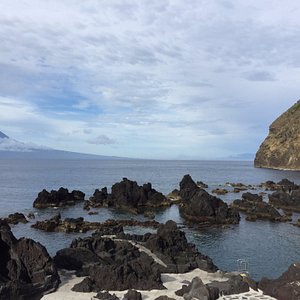
The natural swimming pools of Preguiça are located on the right side of the São Jorge Garden Hotel.
The Ponta dos Rosas, a group of distinctive tiny islands that dot the island shoreline, is located on the southwesternmost tip of São Jorge.

The Urzelina windmills, which face Pico Island, are a spectacular place to watch the sunset.
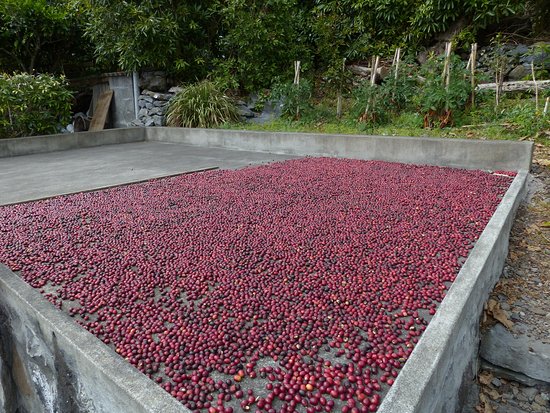
São Jorge has the only artisanal coffee farm in Europe! Descend down the steep hilly road to Fajã dos Vimes and experience the greatest coffee in the Azores at Café Nunes. You’ll also get the opportunity to explore the coffee plantations with the owner, who is quite friendly and hospitable. Make sure to buy a bag of coffee and support local businesses!
The Ponta do Topo islet, located at the island’s southeastern extremity, is a flat piece of ground not far from the beach. In fact, cows swim all the way there in the summer and then graze freely on the islet. Topo village also boasts a cheese factory, for which it is well known.

Book a tour of the São Jorge Cheese Factory to have a better knowledge of the Azores’ favourite cheese’s production process – learn what makes its flavour so distinctive and unique, so fiery! Even if you don’t want to do the complete tour, you may still go to the shop and buy the cheese (it is also available in every supermarket of the Azores).
Pico da Esperança, São Jorge’s highest summit at 1053 m (3,29 ft), offers 360-degree views of all four adjacent islands. You can get there by car, but you’ll have to walk to the very top of the mountain.
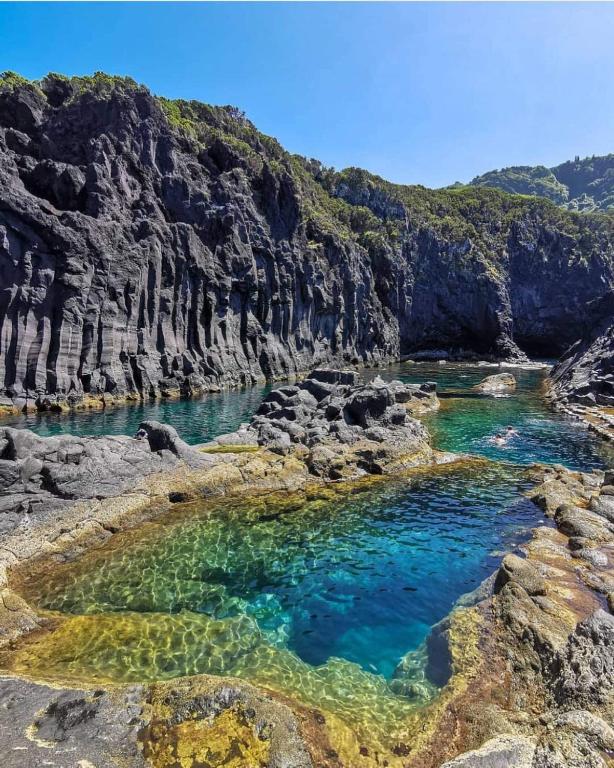
If you’re looking for the most stunning natural swimming pool on the Azores, head to Fajã do Ouvidor! The Poça Simão Dias dazzles and enchants since it is nestled among high volcanic cliffs. The contrast between the crystal clear water and the black boulders is breathtaking.

Another must-see in São Jorge is the lovely Faj dos Cubres, which can be reached by car. Not only can you see this fajã, but also the lake of the Fajã da Caldeira do Santo Cristo a little further away.
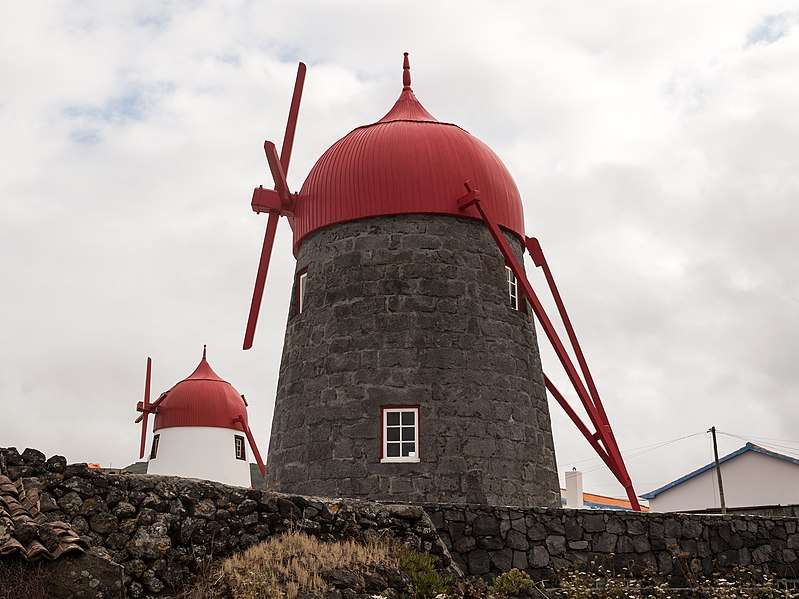
UNESCO has designated Graciosa, the White Island in the Azores, as a World Biosphere Reserve. This island has a distinct environment and a rich architectural past, making it a must-see Azorean destination. Graciosa is 12.5 kilometres long and home to around 4,000 people. It is part of the Azores Archipelago’s Central Groups, and its nearest neighbour is Jorge, making it an ideal location for island hopping. The White Island got its name from the white characteristics of Graciosa observed in Pedras Brancas (White Stones) and Serra Branca (White Hills).
What can you do in Graciosa?
Make sure to hike on “official” routes maintained by the Azores Tourism Board for your own safety. These are well-maintained and marked with hiking markers so that people do not get lost.


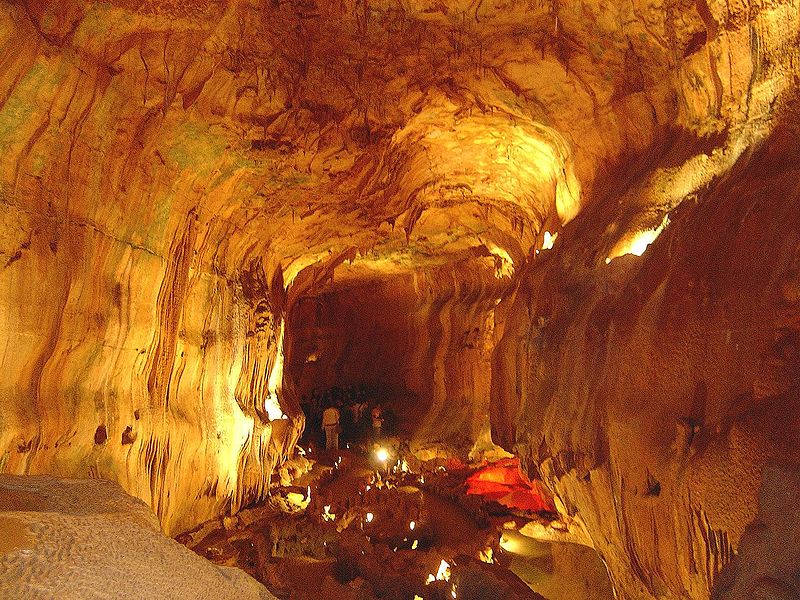
It is the biggest cave found in Portugal. The cave was first entered by humans in 1947. The Moinhos Velhos Cave (Portuguese: Gruta de Moinhos Velhos) is one of the most notable cave systems in the Portuguese Estremadura Limestone Massif, stretching for around 9 kilometres.

It is distinguished by the presence of two fóssil paragenetic major conduits of approximately one decametre in diameter with dendritic tributaries, as well as a series of semi-active channels in a dendritic pattern to the north and angulate to the south. The thickness of the intermediate zone ranges from 80 metres upstream to 60 metres downstream, with a drop of 100 metres in the fossil zone. Water flows through syngenetic passages from the northern to the southern quadrants, approaching the spring at Gruta da Pena.
In the formation of a cave system, four genetic stages may be identified. The first is represented by superficial phreatic galleries of modest diameter, the second by the Galeria Gémea paragenetic main conduit, the third by the Galeria Grande and its tributaries, and the final by the lower cave levels’ active and semi-active galleries.
This cave is home to various endemic trogobionts, including the ground-beetle Trechus lunai, the cave spider Nesticus lusitanicus, and several stygobionts, the most abundant of which is the isopod Proaellus lusitanicus.
It is 15 kilometres from Fátima in the village of Mira d’Aire, which is located on the right side of the N 243 road at the entrance of Serra d’Aire, heading towards Porto de Mós.
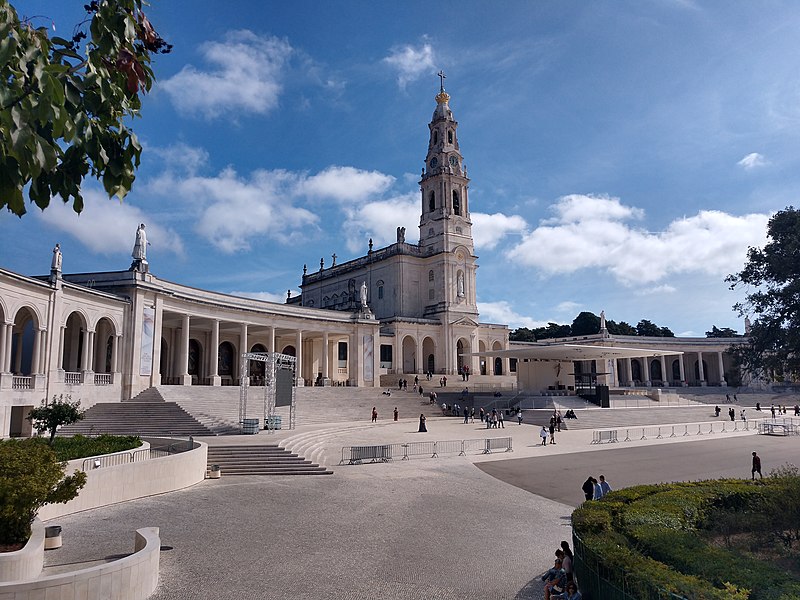

The civil parish has been inextricably linked to the Marian apparitions supposedly observed in 1917 near the Cova da Iria by three local shepherd children.
Later, the Catholic Church declared these occurrences “worthy of belief.” Beginning in 1918, a modest chapel was constructed on the location of the apparition, which is today known as Our Lady of Fátima, and a statue of her was put. Since then, the chapel and statue have been included in the Sanctuary of Our Lady of Fátima, a shrine complex that also houses two minor basilicas. Associated pilgrim amenities, including a hotel and medical centre, have also been constructed within and around the Sanctuary throughout the years. The city has developed a strong international reputation as a destination for religious travellers.
This charming city is located one hour from Lisbon and is surrounded by highland parks and stone-built villages. However, the spiritual city attracts the majority of travellers due to the marvels at the famed Sanctuary of Fátima.
The most popular periods to visit Fátima are on the 13th of each month between May and October when the apparitions took place. On these days, many Portuguese travel hundreds of kilometres to reach there. Many visitors to the sanctuary are dealing with terminal diseases or loss and are seeking religious advice. As a result, be courteous. Take no selfies and dress modestly.
Things to do at the Fátima Sanctuary
Place yourself in the main square.
The Sanctuary of Fátima’s main piazza is enormous! The ideal location to begin. It is larger than Vatican Square and can house thousands of people. You can get a sense of the magnificent Basilica of Our Lady of the Rosary and how vast, yet peaceful, the entire religious complex is.

Basilica of Our Lady of the Rosary
This Basilica, called in Portuguese “Basilica da Nossa Senhora do Rosário,” is a limestone church erected between the 1920s and 1950s. It has a 65-meter bell tower and a statue of Our Lady of Fátima at the church’s entrance. The church is designed in the Baroque style. The church’s interior features a 12,000-piece organ, 14 altars, and stunning stained-glass windows.
Apparitions Chapel
This chapel was erected on the spot where the three youngsters claimed to have seen Mary. It was finished in 1919, two years after the sightings. Mary purportedly informed the children that she wanted a chapel built in her honour there.
Light a candle
Lighting a candle is a religious highlight in Fátima. A candle may be purchased at the Chapel of Apparitions. It can be used to pray, establish an intention, or honour someone who has passed away.

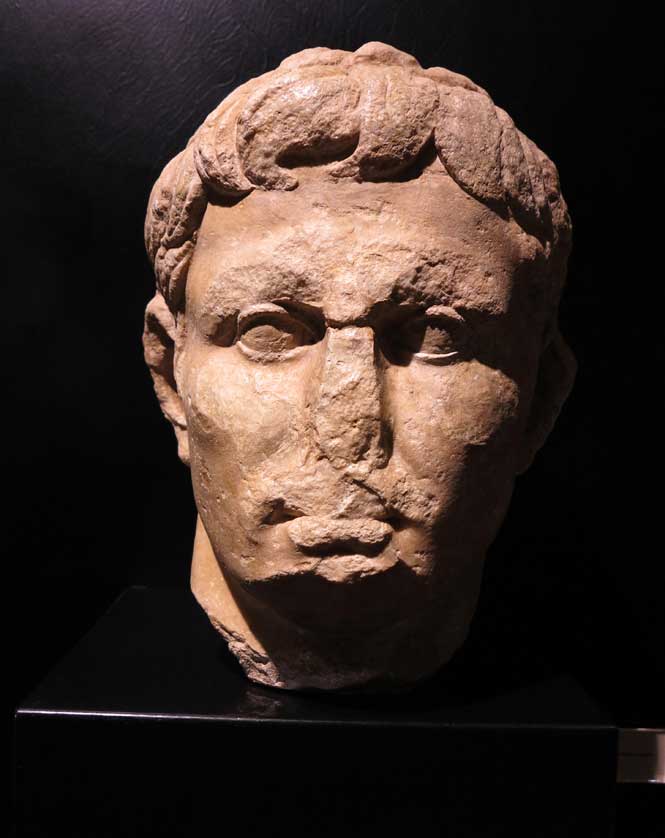
Portugal is home to a number of significant Roman ruins. Numerous museums around the country also have Roman coins, pottery, and mosaics. The majority of visitors to Portugal, not only those interested in history, will be delighted by what they discover.
Conimbriga was originally populated towards the end of the second millennium BC, during the Bronze and Iron Age periods, and continued to be inhabited during the Roman period, when Portugal was known as Lusitania.
Although only around 20% of the whole historical, urban area has been explored, the ruins provide an enthralling glimpse into life and culture during the Roman conquest of Portugal.
There are mosaics, walls, baths, and a great museums to visit, the Museu Monográfico de Conímbriga.

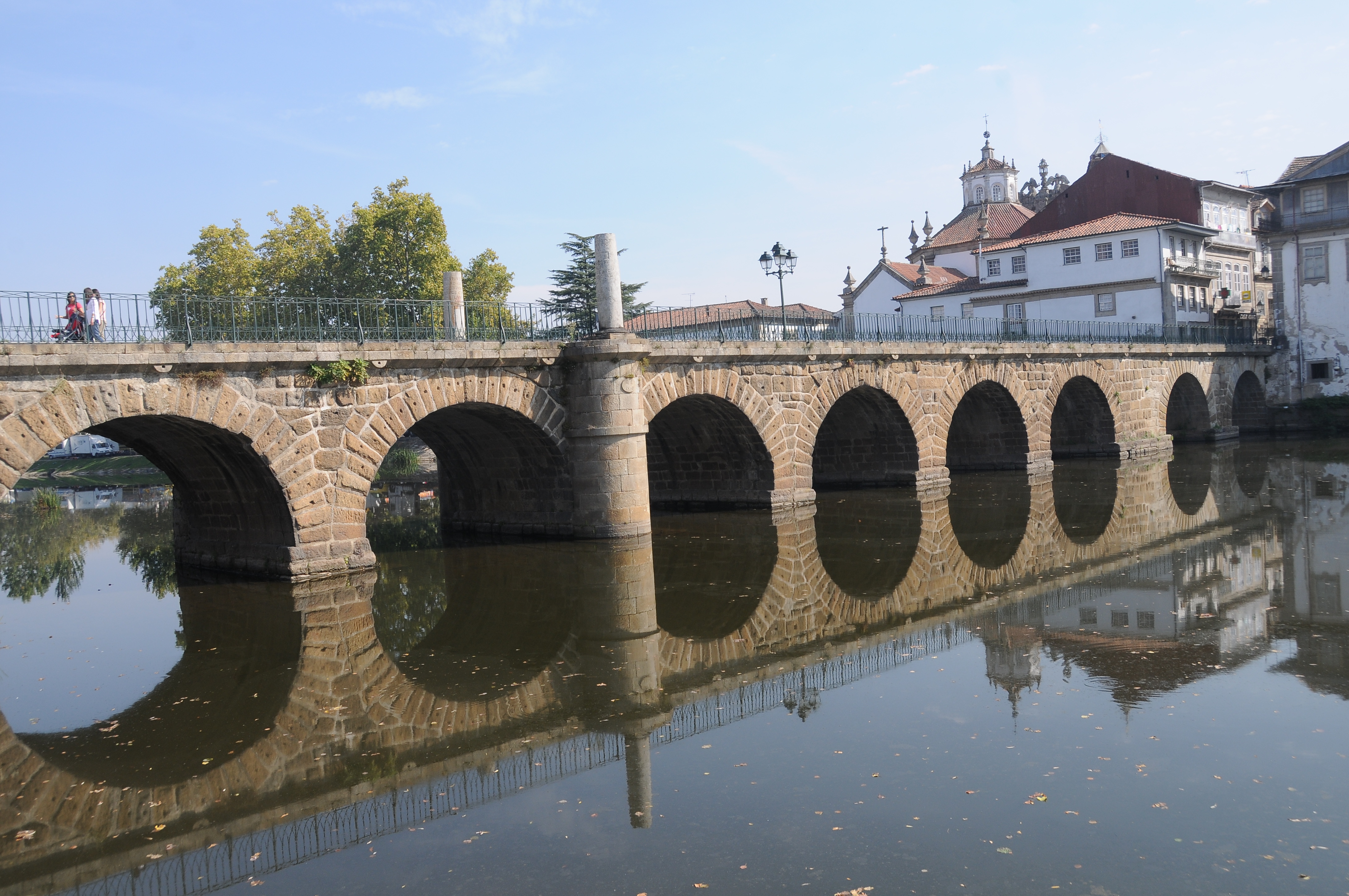 The city of Chaves (Aquae Flaviae) in northern Portugal’s Trás-os-Montes area is home to the magnificent Ponte Trajano (Trajan Bridge).
The 140-metre-long bridge dates from the early second century AD, during the reign of Emperor Trajan. The bridge, which is now pedestrianised, is Portugal’s best Roman structure. It was a section of the Roman route that connected Braga with Astorga in Spain.
On the bridge, two Roman-era columns with inscriptions stand. The first column, dubbed the Padro dos Povos (People’s Standard), originates from 79 AD and is dedicated to Vespasian and Titus, among other notables. The second column bears a shorter inscription indicating that the bridge was constructed by locals and dedicated to Trajan.
Similarly, Tavira in the Algarve contains a smaller bridge (the Ponte Romana) with seven arches, including some that date all the way back to the Roman era.

The Romans referred to Lisbon as Olisipo. Unfortunately, in comparison to other sites, not much remains of the old Roman city. However, the remains of the Teatro Romano, as well as an amazing contemporary museum, may still be viewed.
During Emperor Augustus’ reign, the Teatro Romano was established in the early first century AD. During the reign of Emperor Nero, it was rebuilt in 57 AD by Caius Heius Primus. The theatre, which had a seating capacity of roughly 4,000 people, served as a symbol of Roman supremacy.
From the street outside the main museum building, a portion of the orchestra, the proscenium (stage) wall, and the sitting portions can still be seen. A painted background depicts the theatre in its heyday.
Following the disastrous 1755 Lisbon earthquake, the Teatro Romano remained buried until renovation began in 1798. The structure’s ruins were discovered during the rebuilding of Lisbon after the tragedy.
The museum’s contemporary interior depicts Roman Lisbon through archaeological findings like stone columns, steles and sculptures, pottery, and glassware.
The neighbouring Casa dos Bicos has Roman foundations exposed through a glass floor.

Evora was known as Liberalitis Julia under the Romans. The magnificent Templo Romano is the city’s major Roman monument.
Experts believe the temple, Portugal’s best intact Roman-era structure, dates from the first century, with extensions in the second and third centuries.
Nobody knows for certain who the temple was built in honour of; while it is commonly referred to mistakenly as a temple to Diana, the goddess of hunting, it might possibly have been built in honour of Augustus or perhaps Julius Caesar.
Fourteen Corinthian columns remain, some capped with Estremoz marble and placed on top of a granite platform. At night, the ruin is illuminated.
In the Middle Ages, the temple was utilised as a butcher and is unusually well maintained.
Other Roman relics unearthed in the UNESCO World Heritage Site city include the Termas Romanas (Roman baths) excavated beneath the Câmara Municipal (town hall).

The tiny village of Estói, approximately 10 kilometres north of Faro in the Algarve, is home to the Ruinas de Milreu, a series of 1st century AD Roman remains located just off the N2 Highway.
The ruins were discovered in 1877 and are assumed to be the remnants of a Roman villa and bath complex related to the major Roman colony of Ossonoba
(modern-day Faro).

The Ruinas de Milreu contain a number of well-preserved mosaics depicting fish in the bathing area, a nymphaerium or water sanctuary that was later converted into a church by the Visigoths in the 3rd century, and a small museum with interesting panel displays explaining the site’s history and a number of objects discovered on site.
Aside from the friezes, the bathing area has fragments of the changing room (apodyterium), the frigidarium or cold plunge, and evidence of the complex, brick under-floor heating system.
A massive 3rd-century Roman mosaic depicting Oceanus, the deity of the sea, was unearthed near Faro Railway Station and is now at the Municipal Museum of Faro.

The Acala Island ruins (also known as the Cetobriga Roman Ruins or the Runas Romanas de Troia) on the Troia Peninsula south of Setubal were formerly the greatest fish salting site in the Roman Empire and were in operation until the 6th century.
From October to March, they are open Tuesday through Sunday from 10 a.m. to 1 p.m. and 2.30 p.m. to 6 p.m. The rest of the year, they are only open for guided tours by archaeologists on Saturdays at 3 p.m. in June and September, and on Wednesdays and Fridays at 10.30 a.m. in July and August.

The Roman village of Miróbriga in the Alentejo, adjacent to Santiago do Cacém, includes some of the best-preserved Roman ruins in the country. Two bathhouses, perhaps for men and women, temples, residences, shops, a bridge, paved roads, and the remains of a Hippodrome or Roman Circus could all be located.
The most spectacular structure is the Forum, or temple dedicated to the Imperial religion, which still has a few of its original, ornate columns standing.
A contemporary Interpretive Centre has been built to give information about the entire site.

The Roman ruins of Ammaia are located on the route to Portalegre in Alto Alentejo, 7 kilometres south of the hilltop village of Marvão. The Roman town of Ammaia is said to have been built in the first century under the reign of Emperor Claudius. Parts of a Roman wall with a gate and towers, as well as the remnants of a dwelling, public bath, forum, and temple, are still intact.
A modest Visitor Centre/Museum provides more information about this historic location, which was connected by road to Emerita Augusta (modern-day Mérida, Spain). Some of the pottery, glass, and metalwork discovered at the site is on display in the Visitor Center, while others have been sent to the National Museum of Archaeology in Lisbon.
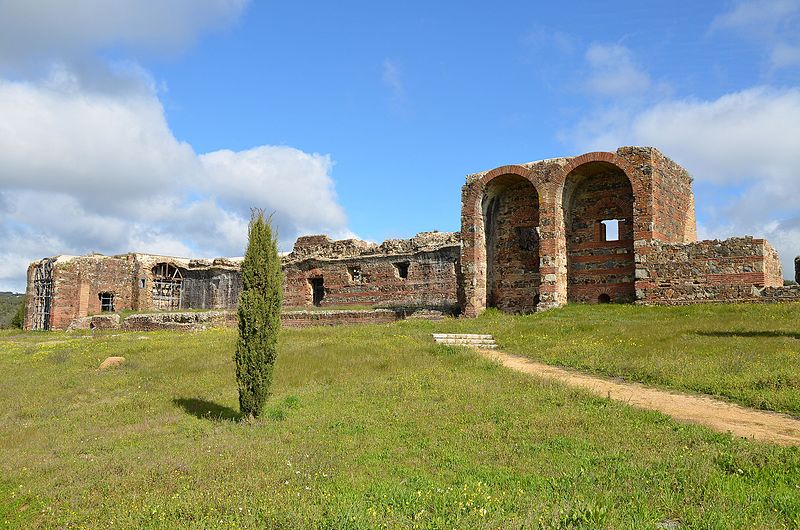
The ruins of São Cucufate are the remnants of a late Roman villa or farmhouse in the country’s southern Alentejo area. Later in the ninth century, a convent was erected on top of the now-demolished Roman structure. This, too, was eventually dropped. Enormous brick arches and portions of the large structures’ walls are visible. A bronze statue of an emperor, pottery, coins, glass, and metal tools are among the notable discoveries made here. The site is located north of Beja, which is home to the Ruinas Romanas de Pisões. These are the ruins of a big Roman rustic villa.

Braga, the provincial capital of Gallaecia, was known as Braccara Augusta in Roman times. The city’s Roman heritage may be explored in the Museu Dom Diogo De Sousa, which is more renowned for its Medieval cathedrals, such as the majestic Sé de Braga. Nearby lies the enormous Maximinus Thermae (Termas Romanas de Maximinos), which is presently being excavated.