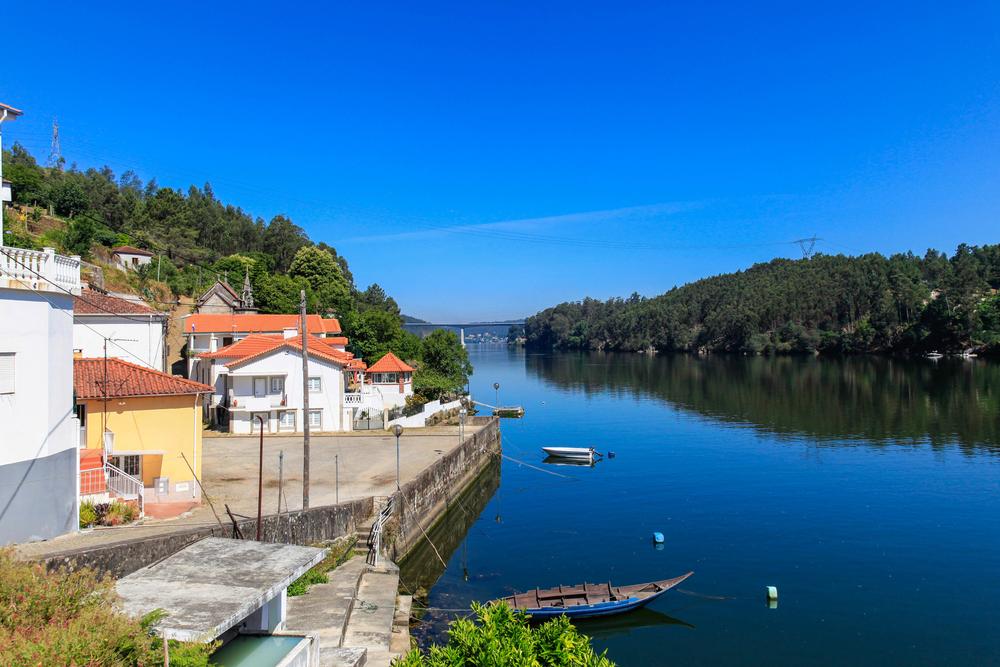
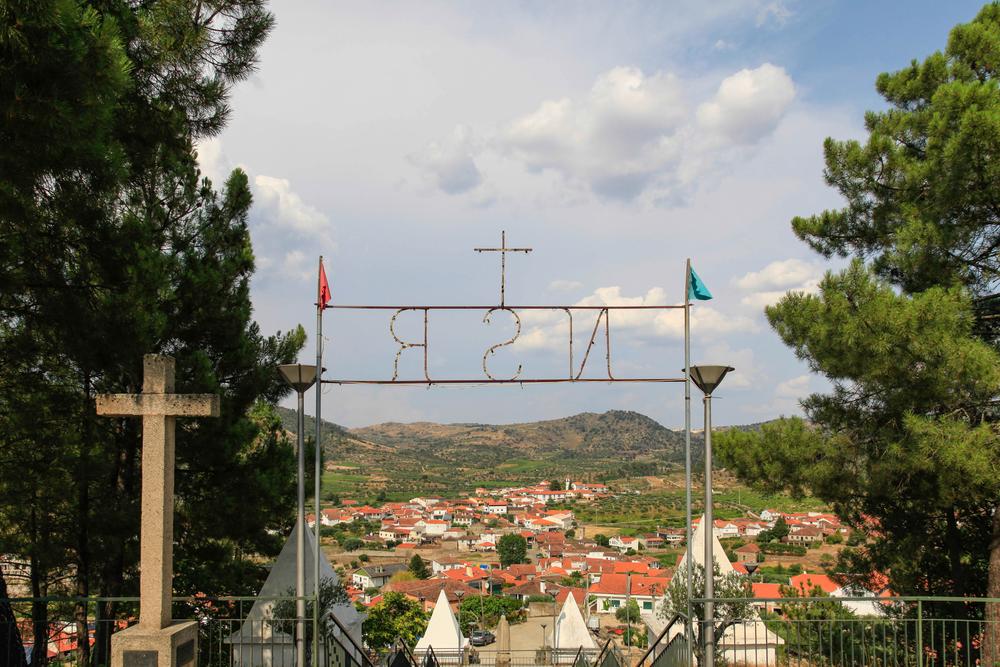
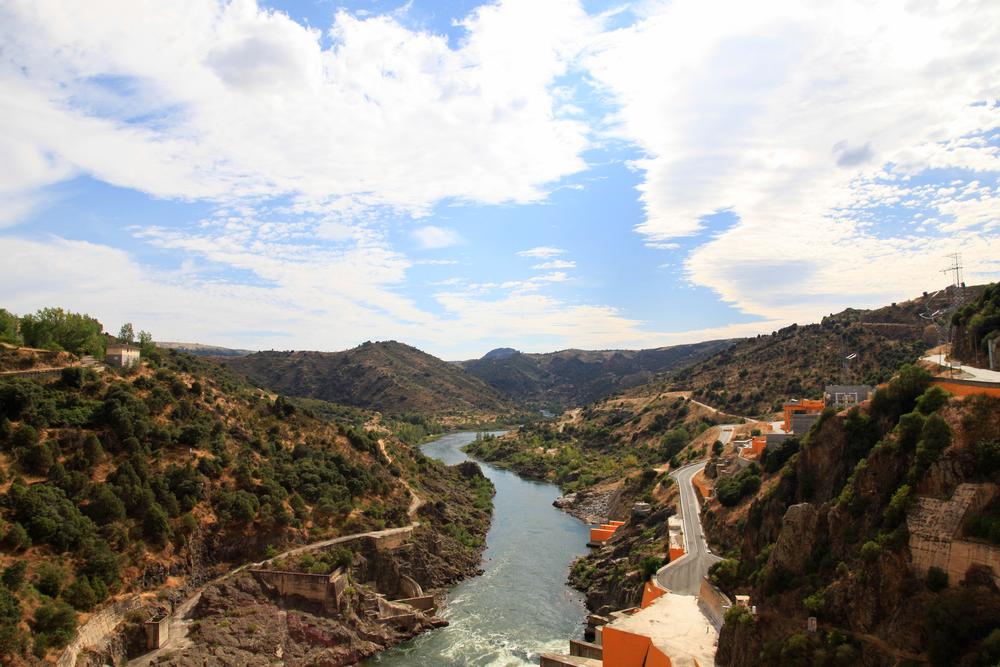
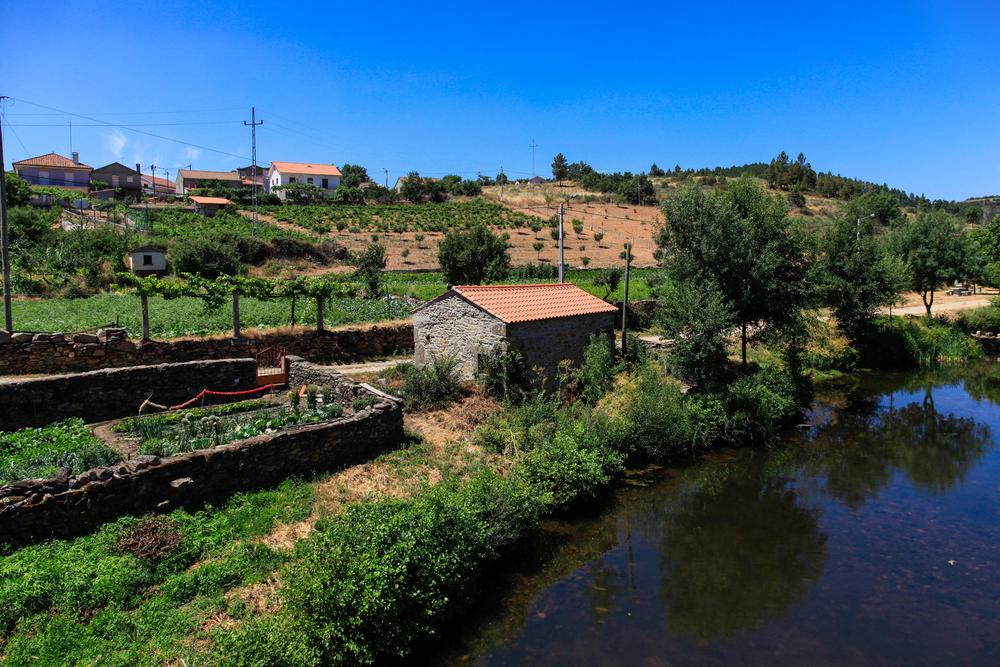
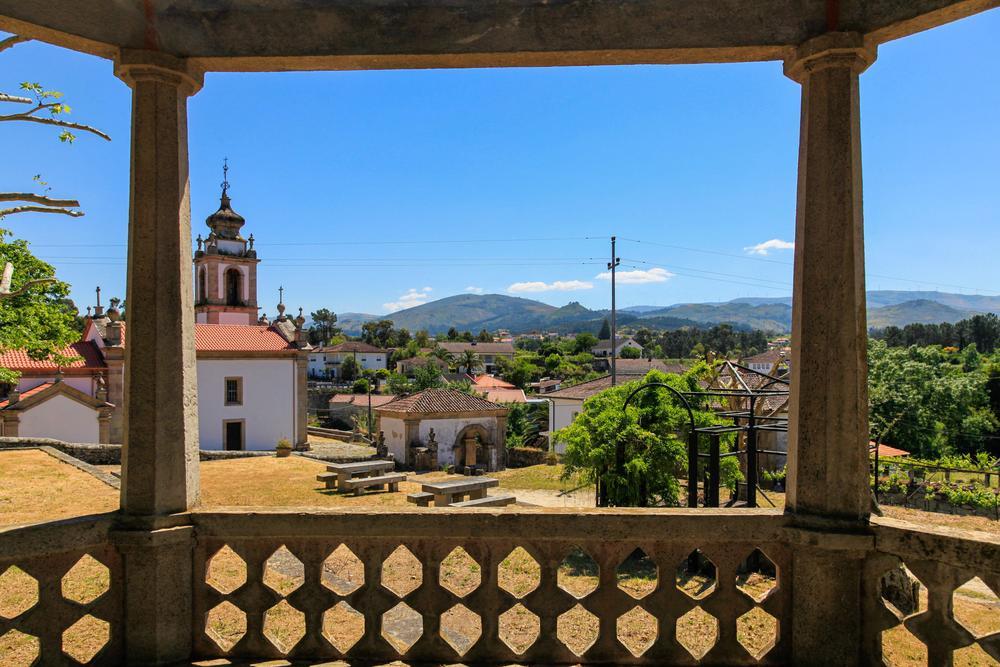
Porto Carvoeiro, located on the left bank of the Douro, is part of the parish of Canedo in Santa Maria da Feira and was formerly a significant commercial outpost in the municipality. Salt was brought in from the south, coal was brought in from the interior, and travellers and vessels transporting Port wine stopped here. Rabelo boats departed from this location, delivering different sorts of food to Porto, including wood, fuel, and charcoal. The proximity of the water also facilitated fishing: lamprey, shad, menhaden, mush, and barbel are still fished here to this day. It’s worth going along the village’s banks, which are framed by a lush grove of eucalyptus and pine trees.
While strolling through the streets of Porto Carvoeiro, take note of the two manor-style residences, one of which features an unusually beautiful private chapel. There are two distinct occasions to visit the village: during the Imaginarius Street International Theater Festival, which often includes at least one initiative, and during the celebrations honouring São Lourenço, which take place on the first weekend of August. If you enjoy water sports, don’t miss out on one of the canoeing routes in tiny boats that sail through the area.
You’ll discover a variety of items to sample in the local tradition, in addition to those derived from the river. Honey and regional tastes such as mixed roast beef on a bed of oven rice, roasted potatoes with thyme, and fogaça with pumpkin jam and walnuts, flanked by honey and accompanied by port wine, are all strong options for desserts. to which almendrados, amenteigados, aerados, and caladinhos may be added. In terms of handicrafts, this region is well-known for its cork, marble, iron and brass artefacts, pottery, lace, and even work in wire, mesh, wood, and leather (sieves, sieves, bass drums and tambourines). Additionally, blankets (litters), yokes and yokes, baskets, clogs, brooms, brushes and squeegees, and, unexpectedly, violins too are common instruments.
The village of Freixiel is located in the municipality of Vila Flor at an elevation of 350 metres, between two hills at the foot of a valley surrounded by the mountains of Folgares, Cabreira, Mós, Pessegueiro, and Vieiro. The valley of Freixiel has been inhabited from prehistoric times, as proven by the discovery of the Castro, the Salgueiral Necropolis, a Roman fountain and mill, and the remnants of a Medieval Bridge.
The village’s history is recounted via its heritage, which should be carefully observed: the Pelourinho, a property of public interest, and the Forca, a one-of-a-kind example in Portugal and a reminder of the time of the death sentence, which is also recognised as a property of public interest.
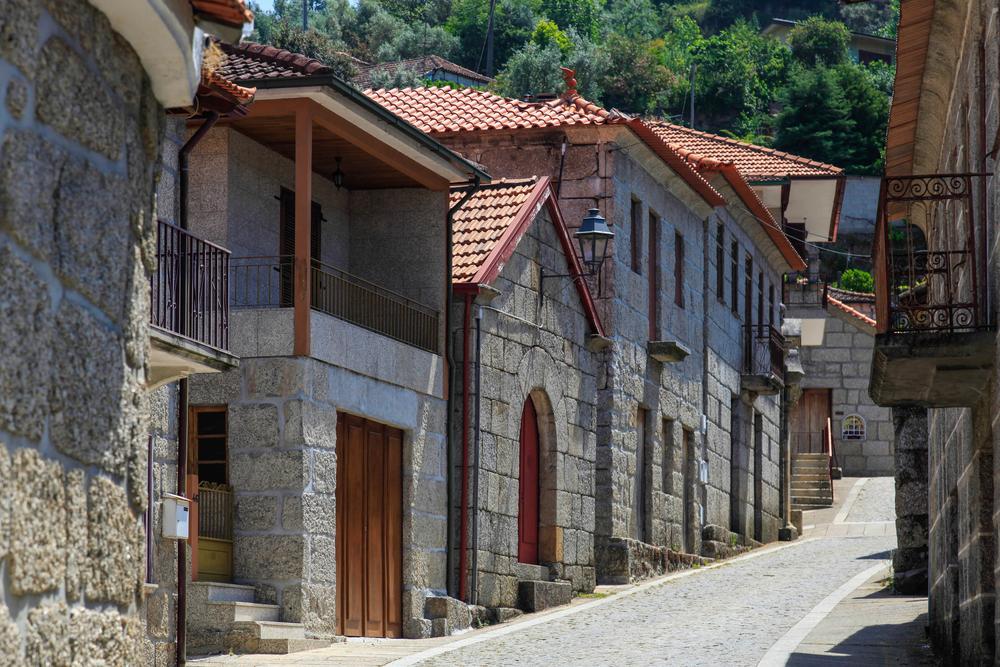
As you stroll through the village’s lanes, take note of the granite cottages with flower-adorned balconies and the olive orchards and vineyards that dot the landscape: you have arrived in the Douro Region! Additionally, keep an eye out for the Church of Santa Maria Madalena, the Freixiel Parish Church, the Chapel of Nossa Senhora do Rosário, the Roman Fountain, and the emblazoned manor residences, one of which features a Manueline window. Visit the Ethnographic Museum in the village.
A winery and tasting facility for Douro and “Porto Canho” wines are located in the village of Freixiel. Consider it! The village is home to the atelier of painter Graça Morais, a parishioner’s daughter who was frequently inspired to make her paintings by Freixiel. The village’s signature dishes include roasted lamb and lamb, folar, and smoked pork. Lace and saddles are used to create distinctive workmanship. Near this land of legends, the “Lenda do Castelo” (about an enchanted rock in Freixiel’s fort) and the “Lenda do Olival” (about a fountain where an enchanted Moor lived) stand out.
Nestled in Portugal’s scenic heartland, Bemposta is a hidden gem perfect for travelers seeking authentic village tourism. With its centuries-old monuments, lively local festivals, and tranquil landscapes, Bemposta village tourism offers a unique glimpse into timeless Portuguese traditions. Whether you’re strolling cobbled lanes, savoring rustic cuisine, or basking in the serenity of nature, every moment in Bemposta promises an experience rooted in heritage and warm hospitality.
Situated on the banks of the Angueira river, the village of São Joanico is part of the parish of Vale de Frades in the municipality of Vimioso. It is a typical Trás-os-Montes town where the Romanesque Bridge, which serves as the village’s ex-libris, and the community mills, which were used to grind grain for bread making, are worth a closer examination. Additionally, pay attention to the Parish Church of São Joanico (18th century), the Fonte de Mergulho (where pitchers were dipped to obtain water), the Cruzeiros, and the Tanque das Eiras.
Visit the river beach of São Joanico, the ideal location for a family picnic and to spend time fishing or simply relaxing! Get lost in nature, stroll among broom and heather, and plunge into the crystal blue waters of the natural pools! São Joanico’s tastes include chestnuts, mushrooms, smoked sausage, and crayfish. As in the past, the hamlet subsists mostly on agriculture and fishing and upholds ancient customs, one of which is the preservation of the donkey. The community of São Joanico has been chosen as the entry to the Iberian Nature and Adventure Park, a project aimed at enhancing the traditions, knowledge, and local goods of the Angueira, São Joanico, and Serapicos communities.
Ponte de Mouro is a picturesque village on the River Mouro in northern Portugal, home to a 14th-century bridge where kings once shaped history. With granite houses, chapels, crystal-clear waters, and festivals that bring the world to dance, this village blends heritage with natural beauty.
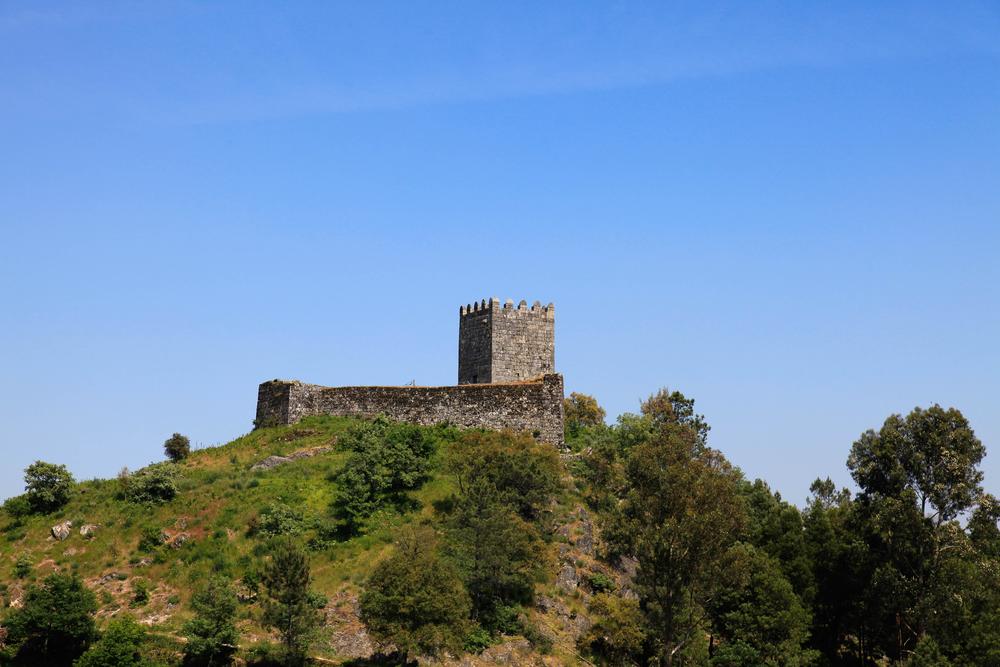
Nestled atop lush Portuguese hills, Castelo Novo Portugal is a village where medieval legends echo through cobblestone lanes and vibrant bougainvillea frames whitewashed walls. Here, the ancient castle stands sentinel over emerald valleys, village markets brim with artisanal treasures, and the rhythms of local festivals invite you to savor genuine tradition. For travelers seeking old-world enchantment far from the well-trodden path, Castelo offers a rare escape into history, hospitality, and breathtaking views.
Lugar da Rua, nestled within Portugal’s Amarante region, is a captivating village where timeless history, rustic charm, and natural beauty converge. Visitors can wander cobbled lanes, explore ancient landmarks like the Pelourinho and Roman Bridge, and savor traditional meals such as cabidela rice and oven-roasted goat. With serene river beaches, nearby hiking trails through Serra do Marão, and authentic encounters at the Maro Interpretative and Cultural Centre, Lugar da Rua offers a true escape—inviting travelers to immerse themselves in the rhythms and stories of a bygone era.
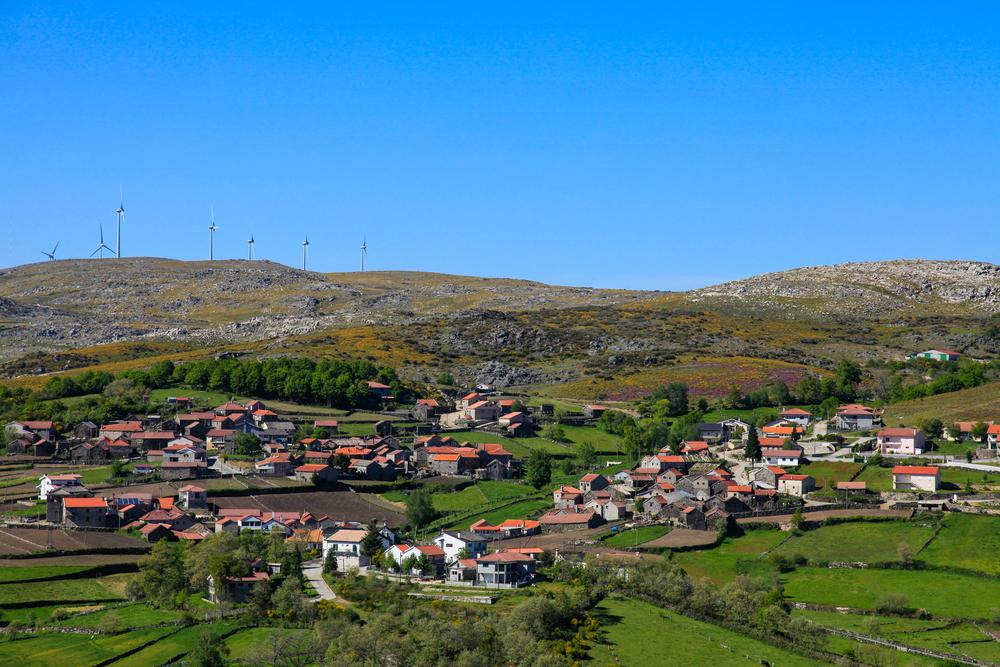
Located in the municipality of Melgaço, near the entrance to the Peneda-Gerês National Park. Characterized by an enormously beautiful landscape and architectural ensemble, the village bears witness to an agricultural and cultural legacy of immense anthropological significance, which makes it extremely unusual and unique. The megalithic pedestrian trail provides an overview of the complete natural heritage’s riches.
AVELEIRA BRANDA hiking trial
Trilho da Aveleira is 7.5 kilometres. It begins with the Chapel of Senhora da Guia, located at the most northernmost point of Serra da Peneda. As the road leaves the village, it passes past canejas, loose stone walls that delineate fields. The approach to the Golo de Areia pond, which is around 1000 metres above sea level, passes through a forest of maritime and wild pine trees. The decline begins there and continues until the starting point.
SANCTUARY OF SENHORA DA GUIA
Senhora da Guia is one of the several names bestowed upon the Virgin Mary, referring to the star that directed the Three Kings to Jesus. As a result, she is known as the patroness of travellers.
The winter snow at Serra da Peneda deprived the animals of food. Thus, pastors develop a distinct way of living. In cold weather, they congregated in lower places that were teeming with food. In the summer, they would ascend the mountain, which was already snow-free and brimming with new pastures, while below, meadows and crops were farmed. The Brandas and the Inverneiras (Verandas). With Our Lady of Guia’s protection.
WALK WITH SHEPHERDS
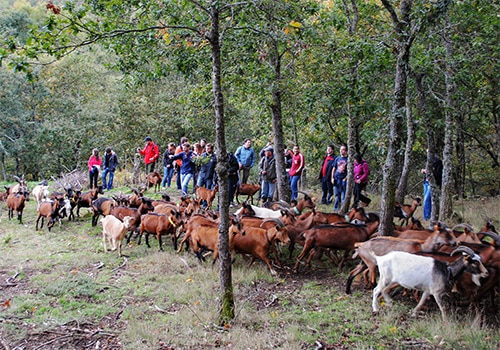
The shepherd’s life has always been and continues to be, a traditional occupation of the people who occupy the highlands of Melgaço. They move every day across valleys and hills with their herds in search of nourishment, guarding them against predator assaults with the support of Castro Laboreiro’s dogs.
The proposed task is to join the shepherd and his animals on a stroll across the highlands. While doing so, take the time to observe and be captivated by the wonderful scenery that surrounds you.
More than an activity, it is a time of coexistence with the local inhabitants and tradition. Be a pastor for a minute, share thrilling experiences, and hear enchanting stories.
POTATO PAPAYA
Approximately 700 metres from Branda da Aveleira.
The Batateiro mamoa is a reasonable-sized megalithic monument with considerable structural remnants, particularly in the dolmenic chamber, which is composed of seven pillars; faint carvings are visible on the inner surface of the chevet’s backbone.
This mound is located within a few kilometres from the Castro Laboreiro plateau, which has a megalithic necropolis including around a hundred prehistoric structures.
Walking Trials
Branda do Aveleira and, as a result of its position, gives its tourists a variety of options for a magnificent stay.
Here, you will have the one-of-a-kind opportunity to explore the breathtaking scenery, whether on foot or by mountain bike, always in the tranquillity of the mountains.
You’ll be able to admire the region’s wildlife and vegetation, particularly the grenadiers and cattle, which are abundant in these sections.
Hazel Trail
This beautiful mountain route takes us through extensive paths and beautiful landscapes.
Along the way, we can find a pond, where countless animals resort to quench their thirst.
Distance: 7.5 Km Difficulty: Easy
Brandeio Trail
Starting in Sr. da Guia, it goes through the main hills of the Serra da Peneda
Distance: 14 Km Difficulty: Easy
Glacier Trail
Here you can find numerous traces of an ancient glacier.
Distance: 4.43 Km Difficulty: Medium
Megalithic Trail
Departing from the branda da Aveleira, this route takes us to Mamoa do Batateiro.
Distance: 2.46 Km Difficulty: Easy
Peneda Trail
This route takes place in the middle of Serra da Peneda, between two mountain villages: Povoamento da Peneda and Branda da Bouça dos Homens, passing by the magnificent Sanctuary of Nossa Senhora da Peneda
Distance: 8.2 Km Difficulty: Medium
Lamas do Mouro Trail – Peneda
This route takes us from the village of Lamas do Mouro to the Sanctuary of Nossa Senhora da Peneda.
Distance: 10.5 Km Difficulty: Medium
Not far from Aveleira, we find some must-visit places:
Lamas de Mouro – One of the most beautiful entrances to the Peneda-Gerês National Park.
It has a large leisure area, framed in a paradisiacal natural environment (highlighting the floristic diversity), with several spaces for recreation, rest, bathing and snacking, and a set of infrastructure and support equipment (toilets/bathrooms, picnic park, campsite, etc).
The unique sanctuary of Nossa Senhora da Peneda .
Built on the slopes of the mountains and inspired by Bom Jesus de Braga, it is a place to visit at any time of year.
The lake of Peneda.
And at the top of the Peneda mountain range, we find the Peneda lake , for many, a hidden paradise that, despite the difficult access, is a must-visit place.
São Bento do Cando.
São Bento do Cândo, with its beautiful chapel, is another place to visit.
Peneda-Gerês National Park.
Vast amphitheatre sculpted by geologies, winds and waters, the National Park extends from the Castro Laboreiro plateau to that of Mourela, covering the mountains of Peneda, Soajo, Amarela and Gerês.
In the altitude zones, the effects of the last glaciation are visible – glacier circuses, moray eels, small lakes and U-shaped valleys.
The nature and orientation of the relief, the variations in altitude and the Atlantic, Mediterranean and continental influences translate into the variety and richness of the vegetation cover: bushes, oak and pine forests, birch or birch forests, abundant vegetation bordering the water lines, cultivated fields and pastures.
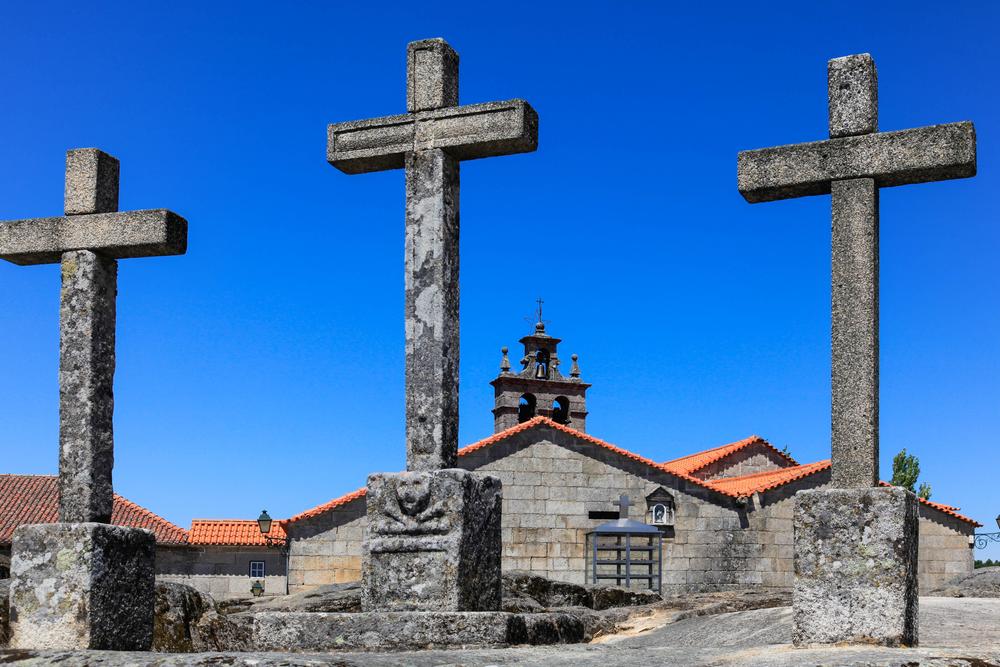
To reach Lugar da Lapa, a significant pilgrimage site, one must pass through areas characterised by Aquilino Ribeiro – who knew the area intimately – as Terras do Demo. The big granite stones attest to the severity and aridity of the area, which is part of the parish of Quintela in Sernancelhe. The limpet is really a granite stone that forms a cave that, due to its protection, would have served as a haven for Our Lady, whose name the sanctuary bears. The picture would have been carried by religious escaping from the Moor commander Al Mansor, who was responsible for the martyrdom of numerous Christians. It was concealed here in the tenth century and discovered centuries later by Joana, a deaf shepherdess who regained her voice! Today, the Sanctuary of Nossa Senhora da Lapa is a national pilgrimage site.
The majestic structure of the Colégio dos Jesutas – which dates all the way back to the sixteenth century -, the buildings, and the roads, all made of granite, all contribute to the creation of a distinct ambience. Additionally, this is where the River Vouga originates, and it is here that you may taste the freshwater. Visit the 13th-century sanctuary and make the pilgrimage: the cave features a brand-new stone where the tradition states that everyone must pass through save those with grave crimes, as well as a facsimile of a big lizard suspended from the ceiling. Additionally, there is a permanent nativity display within the church that is worth viewing. Then wander across town, taking in the boats and vistas and stopping by the town’s eateries. Additionally, you may explore the region on a bicycle, as the location has a sizable network of its own trails.
The pilgrimage to Nossa Senhora da Lapa takes place three times a year: on June 10th, August 15th, and September 8th. Additionally, the Aquiliniana Fair is held here once a year, when regional items are advertised and sold. Take home the traditional and well-known artisanal cheeses, sausages, and well-known bread from Lapa. There are multiple bakeries in the area, and fresh bread is served several times daily. To stay in this location, get a room at the Convent of Nossa Senhora do Carmo, 10 kilometres away, a charming modest hotel with a restaurant located in an old chapel.
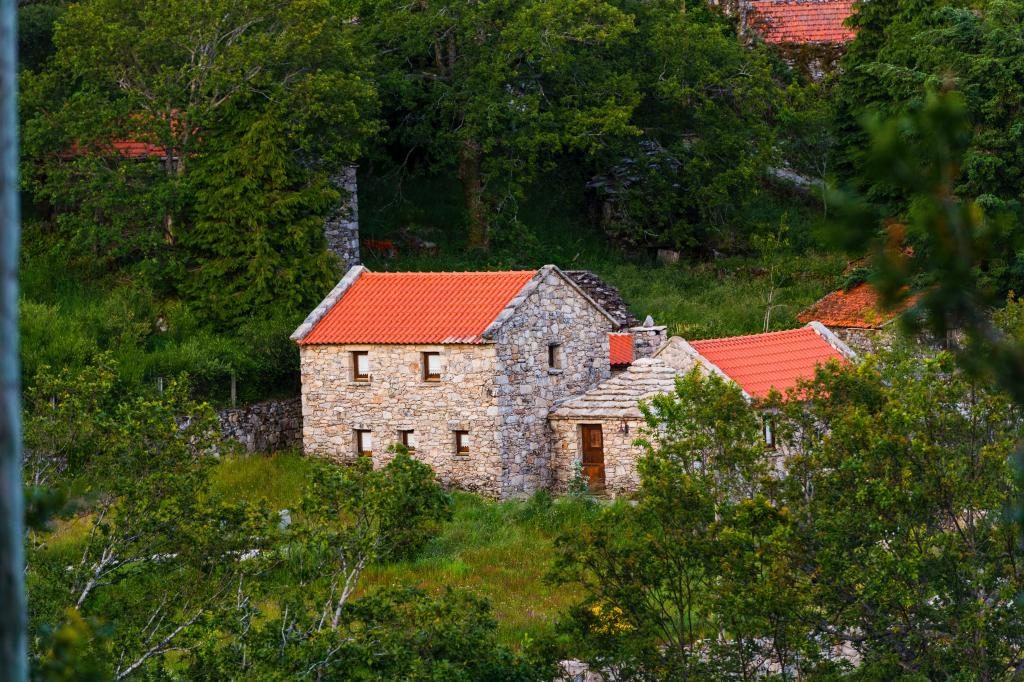
You arrive in Lamas d’Olo and what hits you first is how life is anchored in the material world: granite walls, slate accents, and those lingering thatch roofs that feel like they’ve grown from centuries of sun and wind. Espigueiros—those small, elevated granaries—dot the landscape, whispering a history of harvest and preservation.
This isn’t just a village. It’s the highest in the park, perched about 1,000 meters above sea level atop a granite plateau.It sits within the Alvão Natural Park, a compact but wild 72 km² of rugged ridges, oak groves, and streams, where ancient geology shows through in every broken stone and quartzite outcrop.
What this really means is that Lamas d’Olo is suspended between two worlds—high and low. The uplands cradle meadows and cultivation; the lowlands plunge into steep river valleys marked by schist cliffs and waterfalls.
The irrigation systems here are not modern machines but gestures passed through generations. Water is harvested from springs and streams, channeled via stone levadas, stored in communal tanks and açudes, then sprinkled across fields and pastures to keep them green year‑round.
Everyday rhythms remain deeply rural. Shepherds walk the land, tending flocks that have depended on these fields for decades. Bread is baked, preserved, passed around. You’ll hear stories—like how people once lived without money, making their own clothing and tools, walking to town only when absolutely necessary.
Stand at the Miradouro da aldeia de Lamas de Olo and let your eyes drink in the rolling fields, the village stretched out, silent and steady, as oak meets sky.
Then—just few km away—wait for the dramatic turn. The Rio Olo plunges over rugged quartzite ledges in multiple stages, cascading down about 200 meters in total. This is the Fisgas de Ermelo, one of mainland Portugal’s grandest waterfalls, where calm pools sit above thunderous drops.
So here’s the scene:
A grove of granite and thatch—homes that lean on tradition.
A plateau at a thousand meters—quiet, high, real.
Ancient waterways—levadas, tanks, pastures alive all year.
A community still working the land—carrying on routines rooted in necessity and care.
A viewpoint where stillness meets view.
A waterfall that brings the whole landscape into sudden motion.
That’s Lamas d’Olo—not just a place, but a way of being.
What to See & Do
Wander the Village
Explore its granite houses with thatched roofs — a rare architectural style that’s almost vanished in Portugal.
Spot the canastros (espigueiros), the traditional stone-and-wood granaries on stilts.
Hiking & Nature Walks
Several marked trails start or pass through the village, taking you into the high meadows and oak forests of Alvão Natural Park.
Keep an eye out for shepherds with flocks and the centuries-old irrigation channels that keep the fields green year-round.
Lamas d’Olo Viewpoint (Miradouro da Aldeia)
Offers panoramic views of the plateau, surrounding peaks, and patchwork meadows.
Cimeira & Fundeira Dams
Small, scenic reservoirs surrounded by walking paths and picnic spots.
The Cimeira Dam Picnic Park is a great rest stop.
Fisgas do Ermelo Waterfalls
Only a short drive away, these are among Portugal’s tallest waterfalls, with multiple cascades and natural swimming pools above the drop.
Birdwatching & Photography
The park is home to birds of prey like eagles and kites, plus wildflowers in spring.
Restaurants & Cafés
Lamas d’Olo is very small, so dining options are limited. The most common setup is local village cafés or small eateries serving hearty, traditional food.
A few places serve regional Trás-os-Montes dishes like posta à mirandesa (beef steak), cozido (meat and vegetable stew), and local smoked sausages.
For a wider choice, including sit-down restaurants, head to Vila Real (about 30 min away), where you’ll find both traditional and contemporary dining.
Accommodation
Rural Tourism Houses:
Some restored granite homes offer rooms or small apartments for rent. Examples include Casas de Campo and private Aldeia de Portugal listings.
Many are rustic but cosy, often with fireplaces for the colder months.
Nearby Town Stays:
Vila Real and Mondim de Basto have hotels, guesthouses, and B&Bs if you prefer more amenities.
If you’re visiting in summer or during festivals, it’s best to book ahead, as options in the village itself are limited.
We use cookies on our website to give you the most relevant experience by remembering your preferences and repeat visits. By clicking “Accept All”, you consent to the use of ALL the cookies. However, you may visit "Cookie Settings" to provide a controlled consent.
This website uses cookies to improve your experience while you navigate through the website. Out of these, the cookies that are categorized as necessary are stored on your browser as they are essential for the working of basic functionalities of the website. We also use third-party cookies that help us analyze and understand how you use this website. These cookies will be stored in your browser only with your consent. You also have the option to opt-out of these cookies. But opting out of some of these cookies may affect your browsing experience.
Necessary cookies are absolutely essential for the website to function properly. These cookies ensure basic functionalities and security features of the website, anonymously.
Cookie
Duration
Description
cookielawinfo-checkbox-analytics
11 months
This cookie is set by GDPR Cookie Consent plugin. The cookie is used to store the user consent for the cookies in the category "Analytics".
cookielawinfo-checkbox-functional
11 months
The cookie is set by GDPR cookie consent to record the user consent for the cookies in the category "Functional".
cookielawinfo-checkbox-necessary
11 months
This cookie is set by GDPR Cookie Consent plugin. The cookies is used to store the user consent for the cookies in the category "Necessary".
cookielawinfo-checkbox-others
11 months
This cookie is set by GDPR Cookie Consent plugin. The cookie is used to store the user consent for the cookies in the category "Other.
cookielawinfo-checkbox-performance
11 months
This cookie is set by GDPR Cookie Consent plugin. The cookie is used to store the user consent for the cookies in the category "Performance".
viewed_cookie_policy
11 months
The cookie is set by the GDPR Cookie Consent plugin and is used to store whether or not user has consented to the use of cookies. It does not store any personal data.
Functional cookies help to perform certain functionalities like sharing the content of the website on social media platforms, collect feedbacks, and other third-party features.
Performance cookies are used to understand and analyze the key performance indexes of the website which helps in delivering a better user experience for the visitors.
Analytical cookies are used to understand how visitors interact with the website. These cookies help provide information on metrics the number of visitors, bounce rate, traffic source, etc.
Advertisement cookies are used to provide visitors with relevant ads and marketing campaigns. These cookies track visitors across websites and collect information to provide customized ads.