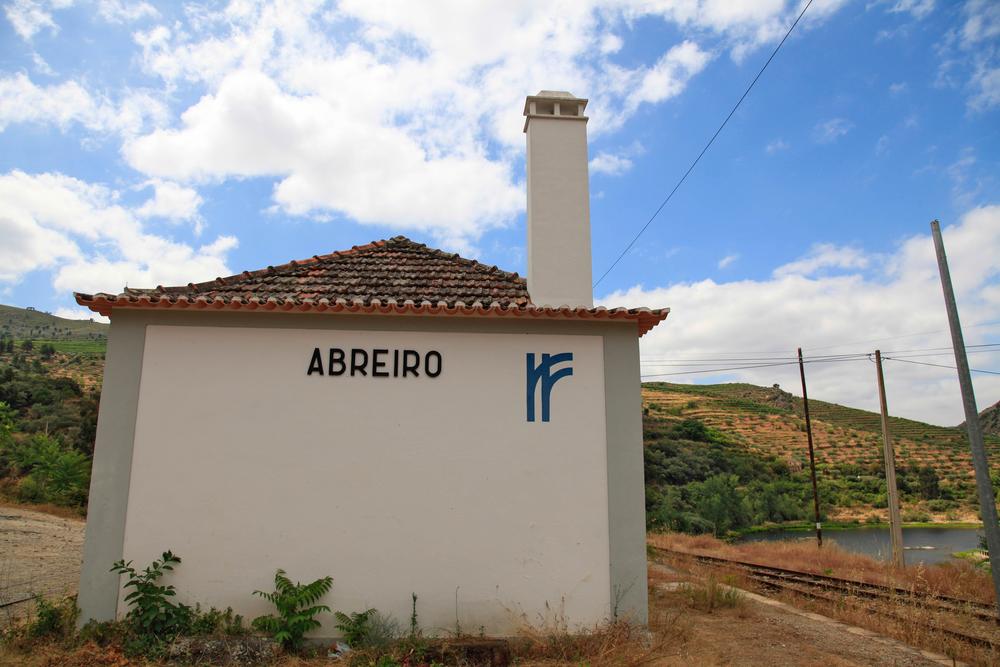
The village of Abreiro is located in the municipality of Mirandela, in a valley soaked by the river Tua. The mediaeval pavement that connects the town to the old bridge of Abreiro, the ruins of the mediaeval bridge itself, and the dolmen of Arcã all attest to Abreiro’s enormous archaeological value.
Notice the well-preserved pillory and the imposing manor houses in the village centre, which contrast with the simple granite houses with the typical wooden balconies. Pay special attention to the parish church, the two village chapels, the cross, the Moorish cemetery, and the historic fountain. If you want to get away from it all, don’t miss out on the Terra Olea initiative, which encourages travellers to learn about the olive oil manufacturing process. This invitation includes olive garden tours, olive picking, oil manufacturing, and tastings of several oils!
Did you know that Abreiro has a functioning biological oil mill? Lose yourself in the beauty of the landscape at the Santa Catarina viewpoint, marked by vine-covered slopes, the Tua river winding at the foot, and the Tua line, now deactivated. If you enjoy fishing and hunting, you should know that Abreiro has a fishing area on the Tua river, as well as a hunting reserve.
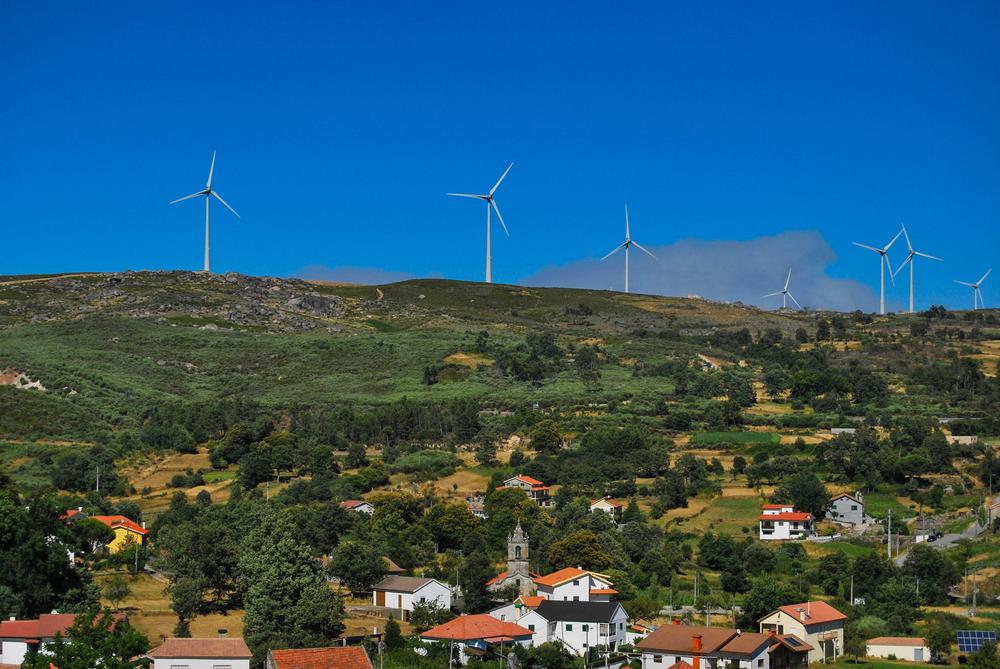
Nestled deep in the rugged Montemuro mountains, the village of Mezio stands as a living testament to alpine resilience and Portuguese tradition. Wander its narrow, winding lanes flanked by granite cottages, and you’ll find Ervanária Ervital at the village’s crest—an organic farm where wild herbs are grown and harvested by locals for aromatic teas steeped in local heritage. Walking segments of the Camino de Santiago here leads you past traditional mills and lush, hilly stretches unique to the region.
Mezio’s rich religious legacy reveals itself in its Igreja Matriz and historic chapels, while the everyday heart of the village beats strongest around a table: savor local rice and beans with salpico, oven-roasted kid, and homemade cornbread at Restaurante do Mezio. Before leaving, explore the Cooperative of Craftsmen and its modest museum—a trove of woven linens, basketry, and handcrafted wooden dolls echoing Mezio’s enduring craftsmanship.
For an especially vibrant visit, come for the second Sunday in May, when Saint Michael’s festival fills the streets with song, dance, and artistry, inviting you to experience the living pulse of one of Portugal’s best-kept mountain secrets.
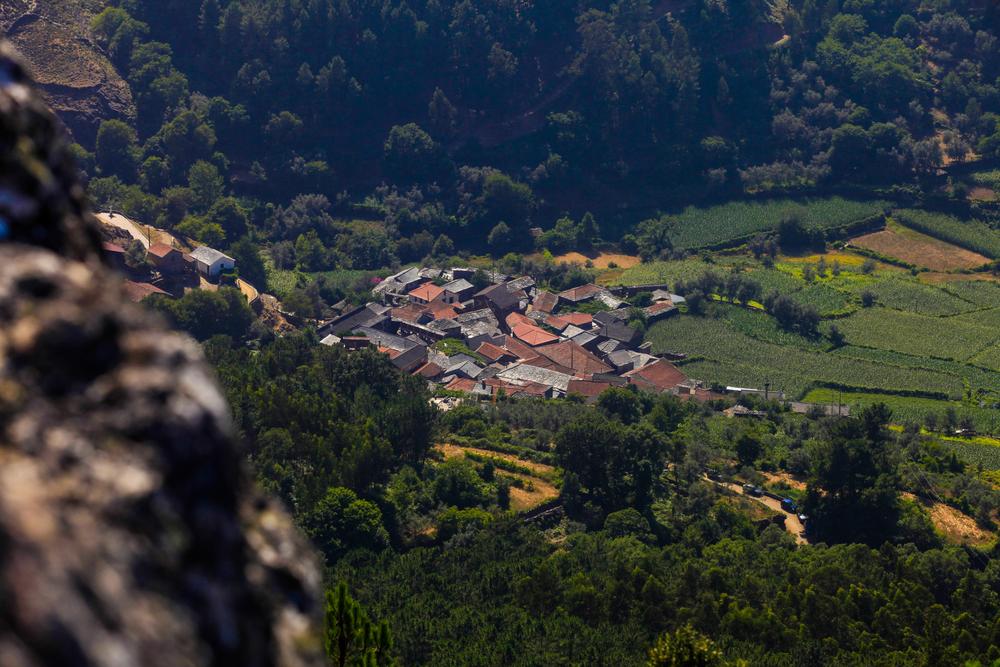
To get to the village of Covas do Monte in São Pedro do Sul, follow a meandering trail of remarkable beauty that crosses the Freita mountains and overlooks Montemuro and Gralheira. Covas do Monte is located in the mountains of São Macário at an elevation of 450 metres, you can breathe clean air here. The lush countryside is speckled with herds, providing a pastoral atmosphere, with mountains all around that no one can ignore. Down here, freshwater runs, which is delivered to the settlement and disseminated around the fields using a conventional irrigation system.
The village is nestled in the slopes at the foot of the mountain and provides a one-of-a-kind hike through its small winding lanes and cluster of cottages, virtually all made in schist and with slate roofs. Take note of how they are spread and how well they blend into the landscape! In this little town that relies on herding, animals and people coexist. Cows, goats and lambs, walk out every day to enjoy the fresh meadows of the hills. They return at the end of the afternoon, and each one appears to know the route home, in a routine that is repeated and worth observing a remarkable image of rural country life.
It should be mentioned that pigs are still slaughtered in this area, therefore sausages and high-quality meat are regarded to be characteristics of the local cuisine. The village restaurant, Restaurant of the Association of Friends of Covas do Monte, is a must-see on weekends and is a point of pilgrimage. It is housed in an old elementary school and provides a lovely view of the mountains as well as a cuisine including regional specialities. Try the Gralheira kid and the Arouquesa cow, both native and verified breeds.
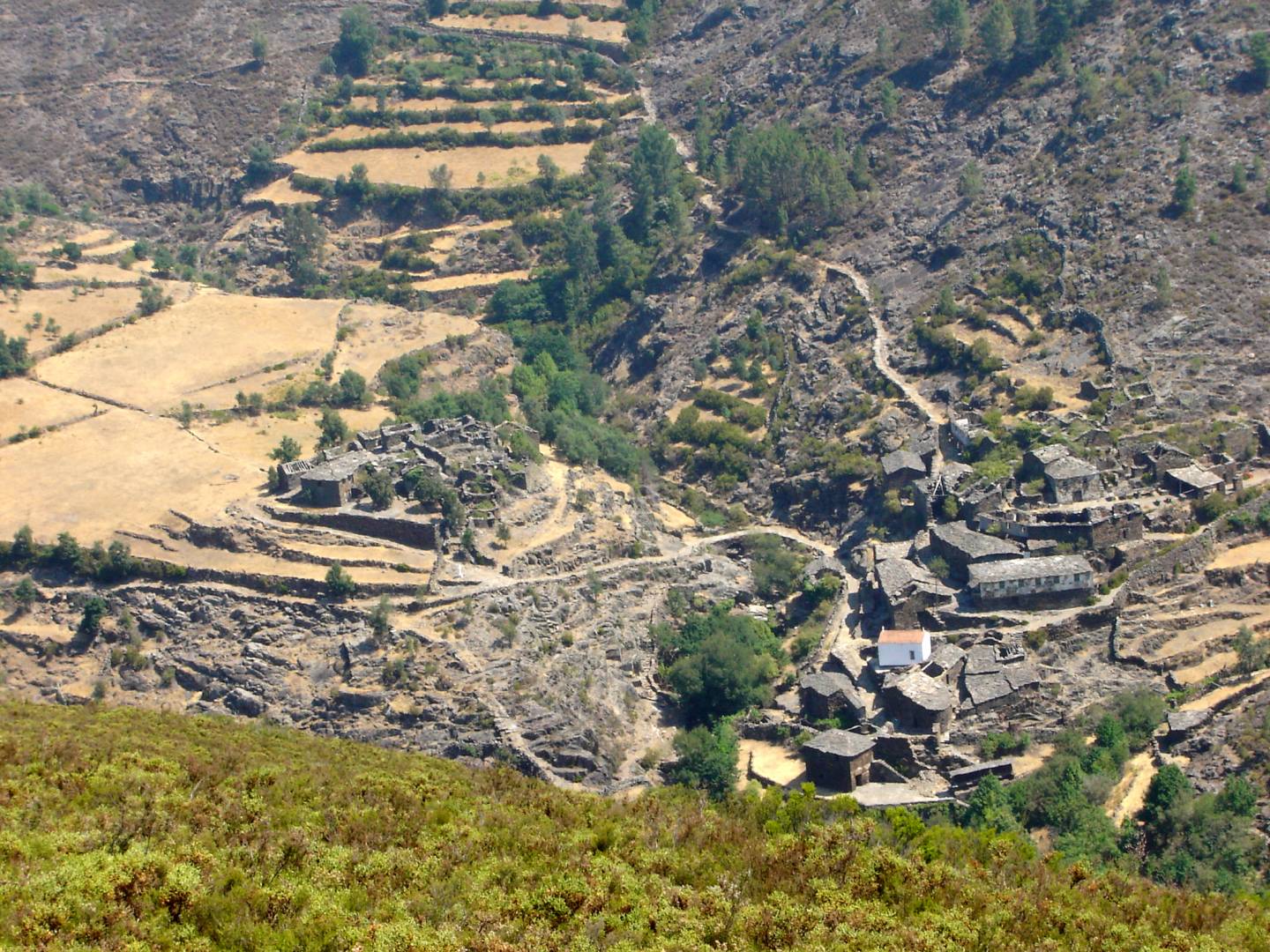
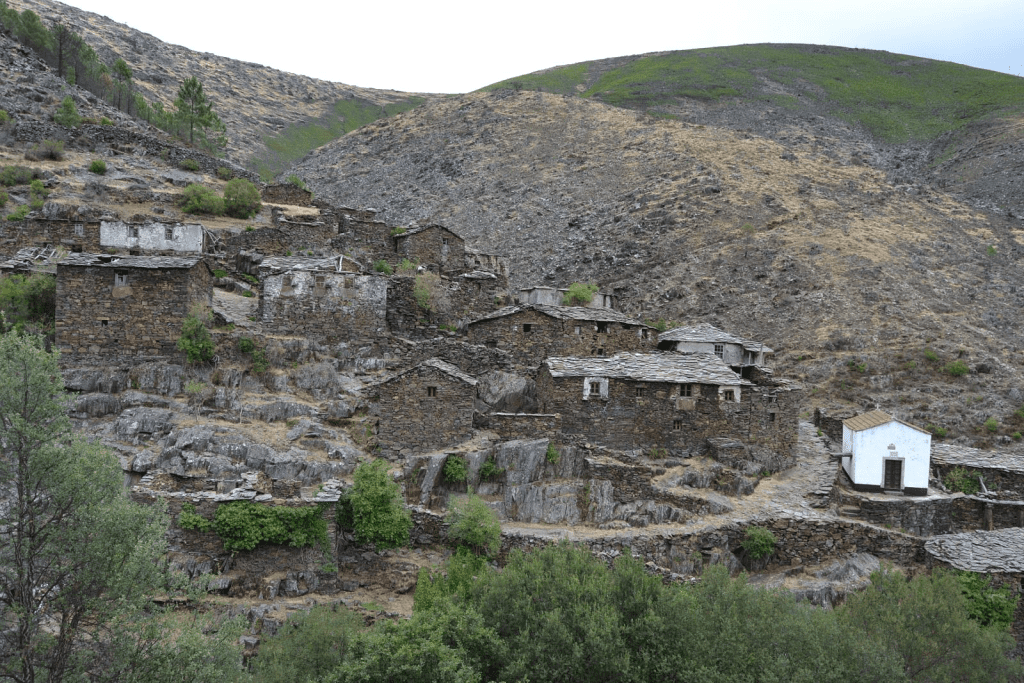
Tucked deep within the dramatic folds of the Arouca Geopark, far from roads, shops, and signal towers, lies a village you can only reach on foot. Drave—known to some as Aldeia Mágica, the Magic Village—is an uninhabited hamlet of slate houses and silence, suspended in a lush mountain valley between the peaks of Serra da Freita, São Macário, and Arada.
Here, time seems to have stopped. There’s no electricity, no running water, no commercial tourism. Just granite paths, wind-sculpted ridges, and a cluster of crumbling stone buildings bearing witness to a once-thriving rural life. If you’re willing to walk the trail in, Drave will offer you something very few places still can: real stillness.
Hiking to Drave: The PR14 “Aldeia Mágica” Trail
Starting Point: Regoufe village
Trail Distance: 4 km (one way)
Duration: Approx. 2 hours
Difficulty: Moderate
Best time: Spring or autumn for comfort and colour
The hike begins in the small mountain village of Regoufe, known for its abandoned wolfram mines. Trail PR14 is well-marked, but don’t be fooled by its short distance—steep inclines, loose rock, and exposure to the elements make this a serious hike. Bring proper boots, plenty of water, and sun protection.
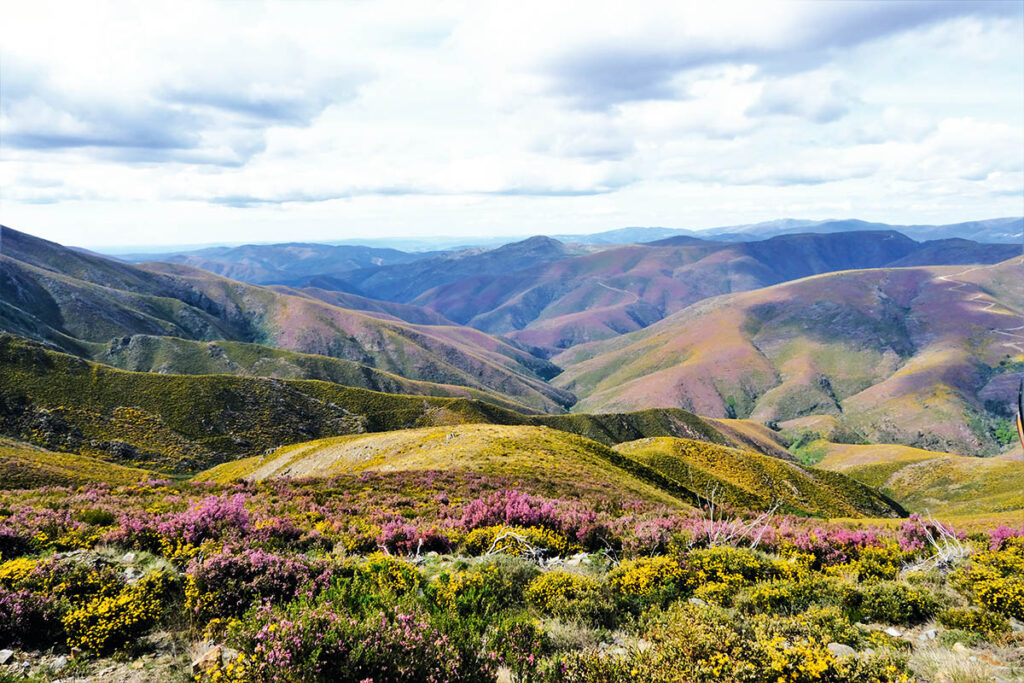
As you gain elevation, panoramic views open up across the Freita range, revealing terraced hillsides and shale formations carved by time and rain. Look out for ancient cart tracks etched into stone and delicate rivulets threading their way down the valley.
The final descent into Drave feels surreal: a secret world slowly revealed through breaks in the ridge. The moment you spot the first slate rooftops nestled in green, you’ll understand why so many describe arriving here as dreamlike.
Arriving in Drave: A Village Lost in Time
Drave is made up of around twenty slate structures built from the stone beneath your feet. The only splash of white among the earthy hues is the Capela de Nossa Senhora da Saúde—a simple chapel that still hosts an annual celebration every 15 August, when former residents return for the village’s one remaining tradition.
Highlights:
Solar da Drave – The grandest of the old houses, once home to the influential Martins family, complete with balcony and wine cellar.
Espigueiros & Currais – Traditional granaries and stone pens near the village entrance speak of communal farming days long past.
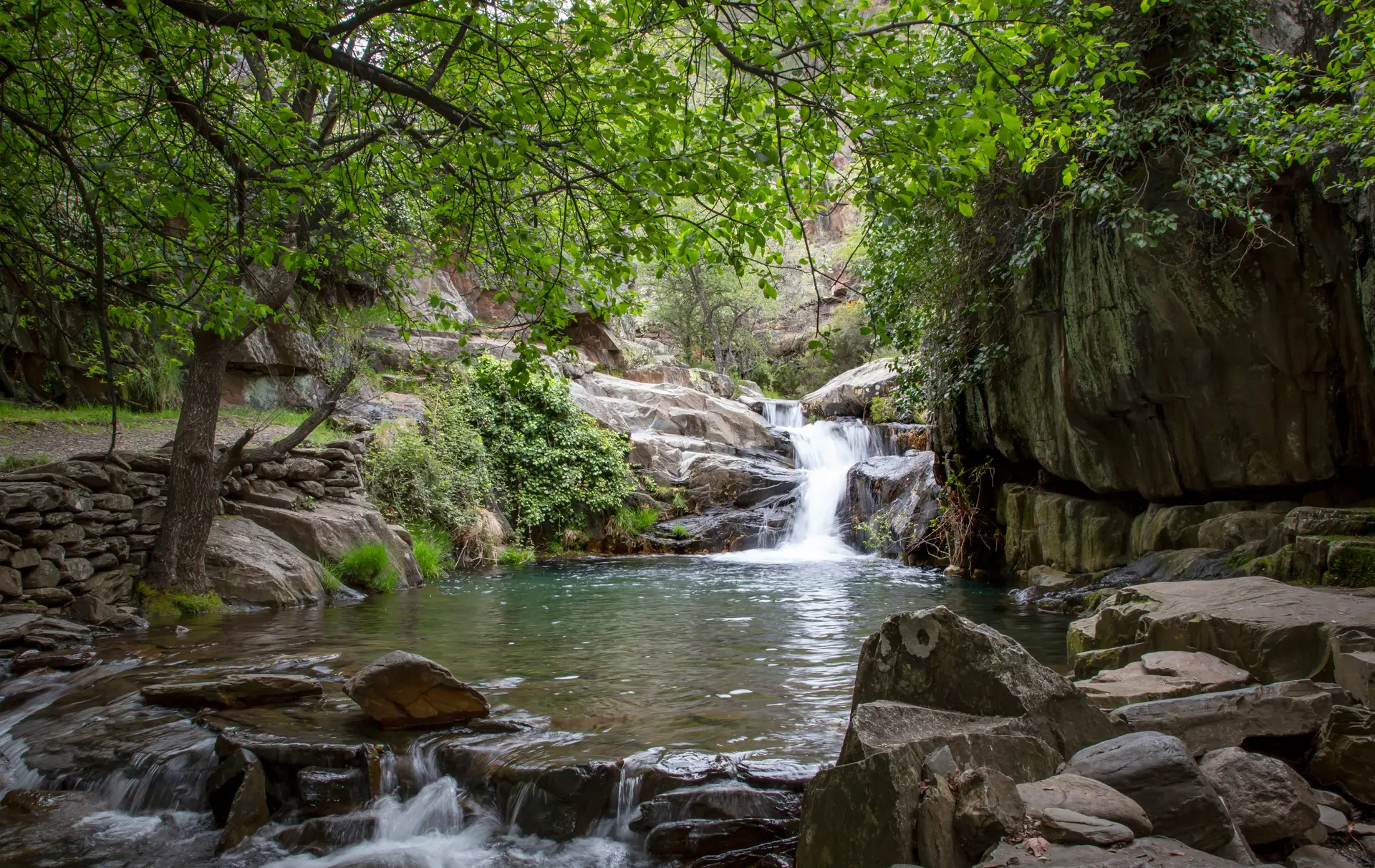
Natural Pools – The Ribeira de Palhais cuts through the valley, forming cold, clear pools perfect for a swim or riverside picnic.
There are no shops, no signal (except rare spots with MEO), no luxuries—and no distractions. In Drave, your only calendar is the sky.
Camping in Drave: What to Expect
Since 2003, the Corpo Nacional de Escutas (Portuguese Scouts) has adopted Drave as its National Rover Base. Thanks to their efforts, part of the village has been stabilised and cleaned, making it a base for learning, conservation, and community.
Wild camping is allowed, but basic. You’ll need to bring everything with you: tent, stove, food, water, sleeping gear, and a deep respect for Leave No Trace principles. Visitors typically pitch by the stream or near the restored scout structures if permitted. At night, the sounds of the river and rustling leaves replace any hum of modernity.
Tip: The skies here are exceptionally clear—bring a blanket and sit out for the stars.
Sample Itinerary: A Two-Day Escape
Day 1
Drive to Regoufe (approx. 2 hours from Porto)
Park at the trailhead and start hike by late morning
Arrive in Drave by early afternoon
Set up camp, explore ruins, cool off in the creek
Watch the sunset from the Solar steps or the chapel hill
Day 2
Early morning mist walk and quiet breakfast
Explore agricultural terraces and ruined mills
Break camp and hike out mid-morning
Stop in Regoufe for rest and refreshments before heading home
Why Drave Stays With You
A Place Where Time Stands Still There are few places left where silence feels sacred. The village’s amphitheatre-like valley absorbs sound, while its abandonment creates a strange peace. Time stretches out here in a way that’s rare and restorative.
A Story of Rural Portugal Drave isn’t just a picturesque ruin. It tells the story of land abandonment across Portugal’s interior. Entire generations left for the cities or emigrated abroad. By 2000, no one lived in Drave. What’s left behind is both haunting and beautiful—a monument to change.
A Beacon for Youth and Nature The Scouts’ ongoing presence here is more than symbolic. Their environmental education projects and restoration work are preserving this unique spot for future generations, making Drave one of Portugal’s few Centres of Excellence for Nature and Environment.
What to Bring: Essential Packing List
Solid hiking boots (essential for uneven terrain)
Minimum 2L water per person
Hat, sunscreen, and sunglasses
Food and high-energy snacks
Tent, sleeping bag, mat
Small stove and utensils
Torch or headlamp
Insect repellent
Offline maps (mobile signal is unreliable)
Trash bags to carry everything out
Note: If you plan to sleep in one of the scout-restored buildings, contact the Arouca Geopark or Drave Scout Base for permission.
When to Visit
Spring (April–June): Lush greenery and wildflowers
Autumn (September–October): Rich colours and milder temperatures
Winter: Atmospheric but cold—bring proper gear
Summer: Beautiful but exposed—go early and carry extra water
15 August: Festa de Nossa Senhora da Saúde brings rare crowds, music, and tradition
Final Thoughts
Drave is not an easy place to reach—and that’s exactly the point. You earn your entrance, and what you find is not a tourist site but a quiet reckoning with nature, history, and the passage of time.
There’s no ticket booth, no café, no postcard stand. Just a trail, a story, and the sound of water in the valley. What you carry in and what you take away—those are the real souvenirs.
If you’re seeking a hike that feels like time travel or a place to disconnect fully and wake to birdsong rather than notifications, then Drave may be one of Portugal’s best-kept secrets. Come prepared. Leave lighter. And let the magic do the rest.
GPS Coordinates for Drave & Trailhead
Aldeia de Drave: 40.861150 N, ‑8.117211 W
Trailhead parking (Regoufe area): ~40.876993 N, ‑8.133014 W
Use those GPS points to set your navigation system precisely.
Getting There by Car
From Porto or Lisbon, drive toward Arouca via A32 and EN326.
Near Regoufe, turn off onto M567 when you see signs for Regoufe.
Follow the village road into Regoufe. Parking options are limited—stop at the first safe layby or small parking area you find.
Some sources mention a rough dirt track driving close to Drave (~3.5 km) but it’s not recommended for regular cars; consider still hiking PR14 for safety and clarity,
Hiking from Regoufe: Trail PR14 “A Aldeia Mágica”
Trail length: ~4 km one way (~2 hours each way)
Difficulty: Moderate—steep in places, uneven terrain, minimal shade.
Well-marked with PR14 signage from Regoufe to Drave.
Suggested Route Step-by-Step
Set GPS or offline map to Regoufe trailhead: 40.876993 N, ‑8.133014 W
Park in Regoufe—spaces are scarce, so go early or midweek.
After about 4 km (~2 hours), you’ll arrive at slate structures, chapel, and natural pools. That’s Drave.
To return, retrace the path back to Regoufe.
When GPS Might Mislead
Some mapping apps show rough rural roads continuing toward the village—but these may be unpaved and hard to navigate. Best stick to the official trail unless you’re in a high-clearance, experienced off-road vehicle.
Quick Navigation Checklist
Step
What To Do
Set GPS
Enter coordinates 40.876993, ‑8.133014 for Regoufe parking
Park
In Regoufe near trail start
Hike
Follow PR14 signs — ~4 km to Drave
Arrive
Use destination coords 40.861150, ‑8.117211
Explore
Drave is walk-in only; no vehicle access
Return
Same trail back to Regoufe
Final Tips
Offline maps or GPX: Download a PR14 map beforehand, since mobile signal is spotty.
Trail conditions: After rain or in winter, the descent/ascent can be slippery and require more caution.
Time buffer: The short distance feels slow—don’t count on signal or shortcuts.
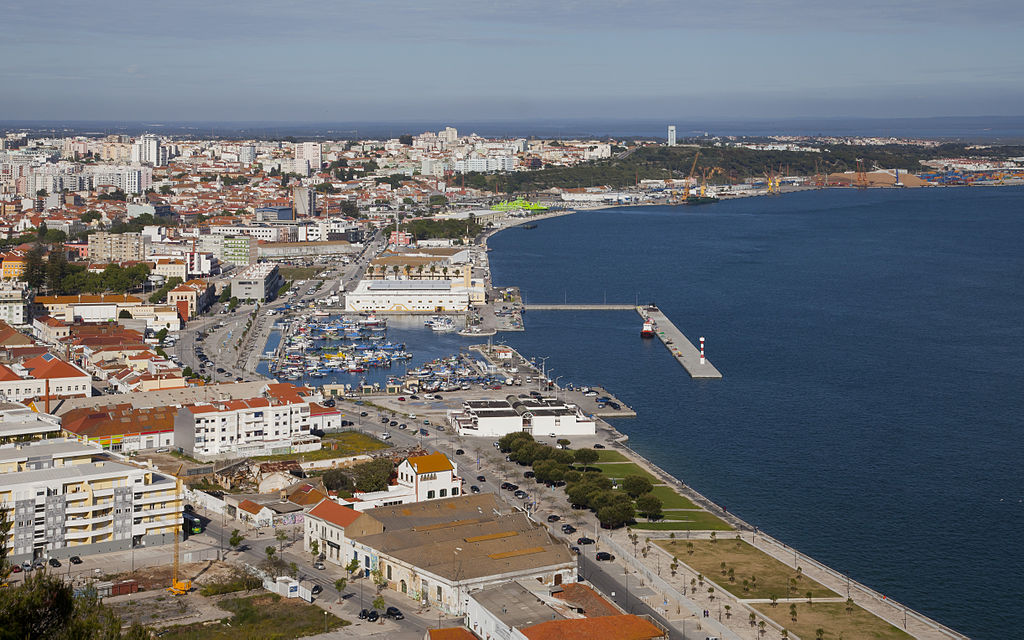
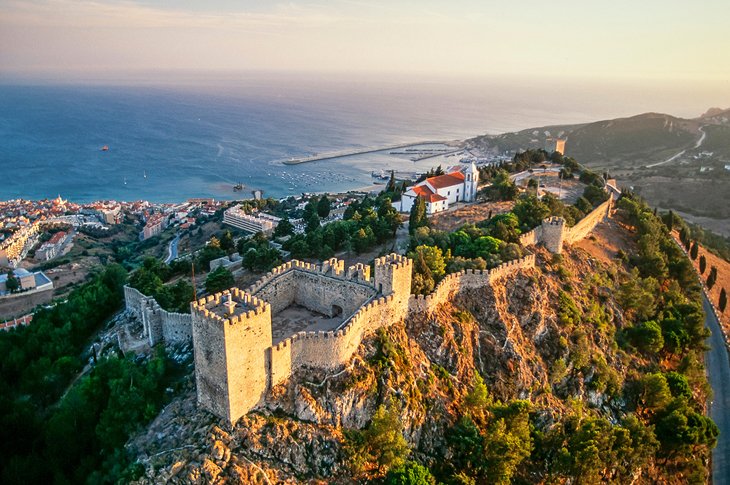
As soon as visitors to Setúbal begin exploring this colourful and active city, they shrug off its image as a busy industrial port. Setúbals connection with the sea is instantly obvious since it is located on the north bank of the River Sado, close to the estuary’s mouth. The wide Atlantic Ocean spreads out towards a steel-blue horizon from the castle high above the port.
Churches in the old town are clad with pleated stone that resembles a twisted rope. Restaurants around the waterfront sell iconic meals like choco frito, which is deep-fried cuttlefish seasoned with garlic and lemon juice. The estuary is a designated natural reserve that is a popular wintering spot for spirited dolphins and other species.
Hikers may explore the stunningly barren Serra to the west of the city, where they’ll find secret chapels and mediaeval castles nestled among emerald woods and fields of flowers. A chic resort on the other side of the harbour serves as the entrance to a quiet peninsula with golden beaches and small lagoons. They cultivate and fish like the Romans did here, and village life is a world away from the metropolis over the sea.
Castelo de São Filipe
The town’s castle dominates the skyline above Setúbal. The fort was constructed under Philip II of Spain’s instructions in 1595, and it is based on a star-shaped design created by Italian military architect Filippo Terzi. Also from Italy, architect Leonardo Torriana ensured that everything was in order.
The fortified fortification was built during the Spanish era to keep out pirates and English invaders. Heavy, more durable walls were constructed after the Portuguese Reconquest, as was a stone tunnel leading to the interior.
Tourists now besiege the castle, either to playfully scramble over the aged bastions or to stay at the pousada, an expensive inn built on 16th-century drawings.
It’s worth taking a look at a little church with intricately crafted tiles. The breathtaking vista of Setúbal, the glistening Sado estuary, and the distant Tróia peninsula, however, is the true lure.
Reserva Natural do Estuário do Sado
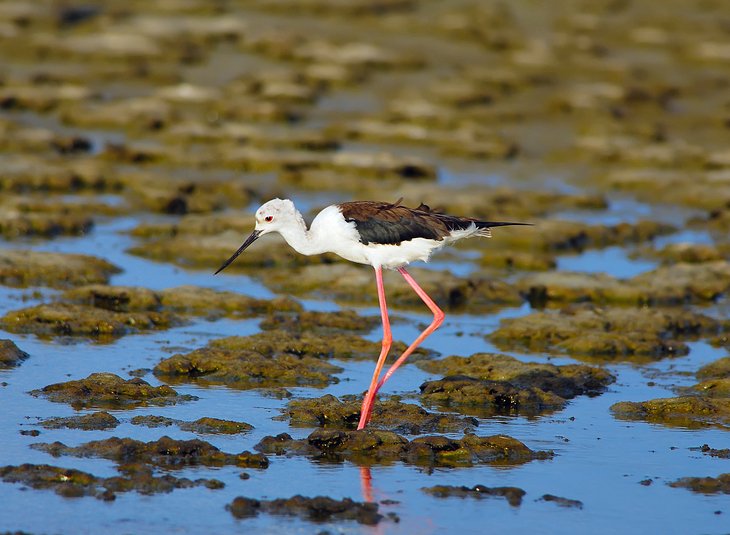
The Sado Estuary Natural Reserve attracts ornithologists. Around 220 bird species have been reported in open water, small lagoons, reed beds, and on the mudflats of the 23-hectare nature park.
The estuary is a popular wintering spot for a variety of birds, including razorbills, marsh harriers, flamingos, purple herons, and black-winged stilts. (For the finest picture opportunity, serious birders should visit between October and February.)
The area is home to fox, badger, mongoose, and the secretive genet. Most tourists, however, are captivated by the native bottlenose dolphin population. The estuary is their preferred site since it provides both food and shelter.
Address: Porto de Abrigo de Sesimbra, Avenida dos Náufragos, Sesimbra
Museu de Arqueologia e Etnografia
This little museum specialises in archaeology and is known for its lively ethnographic collection. Simple stone tools from the Paleolithic period are among the first artefacts on display in the permanent exhibition, which dates back to antiquity. Bronze Age pottery and Roman coins are more visible. A number of amphorae are on show, and the mosaic panels, which were also created by Romans, are one of the museum’s attractions.
The remarkable 19th-century devotional paintings on wood representing divine visions and miracles should also be noted. The majority of the eccentric ethnographic show is made up of local and regional arts, crafts, and industries – the traditional costumes are amusing, and the collection of ships and watercraft is the envy of any scale model boat lover.
Address: Avenida Luisa Todi 162, Setúbal
Igreja de Jesus
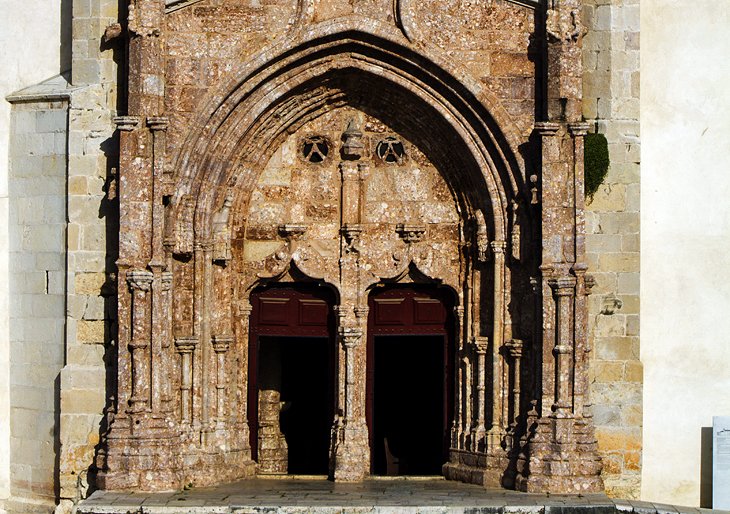
The filigree stonework that decorates this chapel will captivate fans of Manueline architecture. The monastery, which stands alone to the north of the old town, is one of the earliest structures in Portugal to be constructed in the Manueline style, a Portuguese form of Late Gothic that thrived during Manuel I’s reign in the 16th century.
The church, which was built in 1494 by architect Diogo Boitac, is a fitting tribute to the rising trend of using marine elements in architecture, such as plaited colonnettes that resemble twisted rope, which was inspired by Portugal’s Age of Discovery. If you imagine it, the internal columns may be huge lollipop sticks, and the elaborate ribbed vaulting could be a giant spider’s web embellishing the ceiling.
The nearby monastery has been converted into a museum with a notable collection of Portuguese and Flemish paintings from the 15th and 16th centuries. The 14-panel portrayal of Christ’s life by Jorge Afonso is the show’s centrepiece.
Location: Praça Miguel Bombarda, Setúbal
Castelo de Palmela
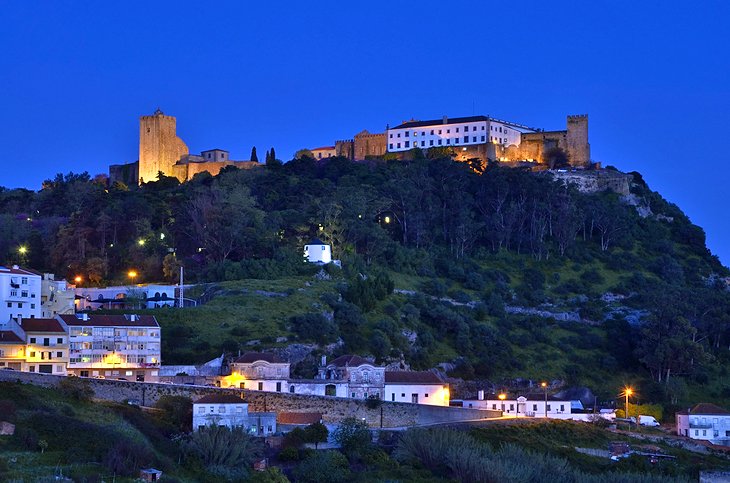
Before Christian armies ultimately took it, the Moors defended it with terrifying fury, and the fortress at Palmela has remained in remarkable good condition since the 12th century. The stronghold, which is strategically located above this charming hill town, was given a makeover in 1423 by King João I, who extended and fortified the walls before converting much of the structure into a monastery.
Today, it is a beautifully magnificent pousada, a historic hotel. The castle’s powerful ramparts may still be examined, and tourists can climb the 14th-century keep for views of the surrounding Serra da Arrábida, including distant Lisbon on a clear day. Wait until dark, when floodlight bathes the castle walls in a copper wash, for the greatest photos of the castle.
Parque Natural da Arrábida
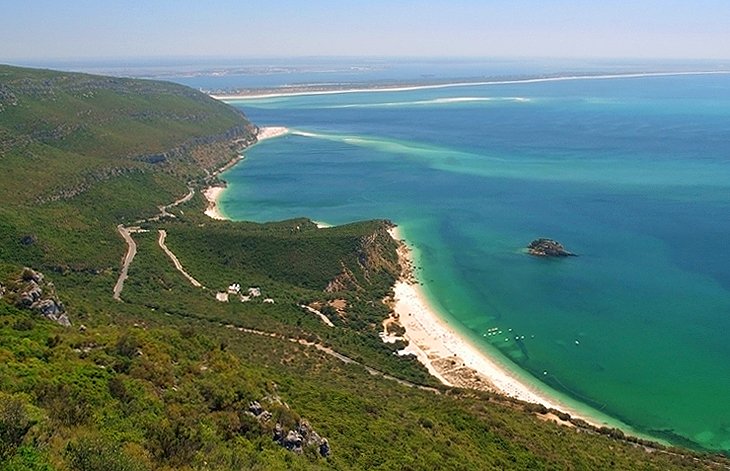
The Serra da Arrábida Natural Park combines a lush stretch of picturesque farmland with a stunning Atlantic Ocean shoreline in a wild and undulating landscape. The stunning backdrop is one of the area’s greatest natural attractions, consisting of a pristine terrain rich in cork, pine, and eucalyptus woods, thickets, meadows, and blankets of scented bushes.
Hikers will have a delight following the well-marked trails. Cyclists will like the vacant streets and hidden nature paths as well. The coastal nature of Arrábida is defined by precipitous limestone cliffs, secret caves, and half-moon coves. Sunbathers are drawn to pockets of golden sand, while scuba divers, snorkelers, and other water sports aficionados are drawn to the crystal-clear sea.
Portinho da Arrábida is a popular site that can only be reached by car along a steep, narrow road. Its teeny-tiny beach looks out over Pedra da Anixa, a rocky outcropping. The Museu Oceanográfico, a remarkable Sea Museum and Marine Biology Center situated in the 17th-century Fortaleza de Santa Maria, lies nestled above the village.
The park’s harsh and untamed landscape begs to be explored thoroughly, and the best way to do so is to join an organised Land and Sea Tour of Arrabida National Park. This operator follows health regulations by providing gloves, masks, and disinfection.
Address: Museu Oceanográfico, Fortaleza de Santa Maria, Portinho da Arrábida
Explore nearby Sesimbra
Sesimbra, about a 40-minute drive from Setúbal, is located in a protected south-facing harbour beneath the hills of the Parque Natural da Arrábida. The town features a picturesque old centre — a maze of cobblestone streets radiating around the 17th-century Fortaleza de Santiago, originally the seaside palace of the Portuguese monarchs — that combines fishing village charm with a bustling, seasonal resort ambience. During the day, the fort’s attractive terrace is available to the public.
The esplanade, which runs parallel to a big sandy beach, is dotted with a variety of cafés and one or two great seafood restaurants and makes for a delightful stroll. The fleet of fishing boats floating in Sesimbra’s harbour, the Porto do Abrigo, exemplifies the city’s dynamic personality.
The hike up to the reconstructed Moorish castle, which sits high above the town, is another worthwhile activity in Sesimbra. The spectacular panoramic views from the robust battlements are well worth the arduous trek, and there’s a café to unwind in afterwards.
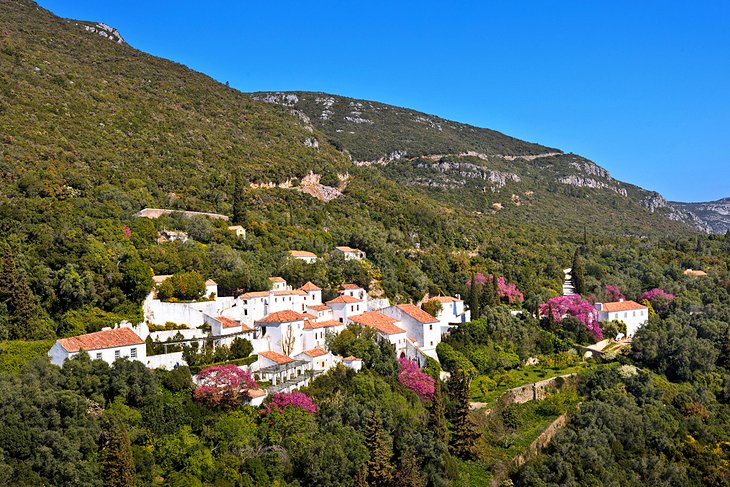
Convento da Arrábida
This 16th-century monastery is half-hidden amid the trees of the Serra da Arrábida, providing the most exquisite setting of any tourist destination in the area.
The whitish cluster of buildings with terra-cotta roofs, which was founded in 1542, really surrounds two monasteries. The remains of the ancient convent are located on the topmost portion of the hillside and are in a terrible state of decay; the later structure, which is in considerably better condition, is located further down the slope.
The stunning views from the newer Franciscan retreat, which overlooks the Atlantic Ocean, are motivation enough to visit this remote location. A visit of the grounds, on the other hand, would discover four chapels and a number of tower-like shrines, which are likely utilised for meditation. There are also a number of cells carved out of limestone rocks that may be viewed.
The inside of the monastery is nondescript for the most part, save for the gilded woodwork and azulejo (tile) panels that adorn the walls.
Address: Serra da Arrábida, Azeitão
Península de Tróia
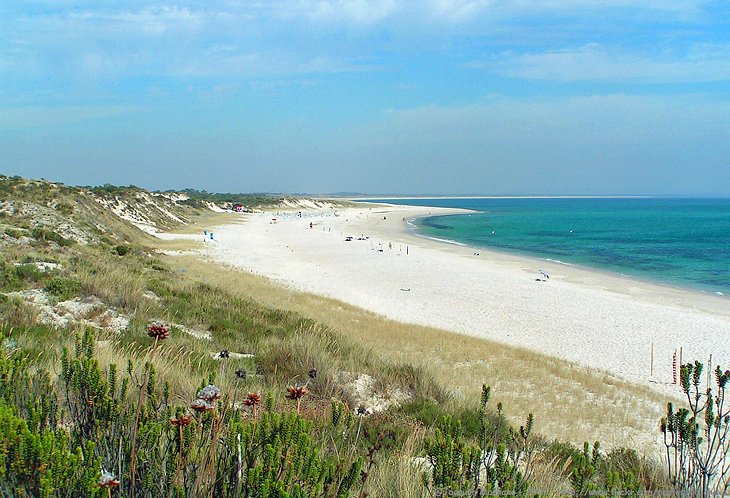
The long, narrow Tróia peninsula, located in the Alentejo area, sits just across from Setúbal. This appealing site, easily accessible by automobile or passenger ferry, boasts the greatest beaches in the area: swaths of golden sand on the western edge span the whole length of the spit.
Tróia, an exclusive resort with hotels, residences, a marina, and a neighbouring golf course, is located at the northern extremity of the island. The boardwalk is lined with chic cafés and bistros.
Traditional fishing villages dot the peninsula’s eastern flank, which overlooks the warm, shallow waters of the protected Reserva Natural do Estuário do Sado, a haven for birdlife and schools of friendly bottlenose dolphins that can be seen during specialised sightseeing cruises that depart from the Tróia pontoon.
Rice paddies can be found growing alongside reed beds and wetlands. The Romans felt at ease here and established Cetóbriga as a fish farm. Comporta, farther south on the peninsula’s heel, is noted for its nesting white storks and one of Portugal’s best beaches, with a selection of wood-decked eateries specialising in grilled fish and shellfish.
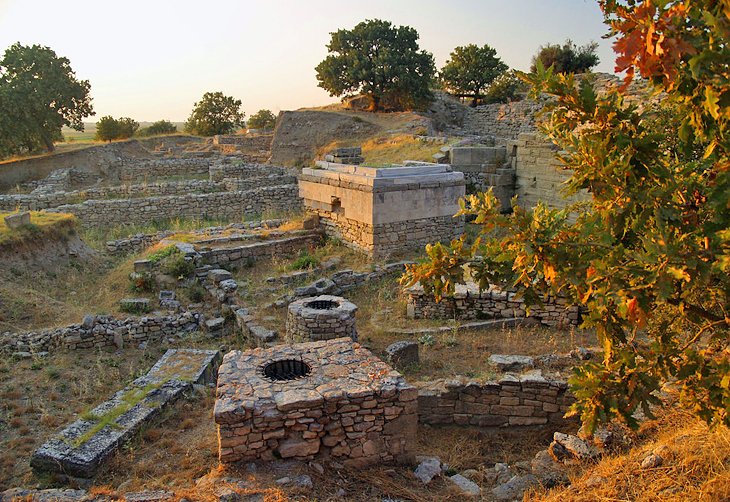
Cetóbriga
Cetóbriga was created by the Romans in the late third century AD to develop a fish-salting enterprise, and the town prospered. The stone tanks used in the operation, as well as the foundations of the many buildings and businesses that rose up in and around the town centre, can still be seen. There are also the remnants of baths, villas, and tombs, as well as patchy mosaic and marble lining.
Cetóbriga was a bustling harbour, and while the companies that made condiments have vanished, remnants of the columns that supported the roofs may still be seen.
The town’s history and the industries that brought it fortune are explained on information panels in Portuguese and English, which add to the tourist experience.
Artist’s impressions depict how the complex might have appeared and aid in the recreation of what was surely a thriving and ambitious community.
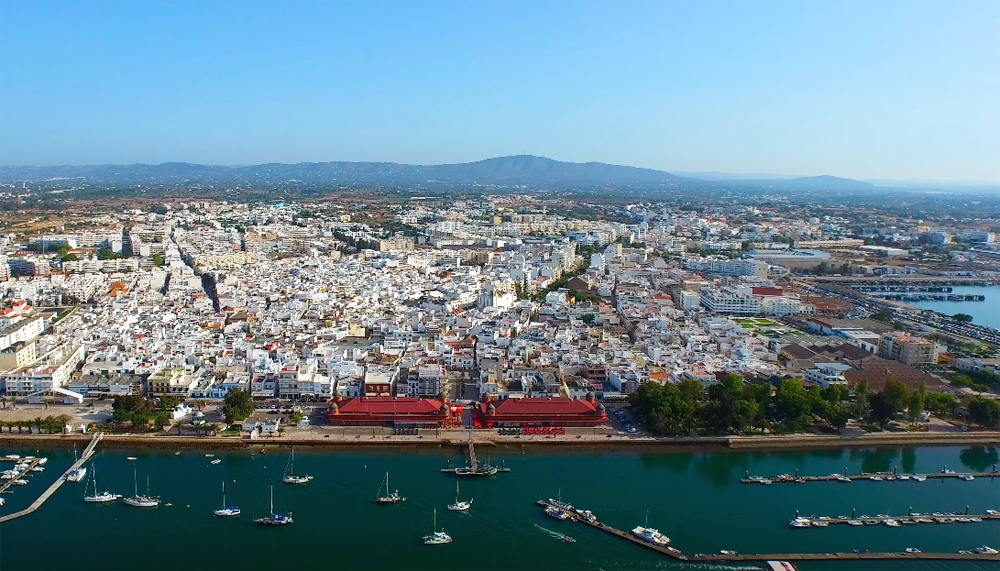
Olhão, formally known as Olhão da Restauração, is a city and municipality in the Algarve area of southern Portugal.
The tiny alleyways of this picturesque and busy fishing harbour have a unique North African feel to them. The flat-roofed cottages gathered near the riverbank have a Moorish style hallmark, a relic from the days when Olhão traded with Morocco.
There are no noteworthy historical attractions in town. Instead, you’ll find a plethora of other enjoyable activities. Visitors are attracted by Olhão’s local culture, especially while browsing the busy harborfront market or wandering down the colourful Avenida da Repblica, the main boulevard.
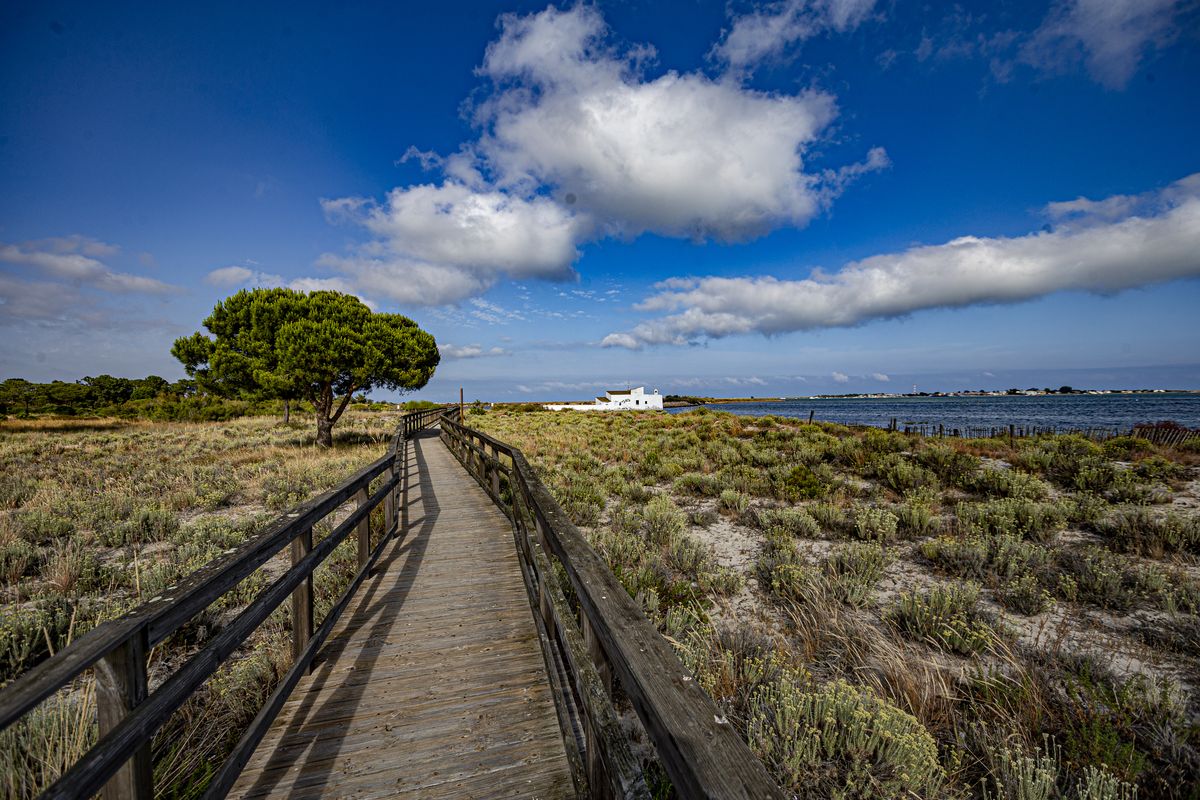
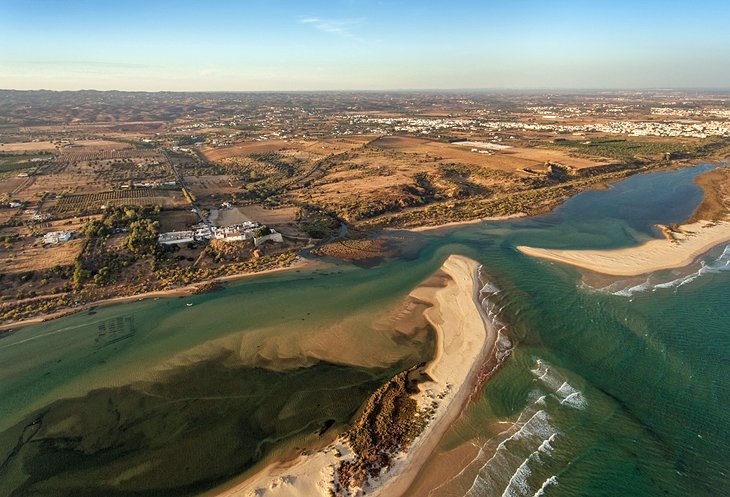
Olhão is also a great place to start exploring the Ria Formosa National Park and the sandbank islands of Armona, Culatra, and Farol. The protected natural park is a home for marine life, and a sightseeing boat is an ideal way to enjoy this spectacular but delicate ecosystem. For sunbathers, the island beaches are serene, remote, and mostly unspoiled by commercialization.
Mercado
When Olho’s market opens, it’s typically still dark, and if you come before dawn, you may see groups of grizzled fishermen landing their catch on the harbourside. Business begins early in this town, and before daybreak, locals are already scouting out the finest deals.
The covered market is split by two early-20th-century redbrick structures with onion-domed corner turrets. The one on the left holds the fish market, while the one on the right sells meat, fruits, and vegetables. Both are lively by mid-morning. The variety of fish and seafood available is astonishing.
Marble-topped tables groan beneath the weight of glistening tuna, sea bass, and the ever-present sardine. In the second hall, the entire Algarve countryside appears to be for sale. Look for delicacies such as luscious figs and gorgeous pumpkins.
Come on a Saturday morning for a special treat, when outdoor merchants surround the quay and lure consumers with flowers and handmade jams.
Address: Avenida 5 de Outubro, Olhão
Quinta de Marim
Olhão is located on the border of the Parque Natural da Ria Formosa, and the park’s headquarters, Quinta de Marim, is three kilometres east of the town centre. The very rudimentary structure, which is located within the protected area, also serves as an environmental education centre.
The peaceful area is great for walking, and you may spend several hours following a designated nature route from the car park that meanders through conifer woods, coastal dunes, mudflats, salt marsh, and freshwater lagoons.
An antique tidal mill, the last of 30 that formerly operated on the Ria Formosa, is an intriguing archaeological site along the journey. Further up, the ruins of five Roman salting tanks from the 2nd century may be found.
The park is a birder’s heaven, with flocks of white storks regularly seen flying overhead, spiralling on a thermal. The uncommon purple gallinule is among the many resident wading birds, while the larger flamingo is a seasonal treat.
Keep a watch out for fiddler crabs, the innocuous viperine snake, and, if you’re lucky, the Mediterranean chameleon.
The route finally returns to the visitor’s centre in a circle.
Parque Natural da Ria Formosa
The protected Ria Formosa Natural Reserve covers 60 kilometres of the Algarve coastline, from Praia de Faro to Cacela Velha, and is one of Europe’s most important wetlands and a coveted draw for travellers who enjoy nature and the outdoors.
The lagoon region of marshes, salt pans, islands, and channels provides a home for resident and breeding wetland birds, including the uncommon purple gallinule. Numerous fish species can also be found in the lagoon waters.
A series of barrier islands — in reality, massive sand dunes – protect this pristine area from the Atlantic Ocean, acting as natural anchors for diverse flora and attracting fauna such as snakes, toads, and the secretive Mediterranean chameleon.
Nossa Senhora do Rosário
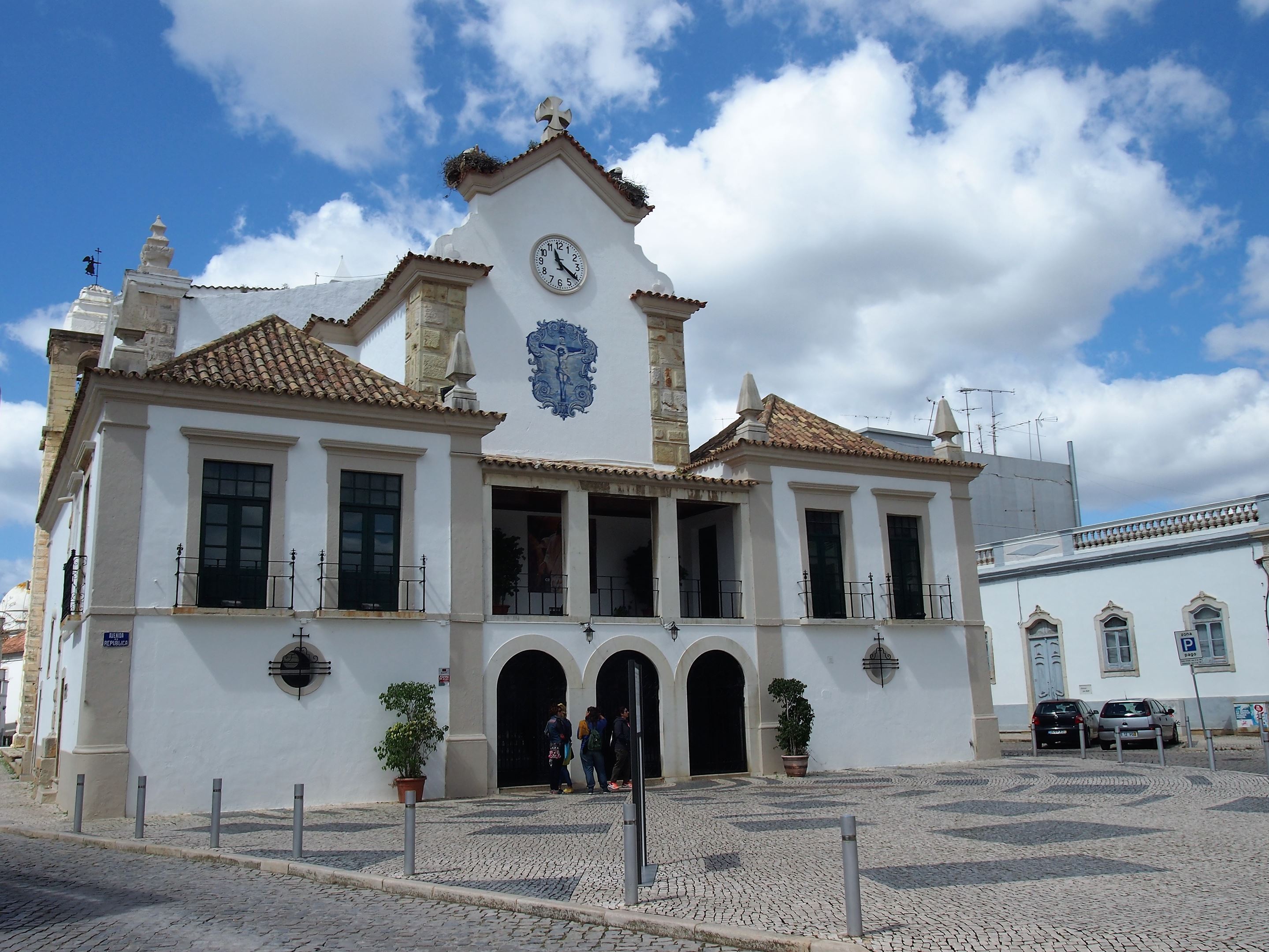
Exploration of the parish church of Our Lady of the Rosary should be included in Olhão old town sightseeing. This is the town’s most famous historic edifice, built between 1681 and 1698 and totally funded by donations from local fishermen.
Its whitewashed Baroque façade gleams in the sunlight, but it’s the exterior chapel of Nossa Senhora dos Aflitos, located at the back of the church, that draws the most attention. In a centuries-old custom, women still gather here to pray for the safety of their husbands when there is a storm at sea — a touching gesture of love.
Inside, if it’s open, tourists may climb the bell tower for breathtaking views of the old town centre’s network of alleys and flat-roof terraces, as well as the Ria Formosa beyond.
Address: Praça da Restauração, Olhão
Ilha da Armona
A series of barrier islands — flat, thin sand bars that are part of the protected Parque Natural da Ria Formosa – shield Olhão from the open sea. Ilha da Armona, a beautiful nine-kilometre sand bar accessible by ferry from the town’s seafront, is one of them.
Armona Island is a popular day-tripper destination in the summer, with holiday homes and a number of cafés. The swaths of beautifully smooth, white sand, on the other hand, are what lure people, and the further you walk away from the ferry pontoon, the less likely you are to share the beach with anybody else. Bring a picnic lunch and lots of sunblock.
Ilha da Culatra
The village of Olhão is connected to a series of barrier islands, which are long, narrow swaths of sand that protect the Parque Natural da Ria Formosa from the open sea.
Culatra is one of the busiest islands, with a population of roughly a thousand people living in Culatra settlement, on the spit’s eastern edge. The islanders avoid the trappings of contemporary life (no automobiles) in favour of a more traditional way of life that attracts visitors. Fishing is the major source of income, which explains why the seafood restaurants in the Algarve are among the best.
Another appealing aspect is the beach, which is a lengthy stretch of velvety white sand.
Ilha do Farol
The main feature of this famous holiday spot is a tall, scarlet-topped lighthouse (Farol). Farol is still part of Ilha da Culatra, but because the lighthouse is located on the island’s western edge, inhabitants refer to the region as “Ilha do Farol.”
There is a daily ferry service between Olhão and Faro, and tourism is well developed. Near the jetty, there are clusters of holiday houses and several good eateries. The wide beach is known for its vibrant cafés.
Museu da Cidade
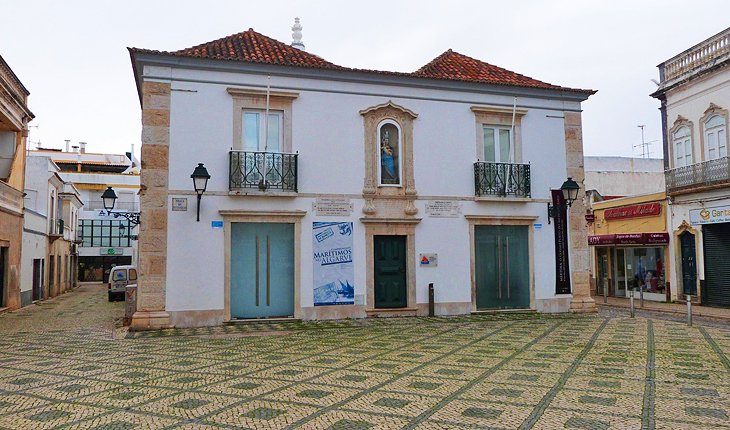
Olhão’s lively City Museum is situated in an 18th-century manor house that originally served as the Maritime Commission’s headquarters and is architecturally significant.
The museum’s collection is essentially an illustrated history of the town and its vicinity. Bronze-Age pots, Iron-Age tool parts, and Roman and Islamic vases are among the archaeological artefacts on show on the ground level, which are modest yet intriguing.
Upstairs, a range of objects, including 19th-century fishing tackle and equipment, oil presses, and an exhibition of miniature fishing boats, illustrate Olhão’s industrial and nautical background. The walls are covered in vintage black-and-white images of Olhão and its people.
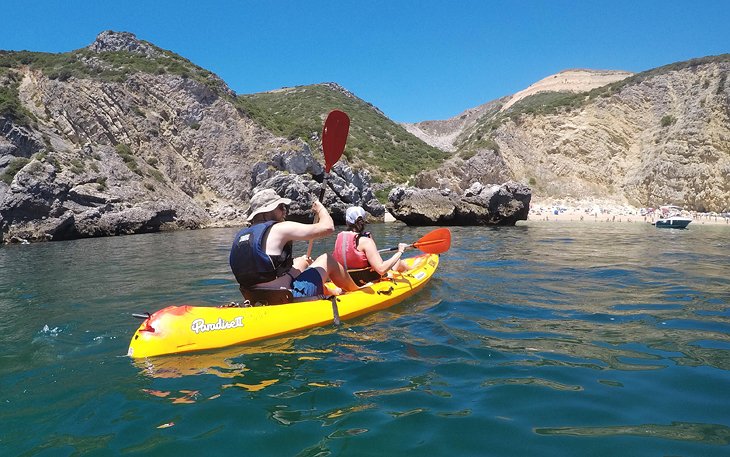
Kayaking off Ribeira do Cavalo Beach near Sesimbra | Photo Copyright: Paul Bernhardt
Taking to the sea in a kayak to explore the Lisbon coast is a rewarding marine adventure. Paddling the shoreline not only adds another depth to the tourist experience but also gives a good reason to exercise in a salt-laced, clean setting.
Indeed, Lisbon’s proximity to the sea provides for a variety of fascinating water activities and exploring the beaches, bays, and coves located between the Portuguese city and the resort town of Cascais is a fun-filled way to spend a day.
Beyond the region, the crystal-clear seas of the Serra da Arrábida Natural Park, which includes Setubal and Sesimbra, provide a one-of-a-kind environment of spectacular, historic coastal cliffs teeming with birds.
The majority of the coastline here is a protected marine reserve – a refuge that contains the stunningly beautiful Ribeira do Cavalo beach.
Hiking the Gerês Mountain Range
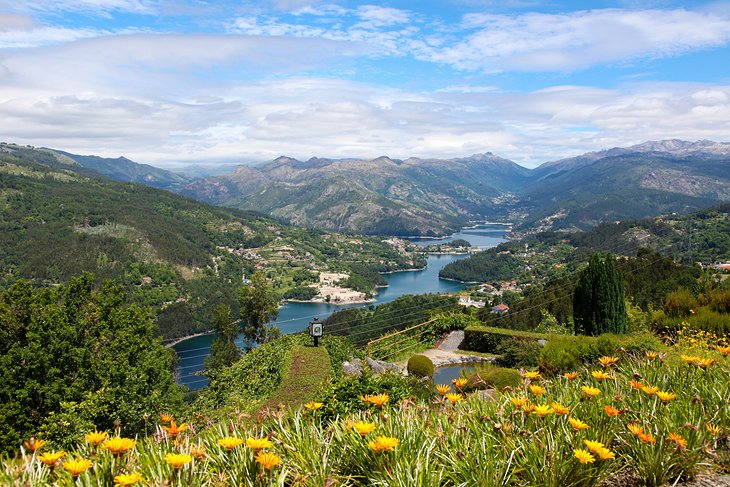
View of the Lima River meandering through Peneda Geres
The Serra do Gerês is a magnificent mountain range in northern Portugal’s rural Minho area. The granite peaks that characterise the nature of this enormous national park, set inside the gorgeous Parque Nacional da Peneda-Gerês, one of the best locations to visit in Portugal, are among the tallest and most spectacular in the country.
The Gerês Mountains, one of Portugal’s most popular natural attractions, attract walkers, hikers, and outdoor enthusiasts to one of Europe’s last great wildernesses, a stark and rugged landscape noted for its lush valleys dotted with shimmering lakes, a scattering of traditional villages, rare flora and fauna, and a way of life that has all but disappeared from the rest of the country’s mountain regions.
The region is crisscrossed with old granite routes that hikers may follow for a casual stroll or a demanding day excursion. The majority of the courses range in length from 10 to 16 kilometres and have varied gradients.
Alentejo by Horseback
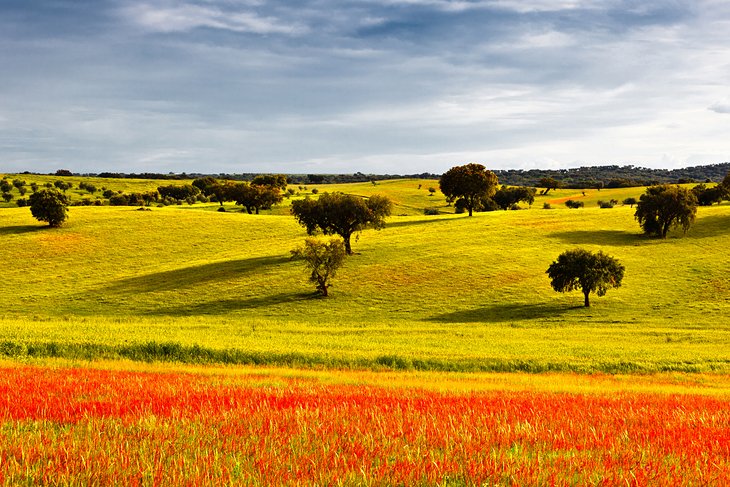
Typical Alentejo landscape in spring
Exploring the Alentejo on horseback is one of the best things to do, whether it’s following a tiny, babbling stream, traversing a flower-flecked meadow, or slogging over a soft, sandy pathway.
The area is recognised for its love of horses — the lovely and mild-mannered Lusitano breed is connected with this part of Portugal, particularly in villages like Alter do Chão, which is home to the Coudelaria de Alter stud.
Leisurely rides in the countryside or along the shore may be enjoyed with skilled guides who were almost born in the saddle. Comporta is a popular coastal resort; inland, visit Alcácer do Sal on the Sado River and Ourique, which lies deep in the wooded hinterland.
Cross-Border Zipline, Alcoutim
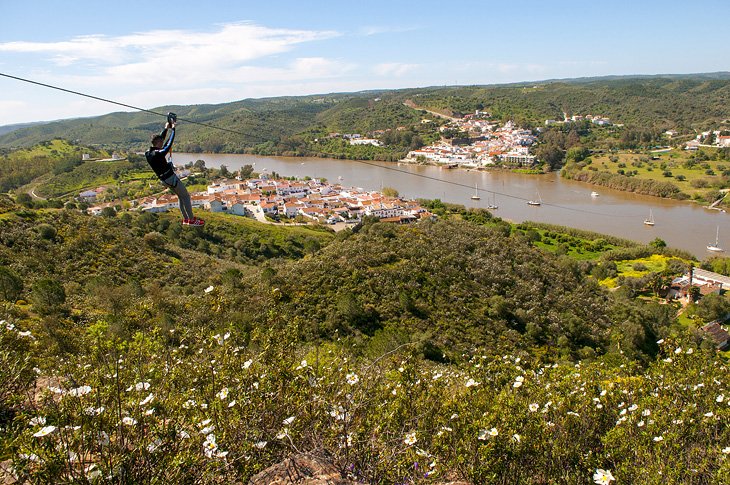
Cross-Border Zipline, Alcoutim | Photo Copyright: Paul Bernhardt
This is one of the country’s most adventurous and unconventional tourist attractions, spanning Spain and Portugal and currently the world’s only cross-border zipline. The 720-meter-long line connects Sanlcar de Guadiana in Spain’s Huelva province to Alcoutim in the extreme north of the Algarve. It spans the large and flowing River Guadiana.
Participants, who are fully equipped with safety harnesses and helmets, take off from a takeoff platform high above the river, overlooking the peaceful town of Sanlcar. They practically fly through time as they cross the river at speeds ranging from 70 to 80 kilometres per hour, gaining one hour due to the time difference between the two nations.
The journey is thrilling and completely unique, offering a completely distinct Algarve tourist experience, and it’s not every day that you can brag about moving from one nation to another in under one minute!
Paiva Walkways (Passadiços do Paiva), Arouca
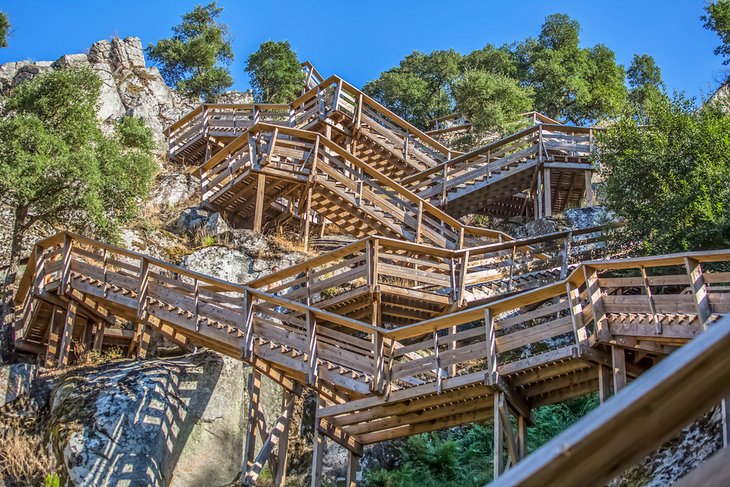
The Paiva Walkways
This award-winning project, known as the Paiva Walkways, checks all the environmental boxes. The Paiva Walkways, located outside the town of Arouca, 70-kilometre drive north of Aveiro in central Portugal, offer a challenging but highly rewarding eight-kilometre hike along an elevated boardwalk that dips, climbs, and meanders through the Arouca Geopark – an unspoiled landscape of outstanding beauty and a biodiversity hotspot.
The trek begins at Areinho and follows the pristine River Paiva downstream for a portion of the route. You’re soon wandering through a difficult, rarely seen set of tranquil, lush woods and vast, gaping canyons.
You’ll encounter cascading waterfalls and tranquil, mirror-like ponds along the route. The walk frequently entails navigating long flights of zigzagging stairs over high inclines: the path truly tests the stamina and physical condition.
The trek takes around 2.5 hours and ends at Espiunca. Don’t forget to bring sunscreen, energy foods, and lots of water.
Côa Valley Archaeological Park (Parque Arqueológico do Vale do Côa), Vila Nova de Foz Côa
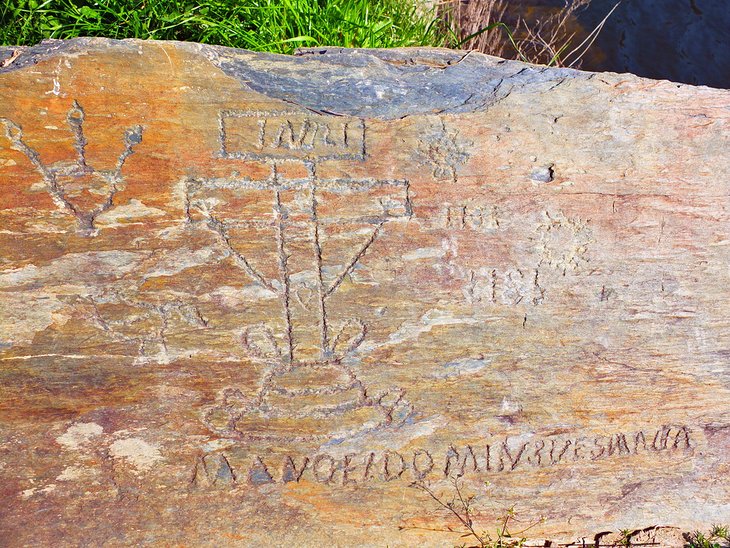
Prehistoric carvings in Côa Valley Archaeological Park
In the early 1990s, a team of engineers surveying a valley of the River Côa in northern Portugal for the construction of a dam uncovered hundreds of prehistoric rock engravings carved into massive slabs of granite. It was an exceptional and unusual find.
The dam project was then abandoned, and the carvings — which depict horses, livestock, weaponry, and human and abstract forms and date back 22,000 years BCE – were finally proclaimed a UNESCO World Heritage Site.
Visitors may now appreciate this ancient rock art maintained in situ at the Côa Valley Archaeological Park by taking an all-terrain vehicle tour. They may also learn more about the history of the artwork and explore the valley through multimedia, photography, and photographs of the engravings at the fantastic Côa Museum, which is located at the park’s entrance.
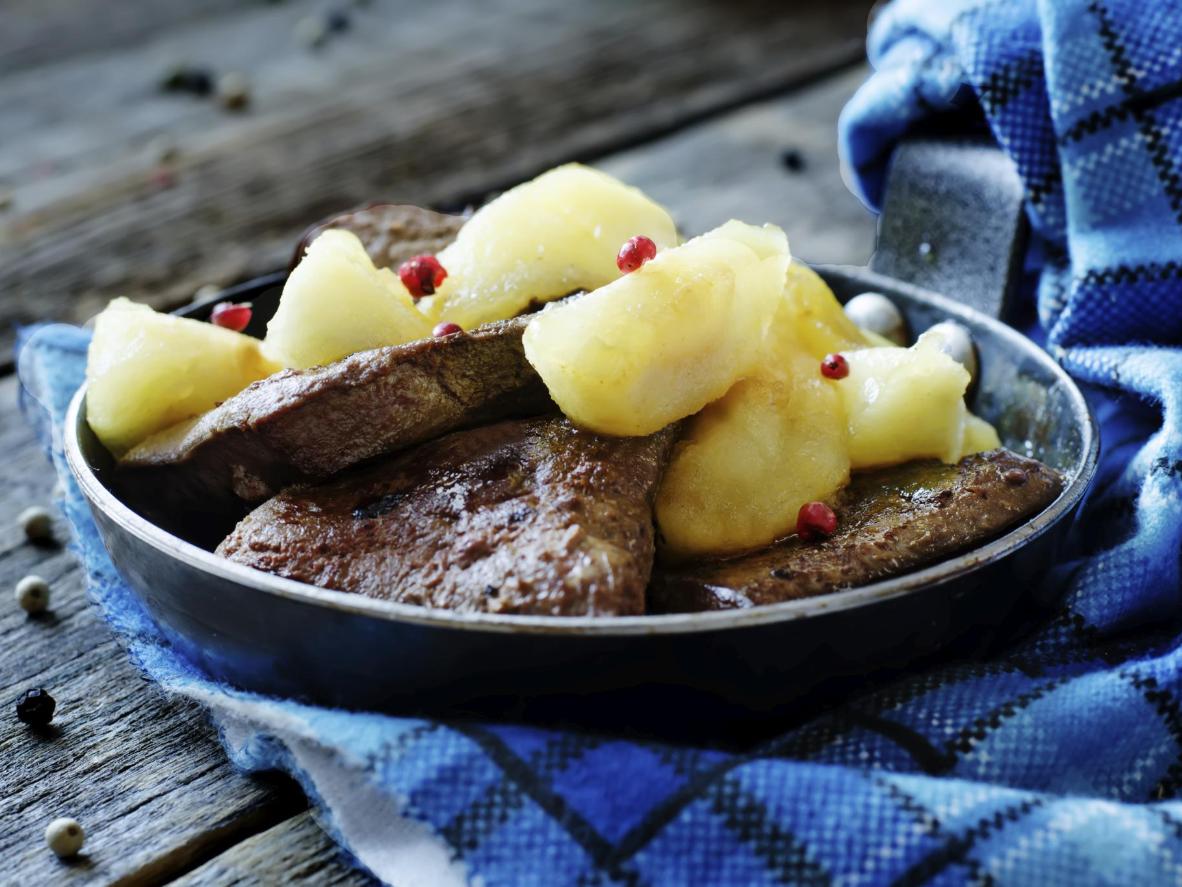
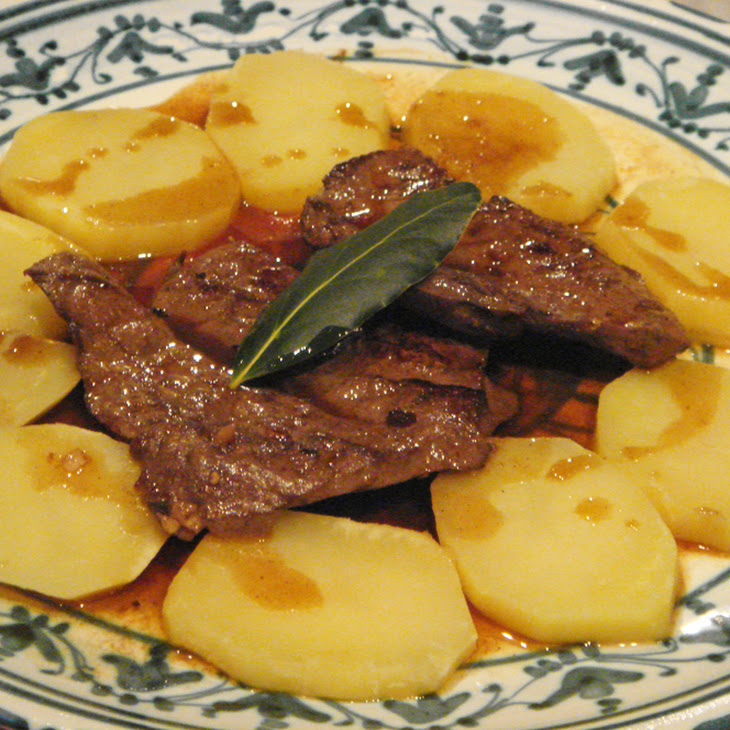
Iscas com Elas are a very famous and traditional Portuguese liver with potatoes dish. There are various ways to cook this dish, and you can either use pork or calf liver. These finely sliced livers are marinated with very simple ingredients, this simplicity results in the livers keeping their own intense flavour and rich texture. They are served with boiled sliced potatoes to properly even out the flavours.
Ingredients: 1 lb. pork or calf liver 3 tablespoons butter 4 garlic cloves, minced 1 bay leaf 3/4 cup white wine 1 tablespoon vinegar 1/2 lbs. potatoes 1 tablespoon parsley, chopped Salt and pepper to taste
Directions: 1) Cut the liver into thin slices and place in a bowl to marinate with white wine, vinegar, minced garlic, bay leaf, salt and pepper to taste. Let it marinate for about 3-4 hours. 2) Boil the potatoes in a saucepan with water with their skin. Once they are done, remove the skin and slice them thinly. 3) In a frying pan, add the slices of liver and place them on medium heat. Cook them in the butter until they are well browned. 3) Pour the marinade into the pan and bring it to a boil. 4) Immediately serve on a plate and accompany with the sliced potatoes. 5) Sprinkle with chopped parsley and serve while hot.
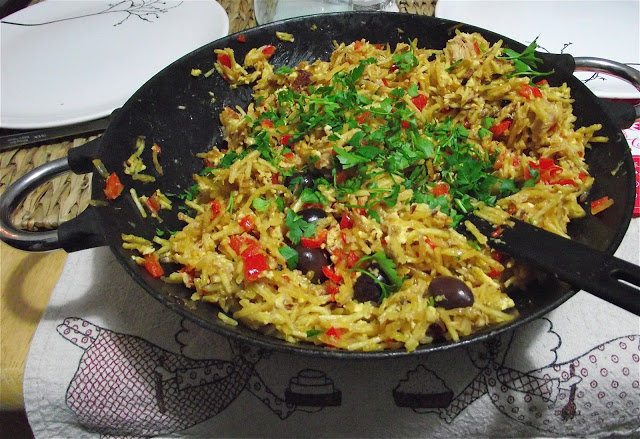
Atum à Brás is Portuguese Tuna à la Brás, a delicious creamy tuna and egg dish similar to Bacalhau à Brás which uses canned tuna, eggs, and french fries along with some vegetables in a healthy and easy make dish. This is a unique Portuguese dish that combines very simple ingredients in a flavorful dish, perfect for cooking without much fuss.
*Serves 2-3* Ingredients: 2 cans of tuna 1 onion, finely chopped 1/4 cup olives 1 red bell pepper, finely chopped 3 cloves of garlic 1/4 cup heavy cream 1 tablespoon olive oil salt and pepper to taste 2 tablespoons chopped parsley 1/2 lbs. French fries, chopped thinly 6 eggs, beaten
Directions: 1) In a large frying pan, add the olive oil with finely chopped onion and garlic and cook on medium heat until they are slightly browned. 2) Now add the canned tuna, chopped pepper, and french fries and season with salt and pepper to taste. 3) Add the beaten eggs and heavy cream to the pan and continue cooking until the eggs are cooked well but not too much so that the dish remains creamy. Stir it well as it cooks. 4) Once the egg has cooked, cover with the parsley and olives and stir it well. Serve.
Pastéis de Bacalhau is one of the most popular and traditional foods in Portuguese cuisine. They are famous for good reason, they utilize one of the most significant ingredients in Portuguese gastronomy, bacalhau. There are many ways to cook bacalhau or salted cod, and this is certainly one of the best. The salted cod deep-fried fritter style is absolutely one of my favourite ways of enjoying bacalhau. They can be served as an accompaniment or on their own with some rice as a meal and are always sure to impress.
Ingredients: 2 cups milk 4 potatoes, chopped 1 onion, finely chopped 4 garlic cloves, minced 1 pound salted cod (If you can’t find this locally, you can always buy some easily here on Amazon) 1 tablespoon parsley, finely chopped 1 tablespoon cilantro, finely chopped 2 eggs Salt and pepper to taste 1 cup vegetable oil, for frying 2 lemons sliced thinly 1/2 cup black olives for garnish
Directions: 1) Soak the dried cod in cold water for a day, changing the water 3-4 times. 2) Drain the cod, rinse, and put it in a large pot. Add the milk and enough water to cover an inch. 3) Simmer gently over medium-low heat for 20 to 25 minutes, until the cod is tender. 4) Drain and rinse the cod well, removing any little bits of skin and bone. 5) While the cod is cooking, pour 1-inch of water in a large pot. 6) Add the potatoes and simmer on medium heat for 20 to 25 minutes until very tender. 7) Drain the potatoes, peel off the skins, and mash them well with a potato masher. 8) In a bowl, add the cod to the potatoes, along with the onion, garlic, parsley, cilantro, and eggs. 9) Beat the mixture firmly with a spoon until it is a smooth and even consistency. Season with salt and pepper to taste. 10) Shape the cod mixture into medium-sized cylinder-shaped pieces. 11) Pour the oil into a deep heavy skillet or pot and place it on high heat. 12) Add the pieces one by one, turning them over until they are golden brown. 13) Once done remove the pieces and place them on a plate with paper towels to dry. 14) Serve while hot with the sliced lemons for extra flavour.
We use cookies on our website to give you the most relevant experience by remembering your preferences and repeat visits. By clicking “Accept All”, you consent to the use of ALL the cookies. However, you may visit "Cookie Settings" to provide a controlled consent.
This website uses cookies to improve your experience while you navigate through the website. Out of these, the cookies that are categorized as necessary are stored on your browser as they are essential for the working of basic functionalities of the website. We also use third-party cookies that help us analyze and understand how you use this website. These cookies will be stored in your browser only with your consent. You also have the option to opt-out of these cookies. But opting out of some of these cookies may affect your browsing experience.
Necessary cookies are absolutely essential for the website to function properly. These cookies ensure basic functionalities and security features of the website, anonymously.
Cookie
Duration
Description
cookielawinfo-checkbox-analytics
11 months
This cookie is set by GDPR Cookie Consent plugin. The cookie is used to store the user consent for the cookies in the category "Analytics".
cookielawinfo-checkbox-functional
11 months
The cookie is set by GDPR cookie consent to record the user consent for the cookies in the category "Functional".
cookielawinfo-checkbox-necessary
11 months
This cookie is set by GDPR Cookie Consent plugin. The cookies is used to store the user consent for the cookies in the category "Necessary".
cookielawinfo-checkbox-others
11 months
This cookie is set by GDPR Cookie Consent plugin. The cookie is used to store the user consent for the cookies in the category "Other.
cookielawinfo-checkbox-performance
11 months
This cookie is set by GDPR Cookie Consent plugin. The cookie is used to store the user consent for the cookies in the category "Performance".
viewed_cookie_policy
11 months
The cookie is set by the GDPR Cookie Consent plugin and is used to store whether or not user has consented to the use of cookies. It does not store any personal data.
Functional cookies help to perform certain functionalities like sharing the content of the website on social media platforms, collect feedbacks, and other third-party features.
Performance cookies are used to understand and analyze the key performance indexes of the website which helps in delivering a better user experience for the visitors.
Analytical cookies are used to understand how visitors interact with the website. These cookies help provide information on metrics the number of visitors, bounce rate, traffic source, etc.
Advertisement cookies are used to provide visitors with relevant ads and marketing campaigns. These cookies track visitors across websites and collect information to provide customized ads.