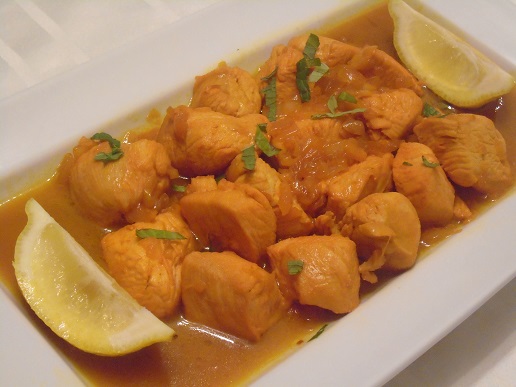
Chicken Mozambique is a popular Portuguese dish that combines tender chicken in a delicious lemon garlic sauce. The addition of some spicy and flavorful African Piri Piri sauce is what completes this already delicious dish. Chicken Mozambique is great because it is not difficult to make and is always sure to impress. It is most typically served alongside a side of white rice or french fries.

*Serves 1-2*
Ingredients:
2 tablespoons olive oil
2 pounds chicken breast, cubed
3 tablespoons butter
1 onion, diced
1 teaspoon salt
2 tablespoons garlic, chopped
1 teaspoon lemon juice
6 oz beer
2 sazon goya con azafran packets
2 tablespoons Piri Piri
1 teaspoon cilantro chopped to garnish
2 lemon quarters to garnish

Directions:
1) In a large frying pan, sauté the chicken cubes in the olive oil on medium to high heat. Season with a teaspoon of salt.
2) Once cooked through, remove the chicken and set it aside in a bowl.
3) Add the onions and garlic to the pan along with 1 tablespoon of the butter. Stir as it cooks.
4) Pour half of a beer, 6 oz, into the pan and stir to deglaze the pan.
5) Add the chicken back to the pan along with the Piri Piri sauce, lemon juice, two packets of sazon goya, and the rest of the butter.
6) Let it simmer for 2 to 3 minutes on medium heat while stirring occasionally.
7) Once done, remove from the pan and place onto a serving platter.
8) Garnish with chopped cilantro and lemon quarters. Serve along with some white rice while hot.

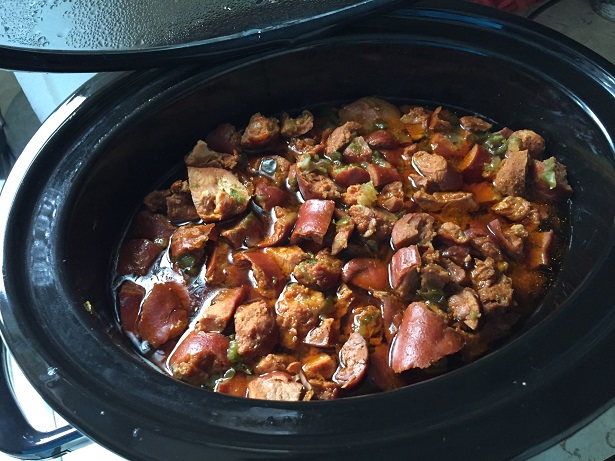
Chouriço and Peppers in the slow cooker, it doesn’t get much better than this. A super hearty and savoury dish perfect for just about any chouriço lover. Perfect for eating in a sandwich or stand alone just as well. The unbelievable savoury flavour from the chouriço with a slightly spicy kick mixes perfectly while getting slow-cooked in combination with the rest of the ingredients. This recipe is very simple and easy to make. Just the wonderful smell of chouriço and peppers in the slow cooker makes this a worthwhile experience in and of itself.

Ingredients:
2 chouriço sausages, casings removed and crumbled
2 green bell peppers, de-seeded and chopped
2 onions, peeled and chopped
2 garlic cloves, crushed
1/4 cup red wine
1/2 cup water
2 tablespoons olive oil
salt and pepper to taste

Directions:
1) In a slow cooker, combine the chouriço, green pepper, onion, olive oil, wine, water, crushed garlic, and salt and pepper to taste. Stir so that everything is evenly distributed. Cover, and set on Low.
2) Cook for 8 hours.
3) Once done, uncover the pot, and cook an additional 2 hours to allow some of the liquid to evaporate.
4) Serve over rice, or with Portuguese bread rolls.

Lisbon Aqueduct | Insight Guides Blog

An engineering wonder in the heart of Lisbon bears witness to both the city’s historical obstacles and its perseverance in conquering them. The spectacular Águas Livres Aqueduct, which winds over the terrain, was created in response to the 18th-century need for a stable water supply.

Consider this: a massive aqueduct that stretches 19 km from Caneças to the Casa de Água reservoir in Amoreiras. Its 14 arches, the greatest of which soars to a stunning 65 metres, cross the Alcântara Valley, making it the world’s highest ancient structure.

Lisbon’s water problems have a long history. Whether it was the complex Roman plumbing or the wells and public pools of mediaeval Alfama, the city had dry times where water would not flow. The Age of Discovery brought marine victories and an expanding population, pushing the city beyond the reach of traditional water supplies. The majestic structures perched atop Bairro Alto’s steep elevation added to the difficulty of water delivery.

Proposals for hydraulic improvements and fountain repairs appeared as the city faced a worsening dilemma. Nonetheless, the circumstance necessitated a more drastic remedy. Cláudio Gurgel do Amaral, the municipal prosecutor, wrote a letter to King Joo V, noting the severe water deficit in western Lisbon. Responding to the urgency, on May 12, 1731, the monarch granted permission to pipe water from the Guas Livres stream, kicking off the building of the Guas Livres Aqueduct.

Águas Livres Aqueduct ("Aqueduct of Free Waters") - Lisbon

After overcoming several obstacles, such as the catastrophic 1755 earthquake, the aqueduct was finished in 1799. Today, it is not only an important part of Lisbon’s history, but also a mesmerising tourist attraction. Visitors may travel along its heights, soaking in stunning city views on each side. The Guas Livres Aqueduct invites visitors to marvel at its distinctive architecture and reflect on the city’s triumph against hardship.

Today, the aqueduct is one of Lisbon’s best-value tourist attractions, and tourists can admire this one-of-a-kind structure by strolling along its heights and taking in the stunning city views over both sides.

The royal structure of Mafra, encompassing a palace, monastery, and cathedral, stands as one of Europe’s most significant historical landmarks and a must-visit destination for travellers exploring the Greater Lisbon area.

Its origins trace back to a promise made by Portugal’s King João V, who vowed to construct a convent in Mafra if he was blessed with an heir to the throne. Following the advice of Friar António de São José, a Franciscan who thought Mafra had ties to ancient fertility rituals, construction started after the birth of his son.

Despite the tragic death of the young prince at the age of two, construction persisted, culminating in the completion of the colossal structure between 1717 and 1730. It involved the labour of 50,000 workers and over a thousand oxen, followed by elaborate festivities lasting eight days and nights.

The façade of the edifice, showcasing remarkable Italianate design, spans an impressive 220 metres (722 feet), surpassing the renowned Escorial in neighbouring Spain. The building, which Johann Friedrich Ludwig of Germany designed, has 880 chambers and rooms as well as 4,500 doors and windows, far exceeding its original purpose of housing only thirteen friars.

Despite the grandeur of Mafra, few Portuguese monarchs, aside from King João V and King Carlos I, found solace within its walls. Many of its doors and windows remained closed, and its corridors were often deserted.

The significance of Mafra in Portuguese history was underscored on October 4, 1910, when King Manuel II and the Queen Mother spent their final night in the palace chambers before departing for England, signalling the end of an almost eight-century-old monarchy. Their departure from Praia das Ribas at Ericeira marked a definitive moment in Portugal’s history.

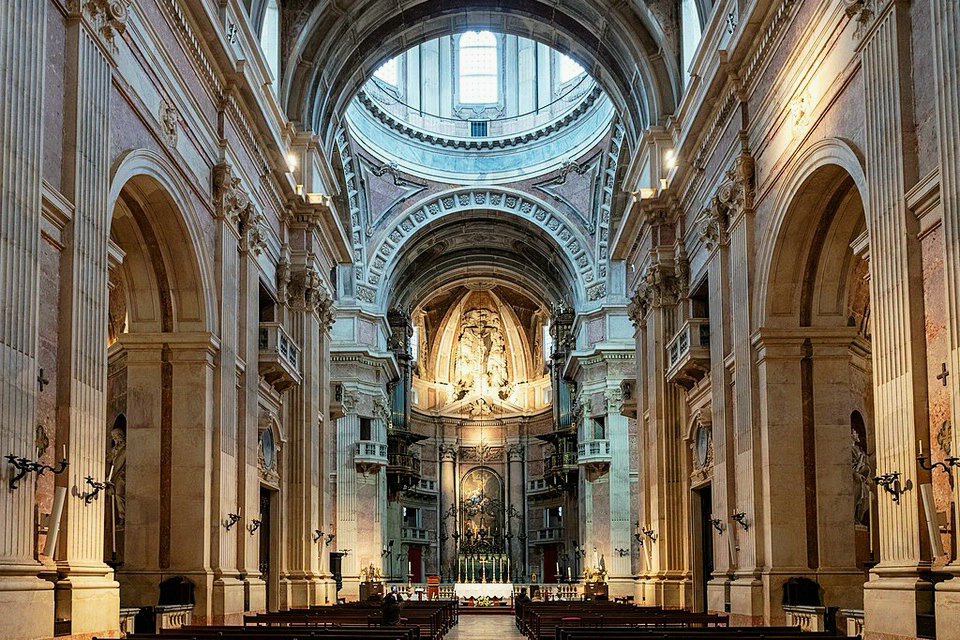
The massive marble basilica of the structure, designed mostly in Italian neoclassicism and German baroque styles, is surmounted by a vast cupola 70 meters (230 ft) high in the center of two long wings, with colossal sculptures of the saints standing guard at the entrance.

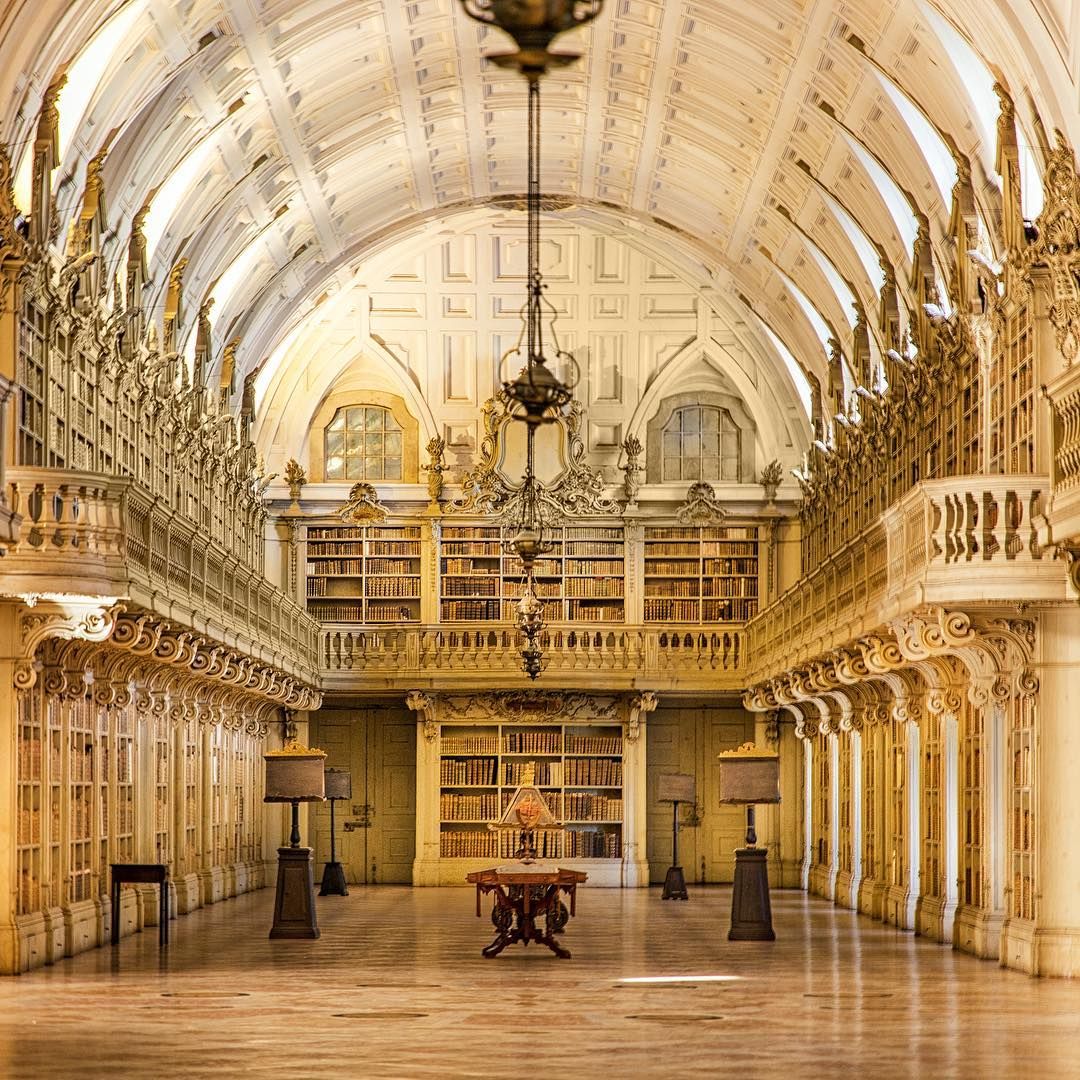
The beautiful rococo library, which measures 88 metres (288 feet) in length, is the crowning glory of this colossal building. It has 40,000 volumes, a wonderful collection of ancient maps, and is painted in grisaille with beautiful gilding and numerous windows.

The inside of the church, with its beautiful central facade, features a variety of superb pink, grey, and white marbles mined from various areas of Portugal, while its minaret-like towers hold two sets of carillons manufactured in Malines near Brussels in 1730.

Mafra, a tiny market town located 40 kilometers (25 miles) northwest of Lisbon, was formerly a hilltop village inhabited by Celts and Lusitanians and then conquered by the Romans and Moors. While in the region, it is also worth seeing the royal game reserve, the Tapada de Mafra, which is located 7 km (4 miles) north of the town and is home to deer, foxes, wild boar, hares, and other animals.

The old royal summer house of Queluz, west of Lisbon, is a popular stopover for travellers while on the way to the mediaeval town of Sintra. It is elegant and modest.

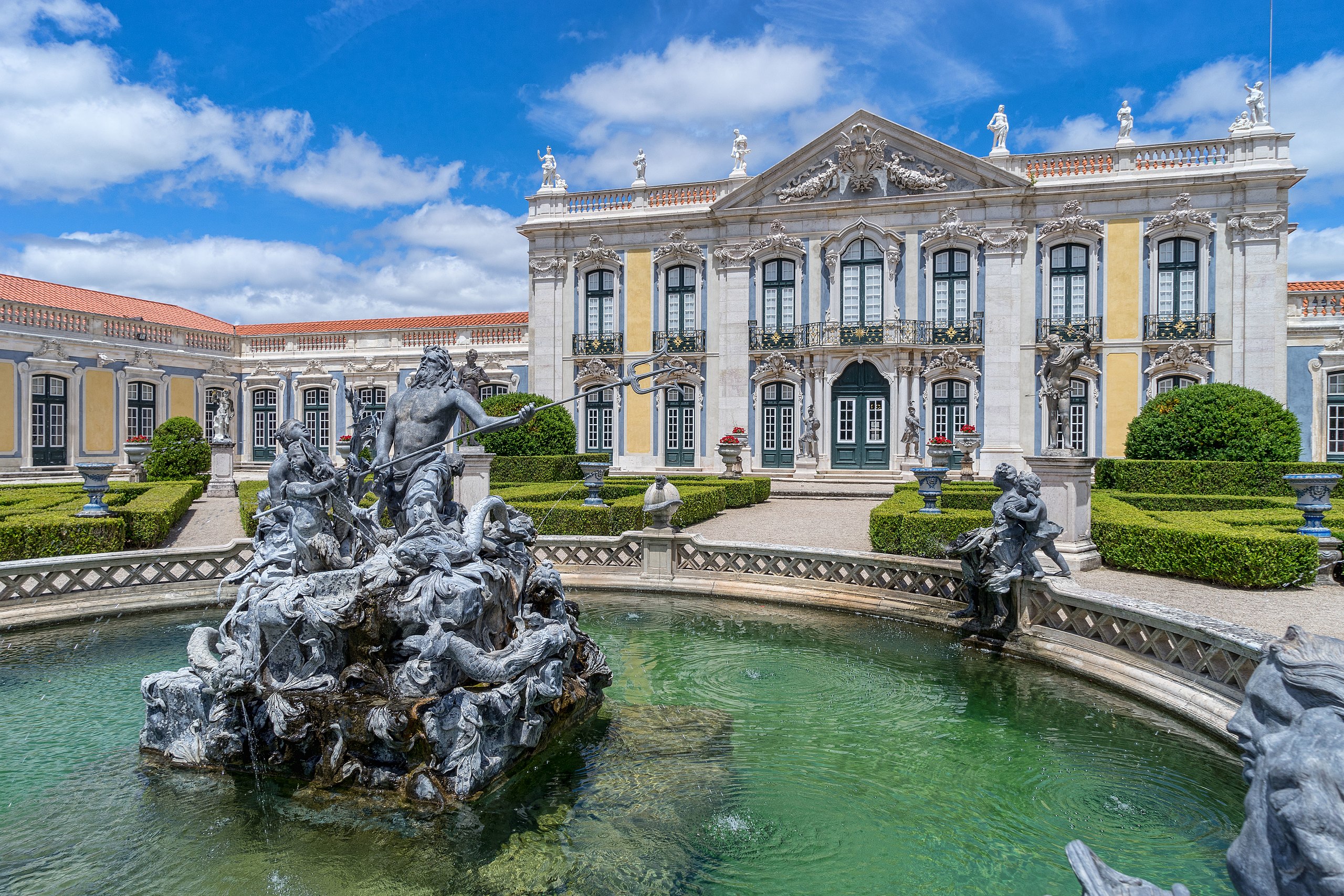
It is considered one of Europe’s most brilliant and shining examples of rococo architecture, and the building (along with its rambling 18th-century gardens) still retains a strong sense of its long royal history. It is located in the bustling suburb of Queluz, just 14km (8 miles) west of the Portuguese capital.

It was commissioned by Prince Pedro (later to be proclaimed king) and erected between 1747 and 1794 by the French architect Jean-Baptiste Robillon and the Portuguese Mateus Vicente de Oliveira from a 17th-century hunting lodge. Once completed, it became the Bragança dynasty’s primary summer house and the favourite palace of Queen Maria I, who lived there for the whole of her turbulent 39-year reign.

The prince’s marriage in 1760 to Princess Maria, his niece and successor to the throne, earned him the title of King Pedro III of Portugal because the couple had already produced sons when she ascended to the throne.

The inside of the palace is divided into a variety of exquisite rooms and hallways, each with its own fine array of finely painted walls, golden mirrors, and opulent ceilings. The elaborate Throne Room, with its brilliant Venetian chandeliers, the Ambassador’s Hall (with its exquisite troupe l’ceil ceiling), the oval Hall of Mirrors, and the royal bedroom (Don Quixote Chamber), where King Pedro IV was born and died, are the most sumptuous of them all.

The palace, which is made up of a central block and two wings, is filled with Portuguese tapestries and furnishings, Florentine marbles, Delft tiles (some of which are very old), Chinese screens, rare Austrian porcelain, Rabat carpets, Brazilian jacaranda wood pieces, and many other exquisite antiques.

The palace’s perfectly-manicured gardens, constructed by Robillon in 1763 and adorned with formal balustrades, majestic fountains, and magnificent statues, are the pride of the palace and a must-see sight for travellers travelling the Greater Lisbon region.

A rich scattering of exotic bushes have been barbered into a variety of inventive shapes among its neatly sculpted box hedges, shaded ponds, hidden grottoes, towering cypress trees, and leafy walkways, and in summer the entire area is aglow with ancient magnolias, scarlet geraniums, mauve petunias, climbing roses, and bougainvillaea cascades.

The royal household and its numerous aristocratic visitors would enter the garden by the majestic Lion Staircase and enjoy summer dinners, serenades, concerts, and firework displays before boating down the azulejo-lined Dutch canal in the centre of the palace grounds.

Hundreds of live animals, including lions, tigers, and monkeys, were housed in a menagerie (now modified for falconry) around Queluz Palace’s famed Shells Cascade in the early nineteenth century. The Portuguese School of Equestrian Art (Escola Portuguesa de Arte Equestre), which is housed in the palace gardens, perpetuates the animal legacy with occasional demonstrations of dressage and horsemanship.

The royal kitchens are now an elite restaurant named Cozinha Velha that specialises in traditional Portuguese cuisine and has a massive fireplace, giant spits, a long marble worktable, and an astonishing array of copper pans (reservations are strongly suggested).

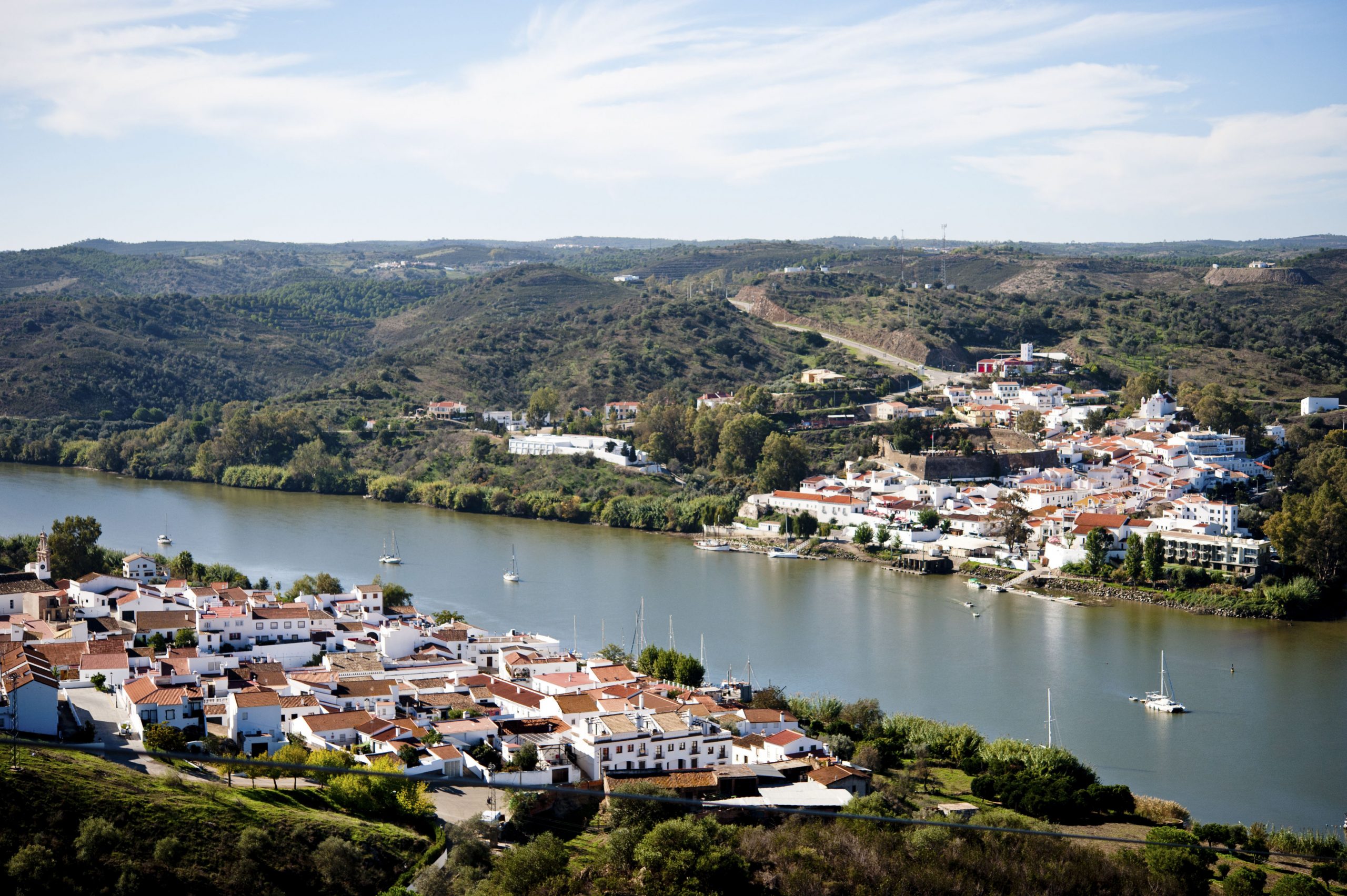
The lovely village of Alcoutim, located in the north-eastern corner of the Algarve, is a haven of unspoiled peace and quiet just across the River Guadiana from neighbouring Spain.

Already a strategic river port in ancient times, it was occupied for extended periods by the Phoenicians, Greeks, Romans, and Moors (the name Alcoutim is derived from the Arabic Al-Qutami, which translates as a peregrine falcon), but its diminutive size belies the enormous impact this sleepy riverside town has had on Portugal’s history over the centuries.

Notably, it was in Alcoutim that King Fernando I of Portugal and Henry II of Castile signed a significant, if brief, peace pact on the 31st of March 1371, thereby ending the First Fernandine War.

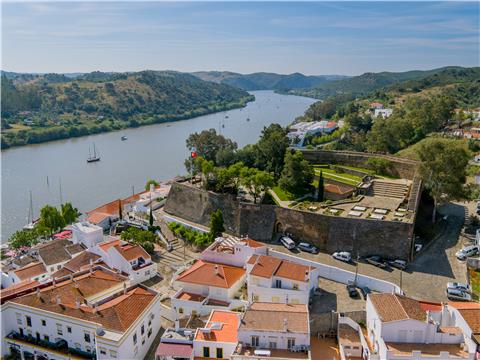
Alcoutim Castle is a rectangular-shaped stronghold constructed entirely of native schist stone. It is perched on a hill overlooking the river. Both King  João II (1455-1495) and his successor King Manuel I (1469-1521) enhanced their defences, the remnants of which still survive today.

It was the site of a major struggle during the Restoration Wars (1640-1668), when Portugal achieved independence from Spain, during which a large portion of the fortress was severely destroyed, eventually falling into ruin.

Alcoutim vai ter ciclovia e Centro de BTT

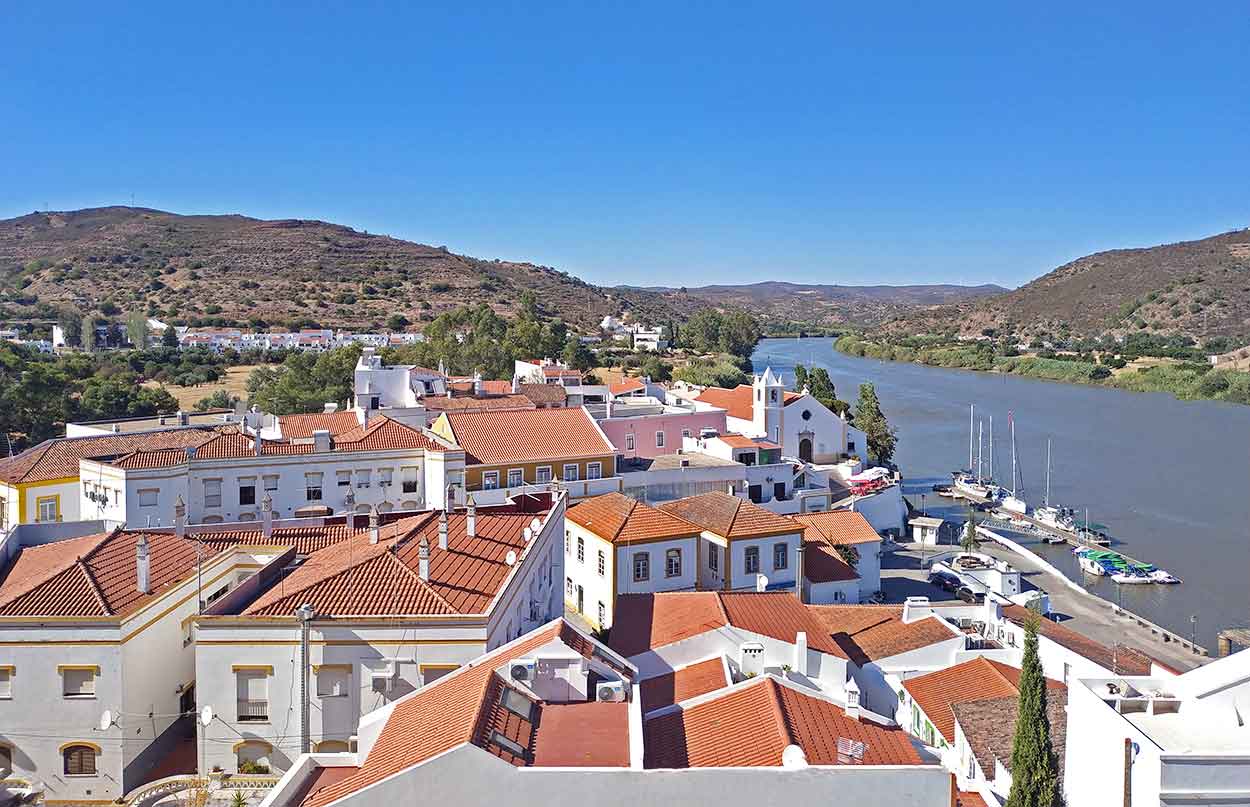
Apart from the castle, visitors come to admire Alcoutim’s compact cluster of brilliant white houses with their striking red roofs and to take in the tranquil river views across the river to the similarly tranquil town of Sanlcar del Guadiana, which boasts its own historic fortress, the restored Castillo de San Marcos.

Alcoutim has three lovely old churches to visit on the leisurely walk down from the castle, including the Ermida de Nossa Senhora da Conceiço (16th century), the small Igreja da Misericórdia (16th century), and the town’s delightful parish church, the Igreja Matriz (16th century), which was built in the Renaissance style just a few metres in from the riverbank.

The River Guadiana originates in the Spanish province of Albacete and flows calmly through Alcoutim on its way to Vila Real de Santo António, where it softly empties into the protected waters of the eastern Algarve. Adventurers may literally ‘zip’ across the river on a cable car that connects not only Alcoutim and Sanlcar, but also two distinct nations.

The lands surrounding Alcoutim are sparsely inhabited and are among the most isolated in Portugal, with many of its towns and villages separated by enormous swaths of magnificent countryside. Leaving by automobile to the south, the picturesque route meanders along the banks of the River Guadiana for several km, providing some of the most spectacular vistas along the way.

Alcoutim: The #1 Guide to the Most Peaceful Town of the Algarve [2021]

The little mountain towns to the west on the route to Cachopo are home to some of the Algarve’s most genuine handicrafts, with high-quality carpets, vases, baskets, and other things meticulously created by local artists in the same way their ancestors did for decades.

Travelling north brings you to southern Portugal’s Lower Alentejo area, a vast stretch of vibrant landscapes and sparkling whitewashed towns. A nice half-hour drive north of Alcoutim takes you to the Guadiana Valley Natural Park (Parque Natural do Vale do Guadiana), a popular protected area for hikers and bird watchers.

Alcoutim 2021: Best of Alcoutim, Portugal Tourism - Tripadvisor

Further north, the Great Lake of Alqueva (Grande Lago de Alqueva) encompasses over 250 square kilometres and is Europe’s largest artificial lake. There, you may rent boats with sufficient berths for many people and enjoy the area by boat rather than by car.

Alcoutim

Monte Gordo - Portugal

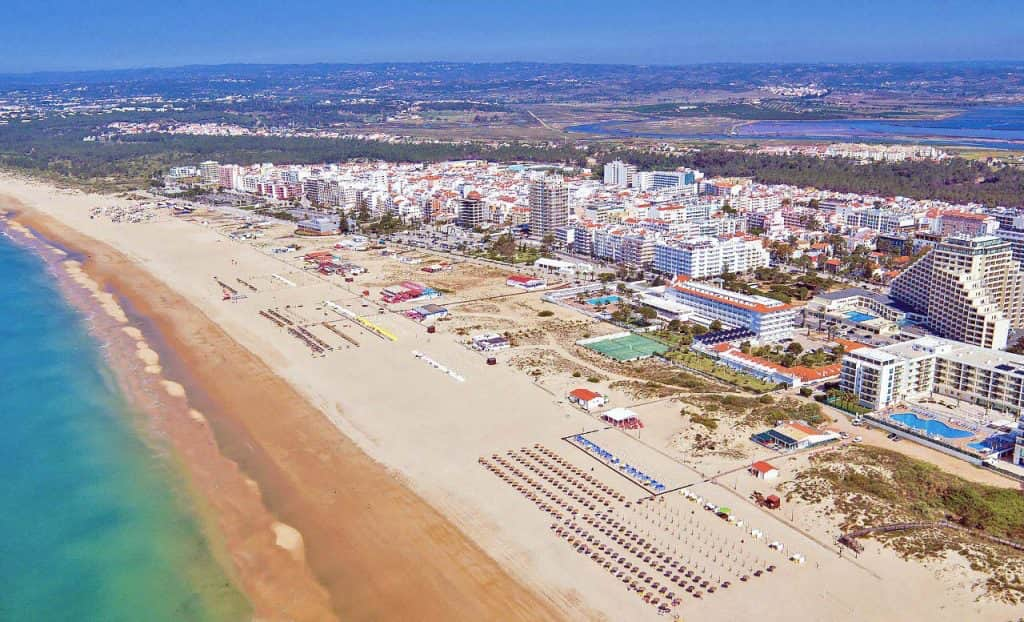
Just three kilometres west of the Algarve’s enormous frontier town of Vila Real de Santo António, the previously peaceful fishing village of Monte Gordo is the last in a long series of popular beach resorts along Portugal’s southern coast.

Praia de Monte Gordo - Vila Real de Santo António | The Algarve Beaches | Portugal Travel Guide

Bright and cheerful, the town has grown significantly in recent years as a holiday destination, catering to both Portuguese and foreign visitors.

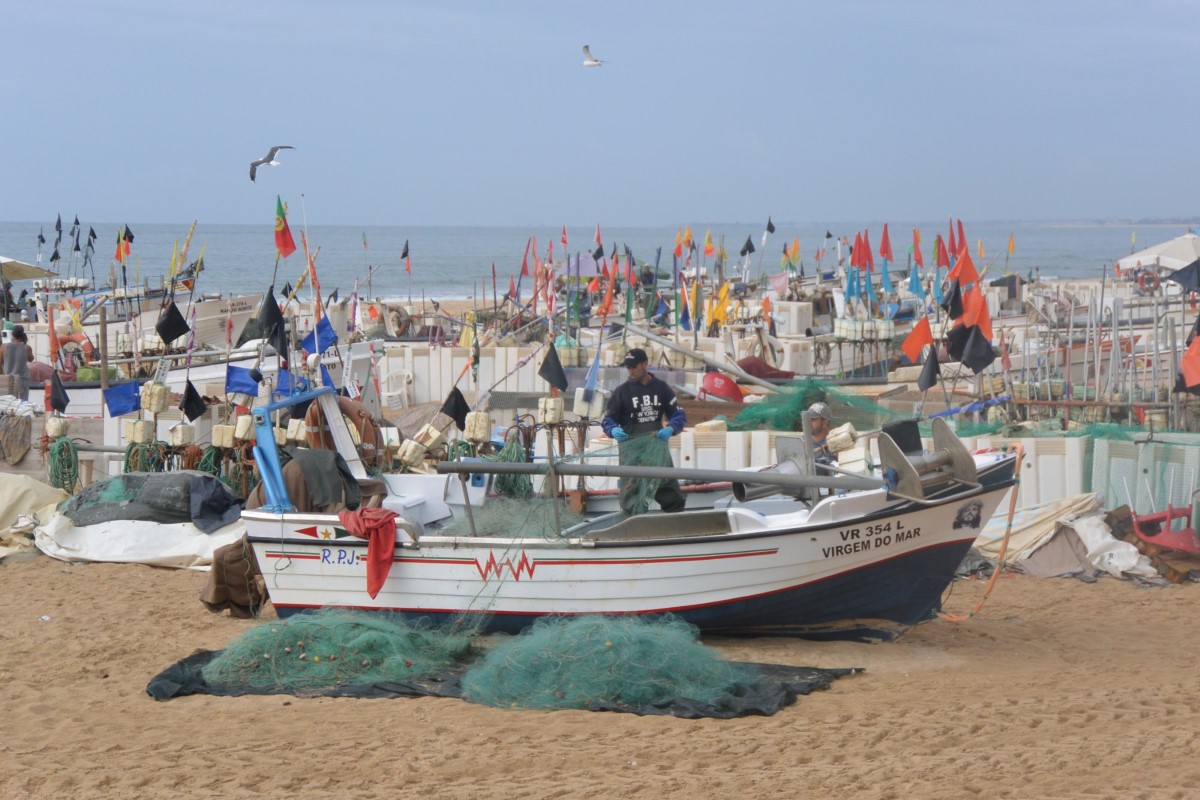
However, the town’s centuries-old fishing culture continues as wives dressed in housecoats emerge from freshly constructed homes to purchase the finest of the fresh catch from local fishermen, who can still be seen occasionally riding rusty bicycles through the streets to deliver their orders.

Monte Gordo not only has the Algarve’s largest beach but also the warmest seas, owing to the Mediterranean climate and its advantageous geographical location at the mouth of the River Guardiana. Fringed by tall trees and facing the sea, its long and vast sands continue uninterrupted for many kilometres, making it one of southern Europe’s most idyllic beach towns

At Manta Rota, a few kilometres west of Monte Gordo, the Ria Formosa Natural Park’s lagoons give way to the vast open sea. Ria Formosa, which stretches about 60 kilometres and covers more than 1800 hectares, is a critical wintering ground for birds from northern and central Europe and a critical stopover for migratory birds migrating between northern Europe and Africa.

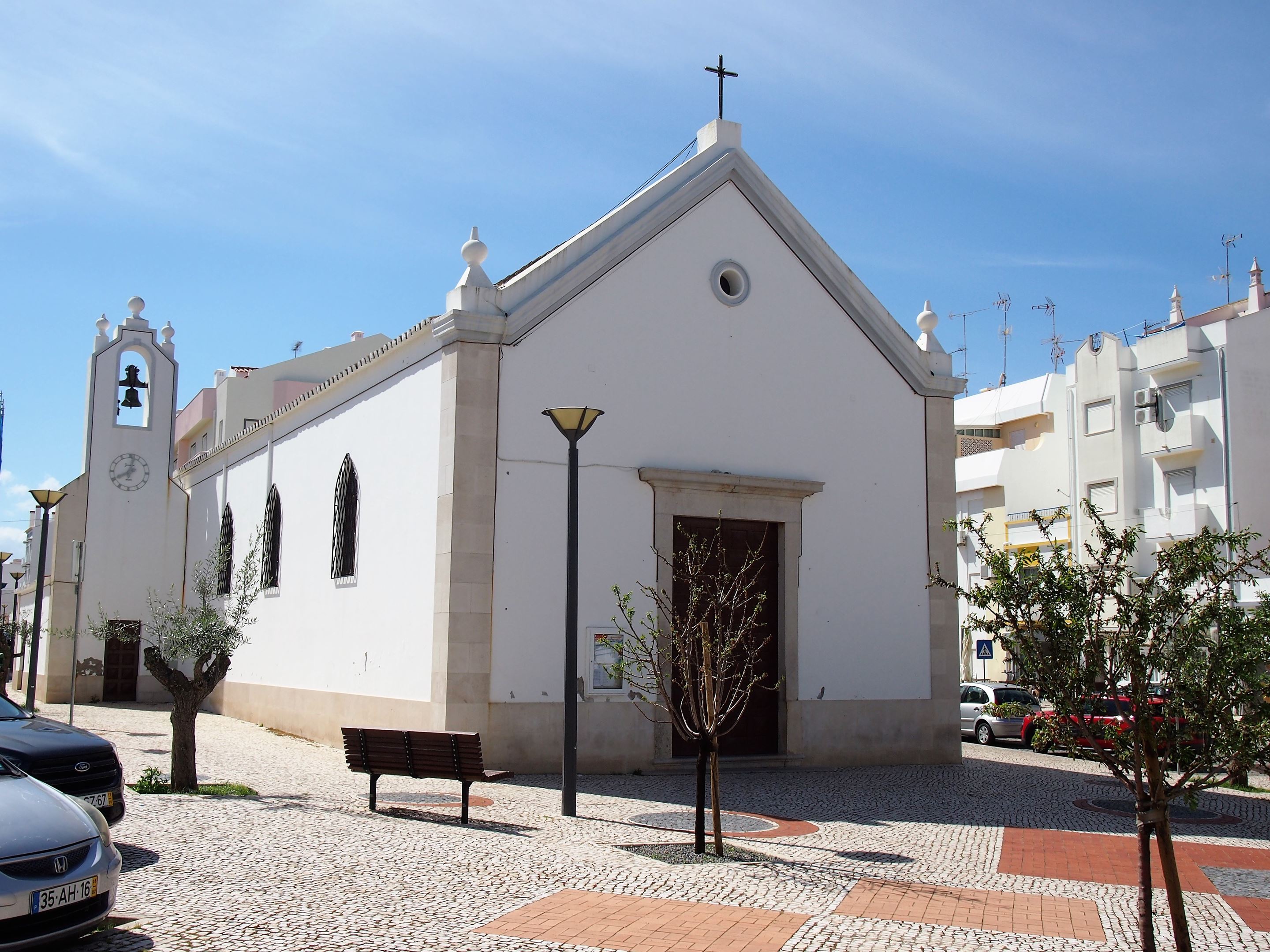
Continuing westward gets you to Cacela Velha, a charming tiny village created by the Phoenicians with a wonderful church plaza overlooking the lagoon and surrounded by various off-shore beaches. The church comes from the sixteenth century and is distinguished by a magnificent Renaissance main entrance and a Gothic side door.

The River Guadiana, which empties into the Atlantic Ocean at the lovely border town of Vila Real de Santo António, is a natural barrier for more than 2,000 years, initially constituting the border between the Roman provinces of Lusitania (Portugal) and Baetica (southern Spain). Regular river excursions introduce guests to the serenity present in this region of Portugal, with leisurely stops in some of the most scenic and peaceful towns and villages in the country.

Monte Gordo

Vila Real de Santo António is centred on a huge, airy central plaza laid in a radiating sunburst pattern. After being submerged by the water in the 17th century, it was rebuilt by the Marquês de Pombal on a grid system identical to that of Lisbon’s Baixa area, giving the town an architecturally distinctive appearance in the Algarve.

Castro Marim, the initial headquarters of the Military Order of Christ, Portugal’s successors to the Templars, is located a short drive north of Monte Gordo. With a view over the Guadiana to Spain, the mediaeval castle’s sandstone walls encircle the remnants of an even older fort.

Monte Gordo

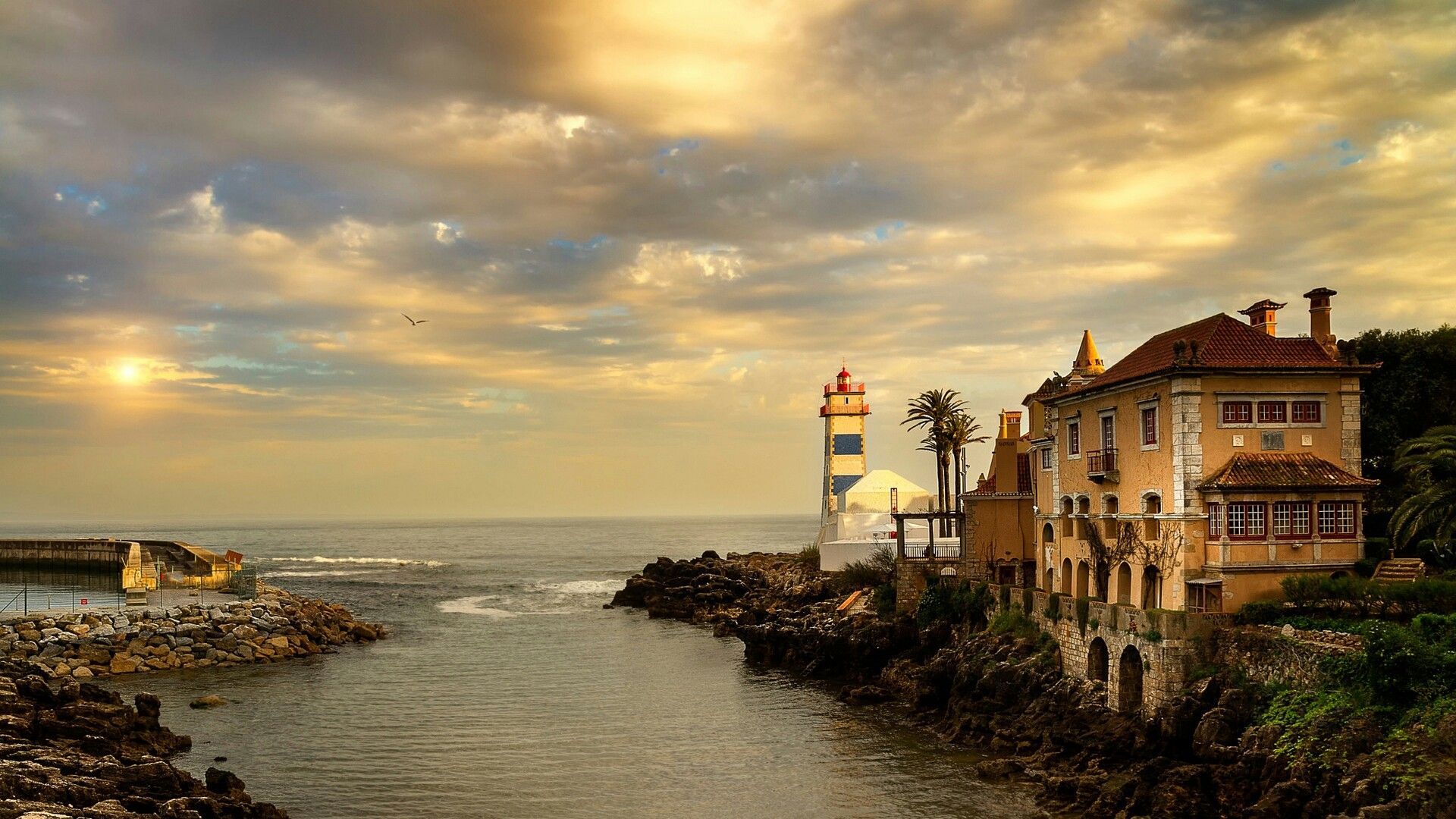
Discover the timeless allure of Portugal’s Cascais Coast—the Portuguese Riviera. Explore historic seaside towns, golden beaches, iconic landmarks, vibrant culture, outdoor adventures, and captivating art, all just moments from Lisbon. Perfect for beach lovers, culture enthusiasts, and leisure travelers alike!

Citânia de Briteiros

Citânia de Briteiros is one of the most spectacular archaeological sites in Portugal and by far the largest and most exciting fortified Celtic-Iberian village in the nation. It is approached through picturesque forested hills in northern Portugal’s lush, green Minho area.

This well-preserved prehistoric monument, which was formerly completely walled in, occupies an area of 3.8 hectares and is located about 10 kilometres southeast of the Bom Jesus sanctuary in Braga.

According to historians, Citânia de Briteiros was the northern Celtic-Iberians’ final stand against the invading Romans.

This unusual archaeological find was discovered in 1874 and devoted the next decade to being examined and unearthed.

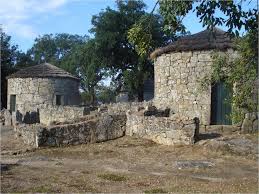
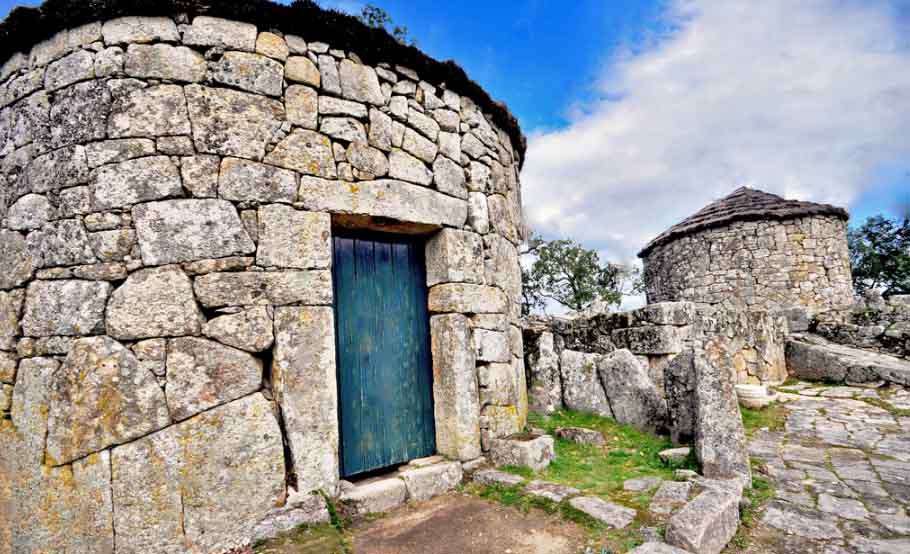
It consists of about 150 single-roomed stone homes of various shapes, including round, rectangular, and elliptical, each with its original foundation amazingly intact, while a few have two or three compartments and even a courtyard.

Citânia de Briteiros, located in a great site overlooking the clean waters of the River Ave, dates back more than 2,500 years, but it was very likely abandoned by 300 A.D.

The fort is composed of three lines of entrenchments up to 2m (7ft) thick, straddling the slope of the boulder-strewn hill of São Romão.

It’s an amazing thrill for tourists to be able to study the site’s rudimentary town design, stroll along with one of Europe’s oldest walkways, and investigate the archaic water system.

Citânia do Briteiros, reminiscent of ancient Mycenae in Greece, is the magnificent ruins of an Iron Age settlement with stone slab streets and houses constructed without the use of mortar.

Complete with conical thatch roofs, some of the structures were properly repaired and recreated by Martins Sarmento (1833–99), the local archaeologist who discovered it.

Apart from the reconstructed chapel and two circular homes atop the hill, the village comprises a bigger structure (about 11m/36 feet in diameter) that was reportedly used as a gathering space, as well as an isolated structure beyond the boundary that was possibly used as a cremation.

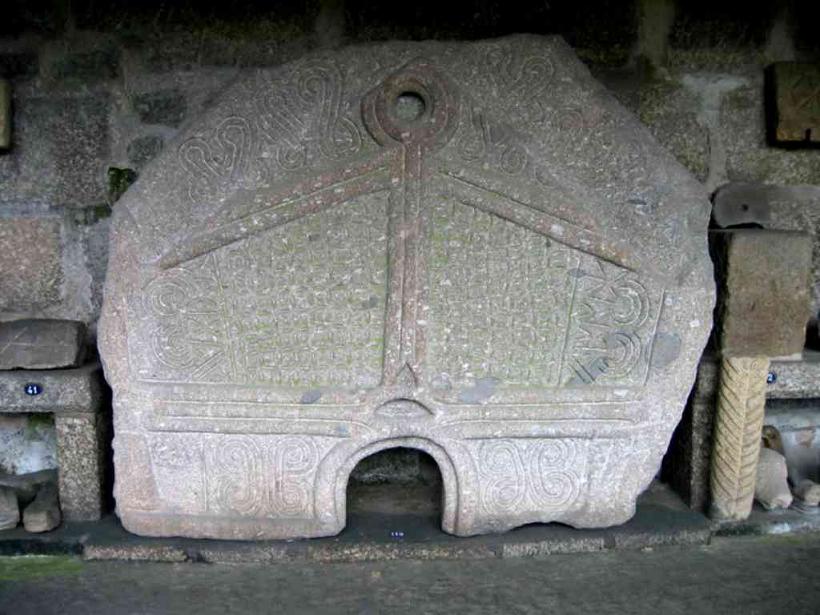
Numerous antiques, artefacts, and ornate gateways discovered during the site’s excavation are currently on exhibit at neighbouring Guimares’ Museu de Martins Sarmento. Along with the numerous fragments of pottery (much of it painted), carved stones, weapons, implements, and pieces of jewellery on display, the star exhibit is without a doubt the Pedra Formosa (meaning ‘beautiful stone’), which confounded archaeologists for years but is now known to have been part of a tomb or shrine.

Easily visible from Citânia de Briteiros, another of Portugal’s most significant ancient monuments, Castro de Sabroso, is just as interesting and dates all the way back to the Iron Age. Both possessed a significant degree of the same Celtic culture and exist as testaments to the great riches and significance of Portugal’s early settlements.

The Making of Manueline - Portugal Travel Guide

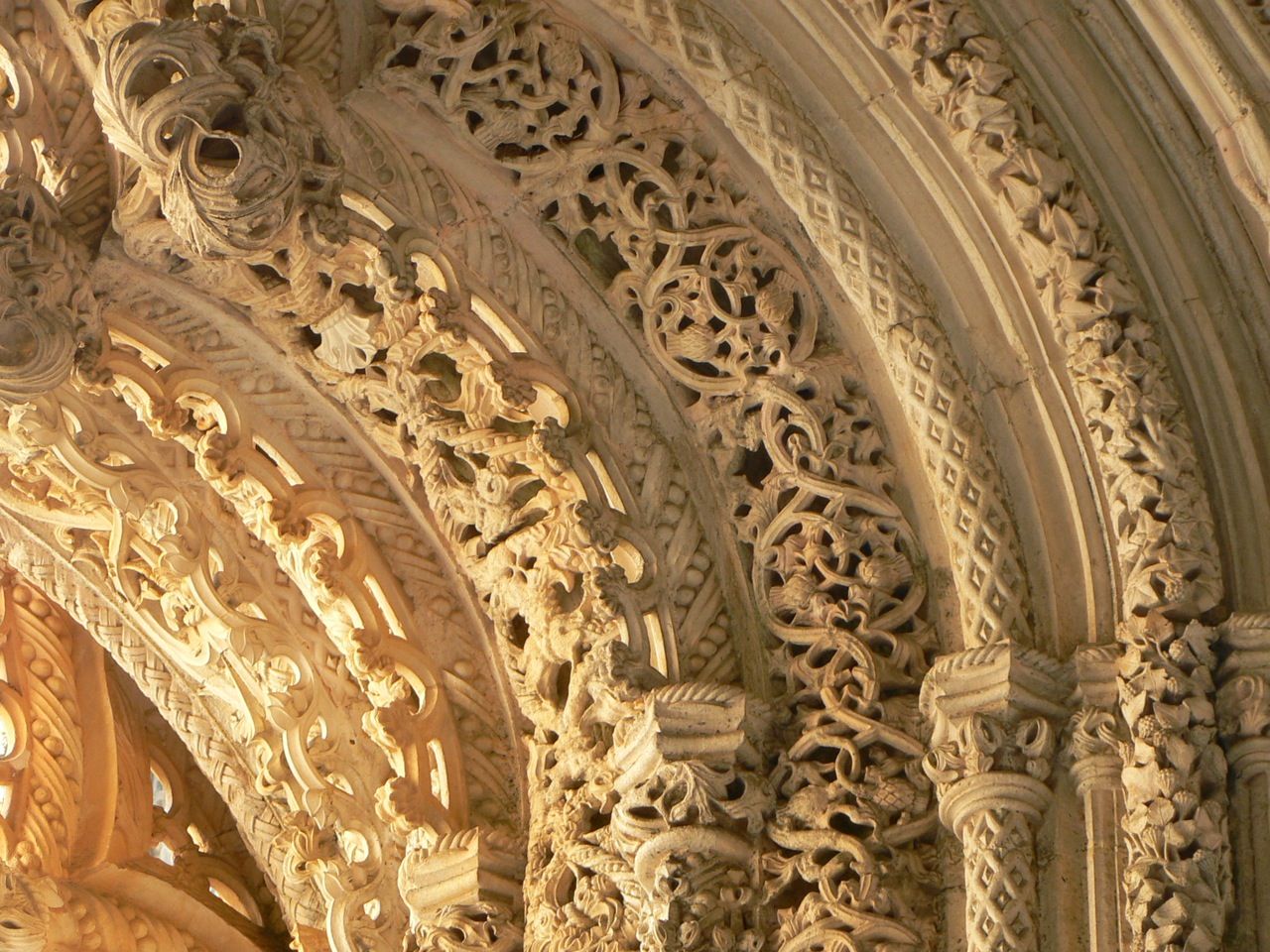
The Manueline, occasionally known as Portuguese late Gothic, is the sumptuous, composite Portuguese architectural style originating in the 16th century, during the Portuguese Renaissance and Age of Discoveries. Manueline is the style that marks the Portuguese artistic and architectural shift away from the late Gothic during the reign of King Manuel I (1469-1521).

During the reign of King Manuel I, the Portuguese aesthetic and architectural transition from late Gothic to Manueline were marked by the style (1469-1521).

However controversial for art historians, Manueline architecture is an ornamental expression in Portuguese architecture of enormous sea voyages and encounters with different civilizations. This is despite the fact that it was an era of tremendous controversy for art history

Indeed, it is a true expression of Portuguese architecture, spanning from religious buildings like the Jerónimos Monastery in Lisbon to military structures like the Tower of Belém with its civic decoration.

In addition, the mysterious astrological visions of the famous window of the Convent of Christ in Tomar, central Portugal, a bastion of the Templars in days gone by, and the doorway of Ponta Delgada Cathedral on São Miguel island in the Azores both depict the Manueline style of decoration (known in Portugal as Manuelino).

Various forms of the water and intrepid expeditions over the oceans to other continents, merging aspects of Christianity with shells, ropes, or bizarre and unusual aquatic creatures.

The armillary spheres, with their heraldic or religious meaning, are another example of this style’s decorative exaltation, which distinguishes it from the gothic and, in some ways, from Renaissance classicism.

Some instances of this style may be found all around Portugal, including the Atlantic islands of Madeira and the Azores. In the famous tile panels found at the National Palace of Sintra, this style is occasionally blended with other influences.

This style strives to ennoble the period’s iconic architecture without tampering with them. Probably because of this, Portuguese art is done in a way that conveys an emotional response.