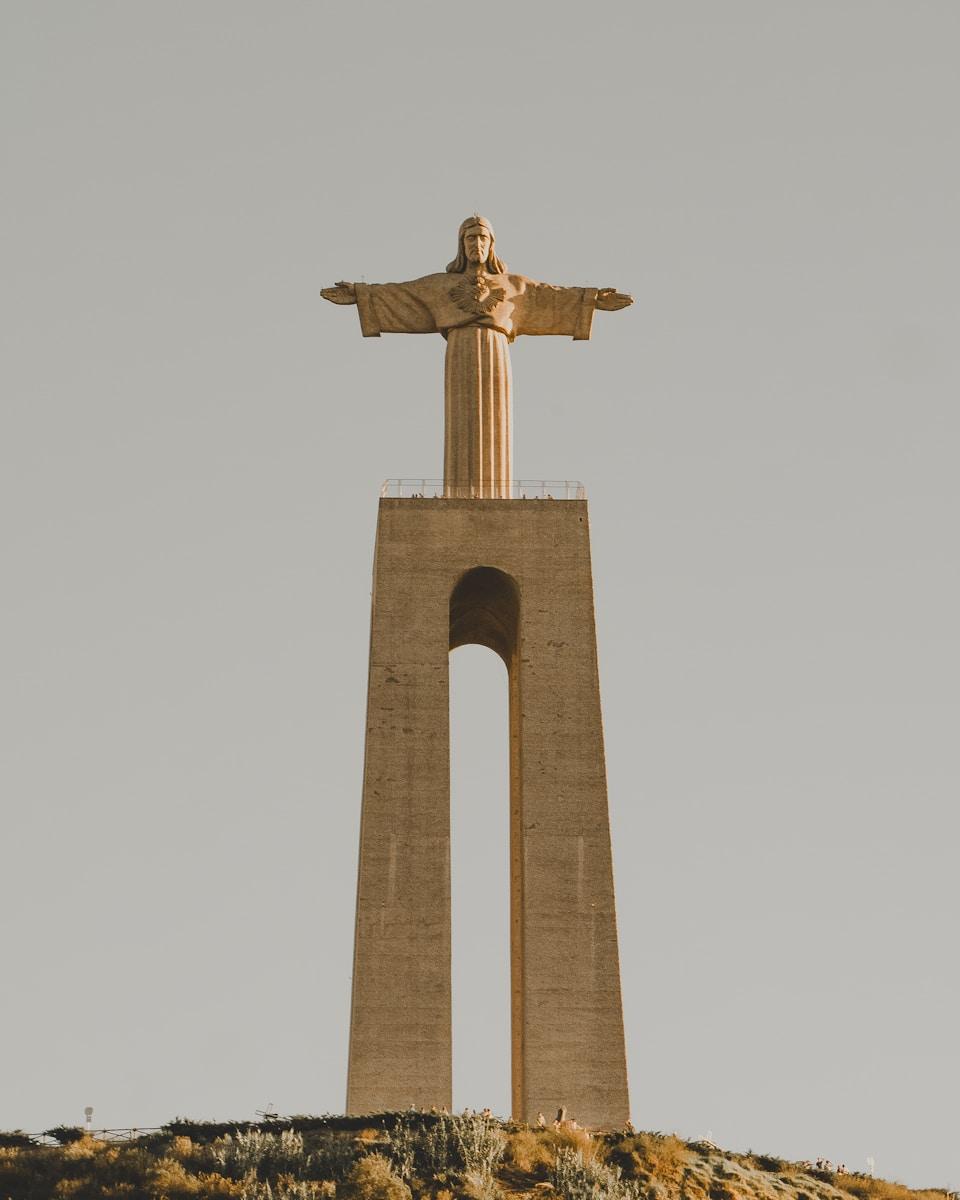
a statue of jesus on top of a hill

Almada is a captivating city and municipality located on the south bank of the Tagus River, often affectionately referred to as “the other side of the river” from Lisbon. Steeped in over 870 years of history, Almada is a vibrant blend of cultural richness, natural beauty, and historical significance. Its residents exemplify a unique sense of belonging, inspired by the area’s multicultural spirit, creativity, solidarity, and tolerance.

Surrounded by both river and sea, with panoramic views of Lisbon that leave a lasting impression, Almada’s landscape seamlessly merges lush natural scenery with centuries of cultural, artistic, religious, military, industrial, and rural heritage. Its coast boasts more than 13 kilometres of pristine white sand beaches, many set within protected natural environments—making them a year-round attraction for beach lovers and surf enthusiasts alike.

From fresh fish grilled over charcoal (carvoadas) to hearty stews and a tempting variety of pastries, Almada’s gastronomy is a journey in itself, ranging from traditional Portuguese recipes to inventive contemporary cuisine.


Historic Significance

Almada has been inhabited since the late Neolithic period, around 5000 years ago. Archaeological findings suggest it was home to nomadic tribes before becoming a strategic settlement during the Islamic period, when Muslims built a defensive fort to safeguard the mouth of the Tagus River.

Over the centuries, Almada became a prosperous trading post for Phoenicians, Romans, and Moors. In 1147, it was captured by the forces of King Afonso I of Portugal with the aid of English Crusaders. The king’s 1170 charter granted protection to the diverse communities—Christians, Moors, and Jews—settling in Lisbon, Almada, Palmela, and Alcácer.

In 1190, Almada was granted its foral (charter) by King Sancho I but faced attacks from Almohad forces under Miramolim Jacub-Abu-Jassuf. The conflict forced many residents to seek refuge, and control over the area shifted several times before returning to Portuguese governance.

The Order of Santiago played a crucial role in repopulating the region, stimulating agriculture, and boosting the local economy.


How to Get to Almada from Lisbon

By Bus
Bus services to Almada are operated by Transportes Sul do Tejo (TST). Routes to the city depart from:

  • Areeiro – Bus 160

  • Cidade Universitária – Bus 176

  • Praça de Espanha – Bus 152

All routes arrive at S. João Baptista Square in central Almada, where connections can be made via the Metro Sul do Tejo for local travel.

By Train
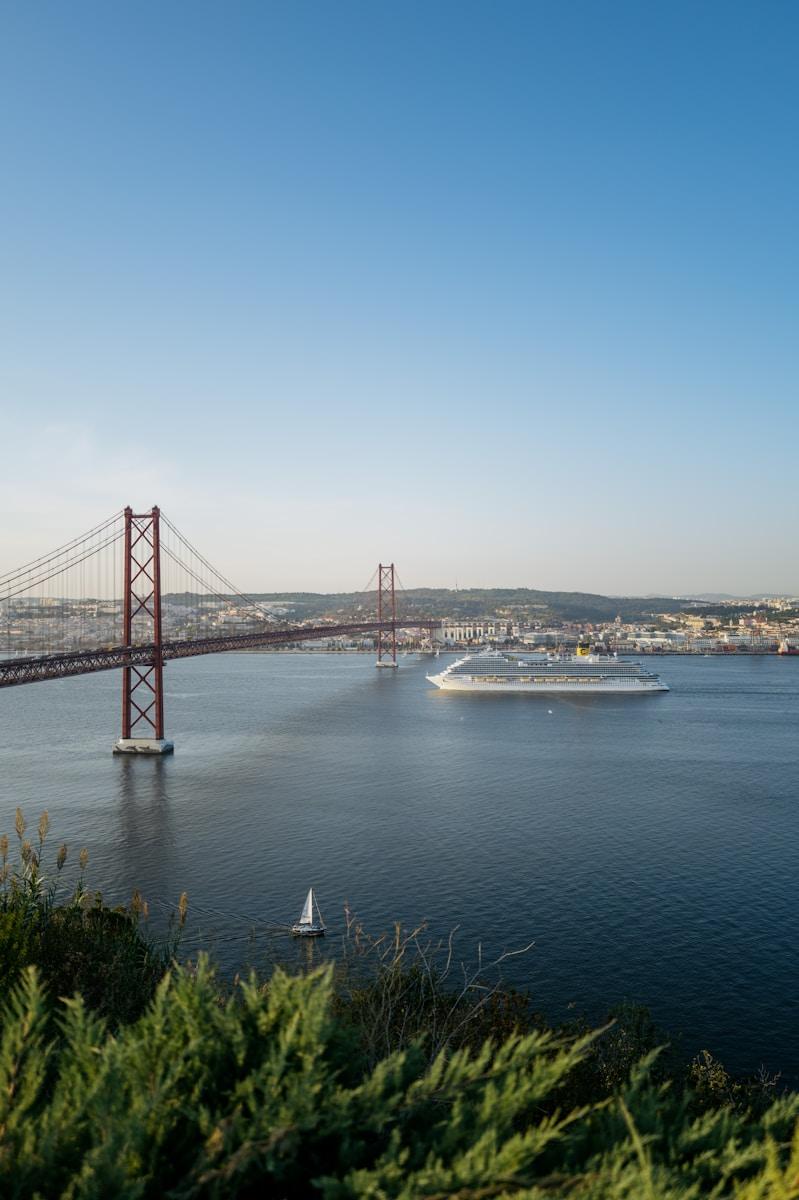
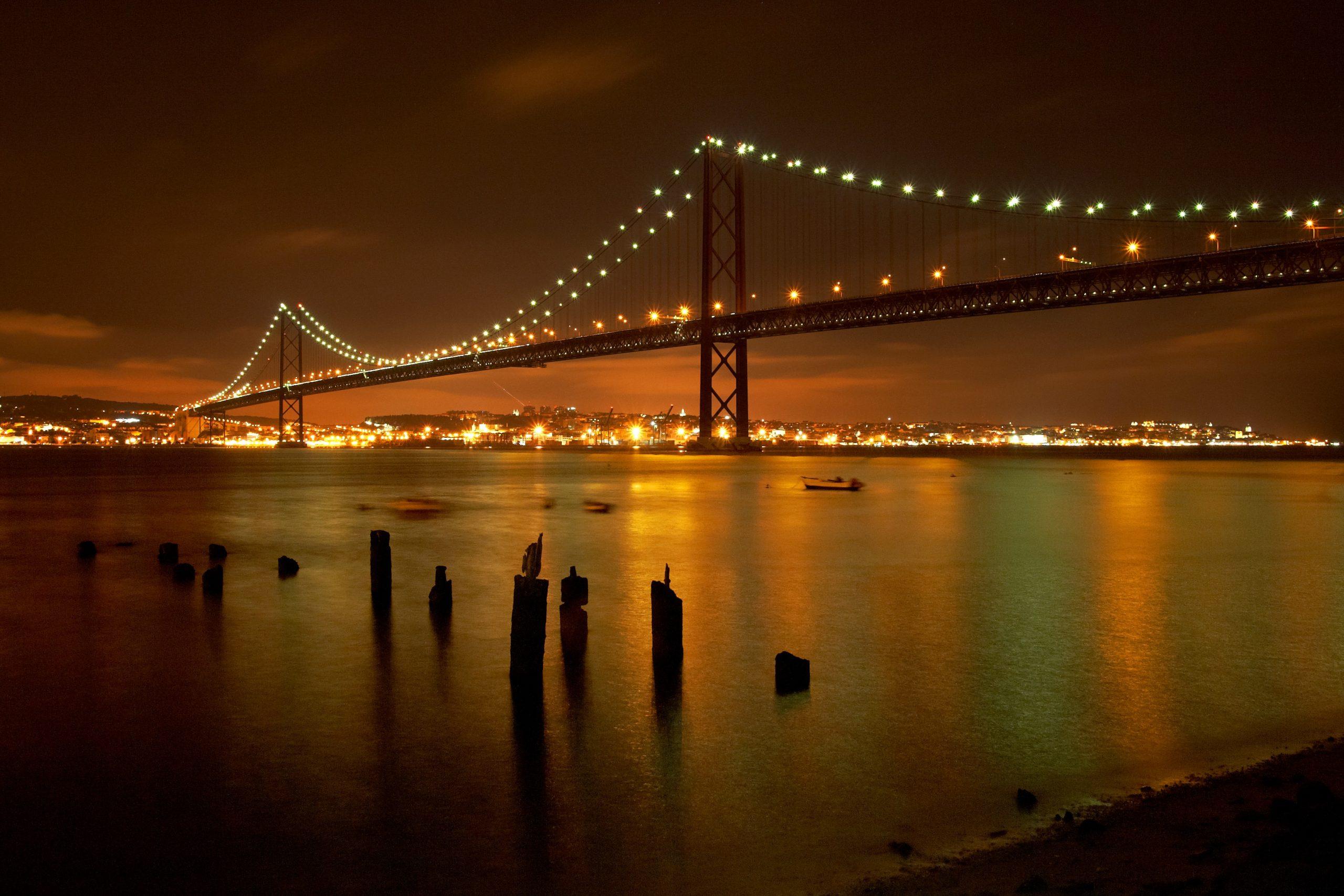
The Fertagus train network links Lisbon to Almada, departing from Roma/Areeiro, Entrecampos, Sete Rios, or Campolide stations toward Pragal. From Pragal, buses connect to various parts of Almada. The train journey offers a dramatic crossing of the 25 de Abril Bridge with sweeping views of the Tagus River.

By Boat
A scenic and efficient option is the ferry between Cais do Sodré in Lisbon and Cacilhas in Almada, operating daily from 5:00 am to 1:20 am.

Travel time is around 20 minutes, with bus and tram connections available from Cacilhas.

By Car
Driving from Lisbon to Almada takes approximately 20 minutes via the A2 freeway or the 25 de Abril Bridge. Taxis and ride-shares are widely available.
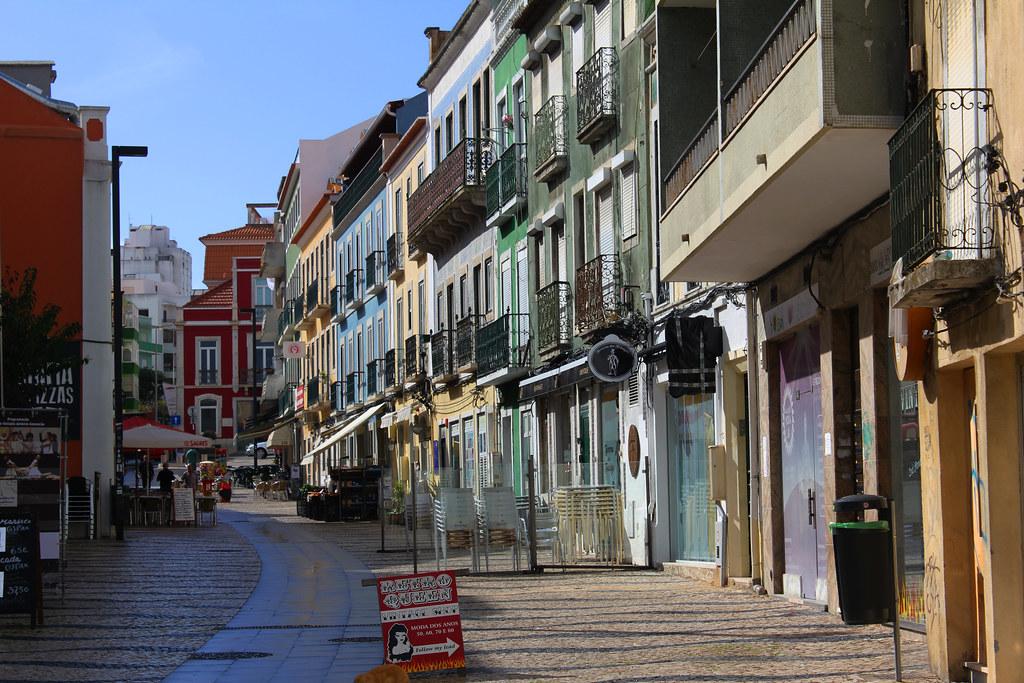

Top 10 Things to See and Do in Almada

  1. Cristo Rei Statue – Inspired by Rio de Janeiro’s Christ the Redeemer, this towering monument offers panoramic views of Lisbon and the Tagus.

  2. Cacilhas – A lively riverside district lined with seafood restaurants and stunning views across the water.

  3. Dom Fernando II e Glória – The last wooden frigate of the Portuguese Navy, now a museum ship.

  4. Caparica Coast – A 13 km stretch of sandy beaches ideal for surfing, swimming, and sunbathing.

  5. Boca do Vento Elevator – A riverside elevator offering spectacular views and easy access between Almada’s upper and lower areas.

  6. Casa da Cerca – A cultural center combining art exhibitions with beautiful gardens and Tagus views.

  7. Convento dos Capuchos – A centuries-old convent surrounded by lush gardens and forest trails.

  8. Almada Forum – One of the region’s largest shopping centers with retail, dining, and entertainment options.

  9. Naval Museum – Chronicling Portugal’s rich maritime history.

  10. Parque da Paz – A peaceful urban park perfect for walks, picnics, and family outings.
Santuário de Nossa Senhora do Cabo Espichel

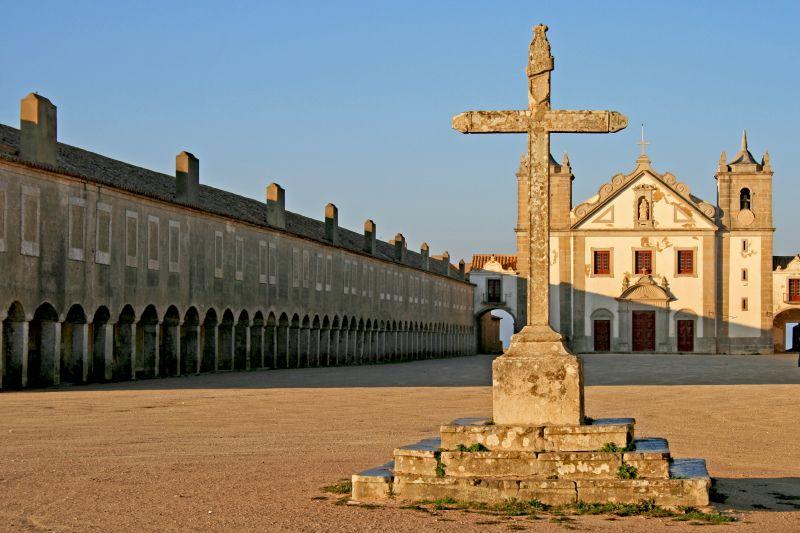
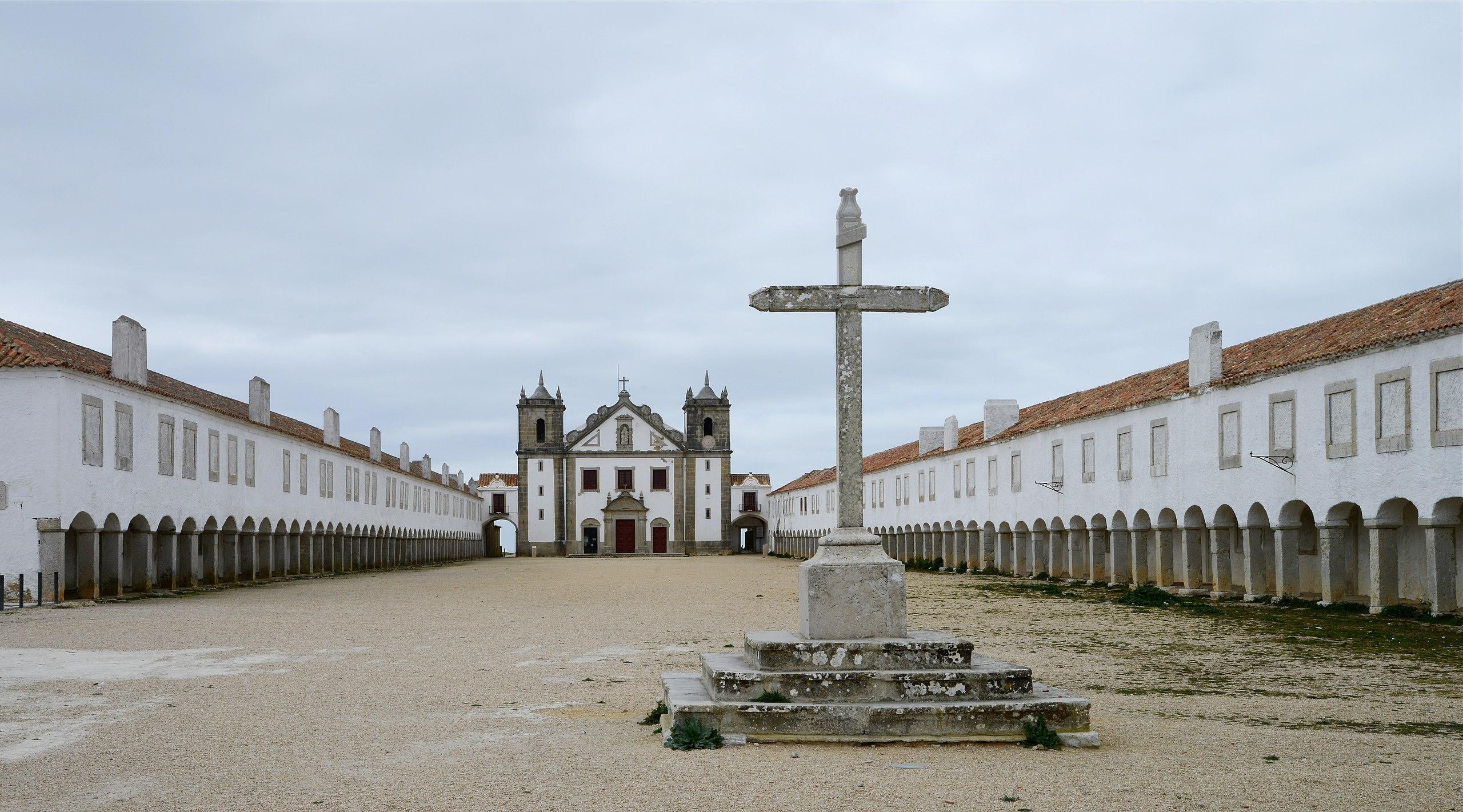
At Sesimbra’s westernmost point stands the Sanctuary of Nossa Senhora do Cabo Espichel, a singular civil and religious architectural ensemble that unites the monumentality of the building with the immateriality of religious devotion. The cathedral, guesthouses, Ermida da Memoria, Opera House (in ruins), Hortas dos Peregrinos, Casa da Água, and aqueduct are all included. The landscape setting of this monument, which is on a plateau that ends in cliffs that lead to the sea, makes it monumental.

The Sanctuary of Our Lady of Cape Espichel, also known as Nossa Senhora da Pedra Mua, is one of the most impressive sites in this region for its location and its remarkable natural architectural complex. Its worship dates back to 1410, when the venerated image of Our Lady of the Cape was discovered at the tip of Cape Espichel by two old men from Caparica and Alcabideche, who were given signs from Heaven in coinciding dreams. Until the start of the 18th century, the grounds around the primitive temple were encased by houses for the pilgrims who travelled there on pilgrimage to venerate the image.

RUIRODRIGUES

The current church was built by royal order between 1701 and 1707, with architect João Antunes designing it. As of 1715, the heavy influx of pilgrims to the Cape forced the construction of two wings of inns with housing and shops, which were enlarged between 1745 and 1760. Later, a supply system including the aqueduct and the water house was built, and, after that, the Opera House, of which only ruins remain.

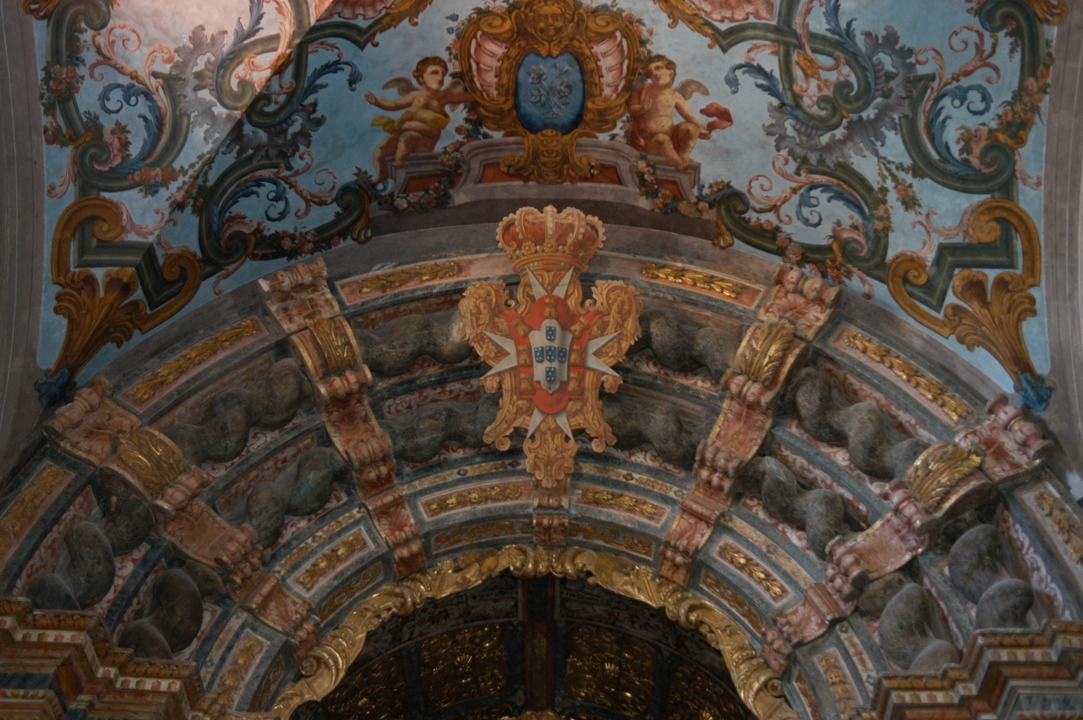
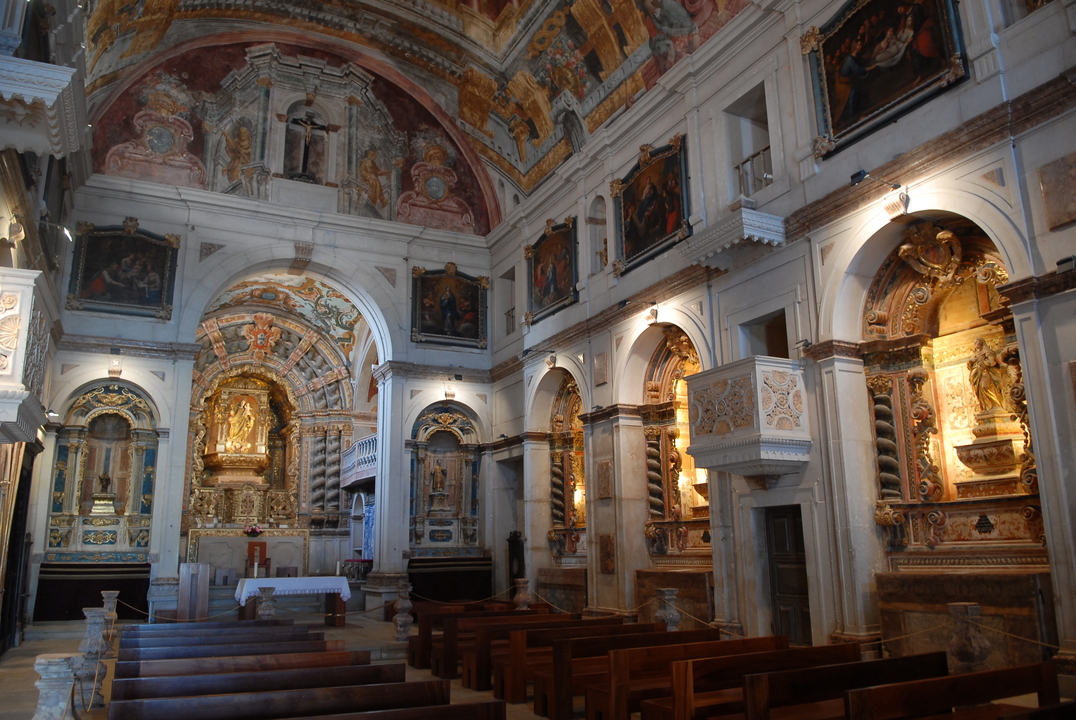
Inside, you will find a number of valuable artistic relics, namely the altarpiece of the high altar in the national baroque style, which guards the image of the Lady of the Cape; the painted ceilings (done in 1740 by Lourenço da Cunha) and the 16th century paintings by the Master of Lourinhã, representing Saint James and Saint Anthony, which can be seen in the sacristy. The gallery on top of the high altar, which was meant for royal visits, is also worth looking at.

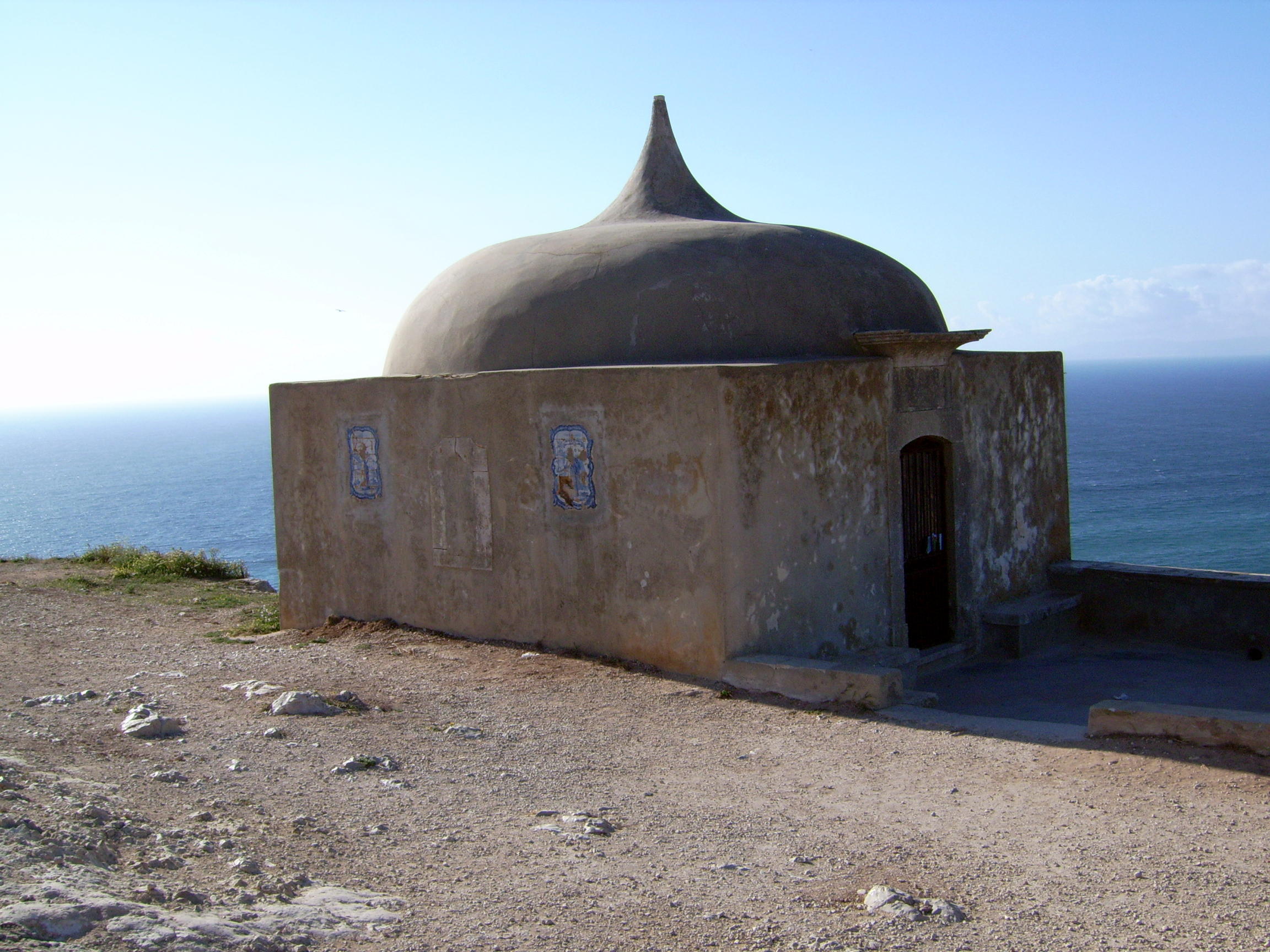
A few metres from the Sanctuary, on the cliffs, remains the little Hermitage of Memory, dating from the 15th century and built on the exact spot of the apparition. Inside, there are tile panels from the 18th century that show the story of the Lady of the Cape.

Address: R. José Relvas 682, Q.ta do Conde, Portugal
Hours: Open 24 hours
Architectural style: Baroque architecture

Santuario de Nossa Senhora do Cabo Espichel

This “Stonehenge” in Portugal is even older than its British counterpart.

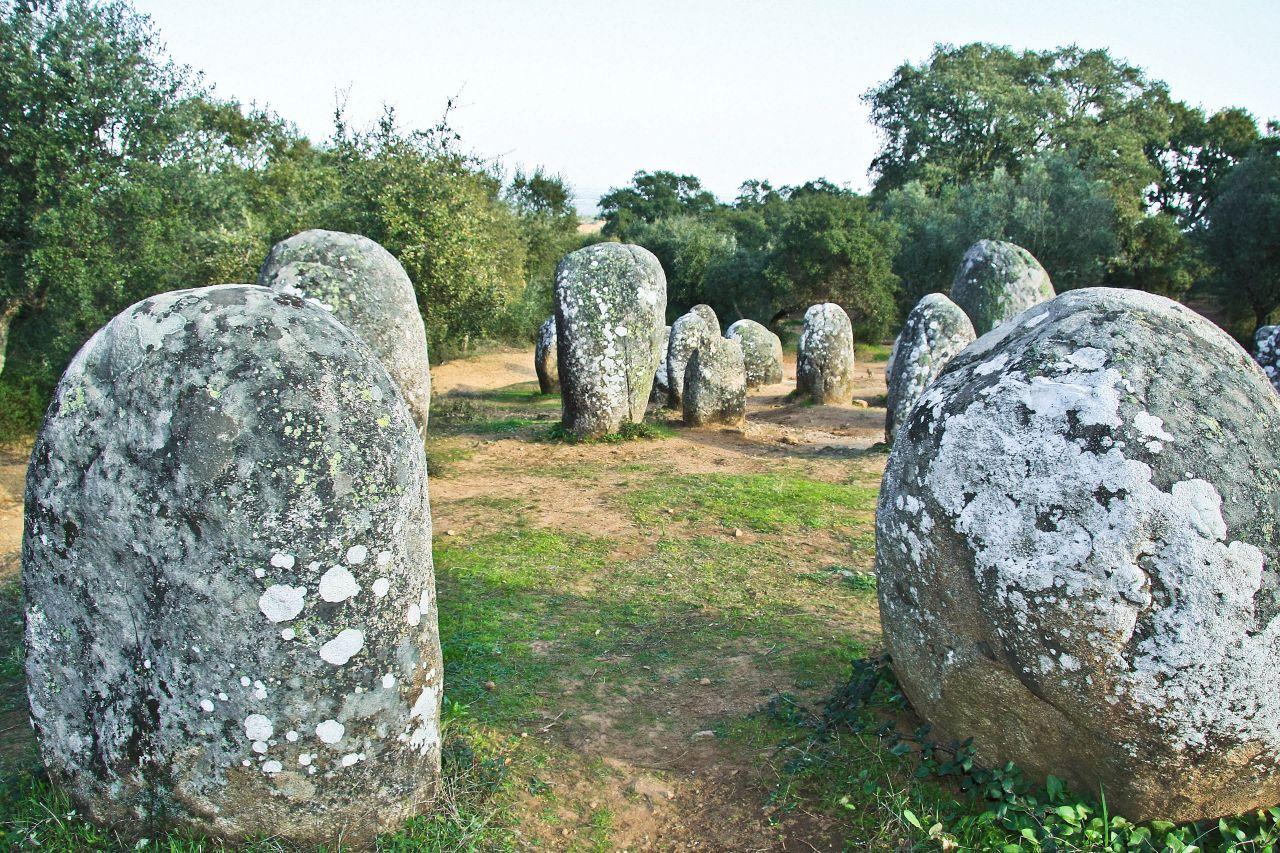
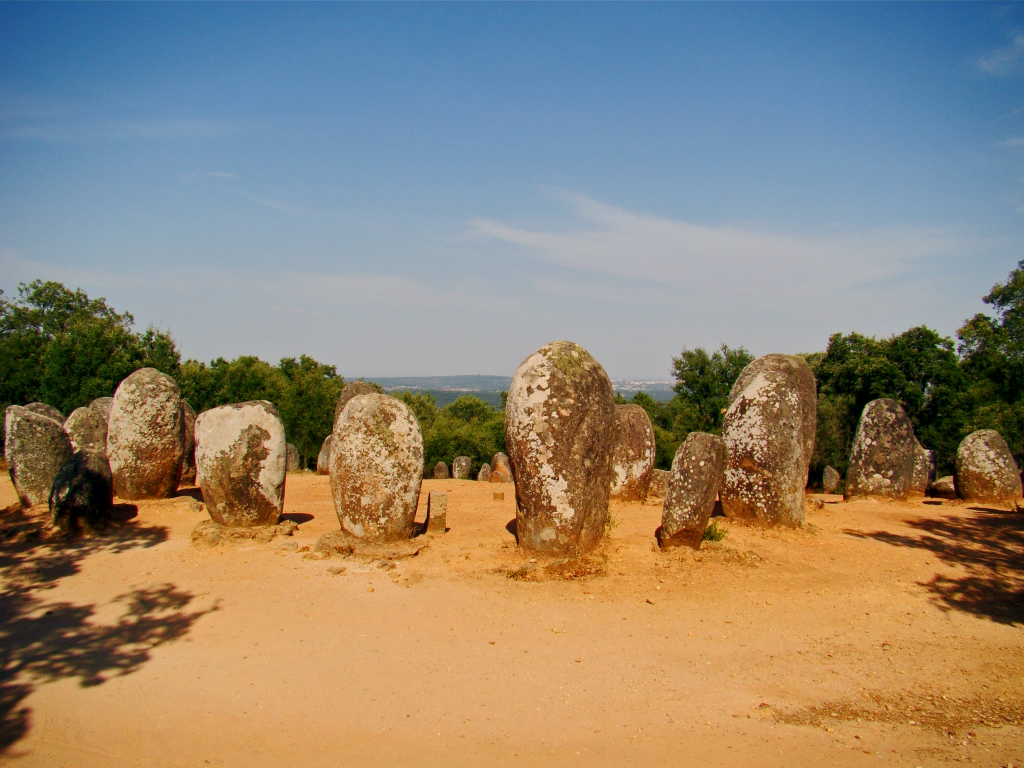
The Almendres Cromlech is so named because the stones are shaped like almonds (almendres in Portuguese), but they are actually more similar to menhirs, which are freestanding monolithic stones, than to dolmens. The location’s Portuguese name is Cromeleque dos Almendres.

Cromlech of the Almendres

Stonehenge in England may be the most well-known megalith, but it is not the only one or the oldest. In reality, when it comes to age, it most clearly isn’t. In Portugal, the Cromlech of the Almendres is even older. This is regarded as the best Neolithic construction in the Iberian Peninsula and one of the best in Europe.

The Cromlech of the Almedres is a Portuguese megalithic formation. It is the greatest surviving group of built menhirs in the Iberian Peninsula. A “cromlech” is a massive stone block megalithic structure.

It is said to be thousands of years old, dating back to the sixth millennium BC—far older than Stonehenge or the Great Pymaids. However, the oldest permanent site known to date is the 14,000-year-old Karahan Tepe in Turkey, which is a sister site to Gobekli Tepe (excavations are ongoing now).

The relative chronology of the cromlech and menhirs has been demonstrated to be quite complex. It spanned the Neolithic to the Chalcolithic periods.

It is thought that, like many other similar places in Europe, it was once used for religious or ceremonial purposes or to study the stars.

Many of the stones had fallen over over the millennia, so the Portuguese government began a huge restoration project in the 1960s to put them back where they belonged.

Some of the stones have unique markings or properties. Among these are:

Stone 48: A small figure holding a staff or crosier is depicted.

Stone 57 is flat on one side and has 13 pictures of well-known things from the past.

Stone 56: Has A Human Face; It Is Considered A Menhir Statue—Perhaps A God

Stone 58 features three solar discs and sunray lines.

The Cromlech of the Almendres is not isolated; it is situated in a region rich in megalithic monuments. The Vale Marie do Meio Cromlech is about six miles away, and nearby are two neolithic dolmens, or megalithic graves, as well as the Portela de Modos cromlech.

Who knows how many additional sites will be discovered? Only in 1993 was the Vale Marie do Meio Cromlech uncovered.

The District of Evora: A Megalithic Hotspot

They are located in the Evora region of Portugal, and there are more than the places described above. These are some of Europe’s oldest monuments, dating back to the time when man was changing from hunter-gatherer to farmer.

There are around ten megalithic enclosures, over 100 isolated menhirs, about 800 dolmens, and nearly 450 megalithic dwellings in just one district alone. That’s some major history right there, and it’s not even touristy!

The Cromlech of the Almendres (Portuguese: Cromeleque dos Almendres/Cromeleque na Herdade dos Almendres) is a megalithic complex (commonly known as the Almendres Cromlech) situated 4.5 road kilometres west-southwest of the village of Nossa Senhora de Guadalupe, in the civil parish of Nossa Senhora da This archaeological site contains many megalithic structures: cromlechs and menhir stones, which belong to the so-called “megalithic universe of Évora,” with clear parallels to other cromlechs in the Évora District, including Portela Mogos and the Vale Maria do Meio Cromlech.

The construction of these structures dates back to the 6th millennium BC. They were rediscovered in 1966 by Henrique Leonor Pina, who was carrying out fieldwork relating to the country’s geological charts.

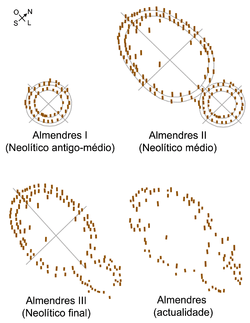
The excavation of the site unearthed a series of both megalithic and neolithic construction phases; Almendres I 6000 BC (Early Neolithic), Almendres II 5000 BC (Middle Neolithic), and Almendres III 4000 BC (Late Neolithic). The relative chronology of the cromlech and menhirs is extremely complex and covers a period from the Neolithic to the Chalcolithic. It is believed that the monument either had a religious or ceremonial purpose or functioned as a primitive astronomical observatory.

Visiting the Site
Today, it’s a wonderful place to stop for people exploring Portugal’s off-the-beaten-path treasures. As this place has not been promoted as a tourist destination, it is likely that you will have the spot to yourself. Since there is no transportation service to the location, it is advisable to drive oneself.

According to reports, the site is managed with a carefree attitude, and it is not roped off or fenced off, so exploration is permitted.

Alternative name: Cromlech of the Almendres Estate

Évora, Central Alentejo, Alentejo, Portugal

38° 33′ 27′′′′N, 8° 03′ 40′′′′W are the coordinates.

No admission charge
Hours of Operation: Not Applicable-Open Constantly
Facilities: Basic or None


by David Leite | photo by Nuno Correia

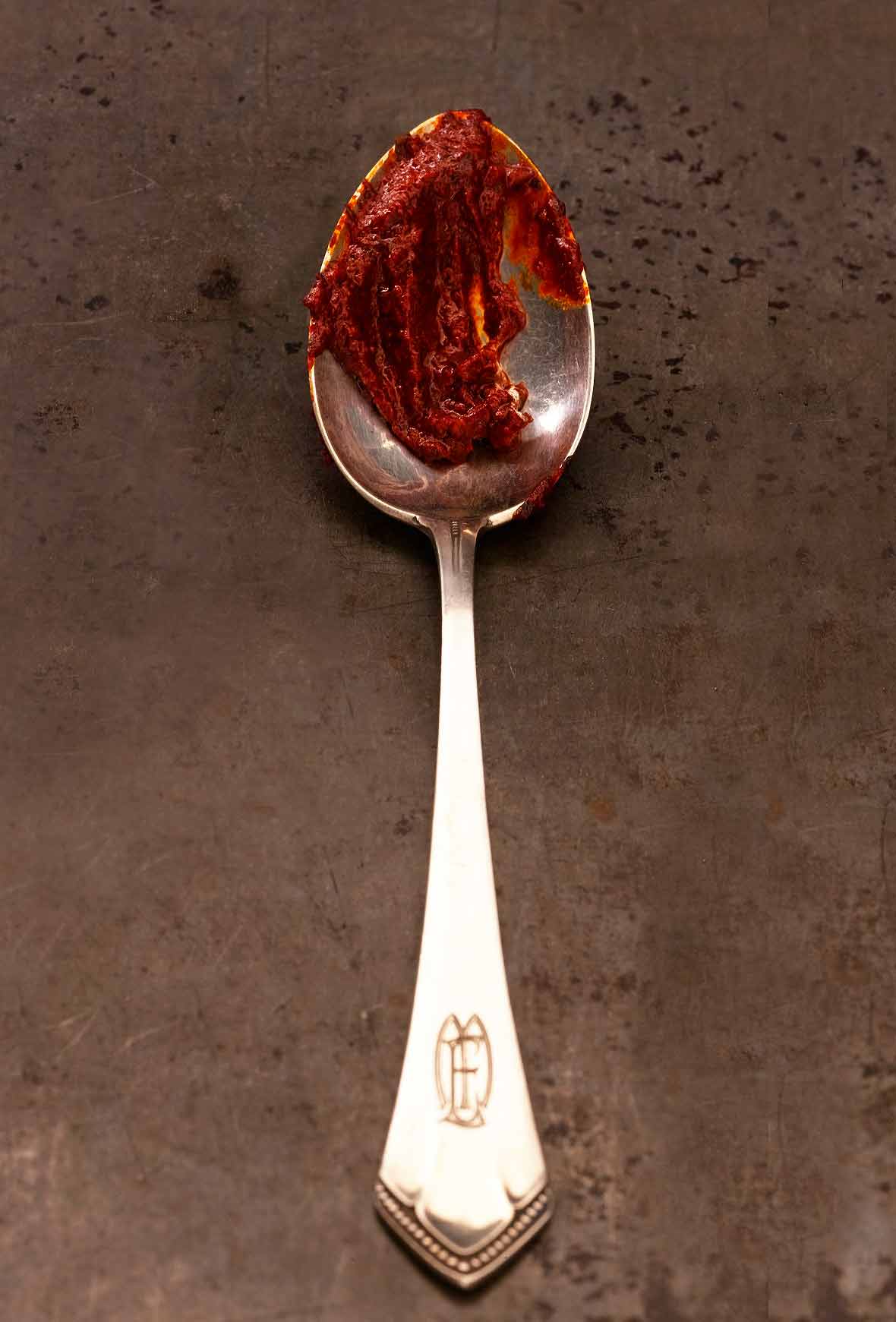
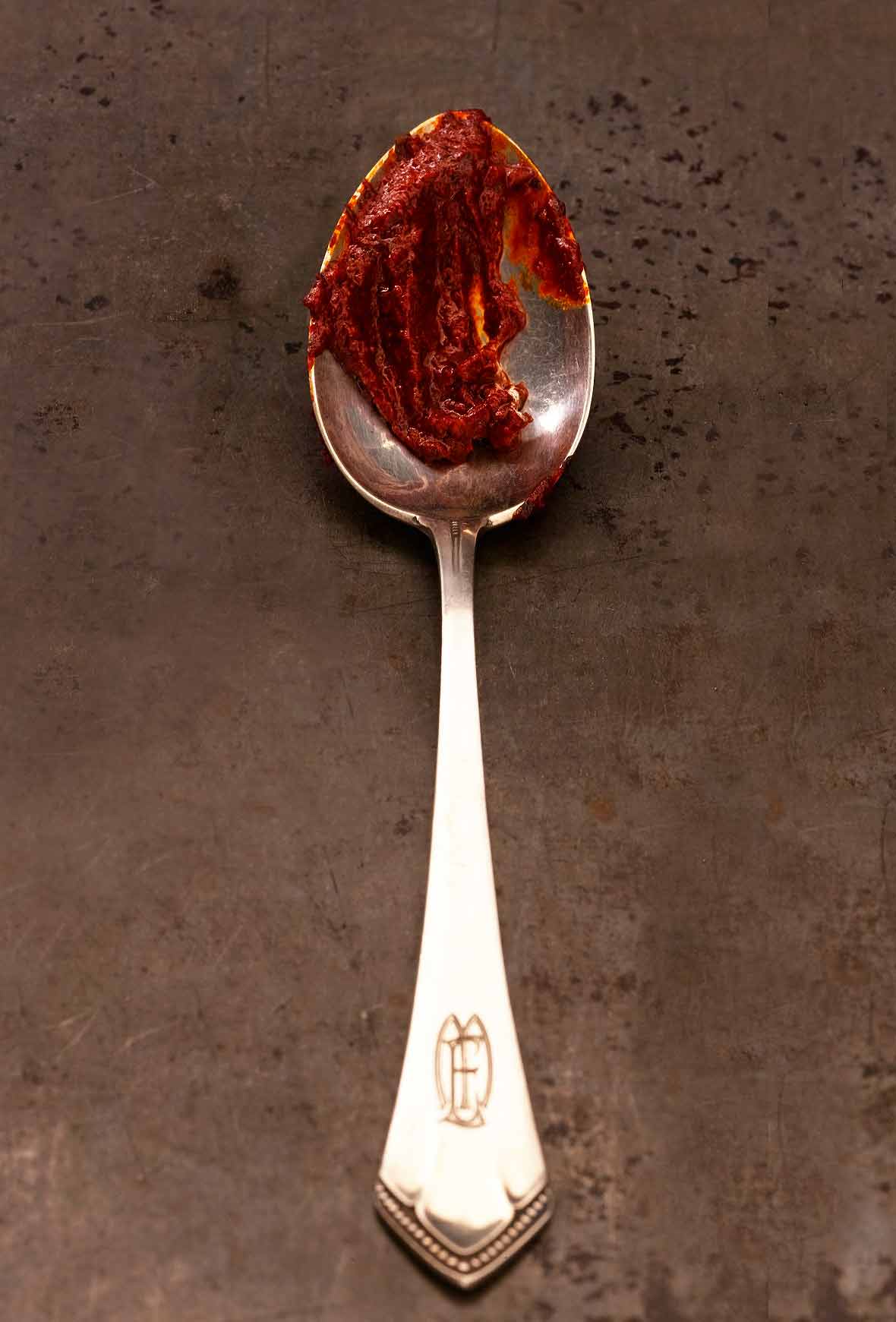
Each Portuguese family has its own rendition of the classic, pantry staple known as massa de pimentão. Here’s how David has amped it up several notches and in the process created something new. It’s bursting with wine, paprika, garlic, hot sauce, and herbs. It’s Portugal in a jar.

By David Leite | The New Portuguese Table 

Massa de pimentão is originally from the Alentejo province. The salty red pepper paste, a pantry staple, is a Portuguese classic and constitutes the major flavour component of the region’s cooking. Each cook has his or her own version. Some are made from fresh bell peppers that have been salt-cured, others rely on roasted peppers, and still, others turn to paprika. This isn’t the classic version. This is an “amped-up red pepper paste” based on my family’s recipe. I wanted all the flavours of the Portuguese kitchen in one power punch of a paste.

It’s richly flavoured–think of it as a preseasoned rub–so all you have to do to make dinner is rub a little on beef, chicken, fish, or even peeled, halved potatoes before roasting. Although I have to say that this particular paste’s most famous—and deservedly so—application (although granted, I’m a little biased) is my Grandmother Costa’s Bread Dressing.–David Leite

HOW TO USE PORTUGUESE RED PEPPER PASTE

David explains that red pepper paste is like Asian fish sauce in that a little goes a long way. As David mentions above, you can rub a little on a beef roast, chicken (both above and below the skin), fish, and even peeled, halved potatoes before roasting. Or you can stir it into stews or soups. It works wonders when stirred into mayo. And any other application you can imagine where you want or need a little spice.

Portuguese Red Pepper Paste

Prep10 mins

Total10 mins

INGREDIENTS

  • 2 tablespoons sweet paprika
  • ▢2 tablespoons sweet smoked paprika
  • ▢1/4 cup dry red wine
  • ▢8 to 10 garlic cloves
  • ▢2 crumbled Turkish bay leaves
  • ▢3 tablespoons store-bought or homemade tomato paste or 1 tablespoon double-concentrate tomato paste
  • ▢1 1/2 tablespoons fresh lemon juice
  • ▢7 sprigs cilantro
  • ▢5 sprigs of flat-leaf parsley
  • ▢1 1/2 tablespoons kosher salt (16 g)
  • ▢1/4 teaspoon freshly ground white pepper
  • ▢Few dashes Piri-Piri sauce or to taste
  • ▢1/4 cup olive oil

DIRECTIONS 

  • In a food processor, combine the sweet paprika, sweet smoked paprika, wine, garlic, bay leaves, tomato paste, lemon juice, cilantro, parsley, salt, pepper, and Piri-Piri sauce.
  • Pulse until the garlic and herbs are minced, scraping the sides of the bowl as necessary.
  • With the motor still running, add the olive oil in a slow, steady stream and continue whirring until the mixture comes together in a slick, homogeneous paste, 1 to 2 minutes.
  • Use the mixture immediately or spoon it into a small glass jar with a tight-fitting lid and refrigerate for up to a month.

NOTES

Classic Red Bell Pepper Paste Variation

This Classico approach to red bell pepper paste relies on salt-cured bell peppers for oomph. It’s a much saltier version of the paste than the recipe above, so use it with a judicious hand. Wash, stem, and seed 3 red bell peppers. Slice them into 1-inch-wide strips. Line a colander with cheesecloth and pour in about an inch of kosher salt. Press some of the strips into the salt and cover with another inch of salt. Continue layering until all the strips are covered. Top with a heavy pan. Place the colander in a large bowl and set aside at cool room temperature for 5 days. On the 6th day, fish out the bell pepper strips and brush off the salt but do not rinse. Purée in a food processor, transfer to a clean glass jar and refrigerate until you need your next fix.

At Leite’s Culinaria, they believe a passion for food isn’t limited to the kitchen. A person can be as satisfied by eating a good meal as by reading about one. Therefore, their mission is to educate and entertain cooks and readers of all levels who are interested in the diverse world of food. Spend time with their website and discover a multi-ethnic variety of recipes, how-tos, essays, musings, and interviews with writers, both Pulitzer prize-winning
and previously unpublished.

Learn more about The New Portuguese Table
Get yours at Leite’s Culinaria or get your
copy at Amazon.com
and/or Barnes & Noble

QUOTE:

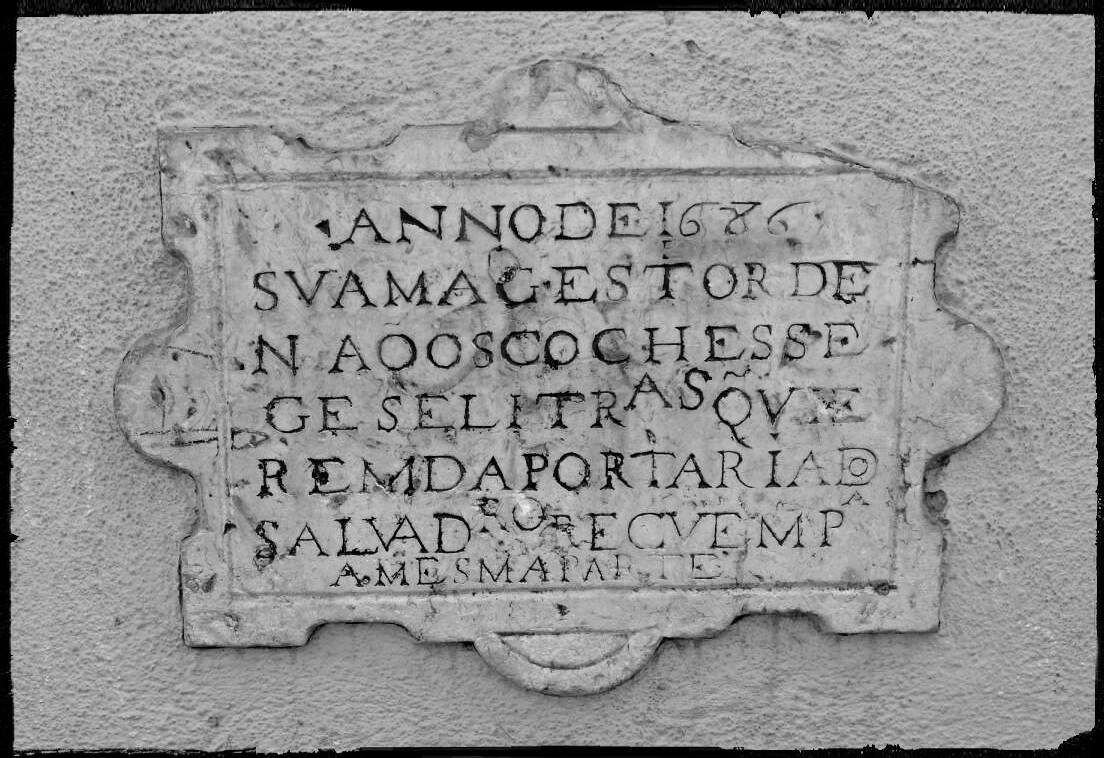
IN THE YEAR 1686

HIS MAJESTY ORDERS

THAT CARRIAGES, SLEDGES

AND BEDDING THAT COMES

FROM THE ORDINANCE OF

THE SALVADOR RETREAT

FOR THE SAME PART.

We can still see it on a wall on Rua Do Salvador in Alfama.

His Majesty, King D. Pedro II, erected this plaque in 1686 to guide animal-drawn vehicles, such as carriages, coaches, oxcarts, or carts, that passed through this narrow artery.

In fact, the king had 24 traffic signs installed and posted, but only this one has survived to the present day.

In practice, those travelling down the artery were given less priority than those travelling up.

The street, which itself is currently a simple and narrow alleyway connecting Rua Das Escolas Gerias and Rua De Sao Tome,

Even so, it was significant around 400 years ago, when it was the link between the castle doors of Sao Jorge and Baixa.

Anyone who disobeyed these traffic signs would be fined 2000 Cruzados and could be deported to Brazil.

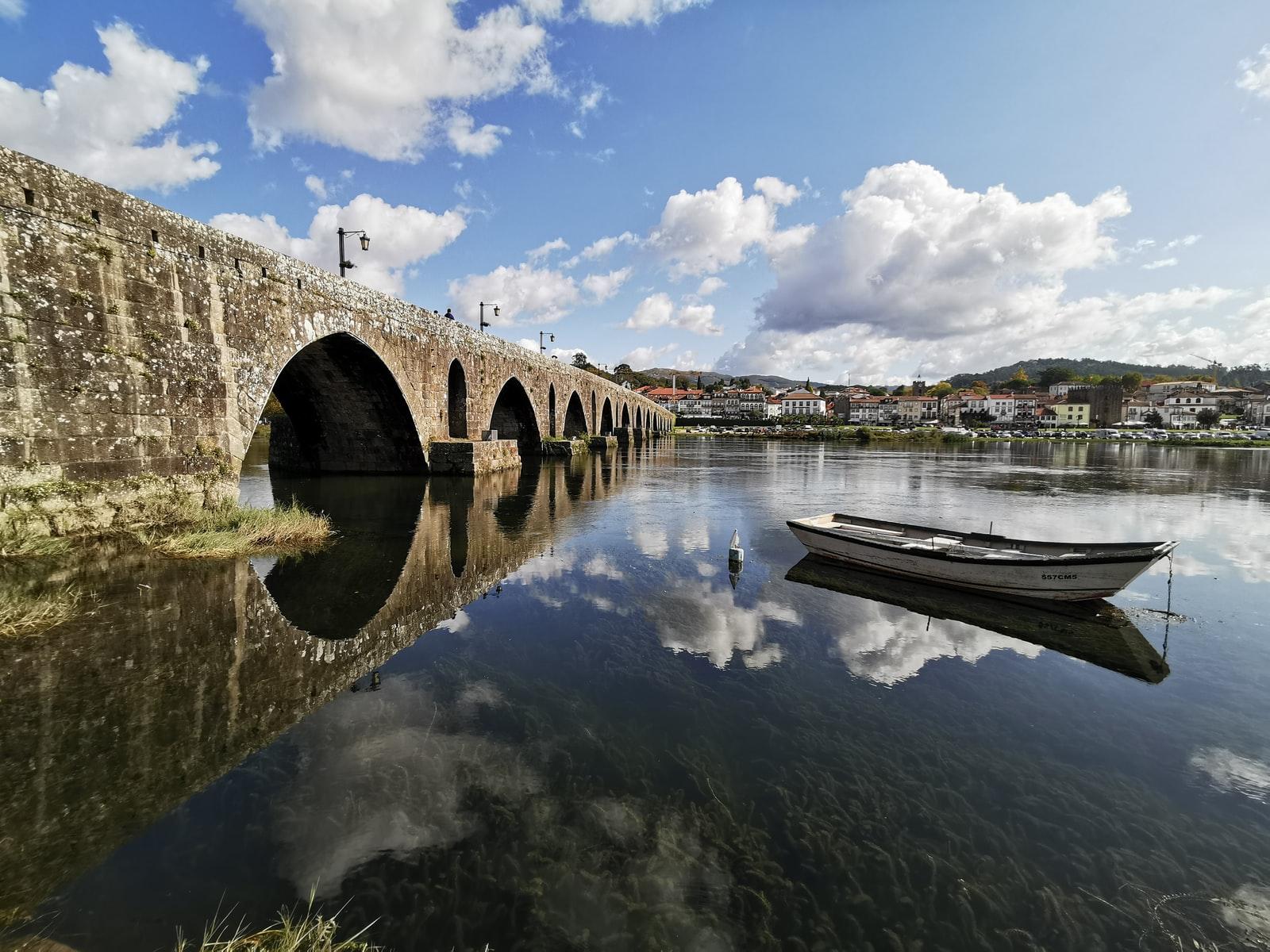
In the heart of Vale do Lima, the authentic and peculiar beauty of the oldest village in Portugal hides deep roots and ancestral legends. It was Queen Teresa who, on the distant date of March 4, 1125, granted a charter to the town, referring to it as Terra de Ponte. Years later, in the 14th century, D. Pedro I, given the geostrategic position of Ponte de Lima, ordered it to be walled off, so the end result was a medieval village surrounded by walls and nine towers, of which there are still two, several vestiges of the others, and of the entire defensive structure of the time, making access to the village through six doors.

The town is named after the long mediaeval bridge (Ponte) that passes over the Lima river that runs next to the town. One of the oldest towns in Portugal (founded on March 4, 1125), it was historically significant as a Roman settlement on the road from Braga to Santiago de Compostela and Lugo, and the first place in Portugal to get a municipal charter.

A walk through the town centre is a journey to the roots of the ancestry in Ponte de Lima, a town of stories and history. Largo de Camões welcomes visitors with its Noble Fountain, completed in 1603. The nearby bridge tempts us all to cross it. Cross the bridge and admire the beauty of the Church of Santo António da Torre Velha (Old Tower), built in the nineteenth century and notable for the height of its tower and the gargoyles flanking it. Nearby, the Chapel of Anjo da Guarda (Guardian Angel), which has Romanesque and Gothic roots and is often thought to have been built in the 13th century, will catch your eye because of how well it fits into the landscape.

 
Don’t return to the other bank without visiting the International Garden Festival and the picturesque outskirts of Além da Ponte (literally “Beyond the Bridge”), of undeniable architectural interest. On the left bank, back in the historic town centre, admire the São Paulo Tower, from the fourteenth century; the Pelourinho (Pillory); the Torre da Cadeia Velha (Old Jail Tower), which was still being used as a prison in the 1960s; and the Arco da Porta Nova, the town gate that leads to the old Rua da Judiaria.

Before heading to another symbol of Ponte de Lima, the Avenida dos Plátanos (Plane Tree Avenue), stop for a moment at the Baroque Chapel of Nossa Senhora da Penha de França. At the end of the avenue, the Chapel of Nossa Senhora da Guia (seventeenth century) is unmissable, as is the notable complex formed by the Churches of Santo António dos Frades (fifteenth century) and Ordem Terceira de S. Francisco (eighteenth century), which houses the Terceiros Museum. Just off the Avenue is the Diogo Bernardes Theatre, a fine example of an Italian-style theatre, inaugurated in 1893, which remains the town’s main cultural centre. The beautiful Neoclassical facades of the Villa Moraes, which is close by, are typical of the homes built by people who came back from Brazil. The Villa Moraes also has a warm and romantic park.

Back in the centre of the town, the Parish Church, rebuilt by João I, is another essential site. From there, walk up to the Paço do Marquês (fifteenth century) and visit the Military History Interpretation Centre. We also suggest a visit to the Church of Lapa, where there is an image of St. Benedict.

The monuments to Teresa, the Countess of Portugal, and the poet António Feijó stand out in Praça da Repblica, as do the Town Hall and the Pelourinho.
The tour continues now along the narrow streets of the old town, Rua Beato Francisco Pacheco and the sixteenth-century Bairro das Pereiras, with its fine architecture and notable façades. There is much left to see, but we suggest ending this tour at the Chapel of Nossa Senhora da Misericórdia das Pereiras, where a sublime view of the valley and over the town can be enjoyed.

Before making any vacation plans, please check the constantly changing local limitations and safety rules. It should be noted that not all sites and services are operating as usual, so check their respective websites for the most recent details.

Image Slide 1
previous arrowprevious arrow
next arrownext arrow
Shadow

The landscape is defined by the tight wall with its towers on a hill. The community is well-known for its resistance during the Restoration, but also for the inventiveness of its recipes including river fish and Marofa lambs.

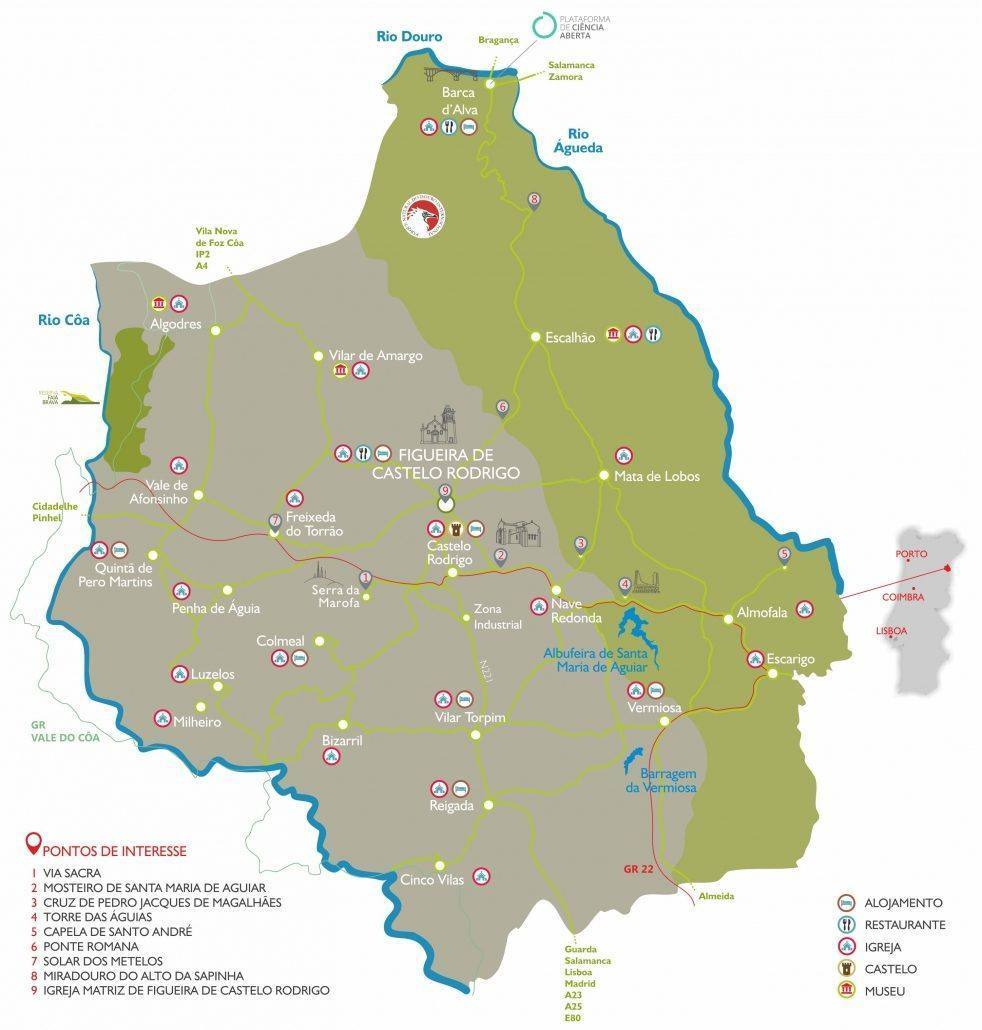
The Municipality of Figueira de Castelo Rodrigo in the heart of the Riba Côa region, has a great wealth of structural history, including Castelo Rodrigo, one of the most beautiful and exceptional medieval villages, playing a key role. Aldeia Autêntica is declared one of Portugal's Seven Wonders.

With beautiful and outstanding natural beauty, such as blooming almond trees in February and March, the municipality is also rich in cultural and architectural legacy, with majestic cathedrals and chapels, one-of-a-kind monuments, and landscapes.

While strolling through the streets of Castelo Rodrigo, you cannot miss the 16th-century Pelourinho, the Igreja Matriz, the medieval cistern, and the remains of a significant New Christian community. The settlement served as a town and county seat for about 600 years. Throughout the country’s history, its people have distinguished themselves through their courage and dedication to the king.

With the medieval settlement of Castelo Rodrigo and Serra da Marofa, with its towering Cristo Rei, as its highest points, it is still drenched by three significant rivers: the River Douro, the River Gueda, and the River Côa, as well as the dam’s reservoirs. Santa Maria de Aguiar and the Vermiosa hydroelectric dam Figueira de Castelo Rodrigo has a holiday on July 7, the anniversary of the Battle of Salgadela, one of the most significant engagements of the Restoration Wars.

It shares its borders with Salamanca, Spain, and the municipalities of Pinhel, Almeida, Vila Nova de Foz Côa, and Freixo de Espada à Cinta. The Municipality of Figueira de Castelo Rodrigo links its millennia-old history to heritage, nature, gastronomy, and investment, always with its hospitable people serving as the region’s primary ambassadors.

Map Source from Figueira De Castelo Rodrigo Municipio

Before making any vacation plans, please check the constantly changing local limitations and safety rules. It should be noted that not all sites and services are operating as usual, so check their respective websites for the most recent details.

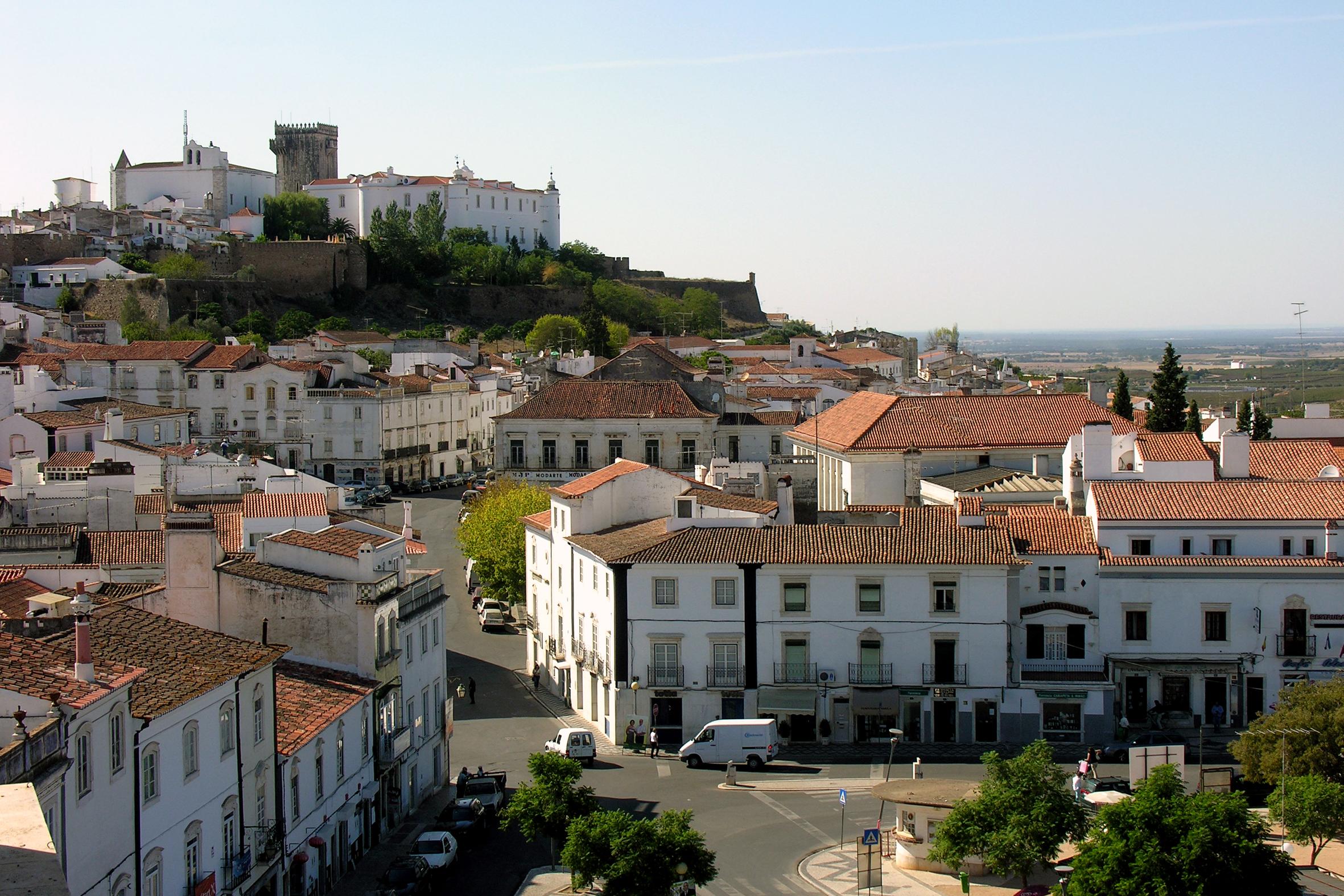
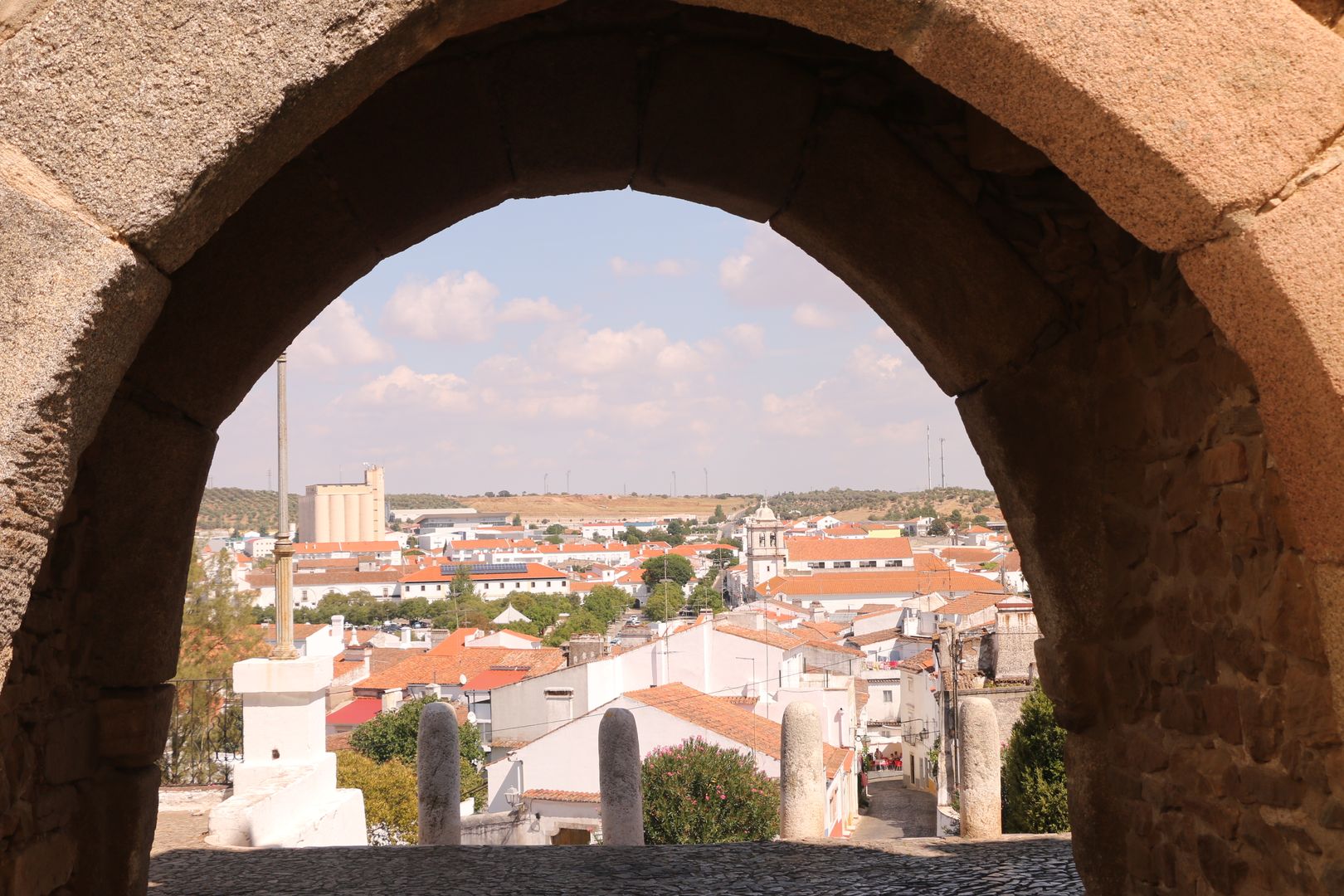
About an hour and a half north-east of the city of Évora is the lovely town of Estremoz. It's a great place to visit in Portugal's beautiful Alentejo region.

Long, straight roads built by the Romans run into this peaceful, pleasant town through great gateways that cut through the 17th-century fortifications that were built to protect the city from Spanish invasions.

Estremoz is in the middle of one of Portugal's most important marble-quarrying areas, and its fortified tower, built in the 13th century, dominates the landscape and can be seen from miles away.

This bustling agricultural centre has many stories to tell about Portugal’s long and chequered history, especially in relation to the country’s 771-year-long monarchy.

The region around Estremoz has been inhabited since prehistoric times. There are also vestiges of Roman, Visigoth and Muslim occupation. During the Reconquista, Estremoz was captured in the 12th century by the army of knight Geraldo Sem Pavor (Gerald the Fearless), who had also conquered neighbouring Évora. However, Estremoz was soon retaken by the Moors and only in the mid-13th century was it reconquered by the Portuguese King Sancho II.

The royal palace, located in the heart of the city, is where Portugal’s mediaeval kings held court. Both Queen Isabel and Inês de Castro’s lover, King Pedro I, died there in 1336 and 1367, respectively.

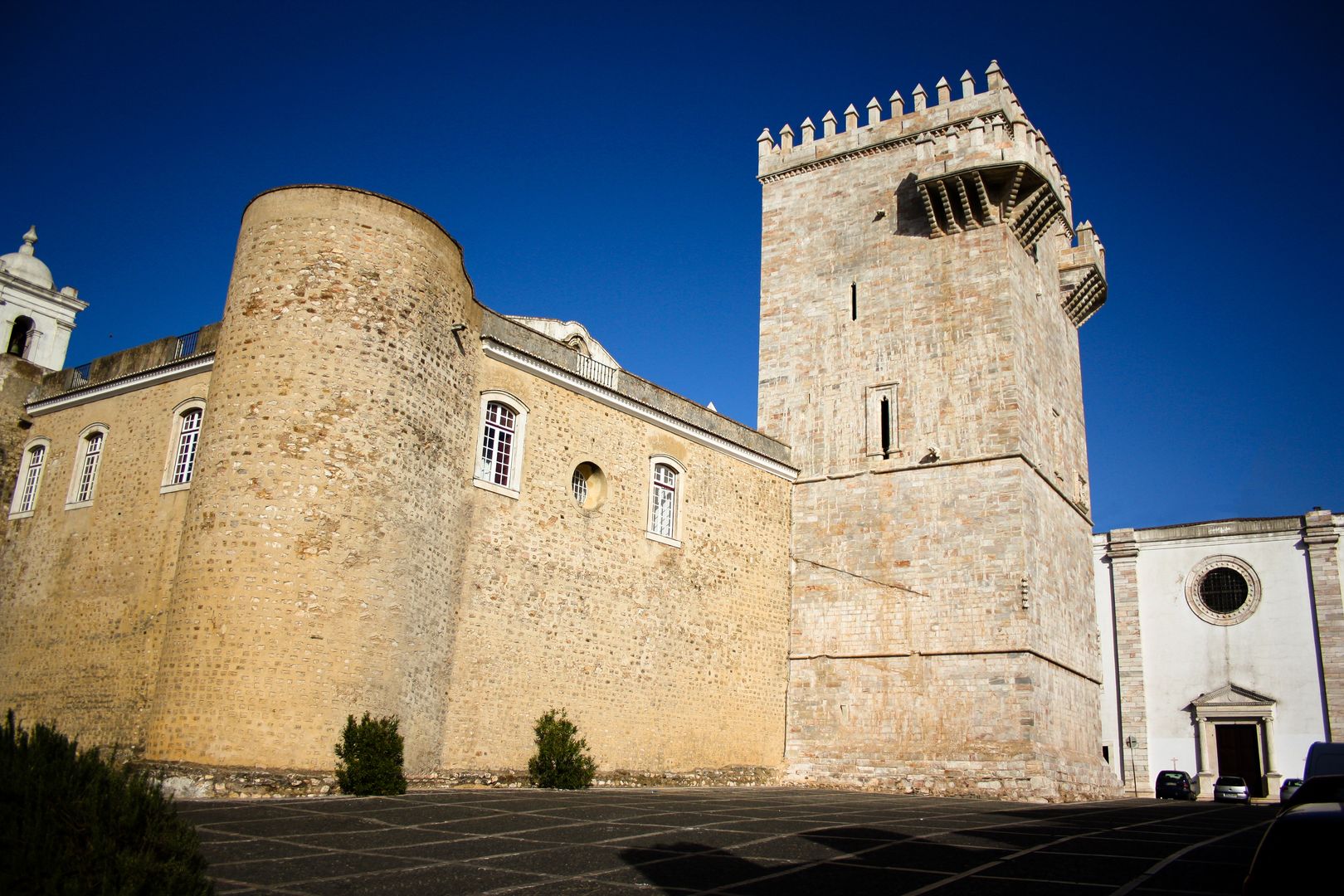
Estremoz has two lines of fortifications, the first of which dates from the 13th century and the second of which was built during the Portuguese Restoration War (1640–48), when the town served as the staging area for several decisive military campaigns against Spanish forces, including the famous Battle of Ameixial, which took place just a few kilometres away. The mediaeval upper town is surrounded by strong ramparts and is dominated by the Torre das Três Coroas (Tower of the Three Crowns), a 27-meter-high grey marble keeps built during the reigns of three kings, Sancho II, Afonso III, and Dinis I.

This iconic keep was the main defence of what was once one of the Alentejo region’s most powerful castles, with balconies from which attackers were thrown boiling oil. Historiographers consider it to be one of the best examples of mediaeval military architecture in southern Europe today.

The adjoining castle and royal palace were built for Dona Isabel (King Dinis’s wife), who maintained devout habits throughout her life, founding several orphanages and other charitable institutions as well as helping the sick and poor whenever possible. The Holy Queen’s life and miracles are depicted in 17th-century azulejo tile panels, which were canonised by Pope Urban VIII almost three centuries after her death. The panels can be found in the palace’s chapel of Santa Isabel.

The castle’s narrow, cobblestone streets are lined with small shops and boutiques selling marble items and beautiful hand-made pottery from the Alentejo region, which is known for its red colour and life-like figures depicting everyday life in the region. The great squares of the lower town (particularly the largest, known as Rossio), lined with houses of bright white stucco and moon-coloured marble, give visitors a contrasting impression of open space and urban brightness, enhanced with a delightfully mediaeval twist.

Estremoz - Portugal | See where this picture was taken. [?] | Vitor Oliveira | Flickr

The Misericórdia church in Rossio, which was built in 1539 and was once a Knights of Malta convent, is now known for its charming Gothic cloisters. Another convent dedicated to St Philip of Nery (a local bishop), whose life is beautifully depicted in some of the old azelujo tiles adorning its walls, was located near a fine 17th-century building, now serving as Estremoz Town Hall.

The municipal museum of Estremoz’s street-level galleries features an impressive display of bonecos, small clay figures that were added to UNESCO’s Representative List of Intangible Cultural Heritage of Humanity in 2017. A very authentic reconstruction of a typical Alentejan country kitchen is also on display at the museum.

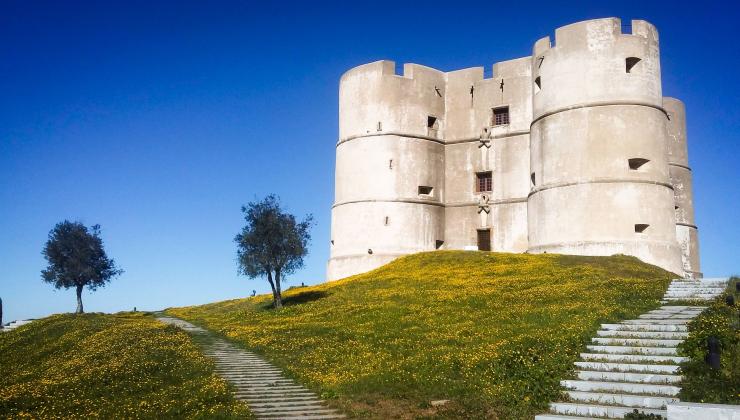
Visitors to Évoramonte, a few kilometres south of Estremoz, can see the site where King Miguel I abdicated and thus relinquished all claim to the Portuguese throne by signing the Concession of Évoramonte on the 26th of May, 1834.

Borba, a charming wine town east of Estremoz, is worth a visit for its late 16th-century church of S. Bartolomeu (full of marble treasures) and the convent of Servas, which has a large double-renaissance cloister set around an old fountain.

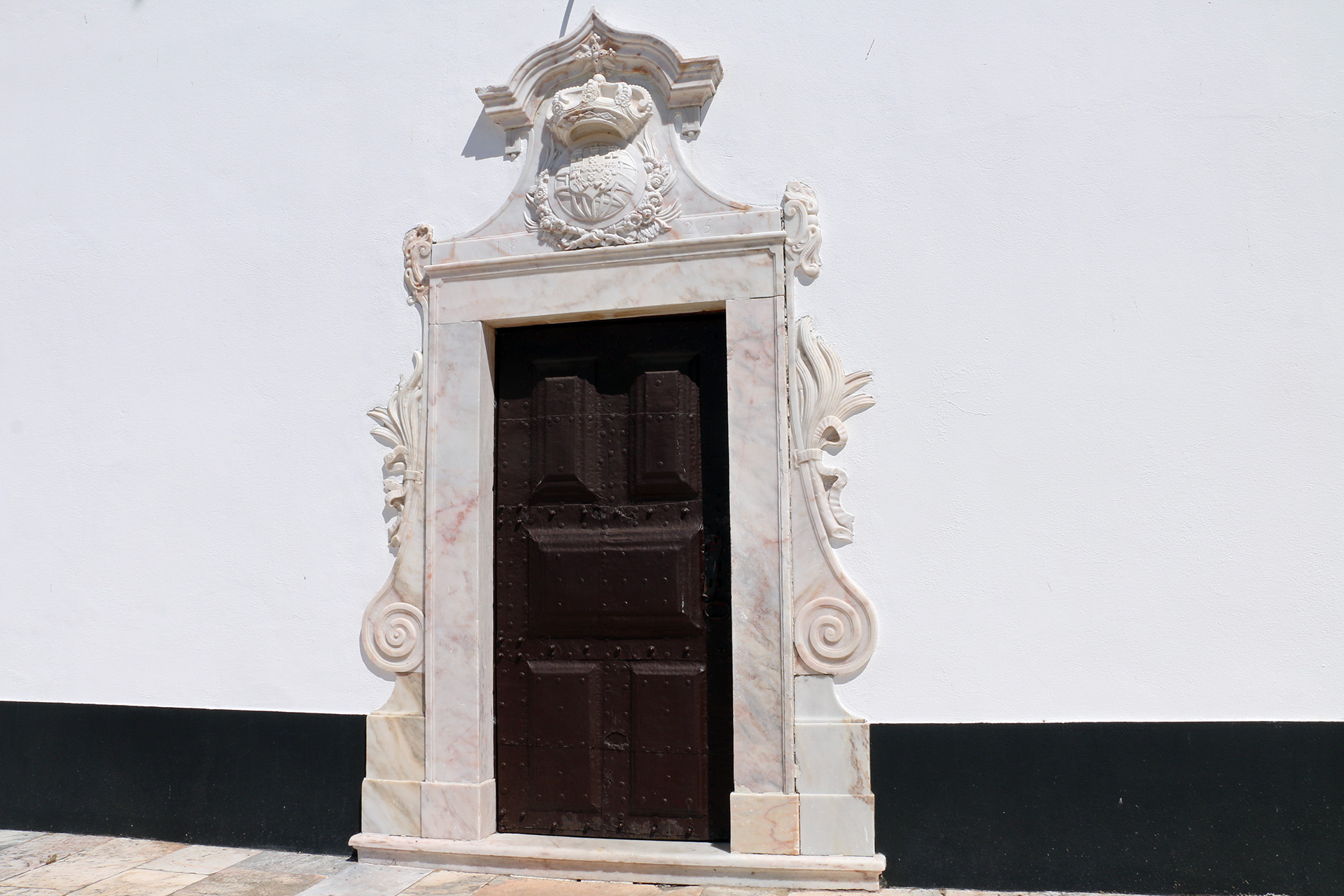
Estremoz, along with the other two marble towns of Borba and Vila Viçosa, is famous for its fine to medium marble, which comes in a variety of colours, including white, cream, pink, grey, and black, as well as streaks of any of these colours. The pink marble (Rosa Aurora and Estremoz Pink) is particularly popular.

Since antiquity, this marble has been used for sculpture and architecture. The first Roman exports were most likely for the construction of Emerita Augusta’s Circus Maximus in modern-day Spain. This marble was exported by Portuguese navigators to Africa, India, and Brazil. The Monastery of Jerónimos, the Monastery of Batalha, the Monastery of Alcobaça, and the Tower of Belém were all built with marble from this region.

Military Heritage

Estremoz is quite rich in military heritage from the attribution of its first charter in 1258. With no archaeological remains to prove the contrary, the town was born from the need to carry out a rapid military settlement, with the entire first medieval walled belt being completed in 1261.

Later, in the 17th century, it also played a fundamental role as a weapons square and war warehouse in the Alentejo, helping the first lines of fortification (Elvas, Juromenha, Campo Maior, etc.) Restoration.

Royal Seat


It was built in 1740

According to Tlio Espanca, the Assento Real was designed by the Marquis of Tancos and was originally conceived as a uniform warehouse for the army of the Province of Alentejo.

It was also used as a military bakery, producing up to 40,000 loaves of bread per day for the Alentejo army.

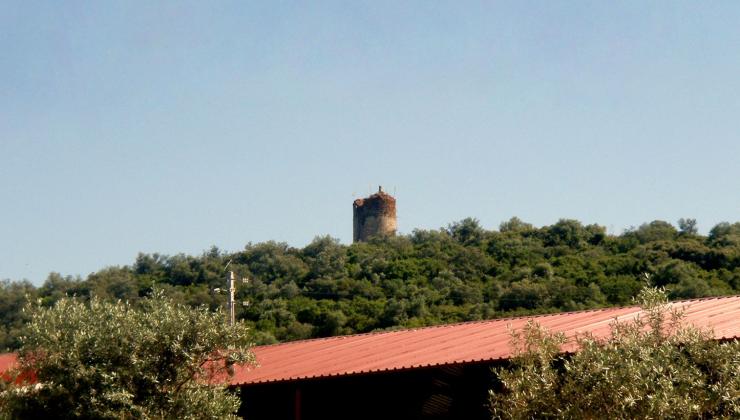
Frandina’s Watchtower

Frandina's Watchtower
Atalaia is an Arabic word (at-talai’a, plural of talaia) that means “place of surveillance.”
As is likely the case with the Atalaia da Frandina, and is defined by the presence of a tower (square, circular, pyramidal, etc. ), with the purpose of controlling the territory and communicating between watchtowers and/or castles.

Veiros Castle


The date of construction of the castle of Veiros is unknown; the only information available is that it began in 1308, during the reign of D. Dinis (r. 1279-1325), on the orders of D. Lourenço Afonso, the then master of the Order of Avis. According to the commemorative tombstone that would be embedded over the entrance door of the Torre de Menagem (which was completely destroyed by order of D. Joo de Austria in 1662), which is now over a small wall, the master-builder was stonemason Pero Abrolho.

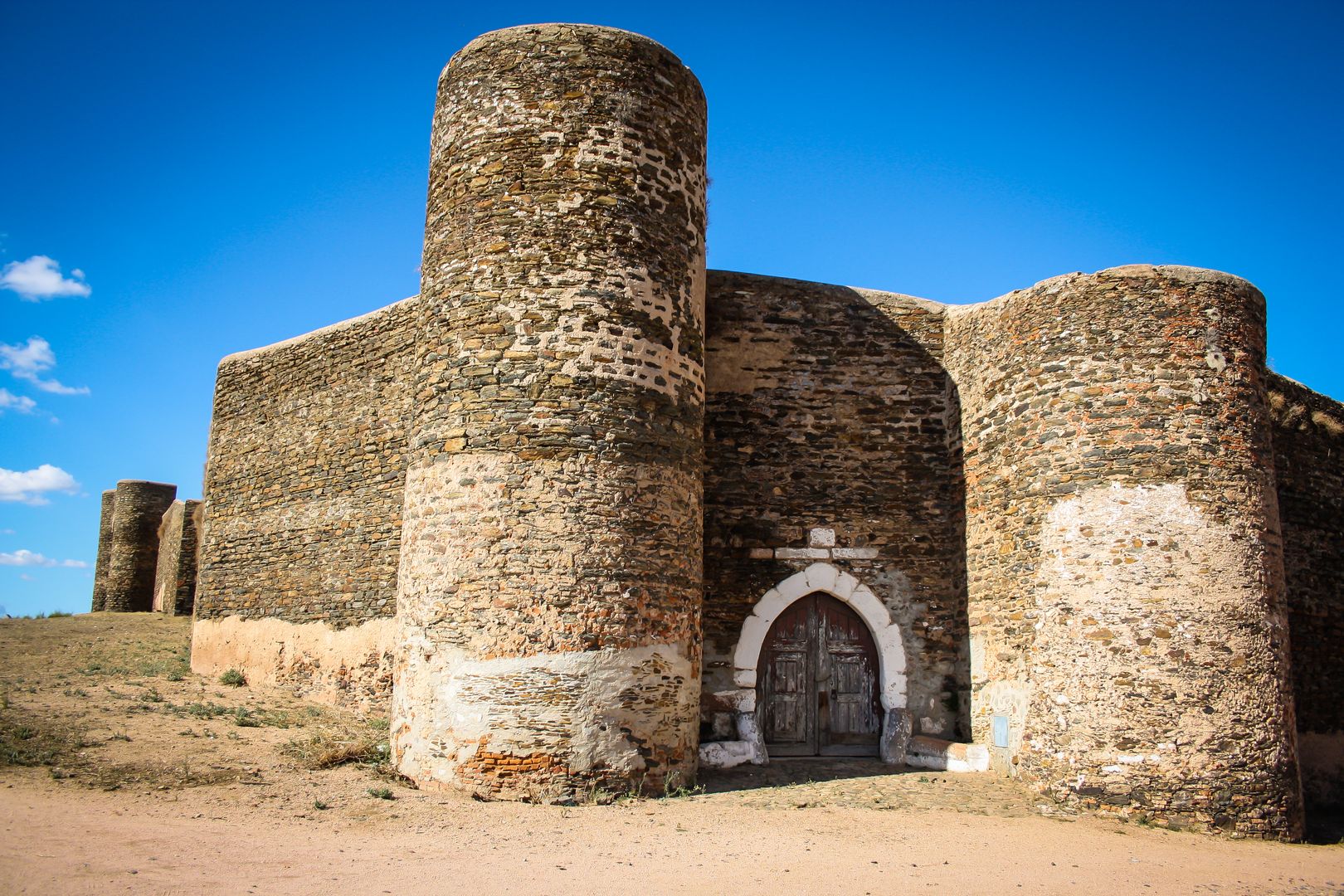
Castle and Medieval Fence of Evoramonte

Castle and Medieval Fence of Evoramonte

The mediaeval fence of Evoramonte was built in 1306, during the reign of D. Dinis (r. 1279–1325). The walled perimeter forms an isosceles triangle whose longest side follows the NE-SW line. It still maintains its four main doors and a wicket: the door of Freixo, with a Gothic arch without imposts and protected by two cylindrical turrets, faces south and has an inscription that corresponds to the beginning of the construction of the fence; the Sun Gate, very similar to the previous one, is oriented to the west; the door of São Brás is oriented towards the chapel with the same name and still maintains its trunnions; the door of São Sebastião has direct access by road to the hermitage of the same patron, which indicates 14th or 16th-century influences.

Monumental Ensemble of the Alcáçova de Estremoz – Castelo de Estremoz

In the centre of the medieval village stands the Torre de Menagem, one of the best-preserved in the country. About 27 meters high, it has a quadrangular plan and is crowned with pyramid-shaped merlons. Typical of Portuguese military architecture from the end of the 13th century and the beginning of the 14th century, it is what remains of the primitive fortress, together with the 13th-century building of Paços do Concelho. On the second floor, there is a beautiful octagonal room with columns of capitals with animalistic and anthropomorphic motifs.

Monumental Ensemble of the Alcáçova de Estremoz – Medieval Fence – Porta da Frandina

The medieval fence of Estremoz was built by King Afonso III (r. 1245-1279) in 1261 and improved by his successors, mainly by his son D. Dinis (r. 1279-1325). It has two main opposite doors (EO axis): Porta do Sol or Porta da Frandina and Porta de Santarém.

The Porta da Frandina, facing east, is flanked by a semi-cylindrical tower, with a recessed portal on the outside and round on the inside. Above the arch, at the entrance, is a tombstone invoking the Immaculate Conception, patron saint of Portugal, as is customary in the reign of King João IV (r. 1640-1656), after the Restoration.

Religious Ancestry

As with the rest of the Alentejo territory, the religious presence in Estremoz is ancient but also quite profuse, as evidenced by the architectural fabric of the city and other urban centres in the county, particularly Evoramonte and Veiros.

The presence of the Church and religious orders (particularly the Order of Avis in Estremoz and the surrounding region) was necessary for a territory that needed to be re-Christianized and populated.

The county contains over 70 structures that demonstrate how religious people lived there. This list includes convents and churches, as well as hermitages, dolmens, and cruises.

Dolmen of Entre Águas

From the Greek  Mega  (Big) and  Lithos  (Stone), Megalithism is the first major manifestation of a demarcated funerary space. A phenomenon that encompasses several typologies (dolmens, cists,  masonry tholoi  , use of natural caves), appears in the context of the transition from the Old Neolithic to the Middle Neolithic (mid-5th millennium BC) in Europe.

Queen Santa Isabel’s Chapel


According to Túlio Espanca, an oratory was constructed here in 1659 on the order of D. Lusa de Gusmão, the widow of D. João IV (r. 1640-1656), in gratitude for the Portuguese victory in the Battle of the Lines of Elvas. Father Francisco Tinoco da Silva carried out works on the temple’s behalf in 1680, during the reign of D. Pedro II (r. 1675-1706). Inevitably, 18 years later, in 1698, following the explosion of the castle’s powder magazine, new works were required, despite the fact that, according to a contemporaneous account, this chapel did not sustain significant damage, implying yet another miracle of the Holy Queen.

The Church of Our Lady of the Martyrs

Nossa Senhora dos Mártires is one of the few chapels in the Municipality of Estremoz with mediaeval characteristics. It was built by D. Nuno Álvares Pereira, according to Fernão Lopes, and the first reference to its existence is dated 1493. However, in 1379, the Confraria de N.ª Sr.ª dos Mártires already appears in the documentation, not meaning, perforce, that that temple already existed. In any case, its architectural features most likely take us back to the 14th century.

The Chapel of Santo Cristo

This small property was built by the Senate in 1574, erecting a simple calvary. Miguel Borralho is responsible for the current appearance of the temple, promoting the construction of a cross and its integration into a closed chapel in 1751.

The Chapel of San Sebastian

The hermitage of São Sebastião, next to the road that connects the lower town to the Castle of Evoramonte, shows the contemporary construction of almost all the extramural hermitages in the parish. The square chancel has a hemispherical dome, which is also the oldest element of the property.

The Church of San Francisco

It already existed in the 1270s, knowing that in 1272 its custody belonged to Lisbon, passing only to Évora in 1330, the year in which it was created. There is also an interesting document from 1277 that mentions a dispute between these Franciscans and the friars of the Order of Avis.

The interior has a rectangular plan with three naves and five bays. The Gothic verticality is proof of its mediaeval foundation, and the decorative elements of this period are naturalistic, zoomorphic, and anthropomorphic.

From the Baroque period is the Tree of Jesse, from the reign of King João IV (r. 1640–1656). It was paid for by the Brotherhood of Nossa Senhora do Rosário in 1652. This rare altarpiece of gilded woodcarvings corresponds to one of the three beautiful examples that still exist in Portugal.

The Network of Museums in the Municipality of Estremoz is made up of a diverse set of museums, from different properties, which are a living testimony to the richness of the culture of Estremoz. Thus, in Estremoz, you can visit Prof. Joaquim Vermelho, the Alfaia Agrícola Museum Center, the Firefighter Museum, the Military Museum, the Rural Museum, and the Museum of Sacred Art, in addition to the Living Science Center.

In the village of Veiros, the José Matos Cortes Agricultural Museum and the Veiros Mercy Museum Rooms are open to the public.

Things to do and see

  • Watch a show at the Bernardim Ribeiro Theater.
  • Buy an Estremoz Puppet.

Clay Dolls Shudder Earning To - Free photo on Pixabay

  • Taste rich and varied gastronomy.

  • Discover more than eight centuries of history.

  • Discover the Natural Heritage: lose yourself in the Landscape.
  • Shop at the Saturday Market.
  • Stroll through the largest square in the country – Rossio Marquês de Pombal is considered by many to be the largest and most beautiful square in the country.
  • Explore a county with three castles.
  • Taste the wines of Estremoz.
  • Feel the grandeur of a marble quarry.
  • Climb to the Fortifications of Estremoz.

Before making any vacation plans, please check the constantly changing local limitations and safety rules. It should be noted that not all sites and services are operating as usual, so check their respective websites for the most recent details.

Chaves is located in the Trás-os-Montes region of Portugal, is along Tâmega River. It is well-known for its spa, historic centre, and delectable presunto (smoked ham). It is a city and municipality in the northern parts of Portugal and located 10 kilometres south of the Spanish border.

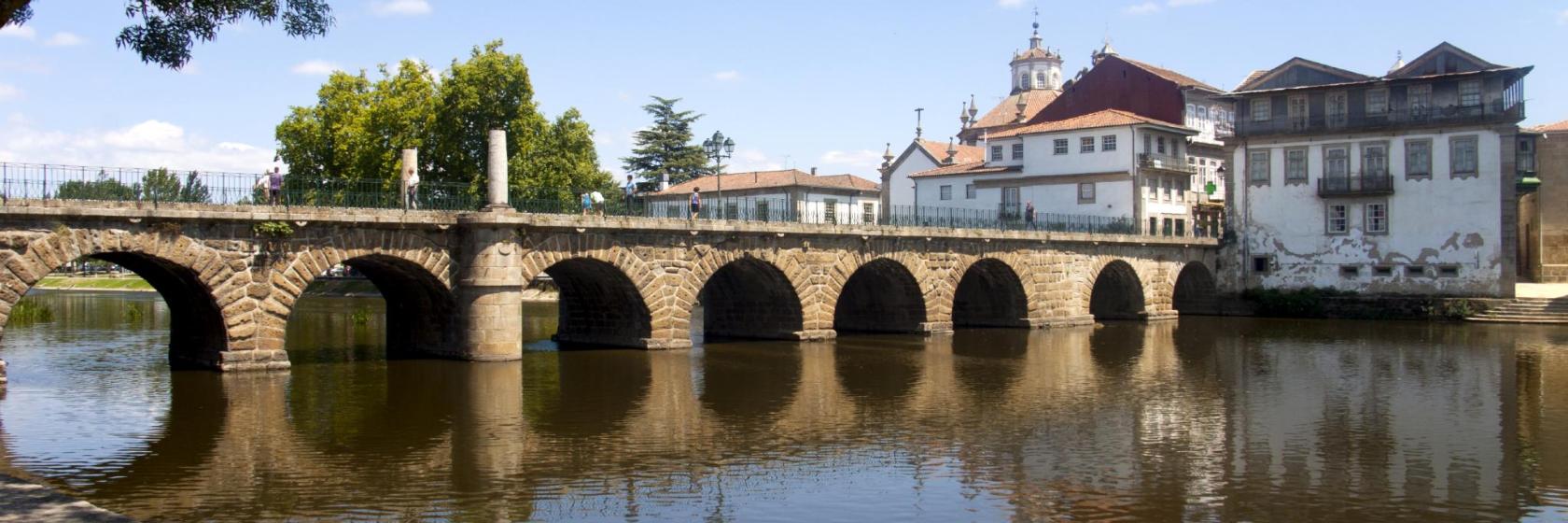
It was a major city in Roman times because of its hot thermal springs and location at the crossroads of three important roads. The well-preserved Roman Bridge is still awe-inspiring evidence of its former glory. The Roman bath ruins, which were excavated in 2009, can now be visited. Roman relics can be found in museums, making the experience of travelling back in time even more enjoyable!

Chaves Thermal Spa

Chaves was a popular Roman destination for reviving bodies and souls in the hot thermal water. Even today, Chaves Thermal Spa uses it for a variety of treatments for a variety of ailments. Relax and recharge your batteries with a wellness treatment in the modern thermal bath and enjoy a spa experience that has been used to heal and relax people for over 2,000 years.

Aside from its rich Roman heritage, Chaves is endowed with a number of historic monuments from other eras. Explore the mediaeval castle, two 17th-century forts, and several churches of various architectural styles. After you’ve seen the historic sites, take a stroll through one of Chaves’ beautiful parks.

Chaves has been fought over by the Romans, the French during the Peninsular War, and numerous Spanish invaders over the centuries. Thermal springs and nearby gold deposits prompted the Romans to establish an important stronghold there in AD 78, and their emperor, Vespasiano, decided to name the town Aquae Flaviae in honour of the quality of its natural spring waters.

The name Chaves (which means “keys”) is said to derive from King João I, father of Prince Henry the Navigator, handing over the town’s keys to Nuno Álvares Pereira for his valiant service at the Battle of Aljubarrota in 1385, during which the Portuguese defeated a much larger Spanish force.

Day trips are a breeze in this location.

Its location in the far north of Portugal not only creates a pleasant climate in Chaves, but also provides opportunities for exciting day trips. Porto, the famous city, is only about an hour away. Santiago de Compostela, a dream destination for millions of pilgrims from all over the world, is a popular day trip for Chaves guests.

Ficheiro:Forte de S. Francisco (Chaves) - panoramio.jpg – Wikipédia, a  enciclopédia livre
 Forte de São Francisco

Chaves has a long military history, which includes many fortifications and battlement remnants. Apart from the mediaeval castle and 17th-century forts (Forte de São Francisco and Forte de São Neutel), two mediaeval fortifications remain Santo Estêvão  Tower (north of Chaves in the village of the same name) and Monforte Castle (in the hills east of the town).

The mediaeval quarter, with its Rua Direita and Rua de Santo António, has been designated as a historic zone, despite the fact that many of the older buildings outside the historical walls have been demolished to make way for apartment blocks. There are narrow multi-story dwellings in these areas, whose origins have been limited by the walled city.

Chaves - centro histórico e as suas varandas | aguasfrias.bl… | Flickr

The old quarter was historically the city, and few buildings were built outside its walls due to the city’s frontier location and the threat of invasion, which prevented the construction of homes outside the walls. As a result, the land was primarily used for multi-purpose dwellings, resulting in extremely narrow streets and multi-story buildings (with balconies that extended over the streets and protected the citizenry). The residents lived in the upper stories, while many of the lower floors were occupied by shops or small businesses. In the mediaeval quarter, remnants of these verandas can still be seen.

  • Things to do in and around Chaves
  • Pedras Salgadas Spa & Nature Park
  • Parque de Campismo Quinta
  • Parque de Lazer de Rebordochão
  • Castle Monforte de Rio Livre
  • Castle of Santo Estêvão
  • Forte de São Neutel
  • Trajano Bridge
  • Museu de Arte Contemporânea
  • Centro de Artes Nadir Afonso
  • Casa-Museu João Vieira
  • CEDIEC
  • Núcleo Museológico
  • Museu da Região Flaviense
  • Museu Rural de Boticas
  • Termas Romanas
  • Pedra Bolideira
  • Castro de Sapelos
  • Castro Curalha
  • Serra da Padrela
  • Church São João de Deus
  • Misericordia Church
  • Largo do Terreiro de Cavalaria
  • Jardim do Tabolado
  • Castle Garden
  • Pillory of Chaves
  • Praia Fluvial de Vidago
  • PAVT – Parque Arqueológico do Vale do Terva
  • Estrada Nacional 2, Km 0
  • Caldas de Chaves

When travelling alone, avoid these blunders. Travelling alone is a wonderful experience that will help you grow in a variety of ways. There is, however, a right and wrong way to go about it. Making the most of your solo trip requires some planning and precautions. If you do this, you will have a positive and memorable vacation that you will cherish for the rest of your life. Here are some common mistakes that solo travellers make—mistakes that you should avoid.

Not doing enough planning ahead of time.

Perhaps the worst mistake you can make when travelling alone is failing to adequately prepare for your trip. Consider every aspect of your upcoming trip. Consider what could go wrong and what you would do in those circumstances. Bring a first-aid kit on vacation, and book accommodations ahead of time rather than arrive without knowing where you will sleep that night.

Arriving in the middle of the night.

black string lights

People appear to be more concerned about flying at a convenient time of day than about booking a flight to arrive early in the day. Flying through the night and arriving in the day is preferable to flying through the day and arriving at night. Arriving while the sun is still shining will allow you to familiarise yourself with your surroundings before night falls and everything goes dark.

Getting Tipsy:

black ceramic mug on table

It’s fine to have a drink or two while on vacation, but if you’re travelling alone, you’ll want to be careful not to get too tipsy. When travelling alone, you are slightly more vulnerable than when travelling with a companion. Therefore, know your boundaries and stop drinking before you put yourself in a dangerous situation.


Being more concerned with the feelings of others than with your own safety.

When you’re travelling alone, it’s not the time to try to be courteous at all costs. Make it a point to become more assertive while on your trip, even if standing up for yourself is difficult for you. If someone or a situation makes you feel uneasy, leave or seek assistance. Don’t be afraid to reject unwanted attention when it comes your way. Prioritize your own safety and well-being over the feelings of others.

Not being aware of the culture

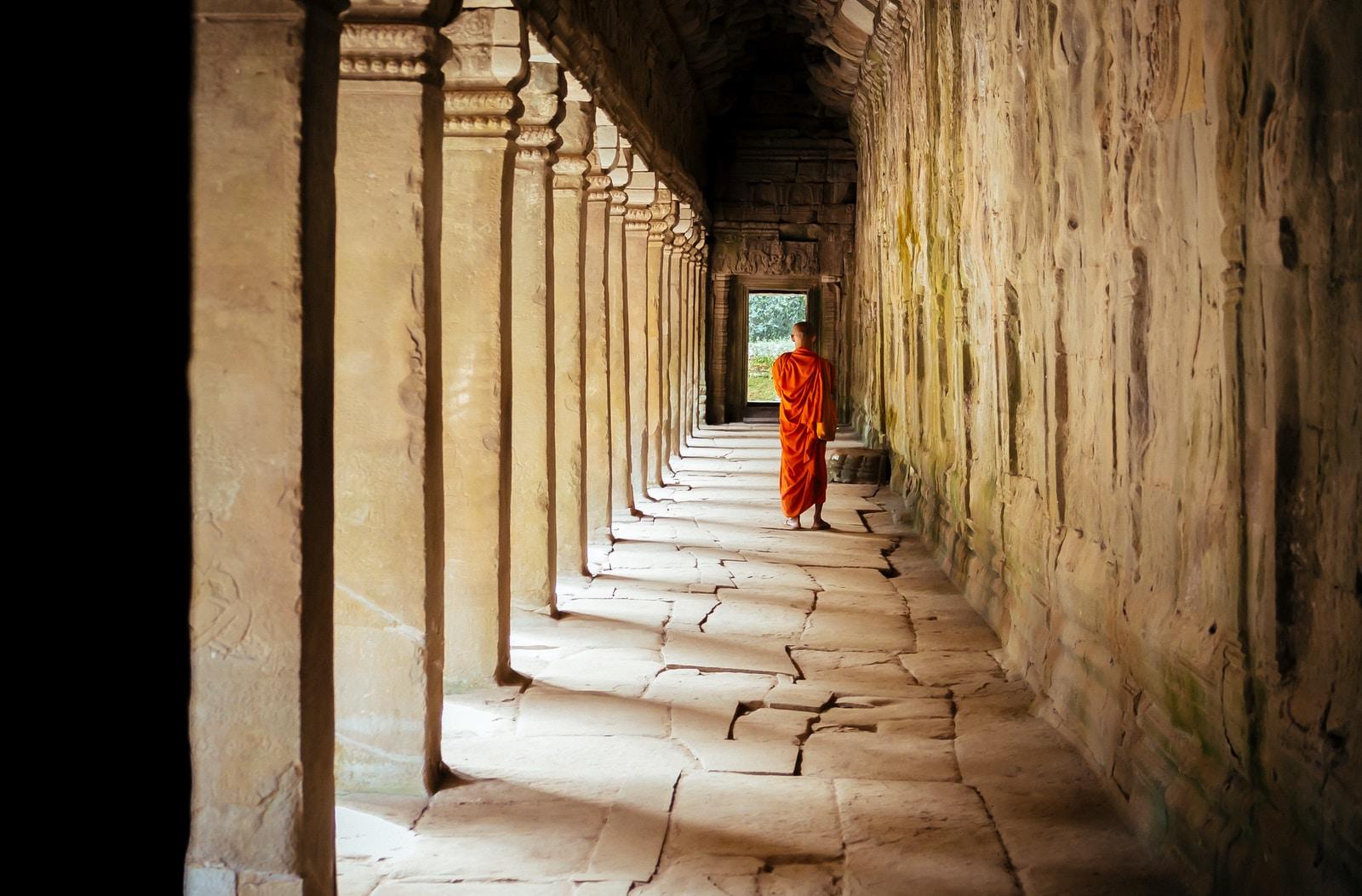
selective focus photography of monk at corridor

When travelling alone, one of the most common mistakes is failing to study or at least becoming familiar with the culture and customs of the country they are visiting. When planning a vacation to any country, keep in mind that you are a visitor. It is up to you to make any necessary behavioural changes, not the people in the country you are visiting. Learn all of the important and minor details that will help you get along with the people in the country where you are temporarily residing. It will make you feel less self-conscious and may even keep you out of trouble. Travelling solo is a fantastic experience, and by avoiding these common blunders, you can ensure that your vacation is free of unnecessary drama. Many people have learned the hard way after making these mistakes in the past. Save yourself the trouble and keep these pointers in mind.