Portugal
No Comments

Take advantage of the clear days by visiting some of Porto’s most beautiful vistas.


Miradouro da Serra do Pilar, Porto

Serra do Pilar

The Monastery of Serra do Pilar is Gaia’s architectural icon. It is part of the region designated as World Heritage by UNESCO in December 1996. The fascinating cathedral and cloisters are set out in a circular pattern that is unique in Portugal. In front of the church, there is a wonderful viewpoint taking in the full splendour of the city of Oporto and the river Douro below.

This ancient monastery, built in the 16th century, is currently used as a military barracks. Cross the Luis I bridge and you’ll be rewarded with a spectacular view of the city walls, the Sé Catedral, the estuary, and more.


Super Bock Arena (Pavilhão Rosa Mota)

Guided tours take place from Wednesday to Sunday and last 40 minutes. They are led by an expert guide in groups of up to 13 people. Children under the age of 12 are not permitted to participate owing to insurance concerns, as well as the activity is not wheelchair accessible. Climb to the top of the Super Bock Arena’s dome (Pavilho Rosa Mota) and enjoy a panoramic view of the Douro River and its banks.

 After climbing 150 steps, you’ll discover a 360-degree viewpoint, with endless views in all directions.

There is a cost for the tour

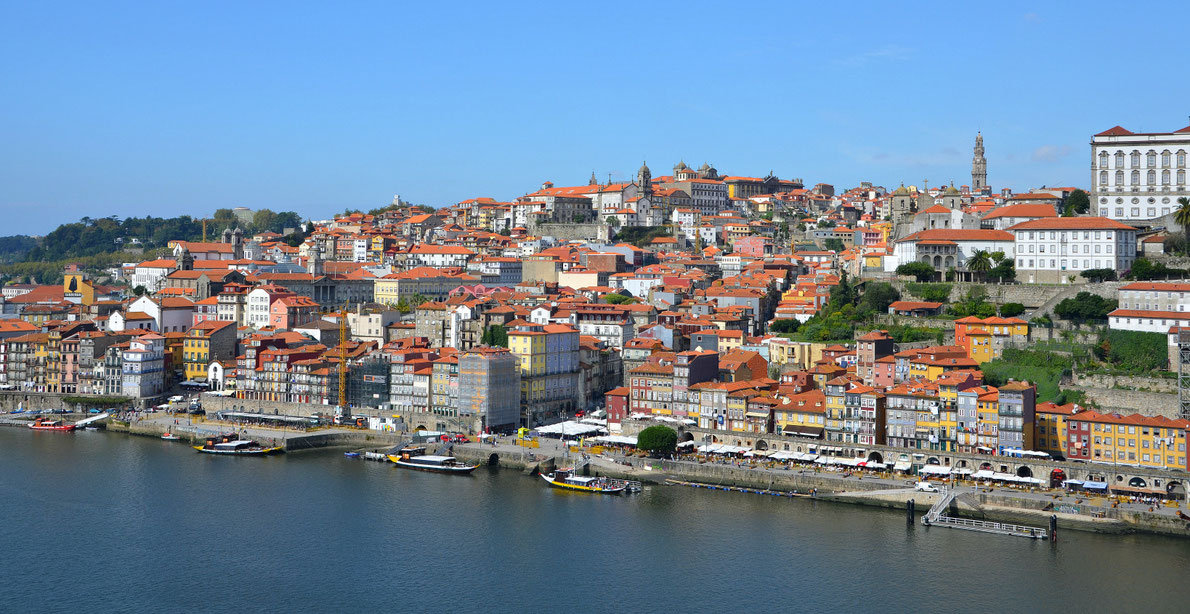
Ponte Luis I and Jardim do Morro

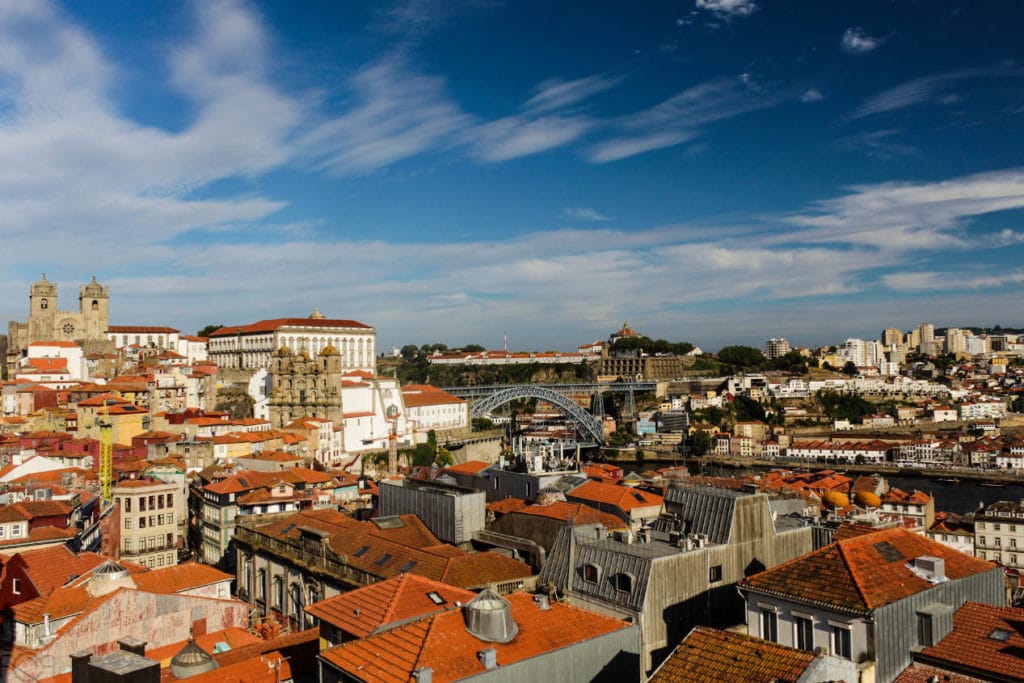
It’s easy to spot Porto’s most beautiful bridge from the banks of the Douro River, but the greatest part about this magnificent structure is the spectacular view from the top, from where you can see all of the city’s major monuments and the world-famous Porto Wine Cellars of Gaia.

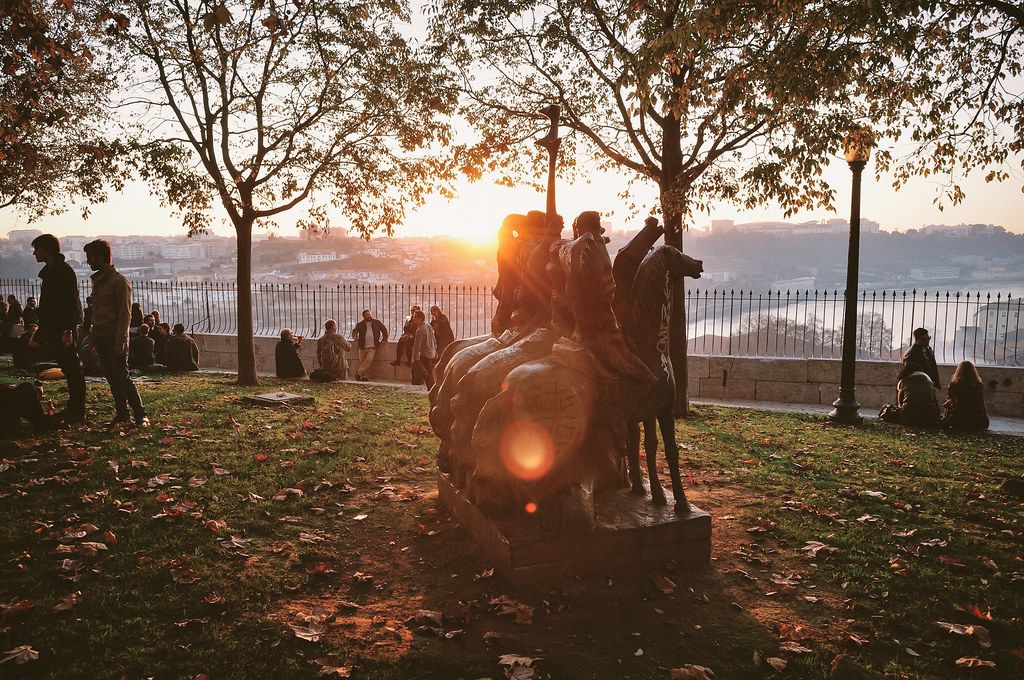
After crossing the bridge to Vila Nova de Gaia, you’ll arrive at Jardim do Morro, a lovely garden where locals congregate to relax and enjoy the spectacular sunsets.

Gail at Large on Twitter: "Sunset From Passeio das Virtudes #Porto  #Portugal • GAIL AT LARGE https://t.co/zZu8E3LjuE… "

Passeio das Virtudes

This is the most popular viewpoint among residents and visitors to the city. Due to the pleasant breeze generated by the river, it’s an ideal spot to unwind on a sunny day with a refreshing beer or glass of “vinho verde.”

The Arrábida Bridge, the Customs Building, the Crystal Palace, and the Douro estuary are all visible from here.

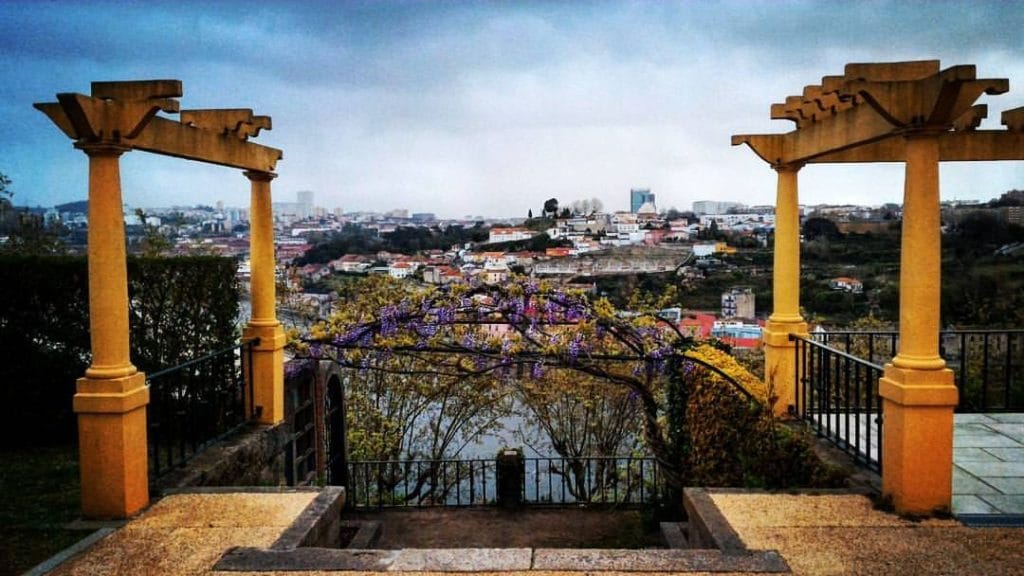
Jardins do Palácio de Cristal

This park is named after a magnificent Crystal Palace that was erected here in the nineteenth century to accommodate the Porto International Exhibition. Although the Palace was dismantled in the 1950s, its wonderful garden and its magnificent vista of the Arrábida Bridge remain. Located a short distance from the historical district, this establishment is a must-see.

Hours of operation: 8:00 a.m. to 21:00 p.m. 1st October to 31st March, 8:00 a.m. to 19:00 p.m.

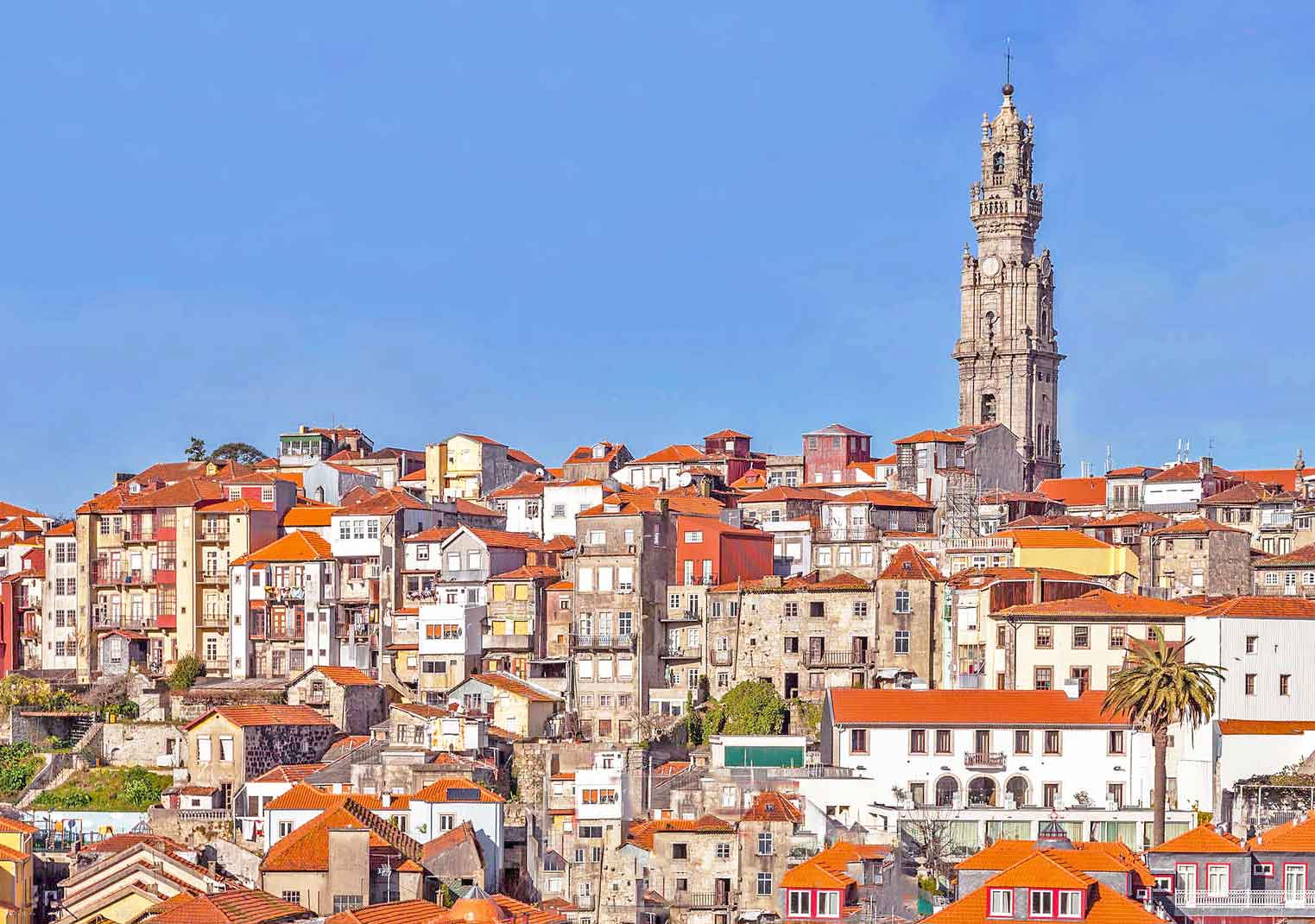
Torre dos Clérigos

This is Porto’s highest viewpoint (76m above sea level), and it provides an amazing 360-degree panorama of the city. However, there is one caveat. To appreciate it, you must climb 225 stairs up a small tower that grows narrower as you ascend, with others arriving and going at the same time, thus it is not recommended if you are claustrophobic. Bear in mind that the line might stretch for an hour during the warmer months.

Daily from 9:00am to 19:00pm
There is an admission cost.

Vitoria Viewpoint

Miradouro da Vitória

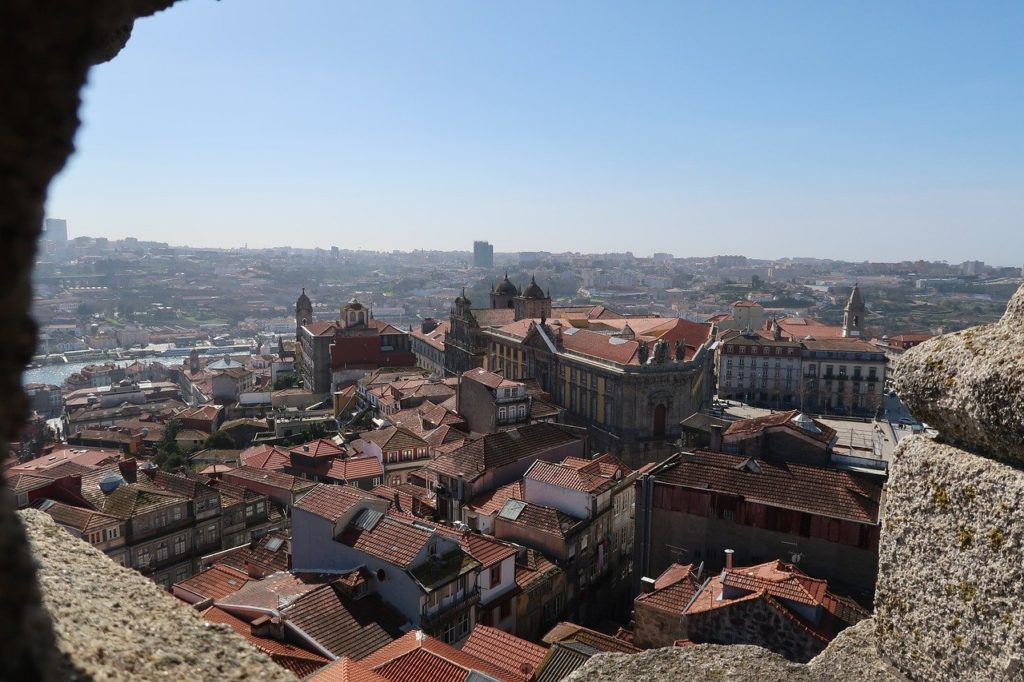
Possibly the greatest vantage point for seeing Porto and Gaia. The viewpoint is located in the historic Jewish Quarter, near Our Lady of Victory Church and the Clérigos Tower.

From this vantage point, you can see the Douro River and the Ribeira district of Porto, as well as the Sé Cathedral, the Episcopal Palace, the D Luis I bridge, and the Port wine cellars on the coasts of Gaia.

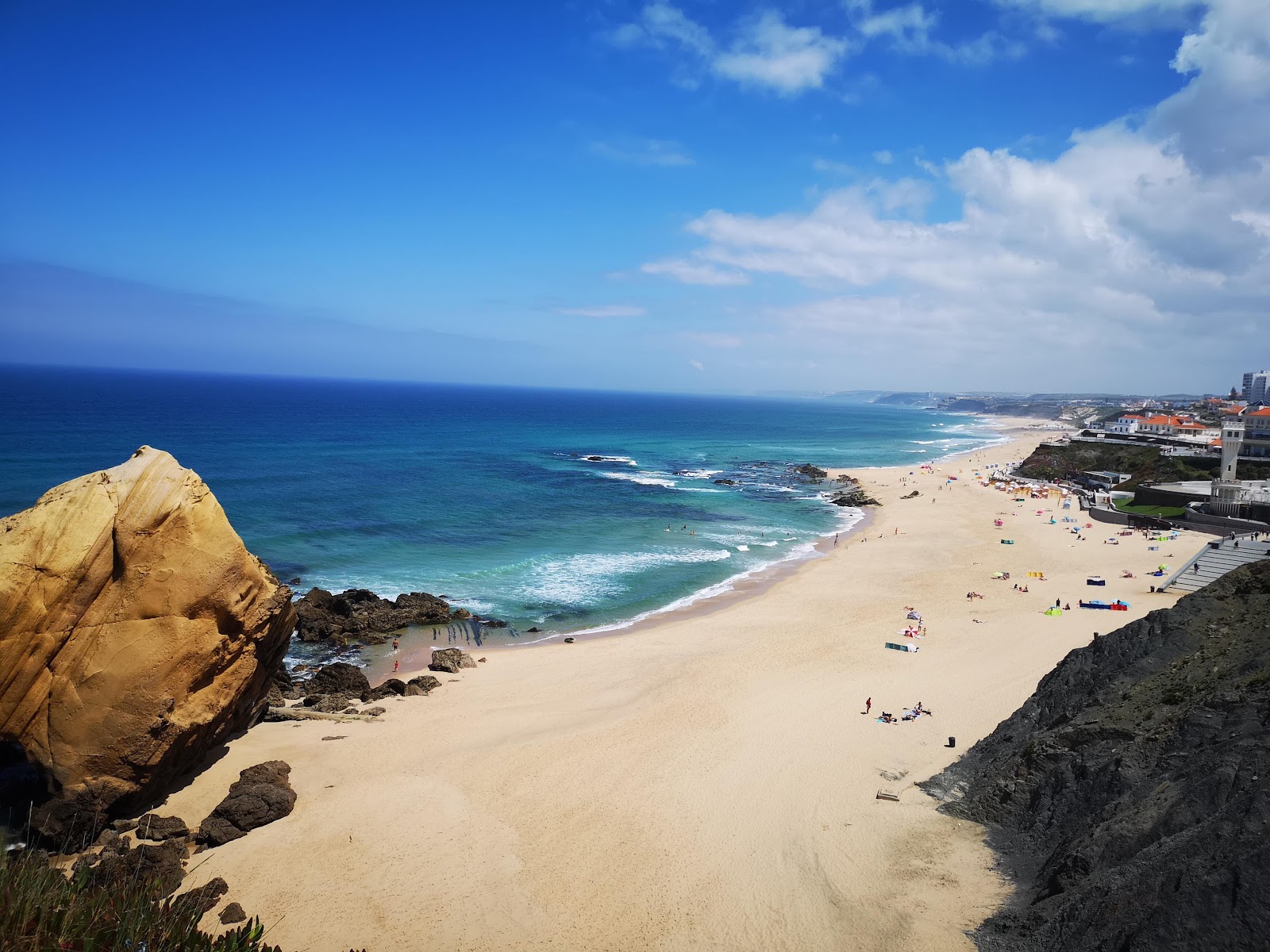
São Martinho do Porto: Panoramic view of the beach and village

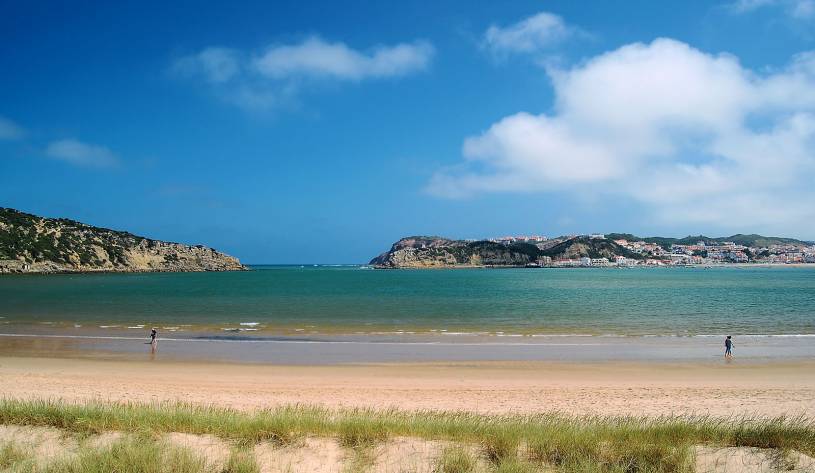
Martinho do Porto is a bay on Portugal’s Silver Coast. It is about an hour and a half (by vehicle) from Lisbon and a few minutes from Nazaré or Alcobaça, where you can visit the monastery.

The region is home to one of the most beautiful beaches in the country, a scallop-shaped cove with calm waves and fine white sand. The natural bay is inviting and tranquil. You will find many stores and restaurants near the beach, making it a perfect place for a relaxing day with the family.

Even though the port is not as busy with business as it used to be, the beach and tourist activities give it a unique energy, especially in the summer.

A few metres of opening connect the bay to the sea. As a result, the water is calm, ideal for youngsters, and even better for sailing, windsurfing, or kayaking. There are several cafes, restaurants, and patios along the road along the sea where parking is difficult to come by. From the port area, a small pedestrian tunnel provides direct access to the open water.

 Friar Estevo Martins, the 12th abbot of the Monastery of Alcobaca, wrote about the town for the first time in a letter he sent in 1257. The bay served as Alcobaça’s seaport, where fishing and shipbuilding operations flourished.

Because of local growth and the installation of the pier, the beach area saw a second settlement in about 1885.


Historic pictures Sao Martinho do Porto pier boats Silver Coast Portugal


Points of interest

Viewpoint – Located on Santo António hill, this viewpoint provides a panoramic view of the harbour.
The Santo António hill lighthouse – Built in ancient times close to a fort that protected the bay’s entrance, it is part of an orientation system for sailors that comprises two headlights placed in the dunes in front of the bar.

Tunnel – It’s a lovely walk, and contemplating the opposing sides of the tunnel is a beautiful experience. The tranquil waters of the Bay on one side, the turbulent seas of the Atlantic Ocean crashing violently on the cliffs on the other.

Frederico Ulrich Square Garden – A green leisure place devoted to children.

The viewpoint of the José Bento da Silva Square – Direct access to the Outeiro Elevator and a spectacular view of the Bay.

Ruinas do Porto (Sao Martinho do Porto) - 2021 All You Need to Know BEFORE You Go | Tours & Tickets (with Photos) - Tripadvisor

Ruins of the artisanal Customs where the caravels that participated in the explorations and conquests were made during the reigns of D. Afonso V and D. João II. Parts of the ships that transported D. Sebastio to Alcácer Quibir were also built here.

Little Slop (Salir do Porto) – This is a freshwater spring that emerges near the ocean. It is said to be miraculous water for various ailments, including characteristics that are useful to skin issues.

Dune (Salir do Porto) – Once Europe’s largest, the Dune of Salir stands out in the scenery of São Martinho Bay, with an altitude of around 50m and a length of 200m. The Dune’s core is made up of red sandstone, a remnant of an earlier fossil dune.

São Martinho do Porto


Portugal Travel Guide
No Comments

Portugal, which is best recognized for its restored medieval cities and untamed coastline, has had a cultural renaissance during the last several decades. Suddenly, a country that was previously entrenched in hundreds of years of history has become fashionable again!

Portugal is a bargain when compared to other Western European nations. Many museums are free on Sundays, and going outside of the summer high season will save you money on accommodation prices. Consider staying in a pensao or residencia, which can range from extra rooms in a family’s house to a tiny lodge with communal toilets if you’re on a tight budget. Instead of eating at a restaurant near a big tourist destination, pack a picnic lunch from a grocery store.

Observe Megaliths in the Darkness of the Night

Photography00059

In the Alentejo area, the sky above Lake Alqueva is an astronomer’s dream for about 290 nights out of the year. The heavens are clear, black, and there is minimal light pollution to impede stargazing. UNESCO designated the region as the world’s first “Starlight Tourism Destination” in recognition of this achievement.

The region offers astronomy workshops, as well as the opportunity to borrow telescopes and binoculars to see the night sky on their own time. At least ten hotels in the surrounding towns of Monsaraz, Telheiro, Portel, and Mourao — all of which may be found on the official website DarkSkyAlqueva.com – provide stargazing opportunities. Avoid missing the astronomical significance of the massive stone structures around the lake, which were constructed by ancient peoples who were similarly fascinated by the night sky.

Sintra is a great place to go palace hopping.

Sintra - Town in Portugal - Thousand Wonders

When you visit the mountain village of Sintra, which is located outside of Lisbon, you will understand why the royal family picked it as their preferred hideaway. The surroundings are green and airy, and there are expansive views of the surrounding countryside.

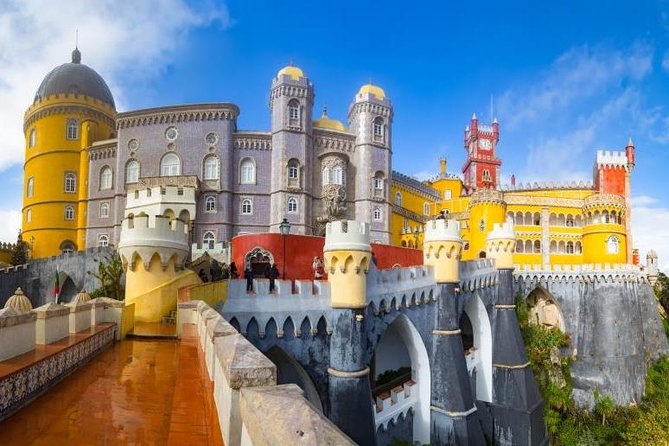
In addition to the ruins of the Castle of the Moors, there are many palaces scattered over the terrain. The colourful and pastel-painted Pena National Palace, which served as the kings’ summer retreat throughout the 18th and 19th centuries, should be your first destination. The Queluz National Palace was the hideaway of a playboy duke who had married his niece, and it served as his residence. The design of the Monserrate Palace is inspired by the Moghul Empire, whilst the Quinta da Regaleira is reminiscent of a Disney fairy tale

Go Shark Diving and see a Blue Shark

Blue Shark Fish Facts | Prionace glauca - AZ Animals

The Azores are a group of nine islands located a few hours off the coast of mainland Europe. The sea here is bathed in warm Gulf Stream currents, which attract a diversity of marine life to feed in its nutrient-rich waters, including many shark species.

The islands are one of just a few spots on the planet where you may dive with blue sharks. Cages are unnecessary since blue sharks are only interested in tiny food such as fish and squid, not people.

Take a Walking Tour of Dinosaurs

Affordable Ocean Views! Zambujeira, Lourinha - Apartments for Rent in  Lourinhã, Lisboa, Portugal

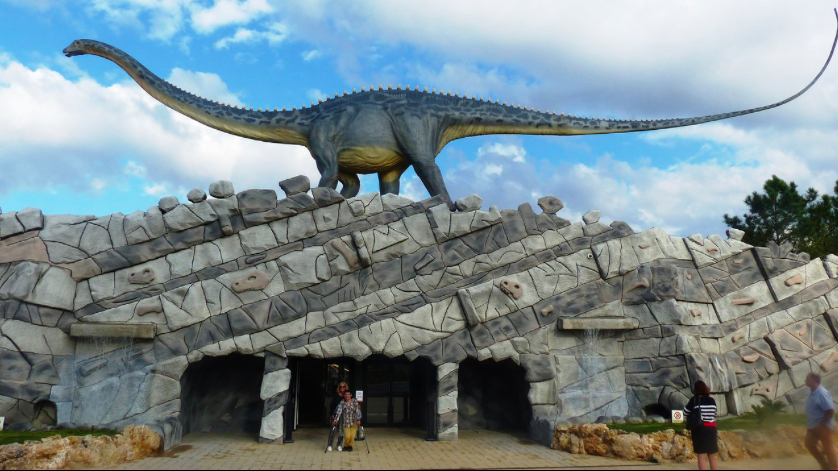
The location was a favourite hangout for Upper Jurassic dinos 150 million years ago, long before surfers and beachgoers came onto the beautiful coastline of the town of Lourinha. In fact, in 1993, one of the biggest nests of dinosaur eggs ever discovered was unearthed here, some of which had petrified embryos.

The town has embraced its dinosaur-filled history to the point that virtually every shop’s name starts with the word “dino.” There is a dinosaur museum in town, as well as a 6.2-mile walking path that includes brontosaurus tracks in a quarry and excavation sites where archaeologists found major findings. (Be on the lookout for fossils.) A petrified leg bone is even on exhibit at the neighbourhood bakery! It takes one hour to drive from Lisbon to Lourinha.

Swim in Lava Pools

Natural Lava Pools in Madeira, Portugal - Places To See In Your Lifetime

Madeira is not your average beach vacation destination. Sea-carved lava rocks border the water’s edge. The volcanic sand is black rather than beige in colour. There are numerous similar beaches, notably Laje Beach in Seixal and Ribeira da Janela Beach in Ribeira da Janela.

Porto Moniz, on the other hand, is well-known for its natural ponds, which have been sculpted by the waves. There is a little cost to use them, and they may get crowded during the summer months, but they are enjoyable and peaceful ways to experience the ocean without the sound of breaking waves. Two types of pools exist: the western group is more “artificial,” with a plethora of amenities such as restaurants and stores, while the eastern group is less “artificial.” From the dock, you may stroll to the pools along a promenade that is simple to navigate.

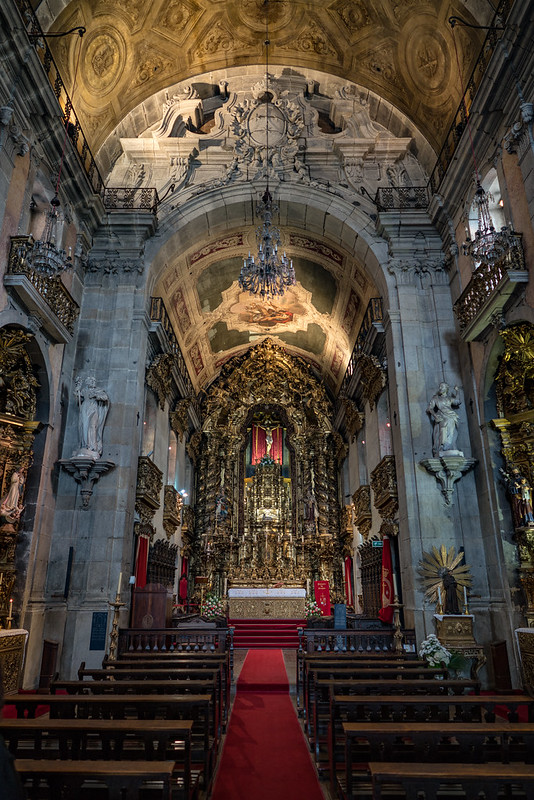
Porto Cathedral, Porto, Portugal - SpottingHistory.com

The Porto Cathedral is one of the city’s oldest structures and one of the most significant local Romanesque structures.

Contrary to popular belief, the present Cathedral of Porto was not erected under the patronage of Bishop Hugo, as the pre-Romanesque cathedral is still referenced in the De Expugnatione Lyxbonensias, which was still in existence in 1147. This means that the current structure was only begun in the second half of the century and would be constantly under construction until the 16th century (not counting later baroque and 20th-century interventions), but there is evidence that the city has been a bishopric seat since the Suevi domination in the 5th-6th centuries.

The cathedral is flanked by two square towers, each with two buttresses and a dome on top. The façade is devoid of ornamentation and very structurally diverse. It depicts a fortified church with a Baroque portico and a magnificent Romanesque rose window beneath a crenellated arch.

The Romanesque nave is rather small and has barrel vaulting. It is surrounded by two aisles and a basement vault. The centre aisle’s stone ceiling is supported by flying buttresses, making the structure one of the earliest in Portugal to utilize this architectural element.

This earliest Romanesque structure has undergone several changes, but the overall appearance of the façade has remained Romanesque.

The Gothic funeral chapel of  João Gordo was constructed about 1333.  João was a Knight Hospitaller under King Dinis I. His tomb is embellished with his reclining image and Apostle reliefs. The beautiful cloister, erected during the 14th and 15th centuries under the reign of King John I, who married English Princess Philippa of Lancaster at Porto Cathedral in 1387, is also from the Gothic period.

During the Baroque period, the Cathedral’s exterior was significantly changed. The ancient Romanesque main gateway was replaced in 1772, and the tower cupolas were changed. In 1736, Italian architect Nicolau Nasoni built an exquisite Baroque loggia on the Cathedral’s lateral façade. During the War of the Oranges, when the fight at Amarante was going on, a party of Spanish soldiers briefly gained control of the Cathedral before being defeated by the locals. A marble plaque with a Magnetite backing currently sits below the altar to remind everyone of those who died while reclaiming possession of the church. The magnetite backing was chosen to serve as a reminder to anyone travelling near the cathedral by interfering with the direction their compass pointed.

Ceramic Tiles From Portugal - And Resources To Make Them Today — The Way of  Beauty

During the baroque period, the inside was extensively changed. A beautiful silver altarpiece, made by Portuguese artists in the second half of the 17th century, may be seen in one of the chapels. Also in the 17th century, the romanesque apse (which included an ambulatory) was demolished and replaced with a new baroque apse, which was later adorned with fresh Nasoni wall paintings and choir stalls. The chapel’s altarpiece, conceived by Santos Pacheco and completed by Miguel Francisco da Silva between 1727 and 1729, is a significant work of Portuguese Baroque.

The three red marble holy-water fonts, which are supported by a statue, were built in the 17th century. A bronze bas-relief by António Teixeira Lopes depicts Christ’s baptism by John the Baptist in the baptistery.

The south transept arm leads to the Gothic cloister, which is adorned with Valentim de Almeida’s baroque azulejos (between 1729 and 1731). They represent the Virgin Mary’s biography as well as Ovid’s Metamorphoses. A few sarcophagi can be found among the ruins of the Early-Romanesque ambulatory. António Vidal designed the tile panels that adorn the patio. Pachini painted allegories of moral ideals on the chapter house’s coffered ceiling in 1737.

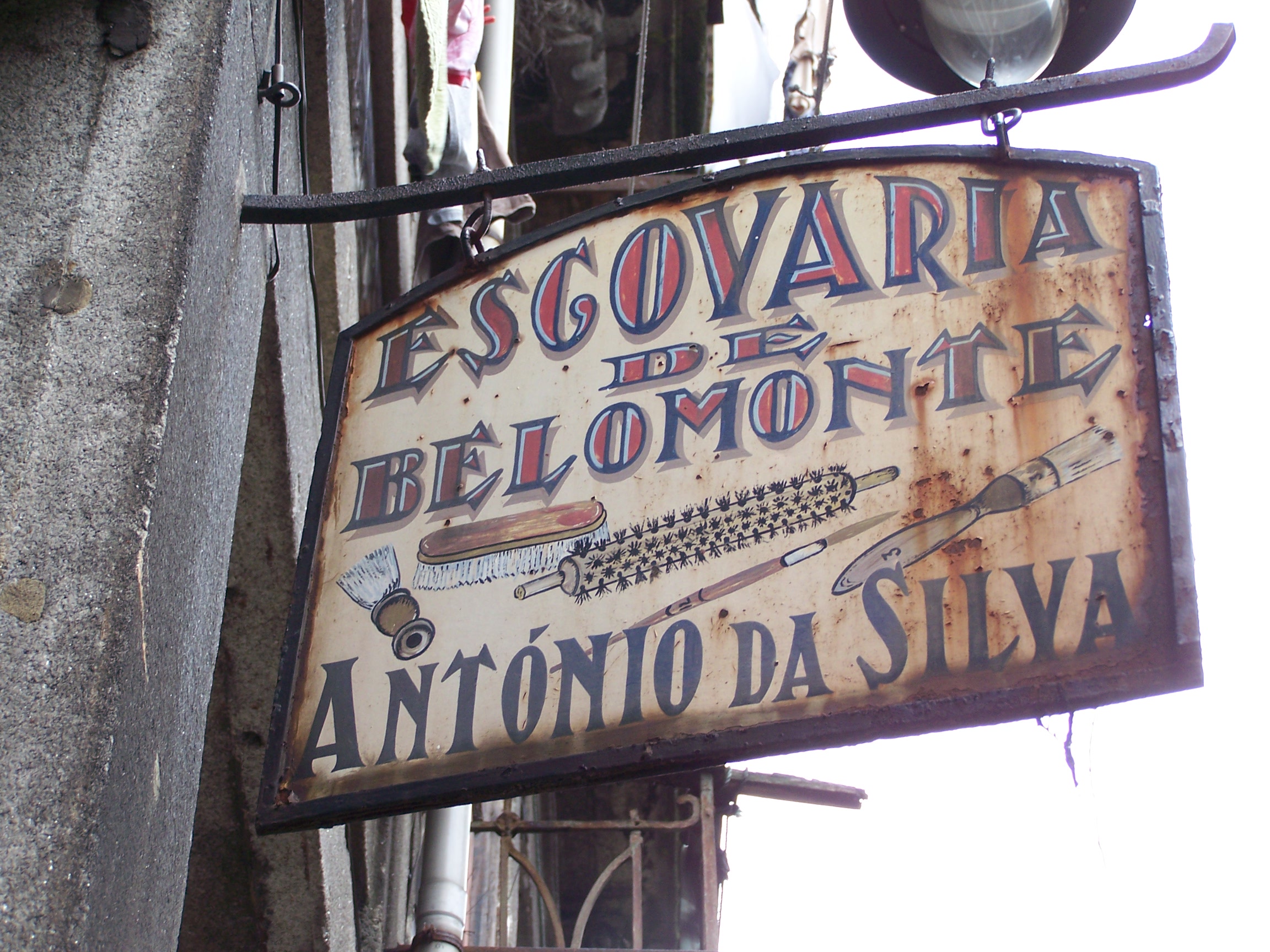
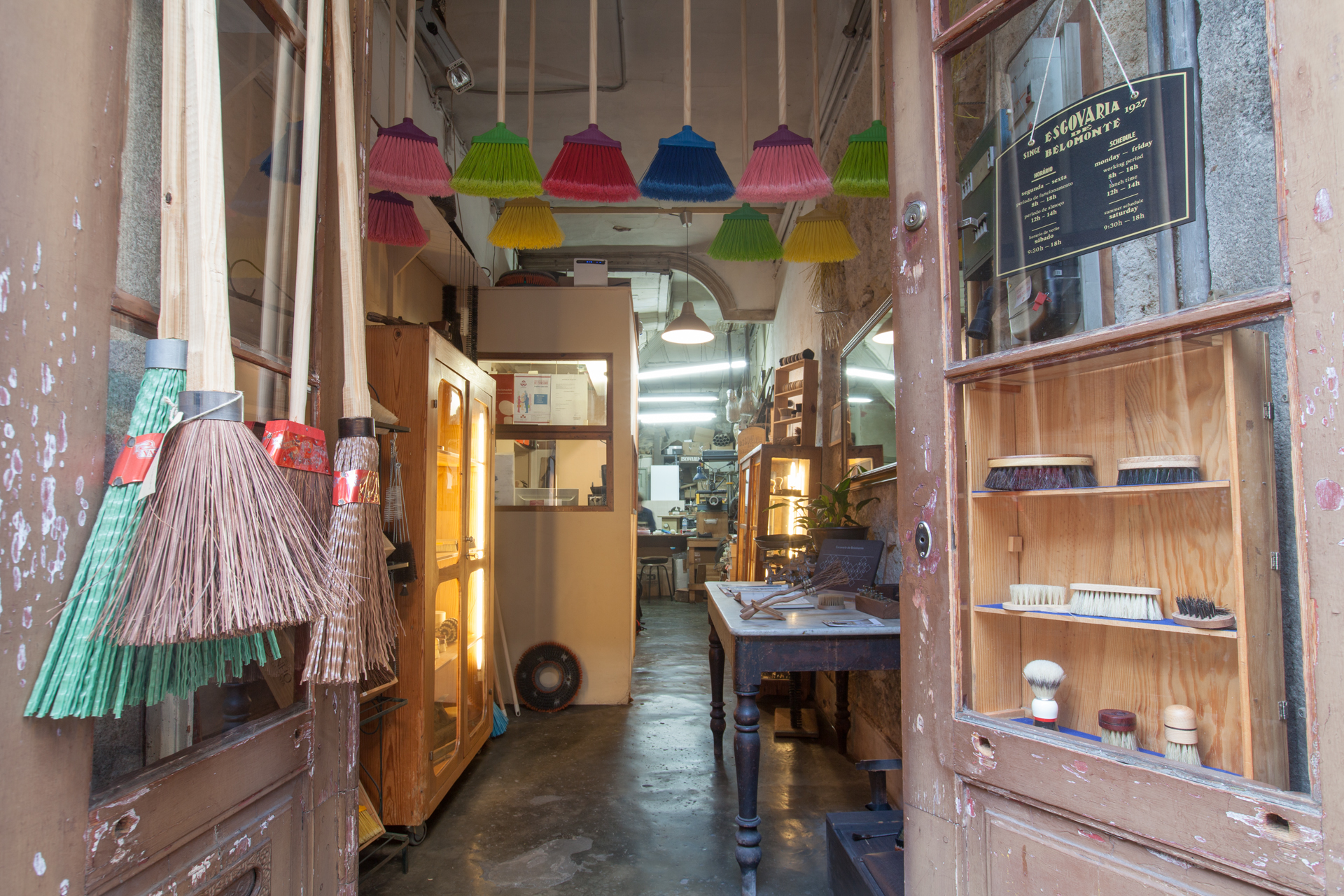
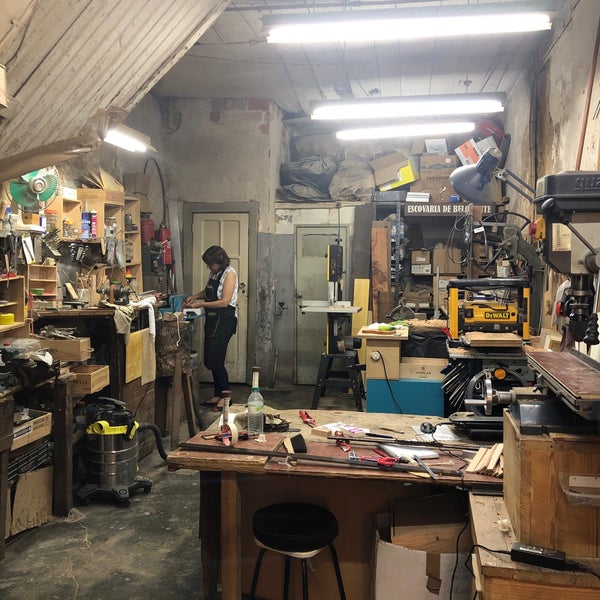
Escovaria de Belomonte is a broom store, a workshop, and a museum all rolled into one. When you go through the door, you’ll see the brightly coloured brooms hanging from the ceiling. The factory where handmade brooms are manufactured can be seen within the store: using a needle that wovens small amounts of natural bristles through holes in wood and metal constructions. The bristle comes from goats, boars, horsehair and tail, pigs, and a special type of fibre derived from a Mexican cactus. The latter is mostly used to make brushes for cleaning dishes and polishing furniture.

History of the Store

Escovaria de Belomonte is a family-owned broom company founded in 1927 by António Silva, the current owner’s grandfather. It began in Massarelos and was relocated to Rua de Belomonte 13 years later, where it remains open.


Closed on Saturdays and Sundays.

Address: Rua do Belomonte 36, 4050-097 Porto

Caldas da Rainha is indeed a town with a rich history and architectural charm. Situated in central Portugal, it boasts beautiful streets lined with historic buildings, traditional ceramic shops, and quaint cafes. The story of its founding adds to its allure.

Legend has it that in 1484, Queen Leonor, wife of King João II, stumbled upon workers soaking in warm, oddly-smelling water beside the roadside. She made the decision to look into it more because of their leisurely activity and the water’s alleged healing properties. After experiencing the water’s benefits firsthand, Queen Leonor was so impressed that she authorised the establishment of a sanatorium near the spring.

With royal support, Caldas da Rainha flourished as a spa town, attracting visitors seeking the healing properties of its thermal waters. Over the centuries, it evolved into a charming destination known for its unique blend of history, culture, and natural beauty.

Today, visitors to Caldas da Rainha can explore its historic streets, visit the renowned thermal baths, and admire the intricate ceramic work for which the town is famous. Whether strolling through its picturesque parks or enjoying a meal at a local restaurant, Caldas da Rainha continues to enchant visitors with its timeless charm and rich heritage.


Retire-to-Caldas-da-Rainha

Caldas da Rainha, also known simply as Caldas, is a charming mid-sized city nestled in the heart of Portugal. With a population of over 30,000 people, it is a bustling hub of history, culture, and natural beauty. Founded in the 12th century, Caldas da Rainha holds the distinction of being home to the oldest purpose-built institution still in operation, known as the Queen’s Baths.

Translated from Portuguese, “Caldas da Rainha” means “Queen’s Baths,” a nod to its regal origins dating back to Queen Leonor in the 15th century. The city’s traditional city centre is a testament to its rich history, featuring cobblestone pathways, a vibrant fruit and vegetable market, and a bustling shopping sector. Located on the stunning Silver Coast, Caldas da Rainha is conveniently situated just one hour’s drive north of Lisbon, making it an accessible destination for travellers.

One of the most renowned figures associated with Caldas is Rafael Bordalo Pinheiro, a Portuguese artist, caricaturist, and sculptor. His life-size statues dot the town, bringing its artistic side to life. Bordalo Pinheiro is best known for his portrayal of Zé Povinho, a beloved working-class figure. In 1885, he established a pottery company and a school in Caldas, both of which continue to thrive today. Visitors can admire his ceramic creations showcased in various locations throughout the city and purchase them from local shops.

Despite its modest size, Caldas do Rainha boasts nine museums covering a range of subjects, including art, history, cycling, and pottery.

Exploring Caldas da Rainha is a delightful experience, with opportunities to visit galleries featuring the works of local artists like José Malhoa, who was born and raised in the city. Dom Carlos Park offers a picturesque setting for a leisurely stroll, while the city’s flat terrain makes it easy to navigate on foot.

For those seeking medical care, Caldas da Rainha offers top-notch facilities and services. Several clinics provide dental and medical care, and many practitioners are fluent in English. A public hospital with an emergency department operates around the clock, ensuring convenient access to healthcare for residents and visitors alike.

Transportation options abound in Caldas da Rainha, with a main bus terminal offering connections to destinations across Portugal and into Spain. Express buses provide swift access to Lisbon, while a railway station serves both local and long-distance trains. Taxis are readily available and affordable, making it convenient to explore the city and its surroundings.

With its rich history, vibrant cultural scene, and convenient amenities, Caldas da Rainha is a captivating destination that offers something for everyone. Whether you’re admiring centuries-old architecture, perusing ceramic shops, or simply soaking in the tranquil ambiance, Caldas da Rainha invites visitors to experience the allure of Portugal’s Silver Coast.

Caldas da Rainha offers a refreshing escape from the sweltering summer heat, with mild temperatures reminiscent of spring. Even in the winter, the rains are gentle and soothing, creating a cosy atmosphere. On the Silver Coast, visitors often encounter a mysterious sea mist that blankets the region in the early mornings, dissipating as the sun rises.

The rural areas surrounding Caldas da Rainha offer stunning vistas of rolling hills, lush farmland, and orchards filled with apples, pears, olives, and oranges.

There’s no shortage of activities to keep you engaged in Caldas da Rainha. Whether you’re an outdoor enthusiast or prefer indoor pursuits, there’s something for everyone. Options include:

  1. Hiking: Explore the scenic trails winding through the countryside, offering breathtaking views at every turn.
  2. Bodyboarding: Head to the nearby beaches and catch some waves on a bodyboard, enjoying the refreshing Atlantic waters.
  3. Volunteering: Get involved in community initiatives and make a positive impact while meeting new people.
  4. Group sports: join a local sports team or participate in friendly matches and tournaments.
  5. Card and board games: Gather with friends or join a club to enjoy a variety of games.
  6. Bowling: Have a fun night out at the bowling alley, perfect for families and groups of friends.
  7. Dances: Put on your dancing shoes and hit the dance floor at social events and gatherings.
  8. Coffee socials: Meet up with fellow coffee enthusiasts to sample local blends and exchange stories.
  9. Historical society: Learn about the rich history of Caldas da Rainha through lectures, tours, and exhibitions.
  10. Book exchanges: Swap books with other avid readers and discover new literary treasures.
  11. Boot camps: With the help of qualified instructors, participate in outdoor boot camp sessions to get fit and healthy.

With such a wide range of activities available, Caldas da Rainha ensures that there’s never a dull moment, making it the perfect destination for those seeking both relaxation and adventure.


Casa Do Gato (Caldas da Rainha, Portugal) - tarifs 2021 mis à jour et avis auberge - Tripadvisor

Given the close proximity to the Atlantic Ocean, spending a day relaxing on the sandy shores or frolicking in the refreshing waters is indeed a tempting prospect. One such idyllic destination near Caldas da Rainha is Foz do Arelho, renowned for its tranquil lagoon, perfect for swimming with children. Moreover, Foz do Arelho boasts a picturesque promenade offering stunning views of the coastline, providing the ideal backdrop for a leisurely stroll or a romantic sunset.

For those seeking a bit more adventure, a short trip to Salir do Porto promises an unforgettable experience. Here, you’ll encounter the nation’s largest sand dunes, offering ample opportunities for playful escapades reminiscent of childhood days. Whether it’s rolling down the sandy slopes, building towering sandcastles, or simply soaking in the natural beauty, Salir do Porto is sure to delight visitors of all ages.

So, whether you prefer to bask in the sun on the sandy shores, take a dip in the refreshing waters, or explore the natural wonders of the coastline, Caldas da Rainha and its surroundings offer a plethora of options for a day of relaxation and rejuvenation by the sea.


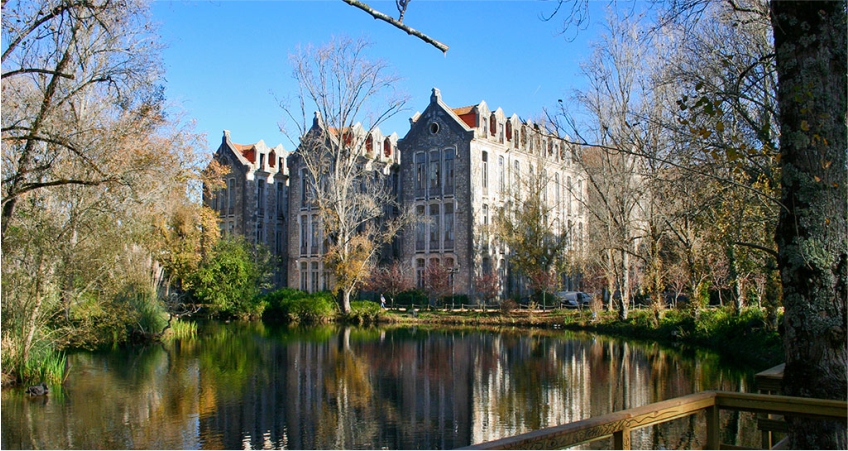
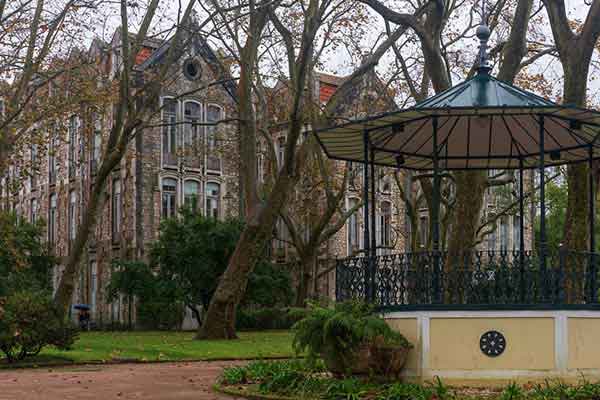
Dom Carlos Park, situated opposite the mall, is a serene oasis nestled within the historic facade of the old thermal hospital. Originally established as a place for hospital patients to convalesce amidst nature, the park underwent a significant renovation in 1950. Today, it stands as a cherished gathering spot for locals and visitors alike, offering a tranquil escape from the bustle of daily life.

Wander along the well-maintained pathways, adorned with statues that tell tales of the park’s rich history. Take a leisurely stroll around the man-made lake, where ducks gracefully glide across the water, inviting visitors to pause and appreciate the beauty of nature. For a more immersive experience, rent a small boat and row gently around the lake, soaking in the peaceful ambiance.

Alternatively, find respite on one of the park’s inviting benches, where you can unwind and admire the surrounding greenery. Throughout the year, Dom Carlos Park plays host to a variety of events, including flea markets, horse shows, and lively festivals, adding to its allure as a vibrant community hub.

Whether you’re seeking a serene sanctuary for quiet reflection or a venue for lively social gatherings, Dom Carlos Park offers something for everyone, making it a beloved destination for friends, families, and nature enthusiasts alike.


Caldas da Rainha’s main centre buzzes with activity, offering a plethora of things to see and do. Thanks to its compact size and mostly level terrain, the city is easily navigable on foot, making it a delightful walking destination.

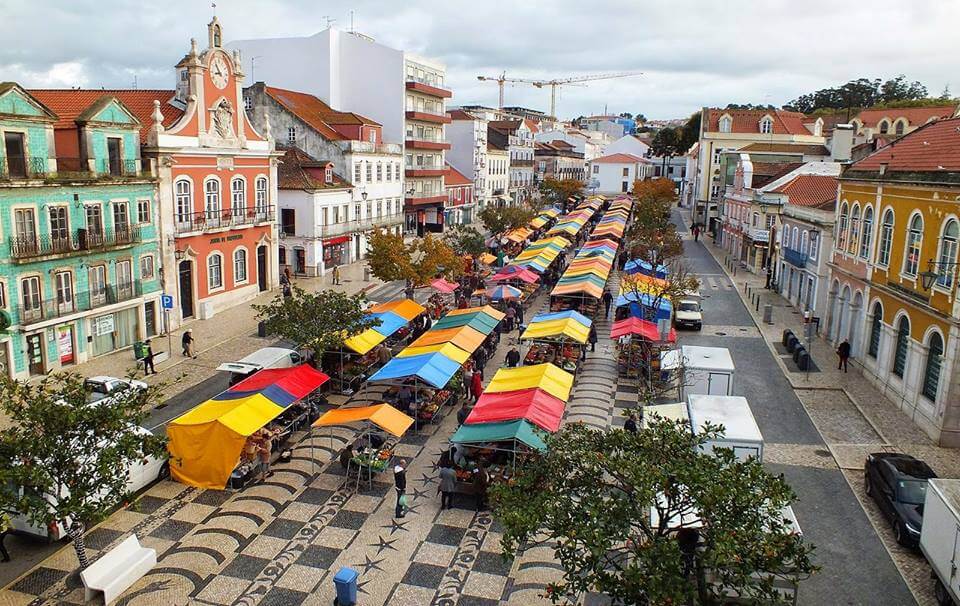
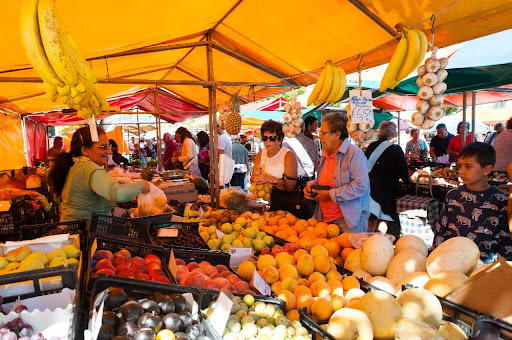
One of the focal points of the city centre is Praça da República, where you’ll find a vibrant fruit and vegetable market bustling with local merchants. Here, stalls brim with an array of locally grown produce, from fresh fruits and vegetables to baked goods, dried meats, nuts, and fragrant flowers. It’s not just a market; it’s a bustling social hub where locals and visitors mingle, exchange stories, and forge new friendships.

Immerse yourself in the lively atmosphere as you browse the stalls, sampling fresh produce and savouring the flavours of Portugal. Engage with the friendly vendors, who are eager to share their knowledge and offer insider tips on the best deals. Whether you’re stocking up on ingredients for a homemade feast or simply enjoying a leisurely stroll, Praça da República promises a memorable experience.

Soak up the sights, sounds, and scents of the market and savour the authentic charm of Caldas da Rainha’s main centre. Whether you’re a seasoned traveller or a first-time visitor, a visit to Praça da República is sure to leave you with cherished memories and perhaps a few delicious treats to enjoy along the way.


Caldas da Rainha

 
BEFORE MAKING ANY VACATION PLANS, PLEASE CHECK THE CONSTANTLY CHANGING LOCAL LIMITATIONS AND SAFETY RULES. IT SHOULD BE NOTED THAT NOT ALL SITES AND SERVICES ARE OPERATIONAL AS USUAL, SO CHECK THEIR RESPECTIVE WEBSITES FOR THE MOST RECENT DETAILS.


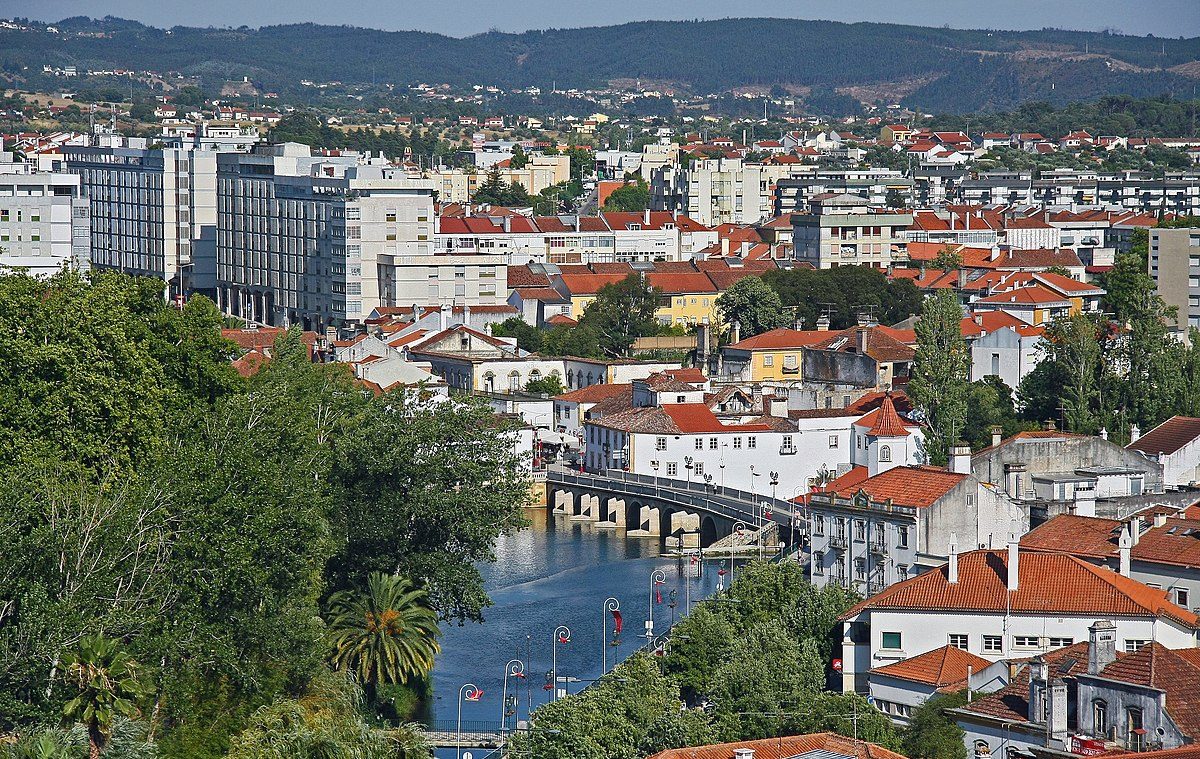
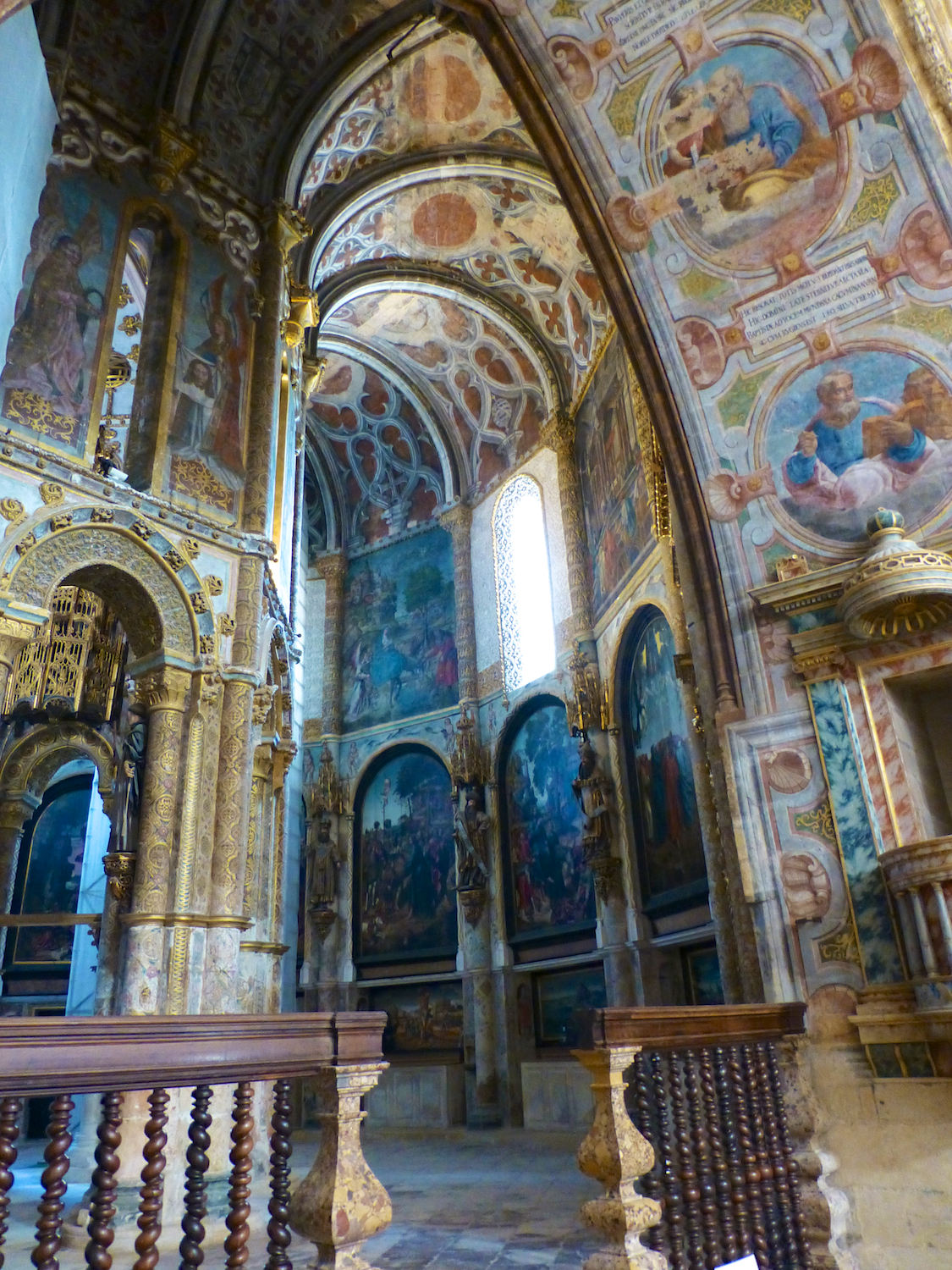
Located in the heart of central Portugal, Tomar is a city rich in history, culture, and architectural beauty. Once the headquarters of the legendary Knights Templar, Tomar played a crucial role in Portugal’s medieval past and the Age of Discovery. The city is home to one of Portugal’s most extraordinary landmarks, the Convent of Christ, a UNESCO World Heritage Site that stands as a testament to the enduring influence of the Templars. Beyond its historical significance, Tomar boasts a charming old town, scenic riverside walks, and lush green landscapes that invite visitors to slow down and soak up the atmosphere. Whether you’re a history buff, a nature lover, or a traveller seeking unique cultural experiences, Tomar offers a captivating blend of past and present.


Tomar - Portugal Travel Guide

 The History of Tomar

Early history and Roman influence Before the arrival of the Knights Templar, the region where Tomar is now located had been inhabited for centuries. The Romans established outposts in central Portugal, leaving traces of roads, fortifications, and agricultural techniques. Although there is little direct evidence of a significant Roman presence, Tomar and its surrounding towns, such as Conímbriga, provide a glimpse of the ancient civilisation that once dominated the Iberian Peninsula.

The Templars and the founding of Tomar

Tomar’s defining moment came in 1160, when Gualdim Pais, the Grand Master of the Knights Templar in Portugal, chose the site to build a powerful fortress. This fortress, now known as the Castle of Tomar, was used as a military base and a religious centre. Over time, it became the Convent of Christ, a medieval and Renaissance masterpiece of architecture. The Knights Templar played a key role in defending Portugal against Moorish invaders and in the Christian reconquest of the Iberian Peninsula. Their wealth and influence grew, leading to tensions with the Catholic Church and European monarchs. In 1312, the Order of the Temple was officially abolished by Pope Clement V, however, in Portugal, King Dinis cleverly rebranded the Order as the Order of Christ, allowing its members to continue their activities under a new name.

The Order of Christ and the Age of Discovery

With the Templars reorganised as the Order of Christ, Tomar became a centre of knowledge, navigation, and exploration. Prince Henry the Navigator, a key figure in Portugal’s Age of Discovery, served as Grand Master of the Order in the 15th century. The wealth and expertise accumulated in Tomar directly contributed to Portugal’s overseas expansion, funding expeditions that led to the discovery of new trade routes and territories.


Tomar in the modern era

As Portugal entered the modern era, Tomar remained an important cultural and religious centre. Its well-preserved medieval streets, historic buildings, and vibrant local traditions make it a unique destination for visitors seeking to experience the soul of Portugal. The city is also famous for the spectacular Festa dos Tabuleiros, a centuries-old festival.

Things to do in Tomar

Templar and Medieval Tours For those who want to delve deeper into the city’s history, several guided tours offer an insight into Tomar’s medieval past, including night tours that recreate historical events.

Outdoor adventures

Hiking around the Convent of Christ and the nearby forests. Canoeing on the Nabão River. Cycle along scenic country lanes.

Traditional festivals & events

Festa dos Tabuleiros (Festival of the Trays): Held every four years, this festival features a grand parade of women carrying elaborately decorated trays on their heads. Templar Festival: A celebration of Tomar’s medieval heritage with re-enactments, music, and street performances.

Explore nearby attractions

Almourol Castle: A fairytale Templar castle on a small island in the Tagus River. Dornes is a picturesque riverside village with a medieval pentagonal tower.


Practical Information for Visitors

How to get to Tomar From Lisbon: Direct train (CP services) or car (1.5 hours drive). From Oporto: Train (2.5-3 hours) or car. Nearby airports: Lisbon Airport (120 km).

Getting around

The best way to explore the old town is on foot. Taxis and buses are available for longer distances.

The best time to visit

Spring & Summer: Ideal weather and major festivals. Autumn: Fewer crowds and beautiful scenery. Winter: quiet and peaceful, although some attractions have limited opening hours.

Conclusion: Why Visit Tomar?

Tomar is a hidden gem of history, architecture, and natural beauty. Whether you’re fascinated by the mysteries of the Knights Templar, the charm of medieval streets, or simply looking for a peaceful escape, Tomar promises an unforgettable journey into Portugal’s past and present.

Portugal, for such a tiny nation, definitely dazzles in its different forms and manifestations. From the sun-drenched beaches and plains of the south to the hilly areas and lush green hills of the north, there is something for everyone. Portugal’s amazing diversity of scenery is matched by the country’s many attractive towns and majestic cities. From UNESCO-listed monuments to border communities, stunning hilltop villages, and sophisticated metropolises, each has its own distinct Portuguese personality and charm.


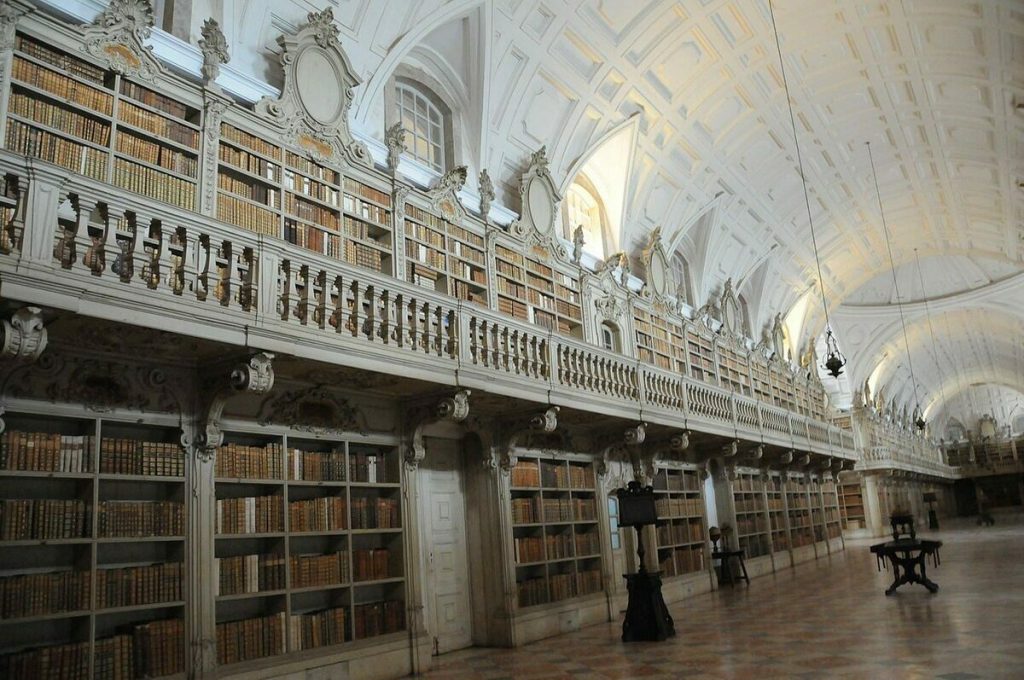
Mafra Palace Library,Portugal

Mafra is a city and a municipality in the district of Lisbon, on the west coast of Portugal

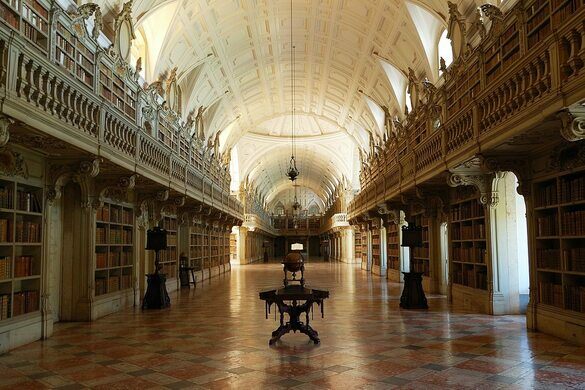
THE GRAND MAFRA PALACE LIBRARY’S WOODEN ROCOCO BOOKSHELVES STORE ABOUT 36,000 leather-bound books ranging from the 14th to the 19th centuries. If not for the inch-long bats that monitor the library at night, book-eating bugs would represent a serious danger to these ancient tomes.

When the majestic Palace of Mafra was completed in 1755, it quickly established itself as a national treasure of Portuguese architecture. Additionally, the palace has an equally magnificent library, one of the best in Europe.

The 280-foot-long Rococo-style library is an appropriate setting for the thousands of priceless antique volumes that fill the wooden bookcases. However, these books are delicate, and bookworms, moths, and other insects may wreak havoc on their fragile pages.

The majority of libraries use ethylene oxide, methyl bromide, or gamma radiation to combat such pests, however, the Mafra Palace Library has a rather unique army of aerial defenders: bats.

During the day, a colony of bats naps beneath the bookshelves or in the garden of the castle. At night, after the library has closed, these tiny bats fly between the stacks, searching for the bugs that would otherwise chew through the library’s priceless collection of books.

This midnight feasting has existed for ages, perhaps dating all the way back to the invention of the library. However, the winged guardians do have one disadvantage: the enormous amount of droppings they deposit on the floors, shelves, and furniture each night. To counteract this, library staff covers furniture before they leave and spends their mornings meticulously washing the marble floors to remove any traces of the previous night’s excrement.


According to the palace website, the Mafra Palace Library is accessible to researchers, historians, and academics “whose subject of study warrants access to this collection.” It is suggested that you make an appointment in advance. Because bats are nocturnal, it is doubtful that you will encounter them during visiting hours. Monday, Wednesday, Thursday, and Friday from 9:30 a.m. to 1:30 p.m. and 2:00 p.m. to 4:00 p.m.


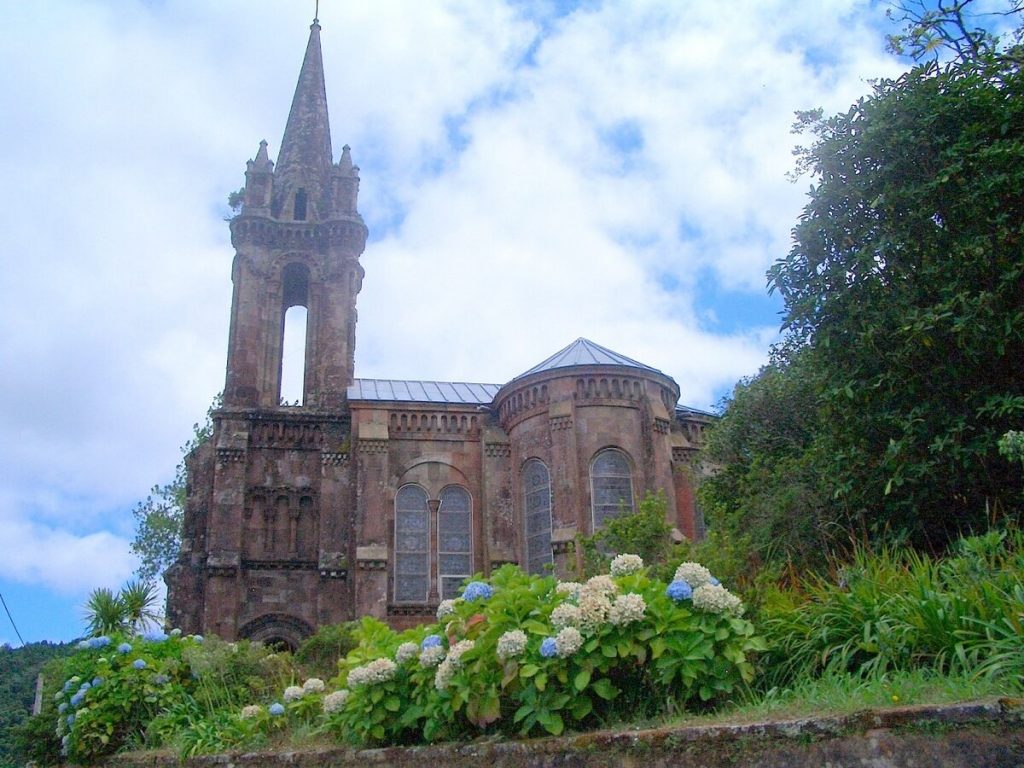
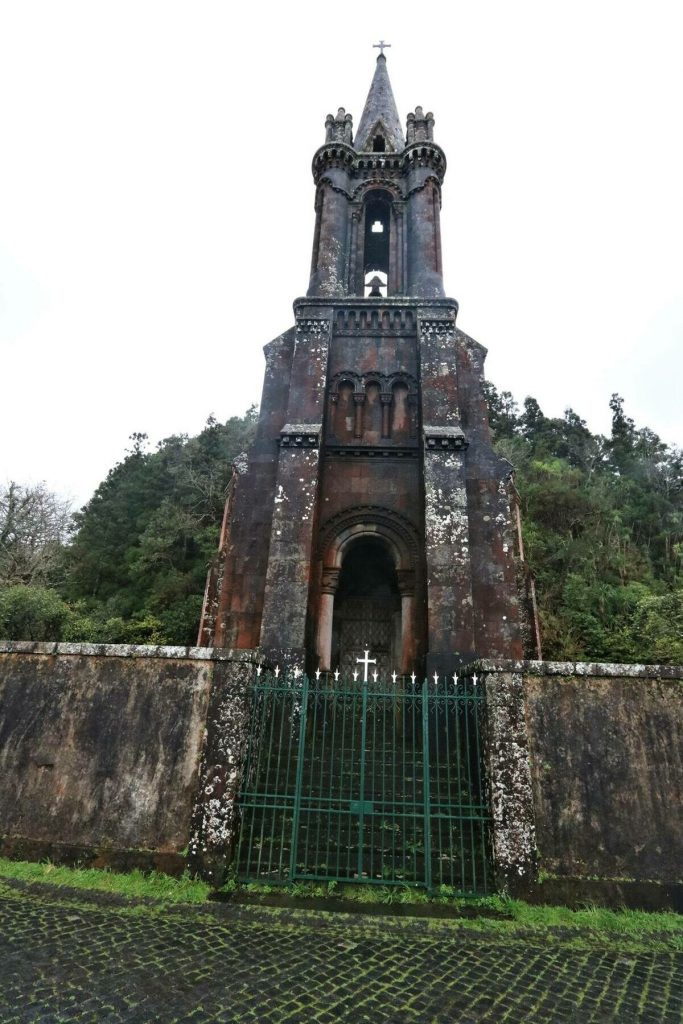
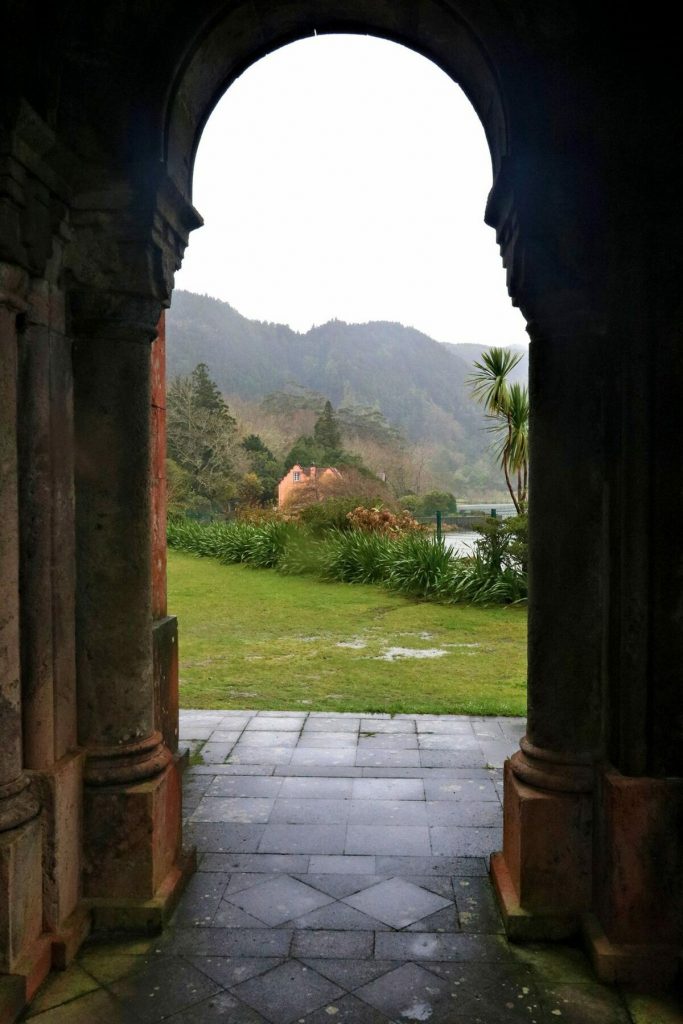
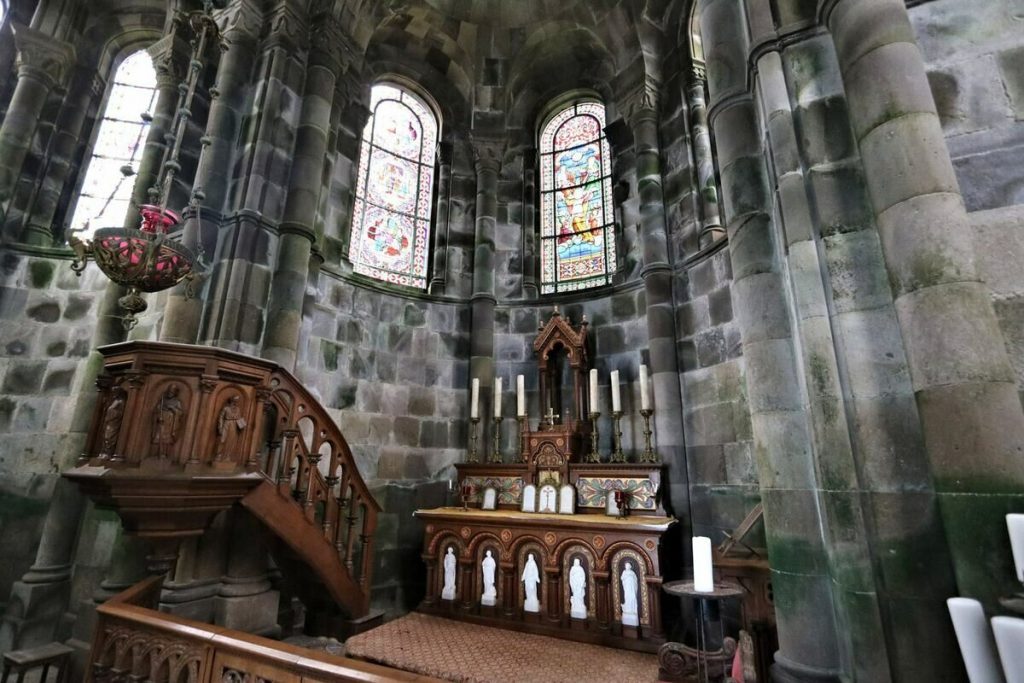
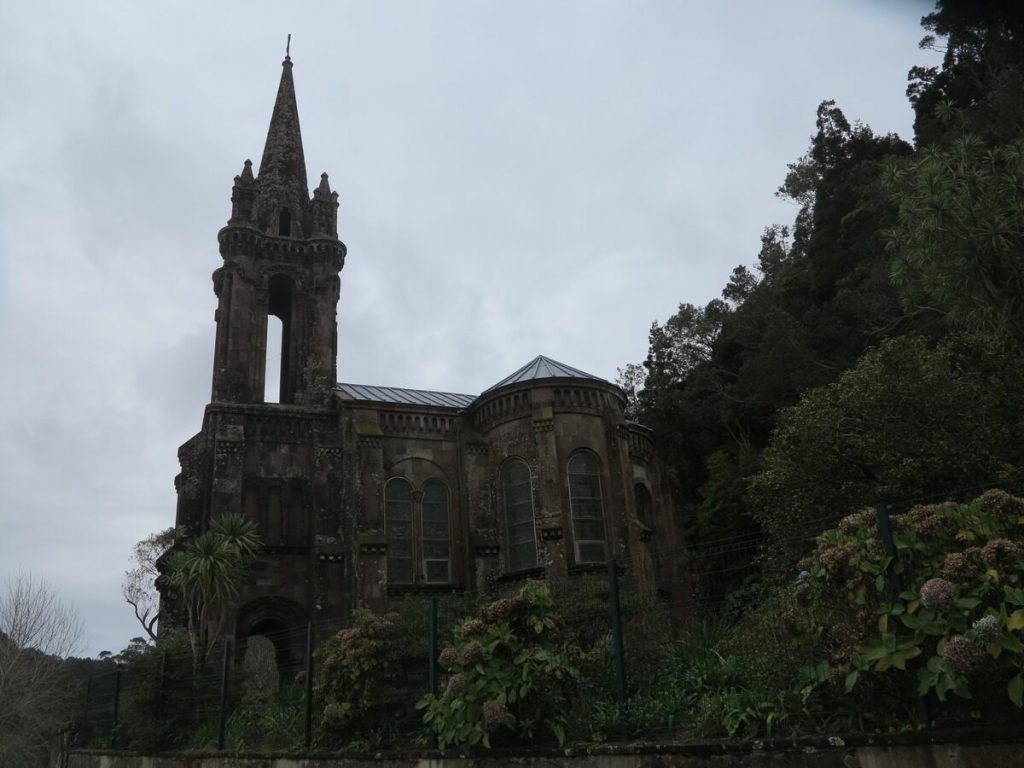
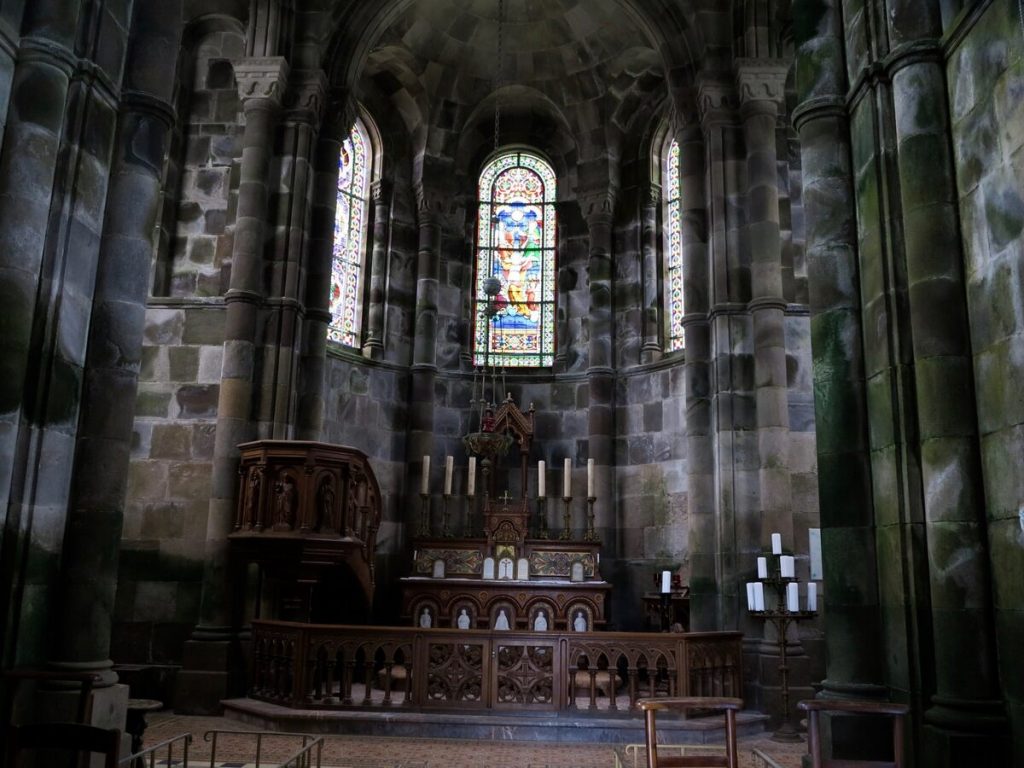
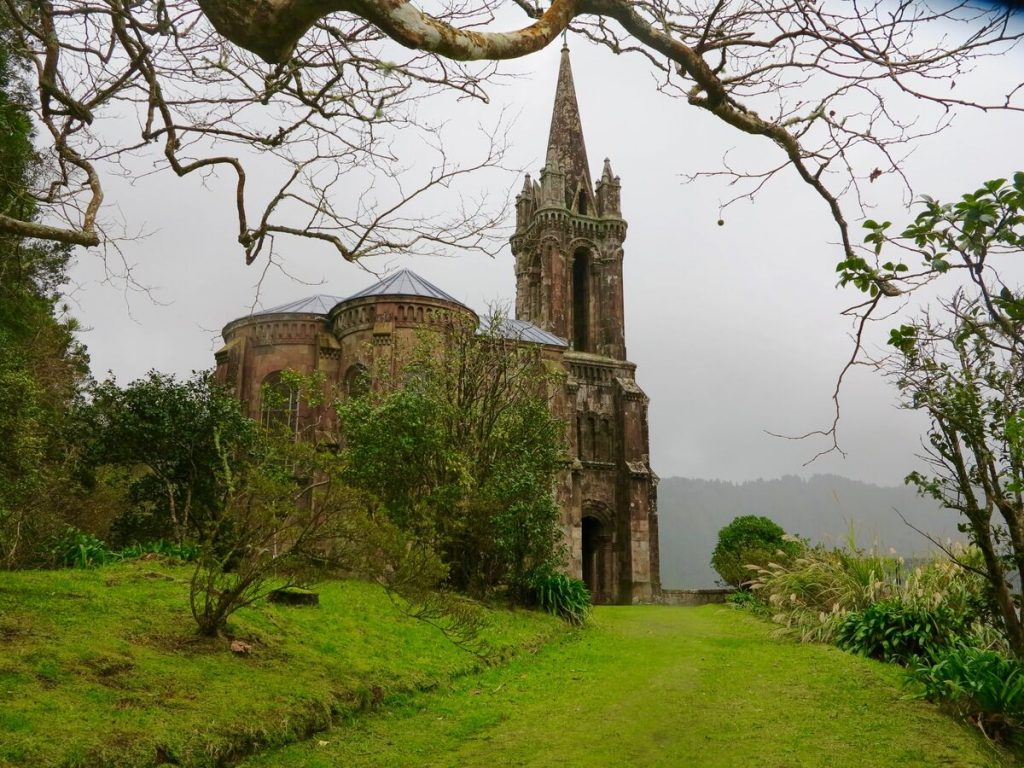
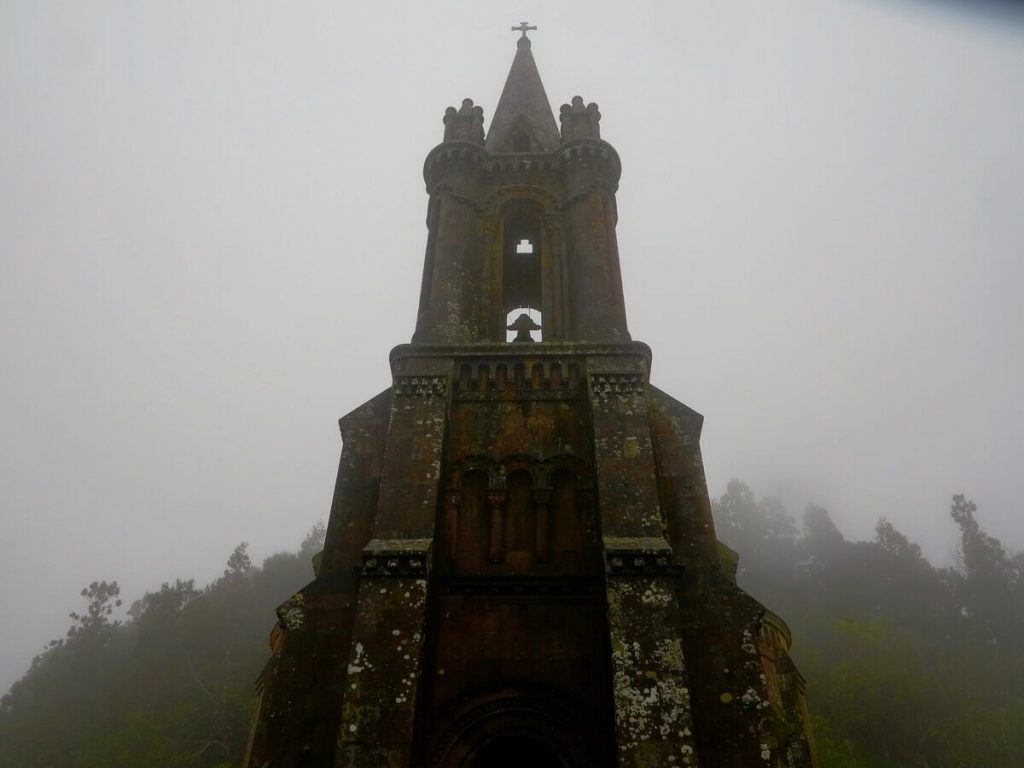
Chapel of Nossa Senhora das Vitórias

São Miguel Island, Azores

This fairy-tale, neo-Gothic church in the Azores is a world of magical realism. 


Cemetery of Anchors

Santa Luzia, Portugal

No one knows who set the first of the hundreds of rusty anchors strewn over the sand dunes of Praia do Barril Beach. Locals, though, continued to add the gnarled weights to commemorate the tiny tuna fishing community that previously thrived in the region.

The anchors were used to weigh down the nets that were used to capture tuna. They are arranged in rows and exist without any real grandeur or formality. The unstable seas where the Atlantic met the Mediterranean were teeming with bluefin tuna, making fishing in the region a hazardous and challenging vocation. The method of capturing them was unique to the region and was most likely developed by the ancient Romans who occupied there.


The island and Barril Beach are accessible from the town of Santa Luzia via a bridge and a 1.2km walk. Alternatively, there is a small railway along 1km of the line (which was formerly used by the fishing community to carry products and freshly caught fish) that runs a mini-train at peak hours


Ponte da Misarela (Misalera Bridge)

Montalegre, Portugal

In northern Portugal, a medieval stone bridge arcs above the Rio Rabago.

According to local legend, a criminal was fleeing the neighbouring hamlet and needed the means to cross the river. He called the devil, who graciously agreed to assist the guy for the modest price of his soul. The guy consented, and the devil built a makeshift bridge that disappeared before the convict’s pursuers could cross.

According to legend, the bandit was so repentant that he sought out a priest to confess his sins. A good priest saw the man’s plight and used his Rosary and a little amount of holy water to banish the demon and transform the bridge into a permanent construction.

Visitors to the Misarela Bridge today won’t have to worry about it disappearing under their feet. Anyone may stroll (or escape, if necessary) over the river thanks to the strong stones. In reality, during the Peninsular War in the early 1800s, French soldiers used the bridge to escape British forces.

Take in the sights of the surrounding environment while you’re there. The area is filled with trees and plants, its green cover spreading down the slope till it reaches the water and rocks. You’ll most certainly see a waterfall pouring over the rocks near the bridge after a rainstorm. In the summer, visitors may cool themselves in the river below.


Anta de Pavia, Portugal

Pagan monument converted to Christianity with the population.

THE ANTA DE PAVIA STANDS OUT EVEN WITHOUT ITS HISTORY. A massive rock has remained in the middle of a plaza in Pavia for generations, surrounded by white-washed, red-roofed houses.

The 4 meters high stone, which was once a dolmen, was used as a burial chamber when paganism went out of favour. When Christianity replaced most other faiths in the 17th century, the huge rock was renamed a tiny church dedicated to São  Dinis. The inner chamber of the dolmen was converted into the chapel’s nave, and although it is still sparse, it has a tiny blue-tiled altar.

While the chapel is an intriguing landmark, it is much more so since it recounts a typical narrative of medieval Portugal’s conversion, and numerous similarly converted pagan buildings can be seen across the nation. 


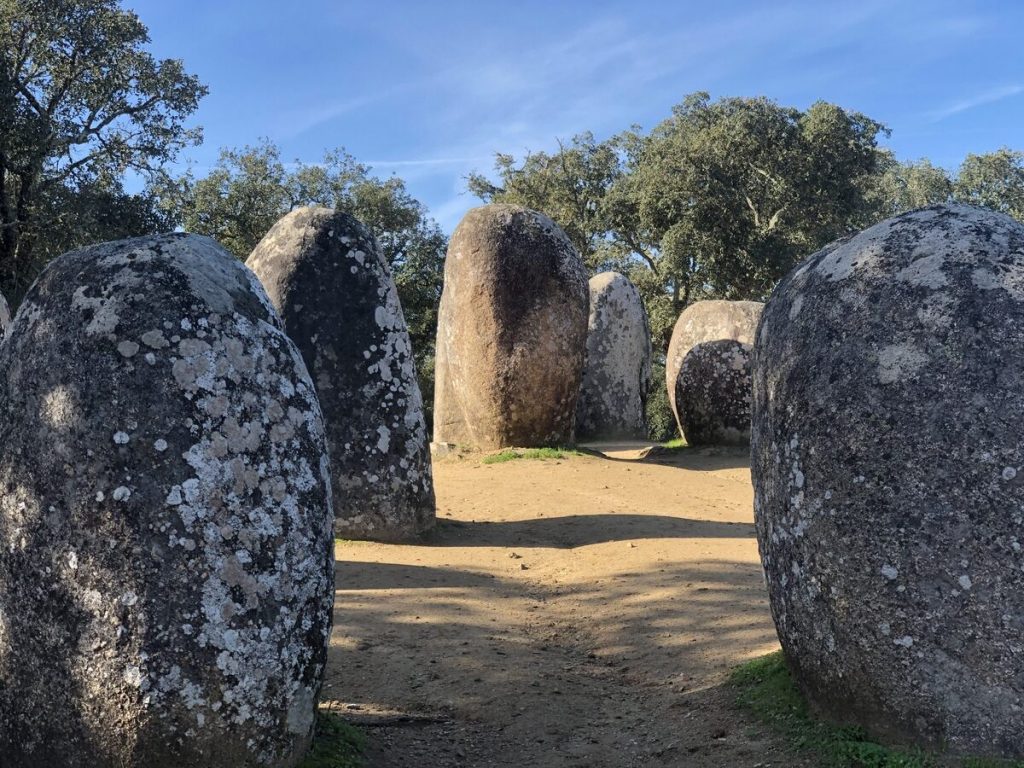
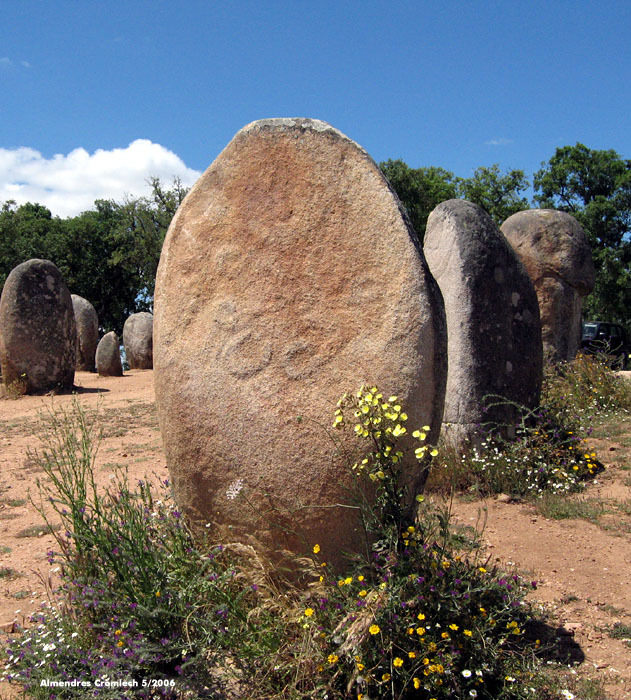
Almendres Cromlech

Évora, Portugal

“Portugal’s Stonehenge” is made up of nut-like stones aligned with the heavens. 

The Almendres Cromlech are the best example of Neolithic buildings on the Iberian Peninsula, built over many periods between 5000 and 4000 BCE and being undiscovered until 1966.

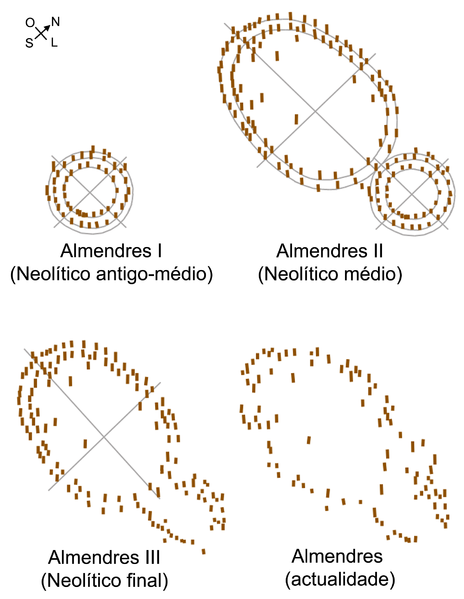
Several typical megalithic monuments, mainly cromlechs and menhir stones, may be seen at the site. The 95 almond-shaped stones visible today are arranged in patterns of two concentric rings – an eastern circle and a bigger oval in the west – and reflect a steady process of collection and redistribution through time.

The site’s earliest part is the smaller ring to the east, created during the early Neolithic period about 6000 BCE, while the western oval ring is believed to have been erected during the Almendres era around 5000 BCE. Many of the stones seem to have been moved during a third phase about 3000 BCE to better coincide with the moon, sun, and stars.

The function of Almendres Cromlech is unclear, as is typical of such ancient structures. The final repositioning of the stones to align with celestial bodies reinforced geometric patterns previously discovered at Almendres Cromlech, making the intentionality of the stones’ existence and placement undeniable, even if the deeper reasoning and rites contained within remain a mystery.


There are no public transportation alternatives, and the stones are located distant from main highways.

East of Evora, right off the major N114 road that links Evora to Montemor-o-Novo.

The entire journey from the outskirts of Evora to the ancient site is 16km (10miles) and takes around 25 minutes.


Espigueiros do Soajo, Portugal

A cluster of granite granaries perched on stilts.  

The ancient hamlet of Soajo is located on the outskirts of the magnificent Peneda-Gerês National Park in Portugal. Its beautiful homes and tiny church add to the scene, but it is most renowned for its magnificent espigueiros: granite granaries constructed above ground.

The name Espigueiros refers to the granaries, which are supported by granite slabs from the Peneda mountains. They were raised above the ground to protect food crops from rats and other vermin, and the whole community utilized them.

The first espigueiros were built in 1782, and the whole cluster was built during the 18th and 19th centuries. Some of the 24 that remain are still used to store grain, particularly maize.

These traditional granaries may also be seen in the hamlet of Lindoso, which is just 6 miles (10 kilometres) from Soajo. There are more than 50 of them, and they are still used to store grain collected by villagers.

From Porto Airport, take the A3 highway to Braga/Valença. After 47 miles (77 kilometres), exit the highway at the Arcos de Valdevez exit. After paying the toll, continue on the IC28 for 9 miles (15 kilometres) and exit at Arcos de Valdevez. At the town’s entrance, there is a roundabout labelled “Soajo/Mezio/PNPG.” Take the signs to “Soajo/Mezio.” After 1.8 miles (3 kilometres), turn right in the direction of “Soajo/Mezio” and continue for 11 miles (18 kilometres) until you reach the hamlet of Soajo.


Capela do Senhor da Pedra

Arcozelo, Portugal

The stunning marble- and granite-strewn beaches of Miramar were originally the SITE site of ancient pagan worship. The Capela do Senhor da Pedra (Chapel of the Lord of Stone) stands now on top of a massive rock protruding into the sea, where rites were previously conducted.

During the 17th century, the hexagonal building was built as part of a major effort to Christianize Europe in order to ‘reclaim’ the country from the ‘heretic,’ naturalist pagans who sought enlightenment at the same location.

Visitors may either climb the set of steps going from the beach to the altar or follow the more penitent path up the steep rocky slopes. The sanctuary doors are bordered by two azulejo mosaics that flaunt the site’s architectural significance while also mentioning that Pagans worshipped here before the chapel became “surely the oldest house of worship in the area.” Inside, three magnificent gold-leaf altars portraying Christ hanging on the cross were built. The crucifix is now backlit by a (controversial) green light.

A horseshoe-shaped indent in the rock appears at the back of the chapel. Explanations for its origin are strange and hazy, ranging from belonging to the Virgin Mary’s donkey to having roots in D. Sebastian’s horse that was badly managed on a misty day, and so on.

Perhaps most intriguingly, an annual three-day celebration honouring the site’s Pagan history takes place in Miramar beginning on Trinity Sunday. The celebrations climax the following Tuesday with a march from the city centre to the church headed by completely veiled ladies (“witches whose identities remain unknown,” according to one local).

The church is worth seeing not just for its unusual setting and breathtaking views, but also for its representation of a cultural conflict whose remnants may still be seen today.

Travel south by rail from Porto/Vila Nova do Gaia. Exit the station at Miramar and go towards the sea, which will be clearly visible.


Covão dos Conchos, Portugal

Despite its surreal appearance, the hole in Portugal’s Lagoa da Serra da Estrela is really a man-made funnel leading into a long tunnel. Though it seems to be a natural sinkhole surrounded by flowing waterfalls, Covo dos Conchos is an engineering marvel.

This lake in the Serra da Estrela mountains was constructed artificially in 1955 as part of the adjacent hydroelectric project development. Rather than construct a pipeline to link Lagoa Serra da Estrela and Lagoa Comprida, the project’s engineers chose to dig a tunnel through the mountain.

The spillway is intended to provide fresh water to surrounding towns, but the lack of other structures nearby gives the funnel the appearance of being a natural feature of the lake rather than an engineering project. Additionally, plants are growing along the sides of the concrete and granite drain pipe, giving the massive hole an even more natural appearance. Until pictures of the hole went viral in 2016, this sci-fi-looking spillway was a little-known mystery in Portugal.

Covo dos Conchos is situated in the natural park of Serra da Estrela, which is far from any major city. The trail to the spillway begins at Lake Comprida and is about 6 miles (10 kilometres) in length. Bring lots of water and sturdy shoes.


Pego do Inferno - Wikipedia

Pego do Inferno

The name Pego do Inferno, which translates as ‘Pit of Hell,’ refers to a beautiful waterfall and lagoon created by the Asseca stream.

This beautiful location, situated in Santo Estêvo, Tavira, is a real hidden treasure.

The area around Pego do Inferno is very lovely, and it’s worth visiting for the view alone. The journey to Pego do Inferno is scenic, as you are surrounded by orange and lemon trees, and the landscape provides for a delightful stroll on a bright day, as well as a pleasant day out in general.

To reach the waterfall, it is well concealed and not the simplest way to take due to the unmarked trails, but for explorers, it provides for an intriguing route to pursue but one that should be taken with care. The lovely cascade is fed by the Asseca River and winds its way over limestone cliffs that create an enchanting lagoon. Calcium carbonate removed from the rock accumulates in the lagoon, imparting a magnificent green hue to the water. The Pego do Inferno waterfall is the biggest of three in the Cascade da Torre and Cascade of Pomarinho series.

With a height of just 3 metres, this waterfall is on the smaller side. Additionally, to pique interest and spice up the visit a little, the Waterfall of Pego do Inferno is linked with a scary tale. According to folklore, a wagon collapsed at Pego, plunging the passengers into the lagoon. The divers were never able to locate the bodies of the wagon’s passengers or the animals that hauled it. Because the divers were unable to reach the lagoon’s bottom, they concluded that the victims had plunged into hell. Thus, the eerie moniker Hell’s Pool/Pit of Hell was created. According to folklore, anybody who falls into it will immediately enter hell.


Lugares e Sabores: VALE DAS BURACAS DO CASMILO? UMA RARIDADE ESPELEOLÓGICA

Casmilo Holes (Buracas the Casmilo)

The Buracas de Casmilo are an intriguing geological feature in the Portuguese municipality of Condeixa-a-Nova, Zambujal parish.

Casmilo is located on the route that links the hill of Senhora do Círculo to Serra de Janeanes. We arrive at Buracas do Casmilo after entering the village and following a route marked by the karst landscape of limestone.

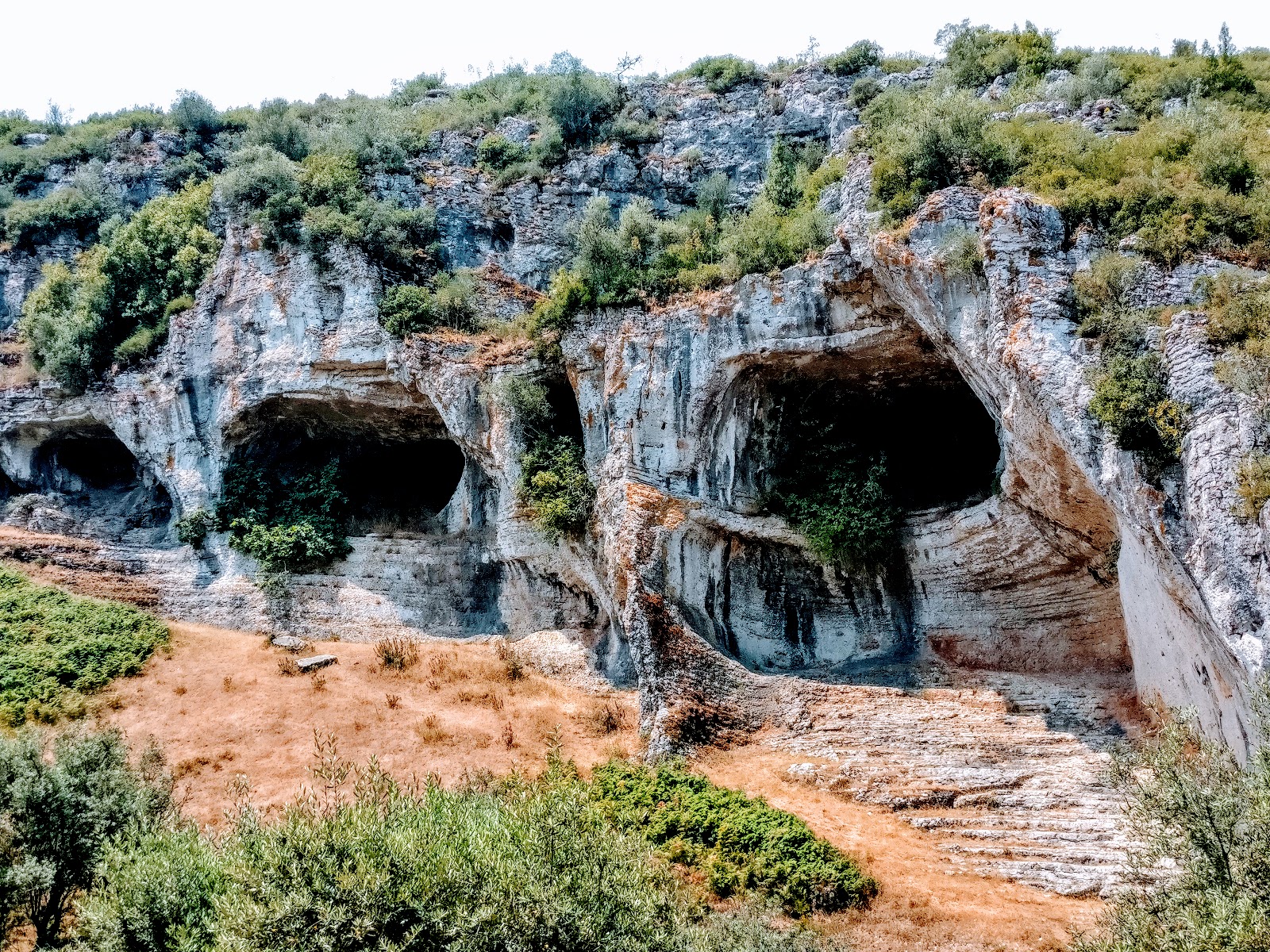
This intriguing geological structure, surrounded by huge cliffs, relates to the remnants of many chambers of a cave that existed within the mound as a consequence of the lowering of the centre section of a pipeline, leaving its extreme lateral parts exposed.

Climbing, mountaineering, orienteering, rappelling, and camping are all popular outdoor activities in Buracas do Casmilo and its surrounding region. 

Every vacation destination should be documented so that you can recall your experiences on the plane flight back home once your vacation is over. From taking selfies in front of landmarks to photographing jaw-dropping scenery, some locations need the use of a camera, and these Portuguese locations are no exception. Keep these places in mind while you’re putting up your itinerary for your next trip to Portugal. 

Castelo de Vide – Marvão, Portugal

Look for it, and you will find it! Once you’ve made your way through the gardens and seen the 17th-century city square and old castle, you’ll have no shortage of photos to share on social media with your friends. Beautiful historical artefacts and breathtaking scenery can be seen throughout this town that is impossible to miss while taking photographs. Take tours of the palace’s cobblestone streets and take in the breathtaking view from the palace’s roof, which is a must-see. After a day spent in this idyllic location, your Instagram feed will be flooded with likes and comments.

Convent of Christ – Tomar, Portugal 

The Convent of Christ in Tomar, Portugal, is a picture-perfect and magnificent structure that begs you to photograph it. The façade of this 12th-century mansion is lavishly decorated in the Manueline style, while the inside is adorned with exquisite Gothic gold ornaments that will have you snapping photos all day. Their eight 15th-century cloisters are also a great location for a quick picture session with your friends. However, while visiting religious or holy sites such as convents and monasteries, it is always essential to maintain a respectful attitude.

Praia de Santa Cruz, Silveira, Portugal

Never before has a stretch of sand looked so beautiful. Taking the perfect Instagram photo at Praia de Santa Cruz is easy since there are so many chances to do so. This isn’t just a beach; it’s a slice of heaven, thanks to its crystal-clear water and architecturally structured rock wall, among other features. Take in the panoramic vistas from the sweeping mountain peaks and the piercing blue ocean; everywhere you look, there’s a picture opportunity waiting to be had.

Serra da Atalhada – Penacova, Portugal

Relax and take in the breathtaking views of the Serra da Atalhada mountain range. This Instagrammable area is an excellent place to take photos and share them with the rest of the world. This little hamlet, surrounded by windmills, is a popular location for rustic and beautiful photographs to be taken. Choose to visit the scenic region during the warmest days of the year in order to get the ideal Portuguese photograph; the bright blue sky will contrast well with the attractive and photogenic windmills.

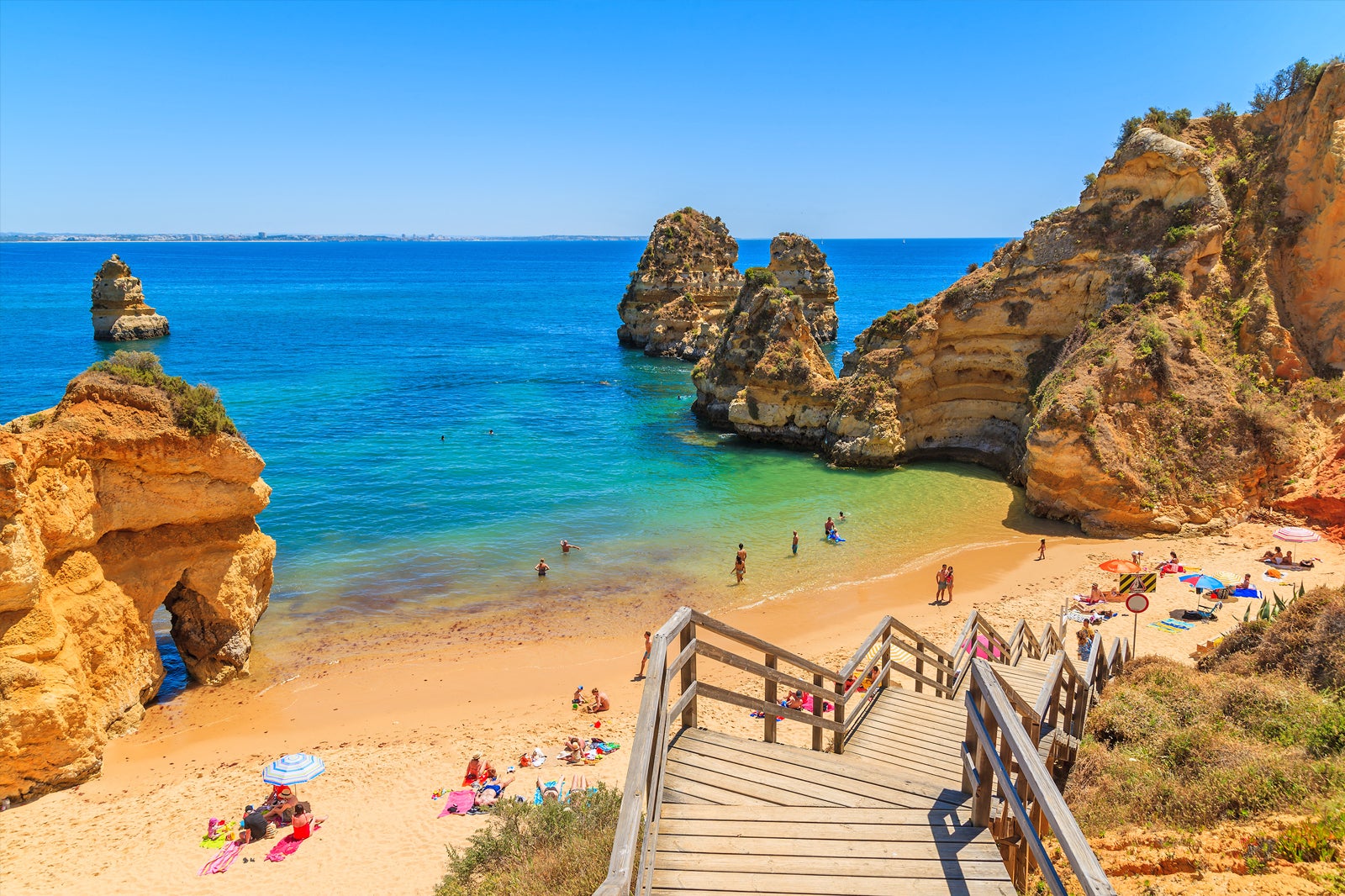
Lagos, Algarve, Portugal

When it comes to beautiful settings, the city of Lagos in Portugal is the cherry on top of the icing. The cliff walls of yellow and red limestone are just the beginning of what this coastal city has to offer. Spend a day soaking in the sun on their beautiful beaches and exploring the village’s whitewashed alleys and 16th-century wall that encircles the whole area. This thriving coastal town is home to some of the world’s most breathtaking sights.

Pena Palace – Sintra, Portugal

When you visit Pena Palace in Sintra, you will have the opportunity to feel like royalty for a day. Located on the peninsula, this loud and proud castle is the ideal location to capture your next photo opportunity. Despite the fact that it has a history that goes back to the Middle Ages and was finished in the nineteenth century, it is now utilized as a meeting place for the President of the Portuguese Republic. When photographed, the unique colours of this ancient site stand out like a dream amid the city of Sintra; the buttery and cherry hues of the buildings seem to be beautiful. Make sure to have a look at their beautiful gardens and the breathtaking view of the royal palace from the top of the hill.

Quinta da Regaleira – Sintra, Portugal

When visiting Portugal, it’s impossible to pass by the Quinta da Regaleira without snapping a few photos of its magnificent architecture. Similarly to the Alcobaça Monastery, the palace is very ornate and Gothic in design. This ancient site, which is surrounded by grottos, gardens, and caverns, is the ideal setting for capturing memories. Photos may be taken in the beautiful gardens or in the twisting and intriguing Labyrinthic and Eastern grottos. There are so many things to see and do in this beautiful area, so why not bring your camera and capture every moment you can get your hands on?

Alfama, Lisbon, Portugal

Known as one of Lisbon’s most authentic districts, Alfama’s architecture displays the distinct features of ancient and colourful houses, which give the area a cheerful character and a sense of tranquillity. Walking through the Alfama area is an invitation to become lost in the maze of narrow streets and alleyways that the neighbourhood has to offer. It’s easy to get lost in, and even simpler to find your way out of!

Finding oneself lost in the alleys of Alfama is a must, particularly for those who like being startled by the distinctive features of a culture that has been in existence for hundreds of years. Rather than trying to explain Alfama, it is preferable to become lost in it and revel in the extraordinary sensation of being in and finding a really unique community. Furthermore, if you happen to be in town around the month of June, enjoy the celebrations of St. António. For two days in June, Alfama becomes even more beautiful and bustling, and, of course… more bright and joyful!

The Fado Graffiti Wall: if street art is your thing, this wall in Escadinhas de São Cristóvão is the result of several artists’ collaboration, and it’s perfect for those artsy-cool shots.

LX Factory, Lisbon, Portugal

The LX Factory, located in a secluded part of Lisbon, in the middle of nowhere between the city centre and Belem, is the hub of a thriving design and arts area, the LX Factory serving as its centrepiece. It’s a wonderful location to get away and hang out among the design companies, production studios, restaurants, and stores that all have a design-centred emphasis. The LX Factory is located on movie-set-looking terrain in an ancient industrial neighbourhood. There are some very interesting shops and restaurants here and even a hotel. LX Factory is home to countless Instagram-worthy spots.

Torel Avantgarde, Porto, Portugal

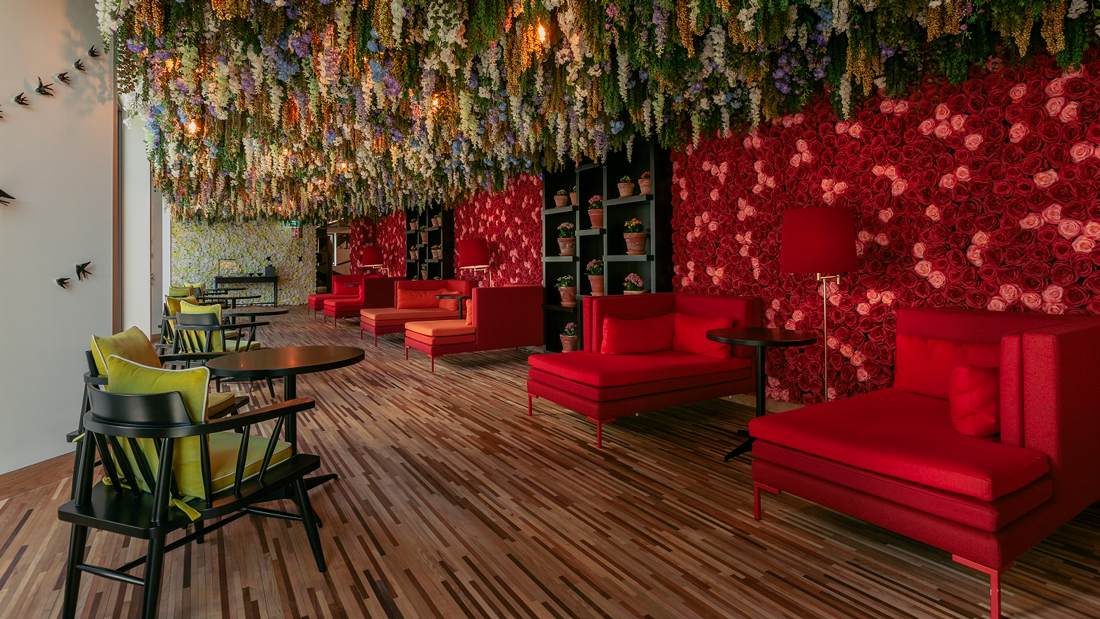
In the case of Torel Avantgarde, this hotel is one of the most photographed locations in all of Portugal or at least one of the most photographed rooms in the country. When you enter the hotel bar, you will be taken to a beautiful “flower tunnel,” where multicoloured blossoms hang from the walls and ceiling, creating an ethereal atmosphere.

Azulejo Panel, Porto, Portugal

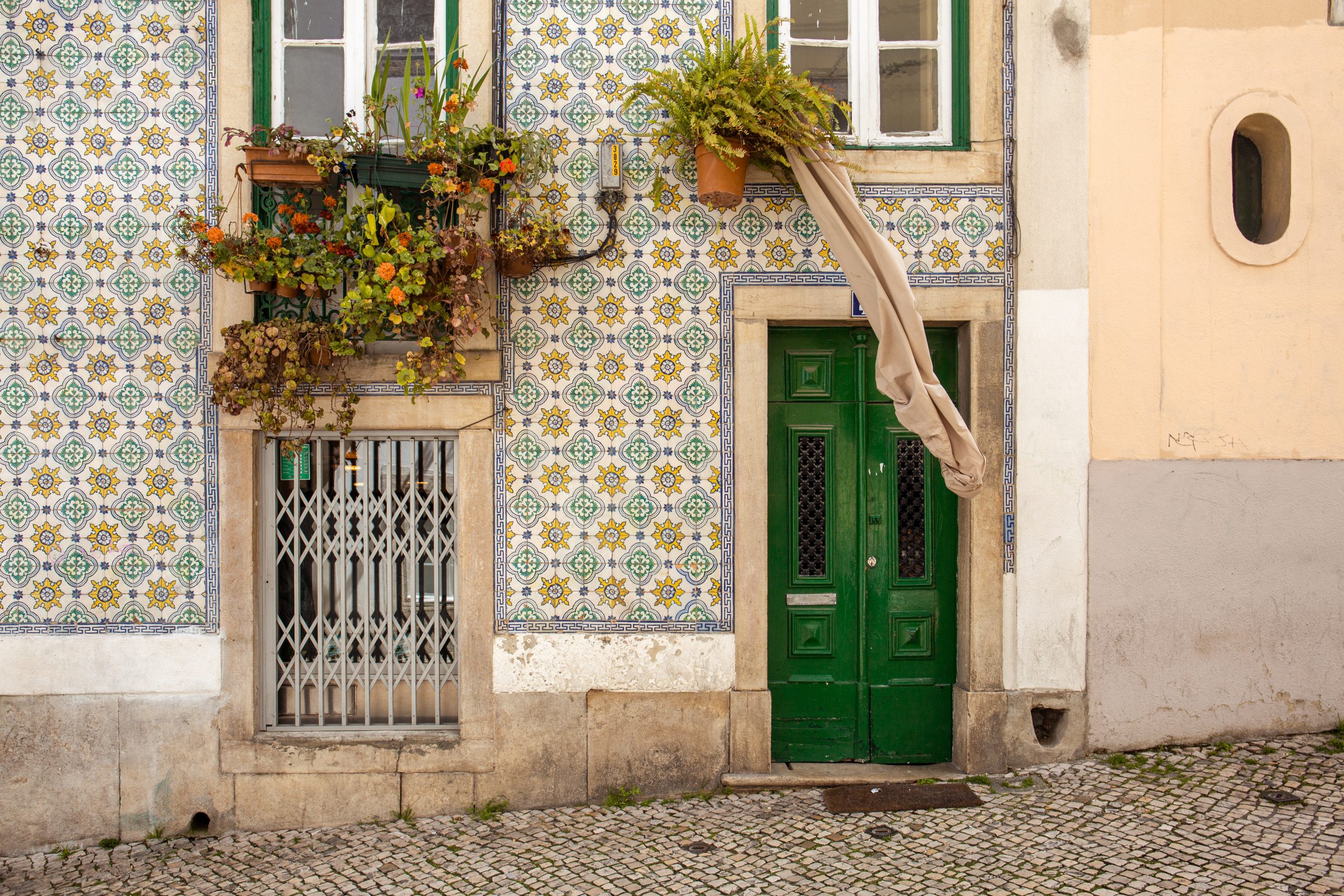
Joana Vasconcelos’ Azulejo Panel: Created by modern artist Joana Vasconcelos, this enormous mural is 20 metres wide and painted in colours that are so vivid that it almost begs to be photographed and shared on social media. You will find it in Porto, Portugal.

Benagil Cave, Algarve, Portugal

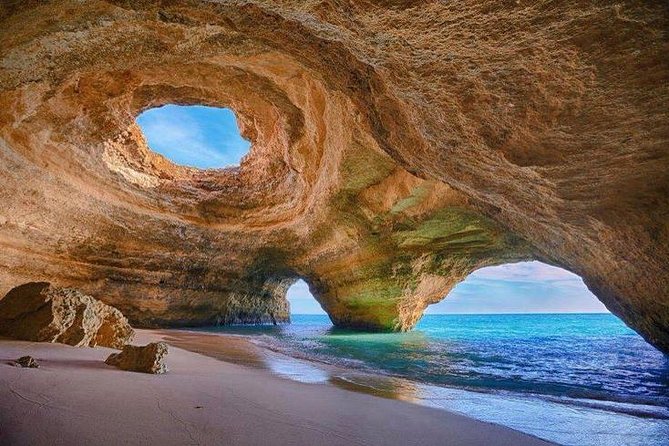
Benagil Cave is without a doubt one of the most beautiful and well-known natural attractions in Portugal. It has a spectacular grotto with a hole in the roof known as “the eye,” which allows sunlight to stream through and highlight the golden beaches and turquoise seas below while also providing a view of the blue sky above.

In case you’re planning a vacation to the Algarve, be sure to add a visit to this stunning cave to your schedule. In addition, Benagil Cave is one of the most famous tourist destinations in the world, and like any tourist attraction, it can become extremely busy. It is essential to study your choices before travelling so that you may enjoy your visit to the most extent possible!

Pink Street, Lisbon, Portugal

Pink Street, which is located on Rua Nova do Carvalho, is a length of road that is right in the heart of Lisbon’s nightlife. The restoration of Rua Cor de Rosa, as it is called locally, was part of a larger effort to clean up what was once known as the Red-Light District.

There are a variety of additional things to participate in while you’re here. Enjoy a beverage on one of the patios, eat lunch at one of the restaurants, or let your inner party animal loose and take advantage of the nightlife options available to you! Pink Street in Lisbon is a well-known destination for partying.

Praça do Comércio | Lisboa | Portugal | AFAR

Praça do Comércio

This is one of the most beautiful squares in all Europe, opening southwards onto the huge Tagus estuary. There are many notable monuments in this plaza, which serves as Lisbon’s central square and one of the city’s most visible landmarks. It is located on the northern edge of the city, and it serves as a gateway to the centre.

From navigating the maze of tiny alleys in ancient districts to cooling down on the Atlantic coast’s sandy beaches, life in Lisbon is never dull! There are so many sites to visit in Lisbon, from small eateries that enable you to experience Lisbon off the main route to places where you can interact with the locals.

Cacilhas

Although this is technically not in Lisbon, it is definitely worth checking out. Take the commuter boat from Cais do Sodré to Amalda and exchange views of the Tagus river’s southern banks and the Christo Rei monument for a glimpse of the Lisbon cityscape. You’ll disembark at Cacilhas, a seafood lover’s heaven. While this neighbourhood lacks the polished appearance of the city centre, its somewhat weathered style provides insight into an alternate Lisbon. The sheer amount of seafood restaurants that meet you as you get off the boat may be daunting, and they all seem uncomfortably similar, so I’d suggest avoiding the confusion and following the small street that runs down the river to Ponto Final. This no-frills restaurant is one of Lisbon’s best-kept secrets, and the relaxed ambience will entice you to remain indefinitely.

Cascais Portugal Tourism Guide – Fully Updated for 2021!

Cais do Sodré to Cascais

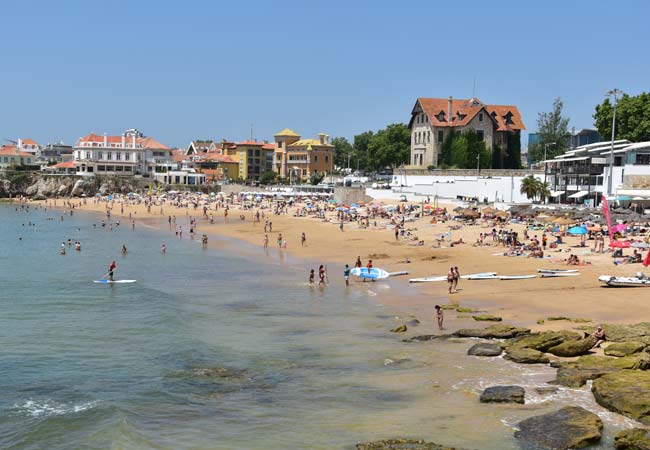
Take the train to Cascais from Cais do Sodré station and choose one of the sun-drenched beaches that border the way out of Lisbon. This ancient fishing town is just a half-hour train ride away and is really one of Lisbon’s hidden treasures, but it is not the only stop along the route. You’re spoilt for choice along this length of the coast, as each station provides gorgeous beaches, clear water, and a few pubs and restaurants, making this the ideal location for a beach day. Praia de Carcavelos and São Pedro are two of the best-kept secrets in Lisbon. Both towns are famous for their surf but are also popular with residents wanting to spend the day soaking up the sun and enjoying drinks and small plates at one of the waterfront bars and cafés.

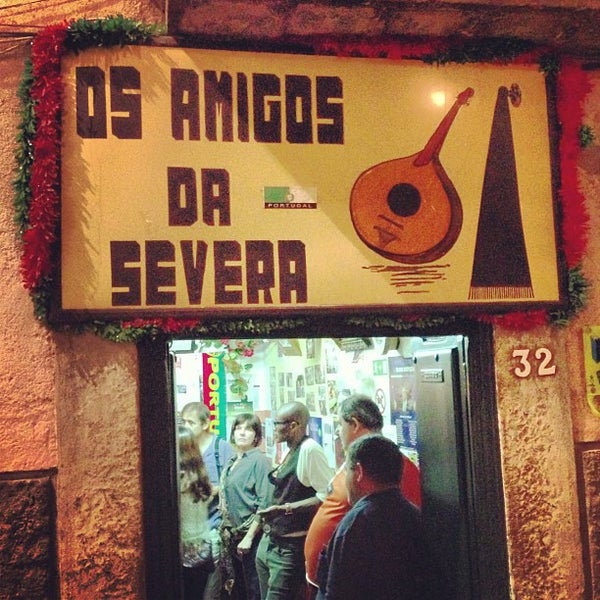
Photos at Os Amigos da Severa - Bar in Lisboa

Os Amigos da Severa

You couldn’t possibly explore Lisbon off the main route without seeing fado at some time – it would be impolite, and even if you did, it would be impossible to avoid it. The finest locations to hear this traditional music, which originated in the city’s medieval district, are in ancient Mouraria or Alfama, but rather than paying a set fee for admission, a drink, and sometimes supper, stop by Amigos da Severa instead.

This is one of Lisbon’s best-kept secrets, a small pub where residents take up their instruments and perform for one another, for themselves, and for anybody else who manages to fit into the bar at the moment. Additionally, this is an excellent location to sample the native cherry liqueur, ginja. There are definitely more renowned places in the city centre to have a drink or two, but for a local atmosphere and handmade liqueur, this pub cannot be beaten.

The history of the establishment can be deduced from the objects that adorn the walls and cover the small counter; from a statue of Our Lady of Fatima to vintage fado posters, record sleeves to football scarves, dried flowers and even a string of garlic – it appears as though little has changed since your grandmother was a girl, but the locals wouldn’t change a thing!

luís figueiredo - Reddit post and comment search - SocialGrep

Ribeira das Naus

This route goes away from Lisbon’s central plaza, the Praça do Comércio, and along the river to the railway station. It’s a hidden treasure in Lisbon, where people go on weekends to socialize, sunbathe, and/or play with their children.

There is a small kiosk with deckchairs where you may relax and take in the panoramic views of the river, but if you want to experience life like the locals, buy some beers from a nearby store and sit down on the stone floor that slopes down to the river. Continue going down the seafront when the main road bends to the right and you’ll come to a cluster of pop-up pubs and street food vendors. Locals congregate on the benches in the evenings, sipping mojitos and getting a bite to eat – it’s the ideal place to cool down in the nights.

Este chinês clandestino tem as melhores beringelas panadas de sempre

Chinês Clandestino

There is another side to Lisbon, although it is unlikely to be included in your guidebook. Mouraria, an older neighbourhood, has seen the emergence of a limited number of ‘illegal’ Chinese eateries near the Martim Moniz metro station.

Locals refer to these establishments as clandestinos; they are basically extensions of someone’s house, with meals prepared in their kitchen and bathrooms identical to those used by the family that lives there.  Some owners have transformed their apartments to resemble a restaurant.

Those unfamiliar with these areas would stroll right by them, since the only way to tell them apart from the neighbouring apartments is to look for a red Chinese lantern hanging in the window, or if you’re fortunate enough to get a tip from a local. So, inhale deeply, ring the doorbell, and prepare to sample genuinely authentic Chinese cuisine. While this may seem odd, these restaurants have been ingrained in the fabric of local life in this region, and it’s an experience unlike any other. Two of these hidden gems are located at 59 Rua do Benformosso, but they are also located at Rua do Terreirinho and Beco da Oliveira.

Palace of the Marquesses of Fronteira

The absolutely stunning 17th-century Fronteira Palace is located just outside of Lisbon’s historic centre, away from the crowds. It was constructed in 1640 as a luxurious summer retreat for a nobleman, D. Jaoa Mascarenhas, 1st Marquis of Fronteira. And the present marquis is still living there.

The Room of Battles at the palace is often referred to as “the Sistine Chapel of Tilework.” It portrays events during the Restoration War, which pitted the Portuguese against the Spanish.

The palace’s stunning grotto-like garden, though, steals the show. The garden is influenced by Italy, and it shines with blue tile work. It is regarded as some of the best in Portugal. Greek gods surround azulejo panels representing the liberal arts on the terrace.

Fronteira Palace is one of Lisbon’s best-kept secrets since getting there requires some effort. Its off-centre position also protected it from significant damage during the 1755 Great Earthquake. As a result, it is one of the oldest and most historic attractions in Lisbon.

Visitor Information for the Fronteira Palace:

Address: Largo Sao Domingos de Benifca 1, Lisboa, 1500-554

Hours: Monday through Friday, 9:30 a.m. to 5:00 p.m., Saturday, 9:30 a.m. to 1:00 p.m. Sundays and holidays are closed. The inside of the palace is only accessible in the morning.

Getting there: A 10-15 minute trip from the heart of Lisbon. Alternatively, you might utilize Uber. You may also stroll from the Metro Station Jardim Zoologico.

File:Lissabon (Belém), Park Vasco da Gama, Thai Pavillon.JPG - Wikimedia  Commons

Thai Pavilion, Belém, Portugal

This 22-foot-high Thai pavilion, known as “Sala Thai,” was a gift from Thailand to Portugal. It was installed in Belém’s gardens in late 2011, commemorating the 500th anniversary of the Portuguese presence in that Asian nation.

The monument was built in Bangkok and transported to Lisbon along the same path used by Portuguese navigator-diplomat Duarte Fernandes in 1511. The formal opening took place in February 2012, in the presence of Crown Princess Maha Chakri Sirindhorn, confirming Portugal’s diplomatic ties with her country, the longest alliance between a European nation and Thailand. The red and gold building was influenced in part by the Jeronimos Monastery, but it adheres to Thai traditions such as assembly without the use of any metal, nails, or screws, and a roof covered with patterns resembling dragon skin.

The Sala Thai is one of the most unique landmarks in Lisbon since it is one of just four such buildings discovered outside of Thailand.

Ermida de S. Jerónimo.jpg

Capela de São Jerónimo, Lisbon, Portugal

The chapel, which is located on the outskirts of the property belonging to the Hieronymos Friars, was constructed in 1514 by Rodrigues Afonso.

This is a square structure with a modest façade that has Manueline-style architectural elements such as conical pinnacles, gargoyles similar to those seen in the Monastery’s Cloisters, the royal shield, the crown, and armillary spheres. The carved triumphal arch and the ribbed vaults are two more characteristics that define the style of the interior.

Following the abolition of the religious orders in 1834, the grounds were divided into lots, and the chapel was cut off from the rest of the Belém ecclesiastical complex.